Image 1 of 3
1 / 3
Plant Reference
Capsicum, Genus, annuum, Species, 'Jalapeño', Cultivar,
- Genus & species
- Cultivar
Jalapeño pepper
Central and South America (parent species); cultivar group associated with Jalapa, Veracruz, Mexico
Overview
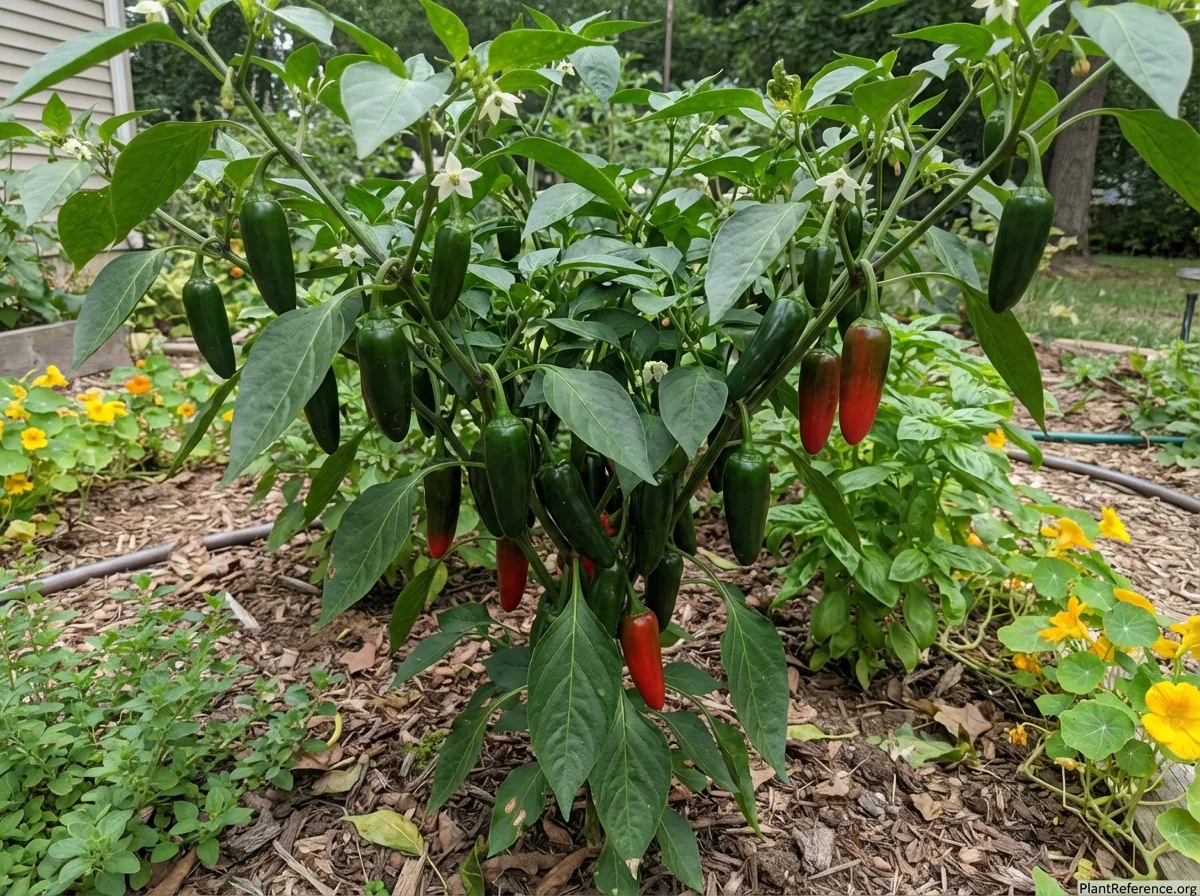
Capsicum annuum 'Jalapeño' is the jalapeño pepper, a compact bushy annual growing 24–36 inches (60–90 cm) tall and 18–24 inches (45–60 cm) wide. Plants carry dark green oval leaves with smooth margins and a slightly glossy texture, and small white flowers in clusters along the stems that develop into cone-shaped fruits 2–4 inches (5–10 cm) long. Fruit is initially dark green at the commercial harvest stage and ripens to bright red if left on the plant. The peppers carry thick walls and a tapered and blunt-rounded tip, with a heat level of 2,500–8,000 Scoville Heat Units (moderate in Capsicum annuum cultivars). The cultivar is separated from other C. annuum cultivars by the specific fruit size, shape, and heat level and is widely grown and widely recognized as a hot-pepper type in North American cooking. Family Solanaceae.
Native Range
The parent species Capsicum annuum is native to Central and South America — particularly Mexico and northern Guatemala — where wild ancestors still grow in tropical and subtropical habitats. 'Jalapeño' is the name of a cultivar group traditionally associated with the Jalapa region of Veracruz, Mexico.Suggested Uses
Grown in vegetable gardens, raised beds, and containers of 3 gallons (11 L) or larger. The compact habit suits patio and deck production. Fruit is used fresh for salsa, pickled, stuffed, and dried into chipotle (smoked ripe red fruit). Handling cut fruit transfers capsaicin oils to hands and eyes, so gloves are used during harvest and cooking. Tender annual. Not deer-resistant in all regions despite capsaicin content.How to Identify
Appearance
Size & Dimensions
Height2' - 3'
Width/Spread1'6" - 2'
Bloom Information
Flowers from June through September. Small white 5-petaled flowers open continuously in the leaf axils through the warm season. Self-pollinating, with bee visitation increasing fruit set. Fruit matures 70–85 days from transplant at the green stage; full red ripening adds another 3–4 weeks.
Detailed Descriptions
Flower Description
White; 5-petaled; small; in clusters in the leaf axilsFoliage Description
Dark green; oval with smooth margins; slightly glossy; alternate on branching stemsGrowing Conditions
Sun Requirements
Requires 6-10 hours of direct sunlight daily
• Full Sun: 6+ hours of direct sunlight
• Partial Shade: 3-6 hours of direct sunlight
• Full Shade: Less than 3 hours of direct sunlight
Care & Maintenance
Care Guide
Plant outdoors after all frost risk has passed and soil temperatures reach 60°F (16°C) in full sun (6+ hours direct sunlight) in moist well-drained loamy soil at pH 6.0–6.8. Consistent soil moisture through the growing season supports continuous flowering and fruit set; deep watering 1–2 times per week (approximately 1 inch per week) reduces fruit-wall disorders such as blossom end rot. A balanced fertilizer every 2–3 weeks through active growth, switched to lower-nitrogen higher-phosphorus formulation once flowering begins, supports fruit production. Plants heavy with fruit benefit from a short stake. Tender annual — the plant is killed by the first frost.Pruning
Early flowers are pinched off until plants reach 6–8 inches (15–20 cm) tall to develop stronger root and stem systems before fruit load begins. Suckers in the crotch between main stems and branches are removed to direct energy to fewer larger fruit. Late-season growing tips are pruned to redirect energy into ripening existing fruit rather than initiating new growth that will not ripen before frost.Pruning Schedule
Prune: June–September
summerfall
Container Growing
Suitable for container growing
Minimum container size: 5 gallons
Toxicity: Not assessed
Capsaicin in fruit causes burning sensations in mouth and on skin. Fruit and handling oils are irritating to eyes and mucous membranes but are not toxic in the usual sense. Gloves are used during harvesting and processing; hands are washed thoroughly before touching face. Small amounts are generally safe for pets but can cause digestive upset.Planting Guide
Planting Methods & Timing
Planting Method
transplant
Indoor Start
8 weeks before last frost
Direct Sow Timing
not recommended for direct sowing in most climates
Days to Maturity
70–80 days
Plant Spacing
18 inches