When to Plant Cucumbers in Oklahoma City: Complete Guide + Best Varieties for Zone 7a
Pets & Toxicity
Recorded toxicity for plants linked in this guide. An unknown status is not a safety assessment.
No linked plant is recorded as toxicDetailsHide
Cucumis sativus 'Marketmore 76' — Toxicity
Non-toxicView Cucumis sativus 'Marketmore 76' plant profileCucumis sativus 'Straight Eight' — Toxicity
Non-toxicView Cucumis sativus 'Straight Eight' plant profileCucumis sativus 'Boston Pickling' — Toxicity
Non-toxicView Cucumis sativus 'Boston Pickling' plant profile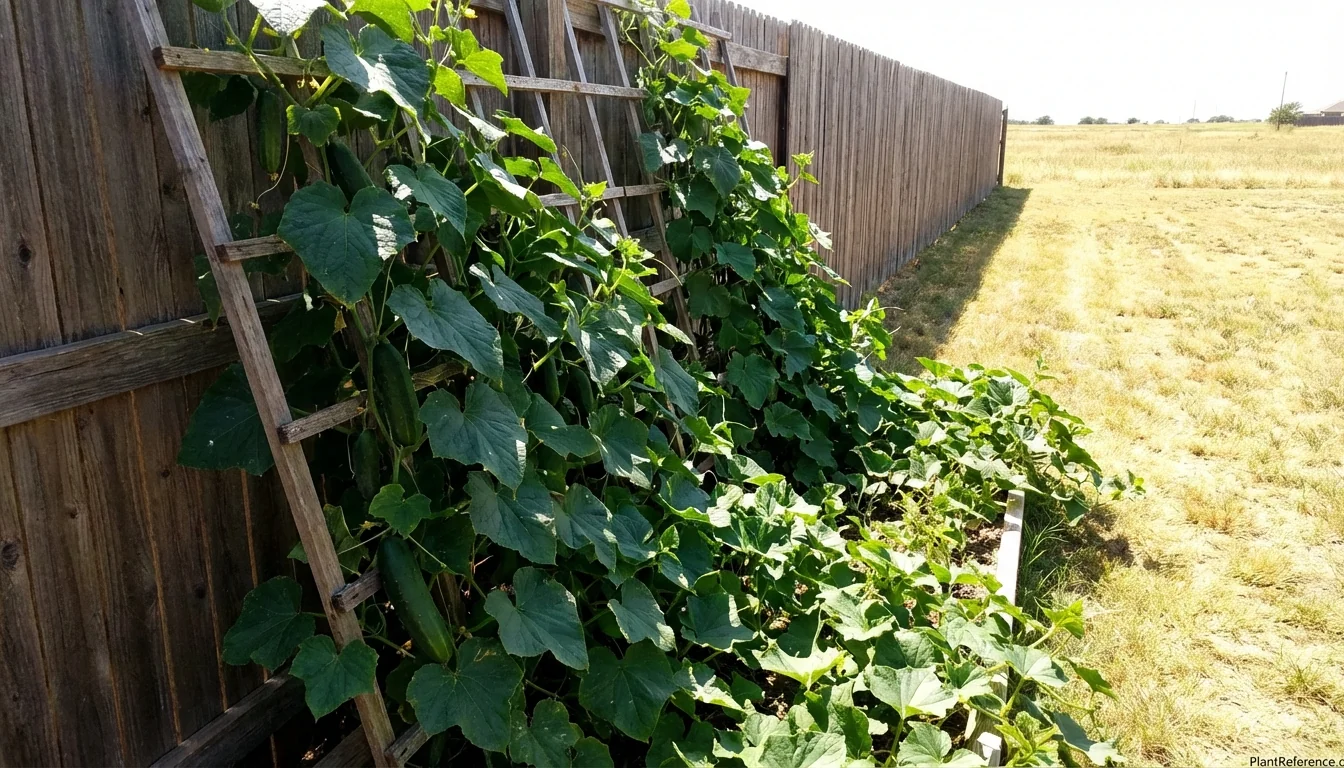
— Image © Plant Reference 2026
Oklahoma City's climate tests every crop you plant, and cucumbers are no exception. Having tracked weather patterns in this region for decades, I can tell you the data is clear: our 218-day growing season looks generous on paper, but the extreme heat from mid-June through August creates a production gap for cucumbers just as it does for most warm-season vegetables. Temperatures above 100°F (38°C) are common during this period, with sustained winds that amplify heat stress through foliar desiccation. The practical approach is to treat cucumbers as a two-window crop: an aggressive spring planting from April through mid-June, and a fall planting that produces from September through early November. Between those windows, you let the climate do what it does and plan accordingly. When to Plant Tomatoes in Oklahoma City: Complete Guide + Best Varieties for Zone 7a
Best Cucumber Varieties for Oklahoma City's Climate
Oklahoma City sits in USDA Zone 7a with an April 1 last frost and November 5 first frost—218 growing days. The Southern Plains climate combines extreme heat, persistent wind, periodic drought, and alkaline soils into a set of challenges that eliminate weak varieties quickly. Heat tolerance and drought resilience are the primary selection factors, with wind resistance as a secondary but important consideration.
Variety | Type | Days to Harvest | Disease Resistance | Best For |
|---|---|---|---|---|
Slicing | 65 days | High (Scab, CMV, moderate DM/PM) | Best heat tolerance with stay-green gene | |
Specialty | 65 days | Moderate (Rust, drought tolerant) | Superior Oklahoma drought and heat tolerance | |
🌿Cucumis sativus 'Persian' (Beit Alpha) | Specialty | 55 days | Moderate (PM) | Heat-adapted Mediterranean genetics |
Pickling | 55 days | Low-Moderate | Fast spring harvest, fall pickling | |
Slicing | 63 days | Low (CMV tolerance only) | Early spring only, fails in heat | |
🌿Cucumis sativus 'Marketmore 76' (fall crop) | Slicing | 65 days | High | Late July planting for fall harvest |
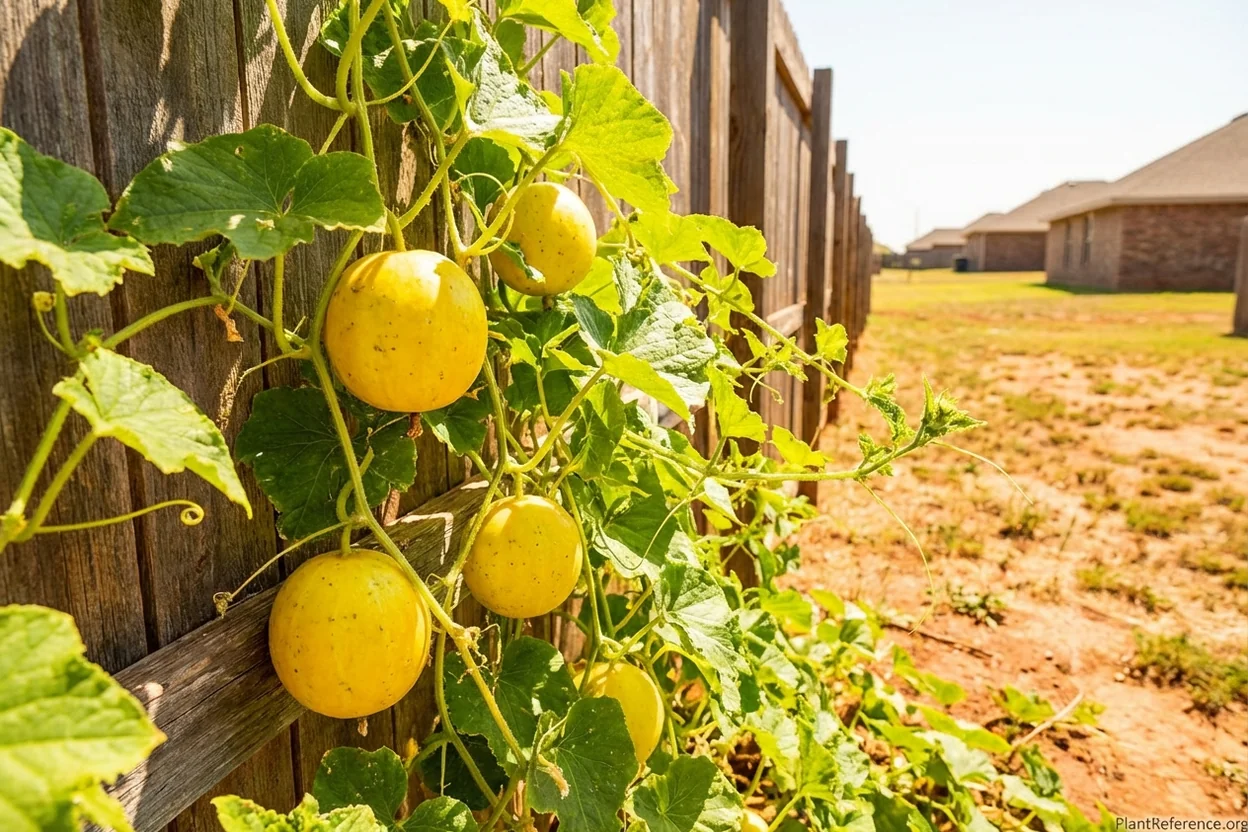
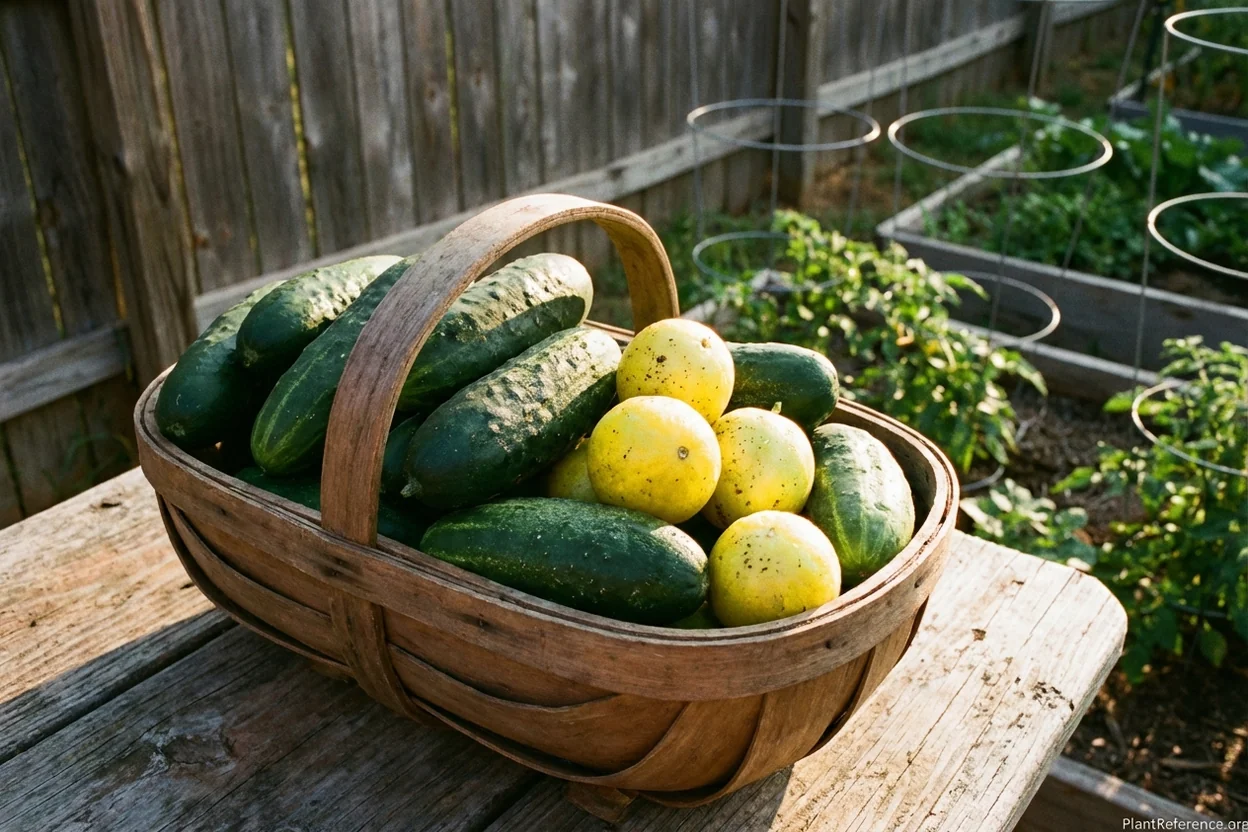
🌿Cucumis sativus 'Lemon' earns special attention for Oklahoma City. Research confirms its superior drought tolerance and heat resistance compared to 🌿Cucumis sativus 'Boston Pickling' and 🌿Cucumis sativus 'Straight Eight'—traits derived from ancestral lineages adapted to arid conditions. When July temperatures exceed 100°F and watering restrictions limit irrigation, 🌿Cucumis sativus 'Lemon' continues producing mild, burpless fruit while other varieties shut down or turn bitter. The round yellow fruit handles wind damage better than elongated slicers because it's less prone to scarring from contact with trellis and foliage.
🌿Cucumis sativus 'Marketmore 76' is the best slicing variety for Oklahoma because its "stay-green" gene prevents heat-induced yellowing and maintains fruit quality longer under stress than any other open-pollinated slicer. The disease resistance package matters less here than in the humid Southeast—Oklahoma's lower humidity reduces Downy Mildew pressure—but it still provides insurance during wet years.
🌿Cucumis sativus 'Persian' types were bred for hot, arid Mediterranean climates and translate well to Oklahoma conditions. The Beit Alpha strains mature fast at 55 days and set fruit without pollinators, which is valuable during extreme heat when pollinators reduce activity. Keep irrigation consistent because their thin skins dehydrate rapidly in our dry winds.
🌿Cucumis sativus 'Straight Eight' is the first variety to fail in Oklahoma heat. Bitter fruit appears rapidly above 90°F, and sustained wind desiccates its foliage faster than heat-adapted varieties. Use only for early spring harvest before conditions deteriorate. When to Plant Peppers in Oklahoma City: Complete Guide + Best Varieties for Zone 7a
Specific Planting Dates for Oklahoma City Gardens
Oklahoma City's April 1 last frost is early for Zone 7a, but spring weather is volatile. I've recorded frost as late as April 20 in my data logs. The November 5 first frost gives a long fall window that most gardeners underutilize.
Indoor Seed Starting: March 10-17 (2-3 weeks before last frost). Start at 75°F (24°C) for 3-5 day germination. Oklahoma homes warm quickly in March.
Transplant Outdoors: April 8-15 (one week after last frost, soil at 60°F/16°C). Harden off 5-7 days. Watch extended forecasts closely—Oklahoma springs are unpredictable. If a late cold front threatens, delay transplanting rather than risk cold damage.
Direct Sow (spring): April 10-May 10. Oklahoma's red-brown prairie soils warm quickly in spring sun. Direct sowing works well because our warm soils germinate seeds in 4-5 days. Don't sow after May 10—65-day varieties won't build enough production before extreme heat arrives in mid-June.
Spring Production Window: Late May through mid-June. This window is shorter than in less extreme climates. Harvest aggressively through June because production quality drops rapidly once sustained temperatures exceed 100°F.
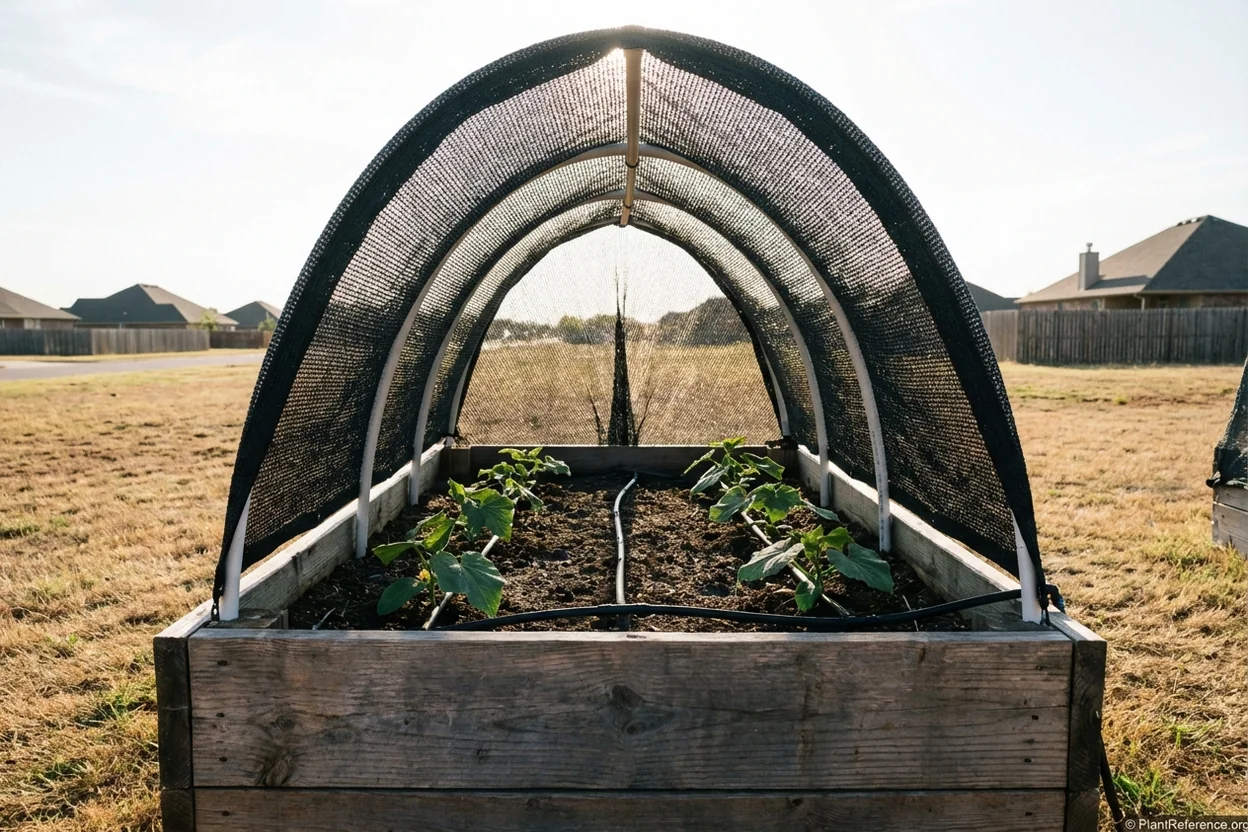
Fall Planting: July 25-August 10. Start seeds indoors or direct sow into pre-moistened, shaded soil. Use 30-50% shade cloth over new plantings. Transplants handle the heat transition better than direct-sown seedlings. The fall crop is often more productive than spring because September and October temperatures stay in the optimal 75-85°F range more consistently.
Fall Production Window: September 10 through November 1. As Oklahoma temperatures moderate, cucumber vines produce their best fruit of the year. Lower wind speeds in fall reduce the desiccation stress that compounds summer heat damage.
Final Sowing Deadline: August 10. A 55-day variety planted August 10 matures around October 4 with four weeks before frost. Raised Bed Vegetable Garden Layout: Planning for Maximum Production
Complete Growing Guide for Oklahoma City
Wind Protection
Oklahoma wind is the factor most gardening guides ignore and the one that causes the most damage to cucumber vines here. Sustained 20+ mph winds are normal spring days, and summer gusts regularly exceed 40 mph during thunderstorms. Wind desiccates cucumber foliage, accelerates water loss from soil, and physically damages vines and fruit.
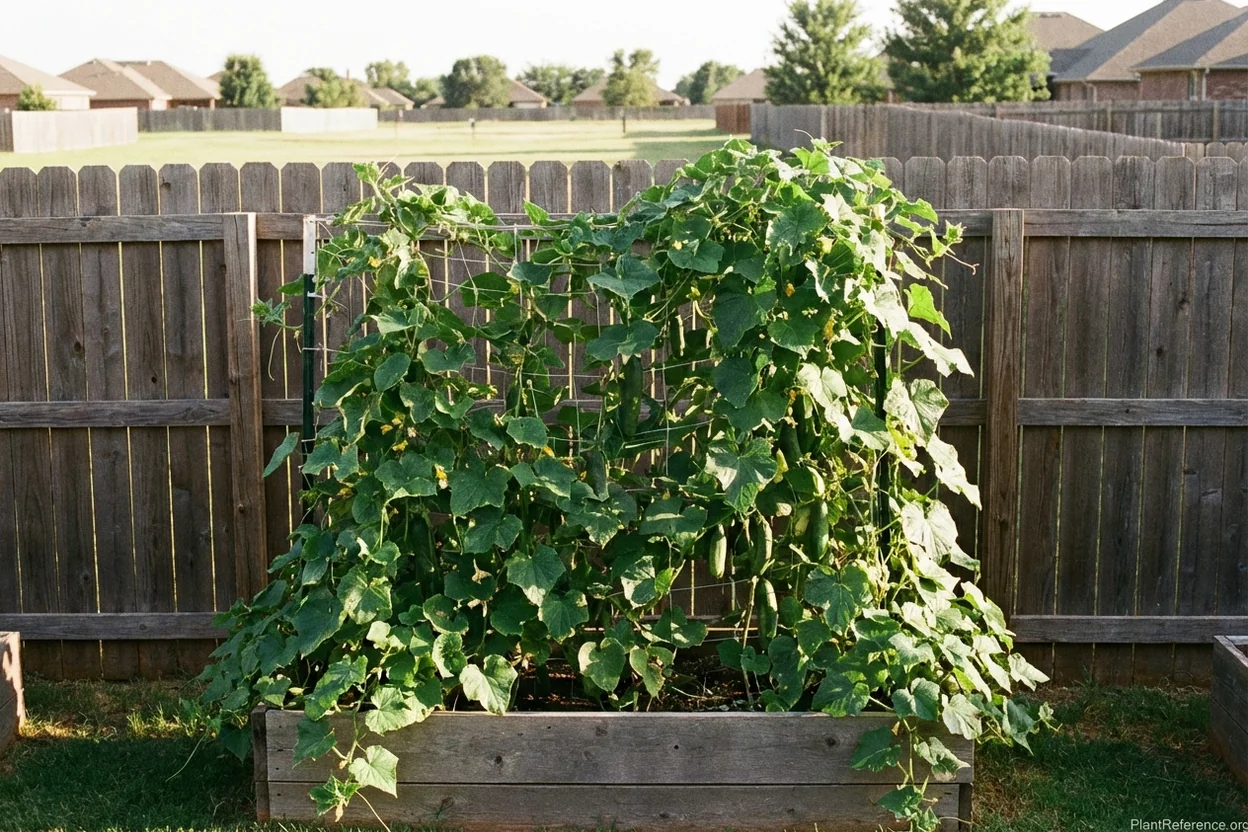
Position cucumber beds on the lee side of buildings, solid fences, or windbreak plantings. A 6-foot (1.8 m) solid fence reduces wind speed by 50% for a distance of 10-15 feet downwind. If no natural windbreak exists, construct one from shade cloth or burlap on posts. Anchor all trellises with driven posts or concrete blocks—lightweight structures become projectiles in Oklahoma winds. How to Build a Raised Garden Bed: Step-by-Step Construction Guide
Soil and Alkalinity
Oklahoma City soils are predominantly red-brown clay with alkaline pH (7.0-8.5). Cucumbers prefer 6.0-6.8, so pH management is important. Work 4-6 inches (10-15 cm) of compost into the top 12 inches (30 cm) and amend with elemental sulfur based on soil test results. The Oklahoma Cooperative Extension Service provides testing through county offices for under $15.
Raised beds bypass both the clay drainage problem and the alkalinity issue. Fill with 60% topsoil, 30% compost, and 10% expanded shale or perlite. Oklahoma's red clay provides decent mineral nutrition when pH is corrected, so don't assume fertility is a problem—test first.
Watering
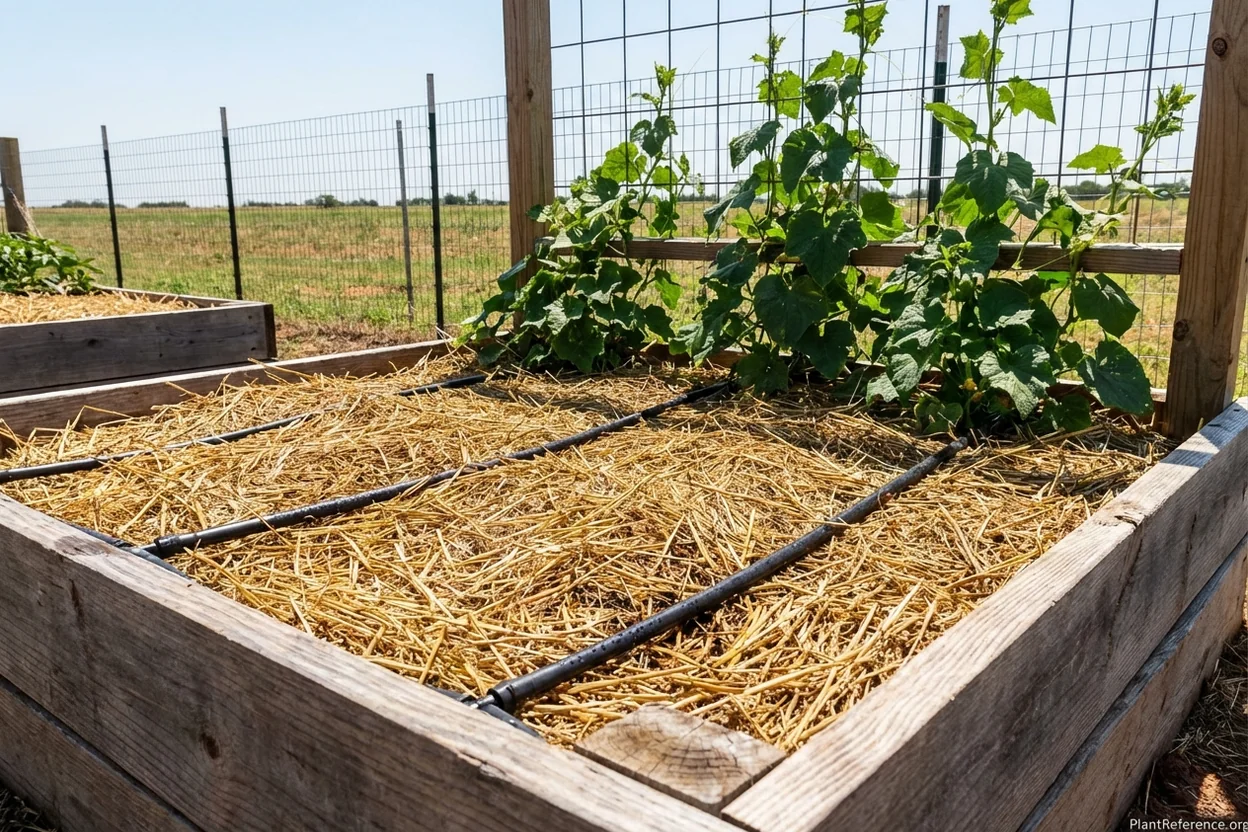
Cucumbers need 1.5 to 2 inches (4-5 cm) weekly in Oklahoma heat—significantly more than in cooler or more humid climates. Wind accelerates evapotranspiration beyond what temperature alone would predict. On a 100°F day with 25 mph wind, cucumber leaves lose moisture at roughly double the rate of a calm day at the same temperature. Drip irrigation on a timer is essential. Water deeply in the early morning before heat and wind build—evening watering in our warm conditions can invite Powdery Mildew during the more humid fall period.
Mulch 3-4 inches (8-10 cm) with straw or shredded hardwood to reduce evaporation from our intense sun and persistent wind. In Oklahoma heat, unmulched soil surface temperatures can exceed 150°F—hot enough to damage shallow roots and scorch fruit resting on the ground. Oklahoma's municipal water restrictions may limit landscape irrigation—check local rules, as food gardens are typically exempt from restrictions that apply to lawn sprinklers. 5 Best Drip Irrigation Kits for Raised Beds (Tested for Easy Installation)
Trellising
Trellis behind windbreaks rather than in exposed locations. A 6-foot (1.8 m) cattle panel on heavy posts withstands typical Oklahoma wind. Avoid lightweight string or wire trellises in exposed spots—they won't survive the first thunderstorm. Trellising keeps fruit off scorching ground surfaces and improves air circulation for disease management during humid stretches. Position the trellis perpendicular to prevailing south winds so it doesn't act as a sail that catches full wind force.
Pollination
Standard varieties like 🌿Cucumis sativus 'Marketmore 76' and 🌿Cucumis sativus 'Straight Eight' need pollinator visits. Oklahoma generally supports healthy bee populations, particularly in areas near agricultural land and prairie remnants. During extreme heat above 95°F (35°C), pollen viability drops significantly and pollinators reduce activity during the hottest hours. 🌿Cucumis sativus 'Persian' types bypass this problem entirely with parthenocarpic fruit set—a significant advantage during July and August when heat-stressed standard varieties produce flowers with non-viable pollen. Plant sunflowers and native wildflowers near your garden to support pollinator populations. When to Plant Squash in Oklahoma City: Complete Guide + Best Varieties for Zone 7a
Feeding
Side-dress with balanced fertilizer at flowering and every two weeks during production. Oklahoma soils often have adequate phosphorus and potassium but leach nitrogen quickly during heavy spring rains. Apply chelated iron if you see interveinal chlorosis (yellowing between green veins)—this is a pH-driven micronutrient lockout common in our alkaline conditions, not a watering problem. Fish emulsion provides balanced feeding without raising soil pH further.
Troubleshooting Oklahoma City-Specific Problems
Extreme Heat and Pollen Sterility
The defining challenge for Oklahoma cucumbers. Temperatures regularly exceed 100°F (38°C) in July and August, causing pollen sterility, flower abortion, and cucurbitacin-driven bitterness. Shade cloth (30-50%), consistent deep watering, and heavy mulch are the primary mitigation tools. 🌿Cucumis sativus 'Lemon' and 🌿Cucumis sativus 'Persian' handle extreme heat better than standard varieties. Accept the mid-summer production gap and focus on maximizing spring and fall windows. Raised Bed Too Hot in Summer: Protecting Plants from Heat Stress
Wind Desiccation
Oklahoma wind removes moisture from cucumber leaves faster than roots can replace it, causing wilting even in well-watered plants. Windbreaks are the primary solution. Mulching reduces soil surface evaporation that compounds the problem. Select compact varieties and trellis behind protected structures rather than in open garden areas.
Alkaline Soil and Iron Chlorosis
Oklahoma's alkaline soils lock up iron, manganese, and zinc. Yellowing between leaf veins with green veins remaining is classic iron chlorosis. Apply chelated iron as a foliar spray for immediate correction. Amend soil with elemental sulfur over time to lower pH. Raised beds with controlled soil mix avoid the problem entirely. Raised Bed Pest Problems: Identification and Organic Control Methods
Storm Damage
Oklahoma's severe thunderstorms deliver straight-line winds, hail, and heavy rain that can destroy cucumber plantings overnight. Anchor trellises with concrete blocks or driven posts. After severe storms, inspect vines and prune damaged sections cleanly to prevent disease entry through wounds. Succession planting provides recovery insurance—if a storm destroys one planting, the next succession is already growing. Best Soil Mix for Raised Beds: Creating the Perfect Growing Medium
Harvest & Storage
Harvest slicing cucumbers at 6-8 inches (15-20 cm) and pickling types at 2-4 inches (5-10 cm). During spring production, check vines daily—Oklahoma heat drives extremely rapid fruit development. In fall, every 2-3 days is adequate as moderate temperatures slow growth to a more manageable pace.
Harvest before 8 AM in summer—fruit picked at 100°F+ wilts within hours. During the moderate fall window, any morning harvest works. Cut with pruners rather than pulling. A healthy 🌿Cucumis sativus 'Marketmore 76' plant produces 8-12 slicers in spring; 10-15 in fall because temperatures sustain the optimal range longer. 🌿Cucumis sativus 'Lemon' produces 10-15 yellow fruit per vine with consistent picking.
Fresh cucumbers store 7-10 days refrigerated in a towel inside a loose bag. 🌿Cucumis sativus 'Boston Pickling' from the fall crop produces exceptional refrigerator pickles—Oklahoma's fall nights develop the firm, crisp texture that makes the best pickles. The fall harvest makes the two-season planting strategy worth the planning effort. The Complete Guide to Raised Bed Gardening for Beginners (2025)
Frequently Asked Questions
Reading about plants and recognising them are different skills. These three build the second.
- Daily PlantIdentify the day’s mystery plant from a close-up photograph.
- Keyed OutWork a dichotomous key, lead by lead, to name a hidden specimen.
- Name That PlantName a specimen from botanical clues dealt hardest first.
Free to play, no account needed
Robert is a retired meteorologist who turned his lifelong hobby of gardening into a second career writing about weather-climate interactions and their effects on plants. Living in Oklahoma, he's seen it all—ice storms, tornadoes, 110°F heat, and drought, sometimes in the same month. Robert brings a data-driven approach to gardening, tracking weather patterns and correlating them with plant performance in his own large garden. He's particularly knowledgeable about wind-resistant plantings, storm damage recovery, and the challenge of gardening in a climate where extremes are the norm rather than the exception. Robert is a calm, measured writer who presents information without drama.