Image 1 of 11
1 / 11
Plant Reference
Quercus, Genus, robur, Species,
- Genus & species
English oak
Europe from the British Isles and Scandinavia south to the Mediterranean basin and east through the Caucasus to the Ural Mountains; lowland and foothill forests, hedgerows, and parklands on a wide range of soils from clay to sandy loam
Overview
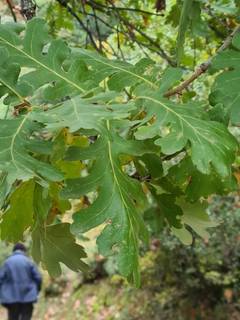
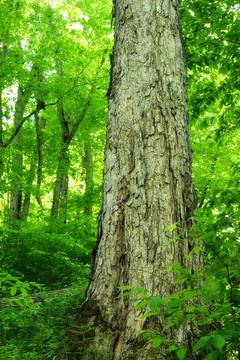
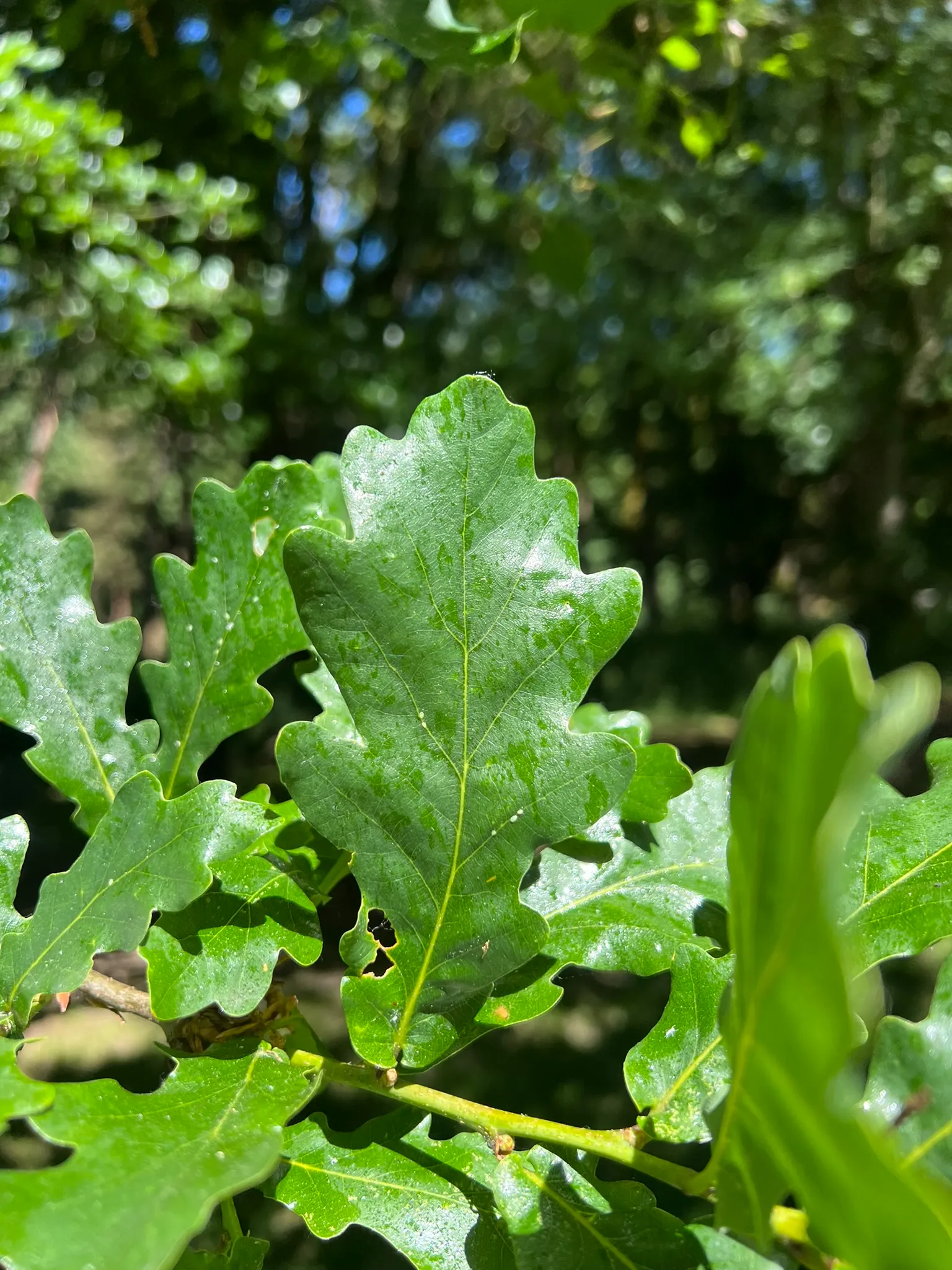
Quercus robur is a very large long-lived deciduous tree in the family Fagaceae reaching 40–70 feet (12–21 m) tall and 40–70 feet (12–21 m) wide in cultivation with a broad rounded crown and heavy spreading lateral branches. In open settings the trunk is short and stout and divides into massive limbs low on the tree, and in forest settings the trunk grows taller and straighter with a narrower crown. Bark is dark gray-brown and deeply fissured into vertical ridges. Leaves are alternate, simple, obovate, 3–5 inches (8–13 cm) long, and carry 3–7 pairs of rounded lobes without bristle tips, and small ear-shaped lobes (auricles) at the leaf base clasp a very short petiole less than 0.4 inch (1 cm) long; this combination of auricles and a very short petiole is the main identification character for the species. Foliage emerges yellow-green in spring, matures to dark green through summer, and turns yellow-brown to russet in fall; the leaves often persist marcescent on the branches into winter on young trees and lower branches. Male catkins open in April and May with the emerging leaves and are pendulous and yellowish-green, and female flowers are small and inconspicuous on the current-year shoots. Acorns are ovoid, 0.6–1 inch (1.5–2.5 cm) long, and borne in pairs on peduncles 1–3 inches (2.5–8 cm) long — the long acorn stalk is the basis for the alternate common name pedunculate oak and separates Q. robur from the closely related sessile oak Q. petraea, which carries stalkless acorns. Growth is slow to moderate at 12–18 inches (30–45 cm) per year, and trees can live 500–1,000 years under favorable conditions, with several English oaks in the British Isles documented at over 800 years old. Limitation: the mature spread of 40–70 feet (12–21 m) is equal to the height and calls for a planting position at least 40 feet (12 m) from buildings and overhead utilities, the heavy lateral branching of open-grown specimens creates large end loads that can fail in wind and ice storms without structural pruning in the first 15 years, and oak powdery mildew (Erysiphe alphitoides) commonly produces white cosmetic patches on the foliage and on late-season regrowth without affecting tree health.
Native Range
Native across Europe from the British Isles and Scandinavia south to the Mediterranean basin and east through the Caucasus to the Ural Mountains. Grows in lowland and foothill forests, hedgerows, and parklands on a wide range of soils from clay to sandy loam, at elevations from sea level to approximately 4,300 feet (1,300 m). Q. robur has been a cultural keystone species of the British Isles and continental Europe for several millennia, supplying timber for shipbuilding, construction, and tannin production.Suggested Uses
Used as a specimen shade tree in parks, large estates, institutional grounds, and arboreta where space allows for the full mature spread of 40–70 feet (12–21 m) at minimum 40 foot (12 m) spacing from structures and overhead utilities. The columnar cultivar 'Fastigiata' carries an upright narrow form 15–25 feet (4.5–7.5 m) wide that suits narrower positions where the species form would not fit. Acorns supply food for squirrels, jays, woodpeckers, and deer across the long lifespan, and the 500–1,000 year potential lifespan makes the species a multi-generational legacy tree for landscape positions that will persist through many human generations.How to Identify
Appearance
Size & Dimensions
Height40' - 70'
Width/Spread40' - 70'
Bloom Information
Male catkins open in April and May as the leaves emerge and are pendulous, yellowish-green, and wind-pollinated. Female flowers are small and inconspicuous on the current-year shoots and are not ornamentally significant. Acorns mature in a single growing season and ripen in September and October, borne in pairs on peduncles 1–3 inches (2.5–8 cm) long that separate this species from the sessile-fruited Q. petraea.
Detailed Descriptions
Flower Description
monoecious; male catkins are pendulous and yellowish-green, opening with the emerging leaves in spring, and female flowers are small and inconspicuous on the current-year shootsFoliage Description
dark green on the upper surface and paler blue-green beneath; alternate, simple, obovate, 3-5 inches (8-13 cm) long with 3-7 pairs of rounded lobes and small ear-shaped auricles at the leaf base that clasp a very short petiole under 0.4 inch (1 cm) long; turns yellow-brown to russet in fall and persists on the branches into winterGrowing Conditions
Sun Requirements
Requires 6-10 hours of direct sunlight daily
• Full Sun: 6+ hours of direct sunlight
• Partial Shade: 3-6 hours of direct sunlight
• Full Shade: Less than 3 hours of direct sunlight
Care & Maintenance
Care Guide
Site in full sun with 6–10 hours of direct sun per day in well-drained soil with a pH of 5.5–7.5. Supplemental deep irrigation every 1–2 weeks through the first 2–3 growing seasons helps establish the deep root system, after which established trees tolerate summer drought and hold foliage quality with occasional deep irrigation during extended dry periods. Soil disturbance within the dripline — grading, paving, or trenching — causes root damage that leads to crown decline 3–10 years later, and construction protection around the dripline of existing mature trees is called for on development sites. Oak powdery mildew (Erysiphe alphitoides) commonly produces white cosmetic patches on the foliage and on regrowth after pruning without affecting tree health. Sudden oak death (Phytophthora ramorum) is present in parts of the Pacific Northwest and Q. robur carries moderate susceptibility; wounding the trunk during the growing season is avoided in regions where oak wilt or sudden oak death occurs. Hardy in USDA zones 3–8.Pruning
Pruning is done in late winter (January and February) while the tree is fully dormant to reduce sap bleeding and to reduce disease transmission risk. Structural pruning in the first 10–15 years builds a strong central leader with well-spaced scaffold branches at wide crotch angles, and co-dominant leaders and branches with included bark are reduced during this formative period because large cuts on mature trees heal slowly and invite decay organisms. Mature trees need little pruning beyond removal of dead, damaged, and crossing branches. Removal of more than 20 percent of the live crown in a single year is avoided because heavy canopy reduction stresses the tree and encourages sprouting from latent buds along the trunk and scaffold limbs.Pruning Schedule
Prune: January–February
winter