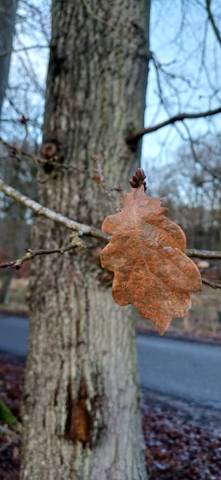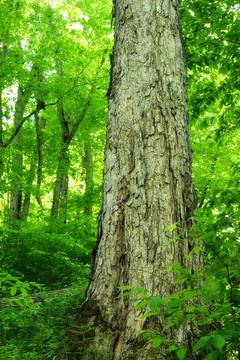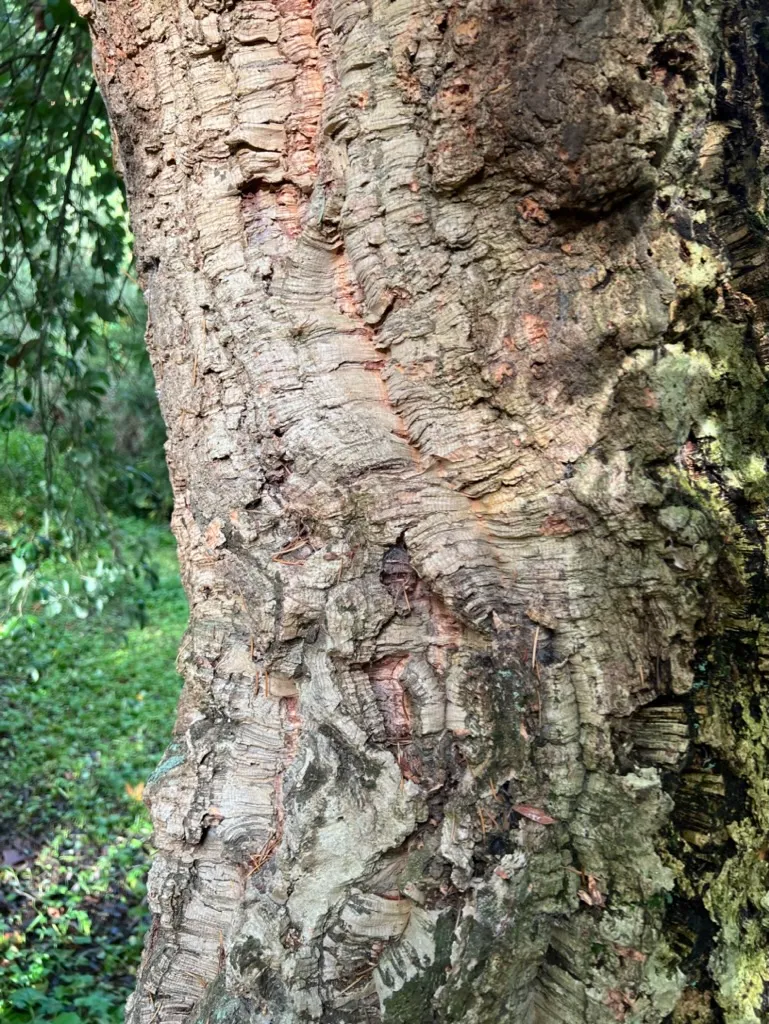
Image 1 of 4
1 / 4
Plant Reference
Quercus, Genus, suber, Species,
- Genus & species
cork oak
Western Mediterranean Basin — Portugal, Spain, southern France, Italy, Morocco, Algeria, and Tunisia; siliceous (acidic) soils in open montado/dehesa woodland
Overview
Quercus suber is cork oak (cork tree), an upright evergreen tree growing 30-60 feet (9-18 m) tall and 30-50 feet (9-15 m) wide. Yellow-green pendulous catkins in May-June (2 weeks). Acorns 0.5-1 inch (1.3-2.5 cm) in fall. Dark gray-green to blue-green leathery leaves 1-3 inches (2.5-7 cm). In Fagaceae. Suber = cork. The source of commercial cork — the thick spongy outer bark 1-2 inches (2.5-5 cm) is harvested every 9-12 years without killing the tree; first harvest at age 25. Portugal produces ~50% of the world's cork. The deeply fissured thick cork bark is the primary feature. Hardy to about 15°F (-9°C) — zone 8. This limited cold hardiness and the large mature size are the primary limitations. Does not tolerate chalk or alkaline soils (unlike Q. ilex). Long-lived (200-500+ years). Drought-tolerant. Leaves and acorns contain tannins that are harmful if eaten in quantity, especially to horses and grazing livestock; the risk to people is generally low. Deer-resistant. Zones 8-10. Full sun. Growth rate is slow.
Native Range
Native to the western Mediterranean Basin — Portugal, Spain, southern France, Italy, Morocco, Algeria, and Tunisia. Found on siliceous (acidic) soils in open montado/dehesa woodland.Suggested Uses
Grown as a large evergreen specimen tree on large sites with acidic to neutral soil, spaced 30-50 feet (9-15 m). Cork bark. Long-lived. No chalk/alkaline. Leaves and acorns are harmful to horses, livestock and pets if eaten in quantity. Zones 8-10.How to Identify
Appearance
Size & Dimensions
Height30' - 60'
Width/Spread30' - 50'
Colors
Bloom Information
Detailed Descriptions
Flower Description
Yellow-green male catkins 1.5-3 inches (4-7 cm), pendulous, in spring; female flowers inconspicuous; acorns 0.5-1 inch (1.3-2.5 cm) ripen in fallFoliage Description
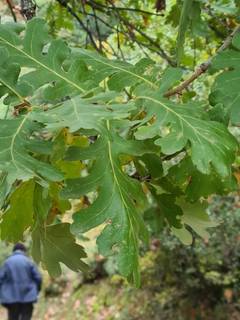
Dark gray-green to blue-green above, pale gray-green beneath, ovate to elliptic, 1-3 inches (2.5-7 cm), leathery, with slightly toothed to entire margins; evergreen year-roundGrowing Conditions
Sun Requirements
Requires 6-12 hours of direct sunlight daily
• Full Sun: 6+ hours of direct sunlight
• Partial Shade: 3-6 hours of direct sunlight
• Full Shade: Less than 3 hours of direct sunlight
Care & Maintenance
Care Guide
Full sun (6-12 hours). Well-drained acidic to neutral soil pH 5.0-7.0 — does not tolerate chalk or alkaline. Drought-tolerant once established. Large mature size (30-60 feet / 9-18 m). Hardy to 15°F (-9°C). Minimal pruning. Leaves and acorns are harmful to horses, livestock and pets if eaten in quantity. Deer-resistant. Zones 8-10.Pruning
Prune in early spring (February-March) if needed to shape or remove lower limbs. Minimal pruning required. Do not damage the cork bark — it does not regenerate if cut too deeply.Pruning Schedule
Prune: February–March
early spring