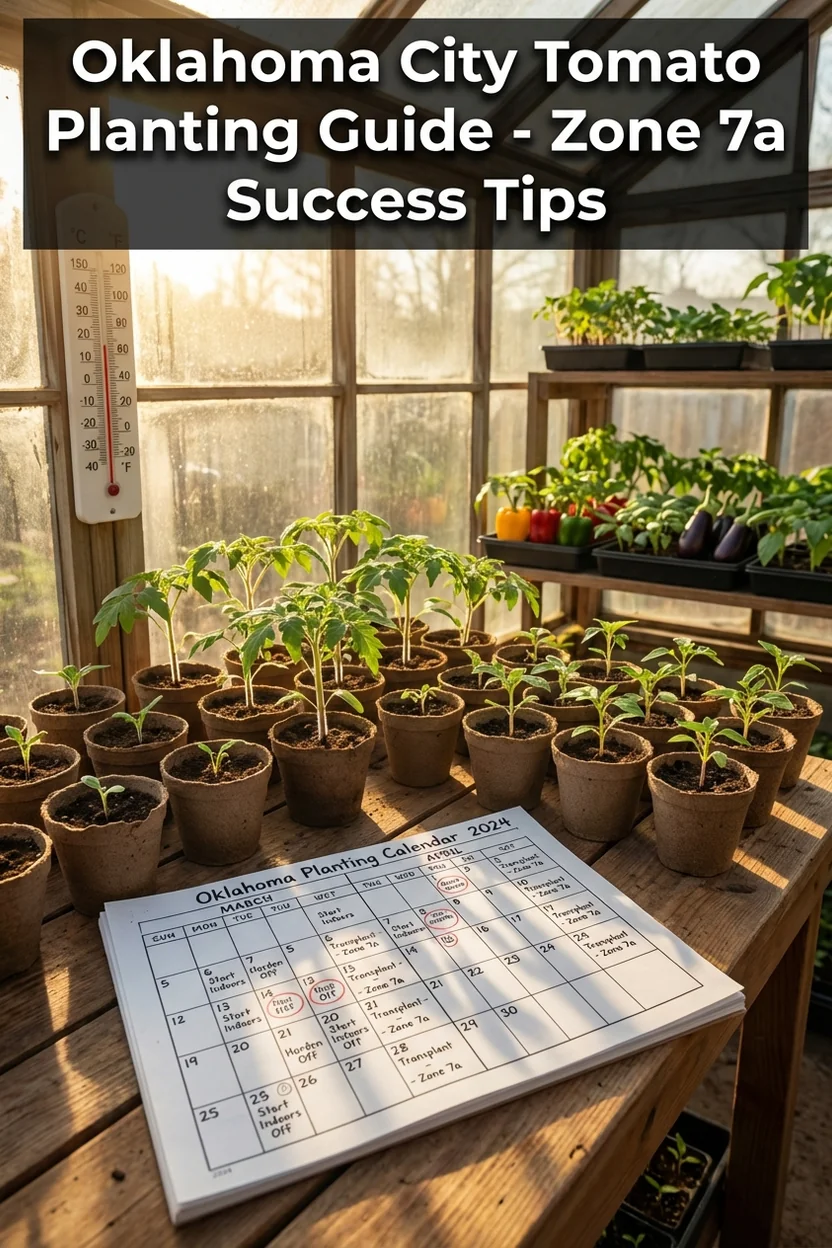
When to Plant Tomatoes in Oklahoma City: Complete Guide + Best Varieties for Zone 7a
Pets & Toxicity
Recorded toxicity for plants linked in this guide. An unknown status is not a safety assessment.
Toxic to pets: early girl tomato, cherokee purple tomato, Stupice tomato and 3 moreDetailsHide
Solanum lycopersicum 'Early Girl' — Toxicity Warning
Toxic to petsView Solanum lycopersicum 'Early Girl' plant profileSolanum lycopersicum 'Cherokee Purple' — Toxicity Warning
Toxic to petsView Solanum lycopersicum 'Cherokee Purple' plant profileSolanum lycopersicum 'Stupice' — Toxicity Warning
Toxic to petsView Solanum lycopersicum 'Stupice' plant profileSolanum lycopersicum 'Sungold' — Toxicity Warning
Toxic to petsView Solanum lycopersicum 'Sungold' plant profileSolanum lycopersicum 'San Marzano' — Toxicity Warning
Toxic to petsView Solanum lycopersicum 'San Marzano' plant profileSolanum lycopersicum 'Brandywine' — Toxicity Warning
Toxic to petsView Solanum lycopersicum 'Brandywine' plant profile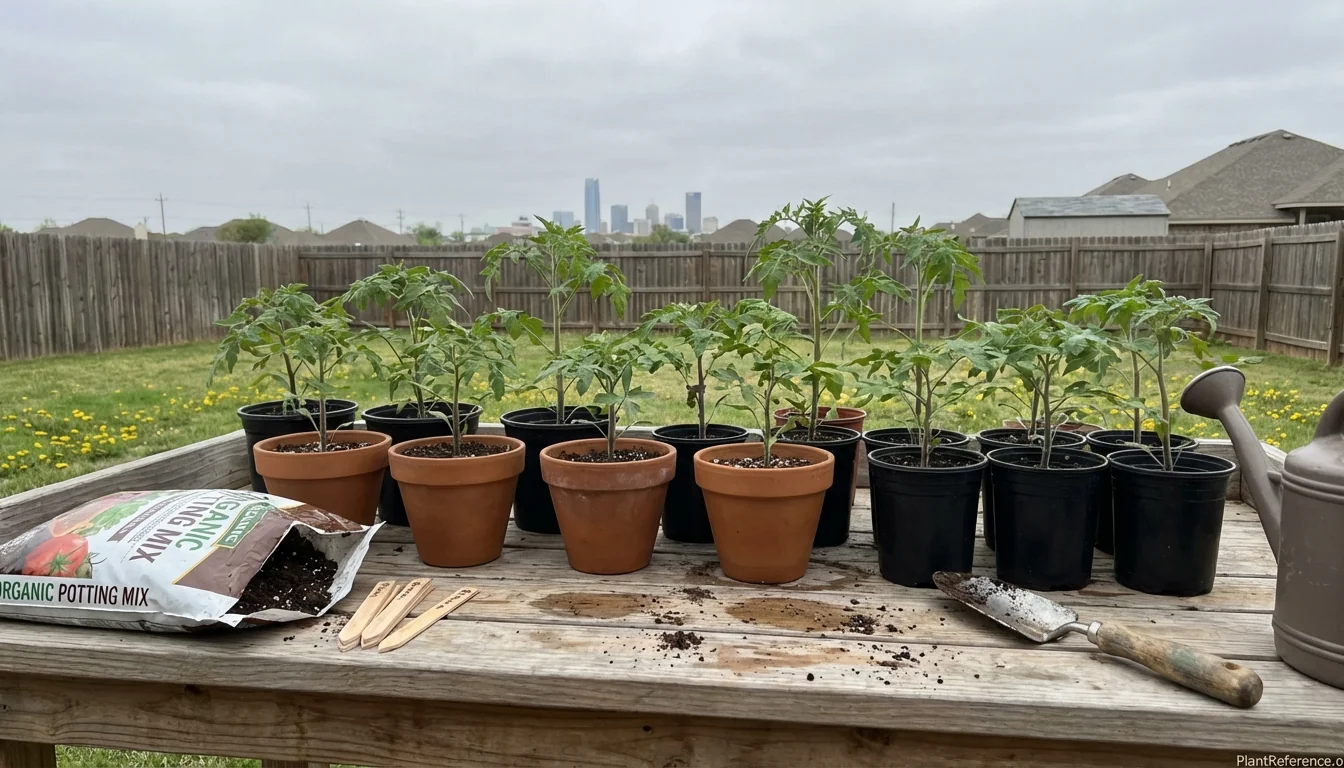
— Image © Plant Reference 2026
When to plant tomatoes in Oklahoma City isn't just about waiting for spring—it's about understanding Zone 7a's unique growing conditions and 218-day growing season. After forty years of growing tomatoes, I'll tell you straight: Oklahoma City gardeners have a sweet spot for tomato growing, but timing and variety selection make all the difference.
Best Tomato Varieties for Oklahoma City's Climate
Oklahoma City's Zone 7a climate gives you excellent growing conditions with 218 days between frosts. The key is selecting varieties that handle both spring temperature swings and intense summer heat that can reach 100°F (38°C) in July and August.
After testing dozens of varieties in Oklahoma conditions, these six consistently deliver the best results:
Variety | Days to Maturity | Best For | Notes for Oklahoma City |
|---|---|---|---|
50-62 days | Quick reliable harvest | Perfect for beating summer heat, sets fruit at lower spring temperatures | |
75-90 days | Premium flavor | Originated in nearby Tennessee, excellent heat tolerance | |
52-60 days | Cold tolerance | Sets fruit reliably in cool April weather | |
55-65 days | Sweet cherry tomatoes | Exceptional flavor, handles Oklahoma heat well | |
78-85 days | Sauce and canning | Requires consistent watering in summer heat | |
80-100 days | Large slicing tomatoes | Needs afternoon shade during July-August heat |
Top Performers for Oklahoma City:
🌿Solanum lycopersicum 'Cherokee Purple' stands out as perfectly adapted to Oklahoma's climate. This heirloom originated in Tennessee with similar growing conditions—hot summers, variable springs, and good growing season length. The plants handle heat stress better than most large tomatoes and consistently produce through July when other varieties shut down.
🌿Solanum lycopersicum 'Early Girl' is your insurance policy. It sets fruit at lower temperatures than most varieties, meaning those cool April mornings won't delay your harvest. When summer heat hits, you'll already have tomatoes ripening.
For cherry tomatoes, 🌿Solanum lycopersicum 'Sungold' can't be beat. The sugar content stays high even in heat, and the plants keep producing when larger varieties go dormant.
Heat Tolerance Considerations:
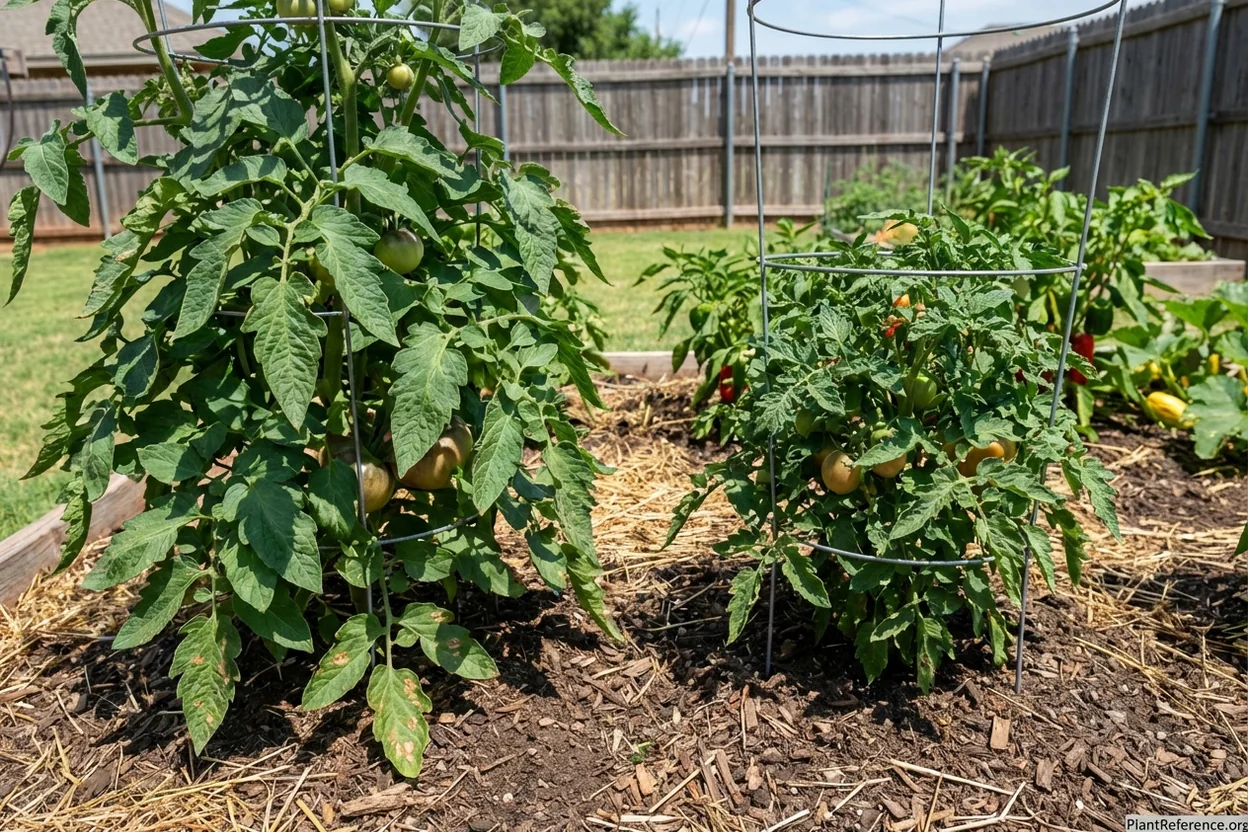
Oklahoma City's summer temperatures regularly exceed 95°F (35°C), and tomatoes stop setting fruit when night temperatures stay above 75°F (24°C). 🌿Solanum lycopersicum 'Cherokee Purple' and 🌿Solanum lycopersicum 'Stupice' both continue producing in heat that shuts down 🌿Solanum lycopersicum 'Brandywine' completely.
For sauce tomatoes, 🌿Solanum lycopersicum 'San Marzano' works well but requires religious watering. The elongated fruits are prone to blossom end rot if soil moisture fluctuates during Oklahoma's hot, dry periods.
Specific Planting Dates for Oklahoma City
Oklahoma City's last frost averages March 31, with first frost returning November 4. This 218-day growing season is generous, but spring weather can be unpredictable with late cold snaps possible through mid-April.
Indoor Seed Starting Schedule:
Start seeds indoors 8 weeks before your planned transplant date. For Oklahoma City, that means starting seeds February 3-10. Here's the precise timeline:
February 3-10: Start Seeds Indoors - Sow 🌿Solanum lycopersicum 'Early Girl' and 🌿Solanum lycopersicum 'Stupice' first—they handle cool conditions - Start 🌿Solanum lycopersicum 'Cherokee Purple' and 🌿Solanum lycopersicum 'Sungold' mid-week - Wait until February 10 for heat-lovers like 🌿Solanum lycopersicum 'Brandywine'
March 1-7: Pot Up Seedlings
Transplant to 4-inch pots when first true leaves appear
Begin hardening off during warm afternoons (above 60°F)
March 15-31: Prepare Garden Beds
Cover beds with black plastic to warm soil
Soil temperature should reach 60°F (16°C) before planting
Install cages or stakes while beds are empty
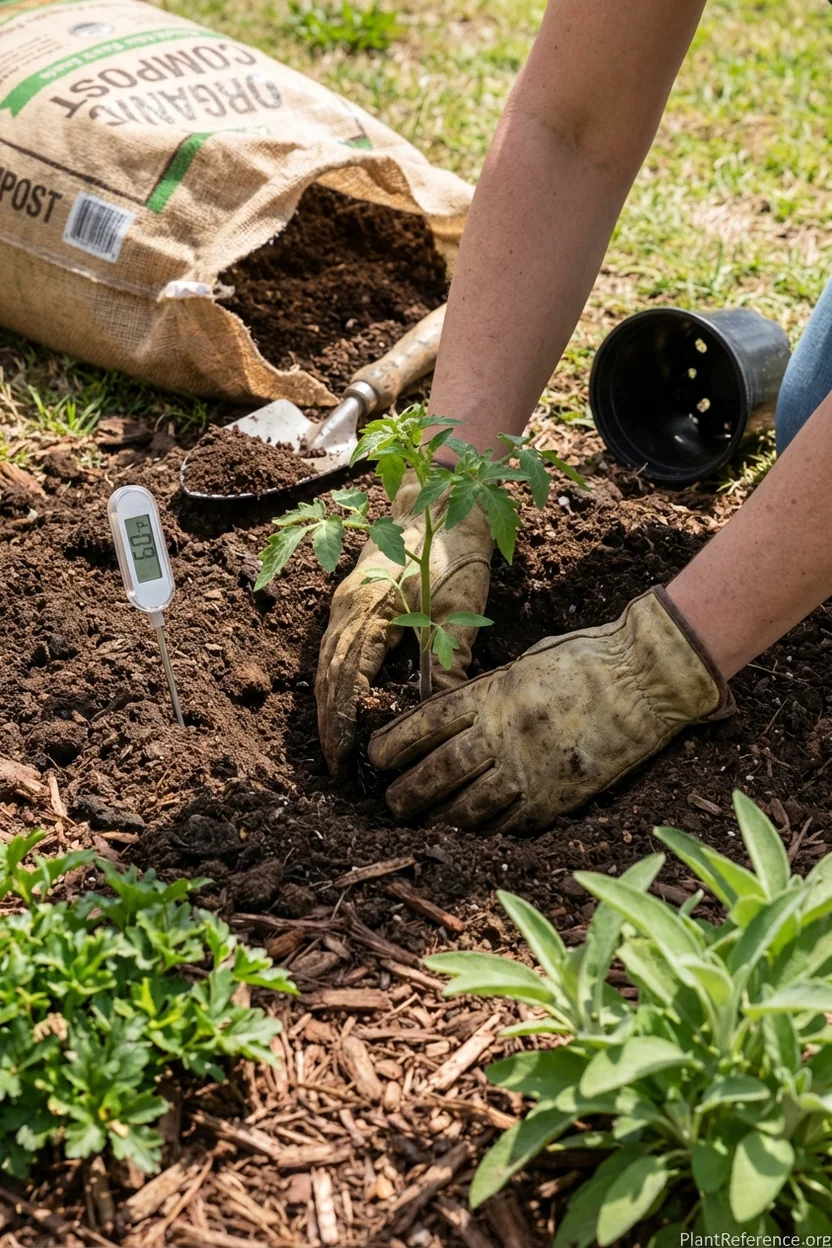
April 7-14: Transplant Outdoors Wait one full week after last frost (March 31) before transplanting. Oklahoma weather can surprise you with a late freeze, and it's better to wait than lose plants. Ideal transplanting conditions:
Nighttime temperatures consistently above 45°F (7°C)
Soil temperature 60°F (16°C) or higher
No frost forecast for following 7 days
Seedlings 6-8 inches tall with strong root systems
Direct Seeding Alternative:
You can direct seed warm-season varieties like 🌿Solanum lycopersicum 'Cherokee Purple' outdoors April 15-30, but transplants give you a significant head start in Oklahoma City's growing season.
Fall Planting Option:
Oklahoma City's long growing season allows for fall tomato crops. Start seeds indoors July 1-15 for transplant in early August. Fall crops often produce better quality fruit than spring plantings because they ripen in cooler September and October weather.
Complete Growing Guide for Oklahoma City
Oklahoma City gardeners face specific challenges: clay soil, intense summer heat, irregular rainfall, and strong winds. Here's how to grow tomatoes successfully despite these conditions.
Soil Preparation for Oklahoma Clay:
Oklahoma's heavy clay soil retains moisture but can become waterlogged or concrete-hard depending on conditions. Improve drainage and structure by adding organic matter:
Add 3-4 inches of compost to planting beds each spring
Mix in coarse sand (not fine sand) to improve drainage
Consider raised beds if drainage remains poor
Test pH—Oklahoma soil typically runs 6.5-7.5, perfect for tomatoes
Spacing and Support Systems:
Oklahoma's strong southerly winds require sturdy support systems. Space plants wider than in calmer climates:
Plant 🌿Solanum lycopersicum 'Cherokee Purple' and 🌿Solanum lycopersicum 'Brandywine' 36 inches (90 cm) apart to allow air circulation during humid periods. Indeterminate varieties like 🌿Solanum lycopersicum 'Early Girl' need 6-foot stakes driven 18 inches deep.
Use concrete reinforcement wire (remesh) cages instead of standard tomato cages. Cut 5-foot sections and form into cylinders—they won't blow over in 30 mph winds.
Watering Strategy for Oklahoma Conditions:
Oklahoma City averages 36 inches of annual rainfall, but summer distribution is irregular. Drought periods alternate with heavy thunderstorms, creating challenging watering conditions.
Install drip irrigation or soaker hoses at planting time. Maintain consistent soil moisture to prevent blossom end rot in 🌿Solanum lycopersicum 'San Marzano' and fruit cracking in 🌿Solanum lycopersicum 'Cherokee Purple'.
Apply 2-3 inches of organic mulch (shredded hardwood, grass clippings, or wheat straw) to retain moisture during dry periods and prevent soil temperature spikes.
Fertilization Schedule:
Oklahoma's clay soil typically contains adequate nutrients but may bind up phosphorus. Use this feeding schedule:
Pre-plant: Mix 2-3 inches compost into soil
Transplant: Add 1 tablespoon bone meal per planting hole
3 weeks after transplant: Apply balanced fertilizer (10-10-10)
First fruit set: Switch to low-nitrogen, high-potassium fertilizer
Monthly through August: Light feeding with tomato-specific fertilizer
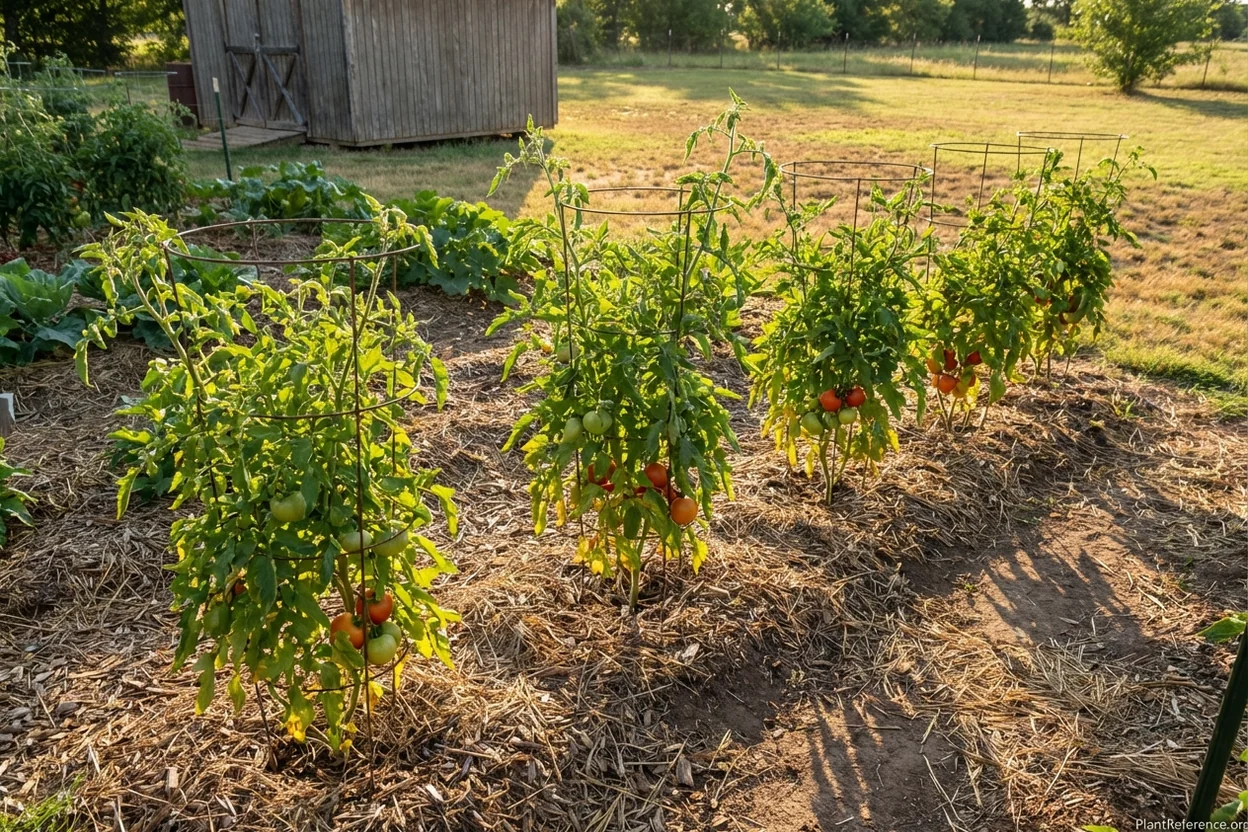
Managing Oklahoma Heat Stress:
When temperatures exceed 95°F (35°C) for extended periods, tomatoes need protection:
Provide afternoon shade using shade cloth (30% density)
Maintain consistent soil moisture—never let soil dry completely
Harvest 🌿Solanum lycopersicum 'Sungold' cherry tomatoes daily to prevent splitting
Remove lower leaves gradually to improve air circulation
Consider temporary row covers during extreme heat warnings (above 105°F)
Wind Protection:
Oklahoma's constant wind can damage plants and increase water stress. Plant windbreaks or position tomato beds on the north side of fences or buildings for protection from southerly winds.
Troubleshooting Oklahoma City-Specific Problems
Living in Oklahoma City for decades, I've seen these problems repeatedly. Here's how to handle the most common issues:
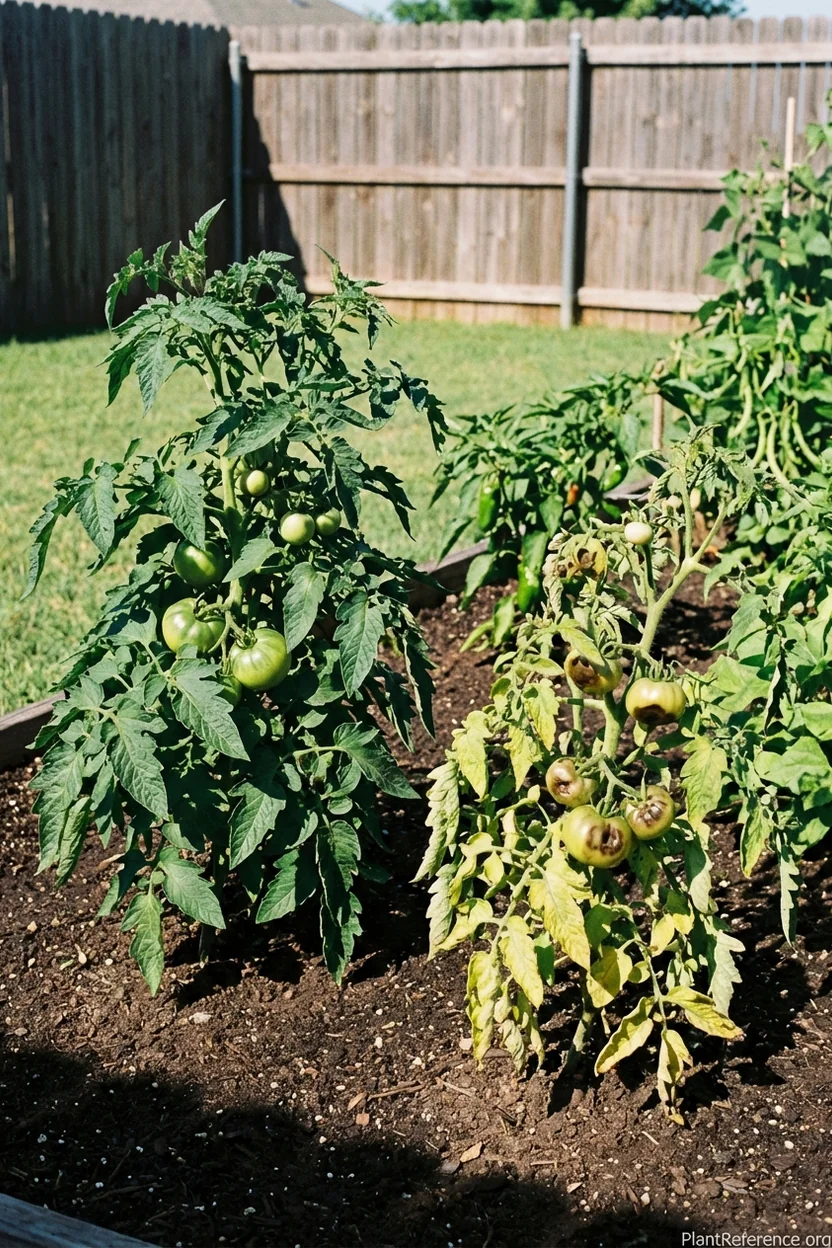
Blossom End Rot in Summer Heat:
Oklahoma's intense heat accelerates plant growth, often outpacing calcium uptake. 🌿Solanum lycopersicum 'San Marzano' is particularly susceptible.
Symptoms: Dark, sunken spots on blossom end of fruit, especially during rapid growth periods Cause: Inconsistent soil moisture prevents calcium transport, not calcium deficiency Solution: Install drip irrigation, maintain consistent moisture, avoid cultivation that damages roots
Early Blight During Humid Periods:
Oklahoma's combination of heat and humidity creates perfect conditions for Alternaria solani, especially on 🌿Solanum lycopersicum 'Brandywine'.
Symptoms: Brown spots with concentric rings on lower leaves, starting in July Prevention: Space plants wider, apply organic mulch, remove lower leaves touching soil Treatment: Copper-based fungicides applied preventatively
Fruit Splitting from Summer Storms:
Oklahoma thunderstorms can dump 2-3 inches of rain quickly, causing rapid fruit expansion and splitting, especially in 🌿Solanum lycopersicum 'Cherokee Purple'.
Prevention: Maintain consistent soil moisture, harvest fruit at first color break Management: Cover plants if heavy rain is forecast for ripening fruit
Heat-Induced Blossom Drop:
When night temperatures exceed 75°F (24°C), tomatoes stop setting fruit. This typically occurs July through August in Oklahoma City.
Varieties Most Affected: 🌿Solanum lycopersicum 'Brandywine', 🌿Solanum lycopersicum 'San Marzano' Heat-Tolerant Options: 🌿Solanum lycopersicum 'Cherokee Purple', 🌿Solanum lycopersicum 'Stupice' Management: Provide afternoon shade, maintain soil moisture, be patient—production resumes in September
Sunscald on Large Fruit:
Oklahoma's intense UV radiation can burn exposed fruit, particularly on varieties with sparse foliage coverage.
Most Susceptible: 🌿Solanum lycopersicum 'Brandywine', large-fruited varieties Prevention: Don't prune too heavily, provide shade cloth during extreme heat Recognition: White or yellow patches on sun-exposed sides of fruit
Harvest & Storage
Oklahoma City's long growing season means extended harvest periods, often from June through the first frost in November. Proper timing and storage techniques maximize your yield.
Harvest Timing by Variety:
🌿Solanum lycopersicum 'Early Girl' and 🌿Solanum lycopersicum 'Stupice' begin producing in late May to early June. Harvest when fruits show first color change—they'll finish ripening indoors with better flavor than vine-ripened fruit in extreme heat.
🌿Solanum lycopersicum 'Cherokee Purple' reaches maturity in July. These large fruits should be picked when shoulders soften slightly and color deepens to dusky purple-brown.
🌿Solanum lycopersicum 'Sungold' cherry tomatoes ripen continuously from June through frost. Check plants daily during peak season—overripe fruit splits easily in Oklahoma's variable moisture conditions.
Storage Methods:
Green tomatoes before first frost: Pull entire plants and hang in garage or basement. Many will ripen over 4-6 weeks.
Ripe tomatoes: Store at room temperature for best flavor. Never refrigerate—Oklahoma-grown tomatoes lose flavor quickly when chilled.
Peak season preservation: Process 🌿Solanum lycopersicum 'San Marzano' into sauce during August harvest. Freeze 🌿Solanum lycopersicum 'Cherokee Purple' slices for winter cooking.
End-of-Season Management:
Oklahoma City's first frost typically arrives November 4, ending the growing season. Two weeks before predicted frost, remove all new flower clusters and small fruit to direct energy into ripening existing tomatoes.
Clear all plant debris immediately after frost to prevent disease organisms from overwintering in Oklahoma's mild winter conditions.
Frequently Asked Questions
Reading about plants and recognising them are different skills. These three build the second.
- Daily PlantIdentify the day’s mystery plant from a close-up photograph.
- Keyed OutWork a dichotomous key, lead by lead, to name a hidden specimen.
- Name That PlantName a specimen from botanical clues dealt hardest first.
Free to play, no account needed
Robert is a retired meteorologist who turned his lifelong hobby of gardening into a second career writing about weather-climate interactions and their effects on plants. Living in Oklahoma, he's seen it all—ice storms, tornadoes, 110°F heat, and drought, sometimes in the same month. Robert brings a data-driven approach to gardening, tracking weather patterns and correlating them with plant performance in his own large garden. He's particularly knowledgeable about wind-resistant plantings, storm damage recovery, and the challenge of gardening in a climate where extremes are the norm rather than the exception. Robert is a calm, measured writer who presents information without drama.