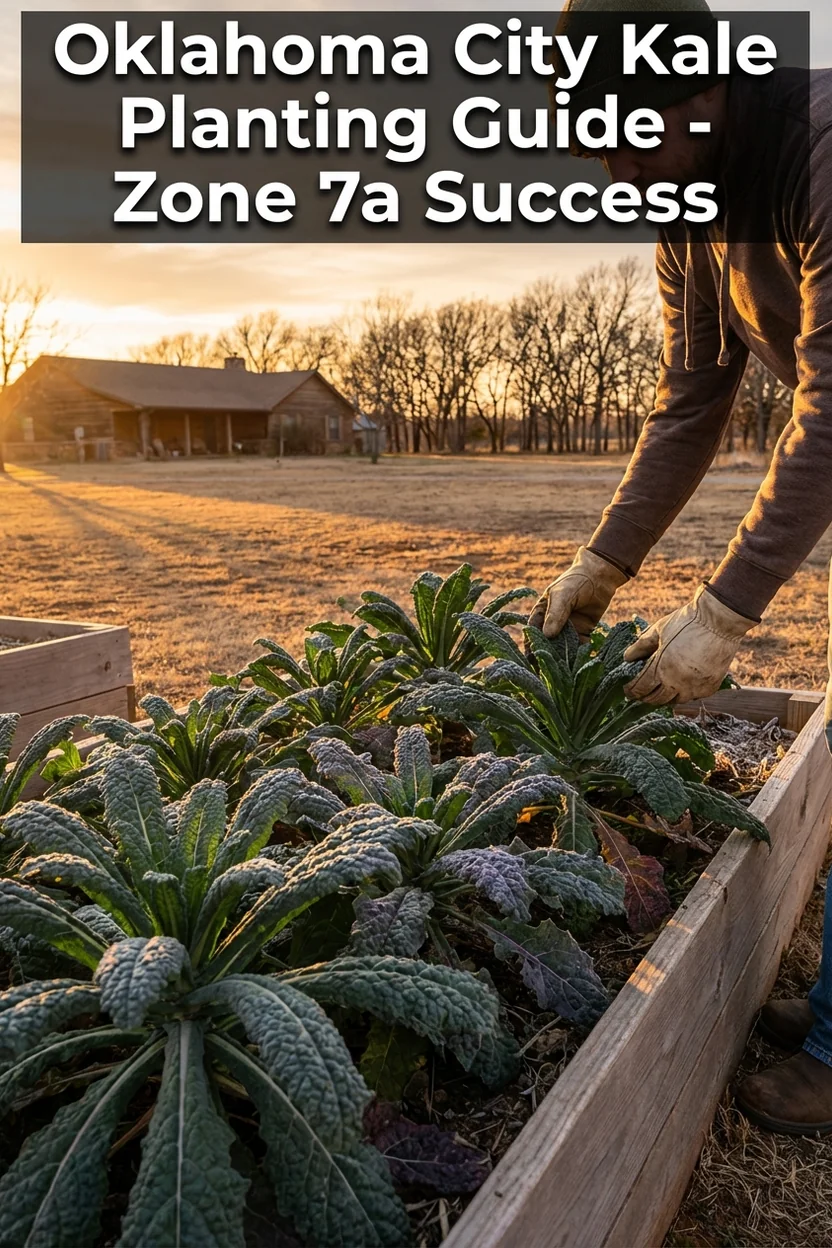
When to Plant Kale in Oklahoma City: Complete Guide + Best Varieties for Zone 7a
Pets & Toxicity
Recorded toxicity for plants linked in this guide. An unknown status is not a safety assessment.
No linked plant is recorded as toxicDetailsHide
Brassica oleracea 'Red Russian' — Toxicity
Non-toxicView Brassica oleracea 'Red Russian' plant profileBrassica oleracea var. sabellica 'Vates' — Toxicity
Non-toxicView Brassica oleracea var. sabellica 'Vates' plant profile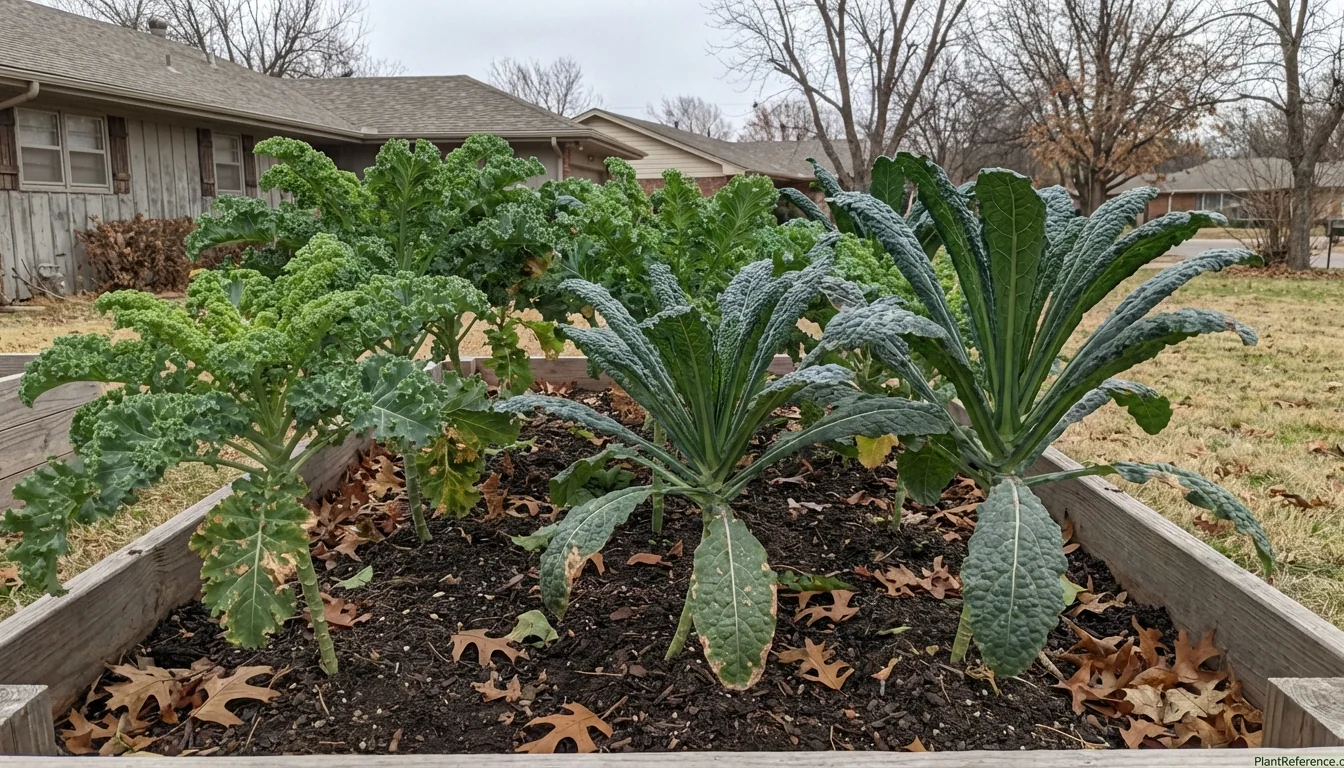
— Image © Plant Reference 2026
Growing kale in Oklahoma City requires understanding our Zone 7a climate's unique challenges and opportunities. With hot, dry summers and mild winters, Oklahoma City gardeners must time their kale plantings precisely to avoid the scorching summer heat that causes rapid bolting.
The key to successful kale growing in Oklahoma City lies in working with our 218-day growing season that spans from March 31 (average last frost) to November 4 (average first frost). Unlike northern climates where summer heat isn't a major concern, Oklahoma's intense summer temperatures above 90°F (32°C) make kale cultivation impossible from June through August. However, our mild winters and long fall season create perfect conditions for the sweetest, most tender kale you'll ever grow.
I've been gardening in Oklahoma for over thirty years, and I can tell you that fall-planted kale in Oklahoma City produces results that rival any crop I've grown. The secret isn't fighting our climate—it's embracing the natural rhythm of cool seasons when kale thrives and the plant's biology works in your favor.
Best Kale Varieties for Oklahoma City's Climate
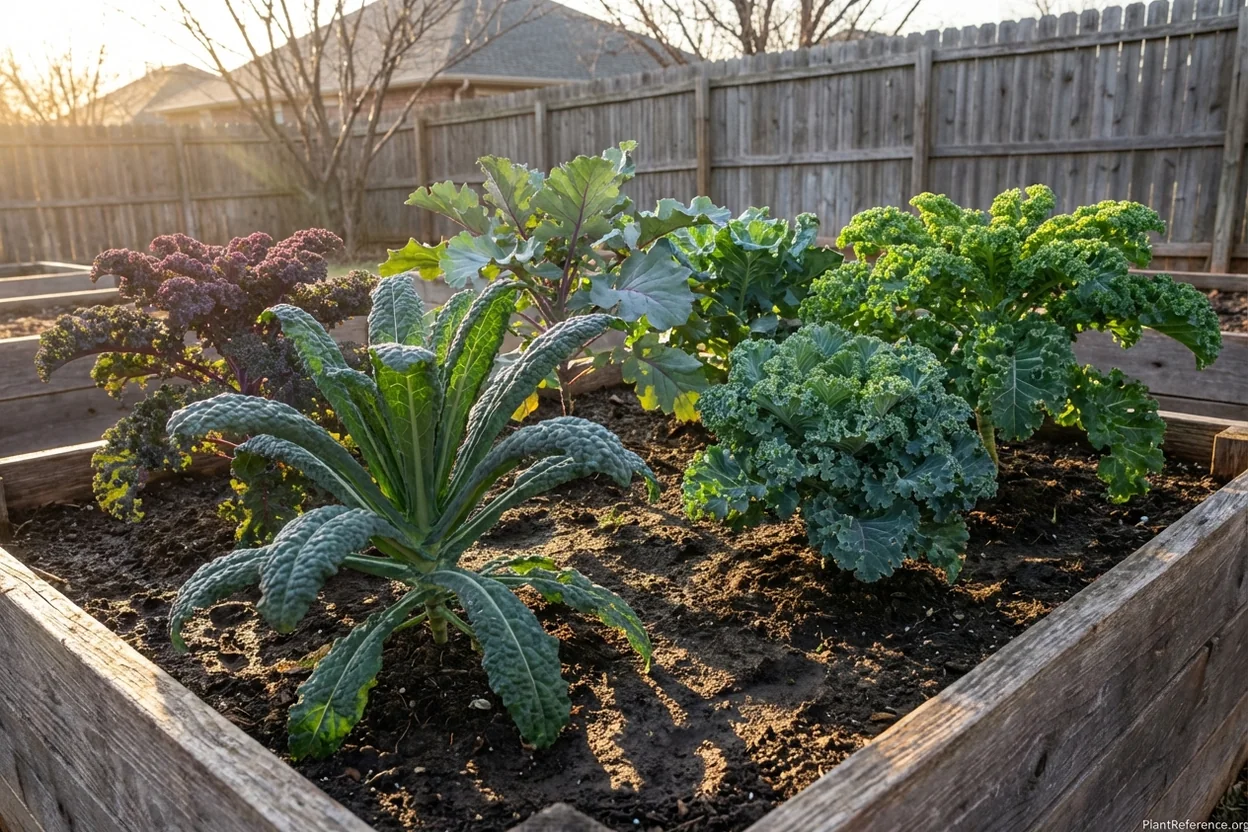
Oklahoma City's Zone 7a climate with hot, dry summers demands careful variety selection. Not all kale varieties handle our temperature extremes equally, and choosing the wrong type can lead to bitter, tough leaves or premature bolting when spring heat arrives early.
Variety | Days to Maturity | Best For | Notes for Oklahoma City |
|---|---|---|---|
50-60 days | Quick harvest, bolt resistance | Most heat-tolerant, excellent for spring planting | |
60-75 days | Heat tolerance, flavor | Superior bolt resistance, handles Oklahoma summers better | |
60-75 days | Cold hardiness, overwintering | Excellent for fall planting, sweetens beautifully with frost | |
60-75 days | Ornamental value, cold tolerance | Stunning purple color intensifies in Oklahoma's fall weather | |
55-65 days | Compact growth, reliability | Dwarf habit perfect for Oklahoma's strong winds |
Heat-Tolerant Champions
🌿Brassica oleracea 'Red Russian' stands as my top recommendation for Oklahoma City gardens. This variety's flat, oak-leaf shaped foliage with purple veining offers exceptional bolt resistance—critical when March weather can swing from 40°F to 75°F (4°C to 24°C) in the same week. The tender texture makes it perfect for raw salads, and it matures quickly enough to beat summer heat when spring-planted.
🌿Brassica oleracea 'Lacinato', also called Dinosaur or Tuscan kale, brings Mediterranean heat tolerance to Oklahoma gardens. Its dark blue-green, strap-like leaves with heavily savoyed (blistered) texture handle temperature fluctuations better than curly varieties. The thick, waxy cuticle helps conserve moisture during Oklahoma's dry spells, and the flavor remains sweet even under mild stress.
Cold-Hardy Powerhouses
For fall planting and potential overwintering, 🌿Brassica oleracea 'Winterbor' excels in Oklahoma City's Zone 7a conditions. This F1 hybrid's deeply ruffled, blue-green leaves can survive temperatures down to 10°F (-12°C) with light protection. The transformation that occurs after our first frost in early November is remarkable—the leaves become noticeably sweeter as starches convert to sugars for frost protection.
🌿Brassica oleracea 'Redbor' offers both cold hardiness and stunning ornamental value. The deeply curled, magenta-purple leaves intensify in color as temperatures drop, creating a striking garden display through Oklahoma's long fall season. This variety matches Winterbor's cold tolerance while providing superior texture for fresh eating.
Wind-Resistant Option
🌿Brassica oleracea 'Vates' deserves special mention for Oklahoma gardens. This dwarf variety's compact, 12-16 inch height makes it naturally wind-resistant—important given Oklahoma's frequent strong winds. The finely curled, blue-green leaves produce consistently high yields in a small footprint, perfect for urban Oklahoma City gardens.
Specific Planting Dates for Oklahoma City
Oklahoma City's Zone 7a climate creates two distinct kale growing windows: a challenging spring season and an excellent fall season. Understanding these timing windows makes the difference between bitter, bolted plants and sweet, tender harvests.
Fall Planting (Primary Season - August 15 to September 1)
Fall represents the premier kale season in Oklahoma City. Plant 🌿Brassica oleracea 'Winterbor' and 🌿Brassica oleracea 'Redbor' seeds August 15-20 for full-size plants before the first frost. For later plantings, sow 🌿Brassica oleracea 'Red Russian' and 🌿Brassica oleracea 'Vates' through September 1 for baby leaf harvests.
August 15 Direct Sowing Timeline: - Seed germination: August 20-25 (5-7 days) - First true leaves: September 1-5 - Transplant size (if started indoors): September 10-15 - Begin harvesting outer leaves: October 1-10 - Peak harvest season: October 15 - December 15 - Final harvest: January 15 (in mild winters)
The beauty of fall planting lies in Oklahoma's weather pattern. August heat helps with quick germination, September's moderating temperatures encourage rapid growth, and October through December provide ideal harvesting conditions. The first frost, typically arriving November 4, triggers the starch-to-sugar conversion that makes Oklahoma-grown kale remarkably sweet.
Spring Planting (Secondary Season - February 15 to March 15)
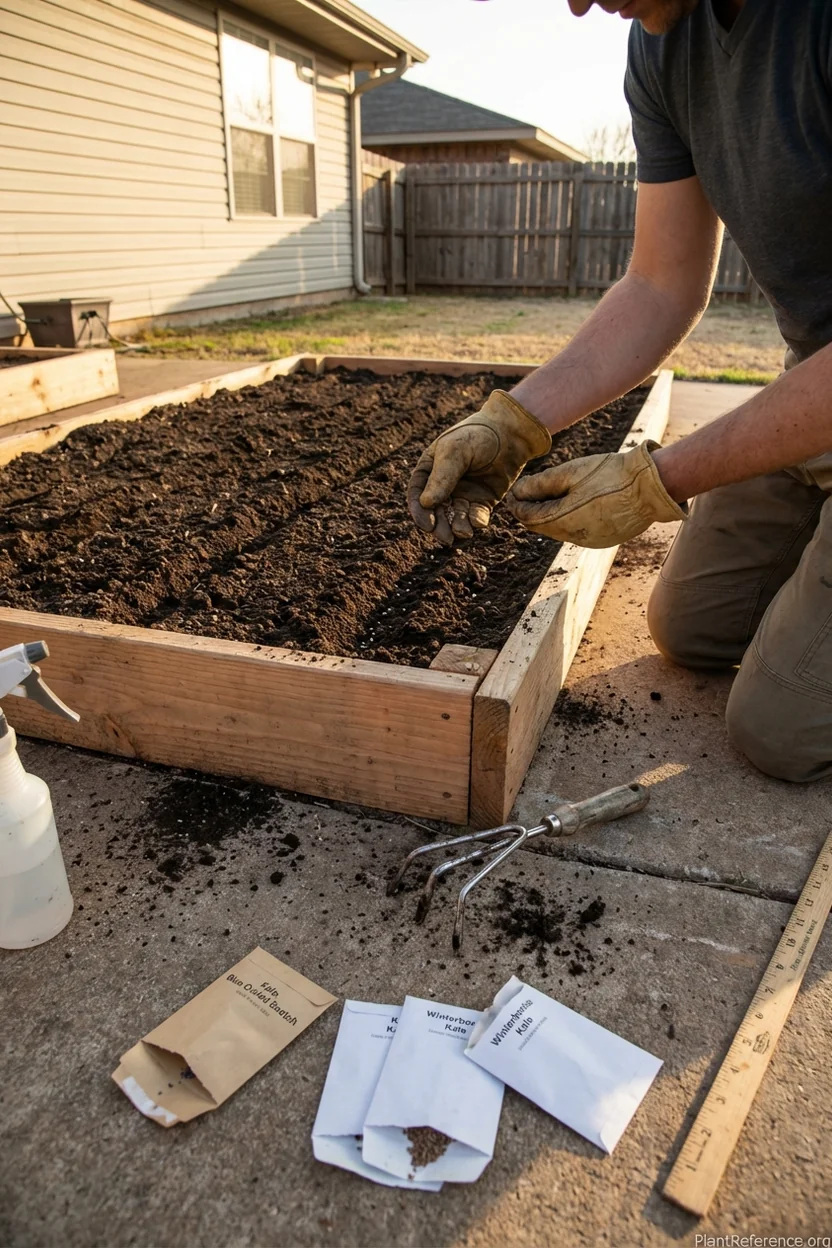
Spring kale in Oklahoma City requires precise timing to avoid bolt-inducing heat. Start 🌿Brassica oleracea 'Red Russian' and 🌿Brassica oleracea 'Lacinato' seeds indoors February 15-March 1 for transplanting after the last frost risk passes around March 31.
February 20 Indoor Starting Timeline: - Seed germination: February 25-March 2 (5-7 days) - First true leaves: March 8-12 - Transplant outdoors: April 1-10 - Begin harvesting: May 1-15 - Final harvest before bolting: June 1-15 (depending on heat)
The critical challenge with spring kale lies in Oklahoma's unpredictable late spring weather. A warm spell in early May can trigger premature bolting, while a late cold snap can stress transplants. Success requires vigilant weather monitoring and readiness to provide protection when needed.
Succession Planting Strategy
To extend harvests, plant new 🌿Brassica oleracea 'Red Russian' every 2-3 weeks during your primary planting window. For fall crops, sow August 15, September 1, and September 15. The later plantings will provide tender baby leaves through December and potentially into January during mild winters.
Complete Growing Guide for Oklahoma City
Oklahoma's unique soil conditions, weather patterns, and pest pressures require specific adaptations to standard kale growing advice. Success comes from understanding how our alkaline clay soil, temperature extremes, and wind patterns affect plant growth.
Soil Preparation for Oklahoma Conditions
Oklahoma City's heavy clay soil with high pH (often 7.5-8.0) requires significant amendment for optimal kale production. Unlike plants that tolerate alkaline conditions, kale performs best in slightly acidic to neutral soil (pH 6.0-7.0). This pH range maximizes nutrient availability and helps prevent clubroot disease.
Start soil preparation 4-6 weeks before planting. Incorporate 2-3 inches of compost to improve drainage in our clay soil and add sulfur at 1 pound per 100 square feet to gradually lower pH. The organic matter also helps retain moisture during Oklahoma's dry spells while preventing waterlogging during heavy rains.
Oklahoma-Specific Soil Mix Recipe: - Existing clay soil (amended) - 3 inches compost or aged manure - 1 inch coarse sand (for drainage) - Sulfur for pH adjustment - Bone meal for phosphorus (1 tablespoon per planting hole)
Water Management in Oklahoma's Variable Climate
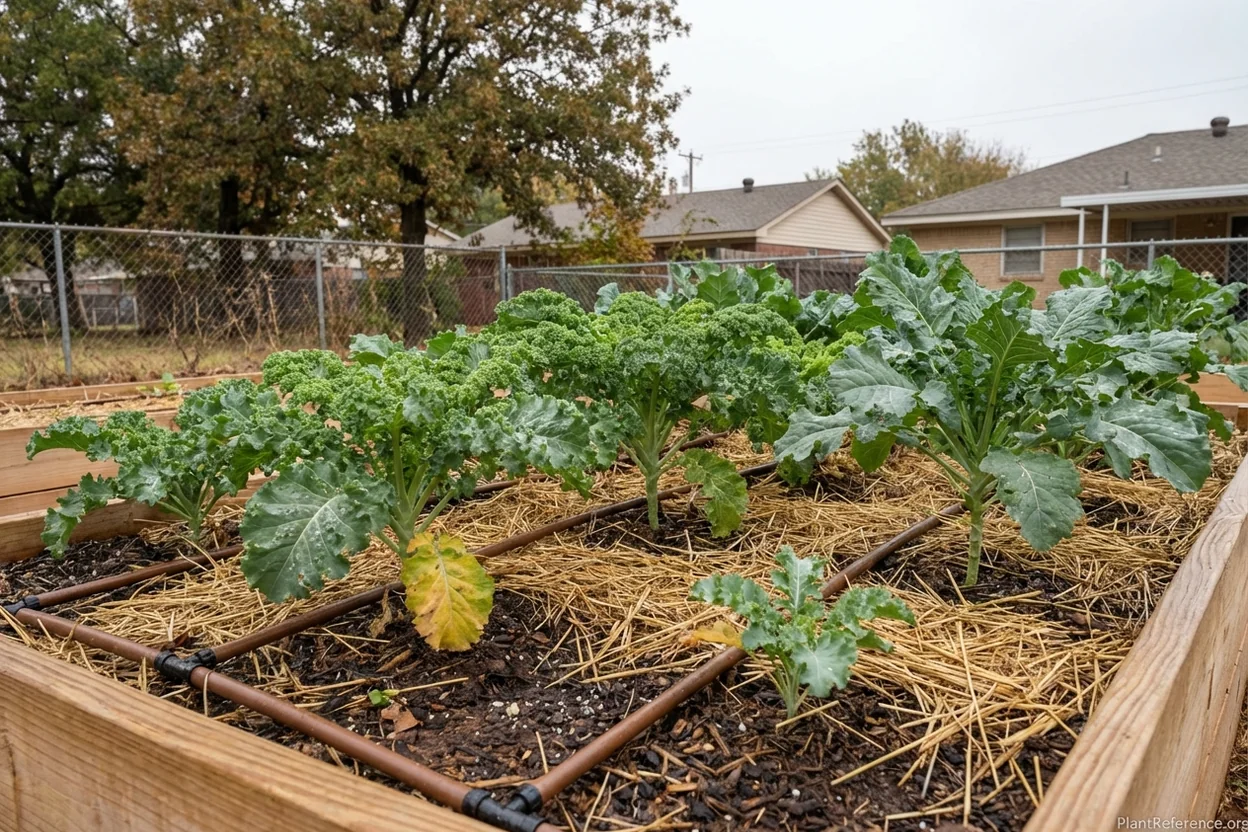
Oklahoma City's erratic precipitation patterns—from drought to flash floods—demand adaptive watering strategies. Kale requires consistent soil moisture without waterlogging, challenging in our clay soil that either repels water when dry or becomes waterlogged when saturated.
Summer Establishment Watering (August/September plantings): Newly seeded beds need daily light watering until germination, then deep watering every 2-3 days as temperatures moderate. Use mulch heavily to conserve moisture and moderate soil temperature during August heat.
Fall/Winter Maintenance: Reduce watering frequency as temperatures cool, but maintain deep weekly watering through November. Oklahoma's dry winters often require monthly supplemental irrigation, particularly during our frequent winter droughts.
Spring Growth Season: Increase watering as temperatures rise and growth accelerates. Watch for signs of stress as April and May heat arrives—wilting during afternoon heat indicates need for deeper, more frequent watering.
Fertilization for Oklahoma Soil
Oklahoma's alkaline clay soil often binds nutrients, particularly iron and phosphorus, making them unavailable to plants. Kale's heavy feeding requirements demand proactive nutrient management beyond basic NPK fertilization.
Pre-Planting Fertilization: Apply balanced organic fertilizer (10-10-10) at 2 pounds per 100 square feet when preparing beds. Add extra phosphorus through bone meal since Oklahoma soil often locks up phosphate in alkaline conditions.
Growing Season Feeding: Side-dress with high-nitrogen organic fertilizer (blood meal, fish emulsion) 4 weeks after germination and again 8 weeks later. The rapid growth period of October through November demands consistent nitrogen availability.
Micronutrient Management: Apply liquid kelp fertilizer monthly to address micronutrient deficiencies common in alkaline soil. Iron deficiency appears as yellowing between leaf veins and responds well to chelated iron applied as foliar spray.
Wind Protection Strategies
Oklahoma's persistent winds create unique challenges for kale production. Strong winds increase transpiration, dry soil faster, and can physically damage large-leafed varieties like 🌿Brassica oleracea 'Lacinato'.
Install windbreaks using row cover fabric on frames for newly transplanted spring crops. The compact 🌿Brassica oleracea 'Vates' naturally resists wind damage, making it ideal for exposed Oklahoma gardens. For taller varieties, stake plants when they reach 12 inches to prevent wind-rocking that loosens roots.
Troubleshooting Oklahoma City-Specific Problems
Oklahoma's unique climate creates specific challenges rarely encountered in cooler regions. Understanding these regional issues helps prevent problems before they damage your crop.
Heat Stress and Premature Bolting
Symptoms: Elongated center stem, bitter taste, tough leaves, flower bud formation Causes: Sustained temperatures above 80°F (27°C), particularly when combined with long days in late spring Oklahoma-Specific Triggers: March heat waves, early warm spells followed by temperature drops
Heat stress occurs when kale experiences temperatures above 80°F (27°C) for extended periods. In Oklahoma City, this commonly happens during late spring when March temperatures spike unexpectedly or when fall crops face Indian summer conditions.
Prevention Strategies: - Plant heat-tolerant varieties (🌿Brassica oleracea 'Red Russian', 🌿Brassica oleracea 'Lacinato') - Provide afternoon shade during spring crops using shade cloth - Mulch heavily to moderate soil temperature - Harvest leaves frequently to redirect energy from flowering
Treatment: Once bolting begins, harvest immediately as leaves become increasingly bitter. The flower shoots (kale raab) remain edible and offer a broccoli-like flavor, turning a problem into a bonus harvest.
Clay Soil Drainage Problems
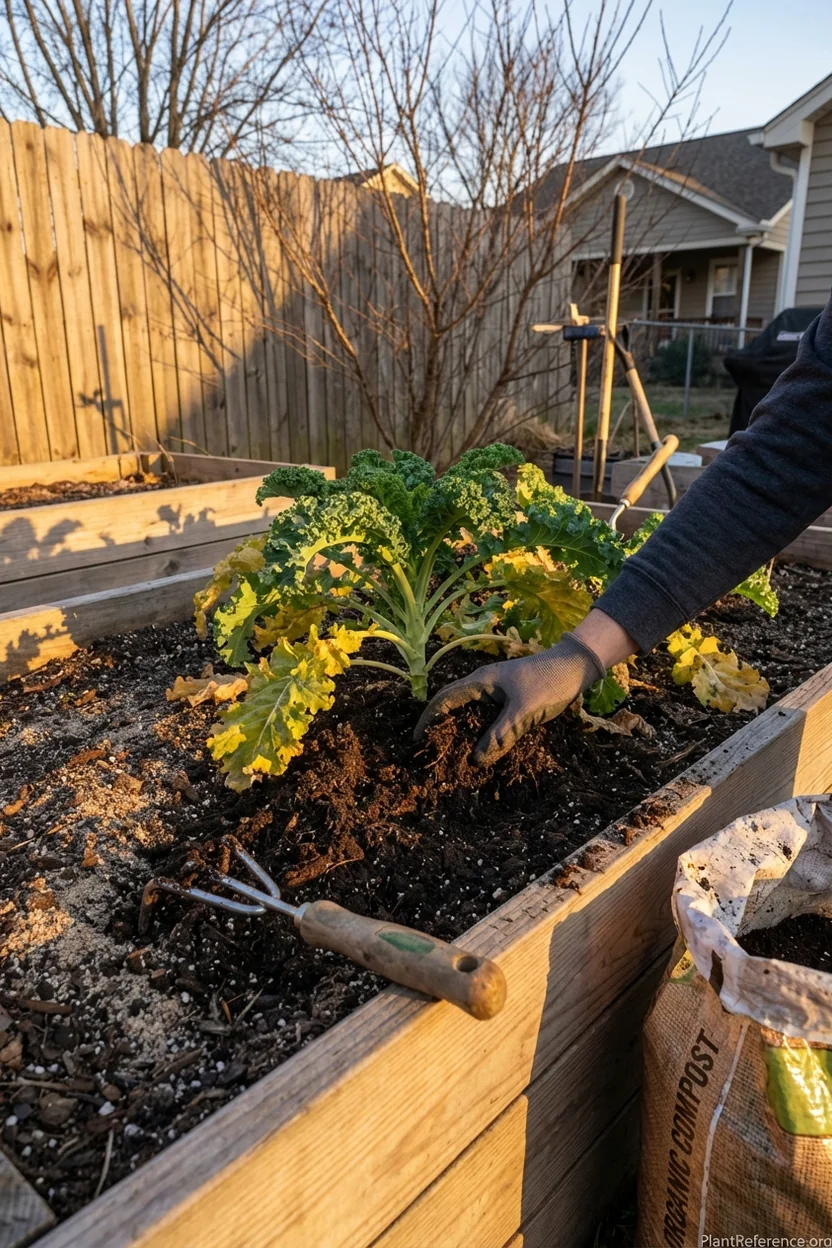
Symptoms: Yellowing lower leaves, slow growth, root rot, fungal diseases Causes: Oklahoma's heavy clay soil holds excess water, particularly during spring rains Timing: Most problematic during March-May wet periods
Oklahoma City's expansive clay soil becomes virtually impermeable when saturated, creating anaerobic conditions that kill roots. This problem intensifies during spring when heavy rains coincide with active root growth.
Solutions: - Build raised beds 8-12 inches high for improved drainage - Incorporate coarse sand and compost before planting - Install French drains in problem areas - Choose naturally well-drained garden locations
Cabbage Worm Pressure
Symptoms: Large irregular holes in leaves, green caterpillars present, dark frass (droppings) on leaves Peak Season: March-May and September-October when white butterflies (cabbage whites) are active Oklahoma Intensity: High pressure due to year-round breeding in mild winters
Cabbage worms cause more damage to Oklahoma kale than in northern climates because our mild winters allow pest populations to survive and build up. The imported cabbageworm (Pieris rapae) and cabbage looper (Trichoplusia ni) both thrive in Oklahoma's conditions.
Organic Control Methods: - Apply Bacillus thuringiensis (Bt) spray weekly during peak butterfly activity - Use floating row covers during vulnerable seedling stage - Hand-pick caterpillars in early morning when they're sluggish - Encourage beneficial wasps with diverse flowering plants
Timing Prevention: Monitor for white butterflies beginning in early March. The first generation causes the most damage to spring crops, while fall populations can devastate September plantings if not controlled promptly.
Aphid Infestations
Symptoms: Curled leaves, sticky honeydew, clusters of gray-green insects on leaf undersides Oklahoma Peak: March-April during spring growth and September during fall establishment Stress Factors: Over-fertilization with nitrogen, water stress, rapid temperature changes
Oklahoma's variable spring weather stresses plants, making them attractive to aphids. The cabbage aphid (Brevicoryne brassicae) specifically targets brassicas and can quickly overwhelm stressed plants.
Management Approach: - Spray with strong water stream to dislodge colonies - Apply neem oil or insecticidal soap for heavy infestations - Avoid over-fertilizing with nitrogen which creates tender, aphid-attractive growth - Maintain consistent soil moisture to reduce plant stress
Harvest & Storage
Oklahoma's long fall season and mild winters create excellent opportunities for extended fresh kale harvests. Understanding proper harvest timing and techniques maximizes both yield and quality from your plants.
Optimal Harvest Timing
Begin harvesting outer leaves when plants reach 8-10 inches tall, typically 8-10 weeks after planting. For fall crops planted August 15, first harvests begin October 1-15. The key principle involves taking only the larger, outer leaves while leaving the central growing point intact for continued production.
Pre-Frost Harvest (October 1 - November 4): Leaves harvested before the first frost offer mild, tender flavor perfect for fresh salads. Pick in early morning when leaves are crisp and fully hydrated.
Post-Frost Harvest (November 4 - January 15): The transformation after Oklahoma's first frost is remarkable. Starches convert to sugars as the plant protects itself from freezing, creating notably sweeter, more tender leaves. This represents peak flavor season for Oklahoma kale.
Winter Harvest Potential: In mild Oklahoma winters (Zone 7a), kale continues producing through December and often into January. Protect plants with row covers during hard freezes below 20°F (-6°C) to extend harvests.
Proper Harvesting Technique
Cut outer leaves at the base using sharp garden shears, leaving 4-6 inches of stem. Never harvest more than one-third of the plant at once to maintain photosynthetic capacity. Start with the oldest, largest leaves which would naturally yellow and drop.
Succession Harvesting Schedule:
Week 1: Harvest 3-4 outer leaves
Week 2: Allow plant to recover and grow
Week 3: Harvest next set of mature outer leaves
Continue this pattern through the growing season
This method can provide continuous harvests for 3-4 months from a single planting when conditions remain favorable.
Storage Methods for Oklahoma Climate
Oklahoma's dry air helps preserve harvested kale longer than in humid climates. Proper storage techniques can maintain quality for 1-2 weeks, allowing you to process large harvests efficiently.
Short-Term Fresh Storage (1-2 weeks): Wash leaves thoroughly, spin dry, and store in perforated plastic bags in the refrigerator crisper drawer. The low humidity helps prevent the rapid deterioration common in humid regions.
Blanching and Freezing: Blanch clean leaves in boiling water for 2 minutes, plunge into ice water, drain thoroughly, and freeze in portions. Frozen kale works excellently in soups, smoothies, and cooked dishes. Oklahoma's freezing method produces better results than in humid climates due to lower initial moisture content.
Dehydration for Chips: Oklahoma's dry climate makes kale chip production particularly successful. Toss clean leaves with olive oil and salt, then dehydrate at 135°F (57°C) for 4-6 hours until crispy. Store in airtight containers for healthy snacking through summer when fresh kale isn't available.
The combination of Oklahoma City's excellent fall growing conditions, frost-sweetened flavor development, and dry storage climate creates ideal conditions for both fresh consumption and preservation. With proper timing and variety selection, you can enjoy homegrown kale from October through March—nearly half the year from Oklahoma gardens.
Frequently Asked Questions
Reading about plants and recognising them are different skills. These three build the second.
- Daily PlantIdentify the day’s mystery plant from a close-up photograph.
- Keyed OutWork a dichotomous key, lead by lead, to name a hidden specimen.
- Name That PlantName a specimen from botanical clues dealt hardest first.
Free to play, no account needed
Robert is a retired meteorologist who turned his lifelong hobby of gardening into a second career writing about weather-climate interactions and their effects on plants. Living in Oklahoma, he's seen it all—ice storms, tornadoes, 110°F heat, and drought, sometimes in the same month. Robert brings a data-driven approach to gardening, tracking weather patterns and correlating them with plant performance in his own large garden. He's particularly knowledgeable about wind-resistant plantings, storm damage recovery, and the challenge of gardening in a climate where extremes are the norm rather than the exception. Robert is a calm, measured writer who presents information without drama.