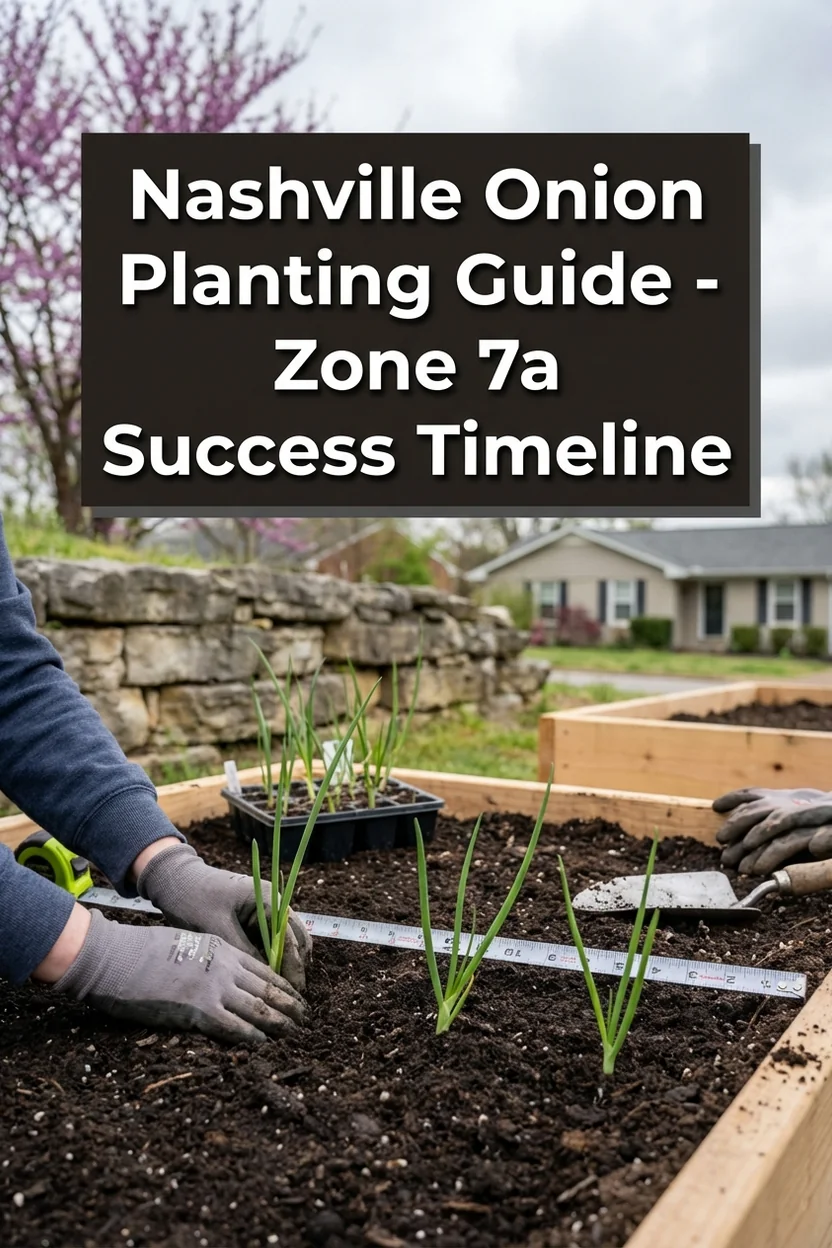
When to Plant Onions in Nashville: Complete Guide + Best Varieties for Zone 7a
Pets & Toxicity
Recorded toxicity for plants linked in this guide. An unknown status is not a safety assessment.
Toxic to pets: Granex onion, Texas super sweet onion, California early softneck garlic and 6 moreDetailsHide
Allium cepa 'Granex' — Toxicity Warning
Toxic to cats and dogs if eaten; cats are especially susceptible, and raw, cooked or concentrated plant material can damage red blood cells and cause anaemia.View Allium cepa 'Granex' plant profileAllium cepa 'Texas Super Sweet' — Toxicity Warning
Toxic to cats and dogs if eaten; cats are especially susceptible, and raw, cooked or concentrated plant material can damage red blood cells and cause anaemia.View Allium cepa 'Texas Super Sweet' plant profileAllium sativum 'California Early' — Toxicity Warning
Toxic to cats and dogs if eaten; cats are especially susceptible, and raw, cooked or concentrated plant material can damage red blood cells and cause anaemia.View Allium sativum 'California Early' plant profileAllium sativum 'Music' — Toxicity Warning
Toxic to cats and dogs if eaten; cats are especially susceptible, and raw, cooked or concentrated plant material can damage red blood cells and cause anaemia.View Allium sativum 'Music' plant profileAllium cepa 'Super Star' — Toxicity Warning
Toxic to cats and dogs if eaten; cats are especially susceptible, and raw, cooked or concentrated plant material can damage red blood cells and cause anaemia.View Allium cepa 'Super Star' plant profileAllium cepa 'Red Candy Apple' — Toxicity Warning
Toxic to cats and dogs if eaten; cats are especially susceptible, and raw, cooked or concentrated plant material can damage red blood cells and cause anaemia.View Allium cepa 'Red Candy Apple' plant profileAllium cepa 'Cabernet' — Toxicity Warning
Toxic to cats and dogs if eaten; cats are especially susceptible, and raw, cooked or concentrated plant material can damage red blood cells and cause anaemia.View Allium cepa 'Cabernet' plant profileAllium cepa 'Walla Walla' — Toxicity Warning
Toxic to cats and dogs if eaten; cats are especially susceptible, and raw, cooked or concentrated plant material can damage red blood cells and cause anaemia.View Allium cepa 'Walla Walla' plant profileAllium fistulosum 'Evergreen Hardy White' — Toxicity Warning
Toxic to cats and dogs if eaten; cats are especially susceptible, and raw, cooked or concentrated plant material can damage red blood cells and cause anaemia.View Allium fistulosum 'Evergreen Hardy White' plant profile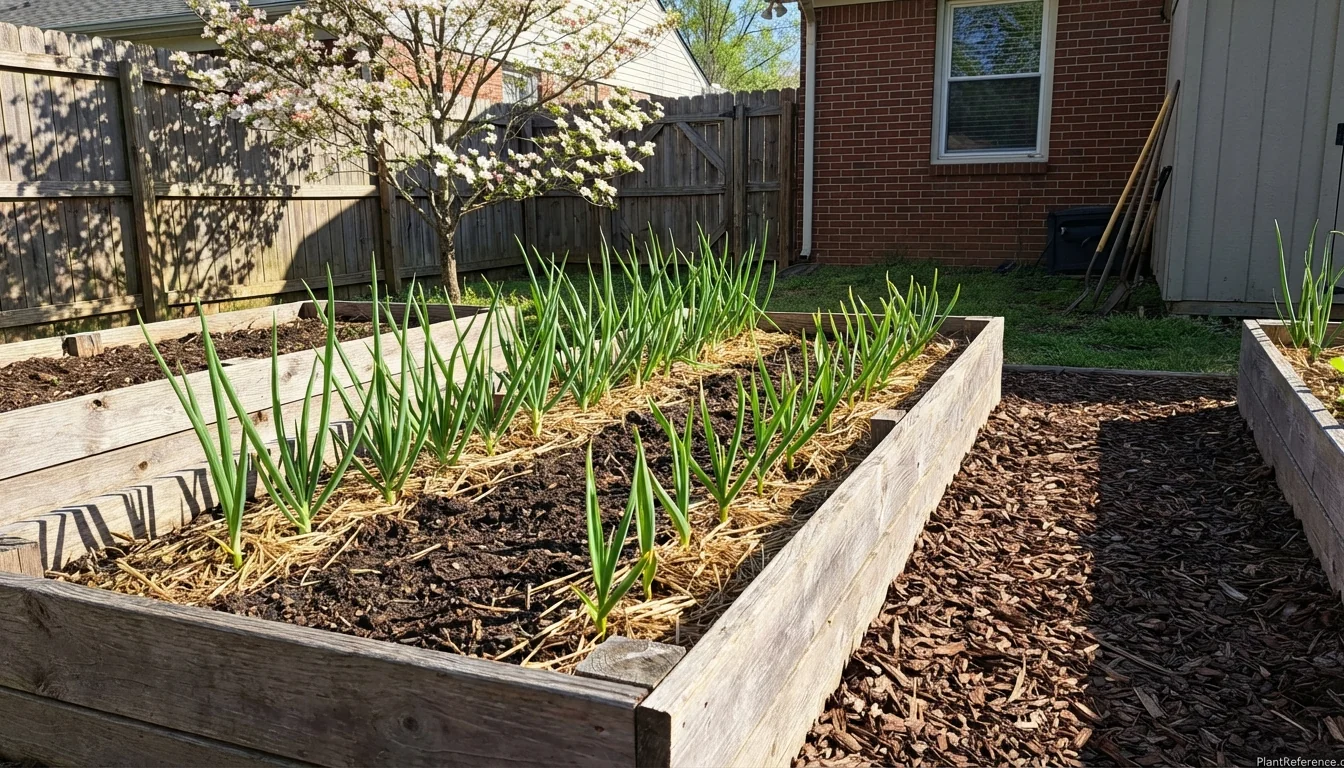
— Image © Plant Reference 2026
I've been growing onions in Tennessee for over thirty years, and I can tell you that Nashville's Zone 7a climate offers some of the best conditions in the country for onion production. The key to success lies in understanding that Nashville sits right in the sweet spot for intermediate-day onions—varieties that bulb when they receive 12-14 hours of daylight.
Best Onion Varieties for Nashville's Climate
Nashville's latitude of 36°N puts us perfectly positioned for intermediate-day onion varieties. These onions require 12-14 hours of daylight to trigger bulbing, which happens naturally in our Tennessee summers.
The biggest mistake I see Nashville gardeners make is planting long-day varieties meant for Minnesota or short-day varieties meant for Texas. Stick with intermediate-day types, and you'll get beautiful, large bulbs every time.
Variety | Days to Maturity | Best For | Notes for Nashville |
|---|---|---|---|
95-110 days | Versatile growing | Perfect for Zone 7a, spring or fall plant | |
100-115 days | Large bulbs | Excellent storage variety for Tennessee | |
100-110 days | Fresh eating | Beautiful red intermediate-day | |
105-115 days | Storage | Deep red, stores 6+ months | |
110-125 days | Sweet onions | Plant early spring only | |
60-70 days | Green onions | Continuous harvest |
Why Intermediate-Day Varieties Work Best
Nashville receives approximately 14 hours and 45 minutes of daylight on the summer solstice. This means intermediate-day onions (12-14 hour trigger) will start bulbing in late May to early June, giving them sufficient time to develop large bulbs before our August heat stress.
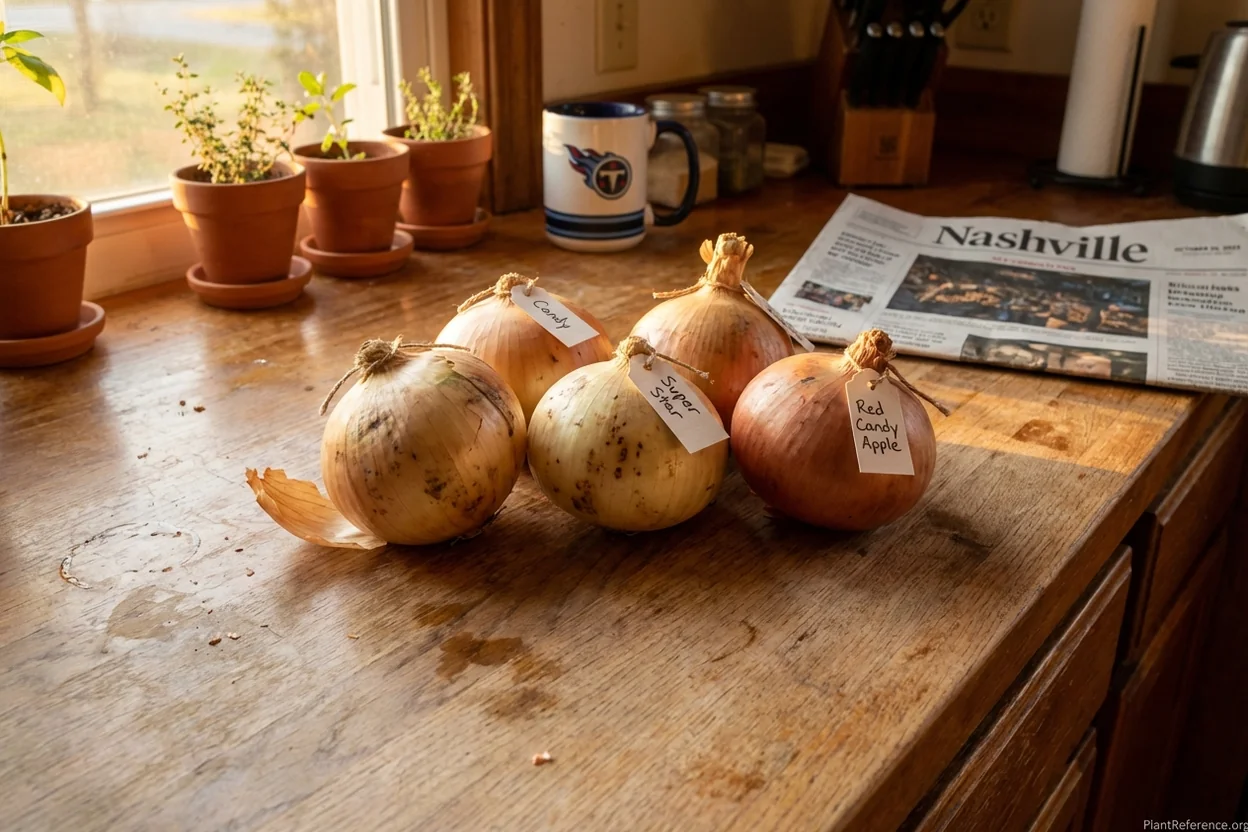
🌿Allium cepa 'Candy' is my top recommendation for Nashville gardeners. This variety was specifically bred to work across different latitudes, making it incredibly forgiving. I've grown bulbs over 4 inches in diameter with proper care.
For storage onions, 🌿Allium cepa 'Super Star' performs exceptionally well in our climate. The bulbs cure beautifully in Nashville's warm, dry late summer conditions and store through winter when properly cured.
Garlic Varieties for Nashville
Nashville's Zone 7a climate works well for both hardneck and softneck garlic varieties, though I prefer softnecks for their superior storage life.
🌿Allium sativum 'California Early' is my standard recommendation. This softneck variety doesn't require the extreme cold that hardnecks need, and it stores 8-10 months in our Tennessee climate.
For those wanting to try hardneck varieties, 🌿Allium sativum 'Music' works well if planted by mid-October to ensure adequate cold exposure.
Specific Planting Dates for Nashville
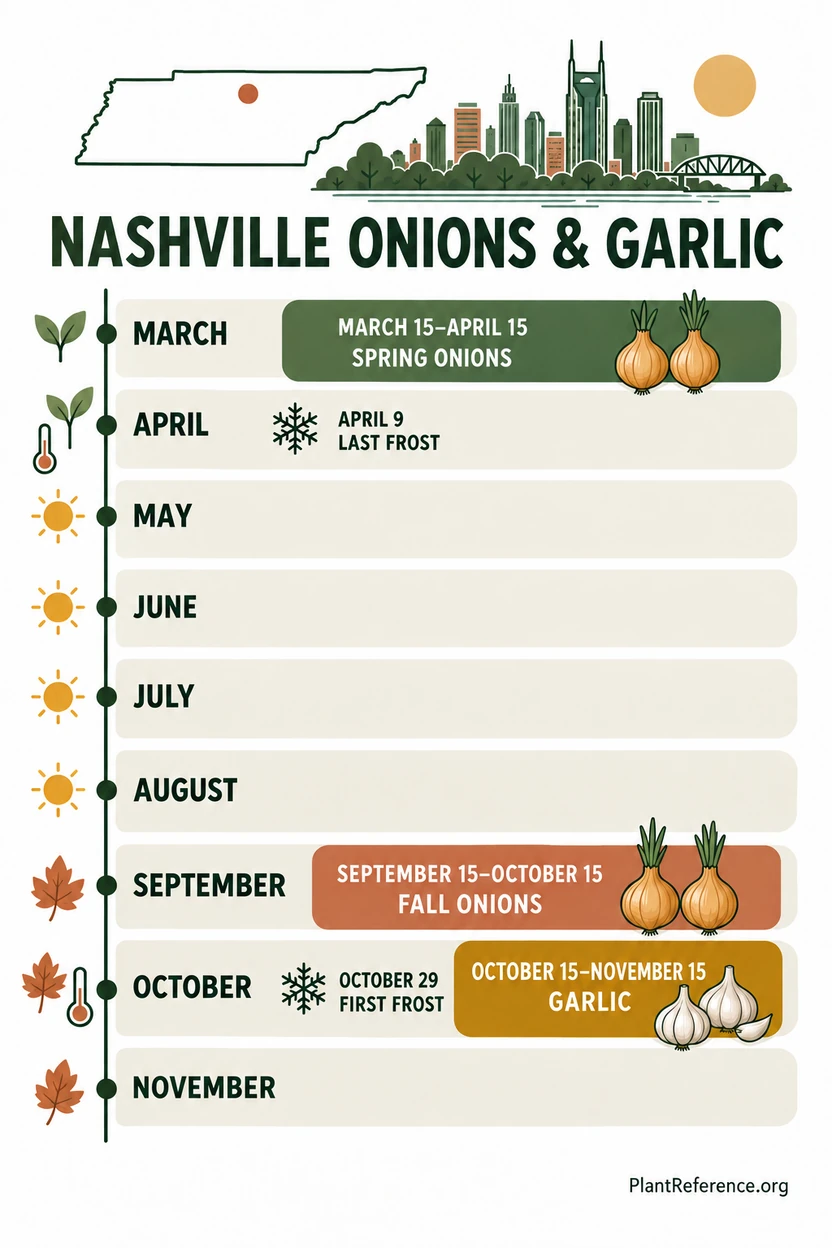
Based on Nashville's average last frost of April 9 and first frost of October 29, here are your optimal planting windows:
Spring Planting Schedule
Onion Sets and Transplants:March 15 - April 15
Soil temperature: Wait until soil consistently reaches 40°F (4°C)
Plant 2-3 weeks before last frost (April 9)
Best planting window: March 20-30 for optimal results
Direct Seeded Onions:March 1 - March 20
Start indoors: January 15 - February 1
Transplant out: March 15 - April 1
Direct sow: Only if soil workable and you're experienced
Fall Planting Schedule (Overwintering Onions)
Fall Onion Transplants:September 15 - October 15
Plant 6-8 weeks before hard freeze
Use cold-hardy varieties only
Mulch heavily before first frost
Garlic Planting:October 15 - November 15
Plant 4-6 weeks before ground freezes hard
Optimal timing: October 25 - November 5
Late plantings reduce bulb size
Calculating Your Planting Dates
Here's how I determine exact planting dates for Nashville conditions:
Spring Onions:
Last frost date: April 9
Count back 2-3 weeks: March 19-26 (optimal window)
Soil workable date: Usually March 10-15
Latest safe planting: April 15
Fall Onions:
First hard freeze: Usually early to mid-November
Count back 6-8 weeks: September 15-October 1 (planting window)
Latest safe planting: October 15
Garlic:
Ground freeze solid: Usually mid-December
Count back 4-6 weeks: October 15-November 15
Optimal timing: Halloween week
Complete Growing Guide for Nashville
Soil Preparation
Nashville's clay-heavy soils require amendment for successful onion production. Onions need well-draining soil that doesn't stay waterlogged during our occasional heavy spring rains.
Soil Requirements:
pH: 6.0-6.8 (most Nashville soils run slightly alkaline)
Drainage: Critical—onions rot in waterlogged soil
Organic matter: Add 2-3 inches of compost annually
Depth: Work soil 8-10 inches deep
Nashville Soil Amendments:
Add coarse sand if clay is severe (not fine sand)
Work in 3-4 inches of compost or aged manure
Consider raised beds for drainage in heavy clay areas
Add sulfur if soil pH tests above 7.0
Incorporate slow-release fertilizer at planting
Planting Techniques
Spacing and Depth:
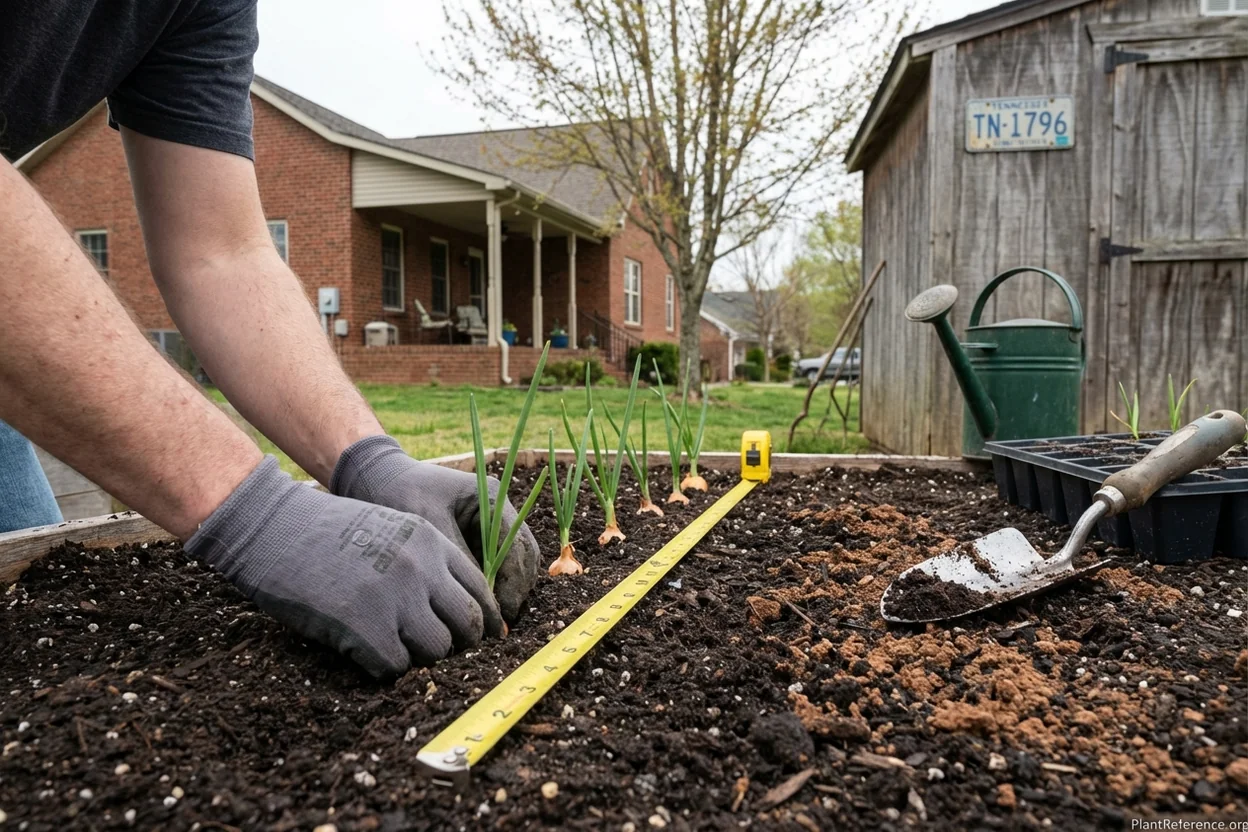
Onion sets: Plant pointed end up, 1 inch deep
Transplants: Plant same depth as in containers
Spacing: 4 inches apart in rows 12 inches apart
Garlic: Plant cloves 2 inches deep, 6 inches apart
Choosing Sets vs. Transplants:
For Nashville gardeners, I recommend transplants over sets. Transplants give you better variety selection and are less prone to bolting than large sets. If using sets, choose ones smaller than a dime—larger sets often bolt in our variable spring weather.
Fertilizing Schedule for Nashville
Nashville's 203-day growing season allows for a strategic fertilization program:
At Planting (March/September):
Apply balanced fertilizer 10-10-10 at planting
Work bone meal into soil for phosphorus
Side-dress with compost
Mid-Season (May for spring planted):
Apply high-nitrogen fertilizer when plants reach pencil thickness
Stop nitrogen 6 weeks before expected harvest
Switch to potassium-rich fertilizer for bulb development
Late Season (July for spring planted):
No additional nitrogen after July 1
Allow natural yellowing and tip-over
Reduce watering as harvest approaches
Watering in Nashville Climate
Nashville receives about 47 inches of rainfall annually, but distribution varies significantly. Spring is typically wet, while late summer can be dry.
Watering Guidelines:
Spring: Often no supplemental watering needed until May
Summer: 1 inch per week during bulb development
Late season: Reduce watering as tops begin yellowing
Never water overhead—use drip irrigation or soaker hoses
Stop watering 2 weeks before harvest
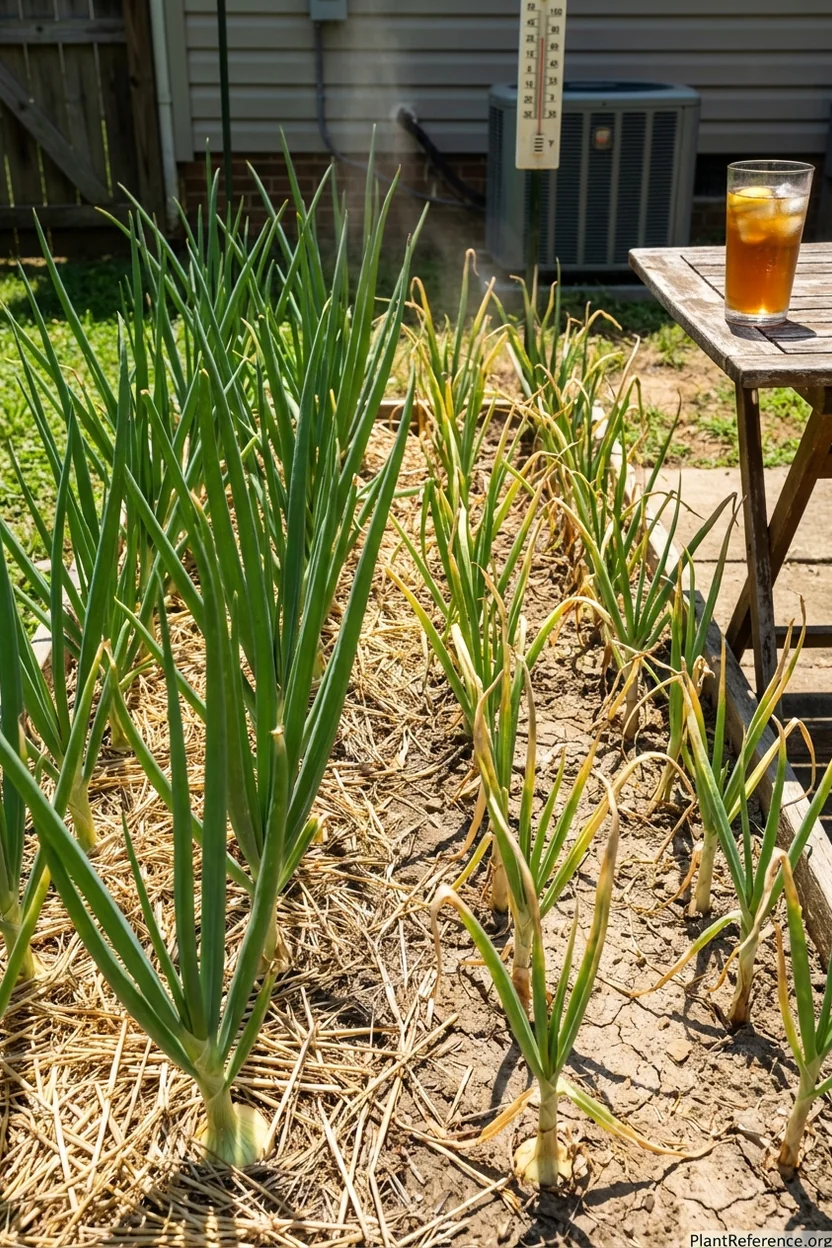
Our July and August heat can stress onions significantly. Maintain consistent soil moisture but avoid overwatering, which leads to soft bulbs with poor storage life.
Troubleshooting Nashville-Specific Problems
Hot, Humid Summers
Nashville's summer heat and humidity create specific challenges for onion growing:
Heat Stress Management:
Mulch heavily to keep soil cool
Provide afternoon shade during peak summer
Maintain consistent soil moisture
Plant fall onions for earlier harvest before heat stress
Humidity Issues:
Ensure good air circulation
Avoid overhead watering
Thin overcrowded plantings
Watch for fungal diseases in humid conditions
Clay Soil Drainage
Many Nashville properties have heavy clay soil that retains water. Poor drainage is the number one killer of onions in our area.
Drainage Solutions:
Build raised beds 6-8 inches high
Add coarse sand and compost to existing beds
Install French drains in consistently wet areas
Consider container growing in problem spots
Common Pest Issues
Thrips: These tiny insects are problematic during Nashville's hot, dry periods. They cause silvery streaks on leaves and can stunt bulb development.
Onion Maggots: Less common but can occur. Adult flies lay eggs at soil level; larvae tunnel into bulbs.
Prevention Strategies:
Rotate crops annually—never plant onions in same spot consecutively
Remove all debris at season end
Use row covers during peak fly periods (May-June)
Encourage beneficial insects with diverse plantings
Monitor regularly for early intervention
Bolting Problems
Bolting (premature flowering) ruins onion bulbs. In Nashville, bolting typically occurs due to:
Using sets larger than a dime
Planting wrong day-length varieties
Temperature stress from late cold snaps
Planting too early in variable spring weather
Prevention: Use intermediate-day varieties, small sets or transplants, and plant within recommended dates.
Harvest & Storage
When to Harvest
In Nashville, spring-planted onions are typically ready for harvest in mid-July through August, depending on variety and planting date.
Harvest Indicators:
50-75% of tops have fallen over naturally
Neck feels firm when gently squeezed
Lower leaves yellowing and drying
Bulb reaches expected size for variety
Before August heat becomes severe
Never force tops to fall over by stepping on them or bending manually. This stops the flow of nutrients to the bulb and creates wound sites for rot.
Curing in Nashville's Climate
Nashville's hot, humid summers require careful attention to curing:
Curing Process: 1. Harvest on a dry day if possible 2. Leave in field for 24 hours if conditions are dry 3. Move to covered area with good air circulation 4. Cure at 80-90°F with low humidity for 2-4 weeks 5. Trim when necks are completely dry and papery
Nashville Curing Locations:
Covered porches with good airflow
Garages with fans running
Attics (if not too hot)
Air-conditioned basements with dehumidifiers
Storage for Tennessee Conditions
Properly cured onions store well through Nashville's mild winters:
Storage Requirements:
Temperature: 32-40°F (hard to achieve without refrigeration)
Humidity: 60-70%
Air circulation: Critical for preventing rot
Dark location: Prevents sprouting
Tennessee Storage Options:
Unheated garage (check temperatures)
Basement storage rooms
Refrigerator for small quantities
Root cellars (rare but ideal)
Garlic Harvest and Storage
Garlic planted in fall is ready for harvest in July when lower leaves brown but upper leaves remain green.
Garlic Curing:
Cure in same conditions as onions
Leave tops attached for braiding
Trim roots but leave basal plate intact
Store in mesh bags or braids
Frequently Asked Questions
Reading about plants and recognising them are different skills. These three build the second.
- Daily PlantIdentify the day’s mystery plant from a close-up photograph.
- Keyed OutWork a dichotomous key, lead by lead, to name a hidden specimen.
- Name That PlantName a specimen from botanical clues dealt hardest first.
Free to play, no account needed
Marcus manages the grounds at a historic property in Memphis and runs a side business doing residential garden design. He grew up helping his grandfather maintain a large vegetable garden in the Mississippi Delta and carried that knowledge into formal training—he has a degree in landscape technology. Memphis sits in a sweet spot for growing: long warm seasons, decent rainfall, and mild enough winters that many marginally hardy plants survive. Marcus writes about Southern gardening traditions, ornamental garden design, and dealing with the humidity and heavy rainfall that define the Mid-South climate.