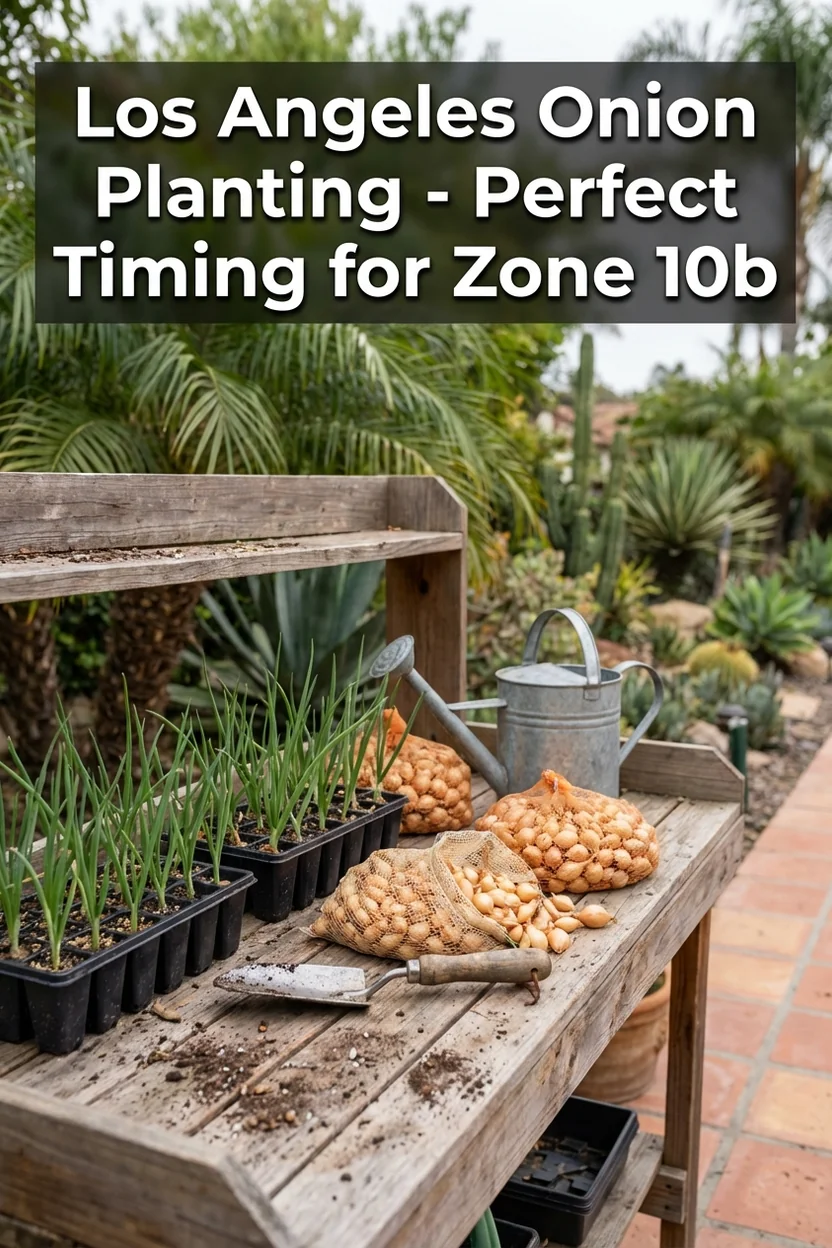
When to Plant Onions in Los Angeles: Complete Guide + Best Varieties for Zone 10b
Pets & Toxicity
Recorded toxicity for plants linked in this guide. An unknown status is not a safety assessment.
Toxic to pets: red creole onion, Granex onionDetailsHide
Allium cepa 'Red Creole' — Toxicity Warning
Toxic to cats and dogs if eaten; cats are especially susceptible, and raw, cooked or concentrated plant material can damage red blood cells and cause anaemia.View Allium cepa 'Red Creole' plant profileAllium cepa 'Granex' — Toxicity Warning
Toxic to cats and dogs if eaten; cats are especially susceptible, and raw, cooked or concentrated plant material can damage red blood cells and cause anaemia.View Allium cepa 'Granex' plant profile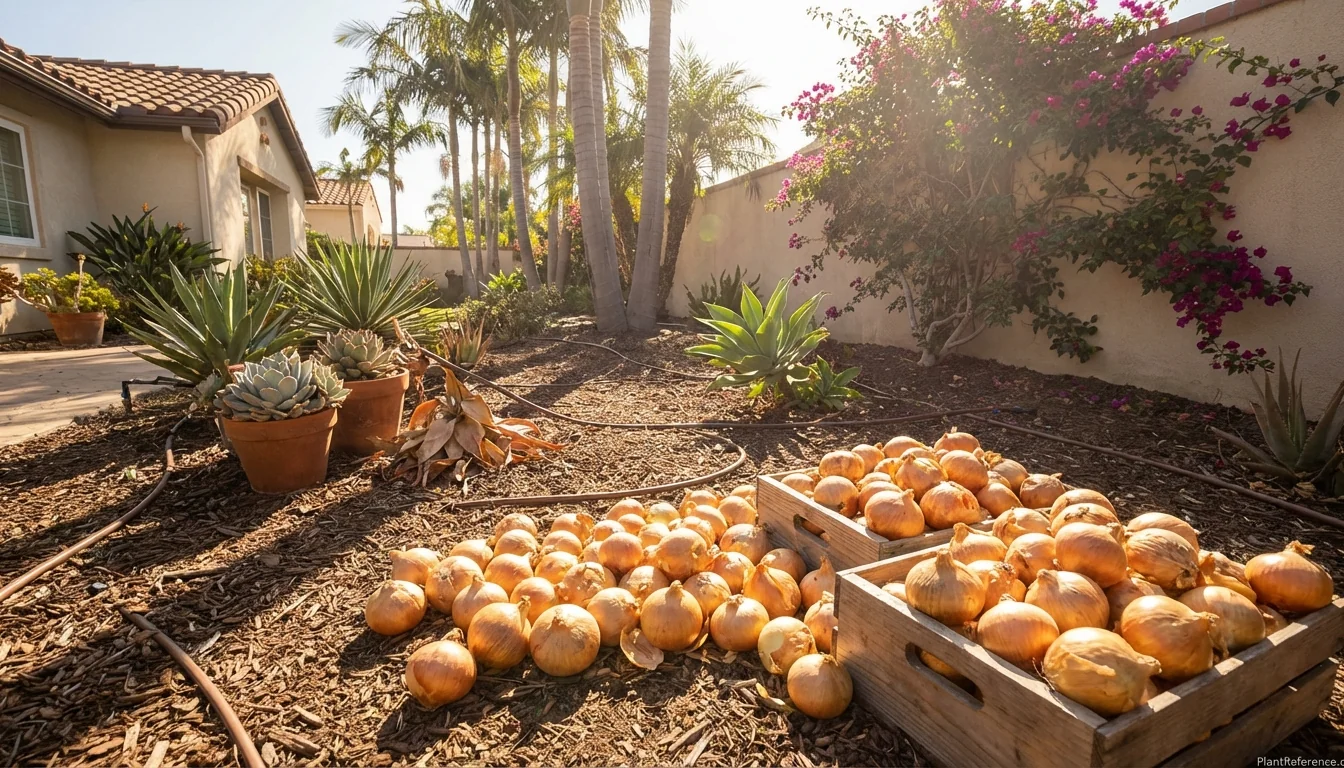
— Image © Plant Reference 2026
Growing onions in Los Angeles requires understanding one critical fact: you must plant short-day varieties in fall, never spring. I've been growing vegetables for forty years, and I can tell you that trying to grow long-day onions in Southern California is like trying to grow palm trees in Minnesota—it's just not going to work.
Los Angeles sits at 34°N latitude in Zone 10b, which means your maximum summer daylight is only about 14.5 hours. Long-day onions need 15-16 hours to trigger bulbing, so they'll just keep growing green tops without ever forming a bulb. Short-day varieties are bred to bulb when days reach 10-12 hours, which happens naturally in Los Angeles during March and April.
Best Onion Varieties for Los Angeles's Climate
The key to onion success in Los Angeles is selecting varieties bred for your latitude. I recommend sticking to proven short-day cultivars that have been selected specifically for Southern California growing conditions.
Variety | Days to Maturity | Best For | Notes for Los Angeles |
|---|---|---|---|
Allium cepa 'Texas Early Grano' | 110-120 days | Sweet eating, mild flavor | Perfect for LA's mild winters, heat tolerant |
100-115 days | Storage, strong flavor | Good keeper for Zone 10b, purple-red skin | |
105-115 days | Sweet Vidalia-type | Extremely mild, low sulfur, eat fresh | |
Allium cepa '1015Y' | 110-125 days | Jumbo sweet onions | Texas-bred for Southern climates |
Allium cepa 'Yellow Bermuda' | 95-110 days | Early harvest | Fastest maturity, good for succession planting |
Texas Early Grano
This is my go-to recommendation for Los Angeles gardeners. Allium cepa 'Texas Early Grano' was bred specifically for Southern climates and performs beautifully in Zone 10b. The bulbs grow large—often 4-5 inches across—with mild, sweet flavor that's perfect for fresh eating. Plant transplants in November for April harvest.
Red Creole
If you want storage onions that'll keep through summer, 🌿Allium cepa 'Red Creole' is your best choice. This Louisiana heirloom has more sulfur content than the sweet varieties, which means better storage life but sharper flavor. The deep purple-red bulbs are beautiful and store 4-6 months when properly cured.
Granex Types
🌿Allium cepa 'Granex' varieties are what become famous Vidalia onions when grown in Georgia's low-sulfur soil. In Los Angeles, they produce sweet, mild bulbs perfect for eating fresh. However, their high water content means poor storage—use these within 2-3 months of harvest.
Specific Planting Dates for Los Angeles
Los Angeles's Zone 10b climate allows flexible fall planting timing, but there are optimal windows for best results.
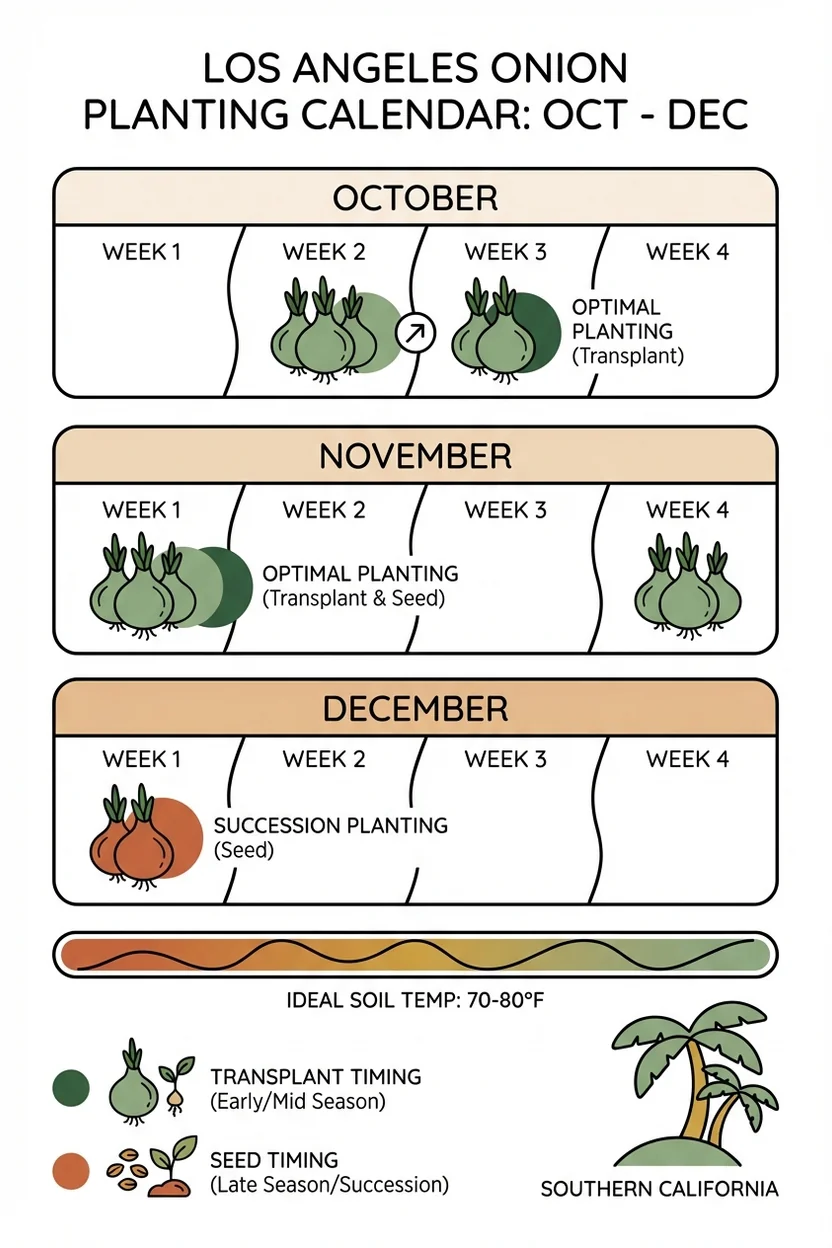
October Planting (October 15 - October 31)
This is prime time for onion planting in Los Angeles. Soil temperatures are cooling from summer heat but still warm enough for good root establishment. Plant transplants during this window for harvest in early April.
Soil Temperature: 65-75°F (18-24°C), ideal for root development
Air Temperature: Daytime highs 75-85°F (24-29°C), nighttime lows 55-65°F (13-18°C)
Varieties: All short-day types perform well with October planting
Harvest Window: Early April through early May
November Planting (November 1 - November 30)
November is the most reliable planting month for Los Angeles onions. The weather has settled into the mild winter pattern, and there's no risk of late-season heat stress that could cause bolting.
Early November (November 1-15): Best window for transplants
Late November (November 16-30): Last chance for optimal growth period
Varieties: Focus on faster-maturing types like
Allium cepa 'Yellow Bermuda' for late November planting
December Planting (December 1 - December 31)
You can still plant onions through December in Los Angeles, but expect smaller bulbs and later harvest. This timing works well for succession planting or if you missed the earlier windows.
Early December: Still productive for most varieties
Late December: Use only fastest-maturing varieties
Harvest: Expect May harvest for December plantings
What NOT to Plant
Never attempt spring planting of onions in Los Angeles. By the time soil warms enough for spring planting (March-April), the days are already lengthening toward the 12-hour trigger point. Your onions will bulb prematurely while still small, giving you marble-sized disappointments instead of full-size bulbs.
Complete Growing Guide for Los Angeles
Growing onions successfully in Los Angeles means working with the Mediterranean climate rather than fighting it.
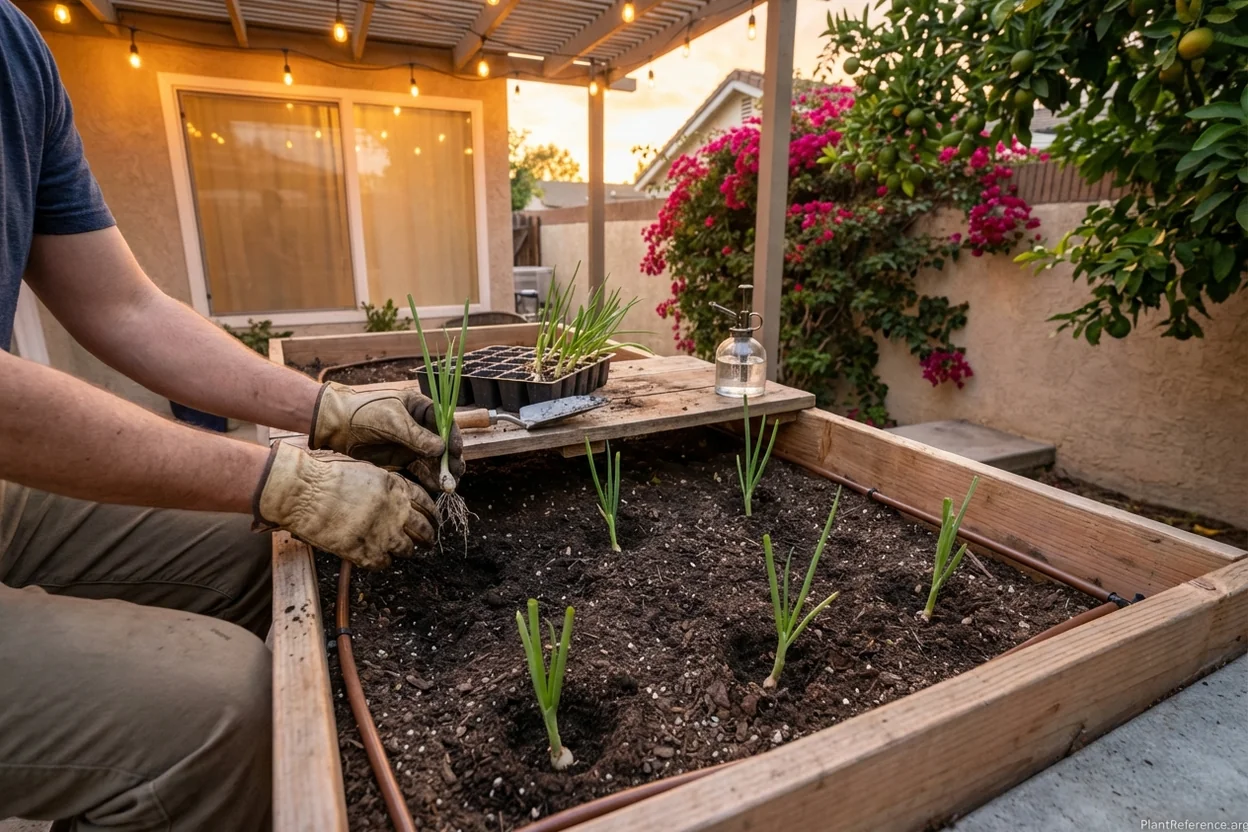
Soil Preparation
Los Angeles clay soil needs serious amendment for onion success. I always tell gardeners to think of onions as root vegetables—they need loose, well-draining soil to expand properly.
Soil Requirements:
pH 6.0-6.8 (test with simple pH meter)
Well-draining (no standing water after irrigation)
Rich in organic matter (2-3 inches of compost worked in)
Loose to 8-10 inches deep (bulbs need room to expand)
Los Angeles Soil Challenges:
Clay Soil: Most of LA has heavy clay that becomes concrete-hard when dry and muddy when wet. Break this up with compost, perlite, or coarse sand.
Alkaline pH: LA water and soil tend alkaline. Add sulfur or organic matter to lower pH if testing above 7.0.
Compaction: Years of foot traffic compact soil. Double-dig beds or build raised beds for best results.
Planting Technique
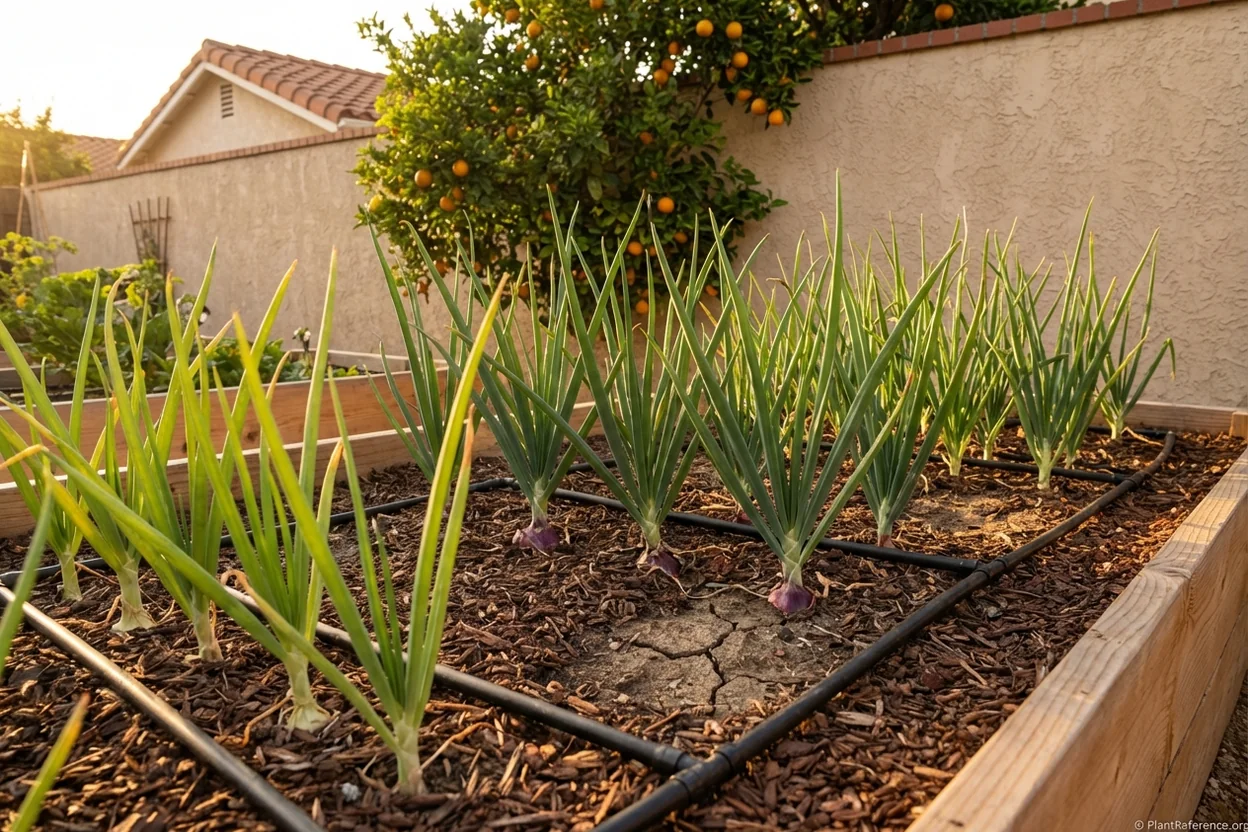
Transplants (recommended): Set transplants 1 inch deep with just the white portion below ground. Space 4-6 inches apart in rows 12 inches apart. Trim roots to 2 inches and tops to 4 inches before planting.
Sets (if you can find short-day types): Push sets pointed-end up until just covered. Most sets sold in LA are long-day types shipped from other regions—avoid these.
Seeds (advanced): Direct sow in September-October or start indoors in August for October transplanting. Seeds give you the best variety selection but require more skill.
Water Management
Los Angeles's Mediterranean climate means wet winters and dry summers. Your onion watering strategy must account for this natural pattern.
Winter Watering (November-March):
Reduce irrigation frequency as rains increase
Monitor soil moisture at 2-4 inch depth
Water deeply but less often (1-2 times per week)
Stop watering if soil stays saturated from rain
Spring Watering (April-May):
Increase frequency as weather warms and rains decrease
Critical bulbing period requires consistent moisture
Never let soil dry completely during bulb formation
Begin reducing water when tops start to yellow
Avoid Overwatering: Los Angeles clay holds water too long. Onions hate wet feet and will rot in saturated soil.
Fertilizing Schedule
Onions are heavy nitrogen feeders during the vegetative growth phase, then need to be cut off completely when bulbing begins.
At Planting (October-December): Mix balanced fertilizer (10-10-10) into soil before planting
Monthly Through February: Side-dress with nitrogen fertilizer (blood meal or fish emulsion)
March Critical Cutoff: Stop all nitrogen feeding when day length reaches 11-12 hours (usually mid-March in LA)
Late nitrogen is the enemy: Feeding nitrogen during bulbing creates thick necks that won't cure and bulbs that rot in storage.
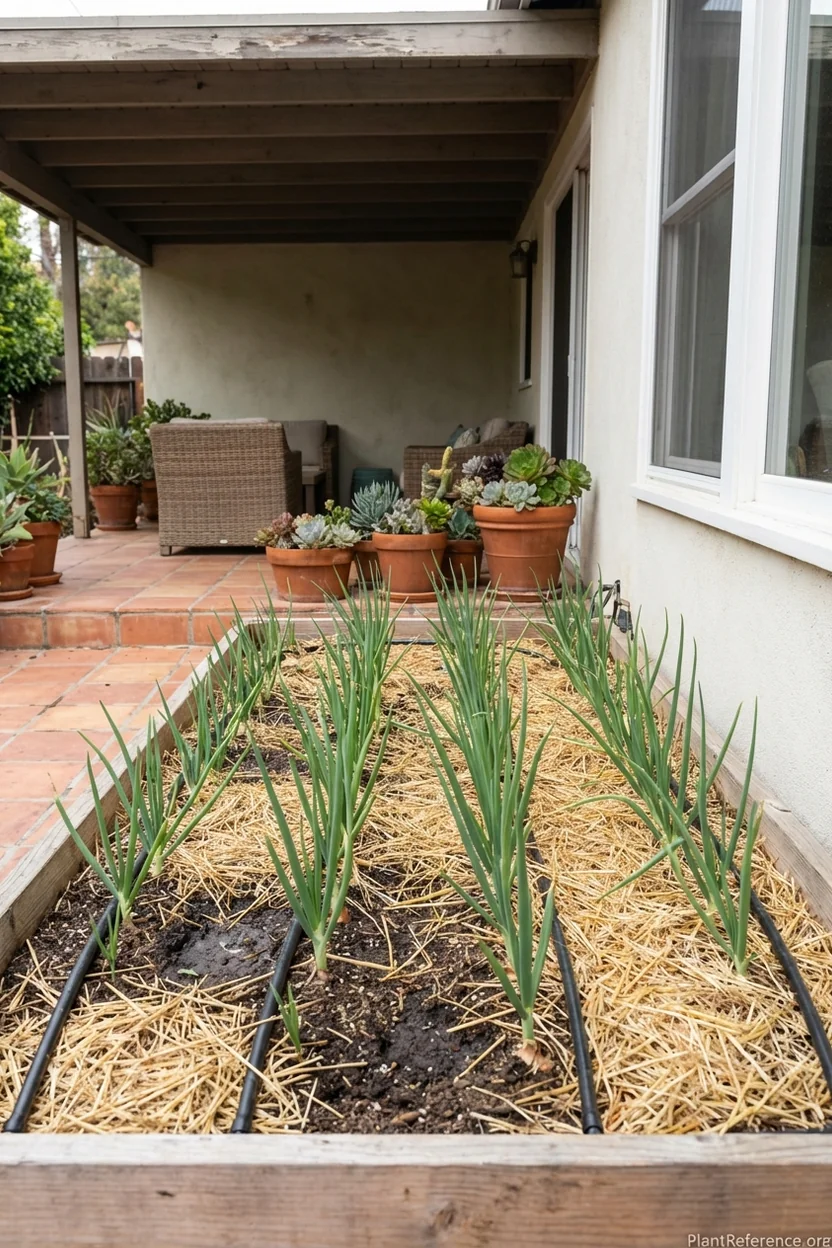
Troubleshooting Los Angeles-Specific Problems
Los Angeles presents unique challenges for onion growing that I've learned to manage over decades of gardening here.
Problem | Symptoms | Likely Cause | Quick Fix |
|---|---|---|---|
Bolting (Premature Flowering) | Hard flower stalk shoots up through center of plant, plant stops bulbing | Wrong variety (long-day types), temperature stress, large sets | Remove flower stalk immediately, harvest bulb early (won't store). Only plant short-day varieties, use small sets or transplants. |
Small Bulbs | Plants grow well but form tiny bulbs, "scallion effect" | Wrong variety (most common), planted too late, poor soil. Most common cause: planting long-day varieties that can't trigger in 14.5-hour maximum daylength | Only plant short-day varieties bred for Southern latitudes like Texas Early Grano or Red Creole. Check variety label before purchasing. |
Heat Stress | Leaves yellowing from tips, bulbs developing thick necks, poor formation | Late spring heat waves, insufficient water, reflected heat from hardscaping. Urban heat island effect increases temperatures in Los Angeles gardens | Position onion beds where they get morning sun but afternoon shade, especially during April-May bulbing period. Mulch heavily to keep soil cool. |
Poor Storage Life | Onions rot quickly after harvest, thick necks won't dry | High water content varieties, excess nitrogen, incomplete curing. High humidity from marine layer during curing period | Choose storage varieties like Red Creole over sweet types. Cure onions in protected area with good air circulation—garage with fan is better than outdoor curing. |
Harvest & Storage
Knowing when and how to harvest determines whether you get 2 weeks or 6 months of storage life from your onions.
Harvest Timing Signs:
50-75% of tops have fallen over naturally
Necks feel soft and bendable
Bulbs feel firm and full when gently squeezed
Lower leaves yellowing and drying
Never bend tops over artificially—this stops the flow of nutrients to the bulb and creates wounds that invite rot.
Los Angeles Harvest Window:
October plantings: Early to mid-April
November plantings: Late April to early May
December plantings: Mid to late May
Curing Process for Los Angeles Climate
Los Angeles's coastal influence creates humidity challenges during the typical May harvest period. Here's how to cure successfully:
Step 1 - Initial Drying (1-2 weeks): Lay harvested onions in single layer in shaded, well-ventilated area. Garage with fan works better than outdoor curing if marine layer creates humid mornings.
Step 2 - Neck Tightening (2-3 weeks): Continue drying until necks are completely tight and papery. In Los Angeles humidity, this takes longer than in desert climates.
Step 3 - Final Preparation: Trim roots and tops to 1 inch once fully cured. Store only perfect bulbs—use damaged ones first.
Storage Conditions: Cool (50-60°F / 10-16°C), dry (60-70% humidity), dark location with good air circulation. Los Angeles garages work well if not too hot.
Storage Expectations by Variety:
🌿Allium cepa 'Red Creole': 4-6 months
Allium cepa 'Texas Early Grano': 2-3 months
🌿Allium cepa 'Granex': 1-2 months (eat fresh)
→ XLUX Soil Moisture Meter ($10-15) - Essential for proper onion watering
This 10-inch probe moisture meter reaches deep into Los Angeles clay soil to check water levels at onion root depth. No batteries required—simple push-and-read design provides instant feedback on soil moisture. Durable metal probe withstands repeated use in multiple garden beds. Essential for Los Angeles gardeners managing clay soil moisture, preventing both drought stress and overwatering rot. Eliminates guesswork in Mediterranean climate watering schedules.
Product link unavailable
Frequently Asked Questions
Reading about plants and recognising them are different skills. These three build the second.
- Daily PlantIdentify the day’s mystery plant from a close-up photograph.
- Keyed OutWork a dichotomous key, lead by lead, to name a hidden specimen.
- Name That PlantName a specimen from botanical clues dealt hardest first.
Free to play, no account needed
Emma runs a small succulent propagation business from her home in San Diego, shipping starter plants and cuttings across the country. She fell into succulents after college when she realized they were the only plants that survived her travel schedule—she was working as a travel nurse at the time. San Diego's mild, dry climate is ideal for outdoor succulent gardens, and Emma's front yard is a living catalog of over 200 varieties. She completed a certificate program in ornamental horticulture and writes about succulent care, propagation techniques, and drought-tolerant garden design. Her writing is calm and reassuring—she knows people feel bad about killing plants, and she wants them to stop worrying so much.