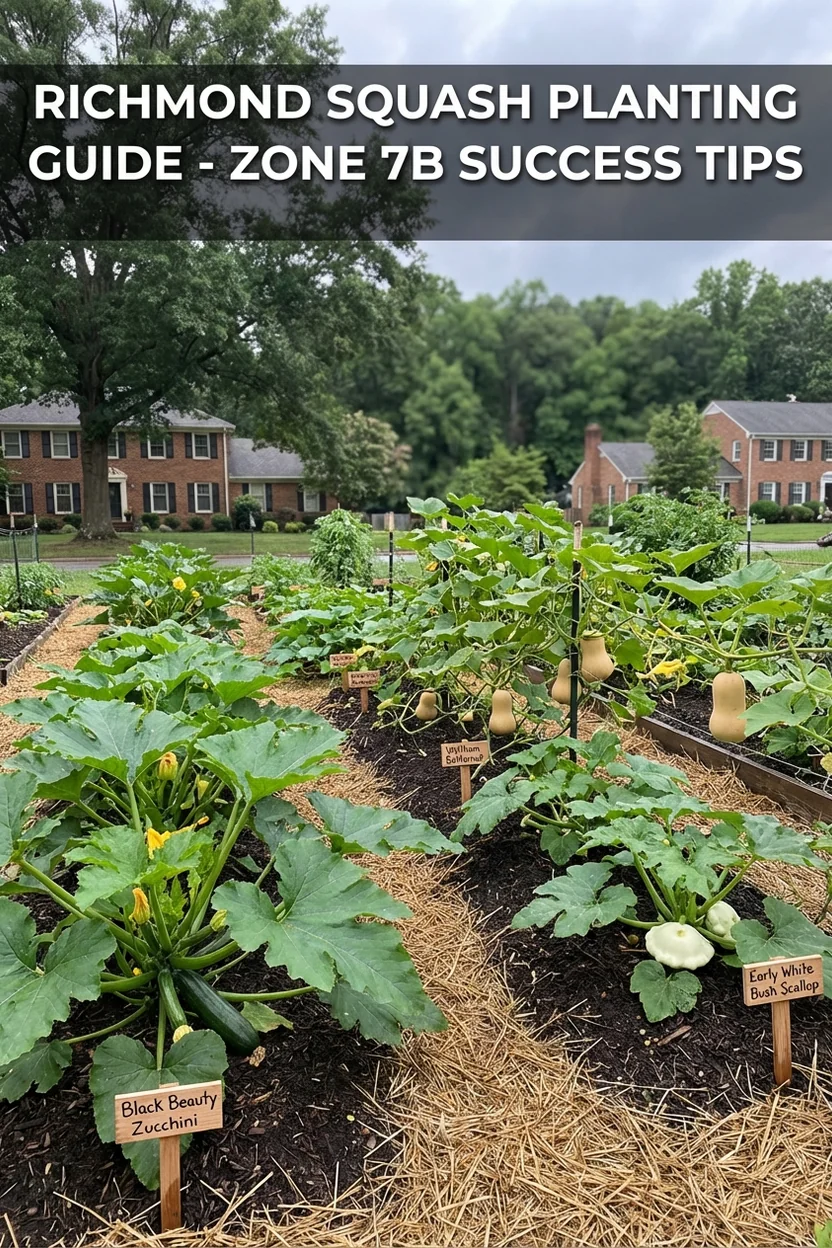
When to Plant Squash in Richmond: Complete Guide + Best Varieties for Zone 7b
Pets & Toxicity
Recorded toxicity for plants linked in this guide. An unknown status is not a safety assessment.
No linked plant is recorded as toxicDetailsHide
Cucurbita pepo 'Black Beauty' — Toxicity
Non-toxic as an edible cropView Cucurbita pepo 'Black Beauty' plant profileCucurbita pepo 'Yellow Crookneck' — Toxicity
Non-toxic as an edible cropView Cucurbita pepo 'Yellow Crookneck' plant profile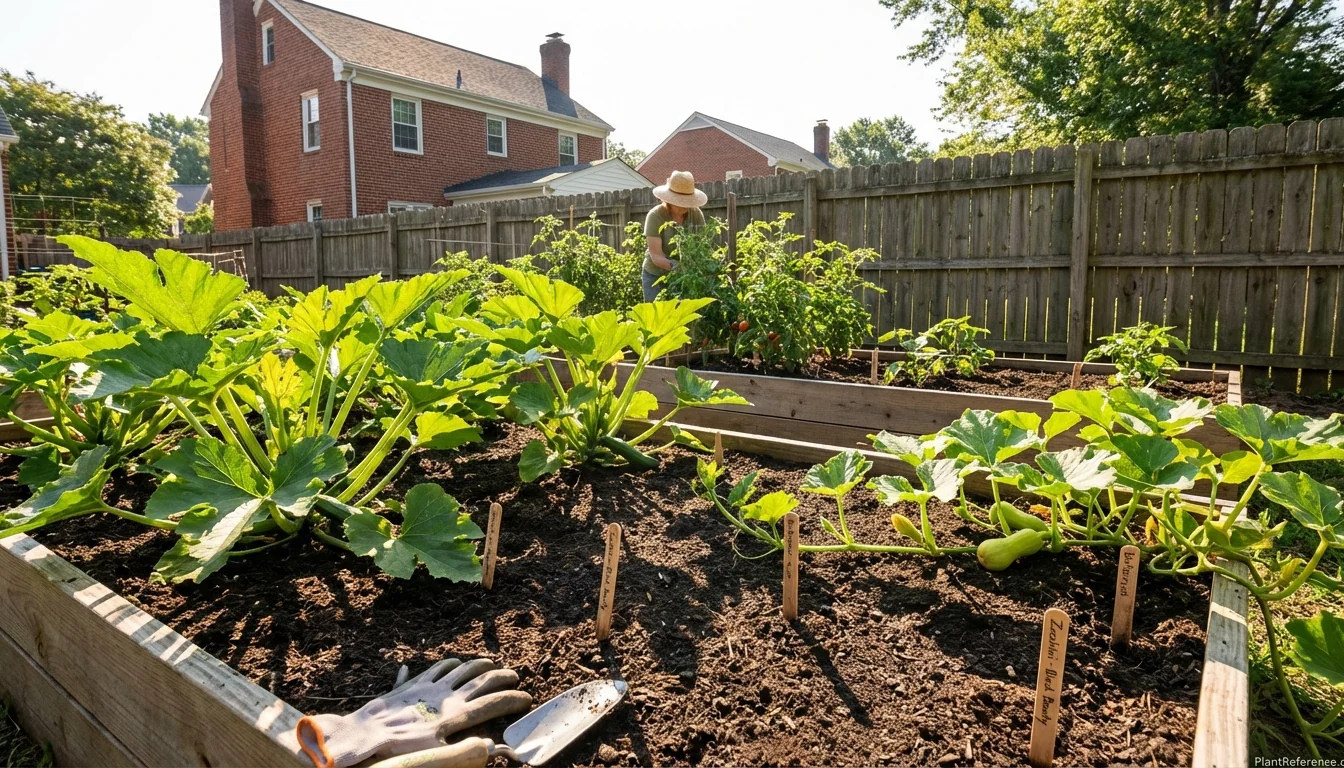
— Image © Plant Reference 2026
Richmond gardeners have excellent conditions for growing both summer and winter squash, with our Zone 7b climate providing a solid 193-day growing season from April 15 to October 25. I've been growing squash in Virginia for over thirty years, and I'll tell you what works: timing is everything, and variety selection makes the difference between a good harvest and a great one.
Best Squash Varieties for Richmond's Climate
Richmond's Zone 7b climate with 193 frost-free days gives us flexibility most gardeners only dream of. We can grow both fast summer squash and the longer-season winter storage types that northern gardeners struggle with.
Summer Squash (50-60 Days)
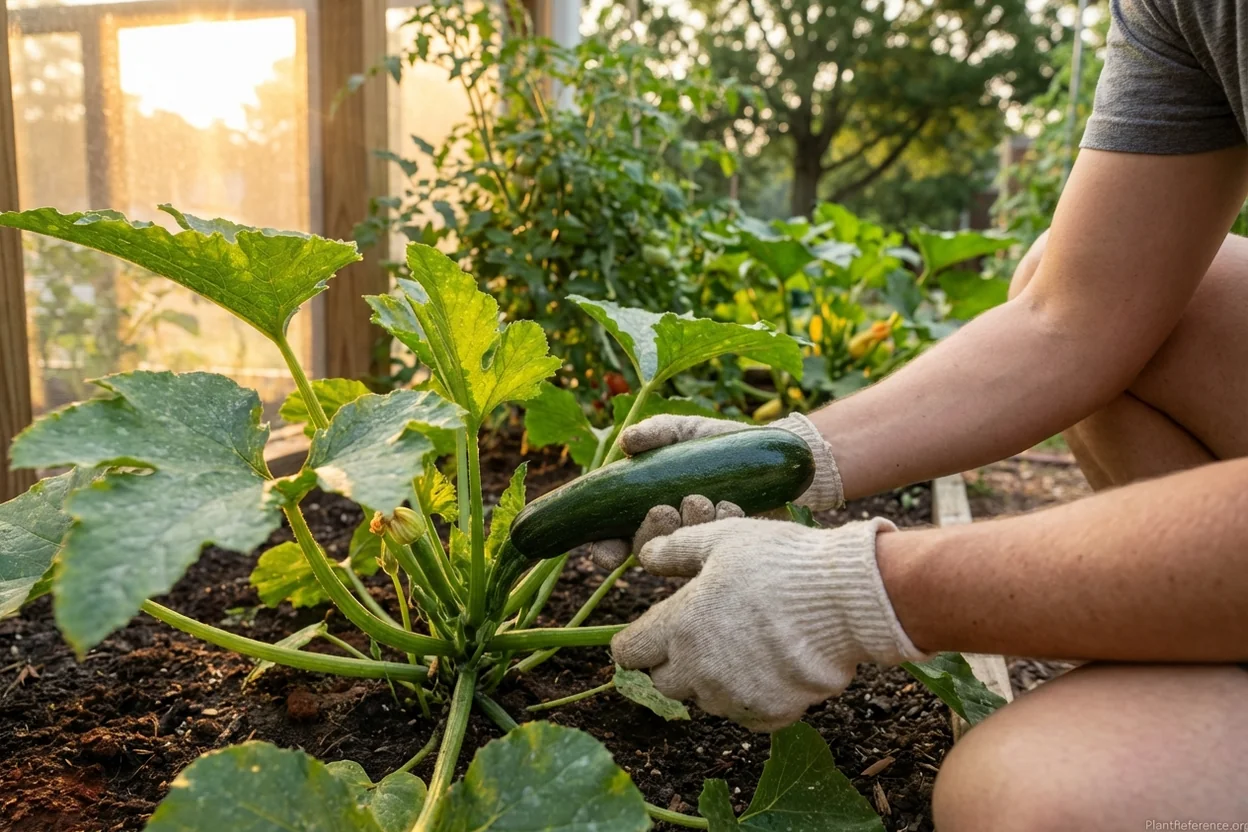
Summer squash varieties mature quickly and produce continuously once they start. In Richmond, these are your workhorses for fresh eating all season.
Variety | Days to Maturity | Best For | Notes for Richmond |
|---|---|---|---|
50-55 days | Heavy production | Heat tolerant, handles Virginia summers | |
52-60 days | Heat tolerance | Excellent for Richmond's hot July/August | |
50-60 days | Compact spaces | Bush type perfect for smaller Richmond yards |
🌿Cucurbita pepo 'Black Beauty' zucchini is my top recommendation for Richmond. It handles our humid summers better than most, and one plant keeps a family in zucchini from June through frost. The key is picking them young—6 to 8 inches maximum.
🌿Cucurbita pepo 'Yellow Crookneck' thrives in Richmond's heat. While other varieties slow down in July, crookneck keeps producing. The warty skin actually helps it shed moisture and resist the bacterial soft rot we sometimes see in humid weather.
Winter Squash (80-110 Days)
Winter squash needs our full season, but Richmond's 193 frost-free days gives us time for even the longest-maturing varieties.
🌿Cucurbita moschata 'Butternut' is the champion storage squash for Richmond. It takes 95-100 days but stores until March if cured properly. The solid stems resist the squash vine borer that plagues other types.
🌿Cucurbita pepo 'Acorn' matures faster at 85-95 days, making it reliable even in shorter seasons. Table Queen is the standard variety—ribbed, dark green exterior with orange flesh that's naturally sweet.
🌿Cucurbita pepo 'Delicata' brings something special to the table. At 85-100 days, it fits our season perfectly, and the thin skin means no peeling required. It tastes like sweet potato when roasted.
Specific Planting Dates for Richmond
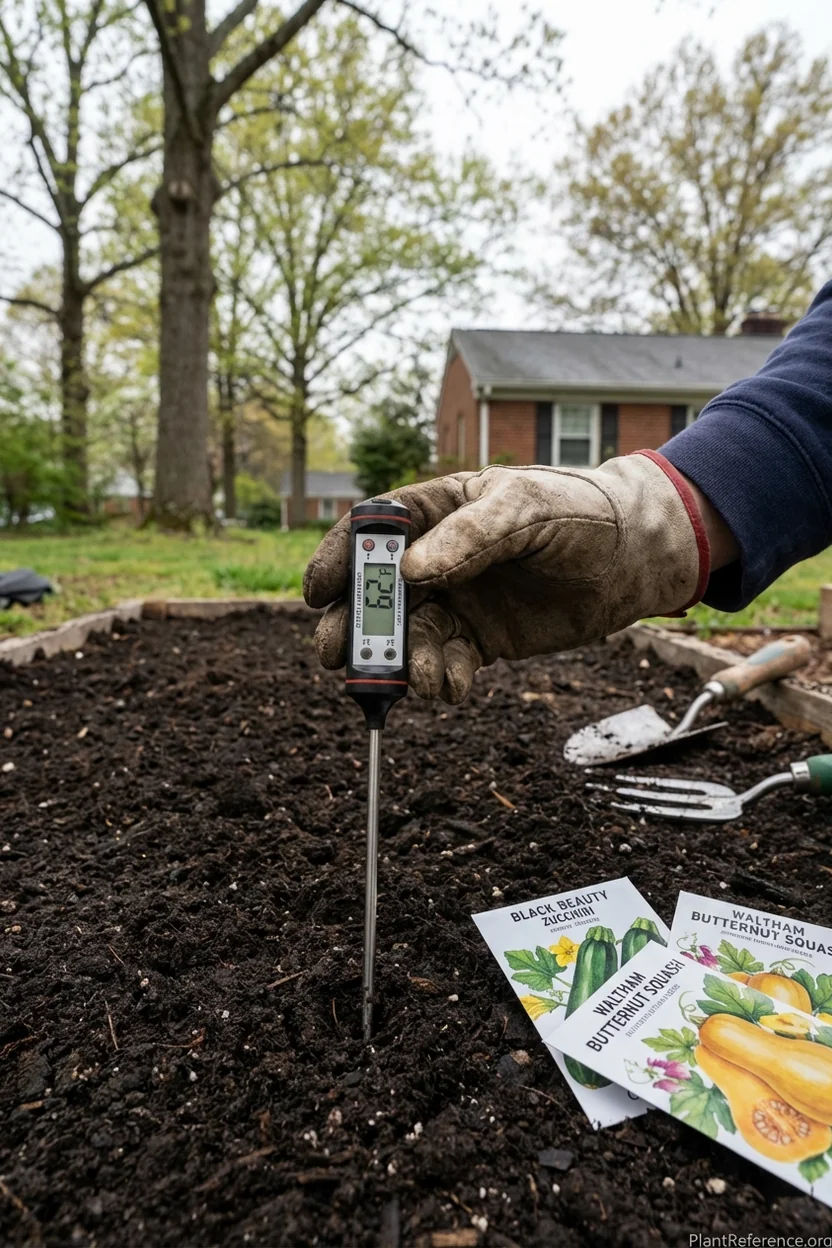
Richmond's last average frost falls on April 15, but soil temperature matters more than air temperature for squash. Cold soil kills seeds and stunts transplants.
Summer Squash Planting Schedule
Direct Sowing: May 1-15 for main crop
Soil temperature: 65°F (18°C) minimum at 2-inch depth
Air temperature: Consistent 60°F (16°C) nights
Plant spacing: 36 inches apart for bush types
Succession Planting: Every 3 weeks through July 15
Second planting: May 20-June 1
Third planting: June 15-30
Final planting: July 1-15
I recommend three plantings of summer squash in Richmond. The first handles spring and early summer, the second carries you through mid-summer, and the third provides fresh squash through fall when the older plants succumb to vine borers or powdery mildew.
Winter Squash Planting Schedule
Direct Sowing: May 10-25 (optimal window)
Earlier risks cold soil problems
Later risks not maturing before October 25 frost
Butternut: Plant by May 15 (needs full 100 days)
Acorn and Delicata: Plant by May 25 (85-100 days acceptable)
Transplant Option: Start seeds indoors April 1-15
Transplant outdoors May 1-15
Use biodegradable pots to avoid root disturbance
Gives 2-week head start for longest-season varieties
Calculating Your Exact Dates
Here's how I figure planting dates for any variety:
For summer squash: Count forward from May 1 (safe soil temperature date)
For winter squash: Count backward from October 25 (first frost) minus variety's days to maturity, minus 10-day safety buffer
Example: 🌿Cucurbita moschata 'Butternut' needs 100 days
October 25 minus 100 days minus 10 buffer days = May 7 latest planting
Complete Growing Guide for Richmond
Soil Preparation
Richmond's clay soil needs help before you plant squash. I've gardened in this clay for decades, and here's what works:
Clay Amendment: Add 2-3 inches of compost each spring. Don't try to replace the clay—amend it. Squash actually likes the moisture retention once drainage improves.
Raised Beds: In heavy clay areas, build beds 8-10 inches high. This improves drainage while preserving the clay's fertility.
pH Management: Richmond clay tends alkaline (7.0-7.5). Squash prefers 6.0-6.8. Compost naturally lowers pH over time.
Planting Techniques
Direct Sowing Method: 1. Wait for 65°F (18°C) soil temperature—use a soil thermometer 2. Plant seeds 1 inch deep, 2-3 seeds per hill 3. Space summer squash hills 36 inches apart 4. Space winter squash hills 48-60 inches apart 5. Thin to strongest seedling after germination
Transplant Method: 1. Start seeds 2-3 weeks before outdoor planting date 2. Use 4-inch biodegradable pots (peat, paper, or cow manure) 3. Keep soil temperature 70-75°F (21-24°C) for germination 4. Transplant pot and all—never disturb squash roots
Water Management
Richmond averages 43 inches of rain annually, but it comes irregularly. July and August can be dry spells when squash needs consistent moisture.
Consistent Moisture: Squash needs 1-2 inches weekly, including rainfall. Inconsistent watering causes blossom end rot and poor fruit development.
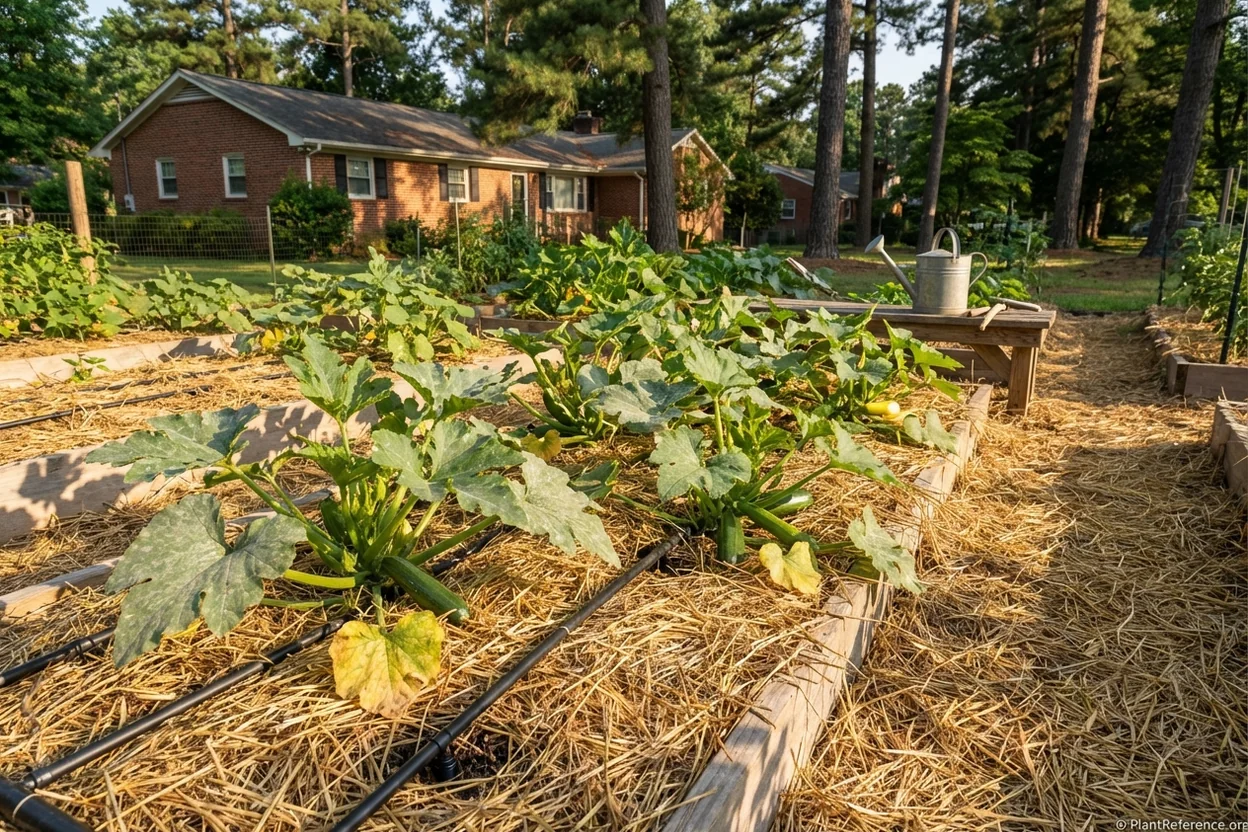
Mulching: Apply 3-4 inches of straw or shredded leaves around plants after soil warms. This conserves moisture and suppresses weeds.
Watering Technique: Water at soil level, not on leaves. Richmond's humidity promotes fungal diseases when foliage stays wet.
Fertilizing Schedule
Pre-Plant: Work 2 inches of compost into planting area At Planting: Mix balanced fertilizer (10-10-10) into planting holes Summer Squash: Side-dress every 3-4 weeks with compost or balanced fertilizer Winter Squash: Side-dress once at vine run, then stop—excess nitrogen delays maturity
Troubleshooting Richmond-Specific Problems
Squash Vine Borer
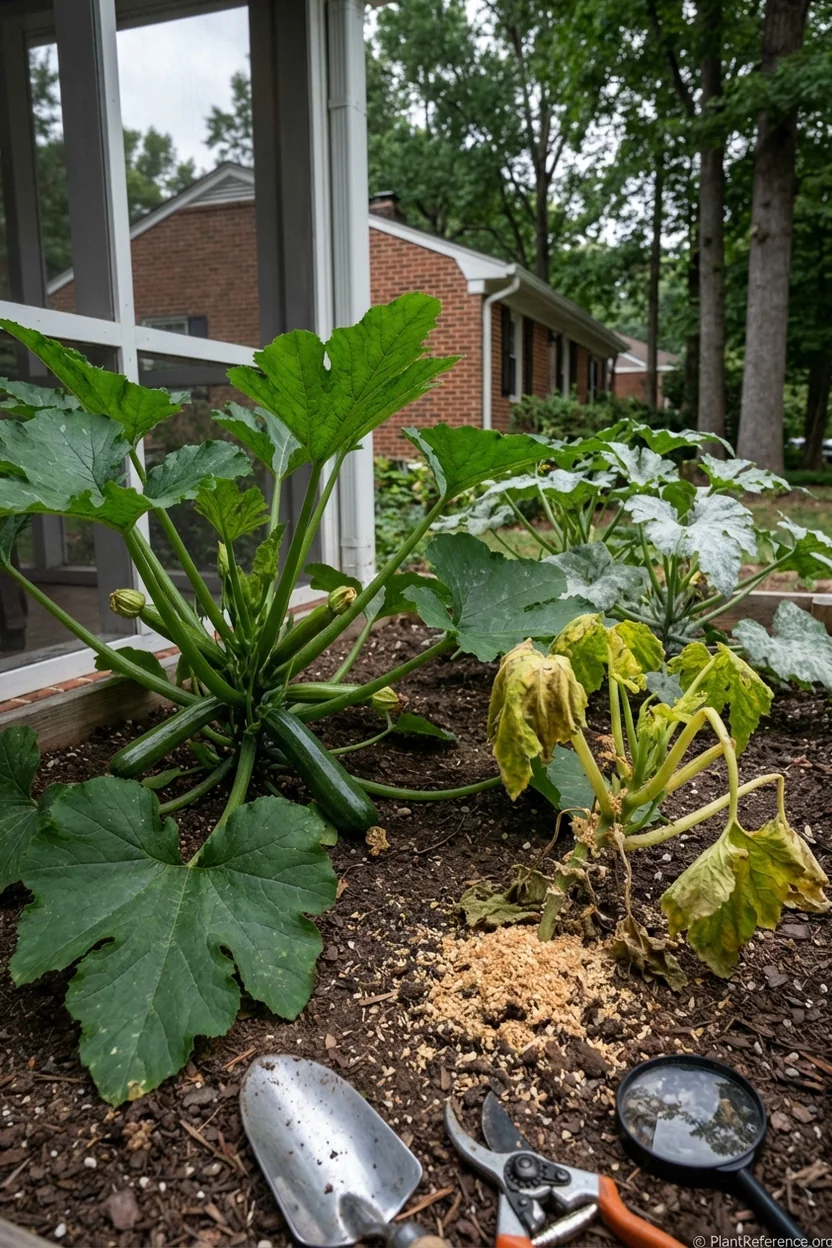
This clear-wing moth is our biggest squash pest in Richmond. Adults emerge in late June and lay eggs at the base of stems.
Prevention:
Plant butternut varieties (Cucurbita moschata)—resistant due to solid stems
Use row covers until flowering begins
Wrap stem bases with aluminum foil
Treatment:
Look for sawdust-like frass at stem base
Slit stem carefully and remove white grub
Mound soil over wounded stem to encourage new roots
Powdery Mildew
Richmond's humidity creates perfect conditions for this white fungal coating on leaves, especially in late summer.
Prevention:
Space plants properly for air circulation
Water at soil level, never on leaves
Choose resistant varieties when available
Treatment:
Spray weekly with baking soda solution (1 tsp per quart water)
Milk spray (1 part milk to 9 parts water) also works
Remove affected leaves immediately
Bacterial Wilt
Striped cucumber beetles carry this disease, which causes sudden vine collapse.
Prevention:
Use row covers during early growth
Remove beetles by hand when spotted
Plant trap crops like Blue Hubbard away from main crop
No Cure: Once plants show bacterial wilt, remove them immediately to prevent spread.
Poor Fruit Set
If you see flowers but no fruit developing, several factors might be at play:
Early Season: Plants produce male flowers first, females come later. Be patient.
Pollination: Hand pollinate if bee activity is low. Use a small paintbrush to transfer pollen from male flowers to female flowers in early morning.
Temperature Stress: Temperatures above 90°F (32°C) or below 60°F (16°C) affect pollination. Richmond's hot spells in July can temporarily stop fruit set.
Harvest & Storage
Summer Squash Harvest
Timing: Harvest when young and tender, skin easily dented with fingernail
Zucchini: 6-8 inches long
Yellow crookneck: 4-6 inches
Pattypan: 2-3 inches diameter
Frequency: Check daily during peak season. Large fruit left on plants stops new production.
Storage: Use within 1-2 weeks. Store at 50°F (10°C) if possible—refrigerator is too cold and causes chilling injury.
Winter Squash Harvest
Timing: Wait until vines die back naturally and stems become corky. Skin should be hard enough that you can't dent it with a fingernail.
Curing: All except acorn need curing at 80-85°F (27-29°C) for 10-14 days. Richmond's September weather often provides perfect curing conditions.
Storage: After curing, store at 50-55°F (10-13°C) with good ventilation. Many Richmond homes have basements perfect for squash storage.
Storage Life:
Butternut: 4-6 months
Acorn: 4-8 weeks (don't cure)
Delicata: 2-3 months
Spaghetti: 2-3 months
Frequently Asked Questions
Reading about plants and recognising them are different skills. These three build the second.
- Daily PlantIdentify the day’s mystery plant from a close-up photograph.
- Keyed OutWork a dichotomous key, lead by lead, to name a hidden specimen.
- Name That PlantName a specimen from botanical clues dealt hardest first.
Free to play, no account needed
Tagged with
Dot grew up on a small farm in rural Virginia and has maintained a vegetable garden for decades. After retiring from teaching elementary school, she became a Master Gardener volunteer and spends her time mentoring new gardeners at community garden plots in Richmond. She's especially knowledgeable about heirloom varieties, seed saving, and traditional growing methods passed down from her grandmother. Dot's no-nonsense advice comes from extensive trial and error—she's seen every tomato disease, pest problem, and weather disaster imaginable. Her biggest pet peeve is gardeners who overcomplicate simple tasks. "Plants want to grow," she often says. "Your job is to not get in their way."