When to Plant Squash in Pittsburgh: Complete Guide + Best Varieties for Zone 6b
Pets & Toxicity
Recorded toxicity for plants linked in this guide. An unknown status is not a safety assessment.
No linked plant is recorded as toxicDetailsHide
Cucurbita pepo 'Black Beauty' — Toxicity
Non-toxic as an edible cropView Cucurbita pepo 'Black Beauty' plant profileCucurbita pepo 'Yellow Crookneck' — Toxicity
Non-toxic as an edible cropView Cucurbita pepo 'Yellow Crookneck' plant profile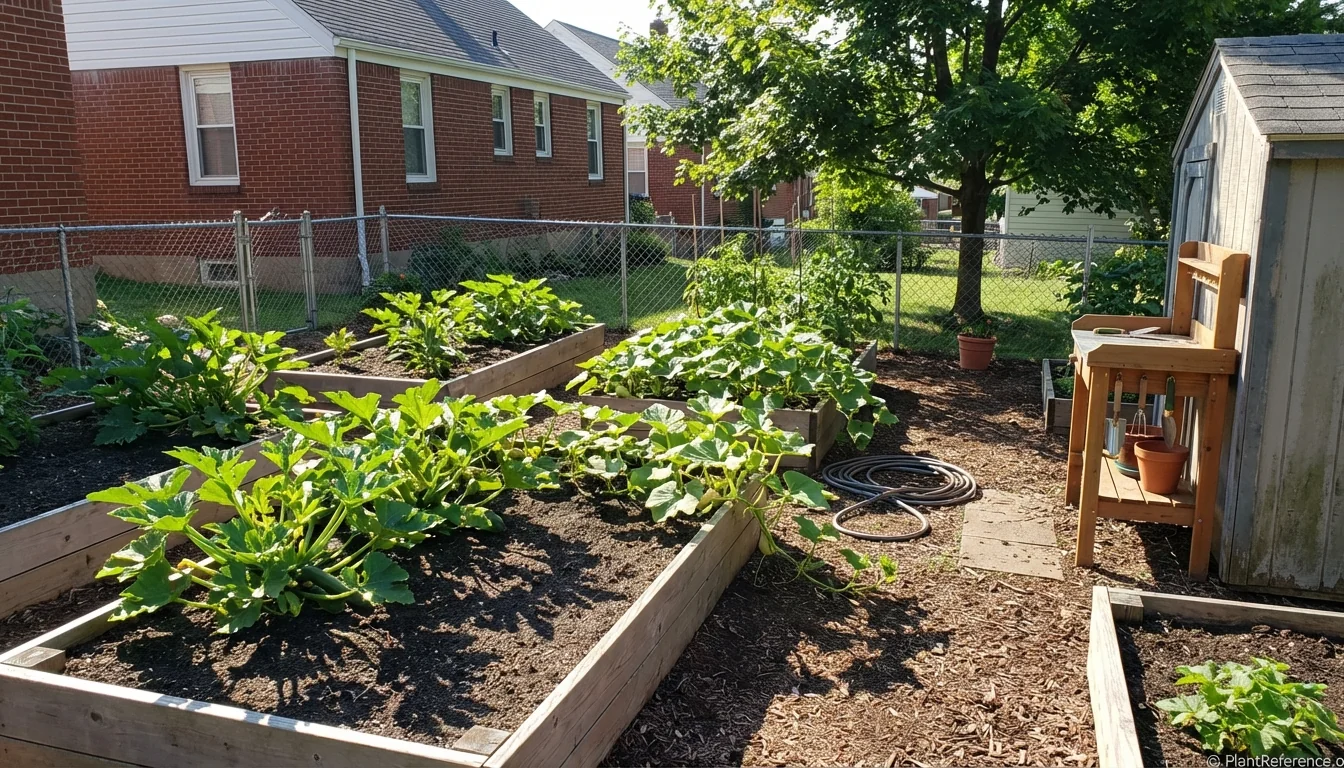
— Image © Plant Reference 2026
Knowing when to plant squash in Pittsburgh can make the difference between a bountiful harvest and disappointing yields. After forty years of gardening in Pennsylvania, I'll tell you what works: timing is everything, and Zone 6b gives us excellent opportunities for both summer and winter squash varieties.
Best Squash Varieties for Pittsburgh's Zone 6b Climate
Pittsburgh's 178-day growing season from April 24 to October 19 provides ample time for all squash varieties, but choosing the right ones makes your job easier. Our moderate climate supports both summer and winter types, though you'll need to manage our regional pest pressure effectively.
Summer squash varieties excel here because they mature quickly and produce heavily before pest populations peak. Winter squash also performs well, but variety selection matters for disease resistance and storage quality.
Variety | Days to Maturity | Best For | Notes for Pittsburgh |
|---|---|---|---|
50-55 days | Fresh eating, continuous harvest | Most productive summer type, harvest daily | |
55-60 days | Tender summer harvest | Pick at 4-6 inches, skin toughens quickly | |
50-60 days | Stuffing, compact gardens | Harvest at 2-3 inches for best texture | |
90-100 days | Long storage, vine borer resistant | Plant by June 10 for October harvest | |
85-95 days | Fall eating, moderate storage | Stores 6-8 weeks without curing | |
80-90 days | Edible skin, short storage | Cream with green stripes, sweet flesh | |
Cucurbita pepo 'Spaghetti' | 90-100 days | Pasta substitute, good storage | Needs consistent water for proper texture |
Cucurbita maxima 'Kabocha' | 95-105 days | Premium eating, excellent storage | Requires warm curing for best flavor |
Summer Squash Champions for Pittsburgh
🌿Cucurbita pepo 'Black Beauty' zucchini is your workhorse variety. These compact bush plants produce heavily from mid-July through frost, and one plant feeds a family of four. The key is daily harvesting—skip a day in August and you'll find baseball bat-sized fruits that stop production.
🌿Cucurbita pepo 'Yellow Crookneck' offers different flavor and texture. The warty, curved fruits taste best at 4-6 inches long. Beyond that size, the skin becomes tough and seeds develop, making the flesh stringy.
🌿Cucurbita pepo 'Pattypan' varieties work well in smaller spaces. These scalloped, disk-shaped fruits are ready at 2-3 inches diameter. Larger fruits become woody but work for stuffing.
Winter Squash Selection Strategy
🌿Cucurbita moschata 'Butternut' is your best bet for long storage and pest resistance. The smooth, tan fruits store 4-6 months in cool, dry conditions. More importantly, butternut's solid stems resist squash vine borer damage—our biggest regional pest problem.
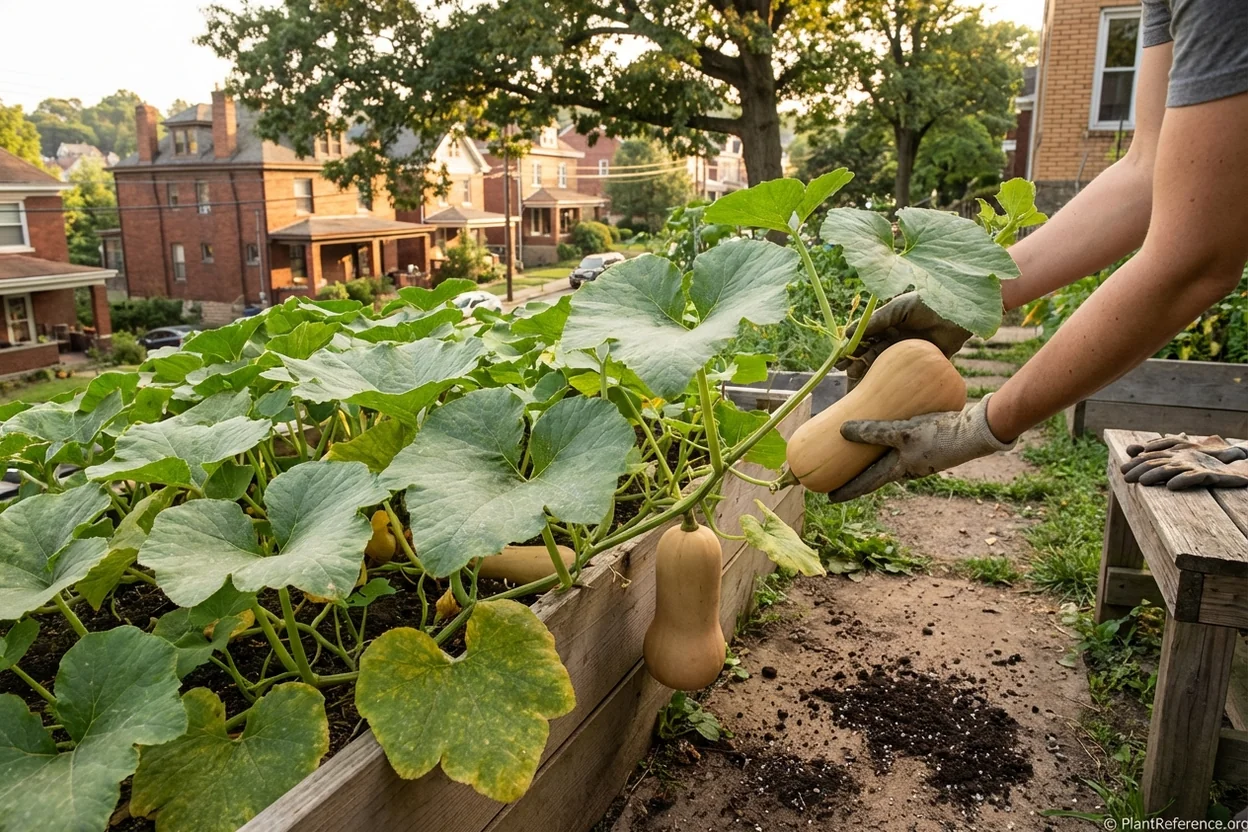
🌿Cucurbita pepo 'Acorn' and 🌿Cucurbita pepo 'Delicata' offer shorter vines for smaller gardens. Acorn stores 6-8 weeks and doesn't require curing—just harvest after vines die back. Delicata's thin, edible skin eliminates peeling, but limits storage to 8-10 weeks maximum.
Cucurbita maxima 'Kabocha' produces the highest quality eating but requires the longest season. Plant by May 15 to ensure maturity before our October 19 frost date.
Specific Planting Dates for Pittsburgh
Pittsburgh's last frost averages April 24, but soil temperature matters more than calendar date for squash success. These warm-season crops need soil temperature consistently above 60°F (16°C) to germinate reliably.
Direct Seeding Schedule
Summer Squash: May 10-15 for main crop. Soil should be 60-65°F (16-18°C) at 4-inch depth. Test with soil thermometer rather than guessing—cold soil leads to seed rot and poor germination.
Winter Squash: May 15-25 for full-season varieties. 🌿Cucurbita moschata 'Butternut' and Cucurbita maxima 'Kabocha' need every bit of our growing season. Plant by May 25 at the latest to ensure 90-100 days before frost.
Succession Planting: For summer types only. Plant second round June 15-20 to extend harvest and replace plants lost to vine borers.
Transplant Timeline
Starting indoors extends your season and improves germination rates, especially for winter squash.
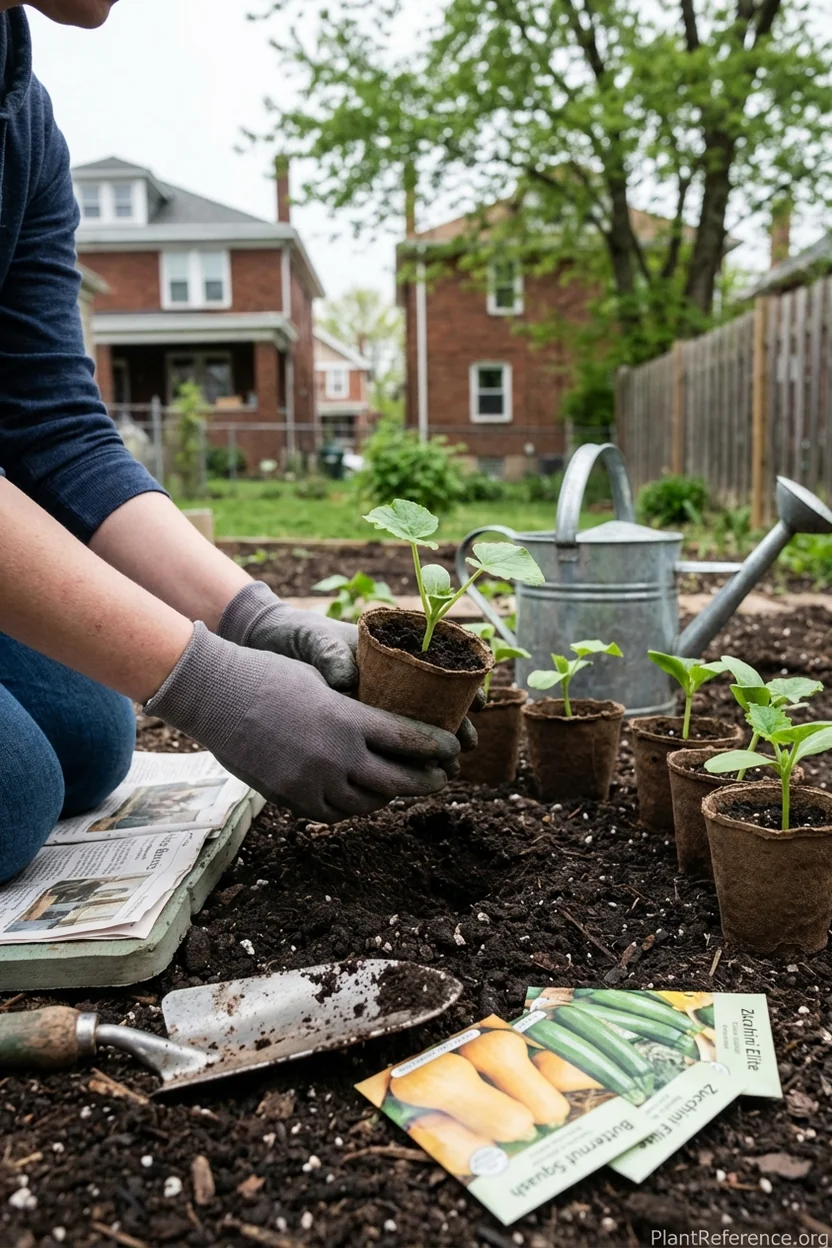
Indoor Seeding: Start seeds April 10-20, using biodegradable pots to avoid transplant shock. Squash roots are sensitive—disturbing them sets back growth by 2-3 weeks.
Transplant Outdoors: May 10-20, after soil warms and night temperatures stay above 50°F (10°C). Harden off gradually over 5-7 days.
Season Extension Techniques
Pittsburgh's variable spring weather benefits from protection strategies:
Row Covers: Use lightweight fabric covers from transplant through early June. Remove when first female flowers appear to allow pollination. This adds 2-3 weeks to your effective season.
Black Plastic Mulch: Pre-warm soil by laying black plastic 2 weeks before planting. Cut holes for transplants or seeds. This technique raises soil temperature 8-10°F (4-6°C), crucial for Cucurbita maxima 'Kabocha' in marginal years.
Wall of Water or Cloches: Individual plant protection works well for 4-6 transplants of winter varieties. Provides frost protection and creates favorable microclimate.
Complete Growing Guide for Pittsburgh
Successful squash production in Pittsburgh requires understanding our specific challenges: moderate growing season, high humidity in summer, and significant pest pressure from squash vine borers.
Soil Preparation
Squash are heavy feeders requiring rich, well-draining soil with pH 6.0-6.8. Pittsburgh's clay-heavy soils need amendment for proper drainage and root development.
Soil Amendment Protocol: 1. Add 2-3 inches of compost to planting area 2. Work in 1-2 inches of coarse sand if drainage is poor 3. Test soil pH—add lime if below 6.0 to prevent calcium deficiency 4. Create raised rows 4-6 inches high for improved drainage
Pre-Plant Fertilization: Work 10-10-10 fertilizer into soil at 2 lbs per 100 square feet, or use equivalent compost at 3-4 inches deep. Avoid high nitrogen at planting—it delays flowering.
Spacing Requirements by Type
Proper spacing prevents fungal diseases common in Pittsburgh's humid summers:
Bush Summer Squash: 3-4 feet apart in rows 4-5 feet apart. 🌿Cucurbita pepo 'Black Beauty' and 🌿Cucurbita pepo 'Pattypan' types need room for air circulation.
Vining Winter Squash: 4-5 feet apart in rows 6-8 feet apart. 🌿Cucurbita moschata 'Butternut' vines spread 10-12 feet—plan accordingly or use vertical support.
Hill Planting: Traditional method using 4-foot diameter hills with 2-3 plants per hill. Space hills 6-8 feet apart. Works well for both types.
Watering Strategy
Consistent moisture is critical but overwatering invites disease. Pittsburgh's summer humidity requires careful balance.
Deep, Infrequent Watering: 1-1.5 inches per week applied twice weekly rather than daily sprinkling. This encourages deep root development and reduces fungal disease risk.
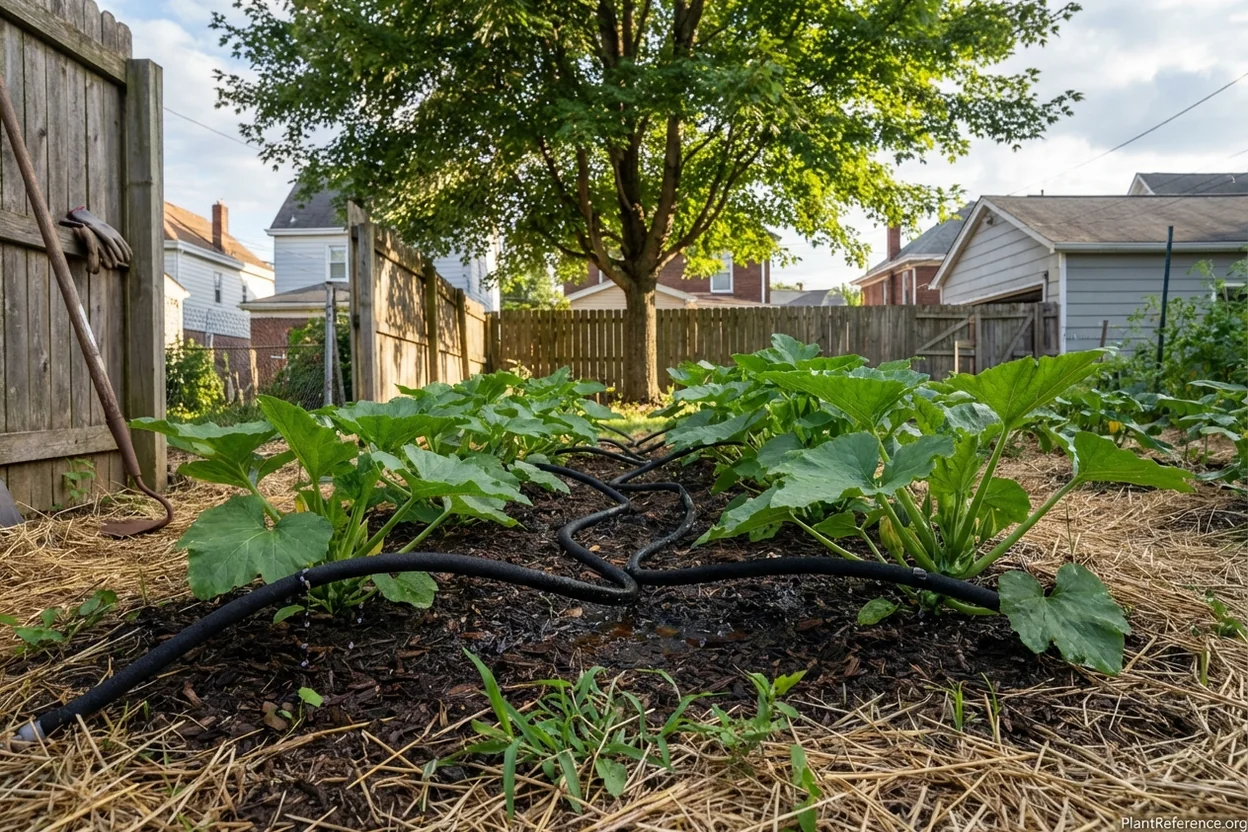
Drip Irrigation or Soaker Hoses: Keep water off foliage to prevent powdery mildew. Pittsburgh's humid August weather creates perfect conditions for foliar diseases.
Mulching: Apply 3-4 inches of straw or grass clippings around plants after soil warms. Maintains moisture, suppresses weeds, and keeps fruits clean.
Fertilization Schedule
Squash nutrient needs change throughout the growing season:
Early Season (May-June): Side-dress with balanced fertilizer when vines begin running. Use 10-10-10 at 1 lb per 100 feet of row.
Mid-Season (July):
Summer squash: Continue balanced feeding every 3-4 weeks to support continuous production
Winter squash: Switch to low-nitrogen, high-potassium fertilizer to encourage fruit development
Late Season (August-September):
Summer squash: Maintain feeding schedule through harvest
Winter squash: Stop all fertilization 6-8 weeks before expected harvest to allow proper ripening
Troubleshooting Pittsburgh-Specific Problems
Pittsburgh gardeners face predictable challenges that require proactive management rather than reactive treatment.
Squash Vine Borer Management
This clear-winged moth is Pittsburgh's #1 squash pest, laying eggs at stem bases from mid-June through July. Larvae bore into stems, causing sudden vine collapse.
Prevention Strategies:
Plant 🌿Cucurbita moschata 'Butternut' varieties with solid stems
Use floating row covers until first female flowers appear
Wrap aluminum foil around stem bases to prevent egg laying
Time plantings to avoid peak moth activity (plant very early or late June succession)
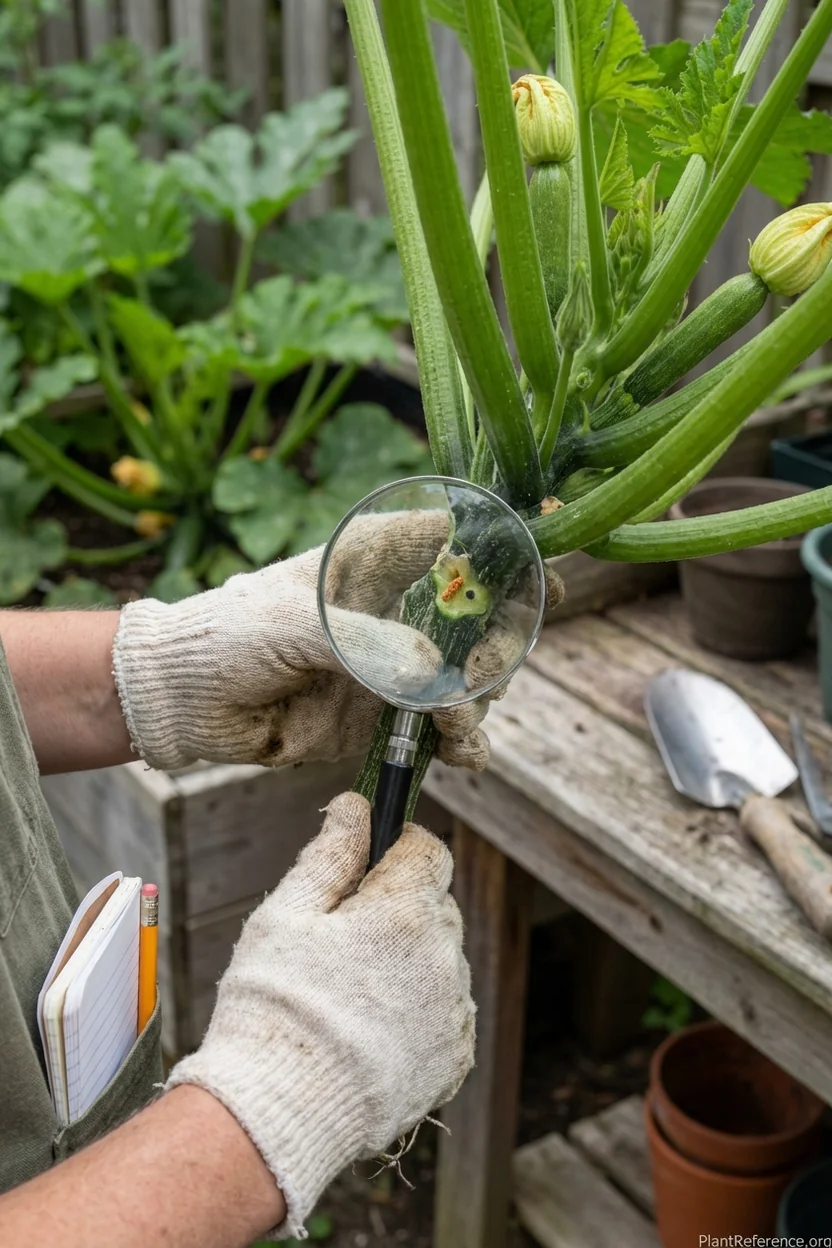
Early Detection: Look for orange sawdust-like frass around stem bases starting in July. This indicates active larvae inside stems.
Treatment Options: 1. Surgical removal: Slit stem lengthwise with sharp knife, remove larvae, cover wound with moist soil 2. Beneficial nematodes applied to soil around stem bases 3. Bt (Bacillus thuringiensis) injected into stems with syringe
Powdery Mildew Control
Pittsburgh's humid August weather creates ideal conditions for this white, powdery fungal coating on leaves.
Cultural Controls:
Increase plant spacing for better air circulation
Water at soil level, never on foliage
Remove affected leaves immediately
Choose resistant varieties when available
Treatment Options:
Weekly spray with 1:10 milk to water solution
Baking soda spray (1 tsp per quart water) applied early morning
Neem oil applications every 7-10 days
Bacterial Wilt Prevention
Transmitted by cucumber beetles, this disease causes rapid vine collapse with no recovery possible.
Management Strategy:
Control cucumber beetles with kaolin clay (Surround) sprays
Use yellow sticky traps to monitor beetle populations
Remove affected plants immediately to prevent spread
Rotate planting areas annually
Pollination Issues
Poor fruit set often results from pollination problems rather than plant health issues.
Common Causes:
Male flowers appearing 1-2 weeks before females (normal)
Hot weather (>90°F/32°C) causing pollen sterility
Lack of pollinators due to pesticide use or weather
Hand Pollination Technique: 1. Identify female flowers (small fruit at base) 2. Collect pollen from male flowers using small brush 3. Transfer to female flower stigma between 6-10 AM 4. Cover pollinated flowers with mesh bag to prevent confusion
Harvest & Storage
Harvest timing determines both eating quality and storage potential. Pittsburgh's climate allows proper curing of winter varieties before storage.
Summer Squash Harvesting
Harvest summer varieties while physiologically immature for best texture and continuous production:
🌿Cucurbita pepo 'Black Beauty':** 6-8 inches long, skin glossy and easily punctured with fingernail. Daily harvest essential during peak production.
🌿Cucurbita pepo 'Yellow Crookneck':** 4-6 inches long, skin still tender. Warty texture is normal—smooth skin indicates immaturity.
🌿Cucurbita pepo 'Pattypan':** 2-3 inches diameter for tender eating, up to 4 inches for stuffing. Harvest every other day minimum.
Storage: Summer squash keeps 1-2 weeks refrigerated. For longer storage, slice and freeze, pickle, or dehydrate.
Winter Squash Harvesting
Harvest winter varieties only when fully mature—premature harvest results in poor flavor and shortened storage life:
Maturity Indicators:
Vines naturally dying back and turning brown
Stem becoming corky and dry where it attaches to fruit
Skin hard enough that fingernail won't puncture it
Dull rather than glossy skin surface
Harvest Timing: Wait until after light frosts kill vines but before hard freeze (below 25°F/-4°C). Pittsburgh's October 19 average first frost provides guidance.
Curing Process: 1. Harvest with 2-3 inches of stem attached 2. Cure in warm (80-85°F/27-29°C), humid location for 10-14 days 3. Exception: 🌿Cucurbita pepo 'Acorn' doesn't require curing and deteriorates in heat
Storage Conditions: 50-55°F (10-13°C) with 50-70% humidity. Basement or unheated garage works well. Check monthly and remove any showing soft spots.
Frequently Asked Questions
Reading about plants and recognising them are different skills. These three build the second.
- Daily PlantIdentify the day’s mystery plant from a close-up photograph.
- Keyed OutWork a dichotomous key, lead by lead, to name a hidden specimen.
- Name That PlantName a specimen from botanical clues dealt hardest first.
Free to play, no account needed
Aisha manages a small tropical nursery on the east side of Houston, specializing in plants that can handle the Gulf Coast's humidity, heat, and unpredictable flooding. She studied horticulture in college and worked at a wholesale grower before opening her own operation. Growing up, her parents kept a kitchen garden with okra, bitter gourd, and curry leaf plants—a tradition she's continued. Houston's subtropical climate lets her grow things most of the country can't, but it also means dealing with fungal issues, standing water, and summers where it's too hot for even tomatoes. Aisha writes about tropical and subtropical plant care, humidity management, and working with heavy clay soils.