When to Plant Squash in Anchorage: Complete Guide + Best Varieties for Zone 4b
Pets & Toxicity
Recorded toxicity for plants linked in this guide. An unknown status is not a safety assessment.
No linked plant is recorded as toxicDetailsHide
Cucurbita pepo 'Black Beauty' — Toxicity
Non-toxic as an edible cropView Cucurbita pepo 'Black Beauty' plant profileCucurbita pepo 'Yellow Crookneck' — Toxicity
Non-toxic as an edible cropView Cucurbita pepo 'Yellow Crookneck' plant profile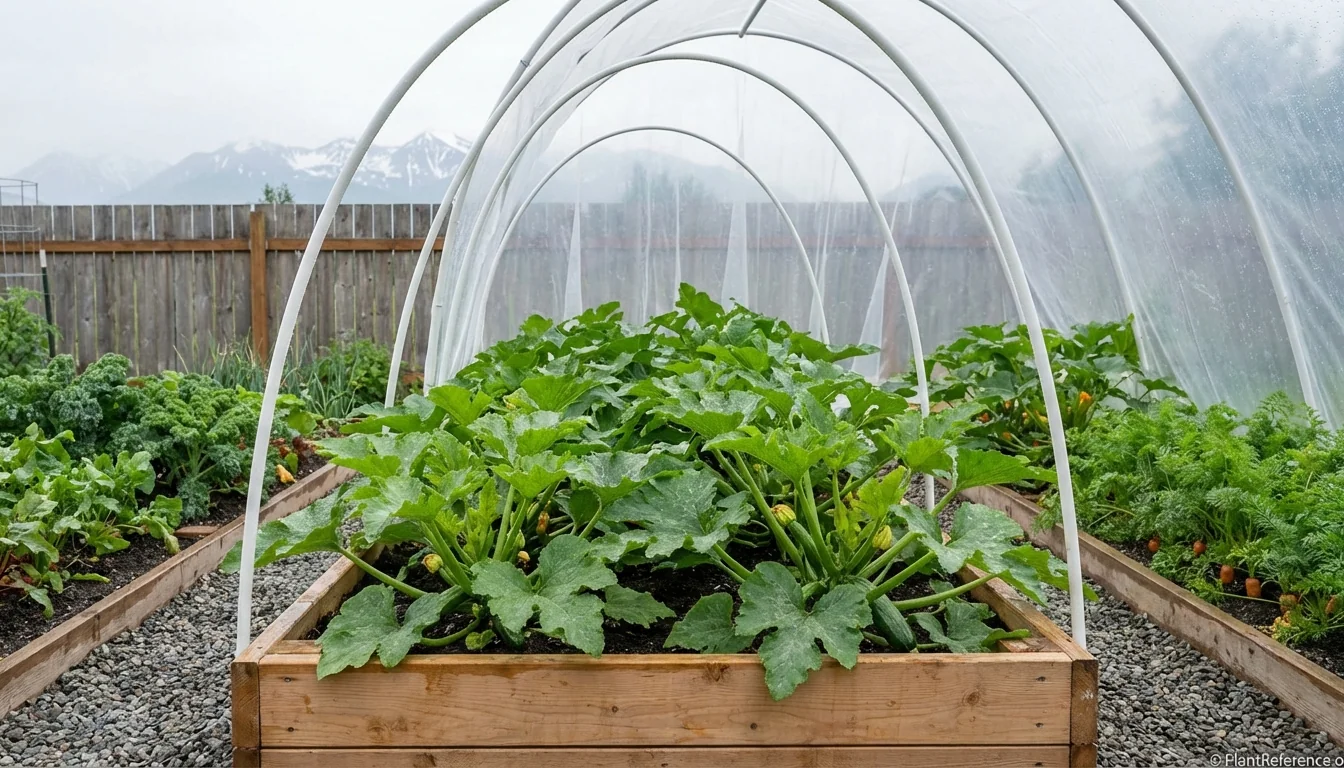
— Image © Plant Reference 2026
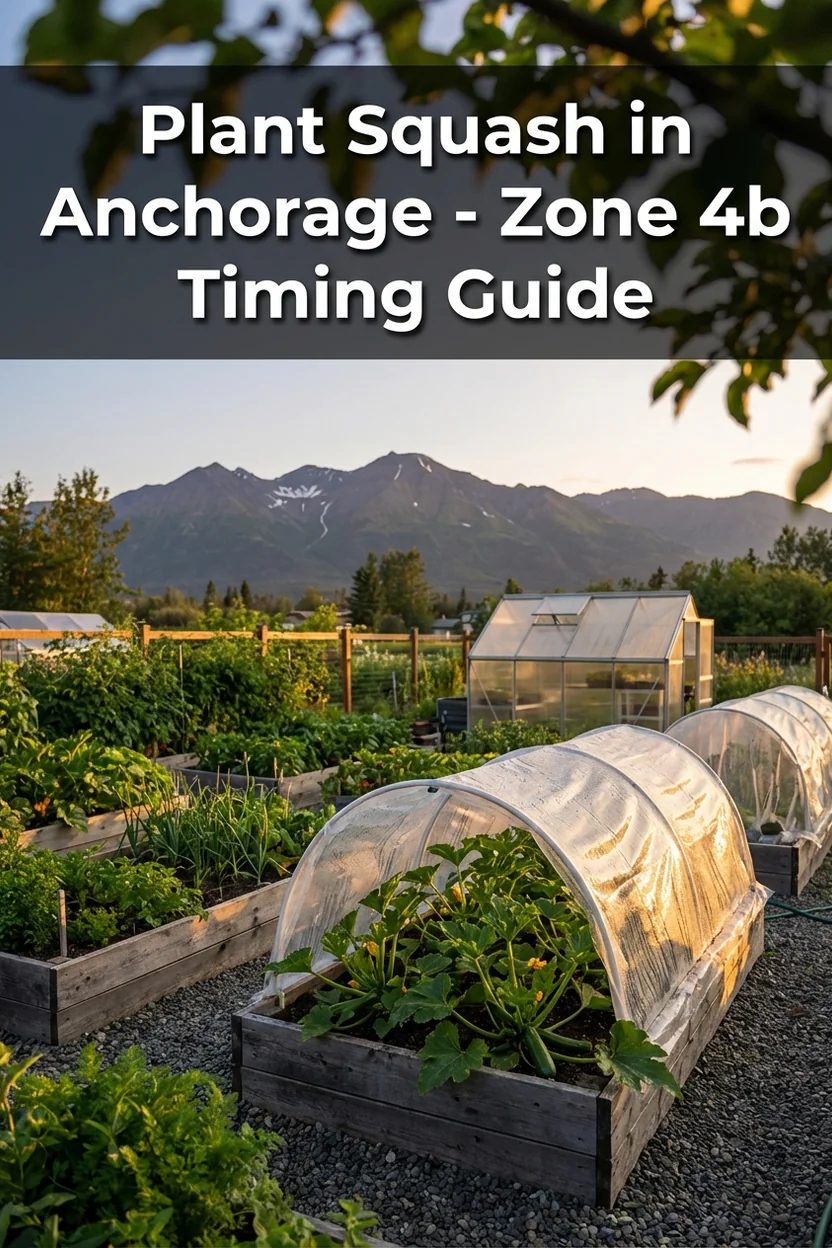
Growing squash in Anchorage presents unique challenges that would discourage most gardeners, but with the right varieties and techniques, you can harvest fresh zucchini by mid-July. Alaska's Zone 4b climate demands a completely different approach from warmer regions—every day of the 118-day growing season counts.
Best Squash Varieties for Anchorage's Climate
I've been gardening in Alaska for over twenty years, and I'll tell you straight: winter squash is a gamble here. Your 118-day season from May 19 to September 14 barely accommodates the shortest-season varieties, and that's with perfect conditions. Smart Anchorage gardeners focus on summer squash and maybe one quick winter variety.
Variety | Days to Maturity | Best For | Notes for Anchorage |
|---|---|---|---|
45-55 days | Reliable summer harvest | Perfect for Zone 4b short season | |
50-60 days | Heat-tolerant option | Good producer in cool summers | |
50-60 days | Space-efficient choice | Bush habit works in raised beds | |
80-100 days | Risky winter option | Requires season extension | |
80-100 days | Only with greenhouse | Not recommended for outdoor |
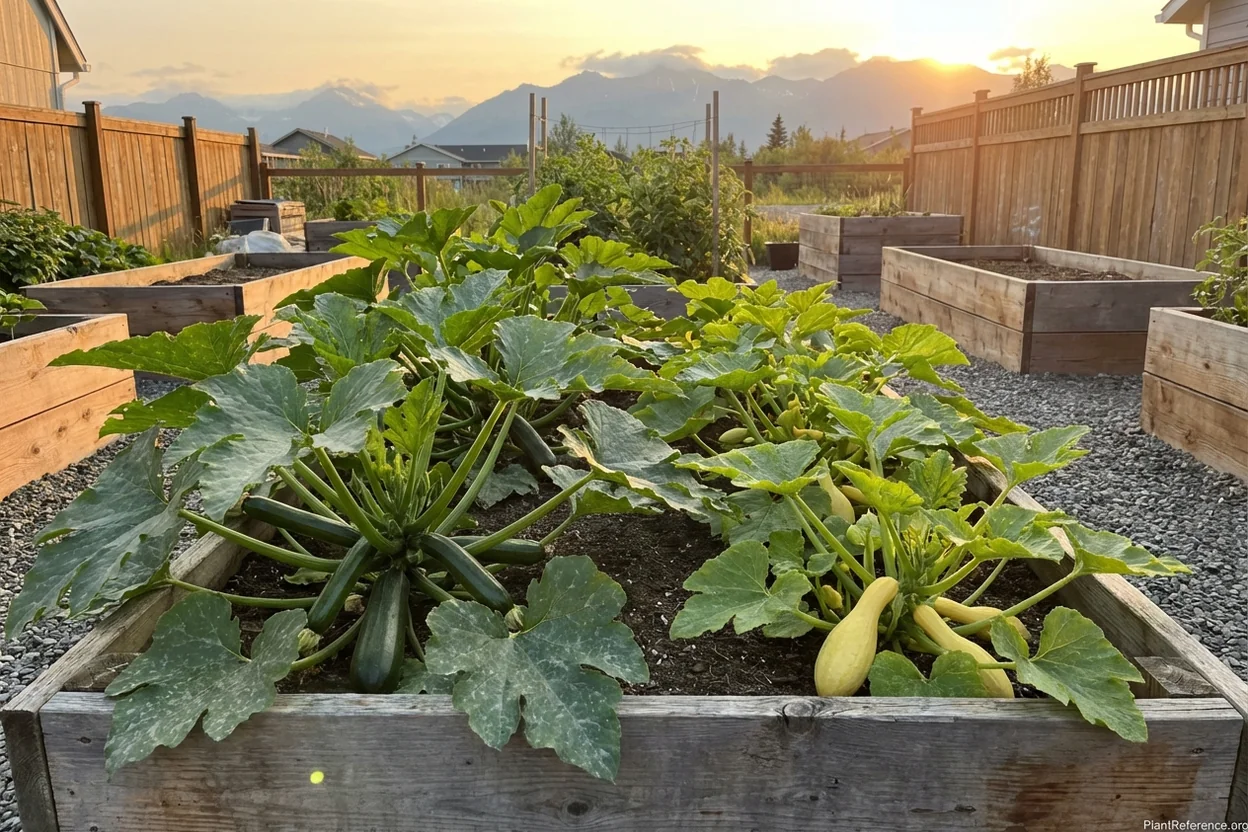
The 🌿Cucurbita pepo 'Black Beauty' zucchini is your safest bet. I can count on this variety every season because it starts producing in early July and keeps going until frost. One plant produces enough for a family of four—trust me on this.
🌿Cucurbita pepo 'Yellow Crookneck' tolerates cool conditions better than most summer squash. Even during those foggy Anchorage summers when temperatures barely reach 65°F (18°C), it continues flowering and setting fruit. The curved neck makes it easy to spot when ready to harvest.
For winter squash, 🌿Cucurbita pepo 'Delicata' is your only realistic outdoor option, and even then, you need plastic mulch, row covers, and luck. The larger winter varieties like butternut require greenhouse conditions to reach maturity before September frost.
Specific Planting Dates for Anchorage
Timing is everything when your growing season is shorter than most varieties' maturity requirements. Here's the schedule I've developed through years of trial and error in Alaska.
Indoor Seed Starting: April 25 Start seeds indoors exactly 3-4 weeks before your planned transplant date. Squash seeds germinate quickly in warm soil (70-75°F/21-24°C), usually within 5-7 days. Use biodegradable pots—peat pots or cow manure pots work well—because squash roots hate disturbance.
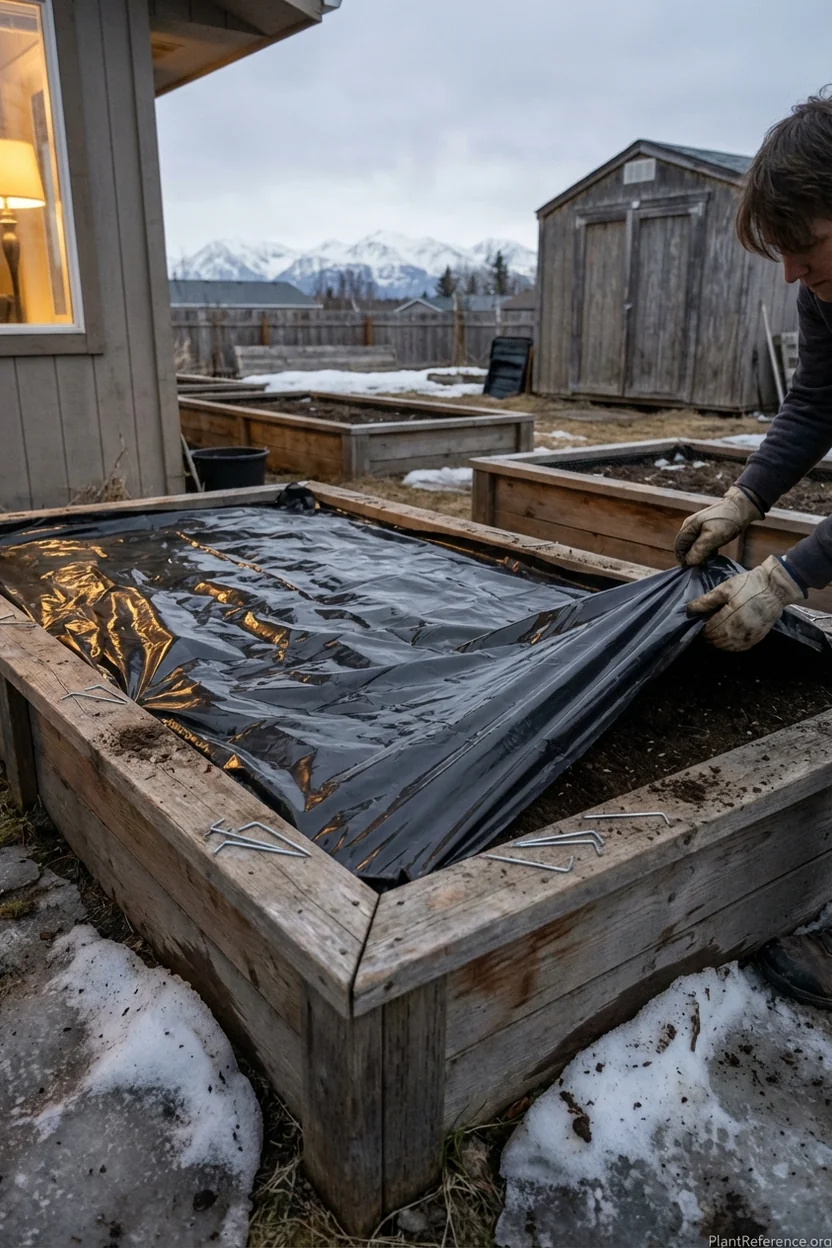
Soil Preparation: May 1-15 While seedlings grow indoors, prepare outdoor beds. Install black plastic mulch over raised beds to begin warming the soil. The soil needs to reach at least 60°F (15°C) before transplanting, and plastic mulch can add 5-10°F to your soil temperature.
Transplant Date: May 26 One week after the average last frost date of May 19 gives you a safety buffer. Even then, keep row covers handy—I've seen snow in Anchorage on Memorial Day weekend. Soil temperature should be consistently above 60°F (15°C) at 4-inch depth.
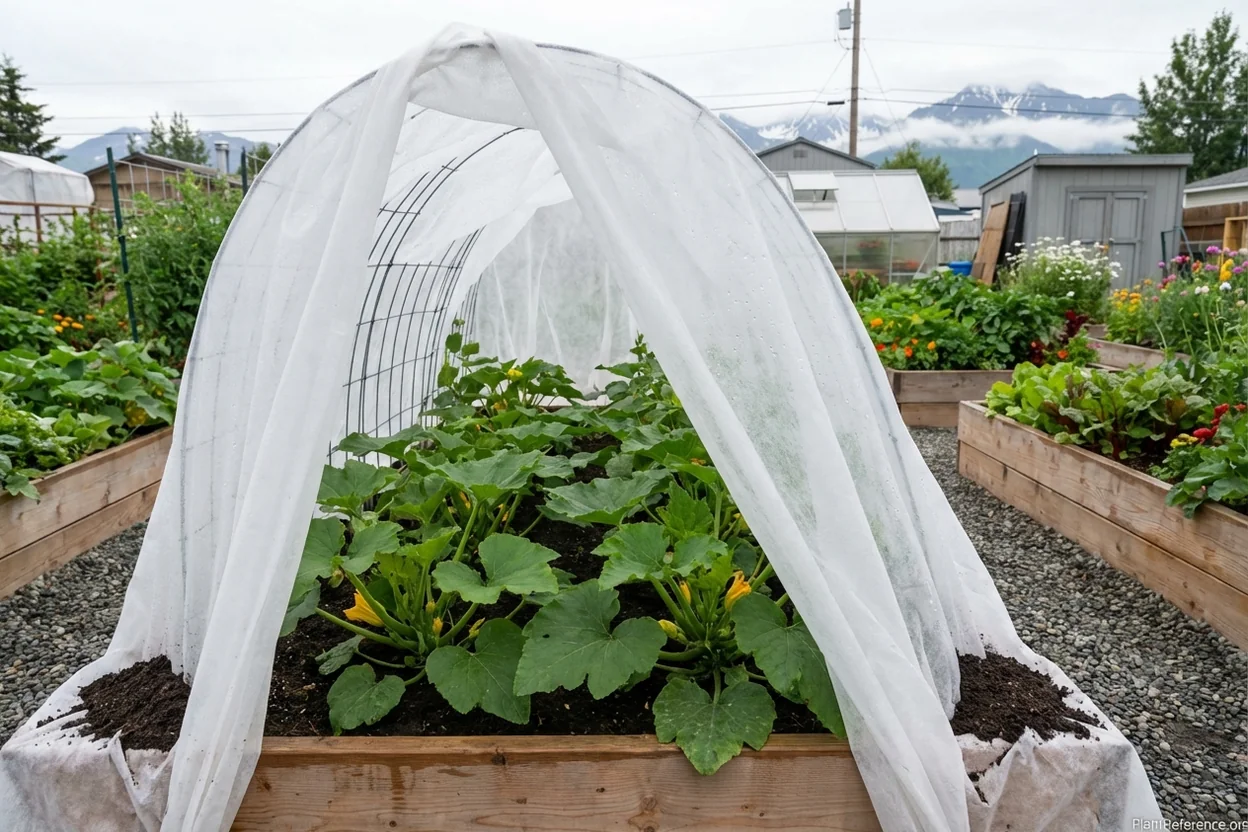
Protection Installation: Transplant Day Install floating row covers immediately after transplanting. These spun-bonded polyester covers add 4-8°F of frost protection and create a greenhouse effect that accelerates growth. You'll remove them when plants begin flowering (usually early July).
First Harvest: July 10-20 Summer squash begins producing 45-55 days after transplanting. Your first zucchini should be ready around mid-July, assuming normal weather patterns.
Complete Growing Guide for Anchorage
Success with squash in Anchorage requires treating it like the marginally hardy crop it is here. Every technique focuses on heat accumulation and season extension.
Soil Requirements for Alaska Gardens
Anchorage's naturally acidic soils need amendment before planting squash. Test your soil pH—it's likely between 5.0-5.5, but squash prefers 6.0-6.8 for optimal nutrient uptake. Add lime in fall or early spring to gradually raise pH.
Drainage is critical in Alaska's wet climate. Build raised beds at least 8 inches (20 cm) high to prevent waterlogged roots. I mix equal parts native soil, compost, and coarse sand to create fast-draining, fertile growing medium.
Organic matter is your friend in Alaska's short season. Work 2-4 inches (5-10 cm) of finished compost into beds each spring. This feeds beneficial microbes that release nutrients slowly throughout the growing season.
Season Extension Techniques
Black Plastic Mulch: Install 4-6 weeks before planting to warm soil. Cut planting holes with a utility knife when ready to transplant. This single technique can advance your harvest by 7-10 days.
Row Covers: Use immediately after transplanting until plants begin flowering. Floating covers (spun-bonded polyester) allow light through while trapping heat and blocking wind. Support with wire hoops to prevent crushing plants.
Wall O' Water: Individual plant protectors work well for single squash plants. These water-filled tubes create a microclimate 10-15°F warmer than ambient temperature. Essential for getting transplants established.
Fertilization Strategy
Alaska's cool soils slow nutrient release, so I use a three-pronged approach:
Pre-plant: Mix granular organic fertilizer (10-10-10) into soil at planting. Use 2 tablespoons per square foot.
Quick-start: Water transplants with diluted fish emulsion (5-1-1) weekly for the first month. This liquid fertilizer works in cool soil when granular fertilizers sit dormant.
Mid-season: Side-dress with compost when plants begin flowering, usually early July. Summer squash needs continuous nutrition to maintain production.
Water Management in Alaska
Alaska's frequent summer rains can be both blessing and curse for squash. Consistent moisture is essential, but overwatering in cool conditions invites root rot.
Install drip irrigation or soaker hoses under plastic mulch. This delivers water directly to root zones while keeping foliage dry. Wet leaves in Alaska's cool, humid conditions develop powdery mildew quickly.
Water deeply but less frequently. Squash roots can extend 18 inches (45 cm) deep, so shallow daily watering creates weak, surface-feeding roots vulnerable to temperature fluctuations.
Troubleshooting Anchorage-Specific Problems
Alaska's unique growing conditions create challenges you won't face in warmer climates. Here's how to solve the most common problems I see in Anchorage gardens.
Slow Germination and Poor Growth
Problem: Seeds take 10-14 days to germinate, or transplants sit without growing after planting.
Solution: Soil temperature below 60°F (15°C) stops squash growth. Install black plastic mulch 4-6 weeks before planting to warm soil. Use soil thermometer to confirm temperature before transplanting.
Blossom Drop Without Fruit Set
Problem: Plants produce flowers that drop without forming squash.
Solution: Cool temperatures (below 50°F/10°C at night) prevent pollination. This is normal in early June—plants will start setting fruit when nighttime temperatures stay above 55°F (13°C), usually after summer solstice.
Stunted Plant Size
Problem: Plants remain small compared to described mature size.
Solution: Alaska's cool nights slow plant metabolism. This is normal—focus on fruit production rather than plant size. A 2-foot tall zucchini plant in Alaska can produce as much as a 4-foot plant in warmer climates.
Short Harvest Season
Problem: Plants start producing in late July, then frost kills them in early September.
Solution: Use succession planting with 2-week intervals. Start first crop indoors April 25, second crop May 10. This extends harvest from mid-July through first frost.
Powdery Mildew in Late Summer
Problem: White powdery coating appears on leaves in August.
Solution: Alaska's cool, humid conditions favor this fungal disease. Increase air circulation around plants, avoid overhead watering, and apply milk spray (1 part milk to 9 parts water) weekly as prevention.
Harvest & Storage
Harvesting squash in Alaska requires understanding the difference between summer and winter types, especially given our short season.
Summer Squash Harvest
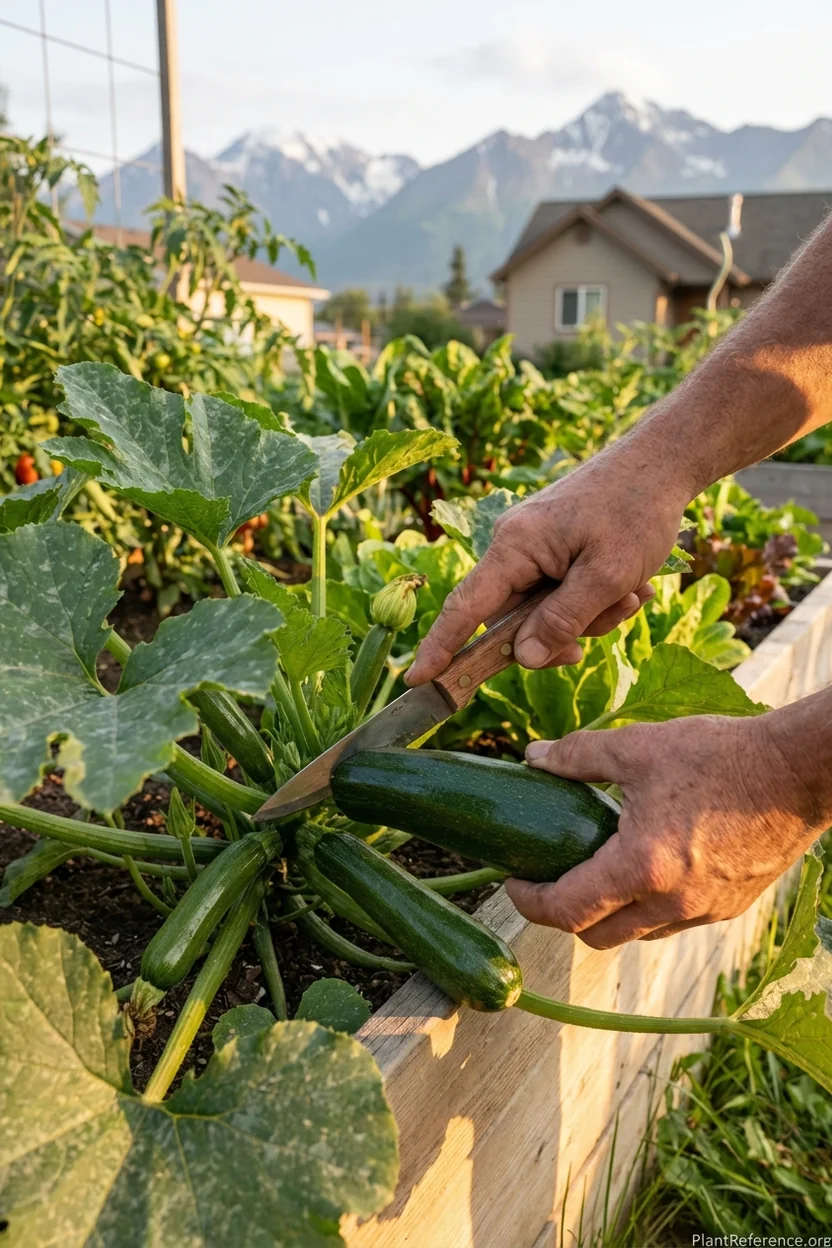
Begin checking plants daily once they start flowering. Summer squash grows rapidly in Alaska's long summer days—a 2-inch zucchini can become an 8-inch monster in 48 hours.
Zucchini: Harvest at 6-8 inches (15-20 cm) long when skin is glossy and easily pierced with fingernail. Large zucchini have tough skin and developed seeds.
Yellow Crookneck: Pick at 4-6 inches (10-15 cm) long. The signature curved neck becomes tough if left too long.
Pattypan: Harvest at 2-3 inches (5-7 cm) diameter. Baby pattypans are tender and flavorful; large ones are best for stuffing.
Winter Squash Harvest (If Attempted)
Winter squash in Anchorage requires gambling with first frost. Check weather forecasts starting September 1st—be ready to harvest early if hard frost threatens.
Delicata: Ready when skin hardens and develops cream color with dark green stripes. Should sound hollow when tapped.
Storage: Alaska's cool, dry conditions are actually ideal for winter squash storage. Cure at room temperature (65-70°F/18-21°C) for 10 days, then store in cool basement or garage at 45-55°F (7-13°C).
Frequently Asked Questions
Reading about plants and recognising them are different skills. These three build the second.
- Daily PlantIdentify the day’s mystery plant from a close-up photograph.
- Keyed OutWork a dichotomous key, lead by lead, to name a hidden specimen.
- Name That PlantName a specimen from botanical clues dealt hardest first.
Free to play, no account needed
Tom is a lifelong Alaskan who gardens in Anchorage, where the growing season is short but intense. He works for the state cooperative extension service and has spent years figuring out what works in a climate where the ground freezes deep, the growing season starts in late May, and you get 19 hours of daylight in June. Tom grows cold-hardy vegetables, maintains a collection of boreal-adapted perennials, and experiments with season extension using cold frames and row covers. He writes about the realities of northern gardening—the unique advantages (those long summer days produce remarkable growth) and the genuine limitations. Tom's tone is calm and practical, with the quiet humor of someone who's gardened through Alaskan winters for decades.