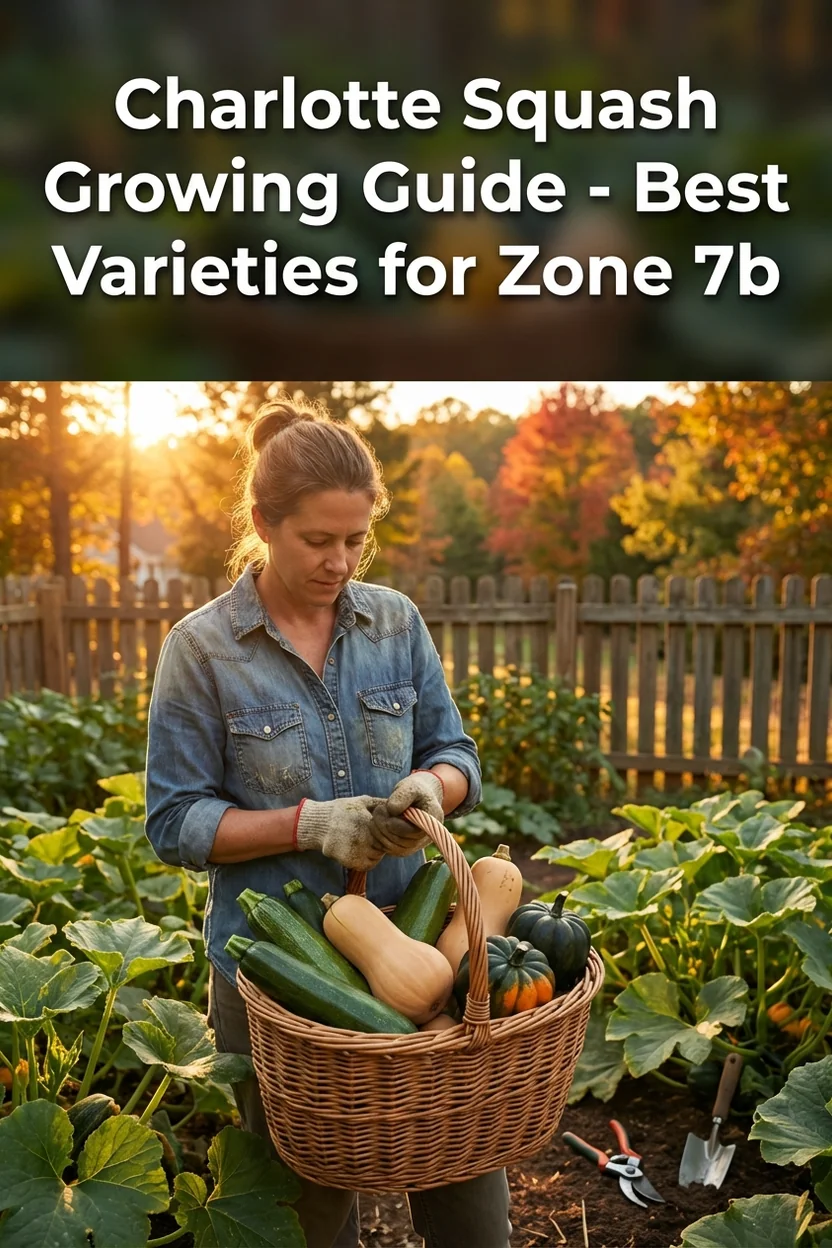
When to Plant Squash in Charlotte: Complete Guide + Best Varieties for Zone 7b
Pets & Toxicity
Recorded toxicity for plants linked in this guide. An unknown status is not a safety assessment.
No linked plant is recorded as toxicDetailsHide
Cucurbita pepo 'Black Beauty' — Toxicity
Non-toxic as an edible cropView Cucurbita pepo 'Black Beauty' plant profileCucurbita pepo 'Yellow Crookneck' — Toxicity
Non-toxic as an edible cropView Cucurbita pepo 'Yellow Crookneck' plant profile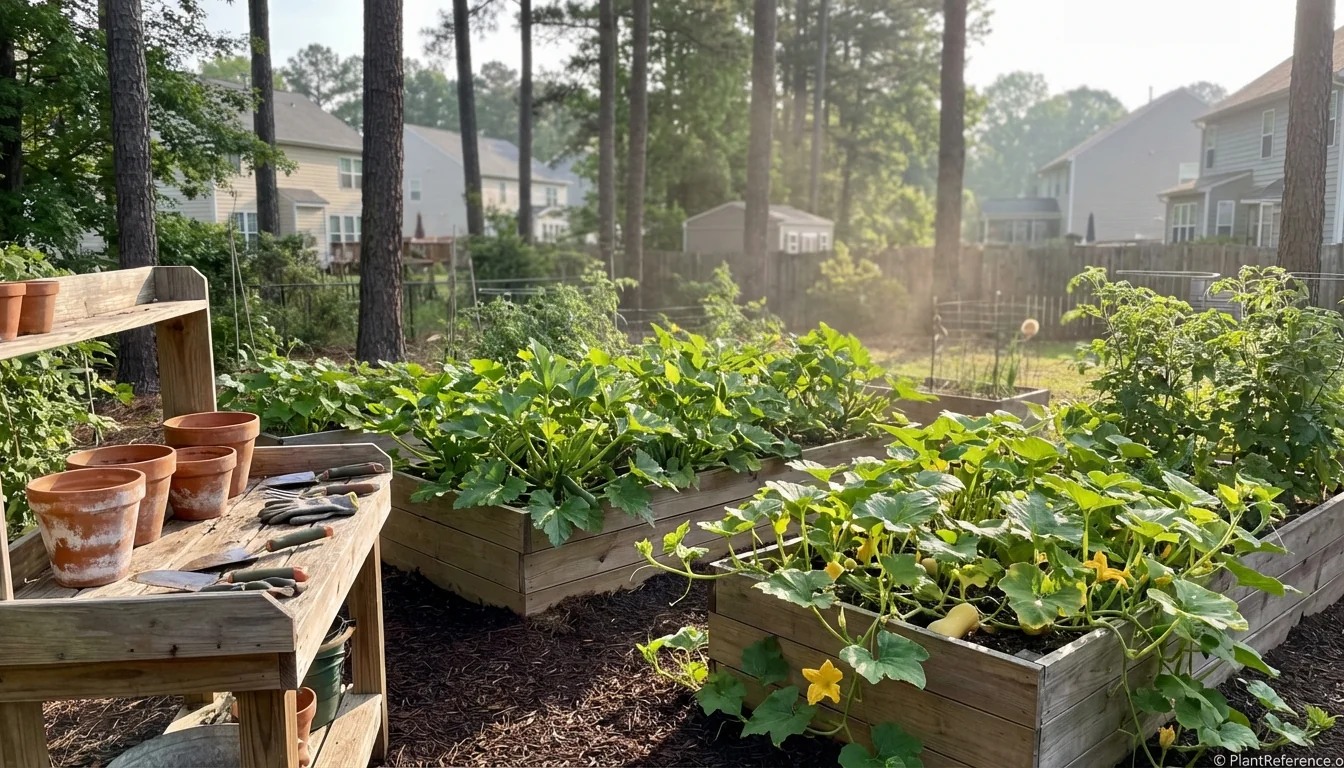
— Image © Plant Reference 2026
Charlotte gardeners have hit the jackpot for squash growing. With Zone 7b's generous 214-day season from April 4 to November 4, you can grow everything from quick-producing zucchini to storage-worthy butternut squash that'll keep through winter.
I've been growing squash in the Carolinas for forty years, and Charlotte's climate is about as good as it gets. You get enough heat units for long-season winter squash, but the growing season isn't so long that you're battling pests and diseases indefinitely. Here's everything you need to know to grow squash successfully in the Queen City.
Best Squash Varieties for Charlotte's Climate
Charlotte's Zone 7b climate is ideal for both summer and winter squash production. The key difference isn't just timing—it's understanding what each type needs from your 214-day season.
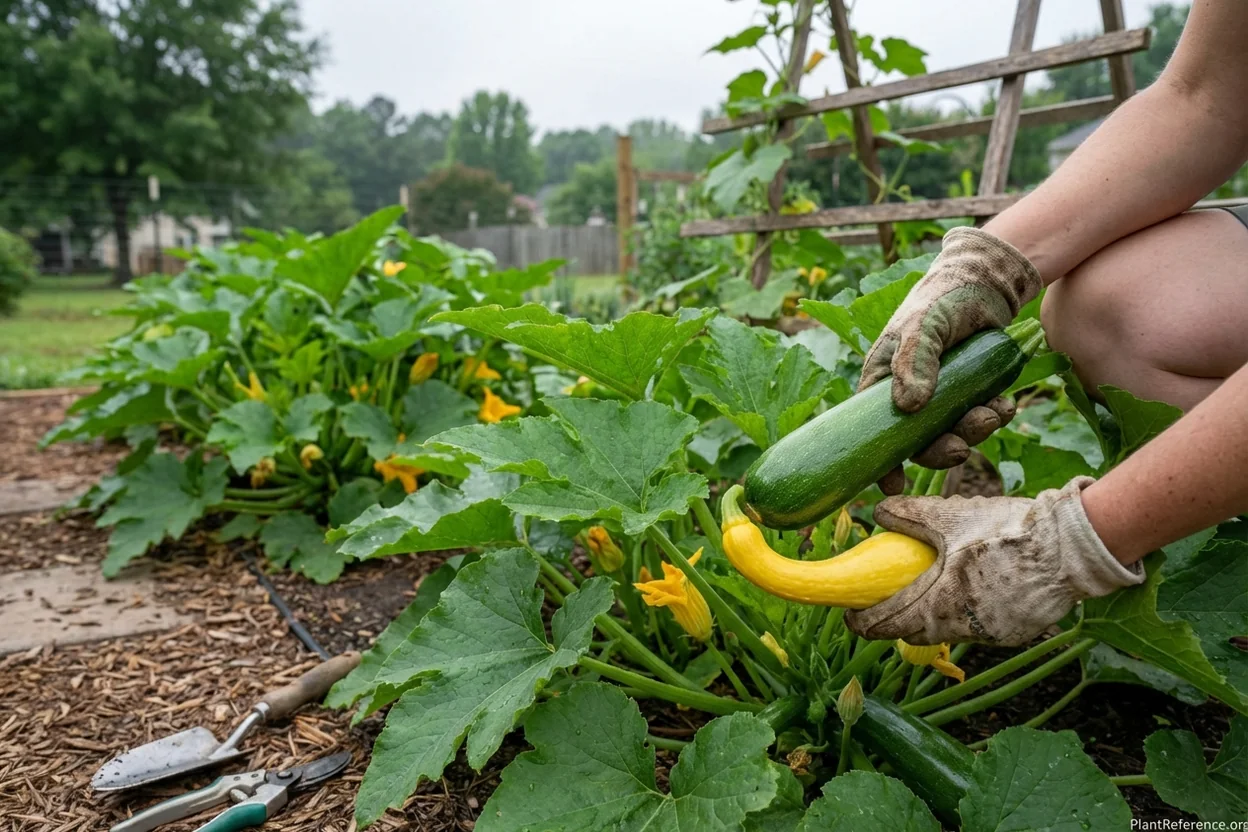
Summer Squash: Quick Producers for Continuous Harvest
Summer squash varieties produce edible fruit in just 45-60 days and keep producing until frost kills them. In Charlotte, plant these for fresh eating throughout the growing season.
🌿Cucurbita pepo 'Black Beauty' is your reliable workhorse. At 45-55 days to first harvest, it produces dark green zucchini that are perfect at 6-8 inches long. This bush variety spreads 3-4 feet and produces consistently through Charlotte's hot summers if you keep picking.
🌿Cucurbita pepo 'Yellow Crookneck' handles Charlotte's heat better than most summer varieties. The warty, curved fruit develops quickly in 50-60 days and has that classic summer squash flavor. Pick them small—4-6 inches—for tender skin.
🌿Cucurbita pepo 'Pattypan' is my favorite for Charlotte gardens because it's so productive you'll be giving squash to neighbors. These scalloped, disc-shaped fruits are best at 2-3 inches diameter. Any bigger and they get tough and seedy.
Winter Squash: Long-Season Storage Champions
Winter squash need 80-110 days to reach maturity, but they reward your patience with months of storage potential. Charlotte's 214-day season handles them all.
🌿Cucurbita moschata 'Butternut' is the storage king. These vining plants need 85-100 days but reward you with tan-colored squash that keep 4-6 months in a cool, dry place. The solid stems resist squash vine borers better than other species.
🌿Cucurbita pepo 'Acorn' works well in Charlotte because it matures relatively quickly (80-100 days) and doesn't need as much space as other winter varieties. The semi-bush habit keeps vines to 3-4 feet. Don't cure these—store them immediately after harvest.
🌿Cucurbita pepo 'Delicata' is Charlotte-perfect because you can eat the skin—no peeling required. These cream-colored fruits with dark green stripes mature in 80-100 days. The thin skin means shorter storage (2-3 months) but incredible convenience.
Cucurbita pepo 'Spaghetti' produces those famous "noodle" strands when cooked. Give these vines 88-100 days and 8-10 feet of space. Consistent water is critical in Charlotte's heat—drought stress prevents proper strand formation.
Cucurbita maxima 'Kabocha' is the premium storage squash, lasting 4-6 months when properly cured. These Japanese pumpkins need 95-110 days and prefer Charlotte's spring-planted, fall-harvested schedule. The vines can spread 12+ feet.
Variety | Days to Maturity | Best For | Notes for Charlotte |
|---|---|---|---|
45-55 days | Quick harvest | Perfect for succession planting every 3 weeks | |
50-60 days | Heat tolerance | Handles Charlotte summers better than dark varieties | |
50-60 days | Compact gardens | High production in small space | |
85-100 days | Long storage | Vine borer resistance, needs full season | |
80-100 days | Moderate space | Semi-bush habit, no curing required | |
80-100 days | Easy preparation | Edible skin, shorter storage window | |
Cucurbita pepo 'Spaghetti' | 88-100 days | Pasta substitute | Needs consistent water for proper texture |
Cucurbita maxima 'Kabocha' | 95-110 days | Premium storage | Longest keeper, sweetest flavor after curing |
Specific Planting Dates for Charlotte
Charlotte's last frost averages April 4, but I always wait until soil temperature hits 60°F consistently. Cold soil rots squash seeds faster than you can say "crop failure."
Summer Squash Planting Schedule
Direct Sowing Outdoors:
Earliest safe date: April 18 (two weeks after last frost)
Optimal planting window: April 25 - May 8
Latest recommended: May 15
Transplant Schedule:
Start seeds indoors: April 4-11 (2-3 weeks before transplant)
Transplant outdoors: April 25 - May 8
Summer squash planted April 25 will produce first harvest around June 10 and continue until frost kills the plants November 4. That's nearly five months of fresh squash from a single planting.
Succession Planting Strategy: For continuous harvest, plant new summer squash every 3 weeks through July 15:
First planting: April 25 (harvest June 10 - September 15)
Second planting: May 16 (harvest July 1 - October 15)
Third planting: June 6 (harvest July 25 - November 4)
Final planting: July 15 (harvest September 1 - November 4)
Winter Squash Planting Schedule
Winter squash need their full maturation time before November 4 first frost. Count backward from November 4 to determine latest planting dates.
Direct Sowing Schedule:
🌿Cucurbita pepo 'Acorn' (80-100 days): Plant by June 26 - July 16
🌿Cucurbita pepo 'Delicata' (80-100 days): Plant by June 26 - July 16
🌿Cucurbita moschata 'Butternut' (85-100 days): Plant by June 21 - July 11
Cucurbita pepo 'Spaghetti' (88-100 days): Plant by June 18 - July 8
Cucurbita maxima 'Kabocha' (95-110 days): Plant by June 11 - July 1
Optimal planting window for all winter squash: May 1 - June 1. This timing ensures harvest in October when cool weather improves storage quality.
Complete Growing Guide for Charlotte
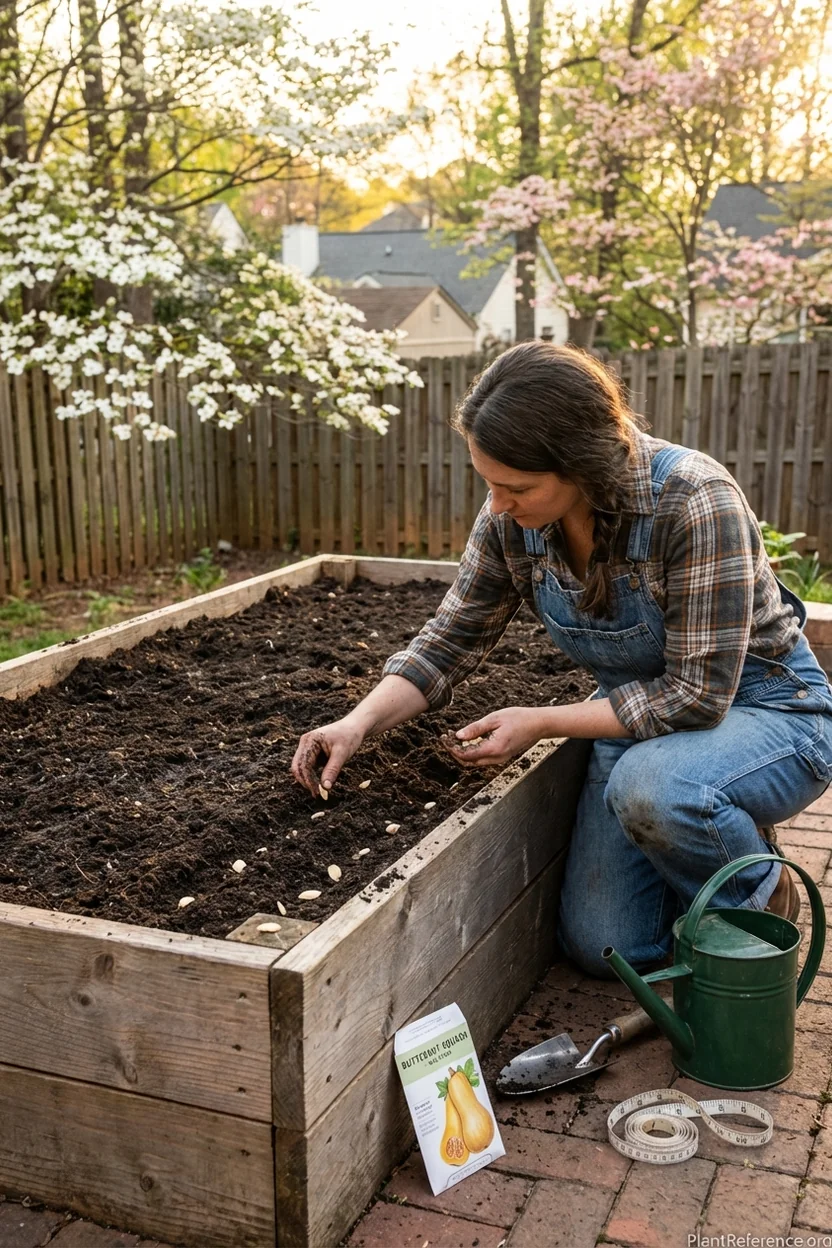
Soil Preparation
Squash are heavy feeders that need well-draining soil. Charlotte's clay tends to hold too much moisture, leading to root rot and fungal problems.
Soil Amendment Recipe:
Work in 2-3 inches of compost to existing soil
Add coarse sand or perlite if drainage is poor
Target pH between 6.0-6.8 (test with inexpensive meter)
Incorporate balanced fertilizer (10-10-10) at planting
Raised Beds: If you're dealing with heavy Charlotte clay, raised beds solve drainage problems immediately. Build them 8-12 inches tall and fill with quality potting mix blended with compost.
Spacing and Layout
Proper spacing prevents fungal diseases that thrive in Charlotte's humidity. Air circulation is your friend.
Summer Squash Spacing:
Bush varieties: 24-36 inches between plants
Rows: 4-5 feet apart
One plant typically feeds a family of four
Winter Squash Spacing:
Vining varieties: 48-60 inches between plants
Rows: 6-8 feet apart
Allow 8-12 feet for vine spread
Space-Saving Options: Small Charlotte gardens can grow squash vertically. Use sturdy cattle panels or heavy-duty trellises for vining varieties. Fruits over 3 pounds need fabric slings to prevent tearing vines.
Fertilization Schedule
Squash nutritional needs change dramatically through their growth cycle. Here's the Charlotte-tested schedule:
Phase 1: Establishment (First 4 weeks) Side-dress with nitrogen-rich fertilizer or compost tea every 2 weeks. This builds the leaf canopy needed to support fruit production.
Phase 2: Flowering (Weeks 5-8) Switch to balanced fertilizer (10-10-10) to support flower and early fruit development. Too much nitrogen now causes "all vine, no fruit."
Phase 3: Production
Summer squash: Continue balanced fertilizer every 3-4 weeks throughout harvest
Winter squash: STOP fertilizing once fruits are set. Continued feeding delays maturity and reduces storage quality
Watering Strategy
Charlotte's hot, humid summers require careful water management. Too little causes blossom end rot; too much encourages fungal diseases.
Deep, Infrequent Watering:
Water 1-2 times per week, soaking soil 8-10 inches deep
Apply 1-1.5 inches per week including rainfall
Water early morning to allow leaves to dry before evening
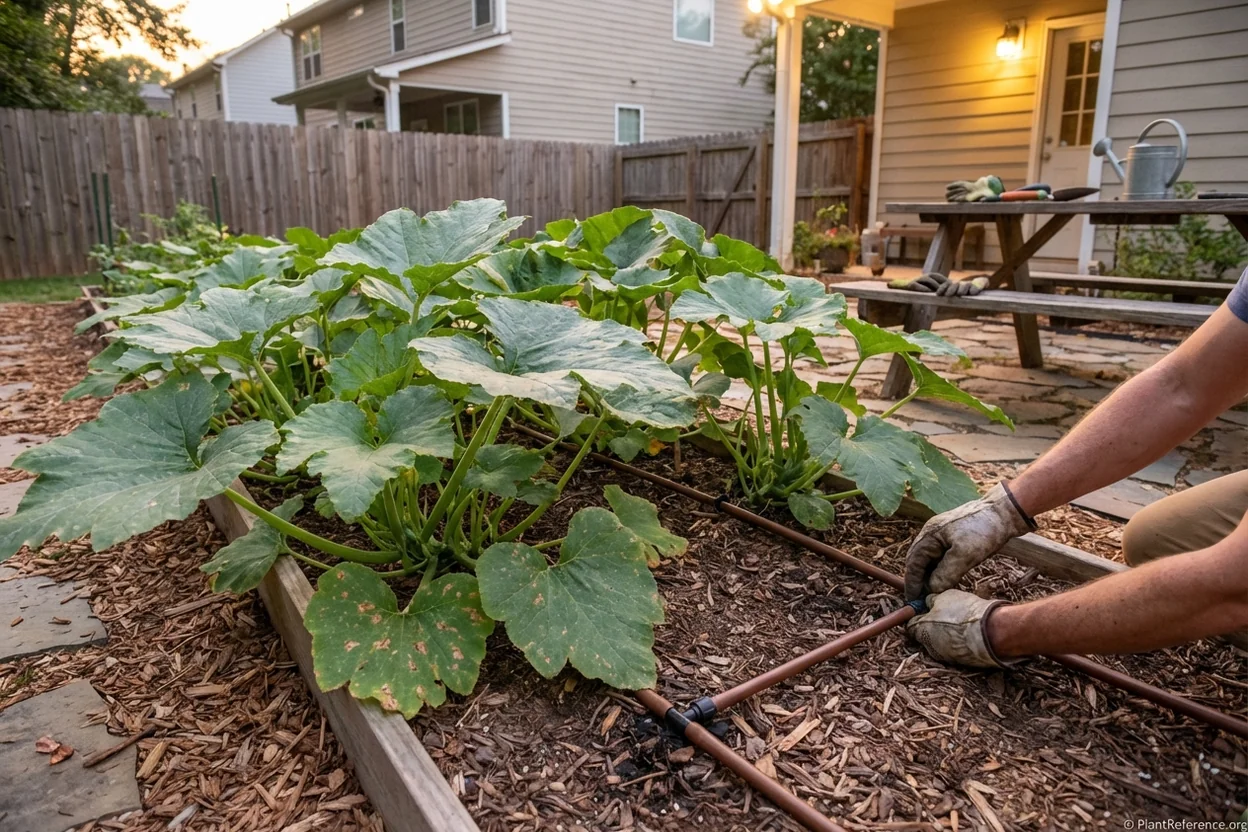
Mulching: Apply 3-4 inches of organic mulch around plants, keeping it 6 inches away from stems. This conserves moisture and suppresses weeds while preventing stem rot.
Drip Irrigation: Consider drip systems for precise water delivery without wetting leaves. This reduces fungal disease pressure significantly in Charlotte's humidity.
Pollination Management
Squash flowers are either male (straight stem) or female (baby squash at base). You need both for fruit production, and Charlotte's timing can be tricky.
Understanding Bloom Sequence: Plants produce male flowers first, often 1-2 weeks before females appear. Don't panic when early male flowers drop—this is normal.
Hand Pollination: When bee activity is low or you're using row covers, hand pollinate between 6-10 AM:
Pick fresh male flower and remove petals
Rub pollen-covered center against female flower's center
One male flower can pollinate 2-3 females
Mark pollinated flowers with colored twist ties for tracking
Encouraging Pollinators: Plant bee-friendly flowers nearby like zinnias, marigolds, and sunflowers. Avoid pesticides during bloom period.
Troubleshooting Charlotte-Specific Problems
Charlotte's combination of heat, humidity, and active pest populations creates predictable challenges. Here's how to handle them.
Squash Vine Borer Management
This clear-wing moth is Charlotte's #1 squash pest. Adult moths lay eggs at stem bases in June and July. Larvae bore into stems, causing sudden vine collapse.
Prevention Strategies:
Plant 🌿Cucurbita moschata 'Butternut' varieties with solid stems that resist borer penetration
Use row covers until plants need pollination, then remove daily for pollinator access
Wrap stem bases with aluminum foil to prevent egg laying
Plant later (June) to miss peak moth activity
Treatment Options: If you find sawdust-like "frass" around stem bases, slit the stem lengthwise with a clean knife, remove the white larva, and mound soil over the wound to encourage new root development.
Squash Bug Control
These shield-shaped bugs suck plant juices and inject toxins that cause leaves to wilt and blacken. Charlotte's long season allows multiple generations.
Integrated Control:
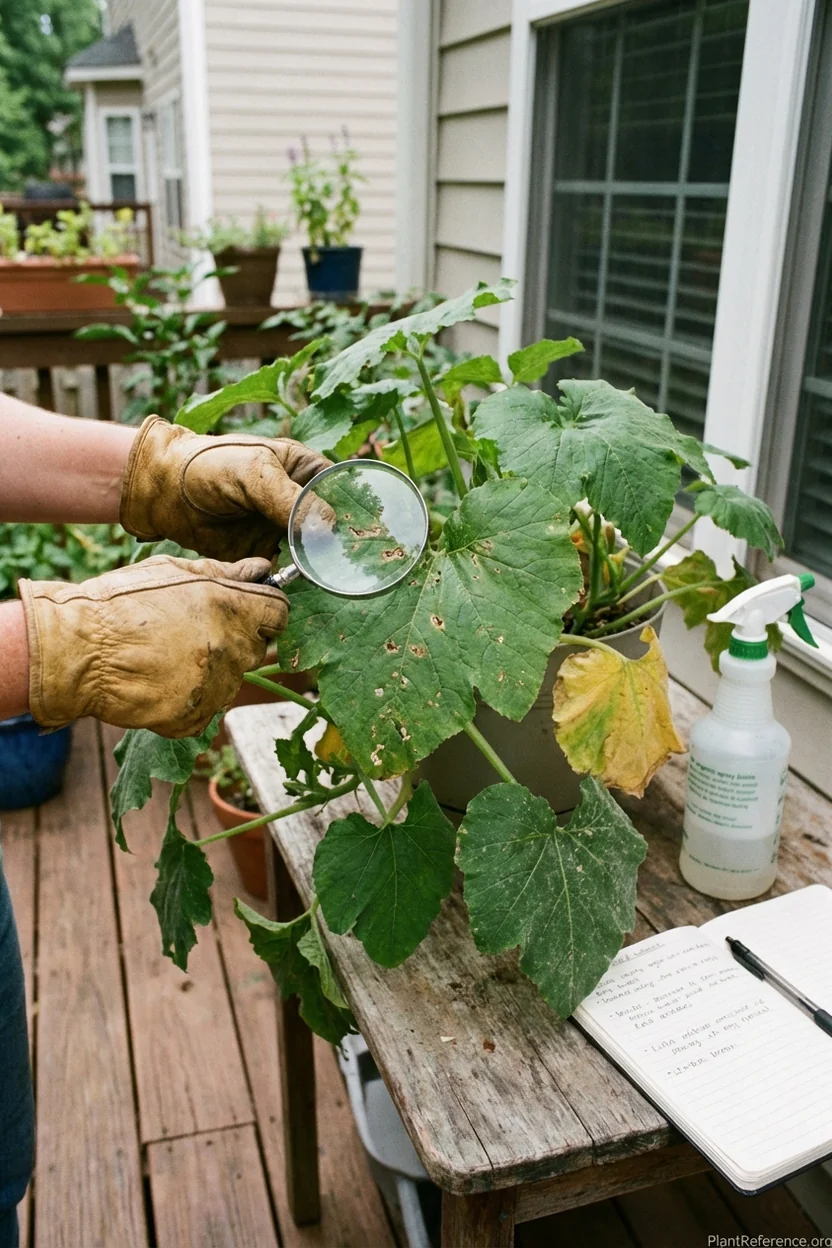
Inspect undersides of leaves weekly for copper-colored egg clusters
Remove and destroy egg masses immediately
Place boards or shingles near plants as overnight traps for adults
Handpick adults in early morning when they're sluggish
Spray nymphs with insecticidal soap or neem oil
Powdery Mildew Prevention
Charlotte's humidity makes powdery mildew inevitable by late summer. The white fungal coating reduces photosynthesis and weakens plants.
Cultural Controls:
Space plants widely for maximum air circulation
Water at soil level using drip irrigation or soaker hoses
Apply organic mulch to prevent soil splash onto leaves
Remove lower leaves that touch the ground
Treatment Options: Milk spray (1 part milk to 9 parts water) applied weekly provides effective organic control. Commercial fungicides work but may harm beneficial insects.
Bacterial Wilt Disease
Striped and spotted cucumber beetles transmit bacterial wilt that causes rapid, permanent vine collapse. Once infected, plants cannot recover.
Prevention Focus:
Use kaolin clay (Surround) to deter beetles without harming pollinators
Plant trap crops like Blue Hubbard squash away from main planting to lure beetles
Remove infected plants immediately to prevent spread
Control weeds that harbor overwintering beetles
Harvest & Storage
Timing harvest correctly determines whether you get weeks or months of squash enjoyment.
Summer Squash Harvest
Summer squash quality deteriorates rapidly once they're overmature. Check plants daily during peak production.
Harvest Indicators:
Zucchini: 6-8 inches long, skin glossy and easily pierced with fingernail
Yellow Crookneck: 4-6 inches long, skin still tender and bumpy
Pattypan: 2-3 inches diameter, edges still well-defined
Storage: Summer squash keep 1-2 weeks refrigerated. For longer preservation, slice and freeze, or pickle the smaller fruits.
Winter Squash Harvest
Winter squash must reach full maturity on the vine for proper storage. Harvest too early and they won't keep; too late and frost damages them.
Harvest Indicators:
Stem becomes dry and corky
Skin becomes dull (loses glossy appearance)
Skin cannot be punctured with fingernail
Vine begins to die back naturally
Fruit sounds hollow when tapped
Harvest Timing: Plan to complete winter squash harvest by October 25 in Charlotte, allowing safety margin before November 4 average first frost.
Curing Process: Most winter squash need curing to develop full flavor and storage potential:
Cure at 80-85°F with 80% humidity for 10-14 days
A sunny, enclosed porch works perfectly
Exception: 🌿Cucurbita pepo 'Acorn' and 🌿Cucurbita pepo 'Delicata' should NOT be cured—store immediately at 50-55°F
Long-Term Storage: After curing, store in cool (50-55°F), dry location with good air circulation. Basements, cool closets, or unheated rooms work well. Properly stored 🌿Cucurbita moschata 'Butternut' and Cucurbita maxima 'Kabocha' last 4-6 months.
Frequently Asked Questions
Reading about plants and recognising them are different skills. These three build the second.
- Daily PlantIdentify the day’s mystery plant from a close-up photograph.
- Keyed OutWork a dichotomous key, lead by lead, to name a hidden specimen.
- Name That PlantName a specimen from botanical clues dealt hardest first.
Free to play, no account needed
Dot grew up on a small farm in rural Virginia and has maintained a vegetable garden for decades. After retiring from teaching elementary school, she became a Master Gardener volunteer and spends her time mentoring new gardeners at community garden plots in Richmond. She's especially knowledgeable about heirloom varieties, seed saving, and traditional growing methods passed down from her grandmother. Dot's no-nonsense advice comes from extensive trial and error—she's seen every tomato disease, pest problem, and weather disaster imaginable. Her biggest pet peeve is gardeners who overcomplicate simple tasks. "Plants want to grow," she often says. "Your job is to not get in their way."