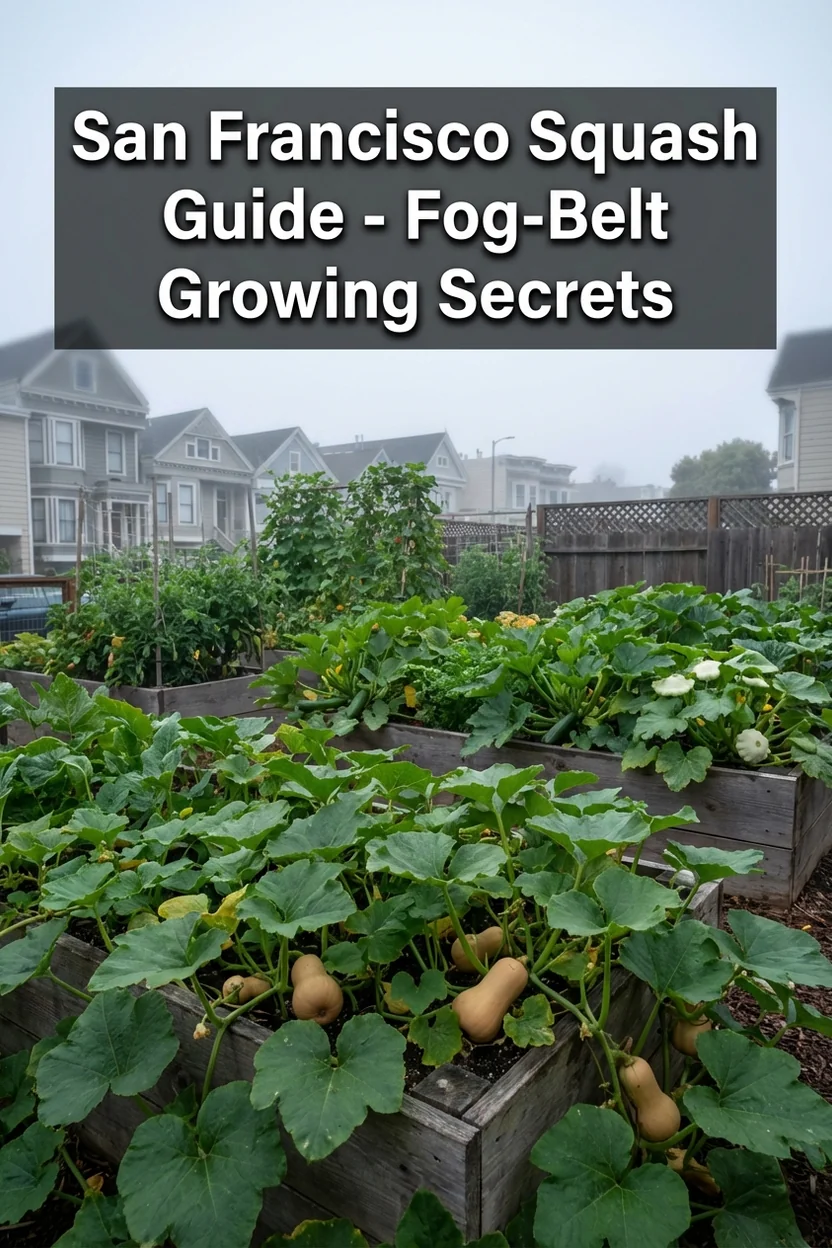
When to Plant Squash in San Francisco: Complete Guide + Best Varieties for Zone 10a
Pets & Toxicity
Recorded toxicity for plants linked in this guide. An unknown status is not a safety assessment.
No linked plant is recorded as toxicDetailsHide
Cucurbita pepo 'Black Beauty' — Toxicity
Non-toxic as an edible cropView Cucurbita pepo 'Black Beauty' plant profileCucurbita pepo 'Yellow Crookneck' — Toxicity
Non-toxic as an edible cropView Cucurbita pepo 'Yellow Crookneck' plant profile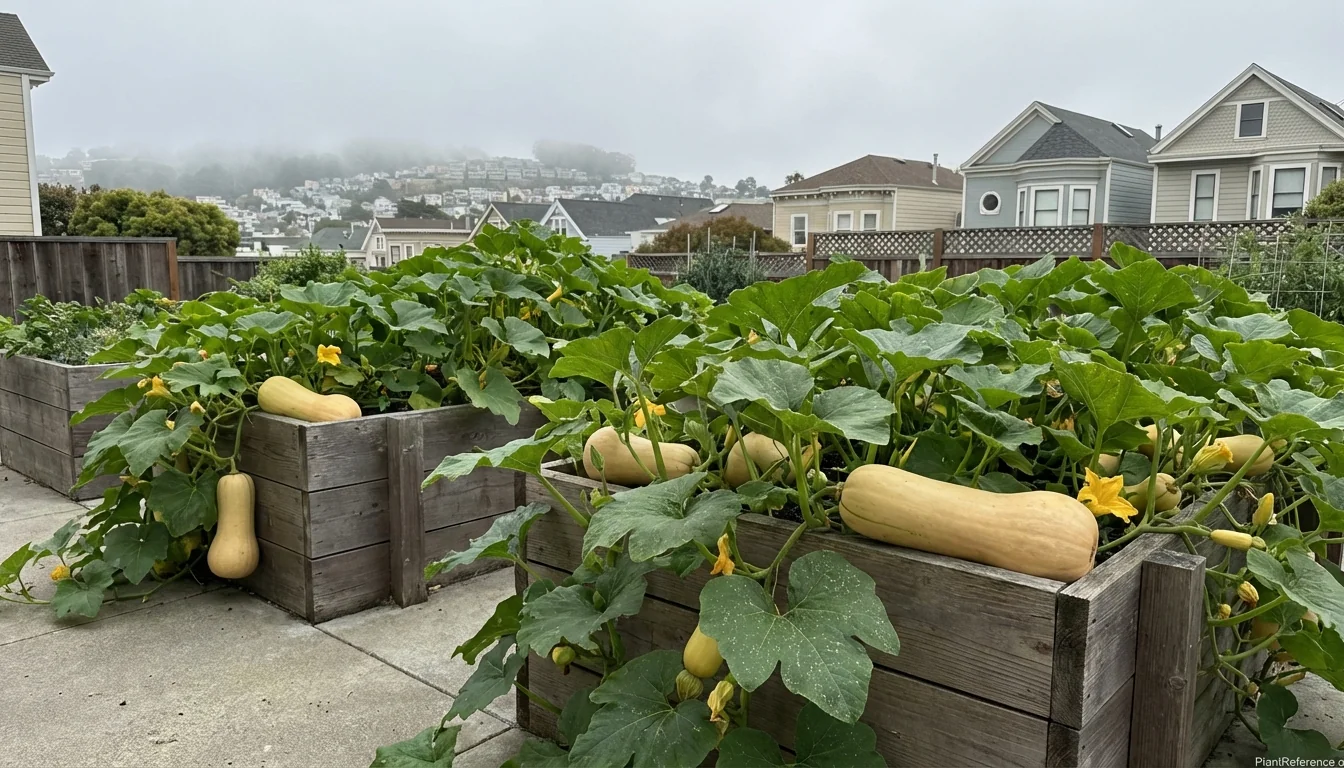
— Image © Plant Reference 2026
San Francisco's Zone 10a climate presents unique challenges for squash growing that differ dramatically from other warm zones. While you have a 334-day frost-free season running from January 14 to December 14, the persistent fog, cool summers, and coastal winds create conditions more like Zone 7 than a typical subtropical zone.
Best Squash Varieties for San Francisco's Zone 10a Climate
San Francisco's cool, foggy summers require careful variety selection. The key is understanding that your "zone 10a" designation comes from minimal frost risk, not summer heat accumulation. Most squash varieties need consistent warmth to develop properly, making variety choice critical for success.
Heat-Accumulating Summer Squash
Summer squash varieties that tolerate cool conditions perform best in San Francisco's fog belt. 🌿Cucurbita pepo 'Black Beauty' zucchini adapts well to temperatures in the 60-70°F range, continuing to produce even when other varieties stall in cool weather. The dark skin absorbs available solar radiation more efficiently than light-colored varieties.
🌿Cucurbita pepo 'Pattypan' works well in San Francisco because its compact bush form allows for easy protection during cool spells. The scalloped shape and dense flesh develop properly even in suboptimal heat conditions. Plant spacing should be reduced to 24 inches to create a warmer microclimate through leaf overlap.
Yellow crookneck squash 🌿Cucurbita pepo 'Yellow Crookneck' requires more heat accumulation and performs inconsistently in San Francisco's climate. Save garden space for more reliable varieties unless you have a particularly warm, protected location.
Cold-Adapted Winter Squash
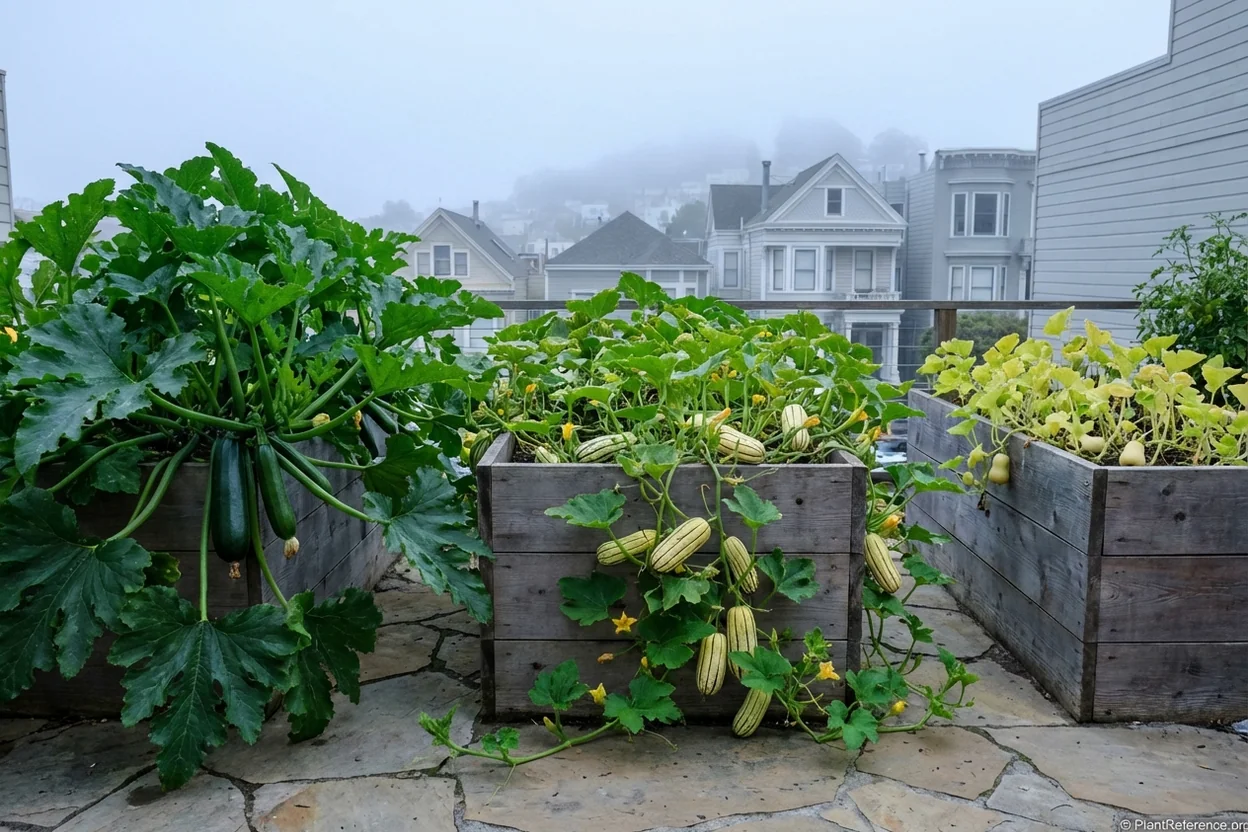
Winter squash selection becomes crucial in San Francisco's climate. 🌿Cucurbita pepo 'Delicata' performs exceptionally well because it requires only 80-100 days to maturity and tolerates cooler growing conditions better than other winter types. The cream and green striped skin develops properly even without intense summer heat.
🌿Cucurbita pepo 'Acorn' varieties thrive in San Francisco's moderate climate, producing 2-3 pound fruits reliably. Table Queen acorn requires 80-100 days and actually benefits from San Francisco's cool nights, which help concentrate sugars in the flesh.
🌿Cucurbita moschata 'Butternut' presents challenges in San Francisco. This variety needs 100-120 days of warm weather and struggles in areas with persistent fog. Plant only in the warmest microclimates—south-facing slopes, heat-reflecting hardscapes, or areas protected from afternoon fog.
Variety Performance Table for San Francisco
Variety | Days to Maturity | Best For San Francisco | Fog Tolerance | Microclimate Need |
|---|---|---|---|---|
45-55 days | Continuous harvest | High | Any location | |
50-60 days | Small spaces | High | Protected areas | |
50-60 days | Warm microclimates only | Low | South-facing, protected | |
80-100 days | Storage squash | High | Any location | |
80-100 days | Fall harvest | High | Any location | |
Cucurbita pepo 'Spaghetti' | 88-100 days | Specialty cooking | Medium | Warm, protected |
100-120 days | Challenging | Low | Warmest areas only | |
Cucurbita maxima 'Kabocha' | 95-110 days | Challenging | Low | Warmest areas only |
Specific Planting Dates for San Francisco
San Francisco's planting calendar differs from typical Zone 10a locations due to summer fog patterns and cool temperatures. The strategy involves working around the coolest months (June-August) when fog is thickest and temperatures struggle to reach 65°F.
Spring Planting Window: March 1 - May 15
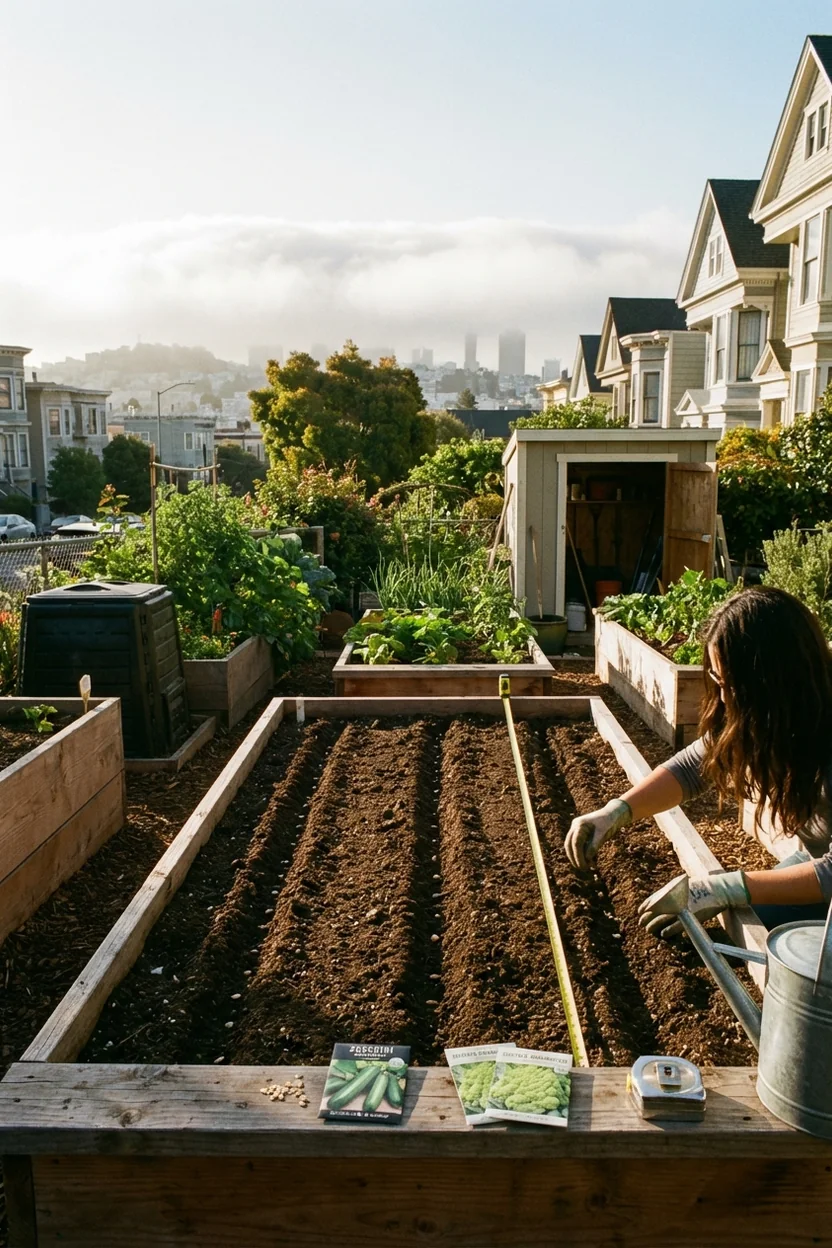
The primary planting season begins in early March when soil temperatures consistently reach 60°F. Direct sow summer squash varieties from March 1 through May 15, with peak planting time being April 1-30 when soil is warming but before heavy fog season begins.
For winter squash requiring 100+ days, start seeds indoors February 15-March 15 and transplant by April 15. This timing allows harvest completion by mid-October before any chance of early winter weather.
Optimal Spring Planting Dates:
Indoor seed starting: February 15 - March 15
Direct sowing summer squash: March 1 - May 15
Transplanting winter squash: April 1 - April 30
Last recommended planting for 100-day varieties: May 15
Fall Planting Window: August 15 - October 1
San Francisco's "second spring" occurs when September brings clearer skies and warmer temperatures than mid-summer. Fall plantings often outperform summer plantings because plants mature as conditions improve rather than deteriorate.
Plant summer squash August 15 - September 15 for harvest through November and December. Fast-maturing varieties like 🌿Cucurbita pepo 'Pattypan' can be planted as late as October 1 for holiday harvests.
Winter squash planted for fall harvest requires indoor starts by July 15, transplanted by August 15. However, this timing conflicts with the coolest, foggiest period and generally yields poor results.
Summer Planting Challenges: June 1 - August 15
June through mid-August represents San Francisco's most challenging period for squash planting. Persistent fog keeps daytime temperatures in the 60-65°F range, insufficient for proper squash germination and growth. Soil temperatures may not exceed 55°F even in full sun locations.
Avoid planting during this period unless you can provide significant protection: cloches, row covers, or greenhouse conditions. Even with protection, growth rates slow dramatically and pest pressure from slugs increases in the humid conditions.
Complete Growing Guide for San Francisco
Microclimate Selection and Preparation
Success with squash in San Francisco depends more on microclimate selection than in any other Zone 10a location. Identify the warmest areas of your garden through careful observation of fog patterns, wind exposure, and heat retention.
Prime Microclimate Locations:
South-facing slopes or raised areas that allow fog to drain away provide the most reliable heat accumulation
Areas near south-facing walls, especially light-colored surfaces that reflect heat, can be 10-15°F warmer than exposed locations
Protected courtyards or areas surrounded by buildings gain heat during brief sunny periods and retain it longer
Avoid areas with afternoon wind exposure from the ocean, which can drop temperatures rapidly even on sunny days
Soil Preparation for Cool Conditions:
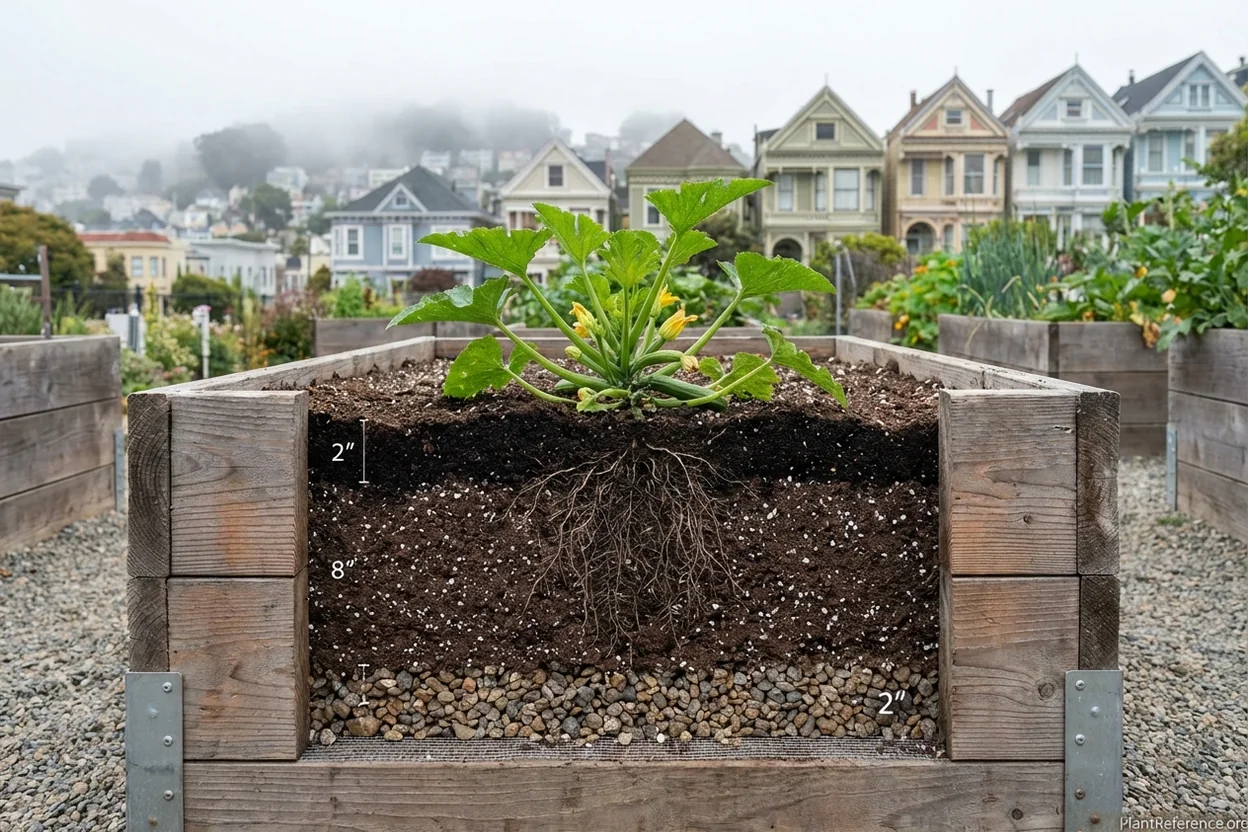
San Francisco's cool, moist conditions require excellent drainage to prevent root rot and soil compaction. Raised beds become essential rather than optional, elevating the root zone 8-12 inches above grade for better drainage and soil warming.
Incorporate 2-3 inches of compost into native soil, but avoid excessive organic matter that stays soggy in San Francisco's climate. Add coarse sand or perlite to improve drainage in clay soils common throughout the city.
Heat Accumulation Techniques
Plastic Mulch and Row Covers:
Black plastic mulch becomes essential for winter squash success in San Francisco. Install 4-6 weeks before planting to pre-warm soil. The plastic can raise soil temperature 8-12°F, often making the difference between success and failure.
Clear plastic provides even better heat gain but requires careful weed management underneath. Combine with floating row covers for the first 4-6 weeks after planting to create greenhouse conditions during cool spring weather.
Heat-Reflecting Surfaces:
Position squash beds near light-colored walls, fences, or hardscaping that reflects afternoon sun. Gravel mulch around plants provides better heat retention than organic mulches in San Francisco's cool climate.
Avoid traditional organic mulches like straw or bark chips early in the season, as they insulate soil from heat gain. Apply organic mulch only after soil temperatures consistently exceed 65°F, typically late May or June.
Spacing and Layout Modifications
Standard spacing recommendations require adjustment for San Francisco's conditions. Reduce spacing by 25% to create warmer microclimates through overlapping leaf canopy.
Modified Spacing for San Francisco:
Bush summer squash: 24-30 inches (instead of 36 inches)
Vining winter squash: 36-42 inches (instead of 48-60 inches)
Between rows: 4-5 feet (standard)
This closer spacing helps plants share heat and creates protection from cooling winds, but requires excellent air circulation to prevent fungal diseases in San Francisco's humid conditions.
Troubleshooting San Francisco-Specific Problems
Cool Weather Growth Stagnation
The most common problem in San Francisco squash growing is growth stagnation during cool periods. Plants may survive but stop developing, flowers may fail to set fruit, and existing fruits grow slowly or develop poorly.
Symptoms: Pale, slow-growing plants with small leaves, few flowers, and poor fruit development despite adequate water and nutrients.
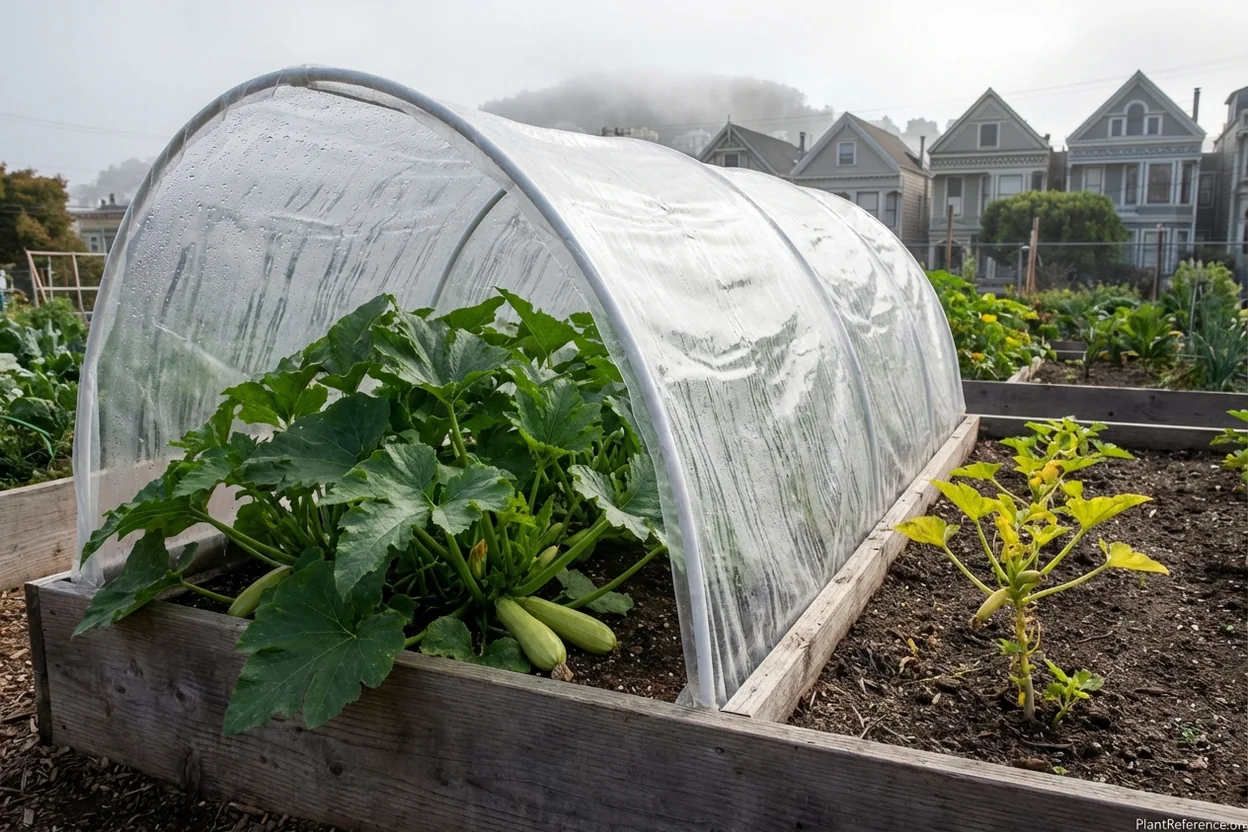
Solutions: Install row covers or mini-hoop houses over affected plants. Move containers to the warmest available location. Consider supplemental heating cables for raised beds in extreme cases.
Prevention: Select varieties suited to cool conditions. Provide wind protection. Use heat-accumulating techniques from planting onward.
Slug and Snail Pressure
San Francisco's cool, moist conditions create ideal habitat for slugs and snails, which can devastate young squash plants and damage mature fruits.
Integrated Management Strategy:
Remove hiding places like boards, dense ground cover, and debris piles near squash beds. Create copper tape barriers around raised beds or individual plants. Apply iron phosphate slug baits around bed perimeters.
Hand-pick pests during early morning or evening hours when they're most active. Encourage natural predators like garter snakes and ground beetles by providing habitat nearby but not within growing areas.
Powdery Mildew in Humid Conditions
San Francisco's fog and cool temperatures create perfect conditions for powdery mildew development on squash leaves, particularly late in the growing season.
Prevention Focus:
Increase plant spacing to improve air circulation. Avoid overhead watering; use drip irrigation or soaker hoses instead. Plant in locations with morning sun exposure to dry leaves quickly.
Treatment Options:
Apply preventive milk spray (1 part milk to 9 parts water) weekly beginning in July. Use sulfur-based fungicides for established infections. Remove affected leaves promptly and dispose in garbage, not compost.
Wind Damage and Dessication
Coastal winds can damage large squash leaves and dry out plants quickly, particularly afternoon winds from the ocean.
Wind Protection Strategies:
Install windbreaks using mesh fabric, bamboo screens, or planted barriers on the windward side of squash beds. Stake large winter squash vines to prevent wind damage to the main stem.
Consider more wind-tolerant bush varieties in extremely exposed locations. Provide extra water during windy periods to compensate for increased transpiration.
Harvest & Storage
Summer Squash Harvest Timing
San Francisco's cool conditions slow summer squash development, requiring adjusted harvest timing. 🌿Cucurbita pepo 'Black Beauty' zucchini should be harvested at 6-8 inches rather than allowing larger development, as cool conditions slow flesh development creating tough, seedy fruits.
🌿Cucurbita pepo 'Pattypan' reaches optimal eating quality at 2-3 inches diameter in San Francisco conditions. Larger fruits become tough and lose their characteristic tender texture.
Harvest every 2-3 days during peak season to maintain plant productivity. Cool conditions mean plants produce over longer periods but at slower rates than in hot climates.
Winter Squash Maturation
Winter squash requires careful timing in San Francisco to ensure proper maturation before any chance of cold weather. 🌿Cucurbita pepo 'Delicata' and 🌿Cucurbita pepo 'Acorn' varieties typically mature by October 15-30 when planted in early spring.
Maturity Indicators:
Stem becomes dry and woody where it attaches to fruit
Skin becomes dull rather than glossy
Skin cannot be punctured by fingernail pressure
Fruit sounds hollow when tapped
Harvest before November 1 in San Francisco, regardless of apparent maturity, to avoid any risk from early weather changes.
Storage Adaptations for San Francisco Climate
San Francisco's moderate, humid climate requires storage modifications compared to typical winter squash storage recommendations.
Curing Process:
Cure 🌿Cucurbita moschata 'Butternut' and other thick-skinned varieties in the warmest, driest location available—often indoors near heating sources. San Francisco's natural humidity may prevent proper curing outdoors.
🌿Cucurbita pepo 'Acorn' and 🌿Cucurbita pepo 'Delicata' should not be cured and store best at 50-55°F in San Francisco's naturally cool conditions.
Storage Location Selection:
Avoid basements or ground-level storage areas in San Francisco due to high humidity. Upper floors, heated garages, or climate-controlled areas work best for long-term storage.
Monitor stored squash monthly and use any showing soft spots immediately. San Francisco's humidity reduces storage life compared to drier climates.
Frequently Asked Questions
Reading about plants and recognising them are different skills. These three build the second.
- Daily PlantIdentify the day’s mystery plant from a close-up photograph.
- Keyed OutWork a dichotomous key, lead by lead, to name a hidden specimen.
- Name That PlantName a specimen from botanical clues dealt hardest first.
Free to play, no account needed
Aisha manages a small tropical nursery on the east side of Houston, specializing in plants that can handle the Gulf Coast's humidity, heat, and unpredictable flooding. She studied horticulture in college and worked at a wholesale grower before opening her own operation. Growing up, her parents kept a kitchen garden with okra, bitter gourd, and curry leaf plants—a tradition she's continued. Houston's subtropical climate lets her grow things most of the country can't, but it also means dealing with fungal issues, standing water, and summers where it's too hot for even tomatoes. Aisha writes about tropical and subtropical plant care, humidity management, and working with heavy clay soils.