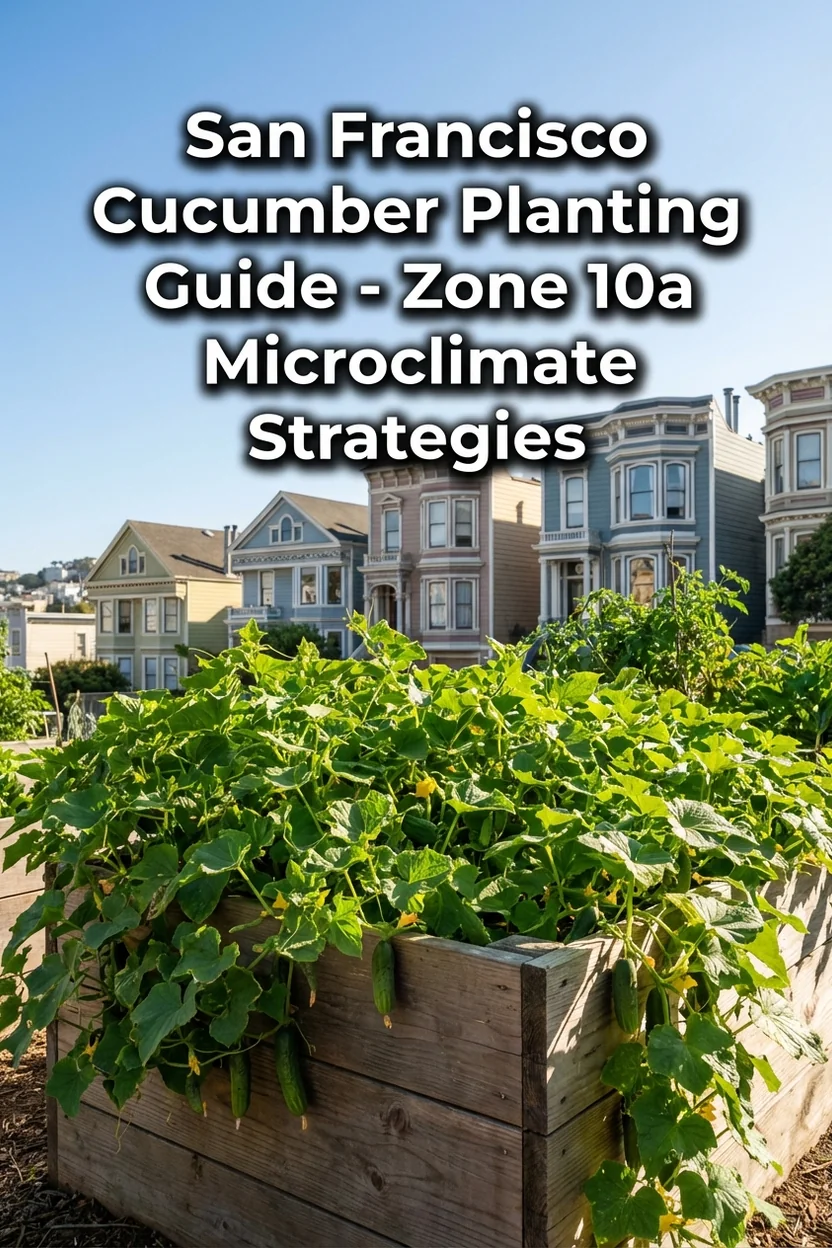
When to Plant Cucumbers in San Francisco: Complete Guide + Best Varieties for Zone 10a
Pets & Toxicity
Recorded toxicity for plants linked in this guide. An unknown status is not a safety assessment.
No linked plant is recorded as toxicDetailsHide
Cucumis sativus 'Marketmore 76' — Toxicity
Non-toxicView Cucumis sativus 'Marketmore 76' plant profileCucumis sativus 'Straight Eight' — Toxicity
Non-toxicView Cucumis sativus 'Straight Eight' plant profileCucumis sativus 'Boston Pickling' — Toxicity
Non-toxicView Cucumis sativus 'Boston Pickling' plant profile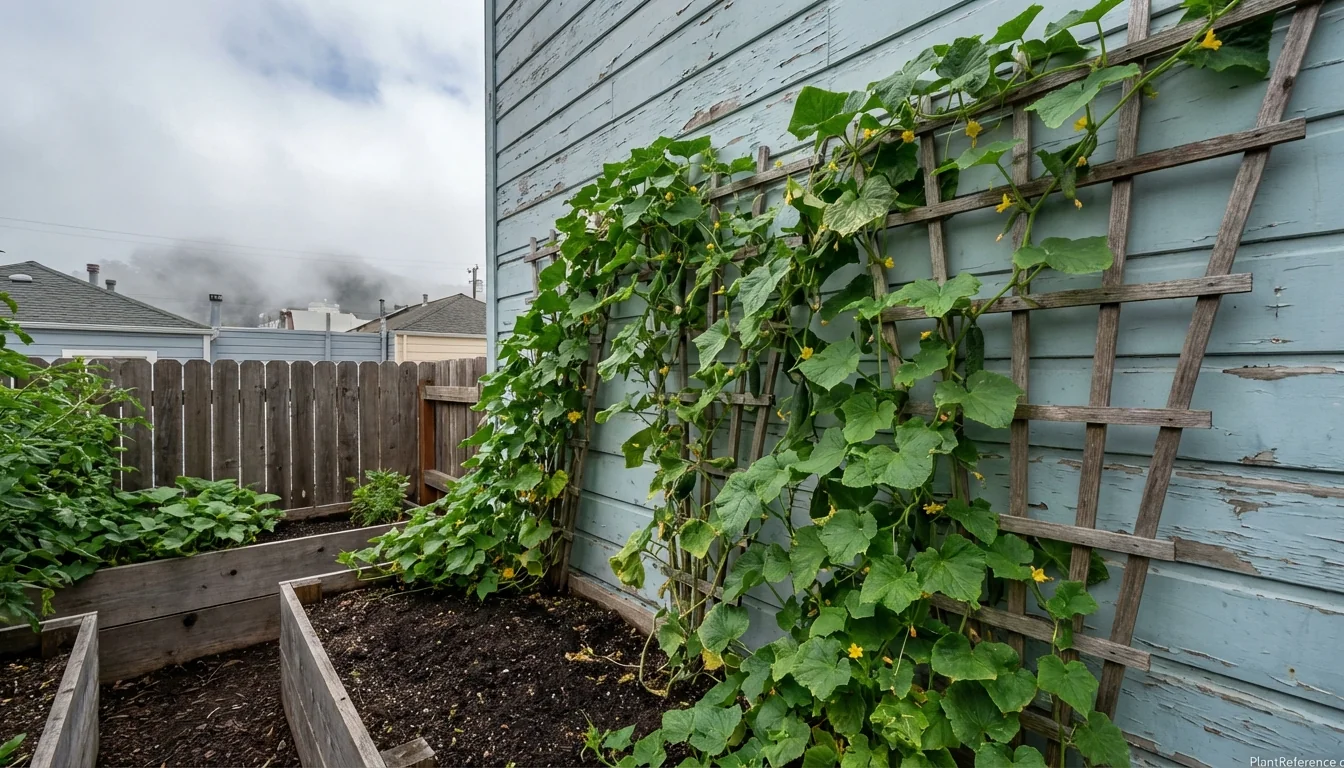
— Image © Plant Reference 2026
I'll be honest—cucumbers are one of the hardest warm-season crops to grow in San Francisco. I wasted my first two summers trying to grow them in my Sunset District backyard before I figured out what was going wrong. The zone number lies. Zone 10a suggests a tropical paradise, but our USDA rating reflects winter minimum temperatures, not summer maximums. San Francisco's average July high is 67°F (19°C)—cooler than Minneapolis in July. The marine layer rolls in most summer afternoons, dropping temperatures and blocking the sun that cucumbers need. But cucumbers aren't impossible here. They just require an approach that's completely different from what gardening books written for the rest of the country describe. You need the right microclimate, the right varieties, and the discipline to accept that your cucumber harvest will be smaller than what gardeners in warmer cities produce—and that's fine. When to Plant Tomatoes in San Francisco: Complete Guide + Best Varieties for Zone 10a
Best Cucumber Varieties for San Francisco's Climate
San Francisco's microclimates matter more than the zone number. The Mission District, Potrero Hill, and Bayview get significantly more sun and warmth than the Sunset, Richmond, or Outer Avenues fog belt. Your neighborhood determines whether cucumbers are challenging or nearly impossible. Variety selection here is about maximizing production in marginal heat conditions—parthenocarpic varieties that don't need pollinators and compact types that fit against south-facing walls are the path to success.
Variety | Type | Days to Harvest | Disease Resistance | Best For |
|---|---|---|---|---|
🌿Cucumis sativus 'Persian' (Beit Alpha) | Specialty | 55 days | Moderate (PM) | Best overall for SF—no pollination, cool tolerant |
Specialty | 65 days | Moderate (Rust, drought tolerant) | Fog belt resilient, novelty | |
Slicing | 65 days | High (Scab, CMV, moderate DM/PM) | Sunny microclimates only | |
Pickling | 55 days | Low-Moderate | Fast harvest in warm spots | |
Slicing | 63 days | Low (CMV tolerance only) | Sunniest locations with wall protection | |
🌿Cucumis sativus 'Persian' (second planting) | Specialty | 55 days | Moderate | Succession in September warm spell |
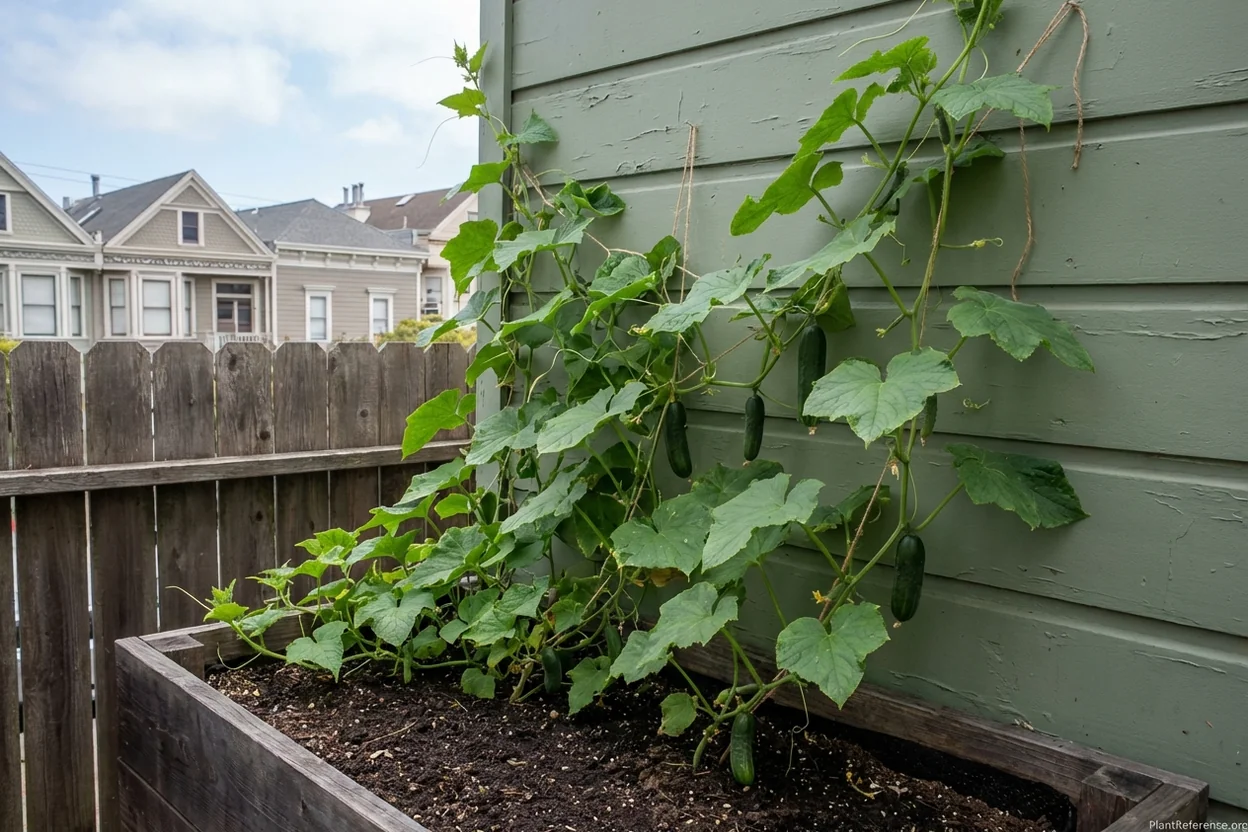
🌿Cucumis sativus 'Persian' is the only variety I recommend without hesitation for San Francisco. Here's why: it matures in 55 days (maximizing our limited warm window), produces on compact vines (fitting against south-facing walls), and—most importantly—sets fruit without pollinator visits. Bee activity in fog belt San Francisco is sparse and unpredictable. On overcast 62°F days, which describes most of our summer, pollinators aren't flying. Standard monoecious varieties like 🌿Cucumis sativus 'Straight Eight' flower for weeks without setting a single fruit in these conditions. Persian cucumbers bypass the problem entirely through parthenocarpic genetics and actually produce decent-quality fruit at lower temperatures than other 🌿Cucumis sativus 'Straight Eight' varieties tolerate.
🌿Cucumis sativus 'Lemon' is my second recommendation for San Francisco. Its drought tolerance and ability to produce in variable conditions give it an edge in our unpredictable climate. The round yellow fruit is a conversation starter at neighborhood gatherings, and its burpless quality means no bitterness even under the moderate stress our climate induces in all cucumber varieties.
🌿Cucumis sativus 'Marketmore 76' can produce well in San Francisco but only in the sunniest microclimates—Mission, Potrero Hill, Bernal Heights, and protected south-facing spots in other neighborhoods. With heat-boosting techniques, it's the most reliable slicer, but I wouldn't attempt it in the Outer Sunset or Richmond districts without a greenhouse. When to Plant Squash in San Francisco: Complete Guide + Best Varieties for Zone 10a
Specific Planting Dates for San Francisco Gardens
Forget everything you know about planting calendars. San Francisco's January 15 last frost and December 15 first frost (334 frost-free days) are meaningless for cucumbers. Our effective cucumber window depends entirely on when your specific microclimate provides enough warmth—typically late May through September, and only during the warmest stretches.
Indoor Seed Starting: April 15-May 1. Start under grow lights on a heat mat at 75°F (24°C). San Francisco houses stay cool year-round—seedlings on a windowsill without supplemental heat germinate slowly and develop leggy, weak transplants. Grow robust seedlings with 3-4 true leaves before transplanting.
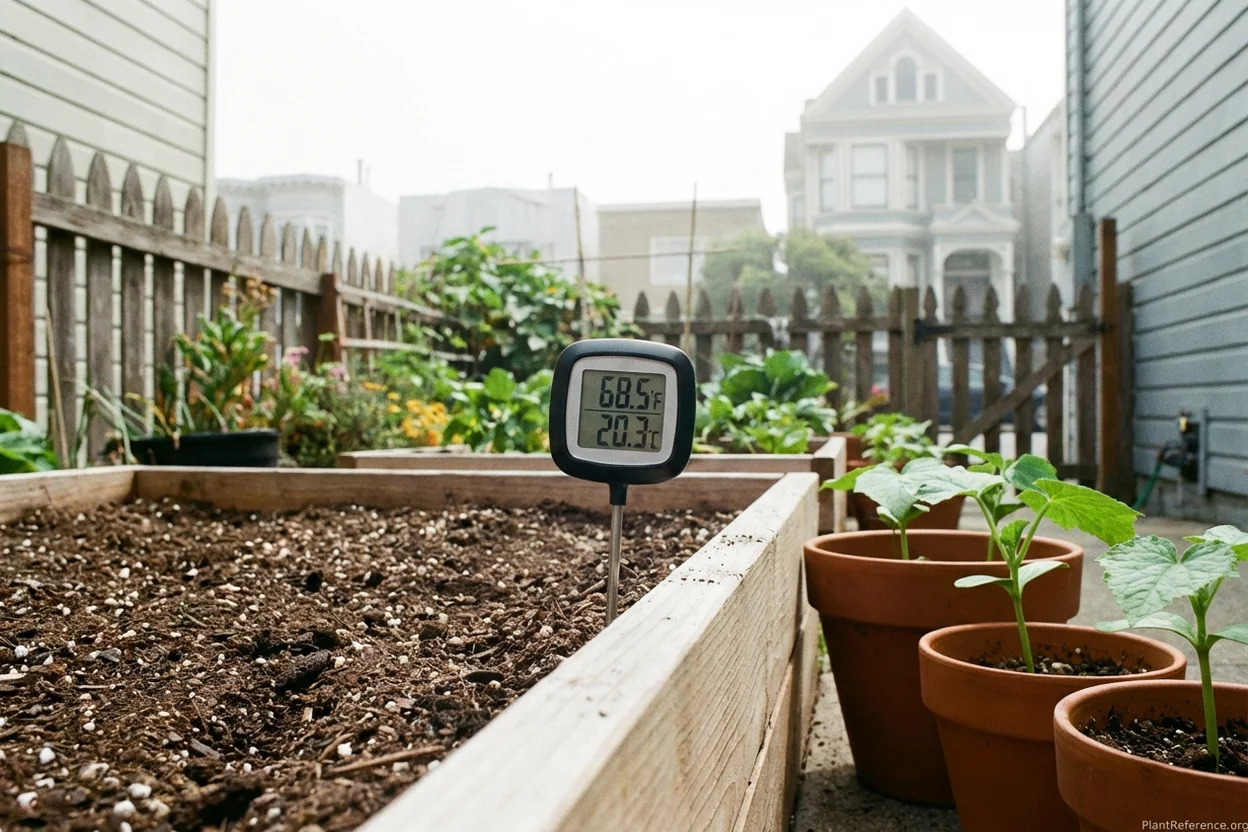
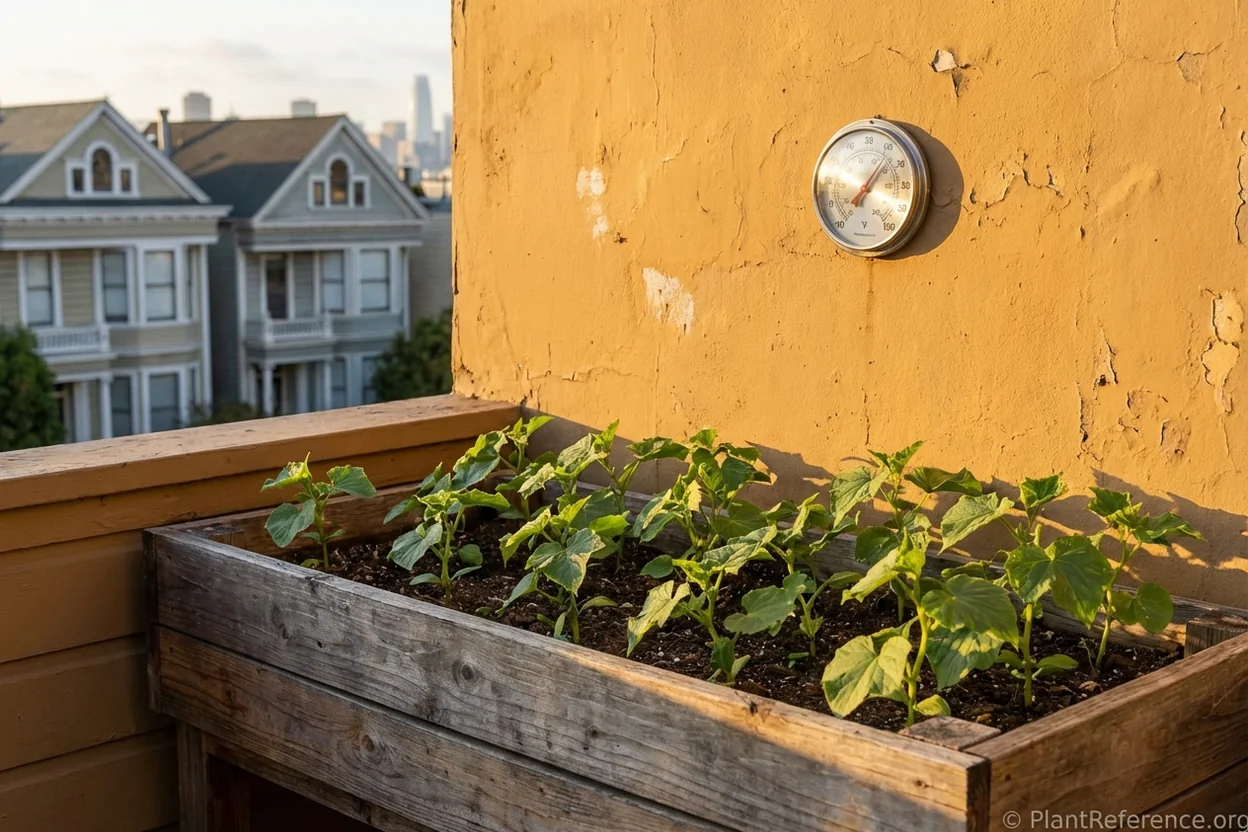
Transplant Outdoors: Late May to early June. The "June Gloom" marine layer can make early June surprisingly cool, so monitor your specific microclimate. If your thermometer reads 65°F+ (18°C+) at midday consistently, transplant. If fog keeps temperatures below 60°F, wait. Some years late May is warmer than early June—watch your local conditions rather than the calendar.
September Warm Spell: San Francisco's warmest weather often arrives in September and October when the fog cycle weakens. Experienced gardeners make a second planting in early August specifically for this window—🌿Cucumis sativus 'Persian' transplants set out August 1-15 produce during the "Indian Summer" weeks that are often warmer than July was. This counterintuitive timing takes advantage of San Francisco's inverted temperature pattern.
Direct Sow: Not recommended under any circumstances in San Francisco. Soil temperatures in most neighborhoods don't reliably hit 60°F (16°C) until June, and the time lost to germination in cool soil makes direct sowing impractical in a climate where every warm day counts.
Effective Season End: Late October. Unlike most cities where frost ends the season, San Francisco cucumbers stop because day length drops below productive levels and temperatures fall below the threshold for vine metabolism. Row covers don't help much here because the limitation is insufficient heat, not frost. Raised Bed Vegetable Garden Layout: Planning for Maximum Production
Complete Growing Guide for San Francisco
Microclimate Selection: The Single Most Important Factor
Before you buy seeds, identify the warmest spot in your garden. This is not optional in San Francisco—it determines whether you'll harvest cucumbers or compost disappointment. Map your sun exposure over a full week, noting exactly how many hours of direct sun each spot receives and when afternoon fog arrives.
South-facing walls absorb solar radiation during sunny morning hours and release heat through the afternoon and evening, creating a microclimate 5-15°F warmer than open garden areas. This thermal mass effect is the closest thing San Francisco has to the summer heat cucumbers need. Position your cucumber bed within 2 feet (60 cm) of a south-facing wall, fence, or building for maximum benefit. Dark-colored walls (brick, dark paint) absorb and radiate more heat than light-colored surfaces. How to Build a Raised Garden Bed: Step-by-Step Construction Guide
Neighborhoods matter enormously. I've tracked temperature data across San Francisco gardens and the differences are dramatic: Potrero Hill and the Mission see 15-20 more days above 75°F per summer than the Outer Sunset. If you garden in the fog belt (Richmond, Sunset, Outer Avenues), cucumbers require a greenhouse, cold frame, or south-facing wall microclimate to produce. Exposed plots in these neighborhoods simply don't get warm enough.
Raised Beds and Soil
Raised beds warm faster than in-ground plots—critical when soil temperature is a limiting factor. Build from redwood or cedar (both last 15+ years in our mild, damp climate). Fill with 60% topsoil, 30% compost, and 10% perlite. San Francisco's sandy native soil actually drains well but lacks nutrients. Compost additions address fertility without creating the drainage problems that clay-heavy cities face.
Heat-Boosting Techniques
Black plastic mulch warms soil 5-10°F above ambient. In San Francisco, this isn't a spring-only tool—leave it in place the entire season because our "summer" soil temperatures can drop below optimal when fog rolls in.
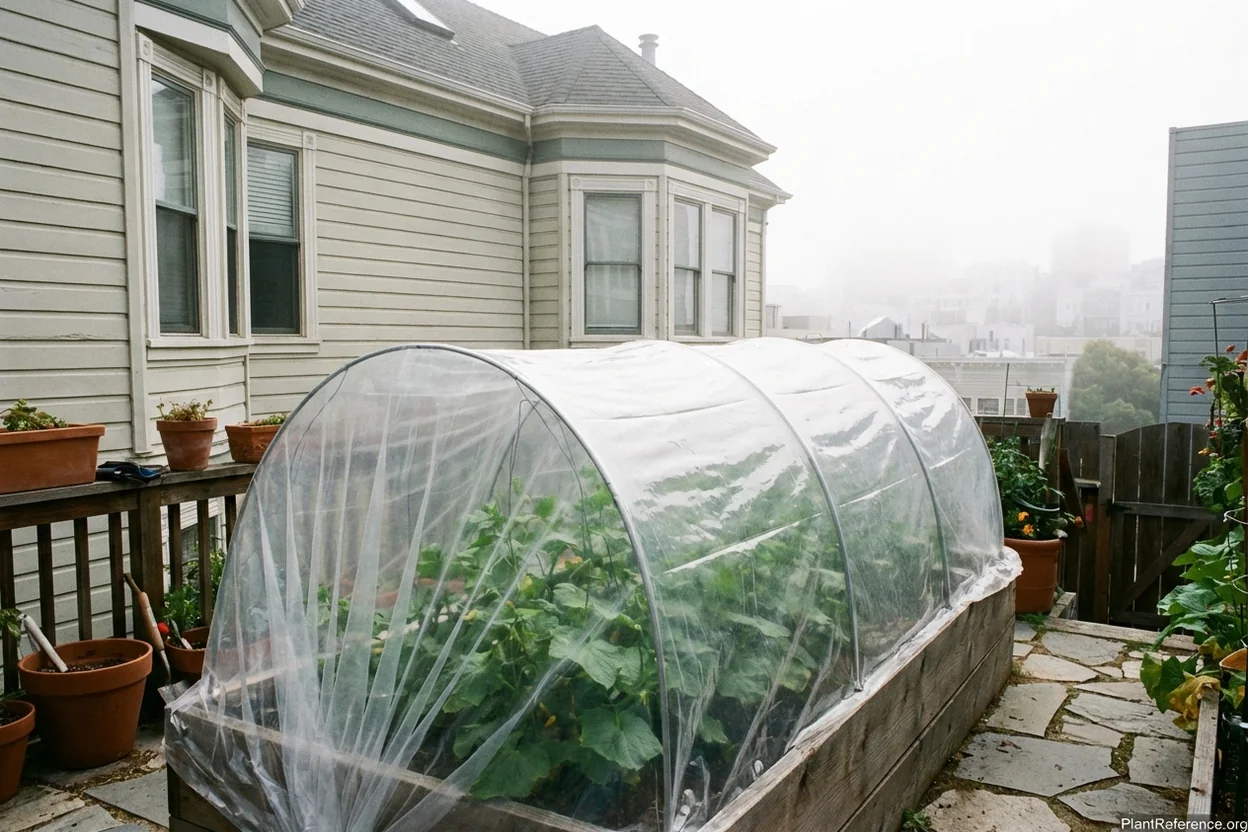
Clear plastic row covers over hoops create a mini-greenhouse effect, boosting air temperature by 10-15°F. Vent on warm days above 80°F (27°C) to prevent overheating—rare but possible in September.
Water-filled walls (Wall-o-Water) around individual plants trap daytime heat and release it overnight when fog drops temperatures.
Watering
San Francisco rarely gets rain from May through October. Cucumbers need 1 to 1.5 inches (2.5-4 cm) weekly. Drip irrigation on a timer provides consistency. Water in the morning—warming the root zone heading into the day's warmest hours matters when overall temperatures run cool. Don't overwater in fog belt gardens where cool temperatures reduce evapotranspiration. Soggy soil in cool conditions invites root rot.
Pollination
Pollination failure is the primary reason standard cucumber varieties fail in San Francisco. Cool, foggy conditions suppress both pollinator activity and pollen viability. Bees need temperatures above 55°F (13°C) to fly and above 65°F (18°C) for active foraging. On typical San Francisco summer days, these thresholds aren't met until midday—if they're met at all. 🌿Cucumis sativus 'Persian' types bypass this bottleneck entirely with parthenocarpic fruit set. For standard varieties, hand-pollinate every morning with a small brush. Even then, pollen viability decreases below 60°F, which is why parthenocarpic varieties fundamentally outperform monoecious types in this climate. When to Plant Peppers in San Francisco: Complete Guide + Best Varieties for Zone 10a
Troubleshooting San Francisco-Specific Problems
Insufficient Heat
The fundamental challenge. If your cucumbers are growing slowly, producing few flowers, or dropping flowers without setting fruit, they aren't getting enough heat. Solutions in order of effectiveness: move to a warmer microclimate (south-facing wall), add clear plastic row covers, use black plastic mulch, and switch to 🌿Cucumis sativus 'Persian' varieties that tolerate cooler conditions. If none of these produce results, your garden may genuinely be too cool for cucumbers—and that's useful information. Focus on the crops San Francisco excels at: brassicas, leafy greens, peas, and cool-season herbs.
Pollination Failure
Flowers open but no fruit develops. In San Francisco, this is almost always temperature-related pollination failure rather than a lack of pollinators. Hand-pollinating helps but doesn't solve the underlying issue of reduced pollen viability at cool temperatures. The real fix is growing parthenocarpic 🌿Cucumis sativus 'Persian' varieties. I spent two seasons trying to hand-pollinate 🌿Cucumis sativus 'Straight Eight' in the Sunset District before accepting that the biology doesn't work at our temperatures. Raised Bed Pest Problems: Identification and Organic Control Methods
Powdery Mildew
Appears in late summer when morning fog creates the surface moisture Powdery Mildew exploits. Less aggressive than in humid Eastern cities but still reduces production. Trellis for airflow, apply neem oil preventatively every 7-10 days from August onward, and choose 🌿Cucumis sativus 'Marketmore 76' for its intermediate resistance if growing in a sunny microclimate.
Wind Damage
San Francisco's afternoon winds—especially in the western neighborhoods—can desiccate foliage and topple trellises. Position cucumbers in wind-protected spots: against south-facing walls, in courtyard gardens, or behind solid fences. Windbreaks reduce desiccation stress and maintain the warm microclimate cucumbers need. Raised Bed Too Hot in Summer: Protecting Plants from Heat Stress
Harvest & Storage
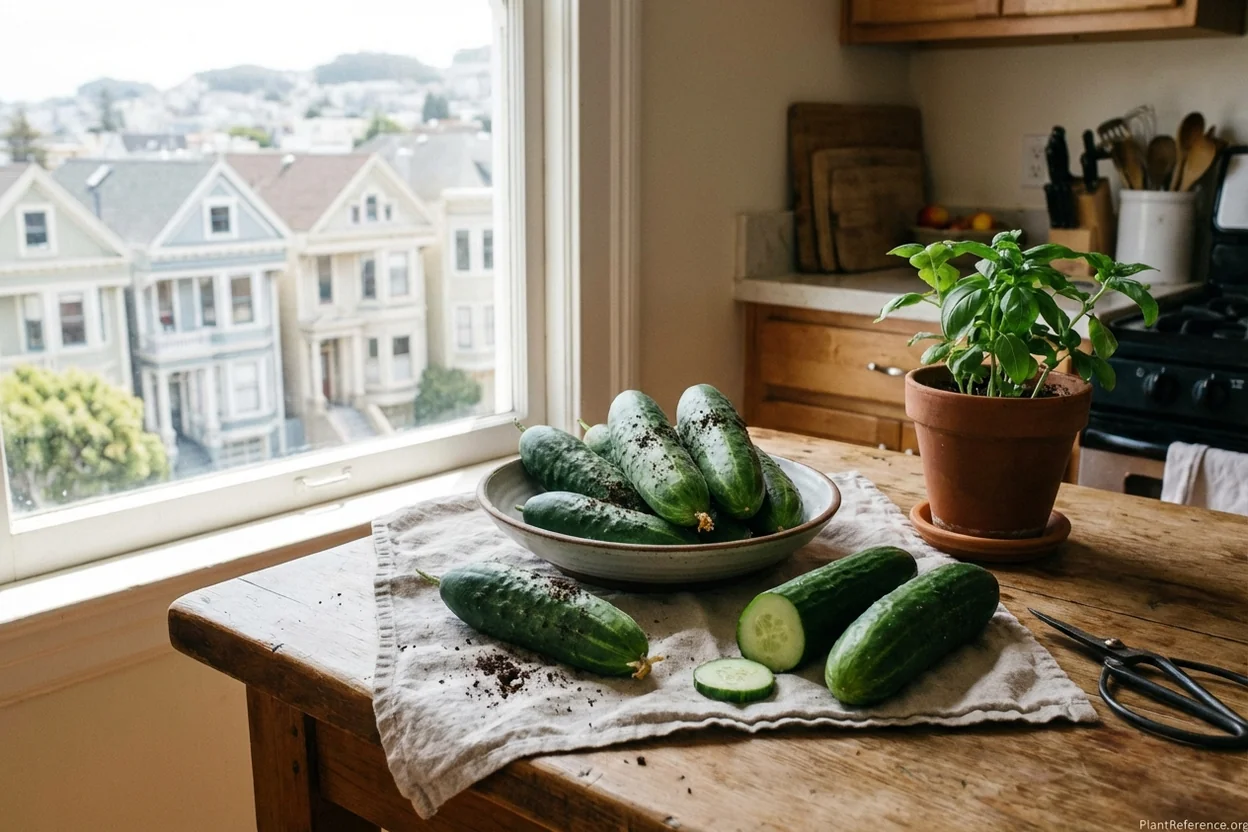
Harvest slicing cucumbers at 6-8 inches (15-20 cm) and pickling types at 2-4 inches (5-10 cm). San Francisco cucumbers grow slowly—expect a pace closer to one fruit every 4-5 days per plant rather than the daily harvests gardeners in warm climates enjoy. Check vines every 2-3 days. Despite the slower pace, still remove overripe fruit promptly to maintain production signals.
Cut with pruners rather than pulling. Harvest in the afternoon when fruit is warmest. A well-managed 🌿Cucumis sativus 'Persian' plant in a favorable San Francisco microclimate produces 8-14 snack cucumbers per season. 🌿Cucumis sativus 'Marketmore 76' in a sunny spot yields 6-10 slicers. These numbers are lower than national averages—set expectations accordingly and appreciate what your microclimate provides.
Fresh cucumbers store 7-10 days refrigerated in a towel inside a loose bag. San Francisco-grown cucumbers develop remarkably crisp texture and mild flavor from the cool growing conditions. The slow growth concentrates flavor compounds in ways that fast-grown, heat-stressed cucumbers from hotter climates don't achieve. Quality over quantity is the San Francisco cucumber grower's mantra. The Complete Guide to Raised Bed Gardening for Beginners (2025)
Frequently Asked Questions
Reading about plants and recognising them are different skills. These three build the second.
- Daily PlantIdentify the day’s mystery plant from a close-up photograph.
- Keyed OutWork a dichotomous key, lead by lead, to name a hidden specimen.
- Name That PlantName a specimen from botanical clues dealt hardest first.
Free to play, no account needed
Aisha manages a small tropical nursery on the east side of Houston, specializing in plants that can handle the Gulf Coast's humidity, heat, and unpredictable flooding. She studied horticulture in college and worked at a wholesale grower before opening her own operation. Growing up, her parents kept a kitchen garden with okra, bitter gourd, and curry leaf plants—a tradition she's continued. Houston's subtropical climate lets her grow things most of the country can't, but it also means dealing with fungal issues, standing water, and summers where it's too hot for even tomatoes. Aisha writes about tropical and subtropical plant care, humidity management, and working with heavy clay soils.