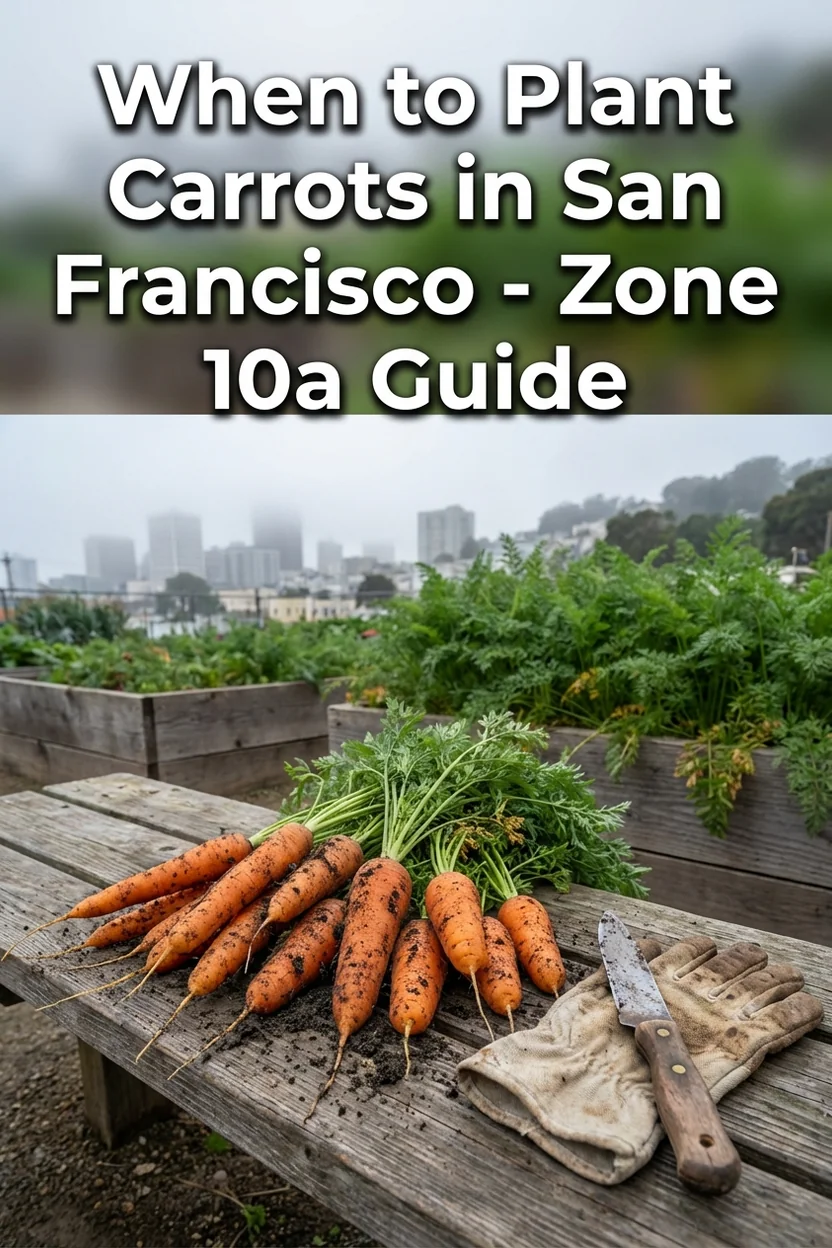
When to Plant Carrots in San Francisco: Zone 10a Dates + Best Varieties
Pets & Toxicity
Recorded toxicity for plants linked in this guide. An unknown status is not a safety assessment.
No linked plant is recorded as toxicDetailsHide
Daucus carota ssp. sativus 'Nantes' — Toxicity
Non-toxicView Daucus carota ssp. sativus 'Nantes' plant profileDaucus carota ssp. sativus 'Chantenay' — Toxicity
Non-toxicView Daucus carota ssp. sativus 'Chantenay' plant profileDaucus carota ssp. sativus 'Imperator' — Toxicity
Non-toxicView Daucus carota ssp. sativus 'Imperator' plant profileDaucus carota ssp. sativus 'Rainbow' — Toxicity
Non-toxicView Daucus carota ssp. sativus 'Rainbow' plant profileDaucus carota ssp. sativus 'Danvers 126' — Toxicity
Non-toxicView Daucus carota ssp. sativus 'Danvers 126' plant profile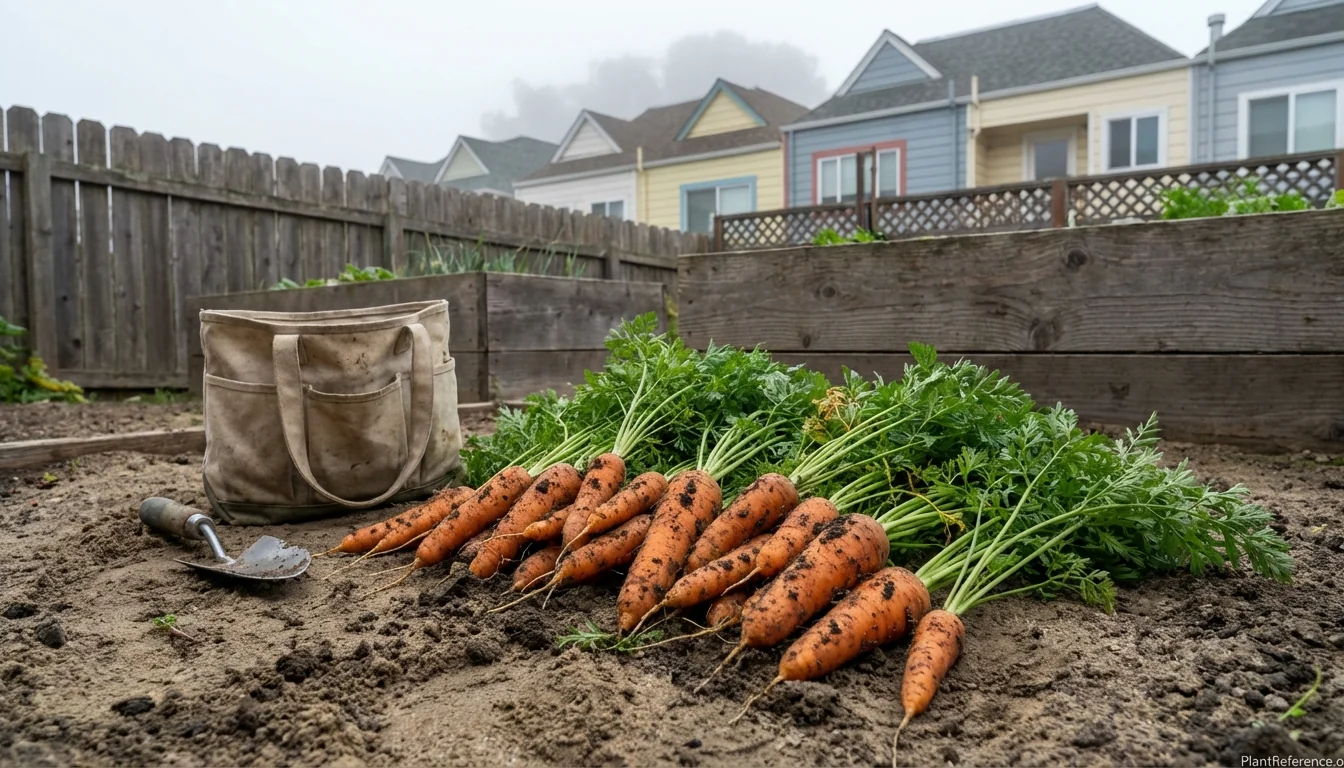
— Image © Plant Reference 2026
San Francisco is one of the best carrot-growing cities in America, and most people here don't realize it. Our cool temperatures, consistent moisture from fog drip, and near-absent frost create almost exactly the conditions carrots prefer. I spent my first two years in the Sunset District trying to grow tomatoes before I figured out what actually works here—cool-season crops thrive, and carrots are near the top of that list. The catch is that San Francisco's block-by-block microclimates mean your neighbor's planting calendar might not match yours. Fog exposure, wind corridors, and sun angles vary dramatically across a few hundred feet.
Best Carrot Varieties for San Francisco's Zone 10a Climate
Most San Francisco soil traces back to sand dunes. The Sunset, Richmond, and Outer Mission districts sit on deep sandy soil that drains fast and warms quickly—exactly the conditions carrots love. Neighborhoods closer to downtown or built on fill may have heavier, more variable soil. Know your block before choosing varieties.
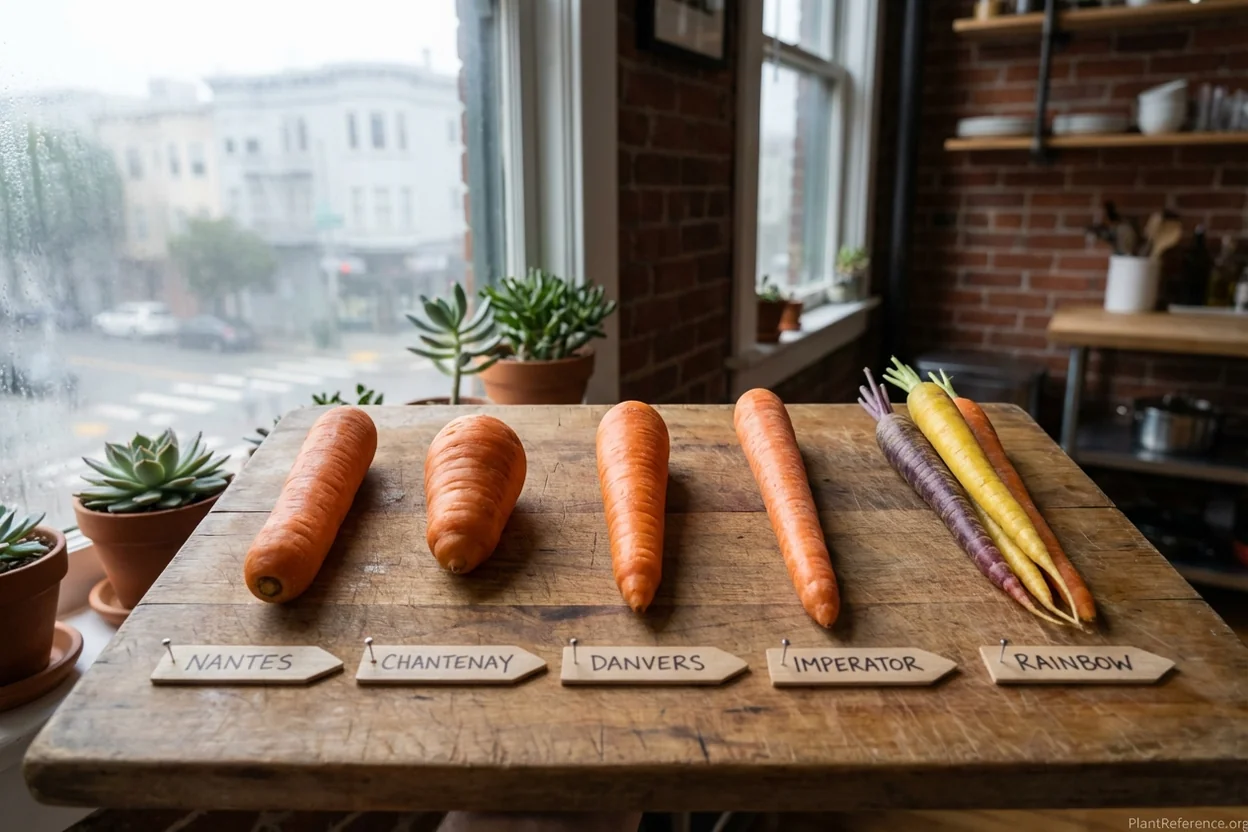
🌿Daucus carota ssp. sativus 'Nantes' (DAW-kus kuh-ROH-tuh) is my go-to recommendation for San Francisco. The cylindrical root grows straight in our sandy soil without any of the forking problems that plague gardeners working with clay. Sweet, nearly coreless flesh with a satisfying snap. The cultivar 'Bolero' adds strong disease resistance and stores well, while 'Mokum' matures early at 54 days—useful for succession planting in the fog belt where you want fast turnaround between sowings.
🌿Daucus carota ssp. sativus 'Chantenay' is the smart pick for small urban lots with shallow or rocky soil. At 4-5 inches (10-13 cm) long with stout shoulders, 🌿Daucus carota ssp. sativus 'Chantenay' produces a usable root in containers, raised beds, and the compacted backyard soil that's common in older San Francisco properties. Pull before the diameter exceeds 2 inches (5 cm) to avoid a woody core.
🌿Daucus carota ssp. sativus 'Danvers 126' handles heavier soil pockets that show up in neighborhoods built on fill or near the bay. The conical root pushes through moderate resistance, and its higher fiber content makes it the best option for winter storage. At 70-80 days to maturity, 🌿Daucus carota ssp. sativus 'Danvers 126' works in every planting window San Francisco offers.
🌿Daucus carota ssp. sativus 'Imperator' produces the long, slender grocery store carrot and performs well in San Francisco's deep sand—one of the few places where this variety can grow in native soil without raised beds. The cultivar 'Sugarsnax 54' delivers exceptional sweetness. If your lot has the depth, 🌿Daucus carota ssp. sativus 'Imperator' takes full advantage of it.
🌿Daucus carota ssp. sativus 'Rainbow' adds color with white, yellow, orange, and coral roots from one hybrid packet. The varied pigments each carry different phytochemical profiles. Maturity runs 70-75 days, and the moderate root length works in most San Francisco garden conditions.
Variety | Days to Maturity | Best For | Notes for San Francisco |
|---|---|---|---|
65-75 days | All-around best performer | Thrives in SF sandy soil; 'Mokum' for fast fog belt harvests | |
65-75 days | Small lots and containers | Short roots handle shallow urban soil and containers | |
70-80 days | Fill soil and storage | Conical shape handles heavier soil near downtown and bay | |
75-85 days | Deep sandy Sunset/Richmond lots | SF sand gives Imperator the depth it needs without raised beds | |
70-75 days | Specialty and nutrition | Multiple colors and phytochemical profiles |
Specific Planting Dates for San Francisco
Forget the traditional spring-and-fall planting calendar—San Francisco's 334-day frost-free season with average temperatures between 50-65°F (10-18°C) means carrots can go in the ground almost any month. The real scheduling variable is your microclimate.
Sunny Neighborhoods (Mission, Potrero Hill, Bernal Heights)
These neighborhoods sit east of Twin Peaks, sheltered from direct fog flow. Soil warms earlier, afternoon sun is reliable, and you get more heat units per day. Sow from February through October with succession plantings every two to three weeks for continuous harvest. Summer sowings do well here because temperatures rarely exceed 75°F (24°C)—unlike inland California, you won't trigger heat-induced bitterness.
Fog Belt (Sunset, Richmond, Outer Parkside)
The western neighborhoods catch the marine layer directly. Summer fog keeps soil temperatures cool and reduces daylight hours. Sow from March through September. February soil is often too cold for reliable germination, and October onward gets too short on light. The silver lining: fog drip provides consistent surface moisture that helps during the 14-21 day germination window.
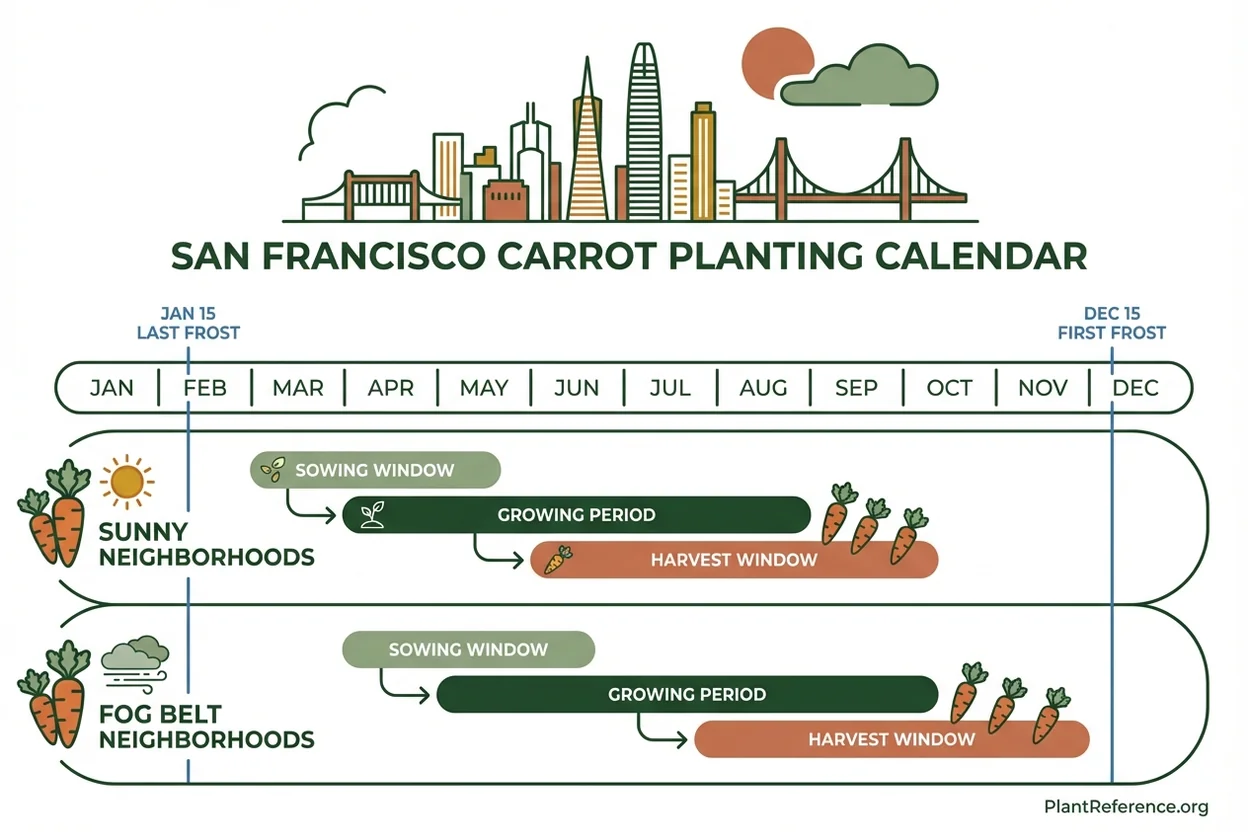
Sunny neighborhoods sowing: February 1 - October 31
Fog belt sowing: March 1 - September 30
Succession sowing interval: Every 2-3 weeks year-round
Primary harvest: Year-round (65-85 days after each sowing)
Best flavor window: Fall and winter sowings (September-January harvest)
Frost risk: Minimal; January 15 last frost, December 15 first frost
Complete Growing Guide for San Francisco
Soil Assessment
San Francisco's soil story is surprisingly simple: most of the western half of the city sits on ancient sand dunes. If you're in the Sunset, Richmond, or Outer Parkside, dig down 12 inches and you'll find sand all the way. This is ideal for carrots—excellent drainage, zero compaction, and easy root penetration. The downside is that sand holds almost no nutrients or moisture.
For sandy soil, work in 3-4 inches (8-10 cm) of finished compost before each planting. The compost adds organic matter that acts as a sponge, holding both water and nutrients in the root zone. Without it, everything you apply washes straight through. Avoid fresh manure—excess nitrogen causes lateral root branching and forked taproots. Best Soil Mix for Raised Beds: Creating the Perfect Growing Medium
Neighborhoods built on fill (SoMa, parts of the Marina, Mission Bay) have unpredictable soil that ranges from rubble to heavy clay. If you're gardening on fill, raised beds are the safest approach. Build to at least 12 inches (30 cm) deep with 60% topsoil, 30% compost, and 10% perlite. How to Build a Raised Garden Bed: Step-by-Step Construction Guide
Seeding
Sow seeds 1/4 inch (0.6 cm) deep in rows 12 inches (30 cm) apart. In sandy soil, cover with a thin layer of vermiculite or fine compost to help retain surface moisture. Sandy soil doesn't crust the way clay does, but it dries fast—especially on windy afternoons when the Sunset gets 20+ mph gusts off the ocean.
Carrot seeds need uninterrupted moisture for 14-21 days to germinate. In the fog belt, the marine layer helps maintain surface moisture naturally. In sunnier neighborhoods, lay burlap or a board over the row and check daily from day 5. Remove the cover as soon as seedling loops appear. Best Soil for Raised Beds: 6 Commercial Mixes Tested and Compared
Thinning
Thin in two passes: first to 1 inch (2.5 cm) at the 2-inch (5 cm) seedling stage, then to 2-3 inches (5-8 cm) when tops reach 4-5 inches (10-13 cm). Snip at the soil line with scissors—pulling disturbs neighboring roots. San Francisco's year-round growing means you'll thin multiple successions, so keep scissors handy. Raised Bed Vegetable Garden Layout: Planning for Maximum Production
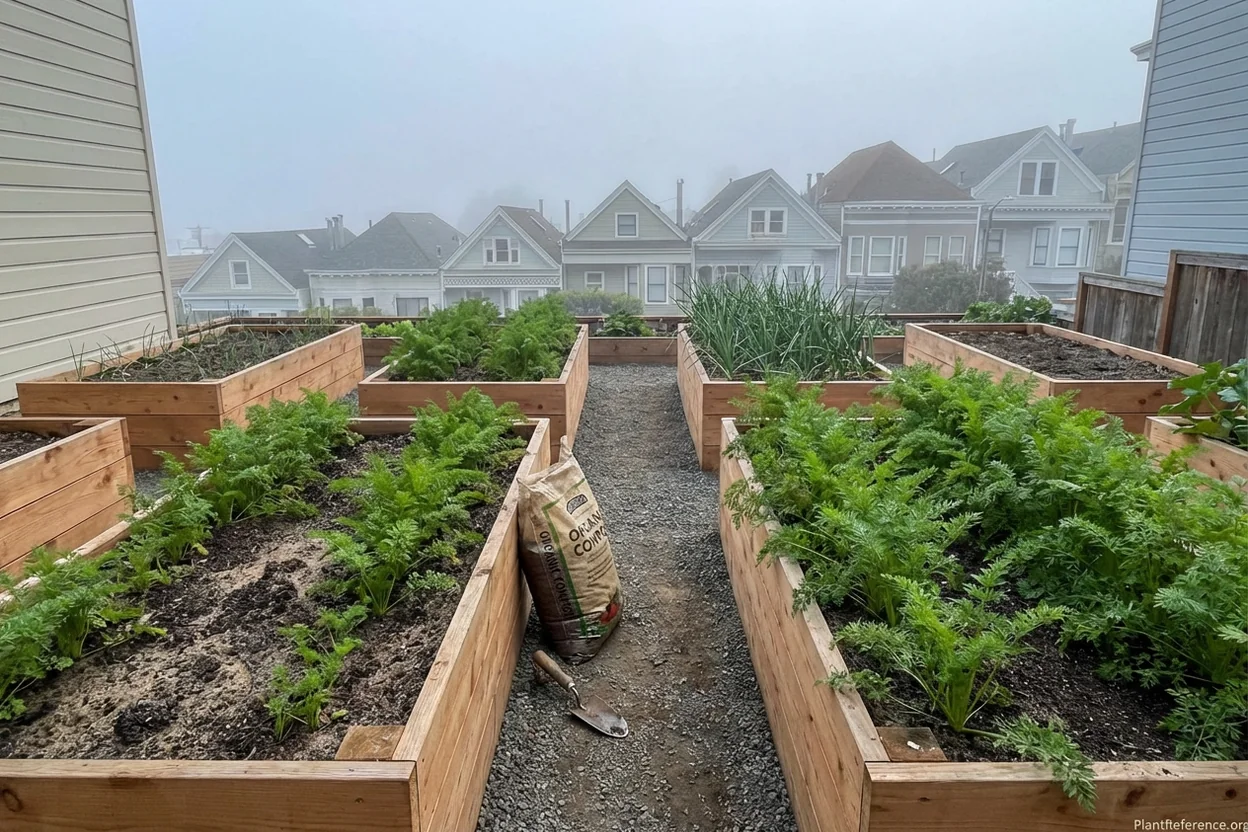
Watering
This is where San Francisco carrot growing gets tricky. Sandy soil drains fast, and our dry season (May through October) delivers virtually no rain. During summer months, carrots need 1-2 inches (2.5-5 cm) of water per week applied slowly through drip irrigation or soaker hoses. Water deeply but less frequently to encourage the taproot to push down rather than spreading laterally near the surface.
In the fog belt, fog drip provides meaningful supplemental moisture—I've measured up to 0.1 inches per night on my rain gauge from fog alone. Factor that into your irrigation schedule to avoid overwatering, which causes root splitting in sandy soil where excess water moves through fast and creates uneven moisture zones. Raised Bed Irrigation Systems: Watering Solutions for Consistent Growth
From November through April, rainfall usually provides adequate moisture. Cut back irrigation and let the rain handle it, checking soil moisture by feel before watering.
Wind Protection
The ocean wind that blasts through the Sunset and Richmond districts from March through September is a genuine challenge for carrot seedlings. Young foliage desiccates in sustained 20+ mph gusts, and wind-driven sand abrades tender stems. Install a low windbreak—30-40% permeability fabric on short stakes works well—on the windward side of your carrot bed during the first six weeks after emergence. Once the foliage is established, carrots handle wind without issue. Raised Bed Weeds: Prevention Strategies and Control Methods
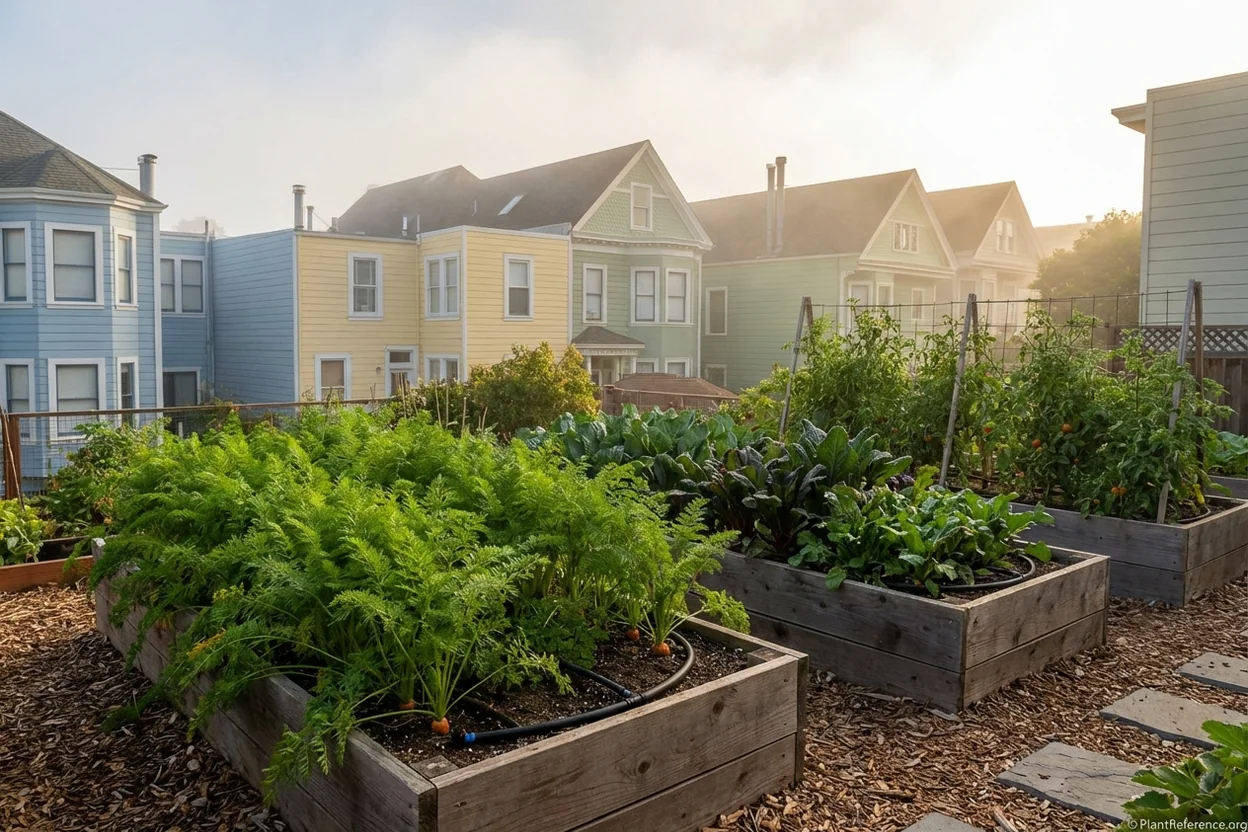
Troubleshooting San Francisco-Specific Problems
Slugs and Snails
San Francisco's fog moisture creates prime slug and snail habitat, particularly in the western neighborhoods. Seedlings disappear overnight during the first three weeks after emergence. Iron phosphate bait (Sluggo or similar) applied at planting and reapplied after rain or heavy fog is essential. Copper tape along raised bed edges provides a physical barrier. I track slug activity with beer traps to know when pressure is highest—usually July through October when fog drip peaks. When to Plant Kale in San Francisco: Complete Guide + Best Varieties for Zone 10a
Nutrient Leaching in Sandy Soil
San Francisco's sand holds nutrients poorly. A single heavy watering or rainstorm can flush fertilizer below the root zone. Side-dress with balanced organic fertilizer every three to four weeks during active growth, and maintain a 2-inch (5 cm) layer of compost mulch to slowly release nutrients. Liquid kelp or fish emulsion applied biweekly provides a fast-acting supplement between granular applications. Raised Bed Soil pH Problems: Testing, Adjusting, and Maintaining Balance
Slow Growth in the Fog Belt
Carrots in the Sunset and Richmond grow noticeably slower than those in Mission or Potrero Hill gardens. Reduced sunlight from the marine layer means fewer photosynthetic hours per day, which translates to slower root development. Choose early-maturing varieties like 🌿Daucus carota ssp. sativus 'Nantes' cultivar 'Mokum' (54 days) or 🌿Daucus carota ssp. sativus 'Chantenay' (65 days) to compensate. Add 10-15 days to the listed maturity when growing in full fog belt conditions. When to Plant Peppers in San Francisco: Complete Guide + Best Varieties for Zone 10a
Aphids
Green peach aphids colonize carrot foliage during the warmer months, particularly in sheltered sunny neighborhoods. Small populations cause minimal damage, but heavy infestations stunt growth and produce sticky honeydew that attracts sooty mold. A strong water spray knocks off most aphids. For persistent infestations, neem oil applied every 7-14 days provides effective organic control. When to Plant Squash in San Francisco: Complete Guide + Best Varieties for Zone 10a
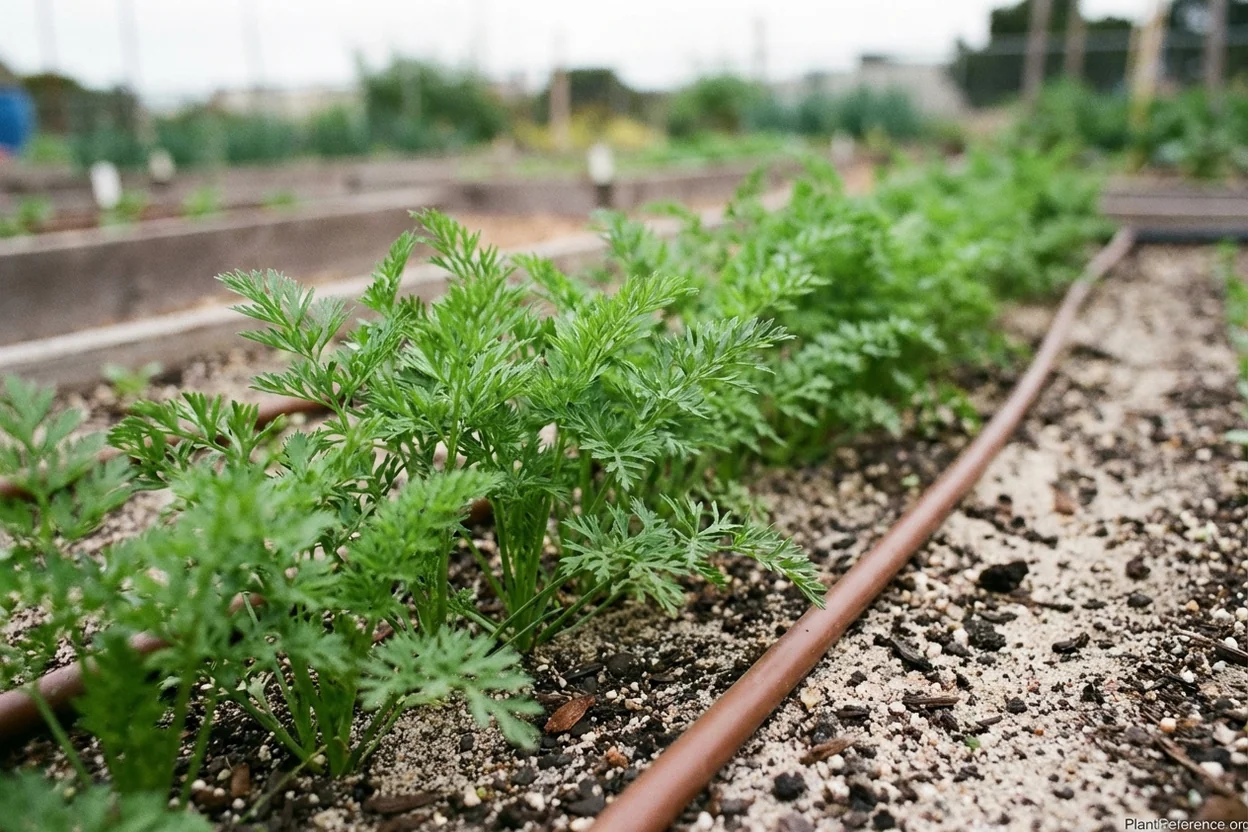
Harvest & Storage
San Francisco's year-round growing means you're harvesting carrots in every season. Pull when shoulders measure 3/4-1 inch (2-2.5 cm) in diameter at the soil surface, typically 65-85 days after sowing. Sandy soil releases roots easily—a gentle twist and pull usually does it without a fork. That's one of the real perks of gardening on dune sand. When to Plant Tomatoes in San Francisco: Complete Guide + Best Varieties for Zone 10a
Fall and winter harvests produce the sweetest carrots. As soil temperatures drop below 50°F (10°C) during San Francisco's mild winter, the starch-to-sugar conversion kicks in and flavor improves noticeably. Since the ground never freezes here, you can leave roots in the soil and harvest as needed—the garden becomes your refrigerator.
For storage, remove foliage immediately—the leaves pull moisture from the root. Store unwashed carrots in perforated plastic bags at 32-38°F (0-3°C). With year-round growing, storage is less critical in San Francisco than in colder climates—you can always have fresh roots in the ground. But 🌿Daucus carota ssp. sativus 'Danvers 126' and the Nantes cultivar 'Bolero' store for four to five months if you want to build a reserve. When to Plant Onions in San Francisco: Complete Guide + Best Varieties for Zone 10a
Frequently Asked Questions
Reading about plants and recognising them are different skills. These three build the second.
- Daily PlantIdentify the day’s mystery plant from a close-up photograph.
- Keyed OutWork a dichotomous key, lead by lead, to name a hidden specimen.
- Name That PlantName a specimen from botanical clues dealt hardest first.
Free to play, no account needed
David is a software engineer who got into gardening after buying a fixer-upper in the Sunset District with a neglected backyard. San Francisco's microclimates fascinated him—he quickly learned that what grows three blocks away might not work in his fog belt yard. David now maintains a productive vegetable garden despite the marine layer, growing cool-season crops almost year-round and experimenting with season extension techniques. He volunteers at a local community garden and writes about urban food growing, microclimate gardening, and the particular challenges of Bay Area conditions. His approach is methodical—he keeps detailed notes and isn't afraid to share what didn't work.