Plant Reference
Cucurbita, Genus, maxima, Species, 'Hubbard', Cultivar,
- Genus & species
- Cultivar
Hubbard winter squash
Andes of South America (Bolivia, northern Argentina) (species origin); cultivar introduced around 1842 in Marblehead, Massachusetts
Overview
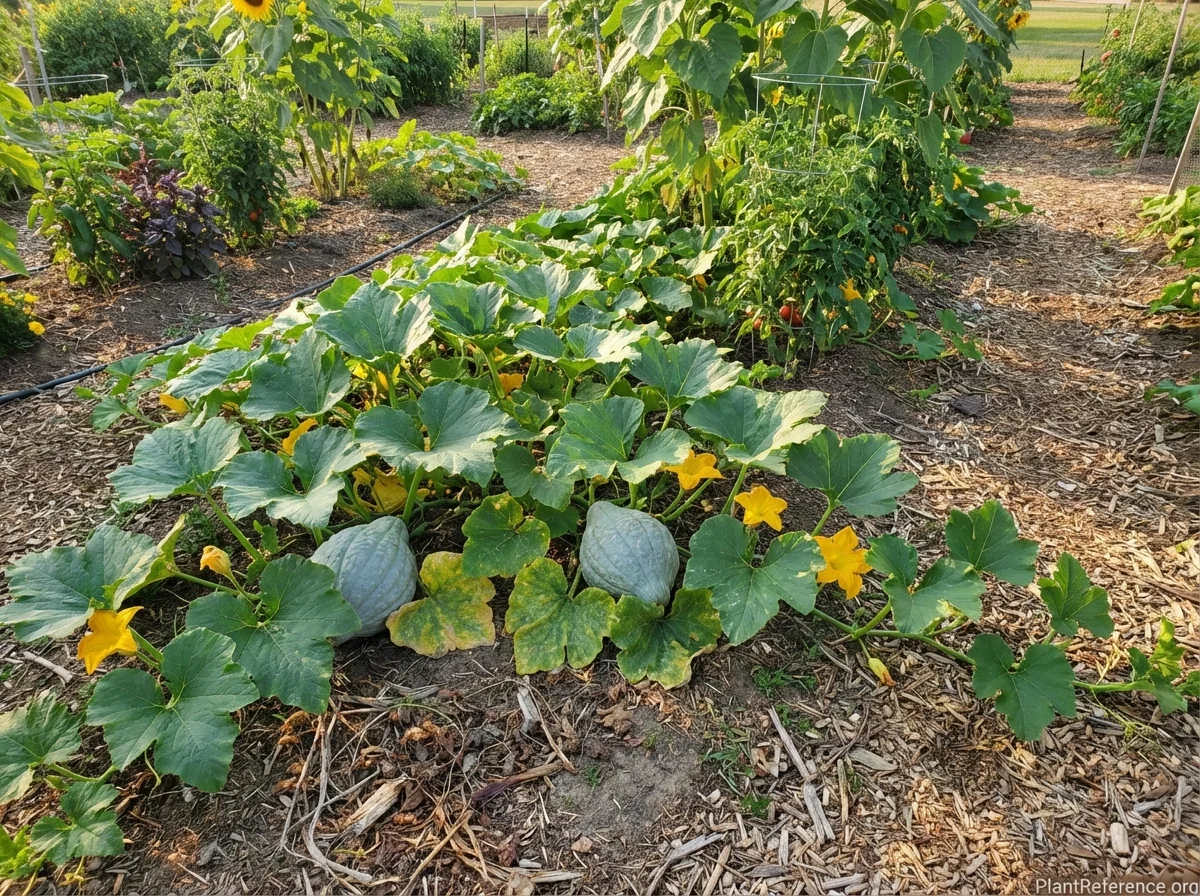
Cucurbita maxima 'Hubbard' is a vigorous trailing annual vine in the family Cucurbitaceae reaching 12-18 inches (30-45 cm) tall and 120-180 inches (300-450 cm / 10-15 feet) in vine length. The cultivar produces large teardrop-shaped winter squash 10-25 pounds (4.5-11 kg) with an extremely hard rind in blue-gray (Blue Hubbard), orange (Golden Hubbard), or green (Green Hubbard). Flesh is dense, smooth-textured, and orange with a sweet dry flavor. Flowers are bright yellow trumpet-shaped monoecious blooms 4-5 inches (10-12 cm) across. Leaves are large, heart-shaped with rounded lobes, 10-14 inches (25-35 cm), carrying short hairs; stems are round and spongy rather than ridged, and this stem character is a C. maxima diagnostic that separates the species from C. pepo and C. moschata. The cultivar is a Massachusetts heirloom named by Elizabeth Hubbard and introduced around 1842 in Marblehead. Fruits cure to a 6-8 month storage life at 50-55°F (10-13°C), and 'Hubbard' is grown specifically for winter keeping. The rind is extremely hard and often requires a saw or a drop onto a hard surface to open. Monoecious and requires bee pollination. The vines need 100-150 square feet (9-14 m²) per plant and are not suited to small gardens. Maturity is 100-120 days from seed. Squash bugs (Anasa tristis) and powdery mildew are the main threats.
Native Range
Cucurbita maxima 'Hubbard' is a heirloom cultivar named by Elizabeth Hubbard and introduced around 1842 in Marblehead, Massachusetts. The species C. maxima is native to the Andes of South America (Bolivia, northern Argentina).Suggested Uses
Grown in large vegetable gardens with 100-150 square feet (9-14 m²) per plant. Not suited to small gardens. Fruits cure to a 6-8 month storage life and 'Hubbard' is grown specifically for winter keeping. Massachusetts heirloom. The extremely hard rind requires a saw to open. Open-pollinated and suitable for seed saving. Non-toxic. Tender annual.How to Identify
Appearance
Size & Dimensions
Height1' - 1'6"
Width/Spread10' - 15'
Bloom Information
Detailed Descriptions
Flower Description
Bright yellow; trumpet-shaped 4-5 inches (10-12 cm); monoecious; July-SeptemberFoliage Description
Medium to dark green; large heart-shaped with rounded lobes, 10-14 inches (25-35 cm); with short hairs; stems round and spongy (not ridged, a C. maxima diagnostic); deciduousGrowing Conditions
Sun Requirements
Requires 6-10 hours of direct sunlight daily
• Full Sun: 6+ hours of direct sunlight
• Partial Shade: 3-6 hours of direct sunlight
• Full Shade: Less than 3 hours of direct sunlight
Care & Maintenance
Care Guide
Full sun (6+ hours of direct light per day). Rich moist soil at pH 6.0-6.8. Bee pollination is required. Trailing vines need 100-150 square feet (9-14 m²) per plant. Growing vine tips are pinched after 2-3 fruit have set to redirect energy to fruit development. Fruit is left on the vine until the rind is extremely hard and the stem is dry. Stores 6-8 months at 50-55°F (10-13°C). Squash bugs and powdery mildew are the primary pests. Not deer-resistant. Non-toxic. Tender annual.Pruning
Growing vine tips are pinched after 2-3 fruit have set to redirect energy to fruit development. Subsequent female flowers are removed. Developing fruit is lifted onto dry boards or straw to prevent bottom rot. Mildewed leaves are removed.Pruning Schedule
Prune: August–September
summer
Toxicity
Non-toxicPlanting Guide
Planting Methods & Timing
Planting Method
both
Indoor Start
3 weeks before last frost
Direct Sow Timing
After last frost when soil temperature reaches 65°F (18°C) or higher
Days to Maturity
100–120 days
Plant Spacing
48 inches