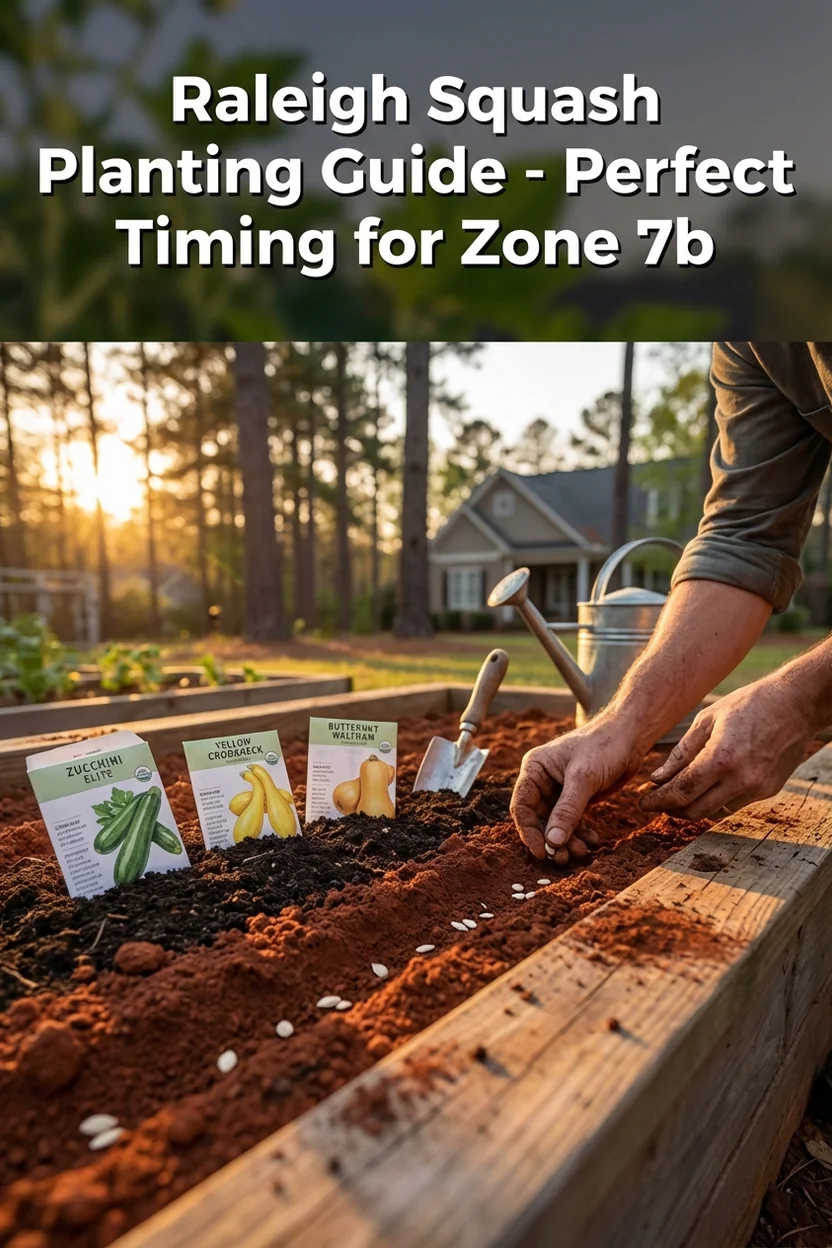
When to Plant Squash in Raleigh: Complete Guide + Best Varieties for Zone 7b
Pets & Toxicity
Recorded toxicity for plants linked in this guide. An unknown status is not a safety assessment.
No linked plant is recorded as toxicDetailsHide
Cucurbita pepo 'Black Beauty' — Toxicity
Non-toxic as an edible cropView Cucurbita pepo 'Black Beauty' plant profileCucurbita pepo 'Yellow Crookneck' — Toxicity
Non-toxic as an edible cropView Cucurbita pepo 'Yellow Crookneck' plant profile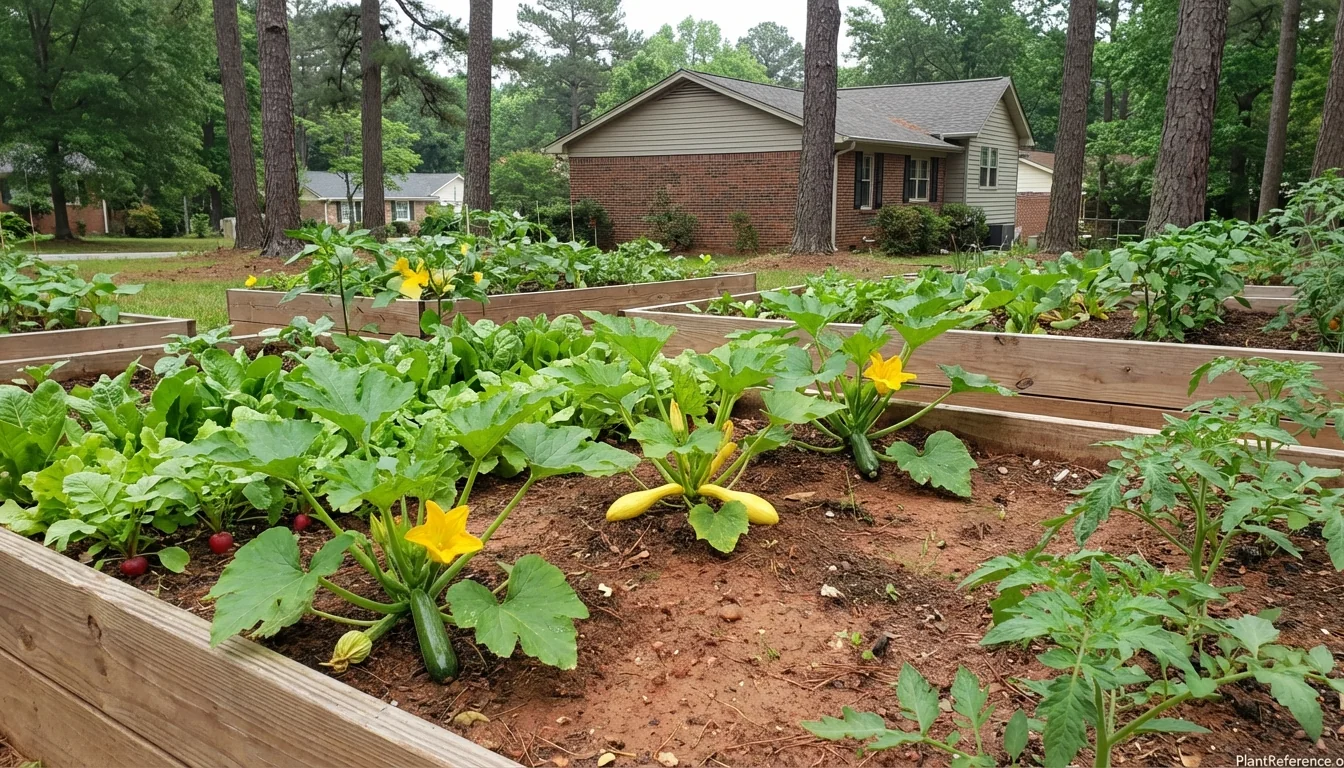
— Image © Plant Reference 2026
Raleigh gardeners enjoy one of the best climates for growing squash in North Carolina. With Zone 7b's 214-day frost-free season from April 4 to November 4, you can successfully grow both fast-producing summer squash and storage winter varieties. The key is understanding when to plant squash in Raleigh to maximize your harvest window.
Best Squash Varieties for Raleigh's Climate
Raleigh's moderate Zone 7b climate with adequate rainfall and 214 frost-free days creates ideal conditions for the complete range of squash varieties. The lengthy growing season allows winter squash to fully mature while summer squash can provide continuous harvests from June through October.
Summer Squash Varieties for Raleigh
Summer squash thrive in Raleigh's warm, humid summers with consistent rainfall. These varieties mature quickly and produce continuously when harvested regularly.
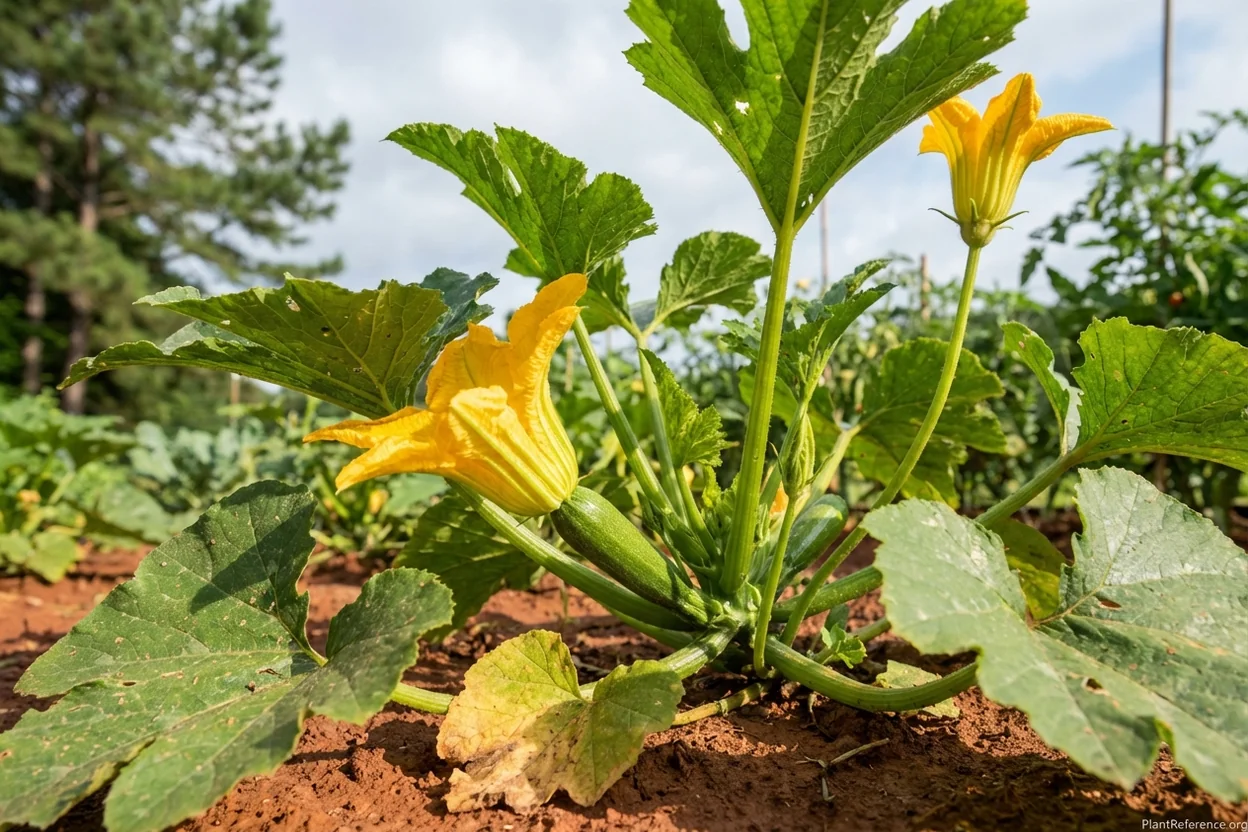
🌿Cucurbita pepo 'Black Beauty' zucchini performs exceptionally well in Raleigh, maturing in just 45-55 days. This compact bush variety spreads 3-4 feet and produces dark green cylindrical fruits best harvested at 6-8 inches. The variety shows good resistance to common southeastern diseases and maintains production through Raleigh's hot July and August temperatures.
🌿Cucurbita pepo 'Yellow Crookneck' adapts well to North Carolina's humid climate, maturing in 50-60 days. The distinctive curved yellow fruits with warted skin should be picked at 4-6 inches for best texture. This variety tolerates Raleigh's afternoon thunderstorms better than many squash types.
🌿Cucurbita pepo 'Pattypan' produces prolifically in Raleigh's growing conditions, with scalloped white or yellow fruits ready in 50-60 days. Harvest when fruits are 2-3 inches diameter for tender, flavorful eating. This compact bush variety fits well in Raleigh suburban gardens with limited space.
Winter Squash Varieties for Raleigh
Raleigh's 214-day season provides excellent conditions for winter squash, which need 80-110 days to reach full maturity. These varieties produce single harvests in fall and store through winter.
🌿Cucurbita moschata 'Butternut' represents the premier winter squash for Raleigh gardens, requiring 85-100 days to maturity. The tan exterior and orange flesh develop full sweetness when vines naturally die back in October. Butternut's solid stems resist squash vine borers, a significant advantage in North Carolina's pest environment.
Cucurbita pepo 'Table Queen Acorn' matures in 80-100 days, making it suitable for Raleigh's season length. The ribbed dark green fruits develop best flavor when harvested after the first light frost. Acorn squash vines spread 4-6 feet, requiring adequate space but less than larger winter varieties.
🌿Cucurbita pepo 'Delicata' cream-colored fruits with dark green stripes mature in 80-100 days. The edible thin skin eliminates peeling requirements, and the sweet potato-like flavor develops fully in Raleigh's autumn conditions. Delicata vines require 6-8 feet of space and benefit from afternoon shade during peak summer heat.
Cucurbita pepo 'Vegetable Spaghetti' produces stringy flesh that substitutes for pasta when cooked. This variety needs 88-100 days to develop proper texture, making it well-suited to Raleigh's growing season. The large vines require 8-10 feet of space but produce multiple 2-3 pound fruits per plant.
Cucurbita maxima 'Kabocha' Japanese pumpkins require 95-110 days and prefer Raleigh's moderate summer temperatures over extreme heat. The dark green fruits with orange flesh develop exceptional sweetness and storability. Kabocha vines can spread 12+ feet and produce 3-5 fruits weighing 3-5 pounds each.
Variety | Days to Maturity | Best For | Notes for Raleigh |
|---|---|---|---|
45-55 days | Continuous harvest | Excellent disease resistance for humid conditions | |
50-60 days | Heat tolerance | Handles afternoon thunderstorms well | |
50-60 days | Small gardens | Compact bush for suburban spaces | |
85-100 days | Storage/cooking | Solid stems resist vine borers | |
Cucurbita pepo 'Table Queen Acorn' | 80-100 days | Fall harvest | Improves after light frost |
80-100 days | Fresh eating | Thin edible skin, sweet flavor | |
Cucurbita pepo 'Vegetable Spaghetti' | 88-100 days | Pasta substitute | Needs consistent moisture for proper texture |
Cucurbita maxima 'Kabocha' | 95-110 days | Premium storage | Prefers moderate summer temperatures |
Specific Planting Dates for Raleigh
Raleigh's last frost date of April 4 and first frost date of November 4 create a 214-day growing window perfect for all squash varieties. Proper timing ensures plants establish before summer heat and winter squash mature before frost.
Direct Seeding Timeline
Direct seeding works well in Raleigh's mild spring conditions. Soil temperatures reach the required 65-70°F by mid-April, allowing for reliable germination.
Summer Squash Direct Seeding: April 18-May 15 Plant summer squash 2 weeks after the last frost date when soil has warmed adequately. Seeds germinate in 7-10 days when soil temperature stays above 65°F consistently. Early April plantings risk cold soil and poor germination.
Winter Squash Direct Seeding: April 18-June 1 Winter squash can be planted throughout this extended window, but earlier plantings produce larger, better-developed fruits. Late June plantings of 110-day varieties like Cucurbita maxima 'Kabocha' mature right at the November 4 frost date with no margin for weather delays.
Transplant Timeline
Starting seeds indoors extends the growing season and provides more reliable establishment, especially for winter squash varieties requiring maximum growing time.
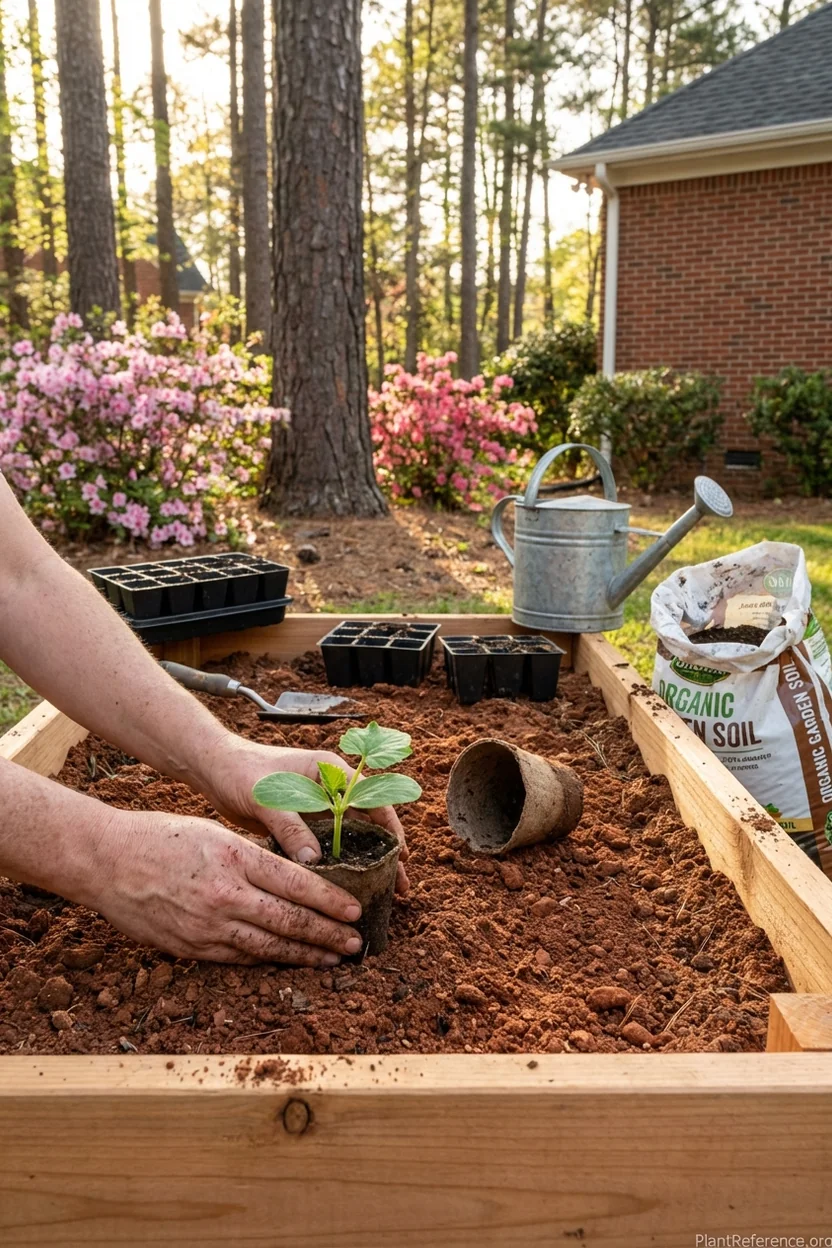
Indoor Seed Starting: March 21-28 Start seeds 3-4 weeks before the last frost date in biodegradable pots to avoid root disturbance. Squash seedlings develop extensive root systems quickly and transplant shock can delay growth by 2 weeks.
Transplant Dates: April 18-May 15 Transplant outdoors when soil temperature consistently stays above 65°F and nighttime temperatures remain above 50°F. Raleigh's moderate spring temperatures rarely create transplant stress when timing is correct.
Succession Planting for Summer Squash
Raleigh's long growing season allows multiple plantings of summer squash for continuous harvest and pest management.
First Planting: April 18-May 1 Early plantings establish before peak summer heat and produce through June and July. These plants often decline in August due to squash vine borer damage and disease pressure.
Second Planting: July 1-15 Mid-summer plantings avoid early season pest cycles and produce heavily from late August through October frost. This timing works especially well for 🌿Cucurbita pepo 'Black Beauty' and 🌿Cucurbita pepo 'Yellow Crookneck'.
Complete Growing Guide for Raleigh
Success with squash in Raleigh requires understanding the interplay between the region's red clay soil, humid summers, and specific pest pressures common to the North Carolina Piedmont.
Soil Preparation for Raleigh Conditions
Raleigh's heavy red clay soil requires significant amendment for successful squash production. The naturally acidic soil (pH 5.5-6.2) and poor drainage create challenges that proper preparation overcomes.
Amend clay soil with 2-3 inches (5-8 cm) of compost worked into the top 8 inches (20 cm) of soil. This organic matter improves drainage while increasing the soil's ability to hold nutrients. Squash roots spread extensively in the top 12 inches (30 cm) and require loose, friable soil for proper development.
Create raised beds or mounded planting areas 6-8 inches (15-20 cm) high to improve drainage. Raleigh's afternoon thunderstorms can saturate clay soil, leading to root rot in squash plants. Raised planting areas ensure excess water drains away from sensitive root zones.
Test soil pH and adjust to 6.0-6.8 using limestone if needed. Raleigh's acidic soil can limit calcium availability, leading to blossom end rot on developing fruits. Adequate calcium uptake requires proper pH and consistent soil moisture.
Spacing and Layout Strategies
Proper spacing prevents disease problems common in Raleigh's humid climate while maximizing production in suburban garden spaces.
Plant bush varieties 36 inches (90 cm) apart in rows 48 inches (120 cm) apart. This spacing allows adequate air circulation to prevent powdery mildew while accommodating the 3-4 foot (90-120 cm) spread of mature plants.
Space large-vined varieties like 🌿Cucurbita moschata 'Butternut' and Cucurbita maxima 'Kabocha' 48-60 inches (120-150 cm) apart with 72 inches (180 cm) between rows. These varieties can spread 8-12 feet (2.4-3.6 meters) and produce multiple large fruits requiring significant space.
Position squash beds where vines can spread without overwhelming other crops. The north side of the garden works well, preventing large leaves from shading shorter vegetables.
Watering and Mulching
Consistent soil moisture proves critical for squash success in Raleigh's variable rainfall patterns and clay soil conditions.
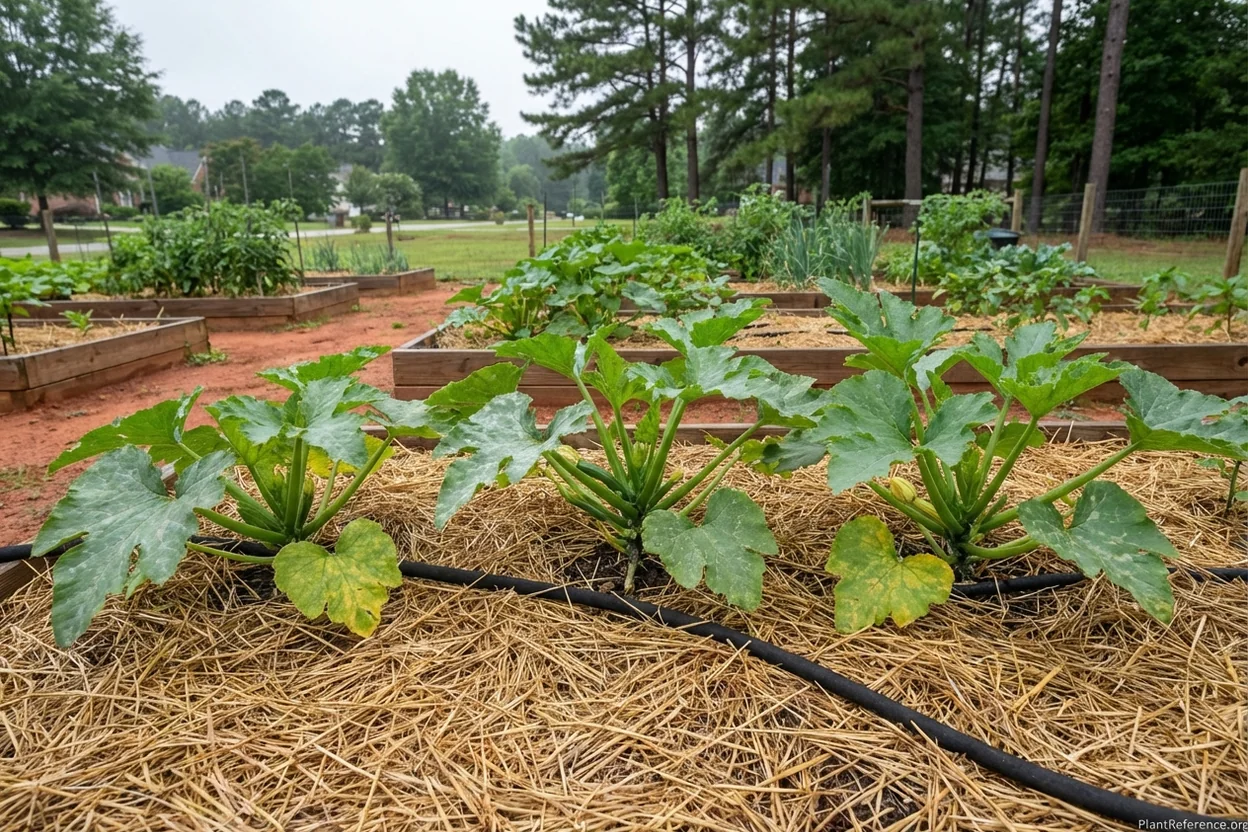
Install drip irrigation or soaker hoses to deliver water directly to root zones without wetting leaves. Overhead watering promotes foliar diseases like powdery mildew in Raleigh's humid conditions.
Apply 3-4 inches (8-10 cm) of organic mulch around plants, keeping mulch 6 inches (15 cm) from stems. Straw, shredded leaves, or grass clippings conserve moisture while suppressing weeds. Mulch also prevents soil splashing onto leaves, reducing disease transmission.
Water deeply 1-2 times per week, providing 1-2 inches (2.5-5 cm) total including rainfall. Clay soil holds moisture well once saturated but can become hydrophobic when allowed to dry completely.
Fertilization Schedule
Squash plants require different nutritional support during their growth phases, with adjustments needed for Raleigh's soil conditions.
Summer Squash: Continue light nitrogen applications every 3-4 weeks to maintain continuous production
Winter Squash: Stop fertilizing once fruits are set to encourage proper ripening and curing
Troubleshooting Raleigh-Specific Problems
Raleigh's Zone 7b climate creates specific challenges including humid-weather diseases, regional pests, and clay soil drainage issues.
Squash Vine Borer Management
The squash vine borer represents the most serious pest threat to squash in Raleigh, with adult moths active from June through August.
Identification: Look for orange eggs laid at the base of plant stems and sawdust-like frass indicating larval boring activity. Sudden wilting of otherwise healthy plants signals advanced borer damage.
Use row covers from planting until flowering begins, then remove for pollination.
Time plantings to avoid peak egg-laying periods - early plantings (April) often escape major damage.
Choose resistant varieties when possible. 🌿Cucurbita moschata 'Butternut' has solid stems that resist borer penetration better than hollow-stemmed 🌿Cucurbita pepo 'Black Beauty' varieties.
Perform stem surgery when frass is detected. Slit the stem lengthwise with a sterile knife, remove the white larva, and mound soil over the wounded area to encourage new root development.
Inject Bt (Bacillus thuringiensis) into stems using a syringe when eggs are found but before larvae bore deeply into plants.
Powdery Mildew Prevention
Raleigh's humid summers create ideal conditions for powdery mildew, which appears as white powdery coating on leaves.
Provide adequate spacing for air circulation and avoid overhead watering. Plant in locations with morning sun to dry dew quickly from leaves.
Choose resistant varieties when available, though most squash shows some susceptibility in humid conditions.
Apply preventive milk spray (1 part milk to 9 parts water) weekly beginning in mid-July when conditions favor disease development.
Remove affected leaves promptly and dispose in trash, not compost, to prevent spore spread.
Blossom End Rot
This physiological disorder appears as dark, sunken spots on the blossom end of developing fruits, caused by calcium deficiency often triggered by inconsistent watering.
Maintain consistent soil moisture through mulching and regular irrigation schedules. Raleigh's clay soil can swing between waterlogged and drought conditions rapidly.
Ensure adequate soil calcium through proper pH management and limestone applications if soil tests indicate deficiency.
Remove affected fruits immediately to redirect plant energy to healthy fruit development. Implement consistent watering schedules and deep mulching to prevent future occurrences.
Harvest & Storage
Proper harvest timing and storage techniques maximize the value of Raleigh's excellent squash growing conditions.
Summer Squash Harvest
Summer squash requires frequent harvest to maintain production, with fruits ready 45-60 days after planting in Raleigh's conditions.
Harvest Indicators: Pick zucchini and yellow crookneck at 6-8 inches (15-20 cm) length when skin is glossy and easily punctured with a fingernail. Pattypan should be harvested at 2-3 inches (5-8 cm) diameter.
Check plants daily during peak production as fruits can grow from perfect size to overripe in 24-48 hours during Raleigh's hot summers.
Storage: Fresh summer squash stores 1-2 weeks refrigerated at 45-50°F (7-10°C). For longer preservation, shred and freeze zucchini for winter baking or slice and dehydrate for storage.
Winter Squash Harvest
Winter squash harvest timing proves critical for storage success, with fruits ready 80-110 days after planting.
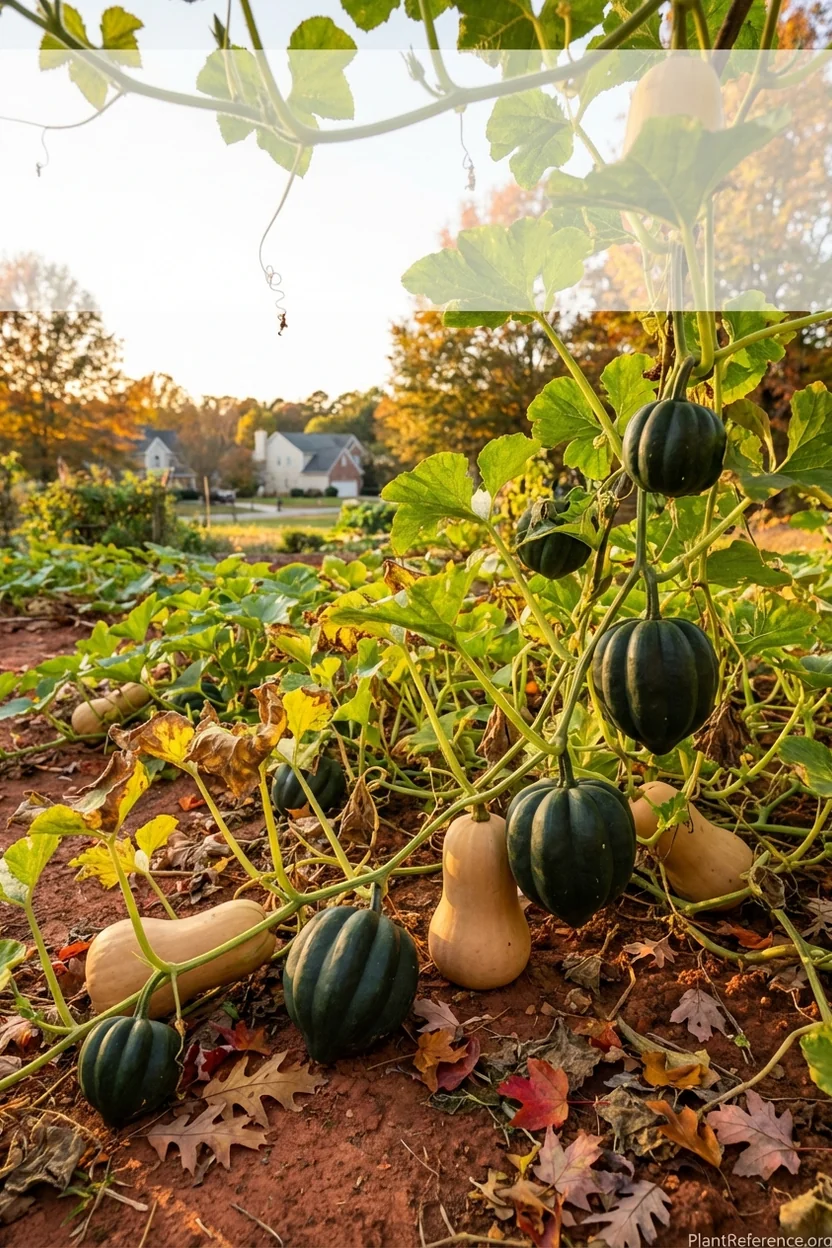
Maturity Indicators: Harvest when vines begin dying back naturally and fruit stems become corky and dry. The skin should be hard enough that it cannot be punctured with a fingernail. For Raleigh gardens, this typically occurs in October.
Leave fruits on vines until just before hard frost (around November 4) to achieve maximum sugar development and storage potential.
Curing Process: Cure most winter squash varieties at 80-85°F (27-29°C) with good air circulation for 10-14 days after harvest. This process heals minor wounds and converts starches to sugars.
Exception: Cucurbita pepo 'Table Queen Acorn' should not be cured as heat degrades its texture. Store acorn squash immediately in cool conditions.
Storage Requirements: Store cured winter squash at 50-55°F (10-13°C) in a dry location with good air circulation. Properly stored 🌿Cucurbita moschata 'Butternut' and Cucurbita maxima 'Kabocha' keep 4-6 months, while 🌿Cucurbita pepo 'Delicata' stores 2-3 months maximum.
Check stored squash monthly and use any showing soft spots immediately to prevent spread to other fruits.
Frequently Asked Questions
Reading about plants and recognising them are different skills. These three build the second.
- Daily PlantIdentify the day’s mystery plant from a close-up photograph.
- Keyed OutWork a dichotomous key, lead by lead, to name a hidden specimen.
- Name That PlantName a specimen from botanical clues dealt hardest first.
Free to play, no account needed
Dot grew up on a small farm in rural Virginia and has maintained a vegetable garden for decades. After retiring from teaching elementary school, she became a Master Gardener volunteer and spends her time mentoring new gardeners at community garden plots in Richmond. She's especially knowledgeable about heirloom varieties, seed saving, and traditional growing methods passed down from her grandmother. Dot's no-nonsense advice comes from extensive trial and error—she's seen every tomato disease, pest problem, and weather disaster imaginable. Her biggest pet peeve is gardeners who overcomplicate simple tasks. "Plants want to grow," she often says. "Your job is to not get in their way."