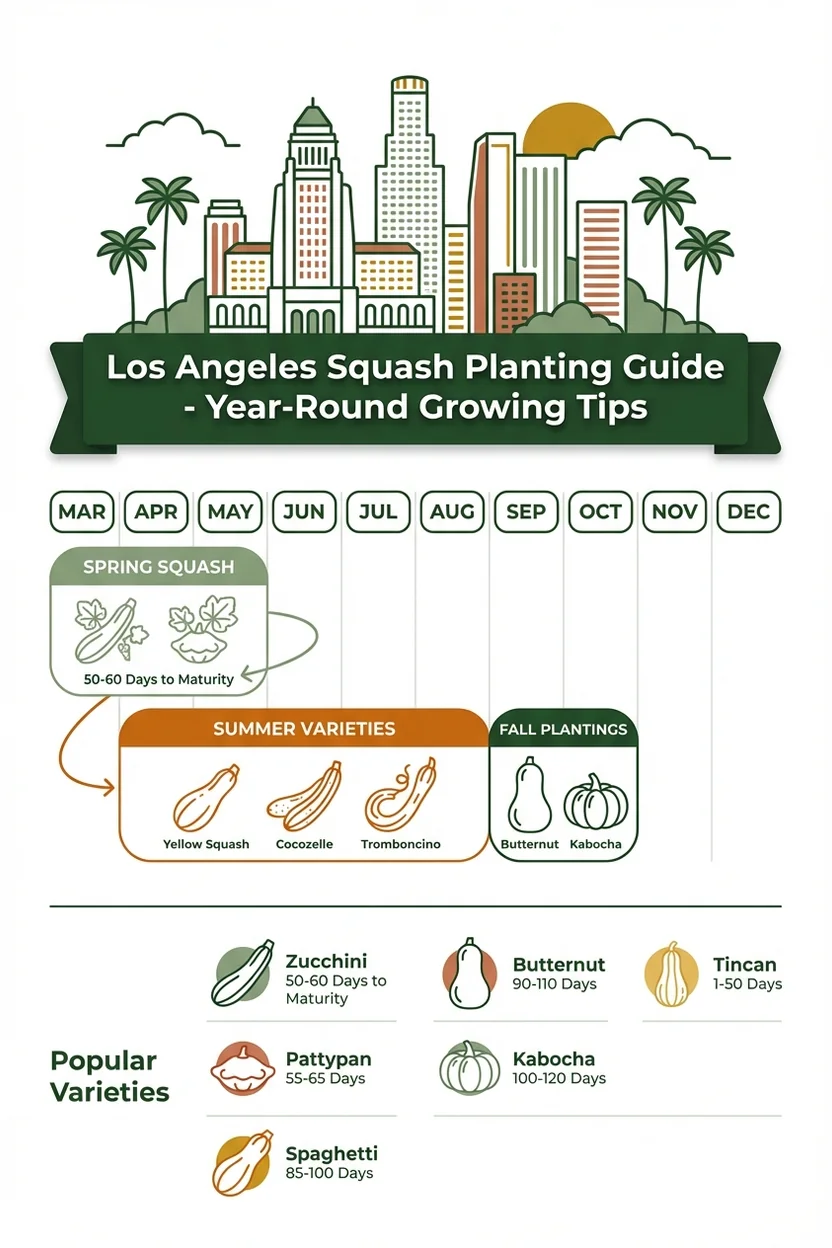
When to Plant Squash in Los Angeles: Complete Guide + Best Varieties for Zone 10b
Pets & Toxicity
Recorded toxicity for plants linked in this guide. An unknown status is not a safety assessment.
No linked plant is recorded as toxicDetailsHide
Cucurbita pepo 'Black Beauty' — Toxicity
Non-toxic as an edible cropView Cucurbita pepo 'Black Beauty' plant profileCucurbita pepo 'Yellow Crookneck' — Toxicity
Non-toxic as an edible cropView Cucurbita pepo 'Yellow Crookneck' plant profilePodosphaera xanthii — Toxicity: Not assessed
Podosphaera xanthii itself is not toxic to humans or animals, but infected plant material may have reduced nutritional quality and should be removed from edible crops to prevent disease spread.View Podosphaera xanthii plant profileAnasa tristis — Toxicity: Not assessed
Anasa tristis is not toxic to humans or pets, though handling should be avoided as the insects may release defensive chemicals with an unpleasant odor when disturbed.View Anasa tristis plant profile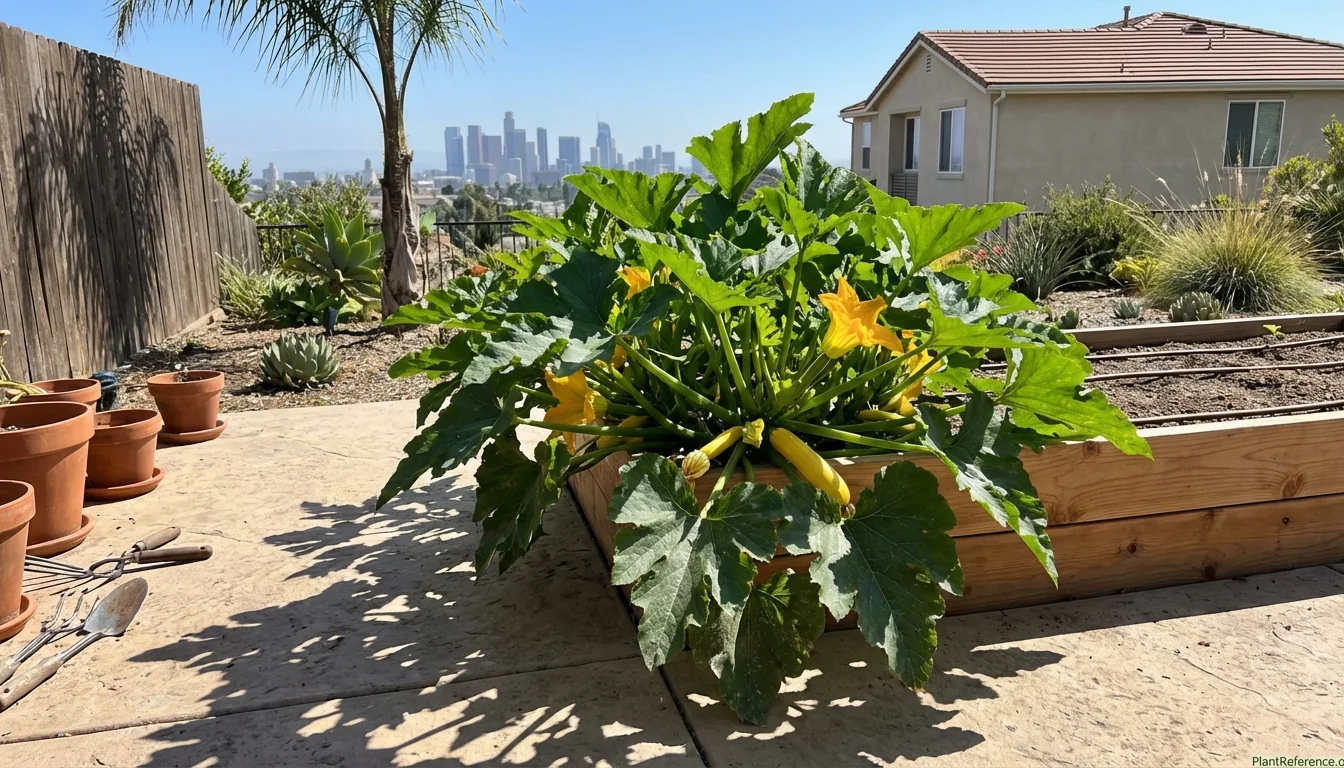
— Image © Plant Reference 2026
Los Angeles gardeners have a significant advantage when it comes to growing squash—Zone 10b's extended 303-day growing season allows for nearly year-round production and multiple successive plantings that northern gardeners can only dream of. When to plant squash in Los Angeles becomes less about avoiding frost and more about maximizing your harvest window while working around the city's unique microclimates and occasional heat extremes.
Los Angeles' Mediterranean climate creates perfect conditions for both summer squash 🌿Cucurbita pepo 'Ronde de Nice' (KYOO-kur-bit-uh PEP-oh) varieties like zucchini and crookneck, plus winter storage types 🌿Cucurbita moschata 'Waltham Butternut' (mos-KAH-tuh) like butternut. Your challenge isn't surviving frost—it's managing the extended growing season to maintain continuous production without overwhelming your kitchen with zucchini!
Best Squash Varieties for Los Angeles' Zone 10b Climate
Los Angeles gardeners can successfully grow all major squash varieties, but some perform better in Southern California's specific conditions. The key is matching variety characteristics to your garden's microclimate—whether you're dealing with coastal fog, inland heat, or urban heat islands.
Summer Squash Varieties for Los Angeles
Summer squash varieties excel in Los Angeles because they can handle the city's warm temperatures and produce continuously throughout the extended growing season. These varieties are harvested young and tender, typically 45-60 days after planting.
🌿Cucurbita pepo 'Black Beauty' zucchini** is the gold standard for Los Angeles gardens. This bush variety stays compact at 3-4 feet wide, making it perfect for smaller urban spaces. It produces dark green, smooth-skinned fruit that should be harvested at 6-8 inches long. In Los Angeles, one plant can produce 15-25 pounds over a 6-8 week period.
🌿Cucurbita pepo 'Yellow Crookneck' performs exceptionally well in LA's heat. The distinctive curved neck and bumpy yellow skin make it a favorite for farmers markets. This variety actually develops better flavor in warm weather compared to cooler climates. Harvest when 4-6 inches long before the skin becomes too thick.
🌿Cucurbita pepo 'Pattypan' comes in both yellow and green varieties. These UFO-shaped squash are extremely productive in Los Angeles, often producing fruit daily during peak season. Harvest when 2-3 inches diameter for best eating quality. Larger fruits work well for stuffing.
Winter Squash Varieties for Los Angeles
Winter squash varieties benefit from Los Angeles' long growing season, allowing even the longest-season types to mature fully. These are harvested at full maturity and can store for months.
🌿Cucurbita moschata 'Butternut' thrives in Los Angeles' climate. This variety actually prefers warmer conditions and the extended season allows full flavor development. Vines can spread 10-15 feet, so plan accordingly. The tan exterior and orange flesh store beautifully for 4-6 months.
🌿Cucurbita pepo 'Delicata' performs well in LA's Mediterranean climate. This variety produces cream-colored fruit with dark green stripes. The thin, edible skin eliminates peeling, making it popular with busy urban gardeners. Vines are more compact than butternut, typically 6-8 feet.
Cucurbita maxima 'Kabocha' can be challenging in extreme heat but does well in Los Angeles' coastal areas or when grown for fall harvest. This Japanese pumpkin type has incredible flavor and stores well. The vines can reach 12+ feet, so provide plenty of space.
Variety | Days to Maturity | Best For Los Angeles | Spacing | Notes for Zone 10b |
|---|---|---|---|---|
45-55 days | Continuous summer harvest | 24-36" | Heat tolerant, compact bush | |
50-60 days | Hot weather production | 24-36" | Excellent heat tolerance | |
50-60 days | Small space gardens | 24-30" | Very productive in warm weather | |
85-100 days | Long-term storage | 48-60" | Loves LA heat, excellent keeper | |
80-100 days | Easy preparation | 36-48" | Thin edible skin, moderate storage | |
Cucurbita maxima 'Kabocha' | 95-110 days | Coastal/fall growing | 48-60" | Best in cooler microclimates |
Cucurbita pepo 'Spaghetti' | 88-100 days | Unique texture | 48-60" | Reliable in LA climate |
Specific Planting Dates for Los Angeles Gardens
Los Angeles' Zone 10b climate with its February 15 last frost and December 15 first frost creates a 303-day growing season—one of the longest in the country. This extended season allows for strategic planting schedules that maximize harvest while avoiding the brief cool period.
Primary Spring Planting: March 1-15
Your main squash planting window begins March 1st, about two weeks after the average last frost. Soil temperatures are consistently above 60°F (15°C), which squash seeds require for germination. This timing allows:
Summer squash planted March 1-15 will produce from mid-April through June, avoiding the hottest summer period while providing early harvests. Winter squash planted March 1-15 will mature by June-July, perfect timing for curing during warm weather.
Extended Spring Planting: March 15-April 30
Continue planting through April for succession crops. Summer squash planted April 1-30 produces May through July. This overlaps with your March plantings, ensuring continuous harvest. Winter squash planted by April 15 still matures by August-September.
Summer Succession Planting: May 1-August 31
Los Angeles' long season allows continuous summer squash planting every 3-4 weeks from May through August. This strategy prevents the common problem of overwhelming harvests followed by plant decline.
May plantings produce June-August during peak summer heat. Choose heat-tolerant varieties and provide afternoon shade if necessary.
June-July plantings produce August-October, often the most productive period as temperatures moderate slightly.
August plantings produce September-November, extending harvest into the traditional "winter" months.
Fall Planting: September 1-October 15
Take advantage of Los Angeles' mild autumns for additional crops. Summer squash planted September 1-October 15 will produce through November and December. Short-season winter squash like Delicata planted in early September can still mature before the brief cool period.
Soil Temperature Guidelines for Los Angeles
Monitor soil temperature rather than air temperature for optimal germination:
60°F (15°C) minimum: Required for reliable germination
65-75°F (18-24°C) optimal: Seeds germinate in 7-10 days
Above 85°F (29°C): Germination may be erratic
In Los Angeles, soil temperatures reach 60°F by late February and stay there through November, explaining your extended planting window.
Complete Growing Guide for Los Angeles Squash
Successfully growing squash in Los Angeles requires understanding how the city's unique climate affects plant development, pest cycles, and harvest timing. Your Mediterranean climate provides advantages but also creates specific challenges.
Site Selection in Los Angeles Microclimates
Los Angeles contains numerous microclimates that affect squash growing success. Coastal areas (Santa Monica, Venice) stay cooler and may need heat-reflecting mulches for optimal growth. Inland valleys (San Fernando, San Gabriel) experience hotter temperatures requiring afternoon shade during peak summer.
Choose a location receiving 6-8 hours of morning sun with protection from hot afternoon sun during summer months. Urban heat islands can push temperatures above squash comfort zones (85-90°F optimal), so consider strategic placement near tall plants that provide afternoon shade.
Soil Preparation for Southern California
Los Angeles soils are typically alkaline (pH 7.0-8.0) and may be heavy clay in some areas. Squash prefers slightly acidic to neutral soil (pH 6.0-6.8) with excellent drainage.
Soil amendments critical for LA gardens:
Add 2-3 inches of compost annually to improve clay soil structure
Incorporate sulfur to lower pH if above 7.5
Ensure drainage—clay soils in LA can become waterlogged during winter rains
Consider raised beds if drainage is poor
Mix in perlite or pumice for improved aeration
Fertility management: Los Angeles' extended growing season means nutrients are depleted more quickly than in shorter-season climates. Plan for multiple fertilizer applications throughout the season.
Planting Techniques for Zone 10b
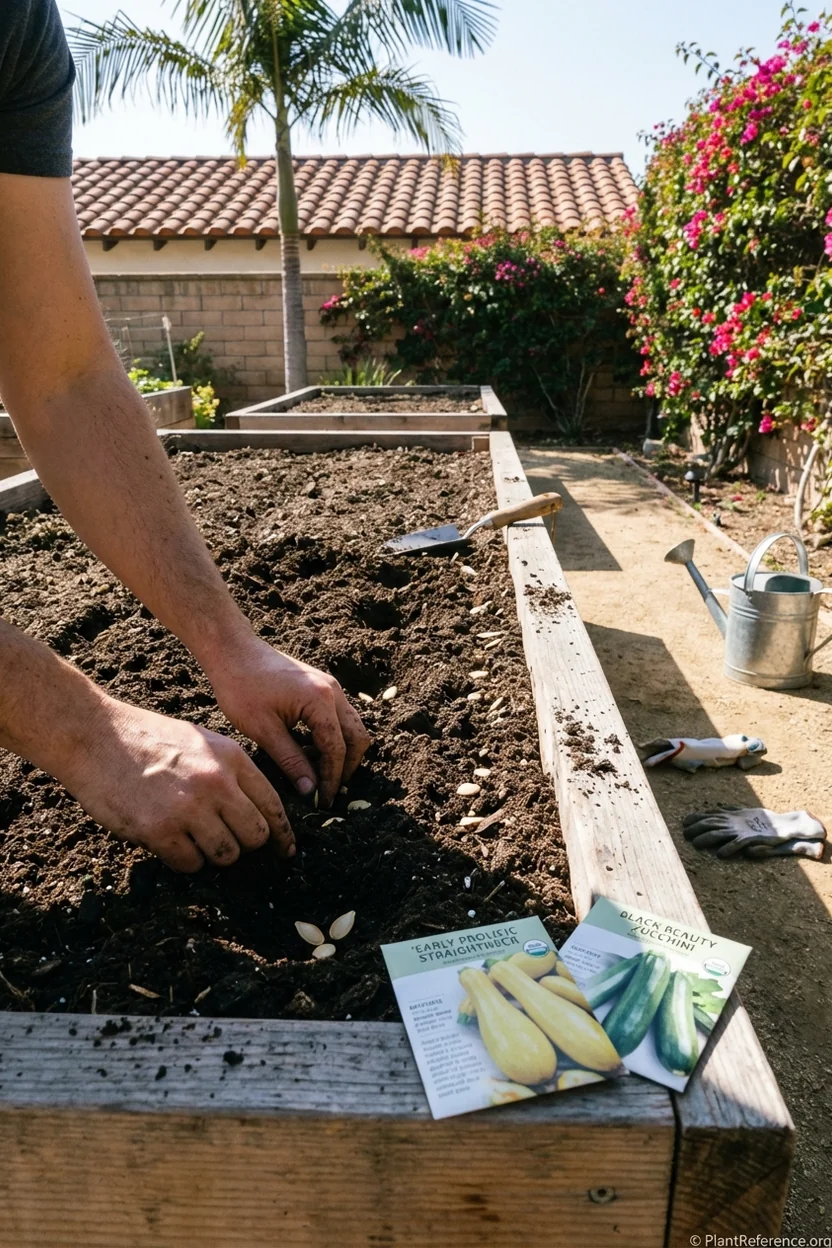
Direct seeding is preferred in Los Angeles since soil temperatures warm early and stay warm long. Plant seeds 1 inch deep, spacing according to variety requirements.
Summer squash: 24-36 inches apart.
Winter squash: 48-60 inches apart.
Transplant option: Start seeds indoors 2-3 weeks before intended planting date if you want precise timing or are succession planting every 2-3 weeks. Use biodegradable pots to avoid disturbing roots.
Succession planting strategy: Plant new summer squash every 3-4 weeks from March through August. This prevents the feast-or-famine cycle and maintains continuous harvests.
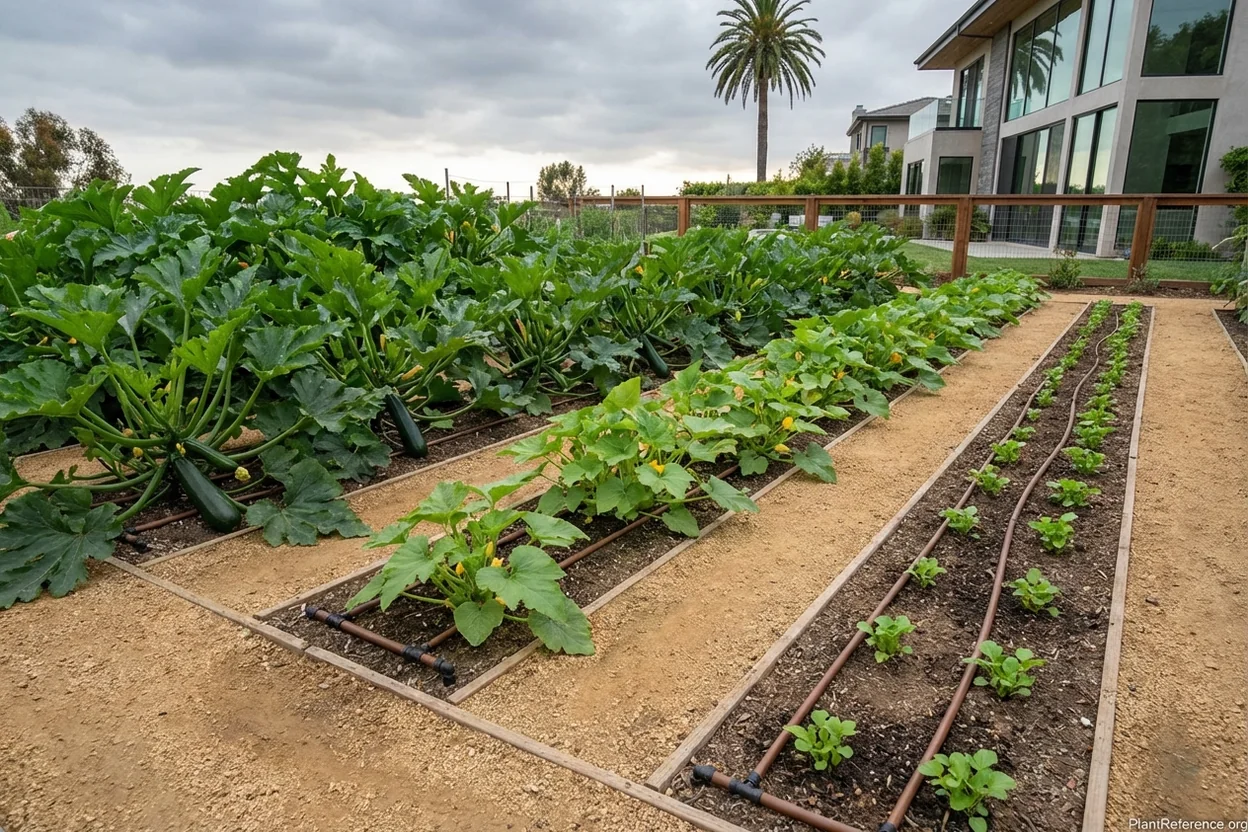
Water Management in Mediterranean Climate
Los Angeles' dry summers require consistent irrigation for squash success. These plants need 1-2 inches of water weekly, applied deeply and less frequently to encourage deep root growth.
Drip irrigation is ideal for squash in LA's climate. It delivers water directly to root zones while keeping foliage dry, reducing disease problems. Soaker hoses work well for row plantings.
Mulching is critical in Los Angeles' sunny climate. Apply 2-3 inches of organic mulch around plants to retain moisture, moderate soil temperature, and suppress weeds. Good options include shredded bark, compost, or straw.
Managing Los Angeles Heat Extremes
While squash likes warmth, Los Angeles occasionally experiences heat waves above 95°F (35°C) that stress plants. Shade cloth (30-50% shade) can protect plants during extreme heat events. Row covers made of lightweight fabric provide protection while allowing air circulation.
Heat stress symptoms include wilted leaves during midday (normal if they recover by evening), blossom drop, and reduced fruit set. Ensure adequate water during heat waves and consider temporary shade structures.
Troubleshooting Los Angeles-Specific Squash Problems
Los Angeles' extended growing season and urban environment create unique challenges for squash growers. Understanding these problems and their solutions keeps your plants productive throughout the long season.
Powdery Mildew in Coastal Areas
Coastal Los Angeles areas experience morning marine layer and higher humidity, creating perfect conditions for powdery mildew 🌿Podosphaera xanthii. This fungal disease appears as white, powdery coating on leaves, typically starting on lower, older foliage.
Prevention strategies:
Space plants wider than recommended to improve air circulation
Water at soil level using drip irrigation, never overhead
Plant in locations receiving morning sun to dry dew quickly
Choose resistant varieties when available
Remove affected leaves promptly
Treatment options: Spray affected plants with milk solution (1 part milk to 9 parts water) weekly. Commercial fungicides containing potassium bicarbonate are also effective for organic gardens.
Squash Bug Pressure in Warm Climate
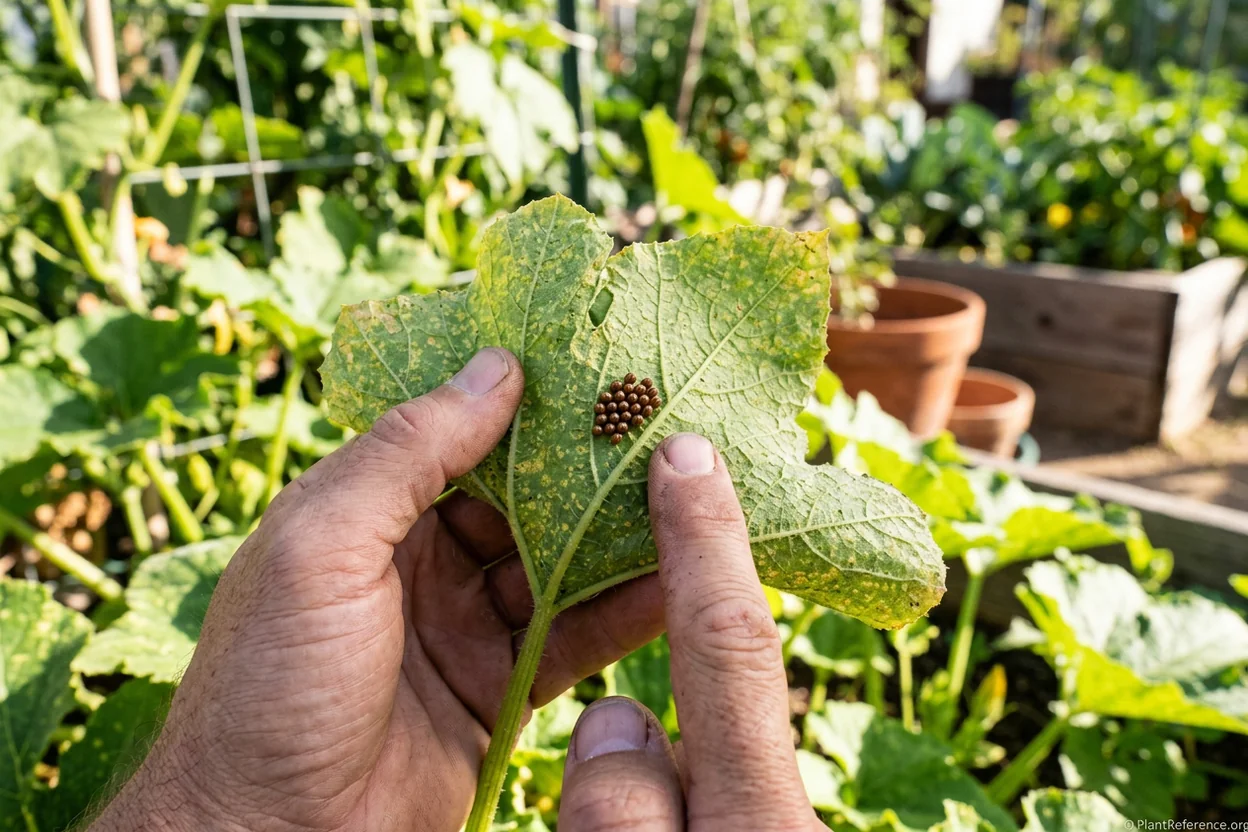
Los Angeles' warm climate allows squash bugs 🌿Anasa tristis to complete multiple generations per year, creating heavier infestations than cooler climates experience. These shield-shaped insects suck plant juices, causing yellowing and wilting.
Identification: Adult bugs are brownish-gray, about 5/8 inch long. They lay bronze-colored egg clusters on leaf undersides. Nymphs are smaller versions of adults.
Management approach: Check plants weekly for egg masses and remove by hand. Board traps placed near plants attract adults overnight—check and dispose of bugs each morning. Row covers during early growth prevent initial infestation but must be removed for pollination.
Pollination Issues in Urban Environment
Urban Los Angeles often has reduced bee populations due to habitat loss and pesticide use in surrounding areas. Poor pollination results in small, misshapen fruit or blossom drop.
Hand pollination technique: Identify female flowers by the small swollen fruit at the base. Male flowers have straight stems. Remove a male flower, strip away petals, and rub the pollen-covered anther against the female flower's stigma. Best timing: Early morning between 6-10 AM before flowers close.
Attracting pollinators: Plant bee-friendly flowers nearby including lavender, salvia, and native California plants. Provide shallow water sources and avoid pesticides during bloom periods.
Managing Extended Season Fatigue
Los Angeles' long growing season can exhaust squash plants, leading to decreased production after 2-3 months. Vine borer damage, though less common than in humid climates, can also cause sudden plant collapse.
Plant replacement strategy: Rather than trying to revitalize declining plants, remove them and plant fresh crops. With Los Angeles' extended season, you can replant through August and still get good harvests.
Soil health maintenance: Extended season depletes soil nutrients faster. Side-dress plants monthly with compost or balanced organic fertilizer. Crop rotation becomes more important with multiple successive plantings.
Harvest & Storage in Southern California
Los Angeles' climate provides unique advantages for both harvesting and storing squash. The extended warm season allows for harvest timing optimization, while low humidity creates excellent curing conditions for winter squash.
Summer Squash Harvest Timing
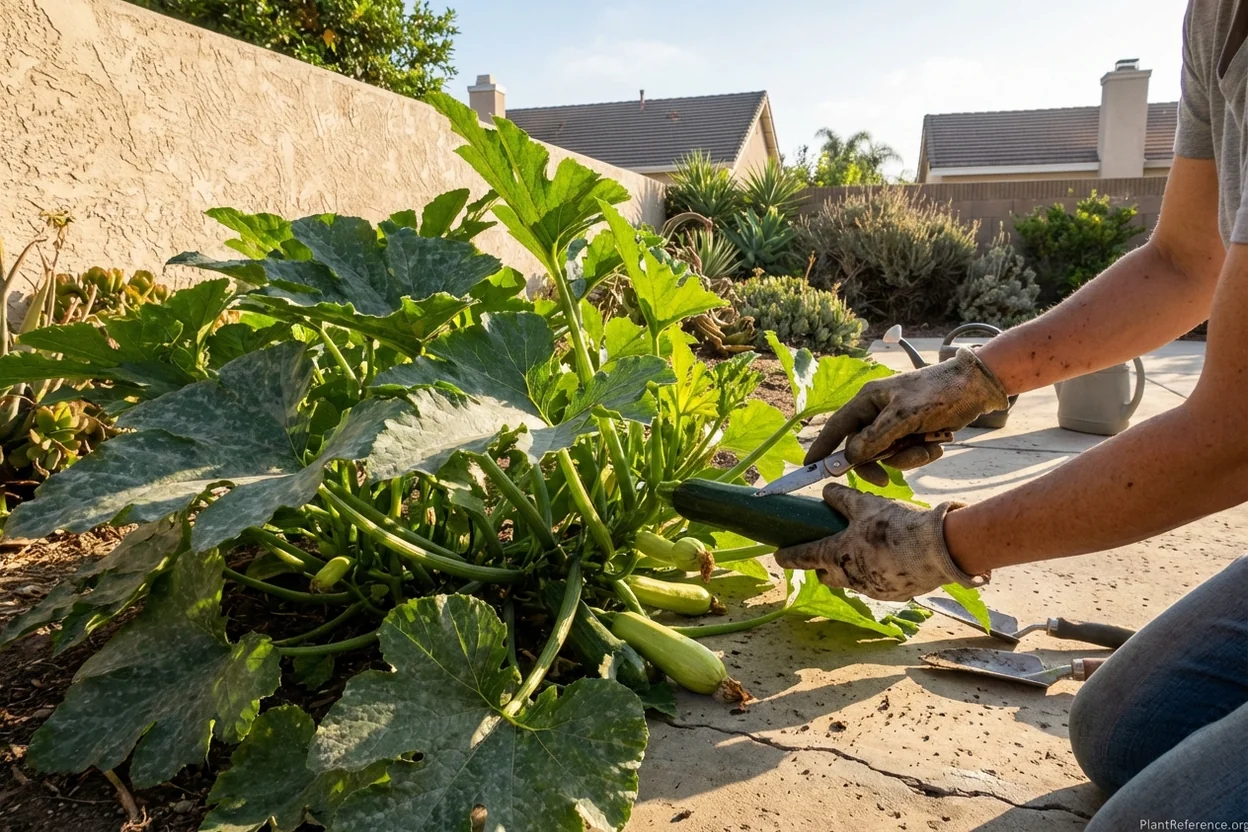
Summer squash produces continuously when harvested regularly. Daily checking during peak production prevents oversized fruit that signals the plant to stop producing.
Optimal harvest indicators:
Zucchini: 6-8 inches long, glossy skin easily pierced by fingernail
Crookneck: 4-6 inches long, tender warty skin, bright yellow color
Pattypan: 2-3 inches diameter, tender skin, vibrant color
All varieties: Harvest in early morning for best texture and storage
Los Angeles advantage: Warm nights maintain plant metabolism, allowing daily harvest during peak season. Northern climates often see reduced nighttime production.
Winter Squash Maturation
Winter squash must reach full maturity before harvest. Visual indicators include vine die-back, corky stem attachment, and hard rind that cannot be dented with a fingernail.
Timing in Los Angeles: March plantings mature July-August during ideal curing weather. April plantings mature August-September. Late plantings (May-June) mature September-October, still allowing proper curing.
Curing Winter Squash in Southern California
Los Angeles' warm, dry climate provides perfect curing conditions. Curing process involves holding harvested squash at 80-85°F (27-29°C) with good air circulation for 10-14 days. This hardens the rind, heals wounds, and converts starches to sugars.
Curing setup: Use a sunny patio, greenhouse, or warm garage. Avoid direct ground contact—use pallets or screens. Protection needed: Cover from direct sun to prevent overheating while maintaining warmth.
Storage after curing: Move cured squash to cool (50-55°F/10-13°C), dry location. Los Angeles challenge: Few homes have naturally cool storage areas. Consider:
Air-conditioned spare room maintained at 55-60°F
Insulated garage that stays below 65°F
Cool basement if available
Refrigerator produce drawer for smaller quantities
Storage expectations in LA climate:
Butternut: 4-6 months in proper conditions
Kabocha: 4-6 months, excellent keeper
Spaghetti: 2-3 months moderate keeper
Acorn: 6-8 weeks, store without curing
Delicata: 2-3 months, thin skin limits storage
Los Angeles gardeners have unique advantages growing squash—an extended season, excellent curing weather, and multiple planting windows. Success comes from understanding how to leverage these benefits while managing the specific challenges of Southern California's urban Mediterranean climate. With proper variety selection, succession planting, and attention to microclimates, you can enjoy fresh squash from your garden nearly year-round.
Frequently Asked Questions
Reading about plants and recognising them are different skills. These three build the second.
- Daily PlantIdentify the day’s mystery plant from a close-up photograph.
- Keyed OutWork a dichotomous key, lead by lead, to name a hidden specimen.
- Name That PlantName a specimen from botanical clues dealt hardest first.
Free to play, no account needed
Emma runs a small succulent propagation business from her home in San Diego, shipping starter plants and cuttings across the country. She fell into succulents after college when she realized they were the only plants that survived her travel schedule—she was working as a travel nurse at the time. San Diego's mild, dry climate is ideal for outdoor succulent gardens, and Emma's front yard is a living catalog of over 200 varieties. She completed a certificate program in ornamental horticulture and writes about succulent care, propagation techniques, and drought-tolerant garden design. Her writing is calm and reassuring—she knows people feel bad about killing plants, and she wants them to stop worrying so much.