When to Plant Squash in Chicago: Complete Guide + Best Varieties for Zone 6a
Pets & Toxicity
Recorded toxicity for plants linked in this guide. An unknown status is not a safety assessment.
No linked plant is recorded as toxicDetailsHide
Cucurbita pepo 'Black Beauty' — Toxicity
Non-toxic as an edible cropView Cucurbita pepo 'Black Beauty' plant profileCucurbita pepo 'Yellow Crookneck' — Toxicity
Non-toxic as an edible cropView Cucurbita pepo 'Yellow Crookneck' plant profile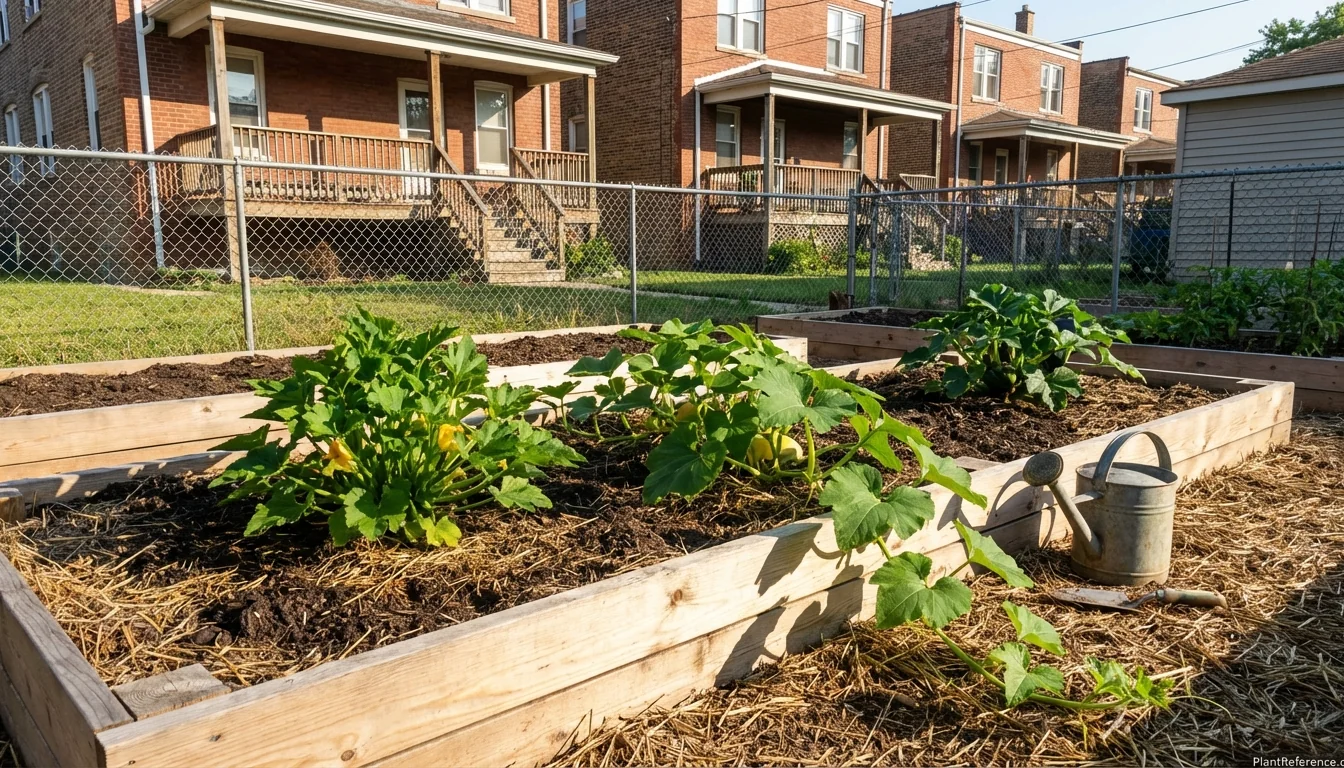
— Image © Plant Reference 2026
Chicago gardeners face unique challenges when growing squash—unpredictable spring weather, intense summer humidity, and the pressure to get long-season varieties harvested before October's first frost. After forty years of vegetable gardening in the Midwest, I can tell you that success with squash in Chicago comes down to three things: choosing the right varieties for Zone 6a's 158-day season, timing your plantings precisely around our May 9 last frost date, and managing the sprawling vines in typical small city lots.
Best Squash Varieties for Chicago's Climate
Chicago's Zone 6a climate offers an excellent window for squash production, but variety selection makes the difference between a mediocre harvest and bins full of fresh vegetables. Our 158-day growing season from May 9 to October 14 supports both fast-growing summer squash and longer-season winter storage varieties.
Summer Squash Varieties for Chicago
Summer squash varieties thrive in Chicago's climate because they mature quickly and produce continuously through our humid summers. These varieties are harvested while young and tender, typically 45-60 days after planting.
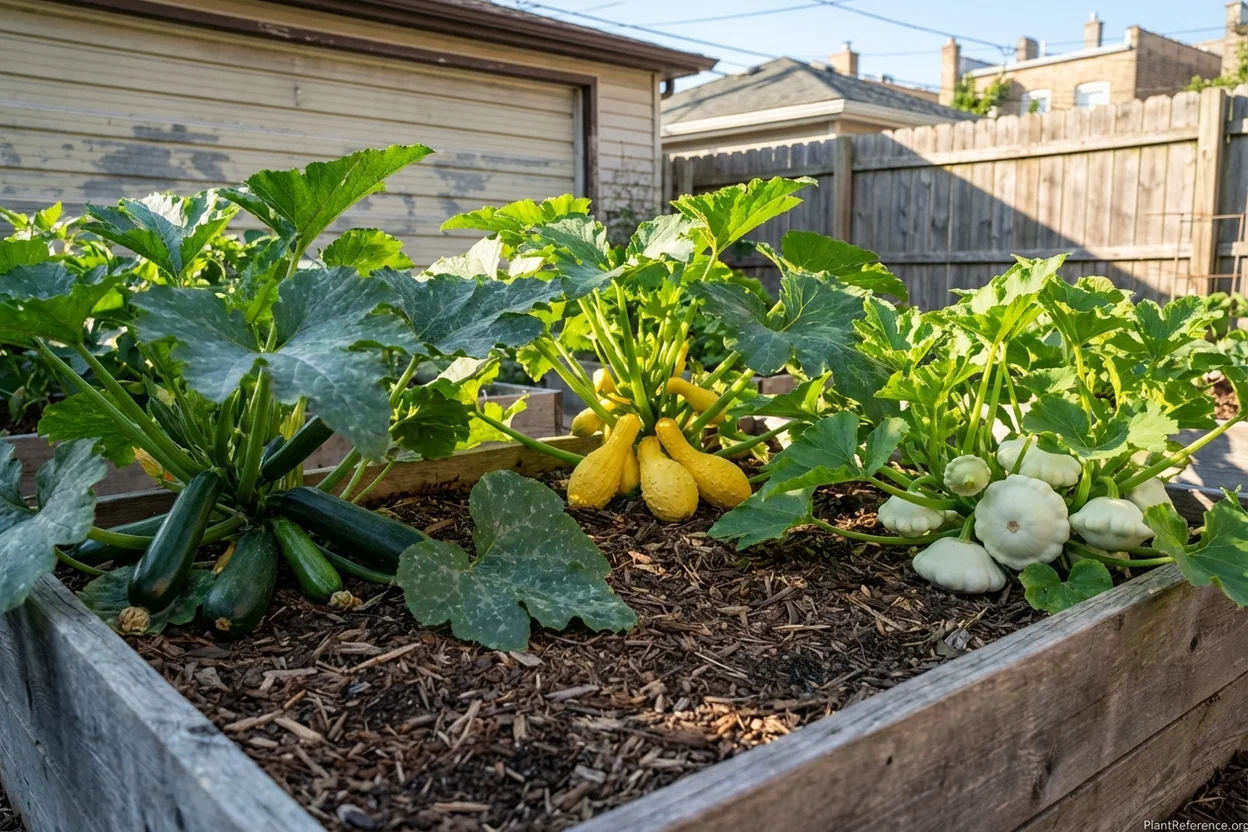
🌿Cucurbita pepo 'Black Beauty' remains my top recommendation for Chicago gardens. This compact bush zucchini produces dark green fruit ready for harvest in just 50 days. The bush habit spreads only 3-4 feet, making it perfect for Chicago's typically smaller urban lots. I've grown this variety for decades—it handles our humid summers without the powdery mildew problems that plague some varieties.
🌿Cucurbita pepo 'Yellow Crookneck' offers excellent heat tolerance for Chicago's sometimes intense July and August temperatures. The distinctive curved yellow fruit with warty skin matures in 55 days and provides a nice variety in both appearance and flavor. This bush variety takes up similar space to zucchini.
🌿Cucurbita pepo 'Pattypan' works well in Chicago but requires vigilant harvesting. These scalloped, disk-shaped squash can go from perfect eating size (2-3 inches) to woody and inedible within 48 hours during peak summer growth. The compact bush habit makes them suitable for container growing if needed.
Winter Squash Varieties for Chicago
Winter squash requires more careful variety selection in Chicago due to our relatively short growing season. These varieties need 80-110 days to reach full maturity and develop the hard rind necessary for winter storage.
🌿Cucurbita moschata 'Butternut' pushes the limits in Chicago but succeeds with proper timing. This variety needs 95-100 days and produces tan-colored fruit with bright orange flesh that stores 4-6 months. Start seeds indoors April 20-27 for transplanting after May 23. The vining habit requires 6-8 feet of space.
🌿Cucurbita pepo 'Acorn' works reliably in Chicago with its 85-day maturity. The semi-bush habit (vines reach 4-5 feet) makes it manageable in smaller spaces. Dark green acorn-shaped fruit stores 2-3 months in cool conditions.
🌿Cucurbita pepo 'Delicata' matures in 85 days and offers the unique advantage of edible skin—no peeling required. The cream-colored fruit with green stripes stores 2-3 months and has a sweet potato-like flavor.
Cucurbita pepo 'Spaghetti' needs 95-100 days but the unique stringy flesh makes it worth growing in Chicago. Start indoors for best results. Vines can spread 8 feet, so plan accordingly.
Cucurbita maxima 'Kabocha' represents the longest season variety at 105-110 days. This Japanese pumpkin produces incredibly sweet, dense orange flesh but requires indoor starting and careful timing. The vigorous vines can reach 12+ feet.
Variety | Species | Days to Maturity | Best For | Notes for Chicago |
|---|---|---|---|---|
C. pepo | 50 days | Fresh eating | Reliable bush variety, perfect for Zone 6a | |
C. pepo | 55 days | Heat tolerance | Handles July humidity well | |
C. pepo | 52 days | Small spaces | Harvest at 2-3 inches maximum | |
C. moschata | 95-100 days | Long storage | Start indoors, needs full season | |
C. pepo | 85 days | Medium storage | Reliable winter squash for Zone 6a | |
C. pepo | 85 days | Easy preparation | Edible skin, sweet flavor | |
Cucurbita pepo 'Spaghetti' | C. pepo | 95 days | Unique texture | Pasta substitute, start indoors |
Cucurbita maxima 'Kabocha' | C. maxima | 105-110 days | Premium flavor | Longest season, sweetest flesh |
Specific Planting Dates for Chicago
Timing is everything when planting squash in Chicago. Our last frost date of May 9 and first frost date of October 14 create a 158-day window, but soil temperature and variety selection determine your actual planting dates.
Indoor Seed Starting Timeline
For winter squash varieties requiring 95+ days to maturity, indoor starting provides the extra time needed for reliable harvest before frost.
April 20-27: Start 🌿Cucurbita moschata 'Butternut', Cucurbita pepo 'Spaghetti', and Cucurbita maxima 'Kabocha' seeds indoors. Use biodegradable peat pots since squash roots resent disturbance. Seeds germinate best at 70-85°F soil temperature.
April 27-May 4: Start 🌿Cucurbita pepo 'Acorn' and 🌿Cucurbita pepo 'Delicata' indoors if desired, though direct seeding works for these varieties.
Direct Seeding Timeline
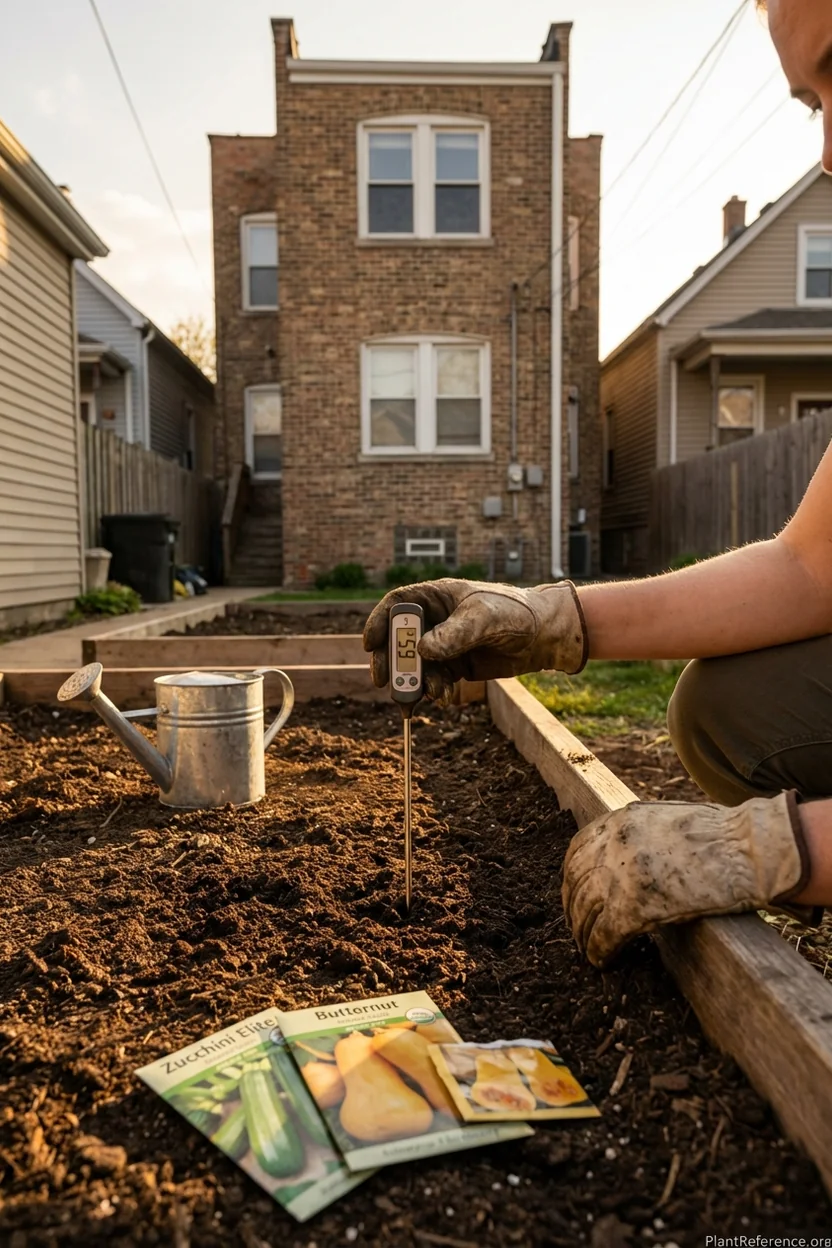
May 23-30: Plant all winter squash varieties outdoors if soil temperature reaches 65°F. This 7-day buffer after our May 9 last frost date accounts for Chicago's sometimes unpredictable late cold snaps.
May 23-June 15: Direct seed summer squash varieties. The extended planting window allows for succession planting—plant a new crop every 2-3 weeks for continuous harvest.
Transplant Timeline
May 23-30: Transplant indoor-started winter squash seedlings outdoors. Wait until nighttime temperatures consistently stay above 50°F and soil reaches 65°F.
June 1-15: Last chance for transplanting winter squash in Chicago. Later planting risks incomplete maturity before October frost.
Succession Planting Strategy
Summer squash benefits from succession planting in Chicago due to pest pressure and plant decline by late summer.
First planting: May 23-30
Second planting: June 15-22
Third planting: July 1-8 (final planting for Zone 6a)
This strategy ensures continuous harvest as earlier plantings succumb to squash vine borers or powdery mildew by August.
Complete Growing Guide for Chicago
Growing successful squash in Chicago requires understanding our climate challenges: variable spring weather, humid summers that promote fungal diseases, and urban space constraints that require strategic planning.
Soil Preparation for Chicago Gardens
Chicago's heavy clay soil requires amendment for successful squash production. I've learned that proper soil preparation makes more difference than variety selection in many cases.
Drainage improvement: Our clay soil holds too much moisture for squash. Add 2-3 inches of compost and coarse sand to raise beds 4-6 inches above grade. This prevents root rot that kills squash in wet springs.
Organic matter: Work in 2-3 inches of well-aged compost or aged manure before planting. Squash are heavy feeders and our clay soil lacks the fertility they need for maximum production.
pH adjustment: Test soil pH and adjust to 6.0-6.8 using lime if needed. Chicago soils often run slightly acidic, and squash prefer neutral conditions.
Spacing Requirements for Urban Gardens
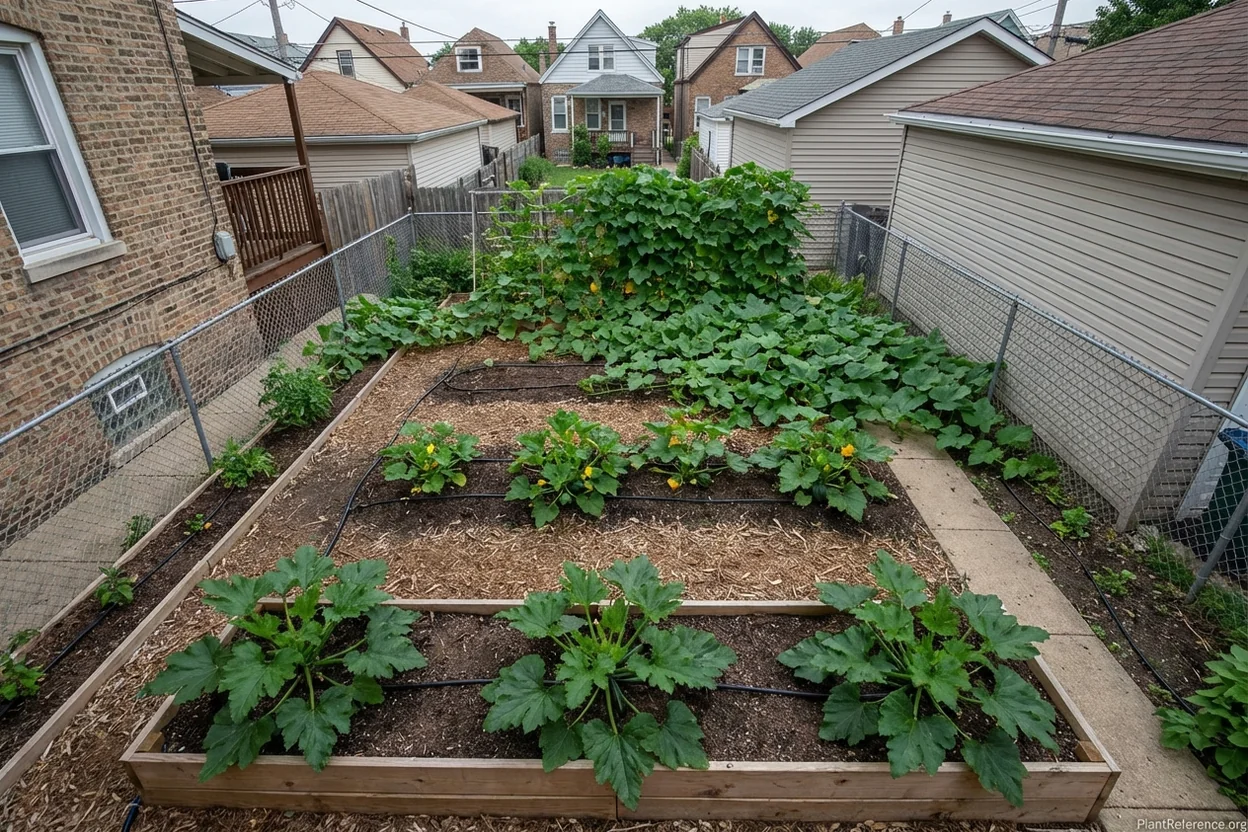
Most Chicago lots require creative space management for squash's sprawling growth habit.
Bush varieties: Space 🌿Cucurbita pepo 'Black Beauty' and similar compact varieties 3-4 feet apart. These work well in raised beds or large containers.
Semi-vining varieties: Allow 4-5 feet for 🌿Cucurbita pepo 'Acorn' and 🌿Cucurbita pepo 'Delicata'. These can be trained along fences or guided to grow into lawn areas.
Large vining varieties: 🌿Cucurbita moschata 'Butternut' and Cucurbita maxima 'Kabocha' need 6-8 feet in all directions. Plant these at garden edges where vines can sprawl without shading other crops.
Planting Techniques
Direct seeding: Plant seeds 1 inch deep in groups of 3-4 seeds per hill. Space hills according to variety requirements. Thin to strongest 1-2 seedlings after germination.
Transplanting: Dig holes twice the width of peat pots and plant entire biodegradable pot. Squash roots are sensitive to transplant shock, and disturbing them can set plants back 2-3 weeks.
Soil warming: Use black plastic mulch or row covers to warm soil faster in Chicago's sometimes cool springs. Remove covers once flowering begins to allow pollination.
Watering Strategy
Chicago's variable rainfall requires adaptive watering strategies for squash success.
Deep, infrequent watering: Apply 1-2 inches of water weekly in a single deep soaking rather than frequent shallow watering. This encourages deep root development.
Avoid overhead watering: Water at soil level to prevent fungal diseases that thrive in Chicago's humid summers. Drip irrigation or soaker hoses work best.
Mulching: Apply 3-4 inches of organic mulch around plants to conserve moisture and suppress weeds. Keep mulch 6 inches away from stems to prevent pest problems.
Fertilization Schedule
Pre-plant: Work in balanced fertilizer (10-10-10) or 2-3 inches of compost before planting.
Early growth: Side-dress summer squash with nitrogen-rich fertilizer (blood meal or fish emulsion) when vines begin running.
Fruit development: Switch to lower nitrogen, higher phosphorus fertilizer when flowering begins to promote fruit set over excessive vine growth.
Winter squash: Stop fertilizing winter varieties 6 weeks before expected harvest to allow proper ripening and skin hardening.
Troubleshooting Chicago-Specific Problems
Chicago gardeners face predictable challenges when growing squash. Understanding these regional issues helps prevent problems before they become serious.
Squash Vine Borer
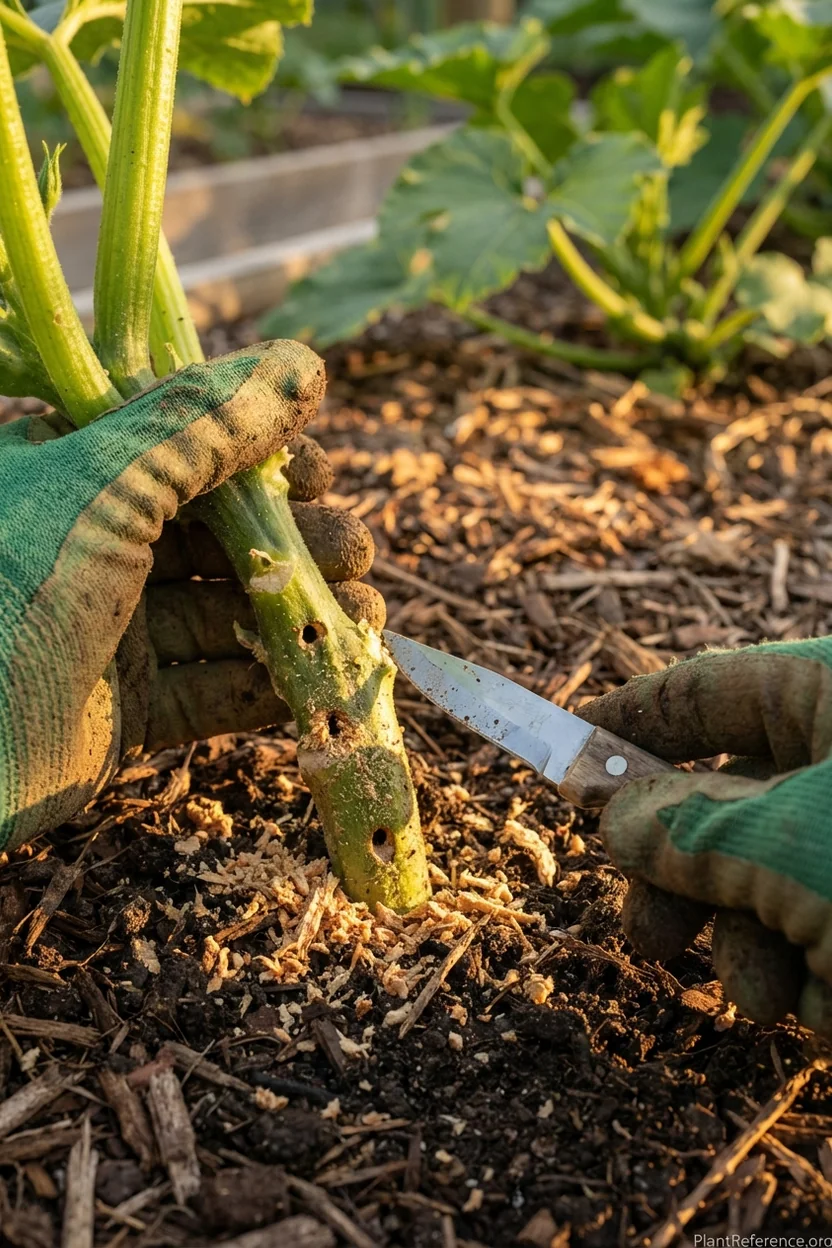
This clear-wing moth represents the most serious pest threat for Chicago squash growers. Adult moths emerge in late June and lay eggs at the base of squash stems. Larvae bore into stems, cutting off water and nutrient flow, causing sudden plant collapse.
Prevention: Cover plants with floating row covers from planting until flowering begins. This prevents egg laying during the critical early growth period.
Monitoring: Check stem bases weekly starting in July for small holes and sawdust-like frass (larvae excrement). Early detection allows surgical removal of larvae.
Treatment: If you find evidence of borers, make a longitudinal slit in the affected stem with a sterile knife, remove the white grub, and cover the wound with moist soil to encourage new root development.
Variety selection: 🌿Cucurbita moschata 'Butternut' shows natural resistance due to its solid, woody stem structure that makes borer penetration difficult.
Powdery Mildew
Chicago's humid summers create ideal conditions for powdery mildew, which appears as white, powdery coating on leaves. This fungal disease reduces photosynthesis and weakens plants.
Prevention: Ensure adequate air circulation by proper spacing. Avoid overhead watering, especially in evening when leaves stay wet longer.
Organic treatment: Spray affected plants with milk solution (1 part milk to 9 parts water) weekly. The proteins in milk create an environment hostile to fungal spores.
Resistant varieties: Some newer varieties show improved resistance, though complete immunity remains rare.
Bacterial Wilt
Transmitted by cucumber beetles, bacterial wilt causes rapid plant collapse that resembles vine borer damage but affects the entire plant simultaneously.
Prevention: Control cucumber beetle populations using row covers early in season. Yellow sticky traps help monitor adult beetle numbers.
Identification: Cut a wilted stem and look for white, sticky bacterial ooze. No treatment exists once plants are infected—remove and destroy affected plants immediately.
Poor Fruit Set
Chicago gardeners often experience poor fruit set due to various factors affecting pollination.
Male flowers only: Early in the season, plants produce only male flowers for 1-2 weeks before female flowers appear. This is normal—be patient.
Weather stress: Temperatures above 90°F can cause pollen sterility. Provide afternoon shade during extreme heat waves.
Low pollinator activity: Hand pollinate by transferring pollen from male flowers (straight stem) to female flowers (swollen base) using a small paintbrush between 6-10 AM.
Blossom End Rot
Dark, sunken spots on the blossom end of fruit indicate calcium deficiency, often caused by inconsistent watering rather than lack of soil calcium.
Prevention: Maintain consistent soil moisture through regular watering and thick organic mulch. Avoid root damage from cultivation near plants.
Treatment: Affected fruit cannot recover, but consistent watering prevents the problem in new fruit.
Harvest & Storage
Proper harvesting and storage techniques maximize your squash investment, especially important for Chicago gardeners dealing with limited growing seasons.
Summer Squash Harvest
Summer squash requires frequent harvesting to maintain plant productivity. Check plants daily once production begins.
🌿Cucurbita pepo 'Black Beauty':** Harvest at 6-8 inches long when skin is glossy and easily punctured with fingernail. Larger fruit becomes seedy and tough.
🌿Cucurbita pepo 'Yellow Crookneck':** Pick at 4-6 inches when neck is still tender. The distinctive curve becomes brittle if fruit grows too large.
🌿Cucurbita pepo 'Pattypan':** Harvest at 2-3 inches diameter while skin is tender. Check every 24 hours during peak production as these grow rapidly.
Storage: Summer squash keeps 3-5 days at room temperature or 1-2 weeks refrigerated. Freeze grated zucchini for winter baking.
Winter Squash Harvest
Winter squash must reach full maturity for proper storage. Harvest timing in Chicago requires attention to both fruit readiness and approaching frost.
Maturity indicators: Stems become dry and corky, skin hardens so fingernail cannot puncture it, and the ground spot (where fruit touches soil) turns from white to cream or tan.
Pre-frost harvest: If frost threatens before complete maturity, harvest and use immature fruit fresh rather than attempting storage.
Curing process: Cure winter squash in warm (80-85°F), humid conditions for 10-14 days to heal wounds and harden skin. A sunny garage or enclosed porch works well in Chicago.
Long-term storage: After curing, store in cool (50-55°F), dry location with good air circulation. Basements often work well in Chicago homes.
Storage expectations: - 🌿Cucurbita moschata 'Butternut': 4-6 months (60-90 cm) - 🌿Cucurbita pepo 'Acorn': 2-3 months - 🌿Cucurbita pepo 'Delicata': 2-3 months - Cucurbita pepo 'Spaghetti': 3-4 months - Cucurbita maxima 'Kabocha': 4-6 months
Regular inspection allows removal of any squash showing signs of deterioration before spoilage spreads to healthy fruit. Check monthly and use any with soft spots immediately.
Frequently Asked Questions
Reading about plants and recognising them are different skills. These three build the second.
- Daily PlantIdentify the day’s mystery plant from a close-up photograph.
- Keyed OutWork a dichotomous key, lead by lead, to name a hidden specimen.
- Name That PlantName a specimen from botanical clues dealt hardest first.
Free to play, no account needed
Pat has been gardening in Milwaukee for over thirty years, through every kind of Wisconsin weather. She worked as a school librarian and started gardening seriously when her kids were small—she wanted them to know where food came from. Now retired, she's a certified Master Gardener and runs the plant sale at her local garden club every spring. She specializes in cold-hardy perennials, native wildflower meadows, and the art of getting a vegetable garden producing in Wisconsin's short but intense growing season. Pat is practical and patient—she's seen enough Wisconsin winters to know that gardening here is a long game, and she writes with the steady confidence of someone who's been doing this a long time.