1 / 3
Vegetables
Brassica oleracea 'Vates'
Vates Collard Greens
BrassicaceaeEurope
At a Glance
Typevegetable
Habitupright rosette
Foliagedeciduous
Height12-18 inches
Width15-20 inches
Growing Zones
USDA Hardiness Zones
3a - 10bZone 3a
Zone 3b
Zone 4a
Zone 4b
Zone 5a
Zone 5b
Zone 6a
Zone 6b
Zone 7a
Zone 7b
Zone 8a
Zone 8b
Zone 9a
Zone 9b
Zone 10a
Zone 10b
These zones indicate the coldest temperatures this plant can typically survive.
Frost Tolerancehardy
Key Features
Attracts Pollinators
Attracts Butterflies
Deer Resistant
Container Friendly
Maintenancemoderate
Overview
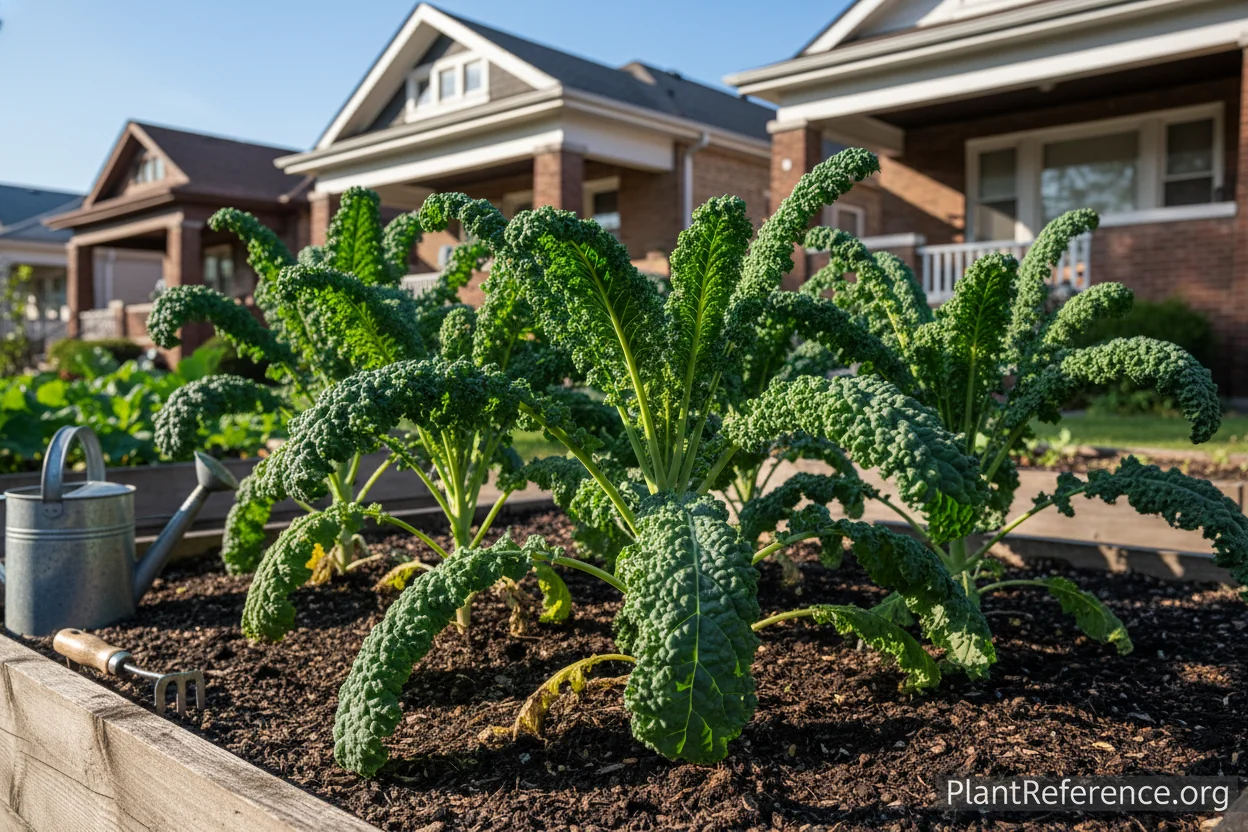
Brassica oleracea 'Vates' is a remarkably hardy and compact cultivar of collard greens specifically developed for cooler growing conditions and shorter seasons. This robust vegetable forms a distinctive upright rosette of thick, substantial leaves that are characteristically smooth and waxy with an attractive blue-green coloration. The paddle-shaped leaves feature prominent white to light green midribs and can reach 12-15 inches in length at full maturity, creating an impressive crown of nutritious foliage.
Unlike its close relative cabbage, Brassica oleracea 'Vates' maintains an open, non-heading growth habit that allows for continuous harvest throughout the growing season. The plant develops a strong, sturdy central stem capable of supporting the heavy, dense foliage, typically reaching 12-18 inches in both height and spread. When allowed to bolt in late spring or early summer, Brassica oleracea 'Vates' produces tall, branched flowering stalks adorned with clusters of small, four-petaled yellow flowers that are characteristic of the mustard family, followed by slender seed pods. This cultivar is particularly prized for its exceptional cold tolerance, actually improving in flavor after exposure to light frosts as starches convert to sugars.
Native Range
Brassica oleracea originated in the Mediterranean region and along the Atlantic coasts of western and southern Europe, where wild forms can still be found growing naturally on rocky cliffs and coastal areas. The 'Vates' cultivar itself was developed much later in the United States during the 1940s at the Virginia Agricultural Experiment Station, where it was specifically bred for improved cold tolerance and compact growth habit.Suggested Uses
Brassica oleracea 'Vates' excels in traditional vegetable gardens, raised bed systems, and large containers with adequate drainage. This cultivar is particularly well-suited for fall and winter gardens in mild climate zones, and serves as an excellent cool-season crop for spring and fall plantings in areas experiencing hot summers. The compact growth habit makes it ideal for small-space gardening and intensive planting schemes. Young, tender leaves can be harvested for fresh salad use, while mature leaves are perfect for traditional cooking methods. Plant in succession every 2-3 weeks to ensure continuous harvest throughout the growing season, and consider interplanting with other cool-season vegetables for efficient space utilization.How to Identify
Appearance
Size & Dimensions
Height1' - 1'6"
Width/Spread1'3" - 1'8"
Colors
Flower Colors
yellow
Foliage Colors
blue green
Bloom Information
Bloom Period
J
F
M
A
M
J
J
A
S
O
N
D
SpringSummer
Detailed Descriptions
Flower Description
bright yellowFoliage Description
blue-green with white to light green midribsGrowing Conditions
Sun Requirements
Full Sun
Partial Shade
• Full Sun: 6+ hours of direct sunlight
• Partial Shade: 3-6 hours of direct sunlight
• Full Shade: Less than 3 hours of direct sunlight
Soil Requirements
pH Range6.0 - 7.5(Neutral)
357912
Soil Types
loam
Drainage
moist
Water & Climate
Water Needs
moderate, consistent moisture
Frost Tolerance
hardy
Time to Maturity
70-75 days
Care & Maintenance
Care Guide
Brassica oleracea 'Vates' thrives with consistent, even moisture throughout the growing season, requiring approximately 1 to 1.5 inches of water weekly through deep, regular watering sessions. Maintain steady soil moisture to prevent plant stress that can lead to premature bolting or the development of tough, bitter-tasting leaves. Apply a balanced fertilizer at planting time, then side-dress with nitrogen-rich fertilizer 3-4 weeks after transplanting to support vigorous leaf development. Mulching around plants helps retain soil moisture and suppress competing weeds. Monitor regularly for common brassica pests including cabbage worms, flea beetles, and aphids, utilizing row covers during the vulnerable seedling stage if necessary. In regions with intense summer heat, provide afternoon shade to prevent premature bolting and maintain optimal leaf quality and tenderness.Pruning
Brassica oleracea 'Vates' benefits from regular harvesting practices rather than traditional pruning methods. Begin harvesting the outer leaves when they reach 6-8 inches in length, always ensuring the central growing point remains intact to continue production. Remove any yellowing, damaged, or diseased leaves promptly to maintain overall plant health and appearance. If flower stalks begin to develop and you wish to continue leaf production, remove them immediately by cutting cleanly at the base. For gardeners interested in seed collection, allow one or two selected plants to bolt completely and flower naturally while continuing to harvest from the remaining plants.Maintenance Level
moderateContainer Growing
✓ Suitable for container growing
Minimum container size: 5 gallons
⚠️ Toxicity Warning
Brassica oleracea 'Vates' is completely safe for human consumption and is widely cultivated as a highly nutritious leafy green vegetable rich in vitamins A, C, and K. However, like other members of the brassica family, it contains naturally occurring compounds called goitrogens that may interfere with thyroid function if consumed in extremely large quantities, particularly when eaten raw over extended periods. The plant is generally considered safe for most pets when consumed in small amounts, though large quantities may cause mild digestive upset in sensitive animals. As with any new food, introduce gradually and consult with a veterinarian if concerns arise.Planting Guide
Planting Methods & Timing
Planting Method
both
Indoor Start
4 weeks before last frost
Direct Sow Timing
early spring 2-4 weeks before last frost, or late summer for fall harvest
Days to Maturity
70–75 days
Plant Spacing
18 inches
Companion Planting
Good Companions
tomatoes
onions
lettuce
spinach
carrots
beets
herbs
broccoli
cauliflower
Avoid Planting With
strawberries
pole beans
peppers
fennel