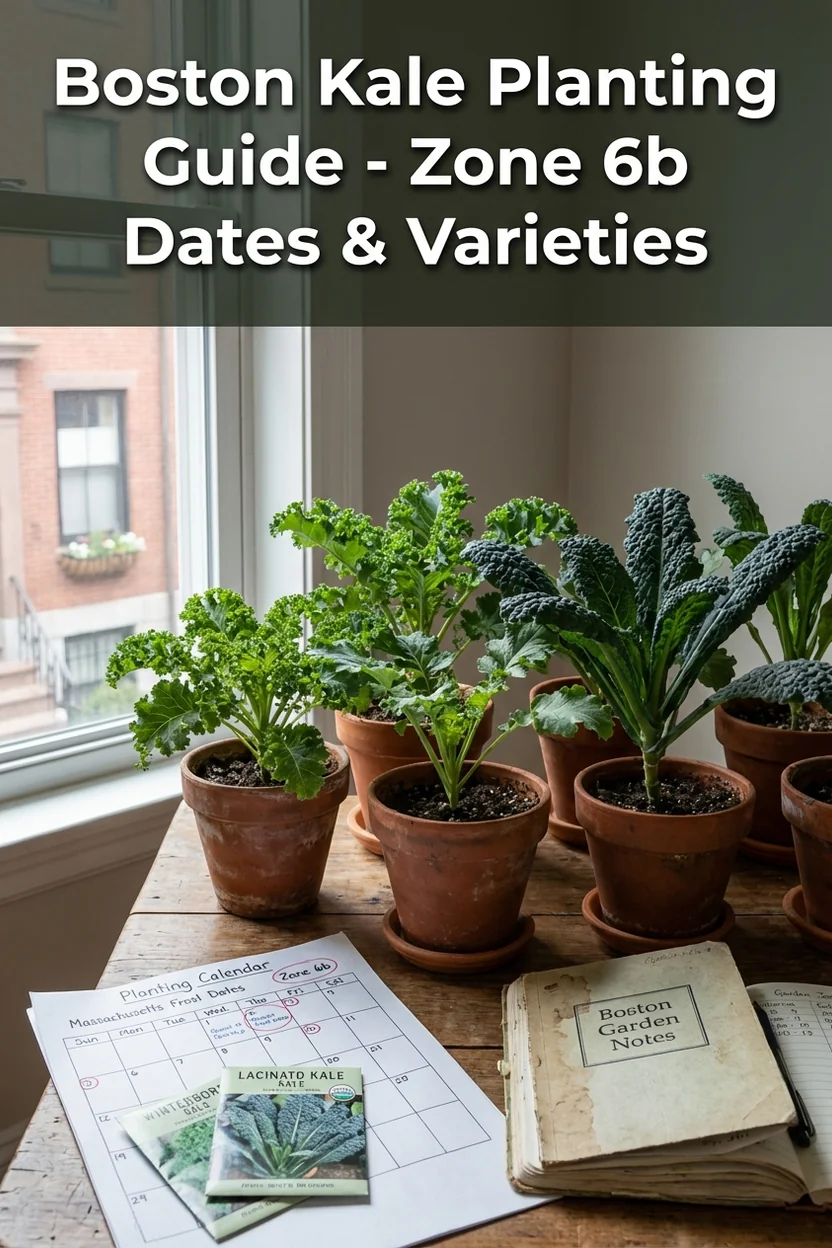
When to Plant Kale in Boston: Complete Guide + Best Varieties for Zone 6b
Pets & Toxicity
Recorded toxicity for plants linked in this guide. An unknown status is not a safety assessment.
No linked plant is recorded as toxicDetailsHide
Brassica oleracea 'Red Russian' — Toxicity
Non-toxicView Brassica oleracea 'Red Russian' plant profileBrassica oleracea var. sabellica 'Vates' — Toxicity
Non-toxicView Brassica oleracea var. sabellica 'Vates' plant profile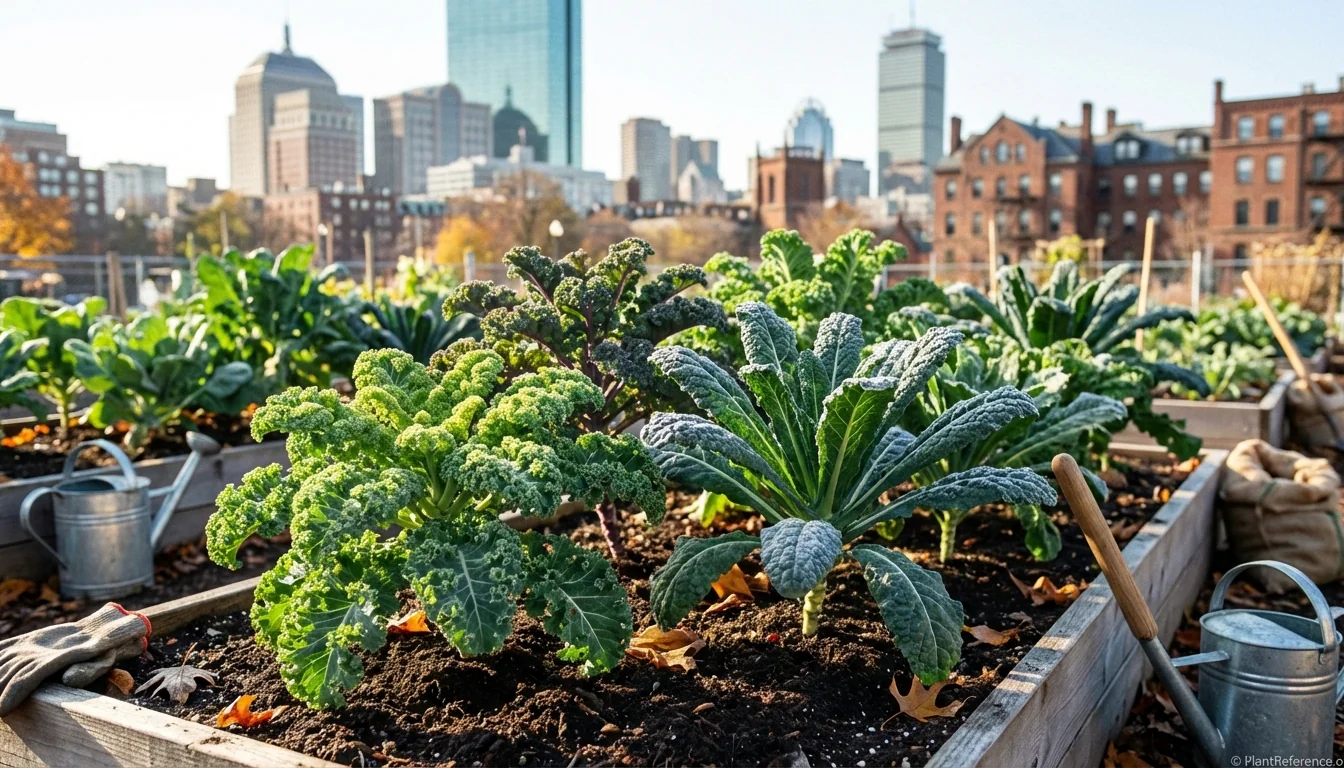
— Image © Plant Reference 2026
I've been growing kale in Massachusetts for over thirty years, and Boston's Zone 6b climate is nearly perfect for this cold-hardy green. With last frost around April 19 and first frost October 19, you get a solid 183-day growing season—plenty of time for two excellent kale crops.
Best Kale Varieties for Boston's Zone 6b Climate
Boston's coastal Zone 6b provides ideal conditions for all major kale varieties. The key is matching variety characteristics to your growing season goals.
Understanding Boston's Kale-Perfect Climate
Your 183-day growing season from April 19 to October 19 creates two distinct planting opportunities. Spring plantings take advantage of cool April and May weather, while fall plantings—which I strongly recommend—develop during late summer and reach maturity as temperatures drop, triggering the natural sugar development that makes frost-kissed kale incredibly sweet.
Variety | Days to Maturity | Best For | Notes for Boston |
|---|---|---|---|
60-75 days | Overwintering | Survives Boston winters with row cover protection | |
60-75 days | Fall harvest | Develops exceptional sweetness after October frost | |
50-60 days | Quick spring crop | Fast maturity perfect for short spring window | |
60-75 days | Ornamental fall | Purple color intensifies in cool Boston weather | |
55-65 days | Container growing | Compact size ideal for Boston urban gardens |
Top Variety Recommendations for Boston
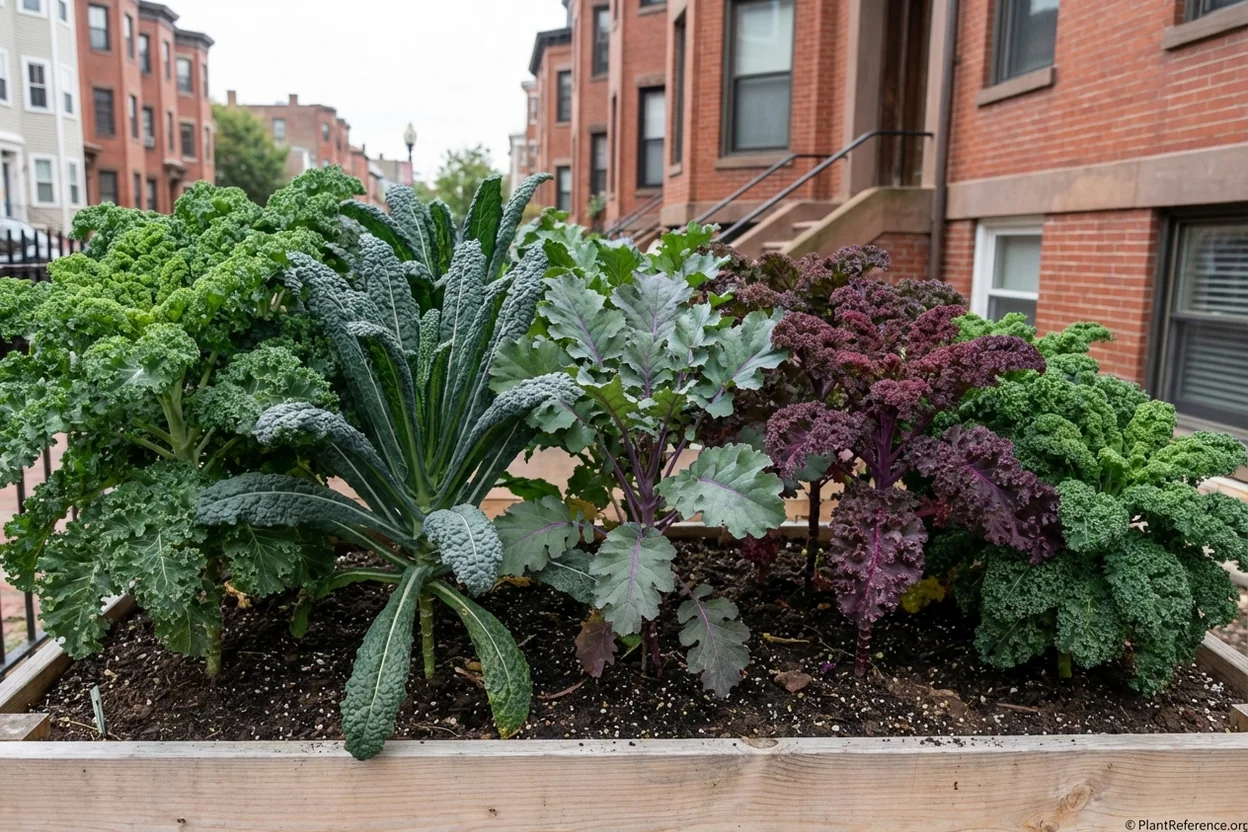
🌿Brassica oleracea 'Winterbor' stands as the champion for Boston growers. This F1 hybrid tolerates your winter temperatures down to 10°F (-12°C) with simple row cover protection. I've harvested fresh leaves in January after December snowstorms—the cold actually improves the flavor by converting starches to sugars.
🌿Brassica oleracea 'Lacinato' performs beautifully in Boston's fall season. The flat, dinosaur-textured leaves develop a nutty sweetness that's unmatched after experiencing your October frosts. This Italian heirloom reaches 24-30 inches tall and produces continuously when harvested correctly.
🌿Brassica oleracea 'Red Russian' serves as your best option for quick spring crops. At 50-60 days to maturity, you can plant March 22 and harvest before summer heat arrives. The tender, oak-shaped leaves work perfectly for fresh salads when harvested young.
Container Growing for Boston Urban Gardeners
Many Boston gardeners work with limited space—balconies, small yards, or shared community plots. 🌿Brassica oleracea 'Vates' excels in containers, reaching only 12-16 inches tall while producing abundantly. Use containers at least 12 inches deep with drainage holes.
Specific Planting Dates for Boston Gardeners
Timing is everything with kale. Plant too early and late spring heat triggers bolting. Plant too late and your fall crop won't reach maturity before hard freezes.
Spring Planting Schedule (Good Results)
Direct Sow Outdoors:March 15-22
Soil temperature should reach 40°F (4°C) consistently
Plant 6-8 weeks before last frost (April 19)
Covers plants with row covers if temperatures drop below 25°F (-4°C)
Indoor Seed Starting:February 15-March 1
Start in seed trays 8-10 weeks before last frost
Transplant outdoors March 22-April 5
Harden off seedlings for one week before transplanting
Fall Planting Schedule (Superior Results)
Direct Sow Outdoors:July 15-August 8
This timing ensures mature plants before first frost (October 19)
Plants develop during cooler August nights and September weather
Mature plants handle frost better than young seedlings
Late Summer Indoor Start:June 15-July 1
Start indoors during hot weather to avoid heat stress on seeds
Transplant August 1-15 when temperatures moderate
Provides head start on growing season
Calculating Your Specific Dates
Here's how I calculate planting dates for any kale variety in Boston:
Spring Direct Sow Date = Last Frost (April 19) - 28-35 days = March 15-22
Fall Direct Sow Date = First Frost (October 19) - Days to Maturity - 14 days safety buffer
For 🌿Brassica oleracea 'Lacinato' (75 days): October 19 - 75 - 14 = July 21 For 🌿Brassica oleracea 'Red Russian' (60 days): October 19 - 60 - 14 = August 5
Boston's Microclimate Considerations
Boston's urban heat island effect means downtown areas stay 3-5°F warmer than suburban locations. If you're gardening in Cambridge, Somerville, or downtown Boston, add 3-4 days to your spring planting dates and subtract 3-4 days from fall planting dates.
Coastal areas like East Boston or South Boston experience more moderate temperatures due to ocean influence. These locations can handle slightly earlier spring planting (March 12-18) and later fall planting (July 18-August 12).
Complete Growing Guide for Boston's 183-Day Season
Success with kale in Boston requires understanding how this cool-season crop responds to your specific climate patterns.
Soil Preparation for Boston Gardens
Boston's native clay-heavy soil needs amendment for successful kale production. I've found that adding 2-3 inches of compost annually transforms even the heaviest Back Bay clay into productive kale-growing medium.
Soil Requirements:
pH 6.0-7.0 (test with local extension service)
Rich in organic matter (compost, aged manure)
Well-draining (raised beds help with heavy clay)
Full sun to partial shade (6+ hours direct sunlight)
Boston Soil Amendments:
Compost: 2-3 inches worked into top 8 inches
Aged manure: 1-2 inches (avoid fresh manure which burns plants)
Coarse sand: Improves drainage in clay areas (not fine sand which makes clay worse)
Test soil pH in early spring - Boston soils tend toward acidic
Add lime if pH below 6.0 to prevent clubroot disease
Work amendments into soil 2-3 weeks before planting
Create raised beds if dealing with heavy clay drainage issues
Planting Techniques for Maximum Success
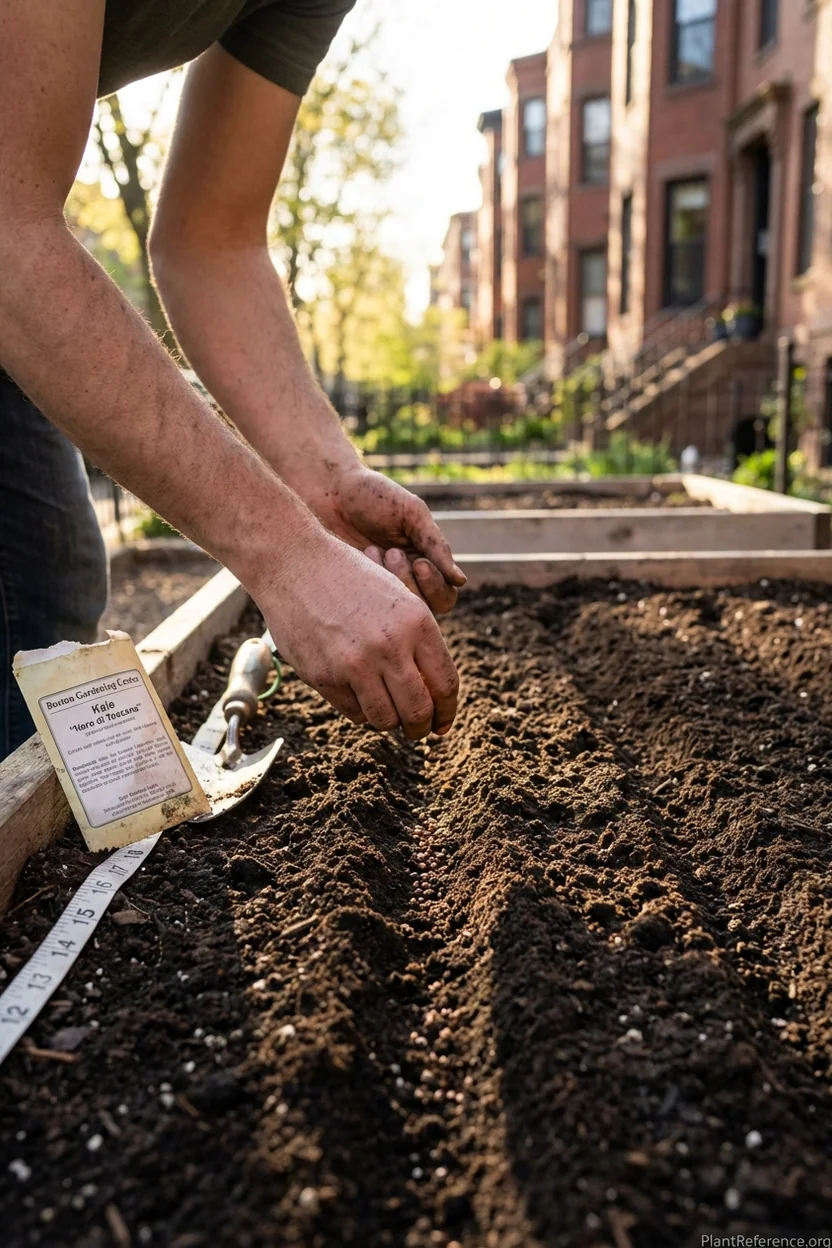
Direct Sowing Method (Preferred): Plant seeds ¼ inch deep in rows spaced 18 inches apart. Thin seedlings to 12-inch spacing when they reach 3-4 inches tall. Direct-sown plants develop stronger root systems and handle Boston's variable spring weather better than transplants.
Transplanting Method: Start seeds indoors 6-8 weeks before transplanting. Harden off seedlings by placing outdoors for increasing periods over one week. Transplant when seedlings have 4-6 true leaves and soil temperature consistently exceeds 40°F (4°C).
Boston-Specific Growing Tips
Boston's spring weather swings from 70°F (21°C) to 35°F (2°C) within days. Protect young plants with row covers during cold snaps. The lightweight fabric moderates temperature swings while allowing rain and light penetration.
Spring Care (March-June):
Monitor soil moisture—Boston's spring rains provide most watering needs
Side-dress plants with compost after 4 weeks of growth
Watch for cabbage worms as temperatures warm in May
Begin harvesting outer leaves when plants reach 8-10 inches tall
Fall Care (July-October):
Water consistently during hot August weather to prevent bolting
Mulch around plants to retain soil moisture and moderate temperature
Reduce watering frequency as temperatures cool in September
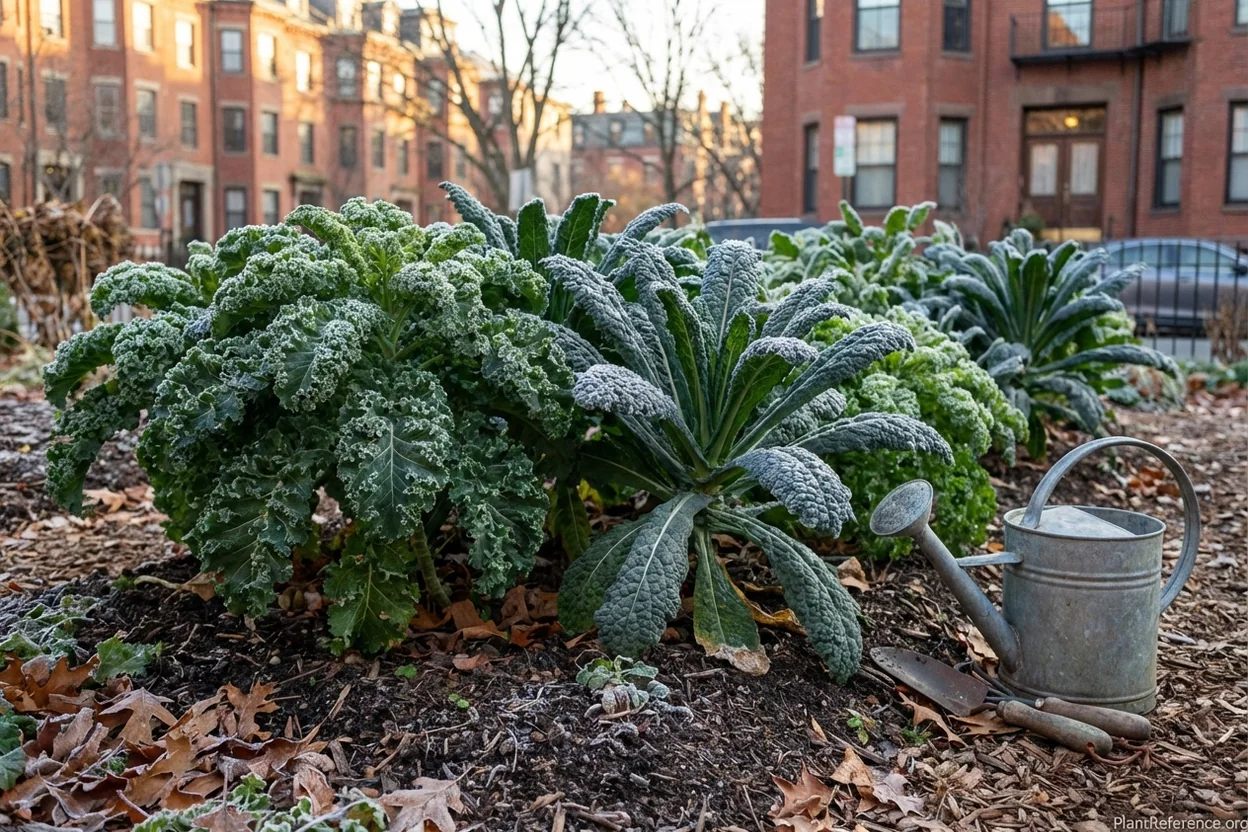
Prepare row covers for frost protection extending harvest into winter
Extending the Growing Season
Boston's Zone 6b climate allows season extension that transforms kale from a summer crop into year-round production.
Cold Frame Construction: Build simple cold frames using old windows and scrap lumber. Position frames to face south, creating a microclimate 10-15°F warmer than ambient temperature. 🌿Brassica oleracea 'Winterbor' survives Boston winters inside unheated cold frames.
Row Cover Protection: Use medium-weight floating row covers (1.5 oz/sq yard) beginning in November. This protection extends harvest 6-8 weeks past normal frost date while maintaining good light transmission for continued growth.
Succession Planting Strategy
Plant new kale every 2-3 weeks from March through August for continuous harvest. This strategy provides fresh tender leaves rather than large, tough plants that bolt in summer heat.
Boston Succession Schedule:
March 15: First spring planting
April 5: Second spring planting
April 25: Final spring planting
July 15: First fall planting
August 1: Second fall planting
August 15: Final fall planting
Troubleshooting Boston-Specific Kale Problems
Thirty years of Boston gardening has taught me that most kale problems result from timing issues or pest pressure during vulnerable growth stages.
Common Problems and Solutions
Spring Bolting (Premature Flowering) Boston's rapid temperature swings trigger early flowering in heat-sensitive varieties. 🌿Brassica oleracea 'Red Russian' bolts fastest while 🌿Brassica oleracea 'Vates' shows best bolt resistance.
Solution: Plant bolt-resistant varieties for spring crops. Use row covers during late spring heat waves. Focus on fall planting for best results.
Cabbage Worm Damage White butterflies lay eggs on kale leaves starting in late April. Green caterpillars chew large irregular holes and leave black droppings on leaves.
Solution: Cover plants with row covers immediately after planting. Apply Bacillus thuringiensis (Bt) spray weekly from May through July. Hand-pick larger caterpillars during daily garden inspections.
Aphid Infestations Gray-green aphids cluster on leaf undersides, causing curled and yellowed foliage. Problem peaks during warm, humid spring weather common in Boston.
Solution: Spray plants with strong water stream to dislodge aphids. Apply insecticidal soap every 3-4 days for heavy infestations. Plant sweet alyssum nearby to attract beneficial predatory insects.
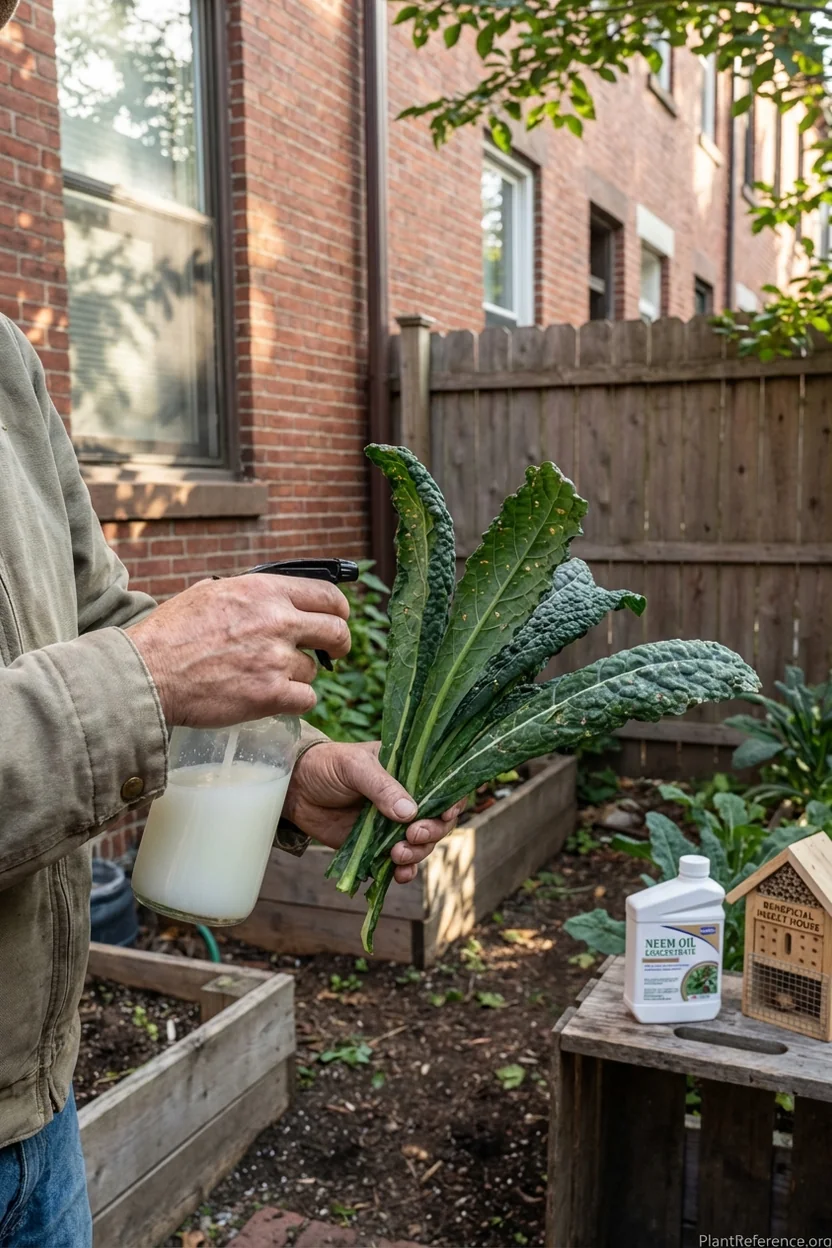
Flea Beetle Damage Tiny black jumping beetles create small round holes in young kale leaves, giving a "shot-hole" appearance. Most damaging to seedlings and young transplants.
Solution: Protect young plants with fine mesh row covers until they reach 6-8 inches tall. Apply diatomaceous earth around plant bases. Plant trap crops like radishes nearby to draw beetles away from kale.
Poor Growth in Clay Soil Boston's heavy clay soil causes stunted growth, yellowing leaves, and root rot during wet springs.
Solution: Build raised beds 8-12 inches high filled with compost-amended soil. Add coarse sand and aged manure to improve drainage. Plant in well-draining areas or containers for immediate improvement.
Winter Damage to Overwintering Plants Fluctuating winter temperatures cause frost heaving, pushing plant roots out of soil. Ice formation damages cell walls in unprotected leaves.
Solution: Mulch heavily around plant bases with 4-6 inches of straw or leaves. Use row covers during temperature swings below 20°F (-7°C). Choose 🌿Brassica oleracea 'Winterbor' for best cold tolerance.
Seasonal Problem Prevention
Spring Prevention (March-May):
Start with disease-free seeds from reputable suppliers
Rotate planting areas—avoid planting kale where other brassicas grew last year
Install row covers immediately after planting to exclude flying pests
Monitor soil drainage during spring rains to prevent root rot
Summer Prevention (June-August):
Provide afternoon shade during heat waves above 85°F (29°C)
Maintain consistent soil moisture to prevent stress-induced bolting
Remove bolted spring plants to eliminate pest breeding sites
Prepare fall planting areas with fresh compost and amendments
Fall/Winter Prevention (September-February):
Inspect plants weekly for signs of pest eggs or disease
Remove damaged or diseased leaves immediately
Ensure adequate air circulation around plants to prevent fungal issues
Prepare cold protection before first frost warnings
Harvest & Storage for Massachusetts Growers
Proper harvesting keeps kale plants productive for months while improper cutting ends production prematurely.
Optimal Harvest Timing
Begin harvesting when plants reach 8-10 inches tall, typically 6-8 weeks after planting. 🌿Brassica oleracea 'Red Russian' matures fastest, ready in 50-60 days, while 🌿Brassica oleracea 'Winterbor' takes 60-75 days to reach full size.
Frost-Sweetened Harvest: Boston's October frosts trigger natural sugar development in kale leaves. Harvest after temperatures drop to 28-30°F (-2 to -1°C) for maximum sweetness. This biochemical change converts stored starches to sugars, eliminating bitterness and creating the sweet, tender kale that makes fall crops superior to spring plantings.
Harvesting Techniques for Continuous Production
Cut-and-Come-Again Method: Harvest outer leaves while leaving the central growing point intact. Cut leaves at the stem base using sharp garden shears. Never harvest more than one-third of the plant at once—this maintains photosynthetic capacity for continued growth.
Progressive Harvesting: Start with baby leaves at 3-4 inches long for salads. Allow remaining leaves to mature for cooking greens. This approach provides diverse textures and flavors from single plants.
Storage Methods for Extended Use
Fresh Storage: Unwashed kale keeps 7-10 days in refrigerator crisper drawers. Wrap in slightly damp paper towels and store in perforated plastic bags. Wash leaves just before use to prevent premature spoilage.
Blanching and Freezing: Blanch kale leaves in boiling water for 2 minutes, then plunge into ice water. Drain thoroughly and freeze in portion-sized bags. Frozen kale works perfectly for smoothies and cooked dishes but loses texture for fresh use.
Dehydrating for Kale Chips: Remove tough stems and tear leaves into uniform pieces. Dehydrate at 125°F (52°C) for 6-8 hours until crispy. Store in airtight containers up to 6 months. Boston's humid climate requires thorough dehydration to prevent mold.
Frequently Asked Questions
Reading about plants and recognising them are different skills. These three build the second.
- Daily PlantIdentify the day’s mystery plant from a close-up photograph.
- Keyed OutWork a dichotomous key, lead by lead, to name a hidden specimen.
- Name That PlantName a specimen from botanical clues dealt hardest first.
Free to play, no account needed
Kevin is a landscape contractor in the Boston area who specializes in cold-climate perennial gardens and hardscaping. He studied landscape design and worked at a prominent nursery on the North Shore before starting his own design-build firm. Kevin's gardens are built to handle New England weather—freeze-thaw cycles, nor'easters, late springs, and heavy snow loads. He's particularly interested in native perennials and shrubs that provide four-season interest without constant maintenance. Kevin writes about cold-hardy plant selection, winter garden structure, and building landscapes that look good even in February.