Image 1 of 2
1 / 2
Plant Reference
Brassica, Genus, oleracea, Species, 'Long Island Improved', Cultivar,
- Genus & species
- Cultivar
long island improved brussels sprouts
Parent species from coastal Europe; 'Long Island Improved' developed on Long Island, New York, in the early 1900s
Overview
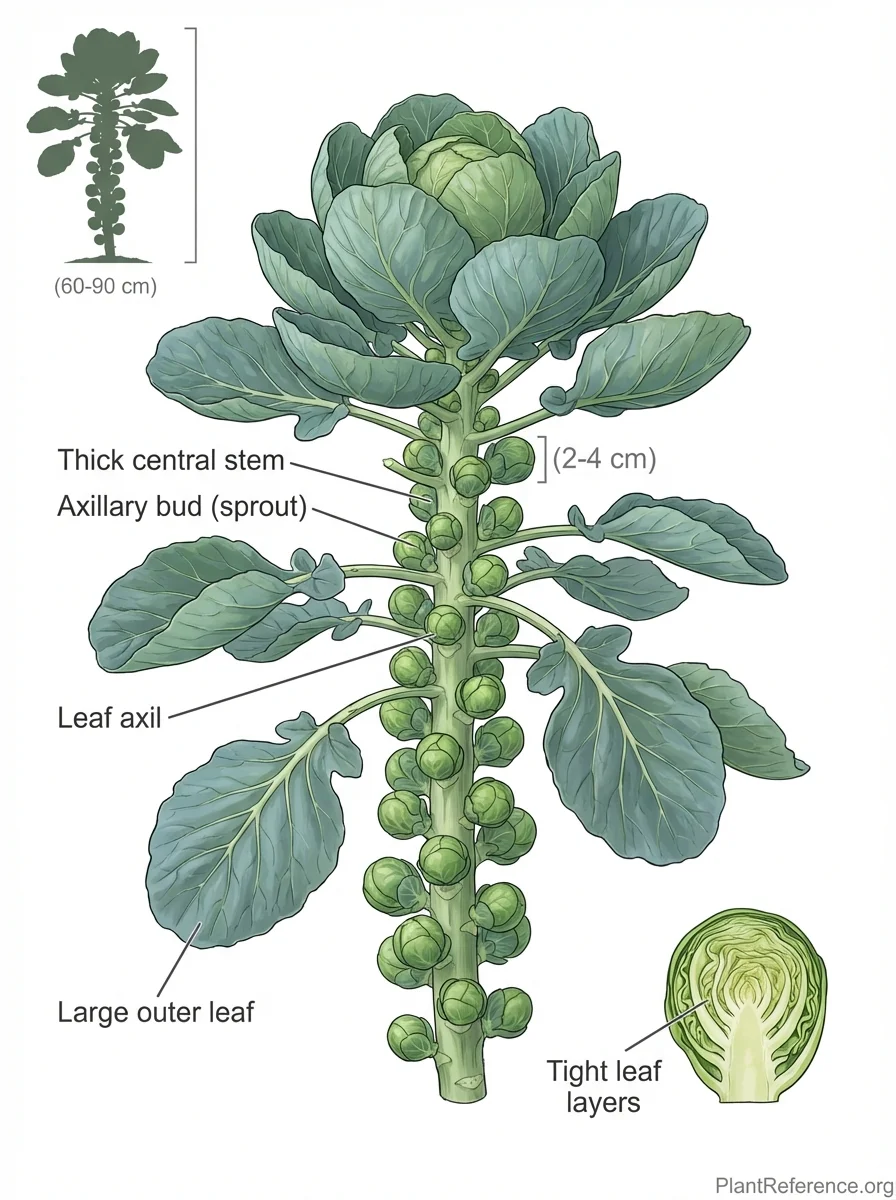
Brassica oleracea 'Long Island Improved' is Long Island Improved Brussels sprouts, an annual vegetable reaching 20–24 inches (50–60 cm) tall and 18–24 inches (45–60 cm) wide with an upright single-stemmed compact habit — shorter and more compact than most Brussels sprout cultivars. The cultivar is an American heirloom developed on Long Island, New York, in the early 1900s. Plants produce firm round medium-green sprouts 1–1.5 inches (2.5–4 cm) in diameter along a stocky central stalk — typically 50–100 sprouts per plant. The compact stature suits smaller gardens and windy sites without staking. Maturity is 90–100 days from transplant, earlier than 'Diablo' at 110–120 days. The cultivar is open-pollinated and grows true to seed. Flavor improves after frost. Family Brassicaceae.
Native Range
The parent species Brassica oleracea (gemmifera group) is descended from wild cabbage native to coastal Europe. 'Long Island Improved' was developed on Long Island, New York, in the early 1900s.Suggested Uses
Grown in vegetable gardens and containers of 5 gallons (19 L) or larger for culinary use in roasting, sautéing, and steaming. The compact short plant suits small gardens and windy sites without staking. Typical yield is 50–100 sprouts per plant. Open-pollinated seed supports home seed-saving. The 90–100 day maturity is faster than most Brussels sprout cultivars. Cool-season crop — not suitable for warm-winter regions where vernalization and cold-induced sweetness do not occur.How to Identify
Appearance
Size & Dimensions
Height1'8" - 2'
Width/Spread1'6" - 2'
Bloom Information
Grown as an annual for sprout harvest. Four-petaled yellow flowers open only if the crop is overwintered or vernalized. Harvest occurs before bolting; plants are started in spring for fall harvest.
Detailed Descriptions
Flower Description
Yellow; four-petaled; only if boltingFoliage Description
Blue-green fan-shaped leaves above medium-green sprouts on a stocky central stalkGrowing Conditions
Sun Requirements
Requires 6-8 hours of direct sunlight daily
• Full Sun: 6+ hours of direct sunlight
• Partial Shade: 3-6 hours of direct sunlight
• Full Shade: Less than 3 hours of direct sunlight
Care & Maintenance
Care Guide
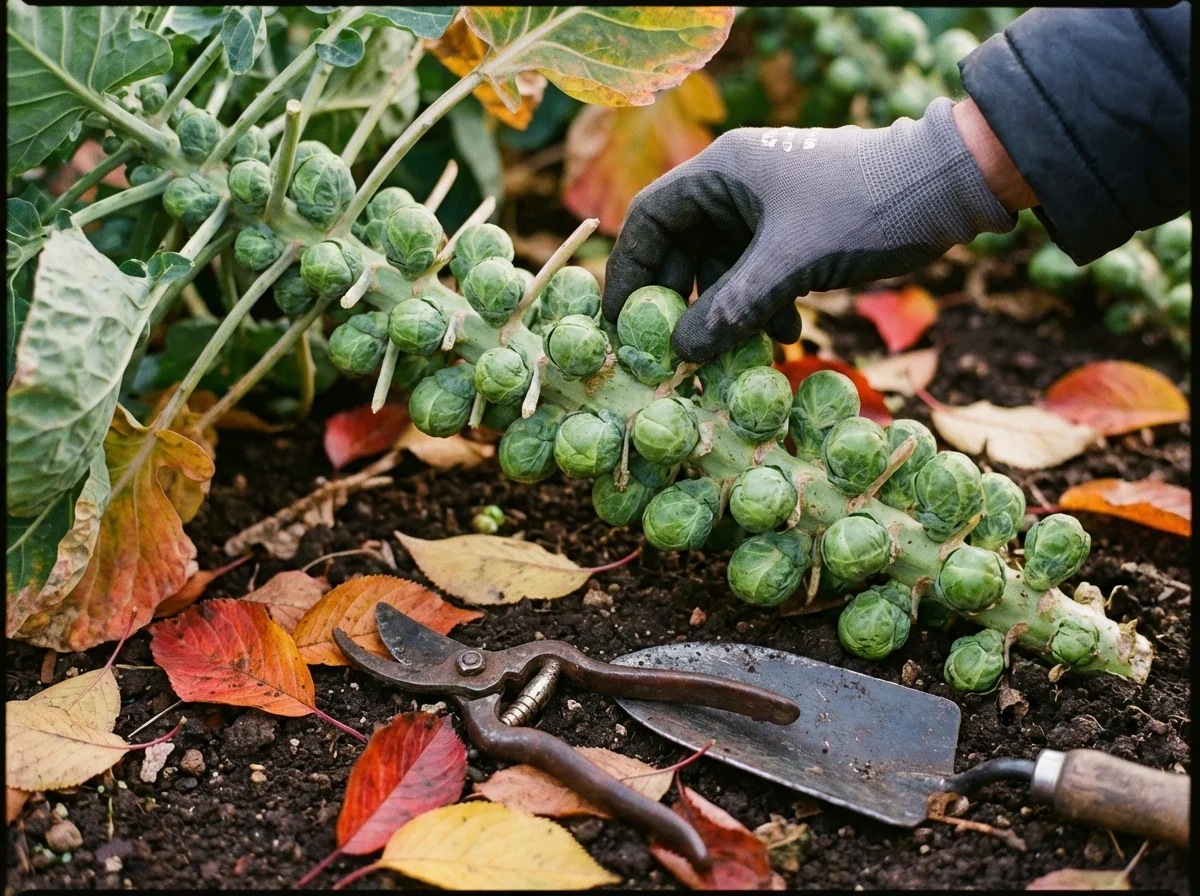
Seed is started indoors 10–12 weeks before the first fall frost date. Transplants are moved into rich moist well-drained soil at pH 6.0–7.5. Consistent moisture and heavy feeding support sprout development along the stalk. The compact stature removes the staking requirement of taller Brussels sprout cultivars in small gardens. Maturity is 90–100 days from transplant. The plant is topped (growing tip removed) 3–4 weeks before the final harvest to redirect energy into finishing the remaining sprouts. Harvest proceeds bottom-up as sprouts reach 1–1.5 inches (2.5–4 cm). Frost improves flavor.Pruning
Lower yellowing leaves are removed as sprouts develop on the stalk. The growing tip is topped 3–4 weeks before final harvest to concentrate energy into sprout maturation. Harvest proceeds bottom-up from the base of the stalk upward.Container Growing
Suitable for container growing
Minimum container size: 5 gallons
Toxicity
Non-toxicPlanting Guide
Botanical Flashcard