Image 1 of 2
1 / 2
Plant Reference
Brassica, Genus, rapa, Species, 'Scarlet Queen', Cultivar,
- Genus & species
- Cultivar
scarlet queen turnip
Species native to central Asia and the Mediterranean region; 'Scarlet Queen' cultivar developed in Japan for the fresh-eating salad-turnip market
Overview
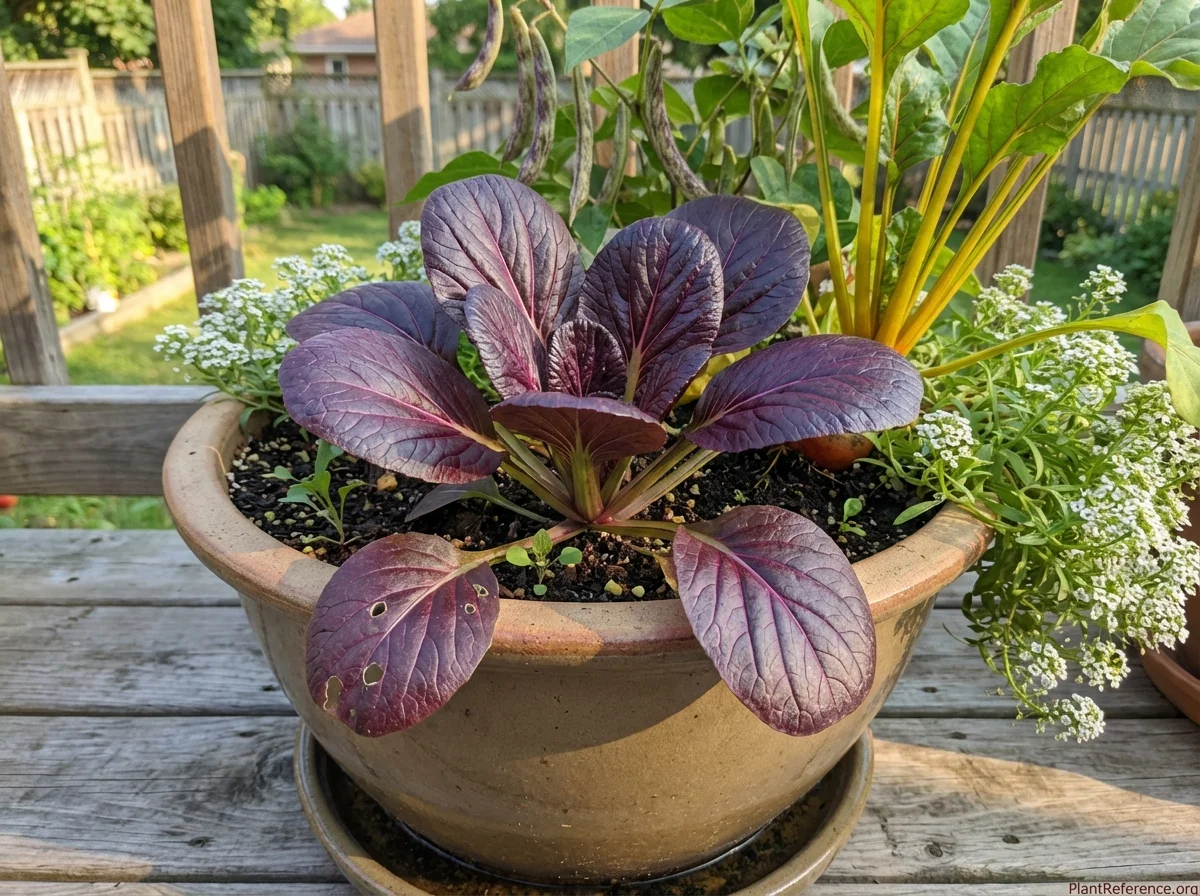
Brassica rapa 'Scarlet Queen' is a fast-maturing annual root vegetable in the mustard family (Brassicaceae) reaching 10–14 inches (25–35 cm) tall (foliage) and 6–8 inches (15–20 cm) wide in an upright habit with a basal leaf rosette above the swollen root. The cultivar is a Japanese hybrid producing round flattened roots 2–3 inches (5–8 cm) in diameter with vivid scarlet-red skin and crisp pure white flesh. The cross-section shows the scarlet skin against pure white flesh — the visual contrast is one of the principal culinary draws of the cultivar for fresh-eating presentations. Flesh runs tender, mild, and sweet without the strong peppery bite of larger turnip cultivars. Leaves are green with reddish stems, basal rosette habit, edible as cooking greens. Days to maturity run 40–50 from direct sowing — slightly slower than the 38–45 day 'Hakurei' but still among the fastest-cycling root vegetables. Roots become pithy and hollow if left in the ground past 3 inches (8 cm) diameter, so harvest timing relative to root size is the principal quality control point. The cultivar performs in cool weather and bolts in sustained heat above 80°F (27°C); spring and fall sowings produce the highest-quality roots in temperate climates. Not known to be toxic to pets or humans.
Native Range
The species Brassica rapa (turnip group) originated in central Asia and the Mediterranean region. The 'Scarlet Queen' cultivar is a Japanese hybrid developed for the fresh-eating salad-turnip market and is grown commercially in market gardens across the United States, Canada, and Japan.Suggested Uses
Grown in vegetable gardens, raised beds, container plantings (3+ gallon containers), and market gardens for culinary use across raw sliced presentations (the scarlet-and-white cross-section adds visual contrast to crudité plates, salads, and cheese boards), pickling (the scarlet skin holds color through brining), and light cooking (quick sauté, glazed, or added to stir-fries). The mild sweet flavor without the peppery bite of larger turnips suits raw eating preparations where pungent traditional turnip flavor would overwhelm. Edible greens are sautéed in olive oil with garlic or added to brassica-greens soups. The cultivar is not suitable for summer growing in hot continental climates where bolting is rapid, and roots do not store for winter use the way longer-keeping turnip varieties such as 'Purple Top White Globe' do.How to Identify
Appearance
Size & Dimensions
Height10" - 1'2"
Width/Spread6" - 8"
Bloom Information
Yellow four-petaled cruciform flowers appear on elongated flowering stalks only when plants bolt in response to sustained heat above 80°F (27°C) or when day length exceeds 14 hours. The cultivar is grown as a cool-season spring and fall crop and is harvested before bolting; bolting plants are pulled and composted as the root has typically become woody and inedible by the time the flowering stalk emerges.
Detailed Descriptions
Flower Description
Yellow four-petaled cruciform (only when bolting); flowering stalks elongate above the foliageFoliage Description
Green with reddish stems; basal rosette habit; edible as cooking greensGrowing Conditions
Sun Requirements
Requires 4-8 hours of direct sunlight daily
• Full Sun: 6+ hours of direct sunlight
• Partial Shade: 3-6 hours of direct sunlight
• Full Shade: Less than 3 hours of direct sunlight
Care & Maintenance
Care Guide
Direct sow seeds 0.25 inch (6 mm) deep in early spring 4–6 weeks before the last frost date, or in late summer (August through September in the Pacific Northwest) for fall harvest. Grow in loose well-drained loam or sandy soil at pH 6.0–7.0. Thin seedlings to 3–4 inches (8–10 cm) apart in rows 12 inches (30 cm) apart when seedlings reach 2 inches (5 cm) tall — thinnings are edible as microgreens. Consistent moisture during root formation produces smooth non-pithy roots; drought-stressed plants run smaller, woodier, and bolt earlier. Days to maturity run 40–50 from direct sowing. Harvest at 2–3 inches (5–8 cm) diameter for the fullest flavor and crispest texture; roots become pithy and hollow within 5–7 days of reaching mature size. The cultivar is cool-season only and bolts in sustained summer heat — successive sowings every 2–3 weeks across the cool-weather window extend the harvest rather than relying on a single planting. In the Pacific Northwest, fall sowings (August–September) produce the sweetest roots as cooling autumn temperatures increase root sugar content.Pruning
No horticultural pruning applies. Plants are harvested whole by pulling the root with the foliage attached. Greens are sparingly harvested from growing plants — outer leaves are cut while the central growing point continues developing the root. The cultivar does not store well; roots are eaten within 1–2 weeks of harvest rather than placed into root cellar storage.Container Growing
Suitable for container growing
Minimum container size: 3 gallons
Toxicity
Non-toxicPlanting Guide
Planting Methods & Timing
Planting Method
direct sow
Direct Sow Timing
4-6 weeks before last frost; late summer for fall
Days to Maturity
40–50 days
Plant Spacing
4 inches
Companion Planting
Avoid Planting With