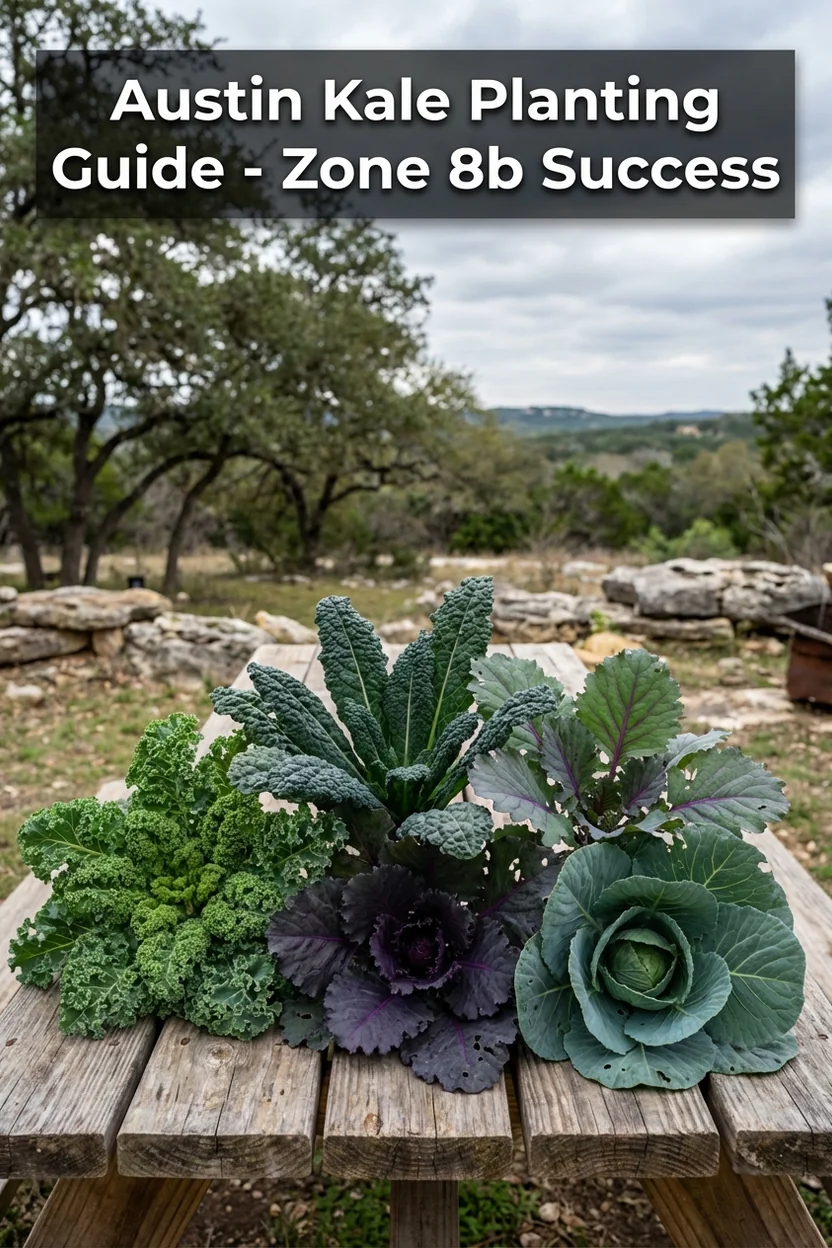
When to Plant Kale in Austin: Complete Guide + Best Varieties for Zone 8b
Pets & Toxicity
Recorded toxicity for plants linked in this guide. An unknown status is not a safety assessment.
No linked plant is recorded as toxicDetailsHide
Brassica oleracea 'Red Russian' — Toxicity
Non-toxicView Brassica oleracea 'Red Russian' plant profileBrassica oleracea var. sabellica 'Vates' — Toxicity
Non-toxicView Brassica oleracea var. sabellica 'Vates' plant profile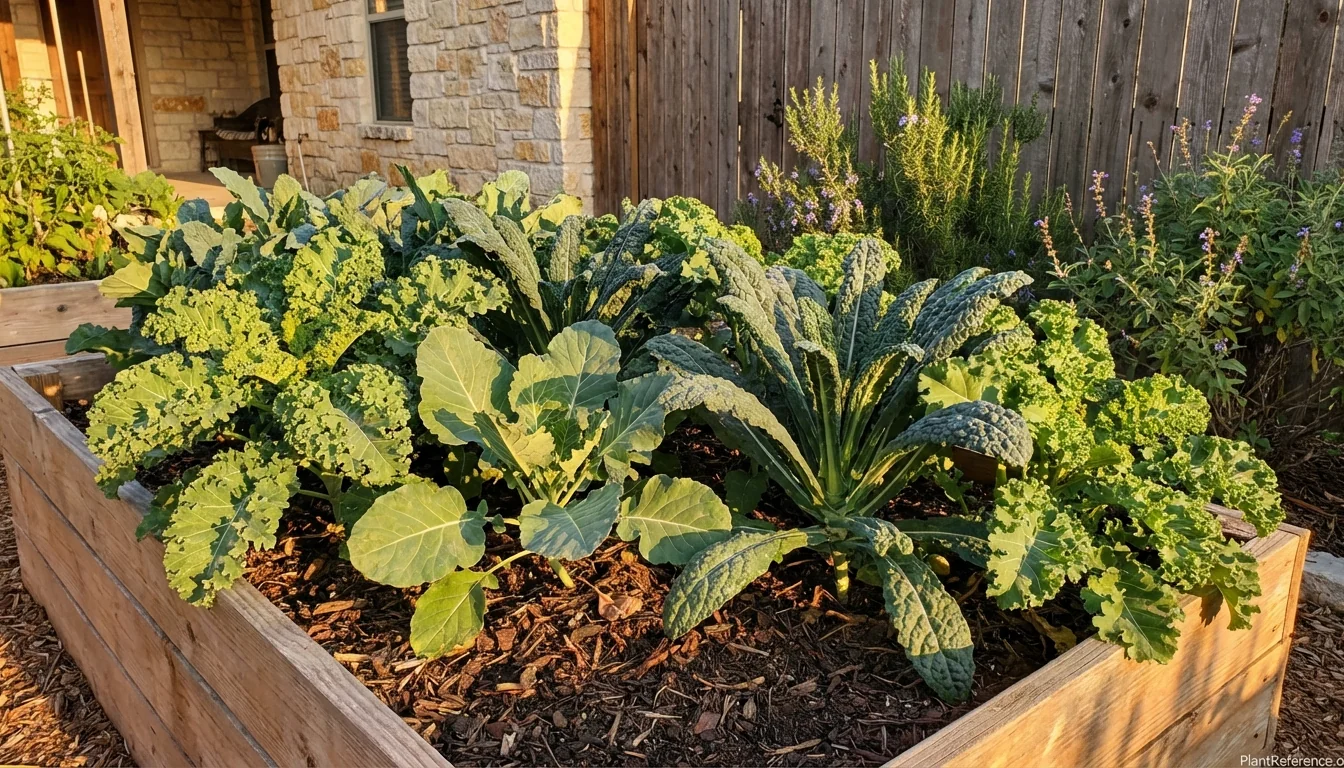
— Image © Plant Reference 2026
Austin gardeners have struck gold with kale cultivation. Your Zone 8b climate provides a remarkable 274-day growing season that transforms kale from a challenging cool-weather crop into a reliable winter garden staple.
The secret to Austin kale lies in understanding our unique seasonal patterns. While other regions struggle with short growing windows, you can harvest fresh kale from September through May—nearly nine months of continuous production. The key is working with our mild winters and avoiding the brutal summer heat that turns kale bitter and triggers premature flowering.
Best Kale Varieties for Austin's Zone 8b Climate
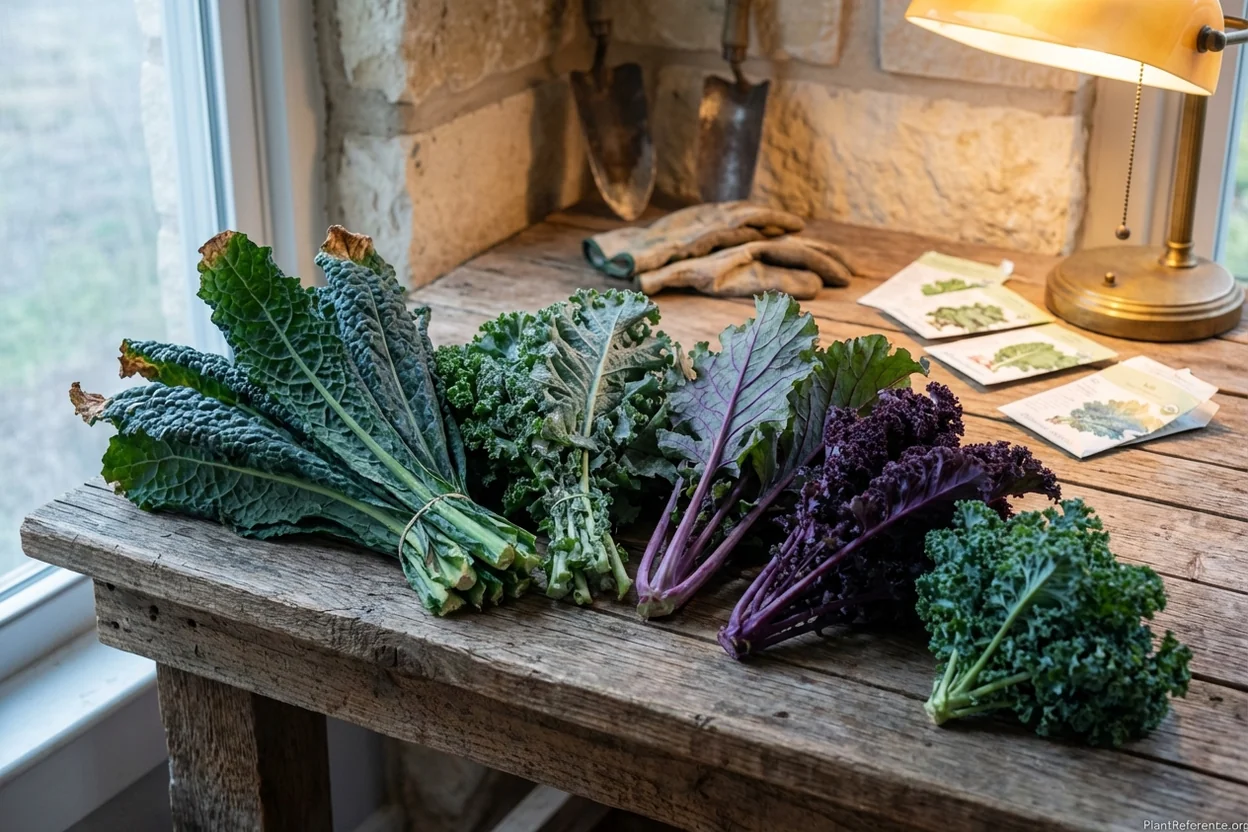
Selecting the right varieties makes the difference between success and failure in Austin gardens. Not all kale varieties handle our temperature swings and occasional heat spells equally well.
Variety | Days to Maturity | Best For Austin | Zone 8b Notes |
|---|---|---|---|
60-75 days | Winter harvest | Excellent heat tolerance, slow to bolt | |
60-75 days | Cold hardiness | Survives Austin's rare freezes perfectly | |
50-60 days | Quick spring crop | Fast-maturing, harvest before May heat | |
60-75 days | Ornamental winter | Beautiful purple color intensifies in cold | |
55-65 days | Small spaces | Compact growth, wind resistant |
Lacinato (Dinosaur Kale) stands as Austin's champion variety. This Italian heirloom 🌿Brassica oleracea 'Lacinato' (LAH-sin-NAH-toh) tolerates our February and March heat spells better than curly types. The dark, textured leaves resist bolting when temperatures climb unexpectedly, and the flavor remains sweet even without hard frost.
Red Russian 🌿Brassica oleracea 'Red Russian' excels as your spring variety. Its rapid 50-60 day maturity means you can plant in January and harvest by mid-March, well before Austin's heat triggers bolting. The tender leaves make excellent salad additions during our mild winter months.
Heat Tolerance Considerations
Austin's Zone 8b presents unique challenges that gardeners in cooler climates never face. Your February days might reach 80°F (27°C), followed by March nights that dip to 35°F (2°C). This temperature volatility stresses plants and can trigger early bolting.
Lacinato handles these swings best, maintaining vegetative growth even during warm spells. Winterbor and Redbor follow close behind, though they may show stress if temperatures stay above 75°F (24°C) for extended periods.
Avoid loose-leaf varieties not listed here—they bolt rapidly in Austin's climate and provide poor harvests.
Specific Planting Dates for Austin
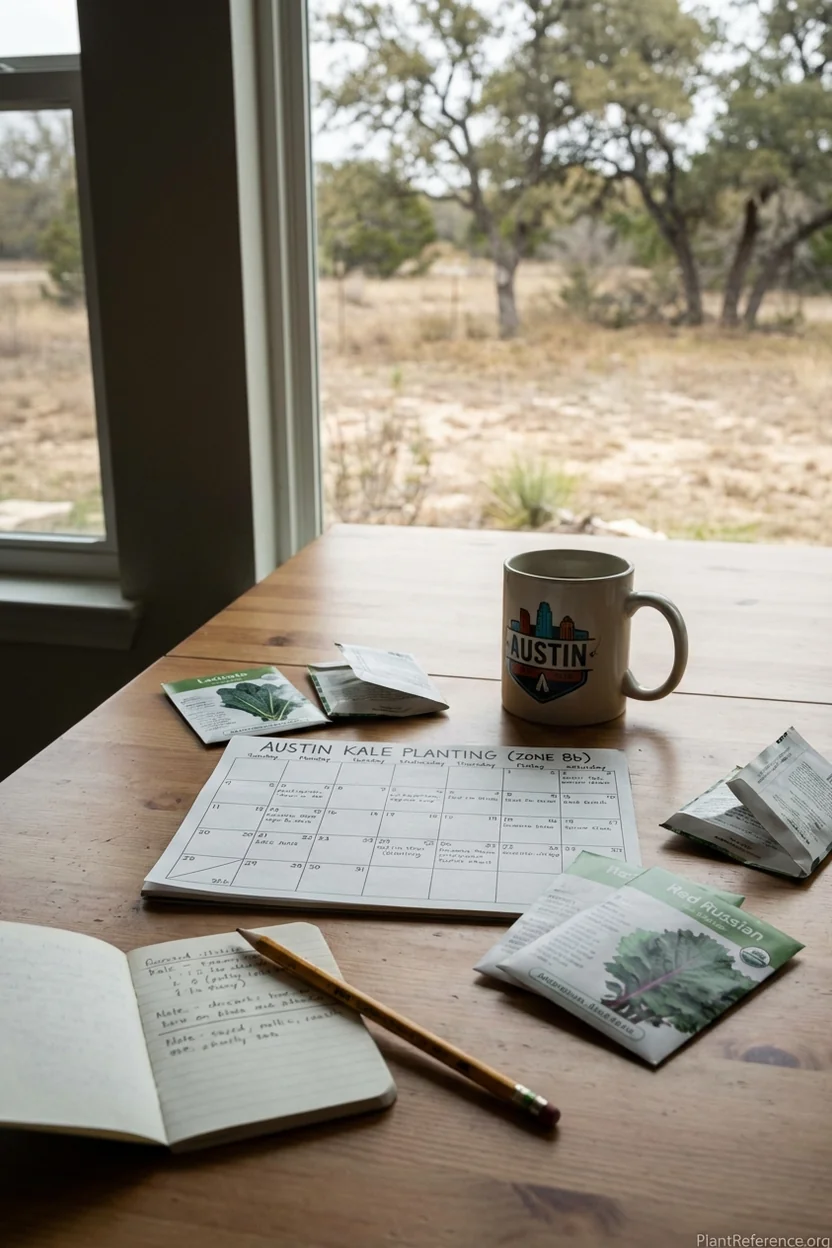
Austin's 274-day growing season allows for three distinct planting windows, each with specific advantages and challenges.
Fall Planting (Primary Season)
Direct Sow Dates: August 15 - September 15 Transplant Dates: September 1 - October 1 Harvest Period: October through March
Fall planting provides your best kale harvest. Austin's September and October weather creates ideal growing conditions—warm soil for quick germination combined with decreasing day length that prevents bolting.
Start 🌿Brassica oleracea 'Lacinato' and 🌿Brassica oleracea 'Winterbor' on August 15 for full-size plants by October. These mature plants easily handle our occasional November freezes and provide continuous harvest through winter.
Winter Planting (Extended Season)
Direct Sow Dates: October 15 - January 15 Transplant Dates: November 1 - February 1 Harvest Period: December through May
Austin's mild winters allow continued planting through January. While growth slows during December and January, plants establish roots and explode with growth during February's warm-up.
🌿Brassica oleracea 'Red Russian' works perfectly for winter planting due to its quick maturity—plant in January for March harvest before heat stress begins.
Late Winter/Early Spring Planting (High Risk)
Direct Sow Dates: January 15 - February 15 Transplant Dates: February 1 - March 1 Harvest Period: March through mid-May
This window requires careful variety selection and vigilant harvesting. Only fast-maturing 🌿Brassica oleracea 'Red Russian' and 🌿Brassica oleracea 'Vates' work reliably, and you must harvest completely by mid-May when sustained heat arrives.
Complete Growing Guide for Austin
Success in Austin requires understanding how our climate affects every aspect of kale cultivation, from soil preparation through harvest timing.
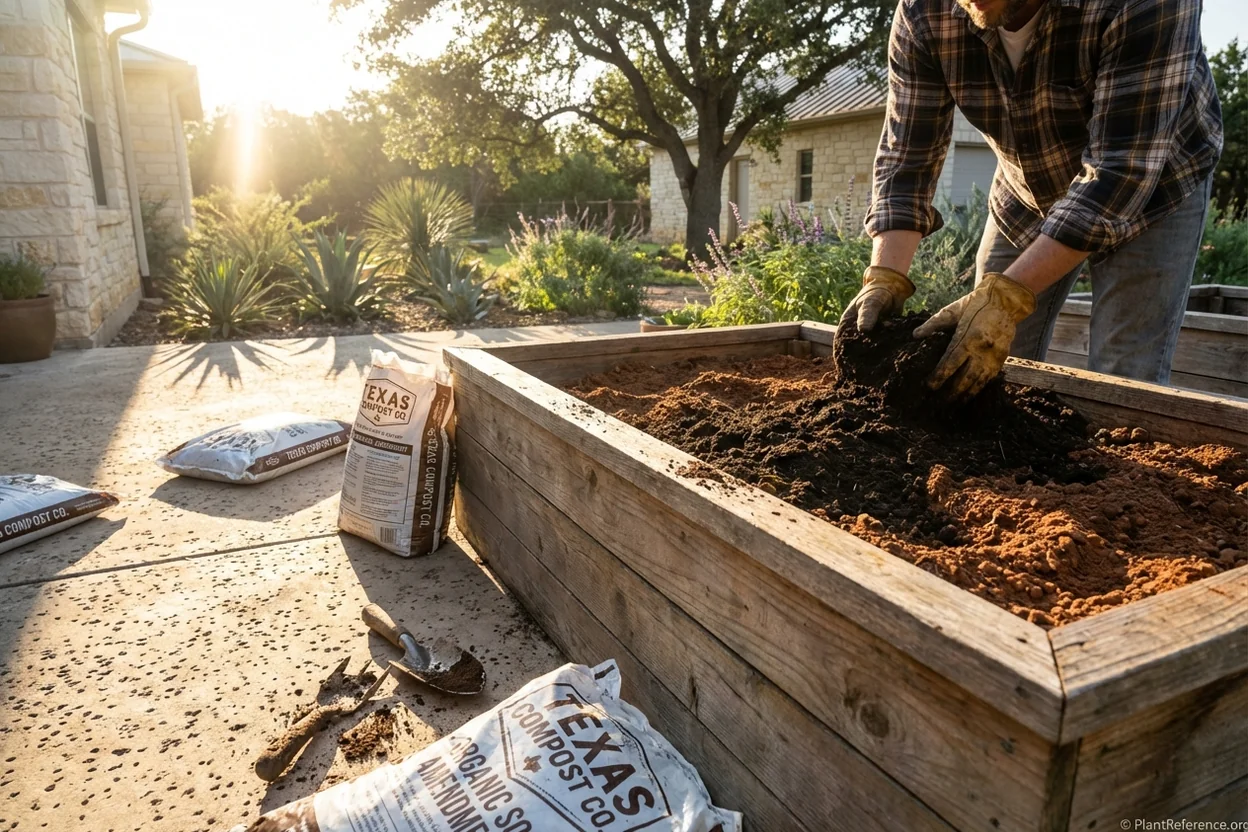
Soil Preparation for Austin's Clay
Austin's notorious clay soil challenges kale cultivation, but proper amendments create excellent growing conditions. Your clay retains moisture during our occasional droughts while providing essential minerals.
pH Management: Austin's clay typically runs 7.0-7.8, perfect for kale without amendments. Test your soil every three years to confirm pH stays between 6.5-7.5.
Drainage Enhancement: Add 3-4 inches (8-10 cm) of compost annually to break up clay structure. Austin's summer heat bakes untreated clay into concrete-like hardpan that prevents root penetration.
Organic Matter: Apply 2-3 inches (5-8 cm) of local oak leaf compost each fall. Austin's abundant live oak leaves create excellent soil amendment when properly composted.
Planting Techniques for Austin Success
Direct Seeding: Plant seeds ½ inch (1.3 cm) deep in Austin's clay-amended soil. Our intense sun can bake shallow seeds, while our clay holds moisture at proper depth.
Transplant Method: Start seeds indoors 4-6 weeks before planting date. Austin's variable spring weather makes transplants more reliable than direct seeding for spring crops.
Space plants 12 inches (30 cm) apart in rows 18 inches (45 cm) apart. Austin's winter sun stays low on the horizon, requiring wider spacing for proper light penetration.
Watering Strategies for Austin's Climate
Austin's rainfall patterns—wet springs followed by summer drought—require adaptive watering strategies.
Fall and Winter: Rely primarily on natural rainfall. Austin averages 2.5 inches (6.4 cm) monthly during peak growing season, sufficient for established plants.
Spring Harvest Period: Begin supplemental watering in March when rainfall decreases and temperatures rise. Provide 1 inch (2.5 cm) weekly through soaker hoses or drip irrigation.
Mulching: Apply 2-3 inches (5-8 cm) of local cedar mulch around plants. Austin's intense sun and drying winds quickly dessicate unmulched soil.
Temperature Management
Austin's temperature swings require protection strategies unknown in steadier climates.
Freeze Protection: Use frost cloth during Austin's occasional hard freezes (typically 1-3 per winter). Most established kale survives to 20°F (-6°C) without protection, but young plants need covering.
Heat Protection: Provide afternoon shade during unexpected warm spells. A simple shade cloth on the west side prevents bolt-inducing stress during 80°F+ (27°C+) days.
Troubleshooting Austin-Specific Problems
Austin's unique climate creates specific challenges rarely encountered in traditional kale-growing regions.
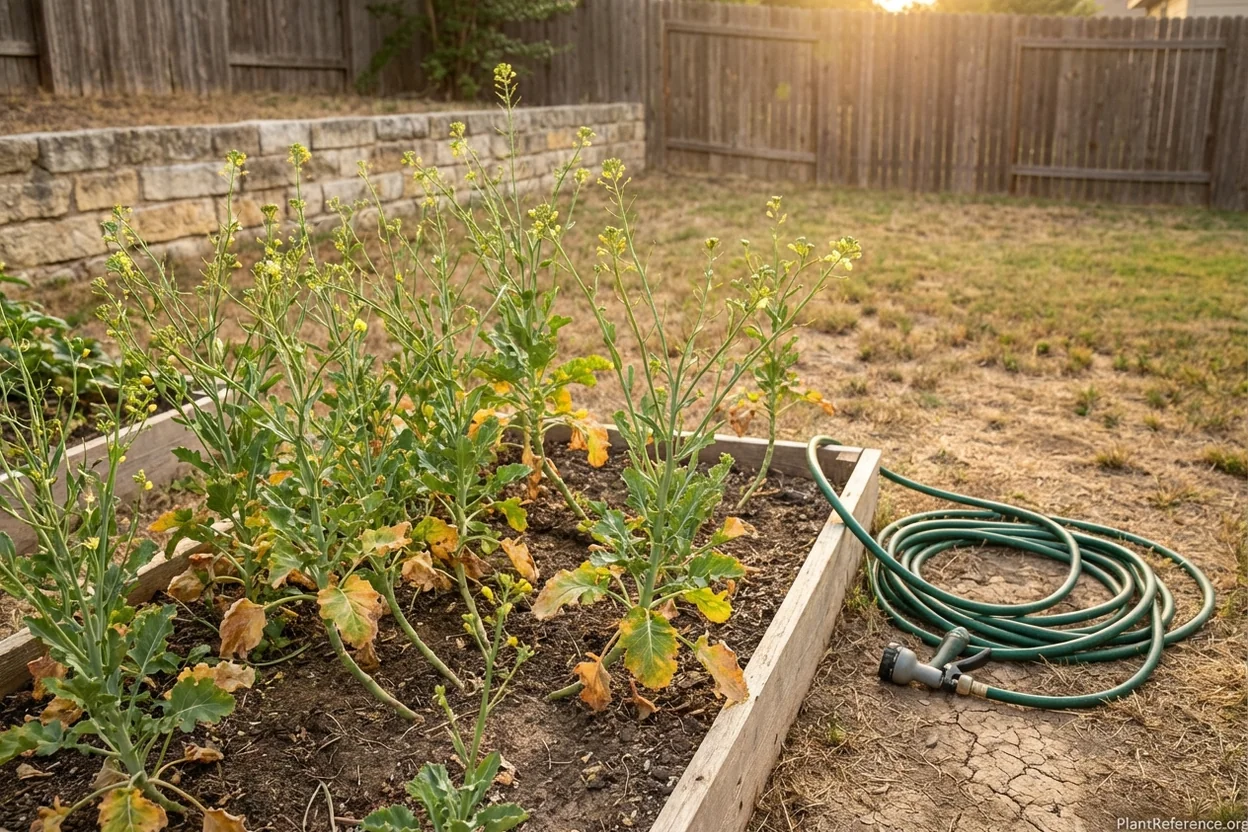
Premature Bolting (Major Austin Issue)
Symptoms: Central stem elongation, small yellow flowers, increasingly bitter leaves Cause: Temperature spikes above 80°F (27°C) during February and March warm spells Prevention: Choose bolt-resistant 🌿Brassica oleracea 'Lacinato', provide afternoon shade during heat waves Solution: Harvest immediately when bolting begins—leaves remain edible for 7-10 days
Clay Soil Drainage Problems
Symptoms: Yellowing lower leaves, stunted growth, root rot during wet periods Cause: Austin's clay holds too much moisture during extended rainy periods Prevention: Build raised beds 8-12 inches (20-30 cm) high, add coarse organic matter Solution: Improve drainage with expanded shale (local Austin amendment) mixed into clay
Winter Wind Damage
Symptoms: Leaf browning on north side of plants, stunted growth Cause: Austin's occasional strong northers (cold fronts) dessicate leaves Prevention: Plant taller varieties on north side of garden as windbreaks Solution: Provide wind protection with frost cloth during extreme weather events
Aphid Infestations
Symptoms: Curled leaves with sticky honeydew, gray-green insects clustered on leaf undersides Cause: Austin's mild winters don't kill overwintering aphid populations Peak Season: February through April when temperatures warm but beneficial insects haven't emerged Control: Strong water spray weekly, neem oil applications, attract beneficial insects with native Texas plants
Cabbage Worm Pressure
Symptoms: Large holes in leaves, green caterpillars with yellow stripes Peak Season: October through December and March through May Prevention: Row covers during peak butterfly activity, Bt spray applications Austin-Specific Note: Cabbage whites remain active longer due to mild temperatures
Harvest & Storage
Austin's extended harvest season requires specific timing and storage strategies to maximize your kale investment.
Harvest outer leaves when they reach 6-8 inches (15-20 cm) long, leaving the growing center intact. Austin's mild climate allows continuous harvest for 3-4 months per planting.
Peak Harvest Timing: December through February provides the sweetest kale as occasional light frosts concentrate sugars in leaves. Austin rarely experiences hard freezes that damage plants.
Storage Methods: Fresh kale keeps 5-7 days refrigerated. Austin's low humidity during winter means harvested kale may wilt quickly—store in plastic bags with paper towels to absorb excess moisture.
Preservation: Blanch and freeze kale during peak harvest periods. Austin's long season often produces more kale than families can consume fresh.
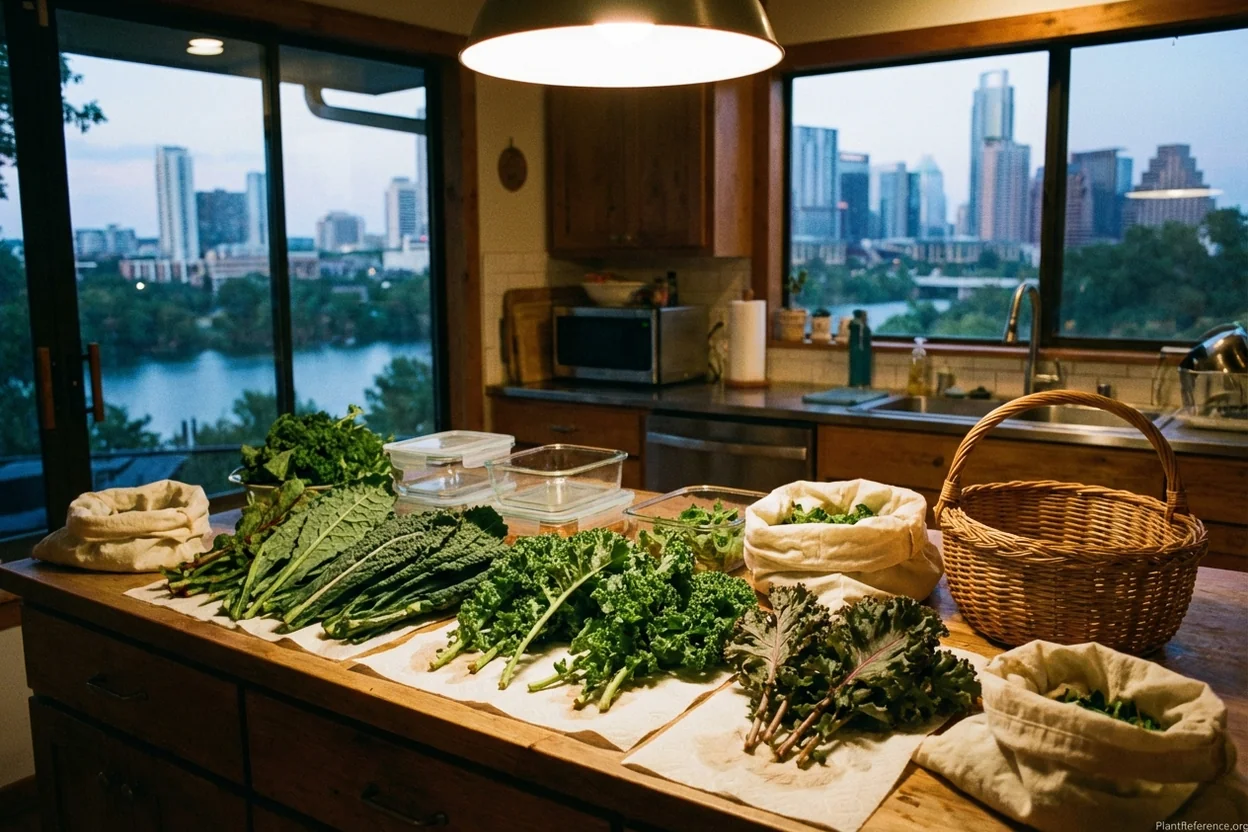
Monthly Harvest Calendar for Austin
September-November: Light harvest of young leaves, allowing plants to establish December-February: Peak harvest period with sweetest flavor March-April: Heavy harvest before heat stress begins May: Final harvest and plant removal before summer heat
Succession Planting Strategy
Plant new kale every 3-4 weeks from August through January to ensure continuous harvest. Austin's mild climate allows multiple overlapping crops that provide steady production.
August 15: Plant 🌿Brassica oleracea 'Winterbor' for December harvest September 15: Plant 🌿Brassica oleracea 'Lacinato' for January harvest October 15: Plant 🌿Brassica oleracea 'Red Russian' for February harvest December 1: Plant 🌿Brassica oleracea 'Vates' for March harvest
Frequently Asked Questions
Reading about plants and recognising them are different skills. These three build the second.
- Daily PlantIdentify the day’s mystery plant from a close-up photograph.
- Keyed OutWork a dichotomous key, lead by lead, to name a hidden specimen.
- Name That PlantName a specimen from botanical clues dealt hardest first.
Free to play, no account needed
Carlos grew up helping his abuelos tend their backyard garden in San Antonio, Texas, but didn't get serious about growing his own food until he bought his first house in Austin. He works as an HVAC technician during the day and gardens in the early mornings and evenings. Carlos specializes in heat-tolerant vegetables and container growing—essential skills for Texas summers and his south-facing driveway that gets intense sun. He's learned through plenty of failures (multiple dead fig trees, countless bolted lettuce crops) and now helps neighbors troubleshoot their own gardens. His YouTube channel documenting his container tomato experiments has a small but dedicated following. Carlos is passionate about growing food on a budget, often sourcing free containers and building his own compost.