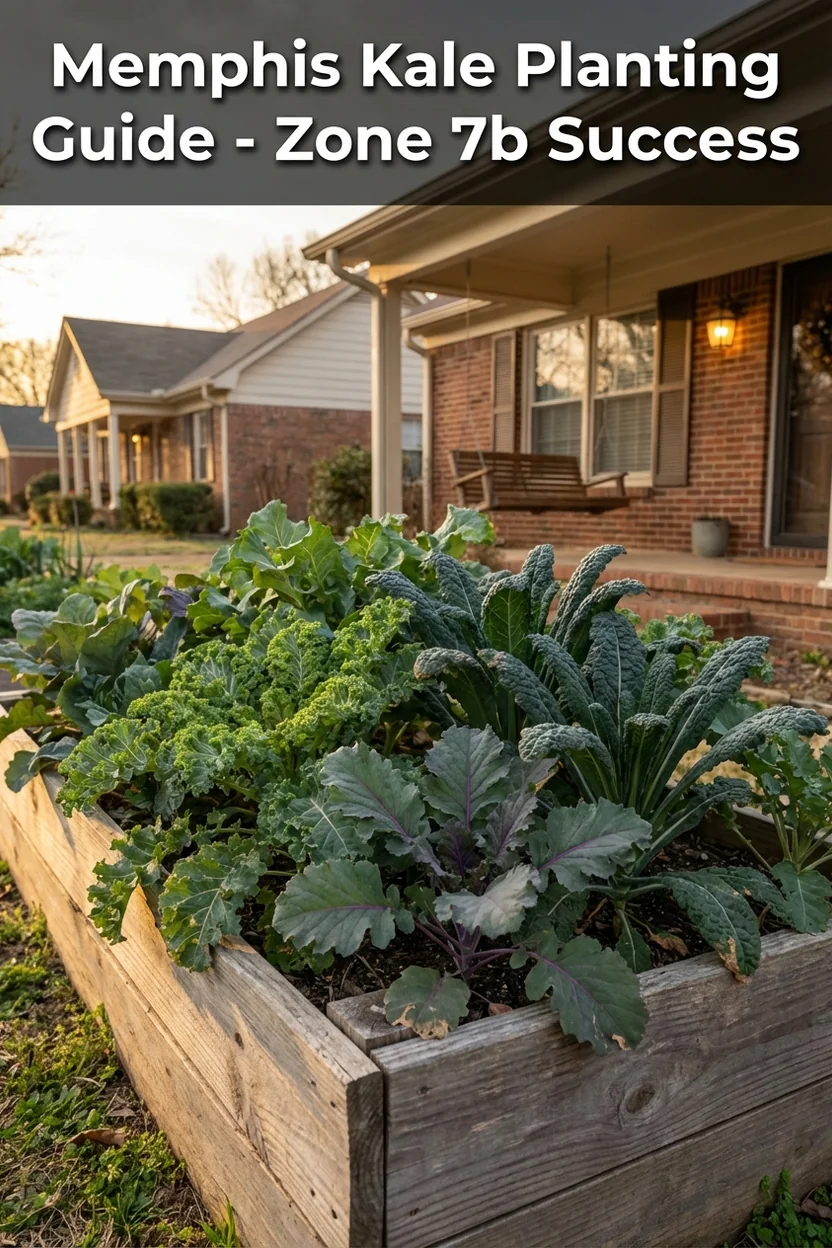
When to Plant Kale in Memphis: Complete Guide + Best Varieties for Zone 7b
Pets & Toxicity
Recorded toxicity for plants linked in this guide. An unknown status is not a safety assessment.
No linked plant is recorded as toxicDetailsHide
Brassica oleracea 'Red Russian' — Toxicity
Non-toxicView Brassica oleracea 'Red Russian' plant profileBrassica oleracea var. sabellica 'Vates' — Toxicity
Non-toxicView Brassica oleracea var. sabellica 'Vates' plant profile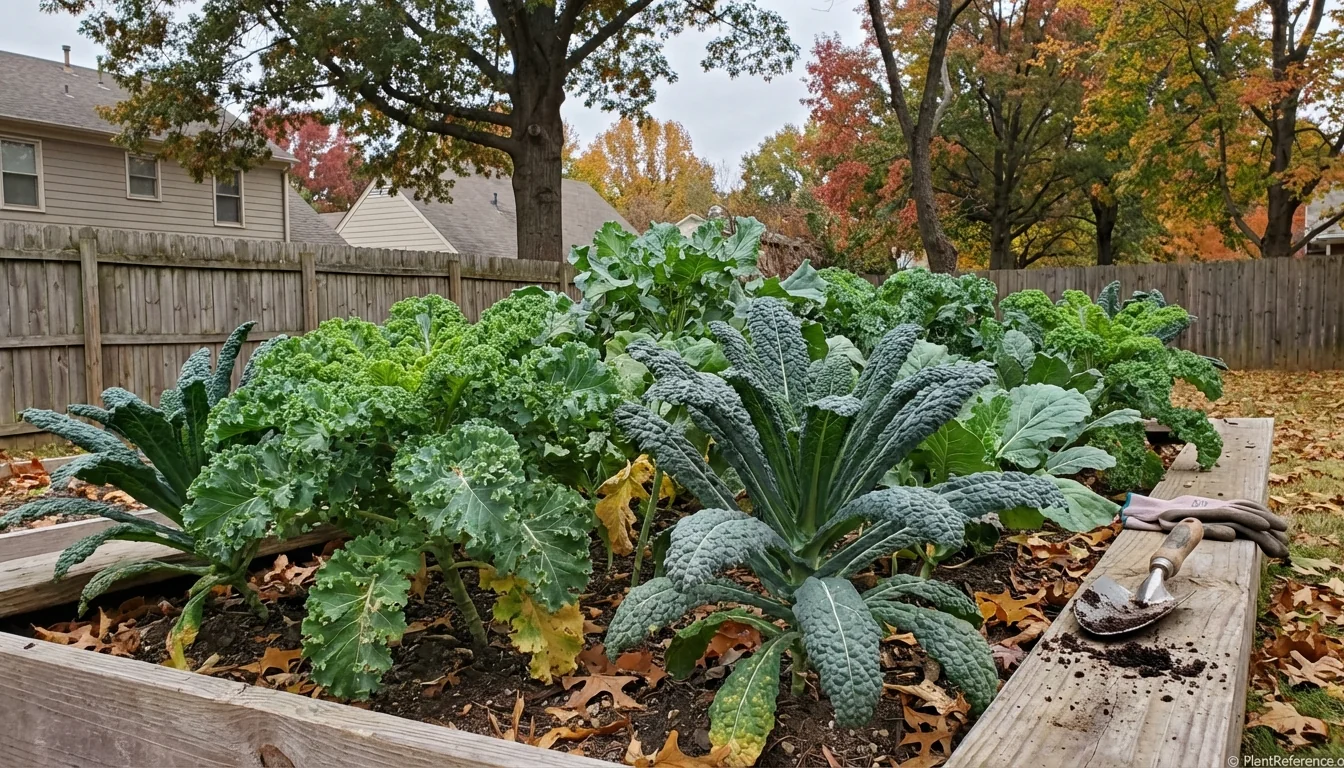
— Image © Plant Reference 2026
Growing kale in Memphis means working with Tennessee's Zone 7b climate where hot, humid summers create challenges but excellent fall and winter conditions reward patient gardeners. After forty years of growing vegetables in the Mid-South, I've learned that timing is everything with cool-season crops like kale.
Best Kale Varieties for Memphis's Zone 7b Climate
Memphis gardeners have excellent kale-growing potential, but success depends on choosing the right varieties for our climate. Zone 7b's 210-day growing season from April 4 to October 31 provides two distinct planting windows, though fall crops consistently outperform spring plantings due to our notorious summer heat.
The key to Memphis kale success lies in understanding that while we can grow kale year-round with proper timing, our humid summers above 85°F (29°C) cause rapid bolting and bitter leaves. Fall-planted kale, however, develops exceptional sweetness after our first frost and can produce through winter with minimal protection.
Variety | Days to Maturity | Best For Memphis | Notes for Zone 7b |
|---|---|---|---|
60-75 days | Fall/winter harvest | Extremely cold hardy, overwinters easily | |
50-60 days | Spring quick harvest | Fast-maturing, bolt-resistant in heat | |
60-75 days | Fall planting preferred | Heat tolerant but summer bolting likely | |
60-75 days | Ornamental fall crop | Beautiful purple color intensifies with cold | |
55-65 days | Compact spaces | Dwarf variety, slow to bolt |
🌿Brassica oleracea 'Winterbor' stands as the champion for Memphis fall planting. This curly variety withstands our occasional winter lows near 15°F (-9°C) and actually improves in flavor after frost exposure. The deeply ruffled leaves hold up well to our winter rains and provide continuous harvest through March.
🌿Brassica oleracea 'Red Russian' offers the fastest path to harvest for spring plantings. At just 50-60 days to maturity, you can direct sow in late February and harvest by early May before summer heat triggers bolting. The flat, oak-shaped leaves with purple stems are tender enough for raw salads when harvested young.
🌿Brassica oleracea 'Lacinato', also called Dinosaur kale, provides the best flavor profile with its nutty, slightly sweet taste. While it can handle Memphis springs, I recommend fall planting for this variety since the textured leaves develop superior tenderness and sweetness after cold exposure.
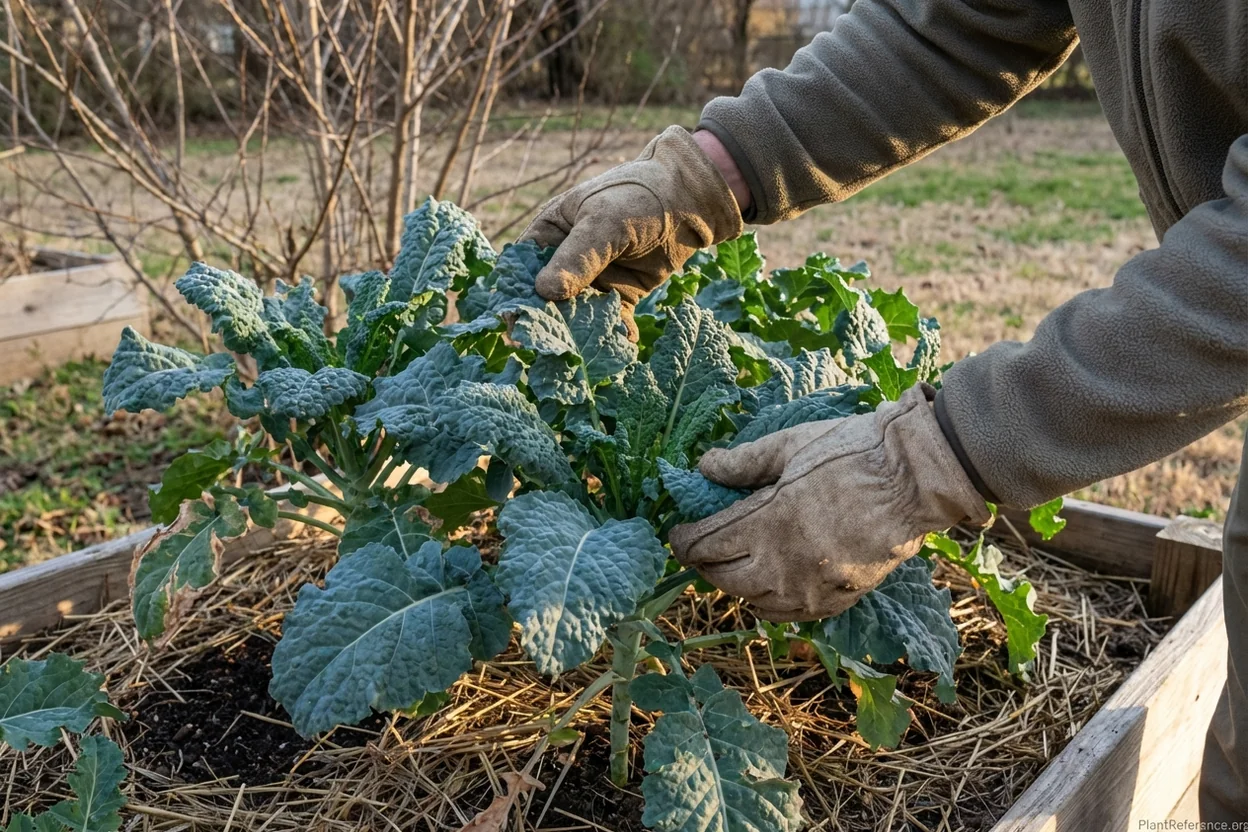
For Memphis container gardeners dealing with limited space, 🌿Brassica oleracea 'Vates' provides excellent production in a compact 12-16 inch frame. This dwarf variety resists our spring temperature fluctuations better than taller types and fits perfectly in patio containers or small raised beds.
🌿Brassica oleracea 'Redbor' deserves special mention for Memphis landscapes. Beyond its culinary value, this variety serves double duty as an ornamental plant. The magenta-purple leaves intensify in color during our cool fall weather, creating stunning landscape contrast while providing continuous harvests.
Specific Planting Dates for Memphis
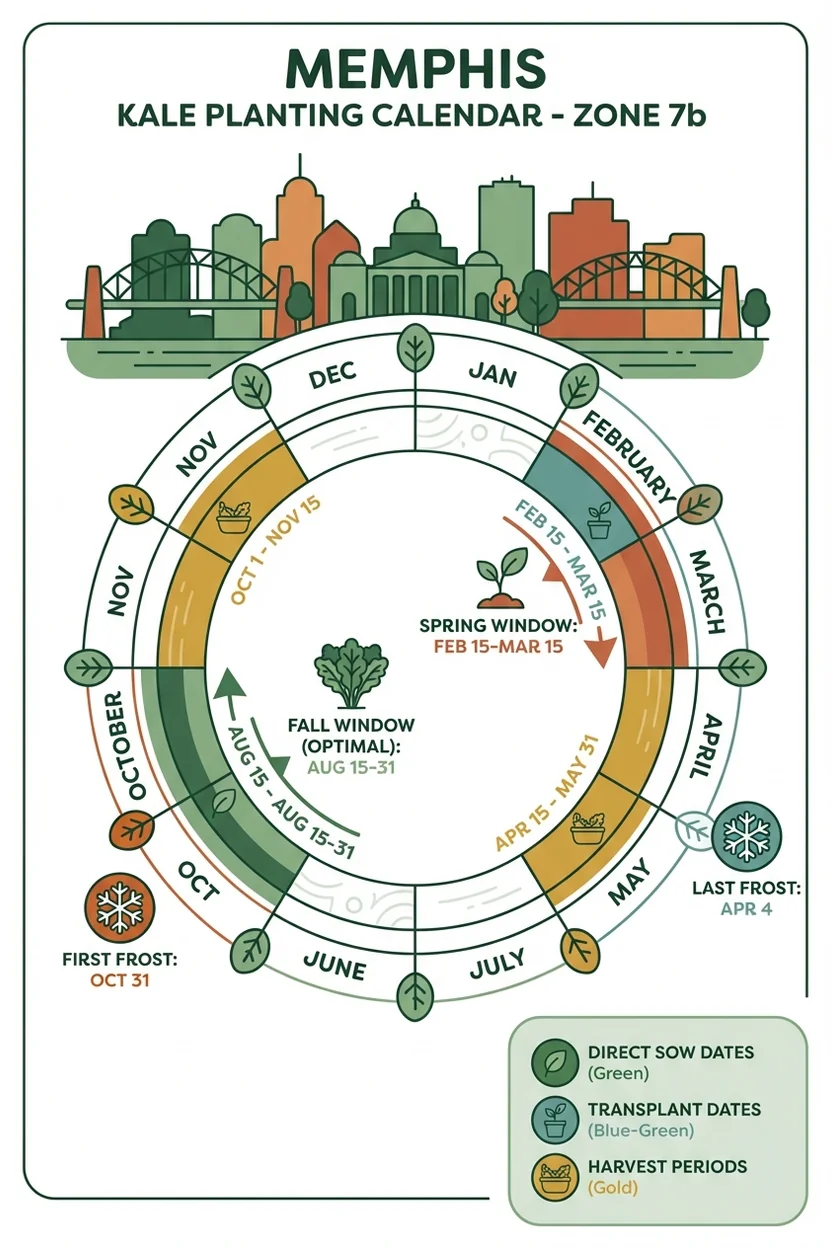
Memphis kale success depends on precise timing that works with our Zone 7b climate patterns. Our growing season spans 210 days from April 4 (last frost) to October 31 (first frost), but kale's cool-season nature means we focus on the shoulder seasons when temperatures stay below 80°F (27°C) consistently.
Fall Planting Schedule (Recommended Primary Season):
Direct sow seeds: August 15-31 Transplant seedlings: August 1-15 (started indoors July 1-15) Mature harvest begins: October 15-November 1 Peak harvest period: November through February Final spring harvest: March 15-30
Fall planting provides the superior Memphis kale experience. Seeds sown August 15-31 establish strong root systems during September's moderating temperatures, reaching mature size by mid-October. The real magic happens after our first frost, typically occurring October 31, when the plants convert stored starches to sugars, creating the sweet, tender leaves that make kale a gourmet crop rather than livestock fodder.
Spring Planting Schedule (Secondary Season):
Indoor seed starting: January 15-February 1 Direct sow outdoors: February 15-March 15 Transplant outdoors: March 1-15 First harvest: April 1-15 Final harvest before bolting: May 15-30
Spring kale in Memphis requires careful attention to our rapidly warming weather. Plants started too late will bolt during May's temperature spikes, while those started too early risk damage from late February cold snaps. The narrow window demands vigilance, but spring kale provides fresh greens when little else is available in the garden.
Succession Planting for Continuous Harvest:
For extended harvests, plant new rows every 3-4 weeks during each season's window. Fall succession works particularly well:
First planting: August 1 (🌿Brassica oleracea 'Red Russian' for quick harvest)
Second planting: August 15 (🌿Brassica oleracea 'Winterbor' for winter crop)
Third planting: August 31 (🌿Brassica oleracea 'Lacinato' for late winter)
This staggered approach provides continuous harvest from October through April, with peak production during Memphis's mild winter months when fresh vegetables are most appreciated.
Complete Growing Guide for Memphis
Memphis kale cultivation requires attention to our specific soil, climate, and seasonal patterns. Zone 7b presents unique opportunities and challenges that differ significantly from both northern and deep southern growing conditions.
Soil Preparation for Memphis Clay:
Memphis sits on river-deposited soil that's often heavy clay with poor drainage—kale's greatest enemy. Our area's typical soil pH runs 6.0-6.5, which works well for kale, but the drainage issues require amendment.
I always recommend raised beds for Memphis kale, minimum 8 inches high to ensure proper drainage during our heavy winter rains. Mix native soil with equal parts compost and coarse sand or perlite. This creates the well-draining, fertile medium kale demands while maintaining enough water retention for our hot, dry spells.
Before planting, incorporate 2-3 inches of aged compost or well-rotted manure. Kale is a heavy nitrogen feeder, and Memphis's long growing seasons can quickly deplete soil nutrients. A balanced organic fertilizer (10-10-10) applied at planting provides essential nutrients for establishment.
Seeding and Transplanting Techniques:
Direct seeding works excellently in Memphis during both planting windows. Sow seeds ¼ inch deep, spacing them 6 inches apart in rows 12-18 inches apart. Memphis's moderate rainfall usually provides adequate moisture for germination, but be prepared to water during dry spells.
For transplants, start seeds indoors 4-6 weeks before transplanting dates. Memphis gardeners benefit from transplants during the challenging spring window since they establish faster than direct-seeded plants, reducing exposure to late cold snaps or early heat waves.
Direct sow: ¼ inch deep, 6-inch spacing
Transplant depth: Same level as in containers
Row spacing: 12-18 inches for air circulation
Thin seedlings to 12-inch final spacing for full-size plants
Apply row covers if late frost threatens spring plantings
Watering Management Through Memphis Seasons:
Memphis receives approximately 54 inches of rainfall annually, concentrated in spring and early summer. This pattern works well for fall kale but creates challenges for spring plantings that may face drought during critical establishment periods.
Fall-planted kale typically receives adequate natural rainfall, but monitor soil moisture during October dry spells. Spring plantings require more attention, particularly during March and April when rainfall becomes less predictable.
Consistent soil moisture prevents stress that triggers premature bolting. Apply 1-2 inches weekly through drip irrigation or soaker hoses to keep roots consistently moist but not waterlogged. Memphis clay soil retains moisture well once properly amended but can become brick-hard if allowed to dry completely.
Fertilization Schedule for Extended Harvests:
Memphis's long growing seasons and continuous harvest nature of kale require ongoing nutrition. Apply balanced organic fertilizer at planting, then side-dress with compost or aged manure every 6-8 weeks during active growth periods.
Fall plantings benefit from additional feeding in late February to support spring growth spurts. Avoid high-nitrogen fertilizers after mid-March for fall plantings, as this can reduce cold hardiness and make plants more susceptible to our occasional late freezes.
Troubleshooting Memphis-Specific Problems
Memphis kale growers face particular challenges related to our humid subtropical climate, heavy clay soils, and specific pest pressures that differ from other regions.
Summer Bolting Prevention:
The greatest challenge for Memphis kale comes from our rapid spring-to-summer temperature transition. Temperatures can jump from comfortable 70°F (21°C) to stressful 85°F+ (29°C) in just days during May, triggering immediate bolting in unprepared plants.
For spring plantings, monitor weather forecasts closely starting in mid-April. When daytime temperatures consistently reach 75°F (24°C), prepare to harvest heavily and consider the crop's end near. Row covers or shade cloth can extend harvest by 1-2 weeks, but Memphis summers eventually defeat all cool-season crops except in heavily shaded areas.
Fall plantings avoid this issue entirely, which is why I always recommend focusing efforts on the August-through-winter growing season.
Managing Memphis Pest Pressures:
Harlequin Bugs: These distinctive black-and-orange stink bugs can devastate Memphis kale crops, particularly during spring when they emerge from winter hiding spots. They're more problematic here than in northern climates due to our mild winters allowing larger overwintering populations.
Hand-picking remains the most effective control since these bugs resist most organic sprays. Check plants weekly starting in March, removing adults before they lay eggs. Trap crops like cleome or radishes planted nearby can draw them away from kale.
Cabbage Loopers: These green caterpillars become particularly problematic during Memphis's extended growing seasons. Unlike northern gardens where cold winters break pest cycles, our mild conditions allow multiple generations.
Bt spray (Bacillus thuringiensis) applied every 2 weeks during active growth provides excellent control without harming beneficial insects. Time applications for late afternoon to avoid affecting pollinators.
Aphid Management: Memphis's humid springs create ideal aphid breeding conditions. These small, soft-bodied insects cluster on new growth, causing leaf curling and general plant stress.
Encourage beneficial insects by maintaining diverse plantings around kale beds. Native Tennessee plants like yarrow, dill, and fennel attract parasitic wasps that control aphid populations naturally. Strong water sprays dislodge aphids effectively during morning garden maintenance.
Disease Prevention in Humid Conditions:
Memphis's high humidity creates conditions favorable for fungal diseases, particularly during spring when cool temperatures combine with high moisture.
Proper spacing becomes critical—allow full 12-inch spacing between mature plants to ensure air circulation. Avoid overhead watering, especially during cool, humid periods. Drip irrigation or soaker hoses keep foliage dry while maintaining soil moisture.
Crop rotation helps prevent soil-borne diseases from building up. Avoid planting brassicas in the same location more than once every three years. Follow kale with completely unrelated crops like beans, squash, or corn.
Harvest & Storage
Memphis kale harvests span longer seasons than most regions, making proper harvesting and storage techniques essential for maximizing your crop's value. Our Zone 7b climate allows for extended fresh harvests combined with various preservation methods for year-round kale availability.
Optimal Harvest Timing:
Fall-planted kale reaches prime harvest condition 10-12 weeks after seeding, typically beginning in late October. However, the real prize comes after our first frost around October 31, when starches convert to sugars, creating the sweet, tender leaves that justify the wait.
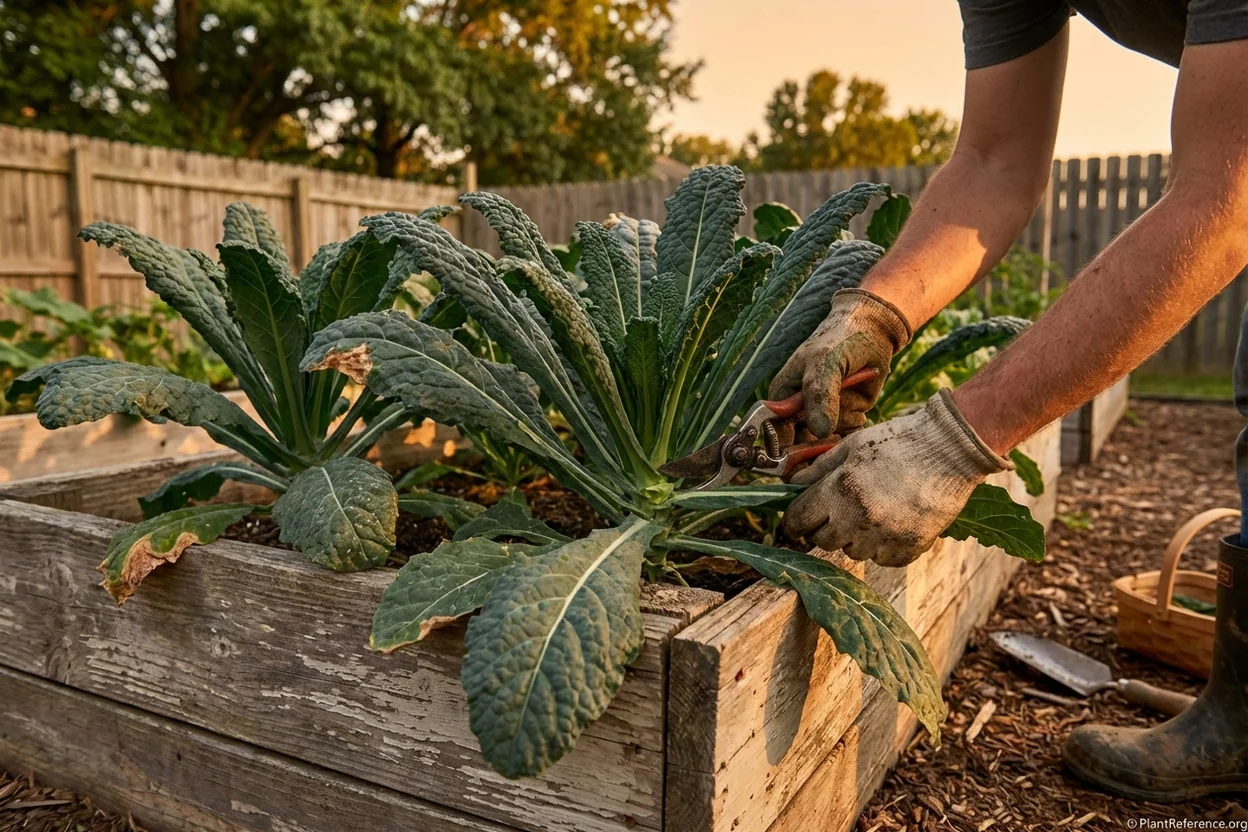
Harvest outer leaves when they reach 6-8 inches long, leaving the central growing point intact for continuous production. Memphis fall plantings can produce continuously through winter, with harvest extending into April before plants bolt during late spring warming.
Cut-and-Come-Again Method:
Memphis's extended seasons make the cut-and-come-again harvesting method particularly valuable. Remove 3-4 outer leaves weekly, cutting stems cleanly with sharp shears about 1 inch from the main stem. This technique allows single plants to produce for 4-6 months.
Never harvest more than one-third of the plant at once. Memphis kale continues growing throughout mild winter periods, and maintaining adequate leaf area ensures continued photosynthesis and root system health.
Storage Methods for Memphis Climate:
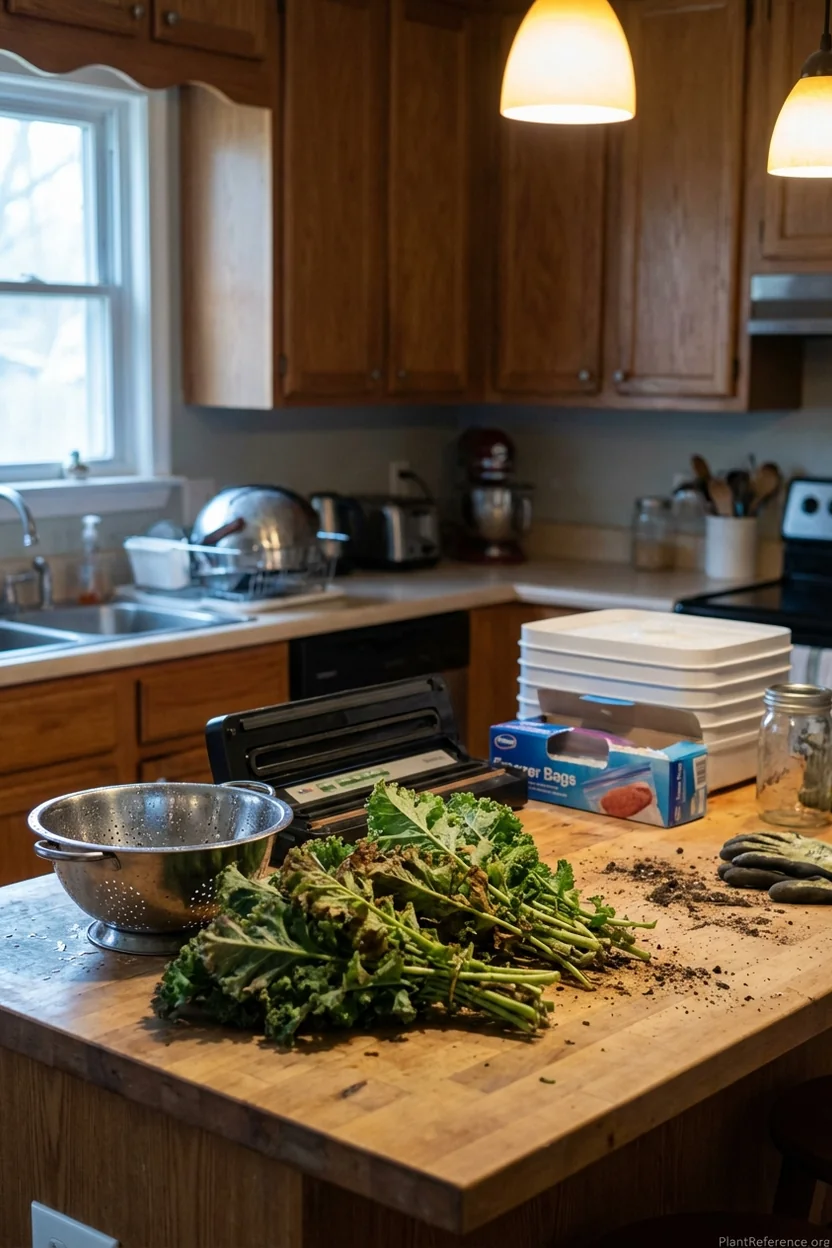
Fresh Storage: Memphis's moderate humidity helps fresh kale keep well when properly stored. Wash leaves thoroughly, dry completely, and store in perforated plastic bags in the refrigerator. Properly stored Memphis kale stays fresh 7-10 days.
Freezing: Blanch leaves in boiling water for 2-3 minutes, plunge into ice water, drain thoroughly, and freeze in portions. Memphis gardeners often freeze peak winter harvests for summer use when fresh kale isn't available.
Dehydration: Our humid climate makes indoor dehydration preferable to air-drying. Dehydrated kale makes excellent chips or powder for smoothies, preserving the nutritional density Memphis gardeners prize.
Frequently Asked Questions
Reading about plants and recognising them are different skills. These three build the second.
- Daily PlantIdentify the day’s mystery plant from a close-up photograph.
- Keyed OutWork a dichotomous key, lead by lead, to name a hidden specimen.
- Name That PlantName a specimen from botanical clues dealt hardest first.
Free to play, no account needed
Marcus manages the grounds at a historic property in Memphis and runs a side business doing residential garden design. He grew up helping his grandfather maintain a large vegetable garden in the Mississippi Delta and carried that knowledge into formal training—he has a degree in landscape technology. Memphis sits in a sweet spot for growing: long warm seasons, decent rainfall, and mild enough winters that many marginally hardy plants survive. Marcus writes about Southern gardening traditions, ornamental garden design, and dealing with the humidity and heavy rainfall that define the Mid-South climate.