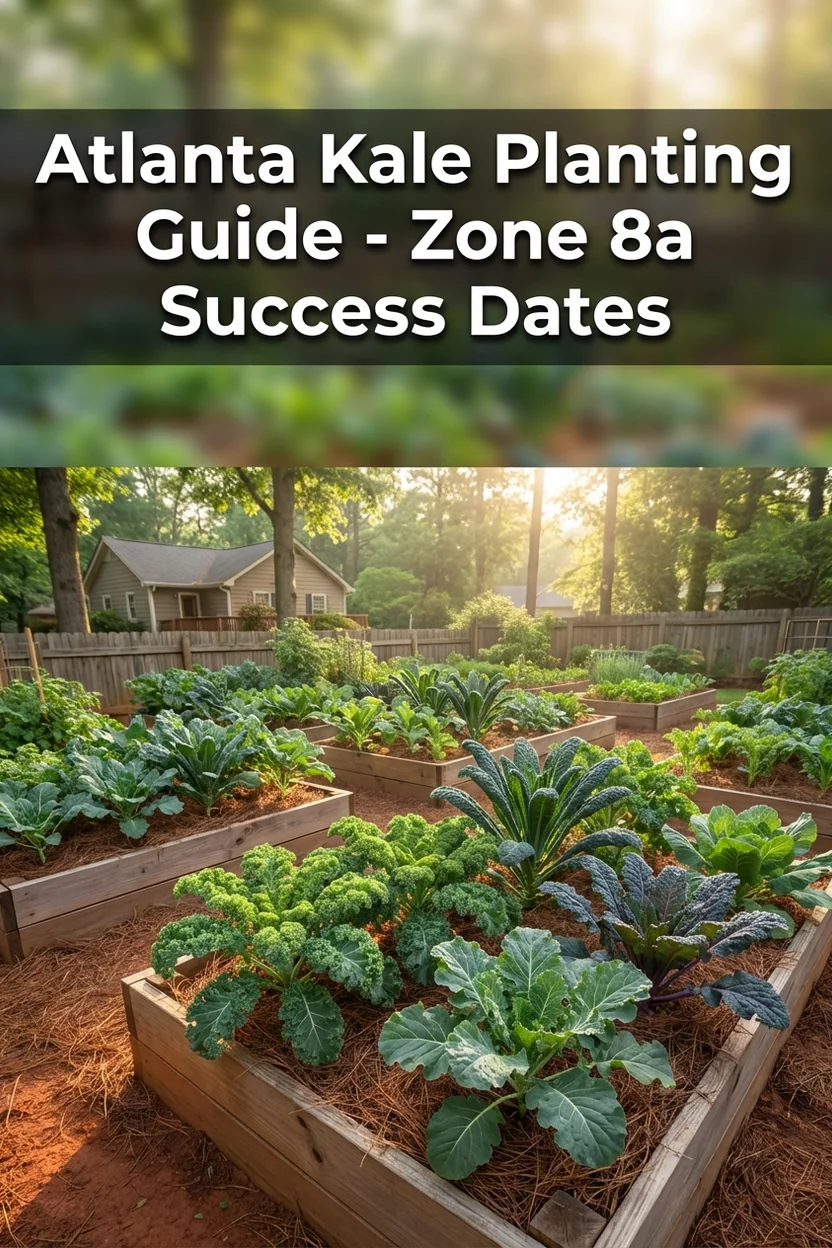
When to Plant Kale in Atlanta: Complete Guide + Best Varieties for Zone 8a
Pets & Toxicity
Recorded toxicity for plants linked in this guide. An unknown status is not a safety assessment.
No linked plant is recorded as toxicDetailsHide
Brassica oleracea 'Red Russian' — Toxicity
Non-toxicView Brassica oleracea 'Red Russian' plant profileBrassica oleracea var. sabellica 'Vates' — Toxicity
Non-toxicView Brassica oleracea var. sabellica 'Vates' plant profile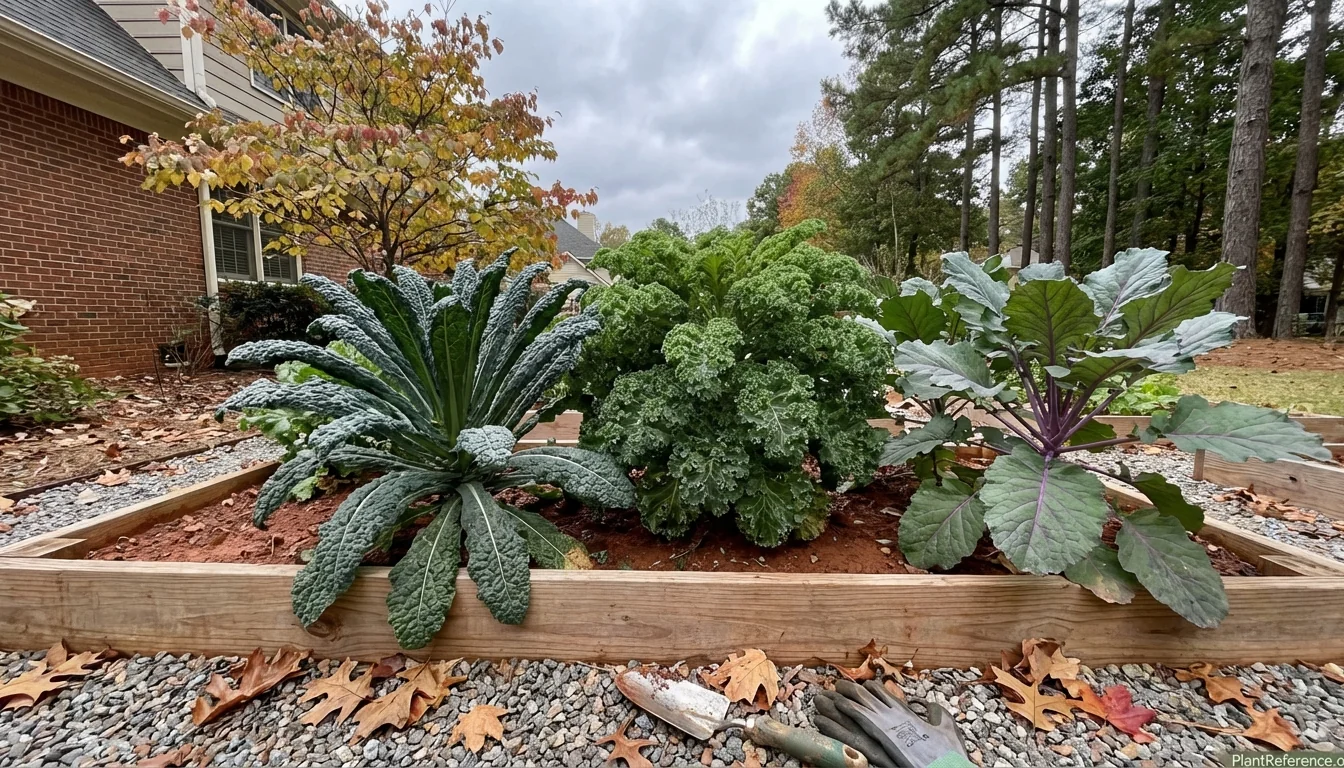
— Image © Plant Reference 2026
I've been growing kale in Georgia for forty years, and I'll tell you what works in Atlanta: timing is everything. Plant it wrong, and you'll get bitter, tough leaves that bolt to seed faster than kudzu climbs a telephone pole. Plant it right, and you'll harvest sweet, tender greens all winter long.
Atlanta's Zone 8a climate gives us a 230-day growing season from March 24 to November 9, making it ideal for kale production. The key is understanding that kale thrives in cool weather and actually gets sweeter after frost. While you can grow spring kale, your fall crop will be superior in both flavor and pest resistance.
Best Kale Varieties for Atlanta's Climate
Choosing the right variety for Atlanta means selecting cultivars that can handle our hot, humid summers or bolt-resistant types for cool-season growing. After decades of trial and error in Georgia gardens, these five varieties consistently perform well in Zone 8a conditions.
Variety | Days to Maturity | Best For | Notes for Atlanta |
|---|---|---|---|
60-75 days | Heat tolerance | Best choice for spring planting; resists bolting longer than curly types | |
50-60 days | Quick harvest | Fastest maturing; ideal for succession planting and baby greens | |
60-75 days | Fall/winter harvest | Extremely cold hardy; survives Atlanta winters with minimal protection | |
60-75 days | Ornamental value | Purple foliage intensifies with cold; excellent for winter interest | |
55-65 days | Container growing | Compact growth perfect for small Atlanta yards and urban gardens |
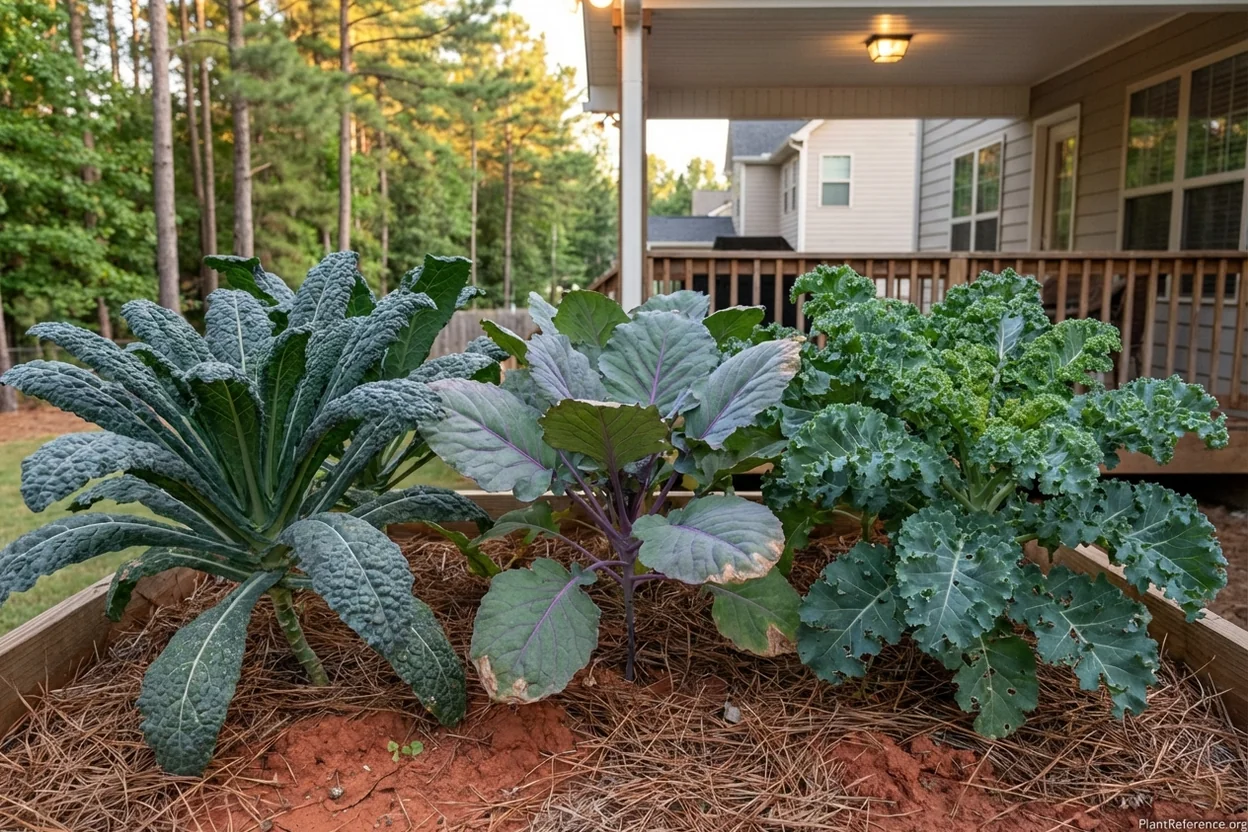
Lacinato: The Heat Champion
🌿Brassica oleracea 'Lacinato' (lah-sin-AH-toh) stands as your best choice for Atlanta's challenging spring growing conditions. This Tuscan heirloom produces flat, dark blue-green leaves with a distinctive pebbled texture that resists the sharp bitterness common in curly types during warm weather.
Unlike curly kales that bolt rapidly when temperatures hit 80°F (27°C), Lacinato often continues producing into early summer. The thick, waxy leaves hold up better to our humid conditions and require less frequent watering during dry spells. For spring planting in Atlanta, this variety consistently outperforms others when summer heat arrives earlier than expected.
Red Russian: The Quick Producer
🌿Brassica oleracea 'Red Russian' delivers your fastest harvest at just 50-60 days from seed. The flat, oak-shaped leaves with purple stems and veins provide excellent flavor for fresh eating, making this variety perfect for Atlanta gardeners who want quick results or succession plantings every 2-3 weeks.
This variety works particularly well for baby greens, allowing harvest of tender leaves at just 30-40 days. However, Red Russian shows less heat tolerance than Lacinato, making it better suited for fall planting when it can mature during cooling temperatures.
Specific Planting Dates for Atlanta
Atlanta's planting schedule revolves around our average last frost date of March 24 and first frost date of November 9. These dates give us two distinct growing windows that require different strategies and expectations.
Fall Planting (Primary Season): August 15 - September 1
Fall planting produces superior kale in Atlanta. Start seeds during the hottest part of summer to have mature plants ready when temperatures moderate in October and November.
Direct Sowing Schedule:
August 15-20: Best window for full-size plants before first frost
August 25-30: Still excellent, plants will be slightly smaller but fully productive
September 1-5: Last chance for full maturity, may need protection for young plants during heat
Why Fall is Superior: Fall kale benefits from decreasing day length and cooling temperatures that prevent bolting. When our first frost hits around November 9, the plants actually improve in flavor as natural sugars concentrate in the leaves. Unlike spring crops that face increasing heat and day length, fall kale moves into ideal growing conditions.
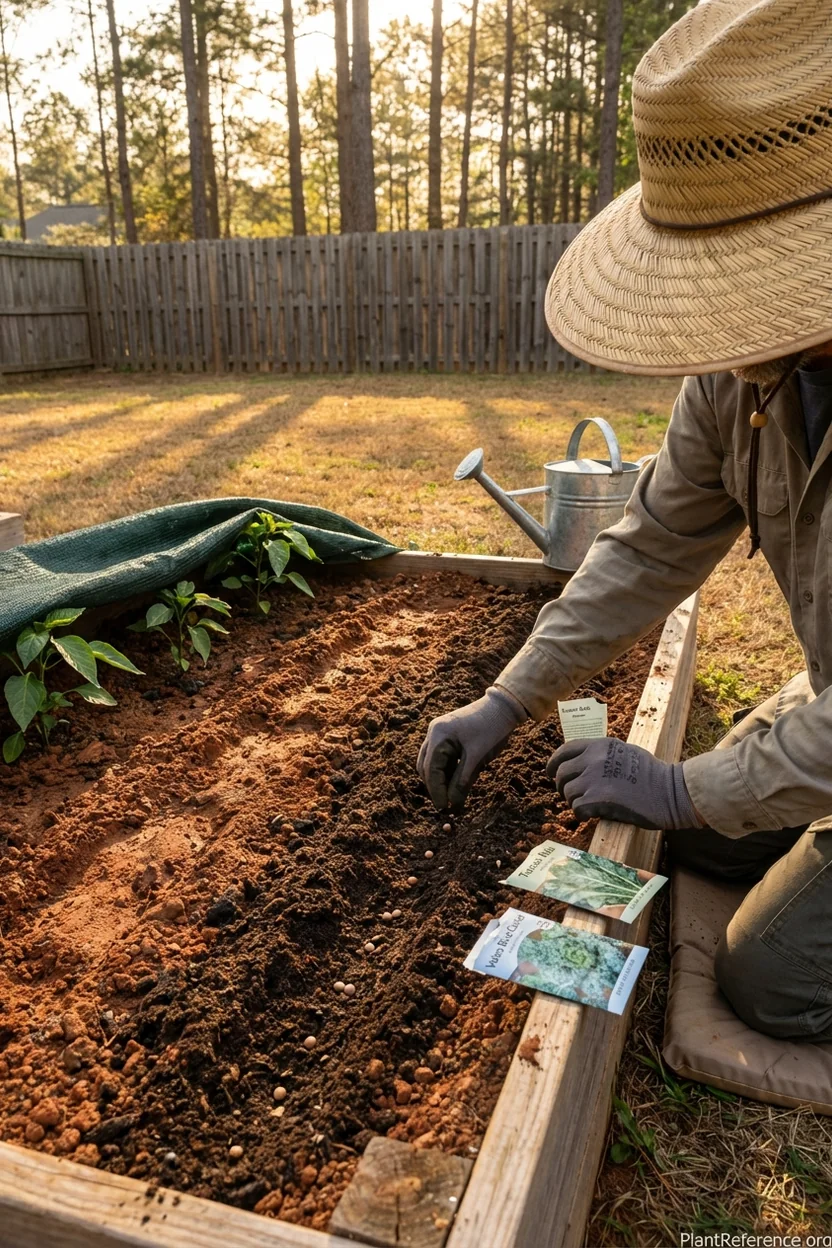
Spring Planting (Secondary Season): February 15 - March 15
Spring planting works in Atlanta but requires more attention and accepts a shorter harvest window. The goal is establishing plants before last frost (March 24) and harvesting before summer heat triggers bolting.
Direct Sowing Schedule:
February 15-25: Start indoors or use cold frames, transplant after soil warms
March 1-10: Direct sow with row cover protection against late cold snaps
March 15: Last recommended planting date to avoid summer bolting
Spring Harvest Timeline: Plants seeded March 1 will be ready for first harvest around May 1, giving you 4-6 weeks of prime picking before heat stress begins. By mid-June, most varieties will show signs of bolting unless we have an unusually cool spring.
Succession Planting Strategy
For continuous harvest, plant new rows every 2-3 weeks during your chosen season. Fall succession works better in Atlanta:
August 15: First planting
September 1: Second planting
September 15: Final planting (may need protection for winter harvest)
This staggered approach provides fresh, tender leaves from October through March in most years.
Complete Growing Guide for Atlanta
Growing exceptional kale in Atlanta requires understanding our specific soil, climate, and seasonal challenges. Success depends on working with our red clay soil, managing summer heat and humidity, and taking advantage of our mild winters.
Soil Preparation for Atlanta Conditions
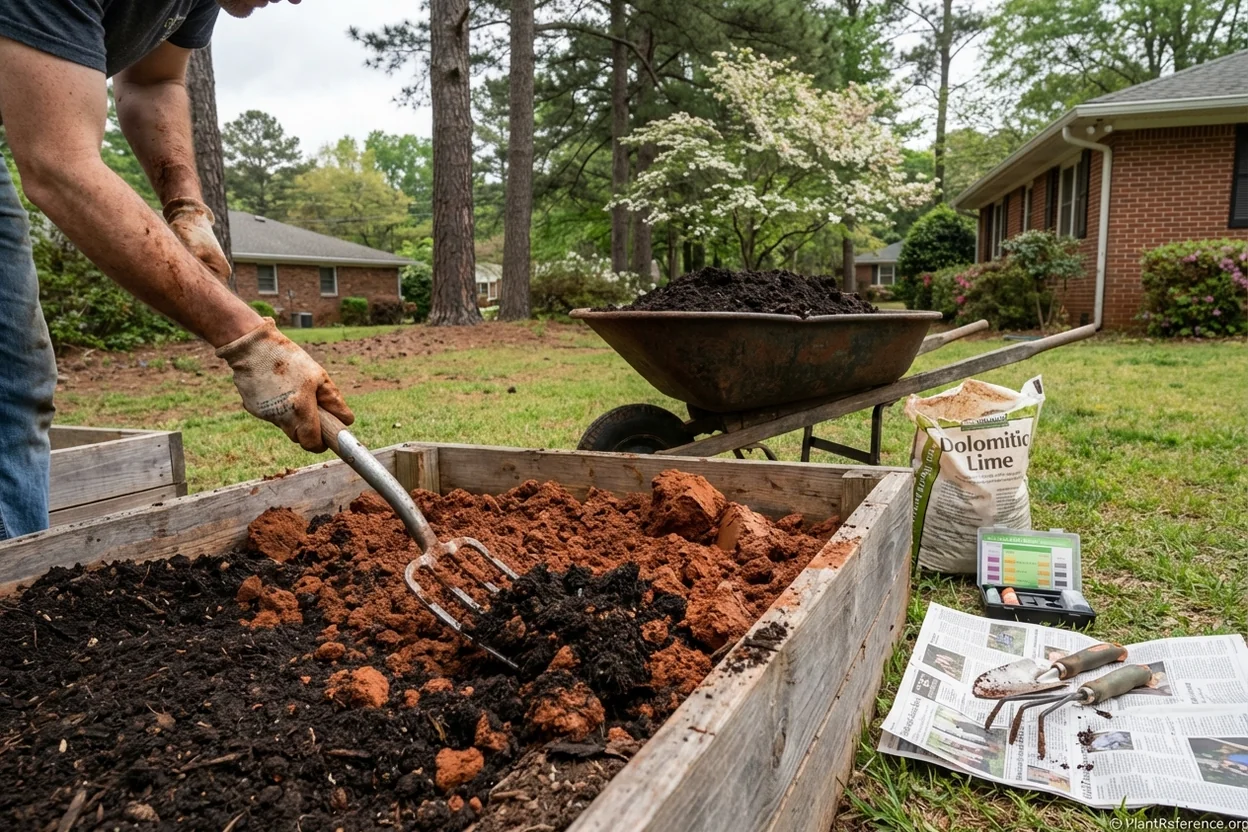
Atlanta's infamous red clay soil poses the biggest challenge for kale production. This heavy, compacted soil drains poorly during our wet winters and becomes rock-hard during summer droughts. Proper soil preparation makes the difference between success and failure.
Clay Soil Amendment Protocol: Add 3-4 inches (8-10 cm) of compost to your planting area and work it into the top 8-10 inches (20-25 cm) of soil. Don't just till clay—this creates a "bathtub effect" where water pools above the clay layer. Instead, create raised beds 6-8 inches (15-20 cm) high using the amended soil mixture.
pH Management: Most Atlanta soils test acidic (pH 5.5-6.0) due to our high rainfall and pine needle decomposition. Kale prefers pH 6.0-7.0, so add agricultural lime 4-6 weeks before planting. Test your soil—many DeKalb and Fulton County areas need 2-3 pounds of lime per 100 square feet (0.9-1.4 kg per 9.3 square meters).
Drainage Solutions: If raised beds aren't possible, create drainage by working coarse sand (not fine sand) and aged compost into planting areas. Pine bark fines, readily available in Atlanta, also improve drainage when mixed with clay soil. Avoid planting in areas where water stands after rain.
Planting Techniques for Atlanta Success
Direct Sowing Method (Recommended): Plant seeds ½ inch (1.3 cm) deep in rows 18 inches (45 cm) apart. In Atlanta's dense clay, create shallow furrows and backfill with compost mixture rather than straight clay. Seeds germinate better in the loose, organic matter.
Space plants 12 inches (30 cm) apart after thinning. Closer spacing works in cooler climates, but Atlanta's humidity requires good air circulation to prevent fungal issues. Use thinned seedlings in salads—they're tender and flavorful.
Transplant Method: Start seeds indoors 4-6 weeks before intended planting date. Use quality potting mix, not garden soil, for seed starting. Atlanta gardeners often have better success with transplants during challenging spring or late summer planting windows when direct sowing faces weather extremes.
Harden off transplants gradually over 7-10 days. Our temperature swings between day and night can shock plants moved directly from indoor conditions to outdoor growing.
Watering Strategy for Georgia Climate
Atlanta receives 50 inches (127 cm) of annual rainfall, but distribution varies dramatically. Summer droughts stress plants while winter and spring often bring too much water. Develop a flexible watering approach.
Summer Watering (Critical for August plantings): Newly planted fall kale needs consistent moisture during August heat. Water deeply twice per week rather than daily light watering. Soaker hoses work better than overhead sprinklers, which promote fungal diseases in our humid climate.
Apply 2-3 inches (5-8 cm) of mulch around plants but keep it 2 inches (5 cm) away from stems. Pine straw, abundant in Atlanta, makes excellent mulch that slowly decomposes and acidifies soil naturally.
Winter Considerations: Reduce watering frequency as temperatures drop and rainfall increases. Overwatering during cool, wet periods causes root rot in clay soils. Check soil moisture by inserting your finger 2 inches (5 cm) deep—water only when dry at this depth.
Fertilizing Schedule
Kale is a heavy nitrogen feeder requiring consistent nutrition for tender leaf production. In Atlanta's leached soils, regular feeding becomes essential.
Initial Feeding: Work 2-3 inches (5-8 cm) of aged compost or well-aged cow manure into beds before planting. This provides slow-release nutrition and improves soil structure.
Growing Season Protocol: Side-dress with balanced organic fertilizer (5-5-5) or compost every 4-6 weeks. For faster results, apply liquid fish emulsion every 2 weeks during active growth periods. Avoid high-nitrogen synthetic fertilizers, which create succulent growth attractive to aphids.
Fall-Planted Crop Feeding: Feed heavily during establishment (August-September) but reduce nitrogen as temperatures drop. Excess nitrogen in fall creates tender growth susceptible to cold damage. Switch to potassium-rich fertilizer (wood ash or organic potassium sulfate) in October to improve cold tolerance.
Troubleshooting Atlanta-Specific Problems
Atlanta's hot, humid climate creates unique challenges for kale production. Understanding these regional issues helps prevent problems before they start and provides solutions when problems arise.
Summer Heat Stress
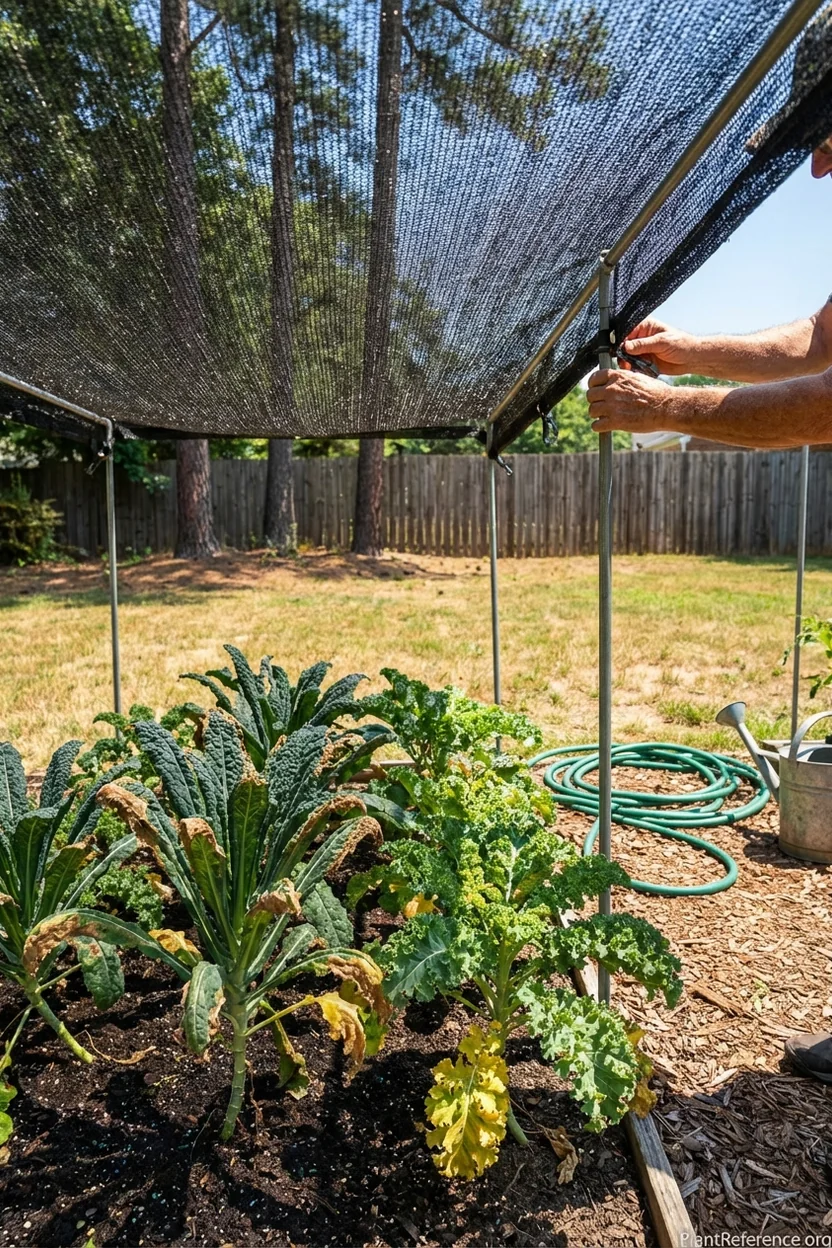
Problem: Spring-planted kale becomes bitter and tough when temperatures consistently exceed 80°F (27°C). Leaves may develop brown edges, and plants bolt (flower) prematurely.
Solutions:
Provide afternoon shade using shade cloth (30-50% reduction) during peak summer
Harvest leaves when young and tender rather than letting them mature
Switch to baby leaf harvest, cutting plants back to 4 inches (10 cm) for regrowth
Plant heat-tolerant varieties like Lacinato for spring crops
Focus energy on fall plantings that avoid summer stress entirely
Clay Soil Drainage Issues
Problem: Standing water after Atlanta's frequent thunderstorms causes root rot and yellowing plants. Clay soil stays soggy for days, suffocating roots and promoting fungal diseases.
Solutions:
Build raised beds 8-12 inches (20-30 cm) high with amended soil
Create drainage channels around growing areas to direct runoff
Add coarse organic matter (pine bark fines, aged wood chips) to improve soil structure
Plant in areas with natural slope or elevation
Consider container growing if drainage problems persist
Pest Pressure in Humid Conditions
Atlanta's humidity and mild temperatures create ideal conditions for several kale pests. Early identification and treatment prevent minor issues from becoming crop failures.
Cabbage Aphids: Gray-green insects that cluster on leaf undersides, causing curled, yellowing leaves. More common on spring plantings when beneficial insects are less active.
Control: Blast with strong water spray weekly. Apply insecticidal soap every 5-7 days if infestation persists. Encourage beneficial insects with diverse plantings.
Cabbage Loopers: Green caterpillars that arch their backs when moving. They chew large holes in leaves and can defoliate plants rapidly during warm weather.
Control: Apply Bacillus thuringiensis (Bt) spray weekly during warm months. Hand-pick large caterpillars. Use row covers on young plants if population explodes.
Flea Beetles: Tiny black beetles that jump when disturbed, creating numerous small holes giving leaves a "shot-hole" appearance. Most damaging to seedlings and young plants.
Control: Protect young plants with lightweight row covers. Apply diatomaceous earth around plant bases. Remove garden debris where beetles overwinter.
Winter Protection and Harvest Extension
Problem: Sudden temperature drops below 20°F (-7°C) can damage even cold-hardy kale varieties. Atlanta's variable winter weather makes protection planning challenging.
Solutions:
Use lightweight row covers when temperatures drop below 25°F (-4°C)
Apply 4-6 inches (10-15 cm) of loose mulch around plant bases before hard freezes
Harvest heavily before predicted severe cold and store leaves in refrigerator
Choose cold-hardy varieties like Winterbor for best survival odds
Position plants in protected microclimates near south-facing walls or structures
Succession Planting Challenges
Problem: Maintaining continuous harvest through Atlanta's variable weather requires precise timing and variety selection.
Solutions:
Plant new rows every 2-3 weeks during optimal planting windows
Use fast-maturing varieties (Red Russian) for quick gaps filling
Maintain both spring and fall plantings for extended season
Keep transplant seedlings ready to replace failed direct sowings
Choose staggered varieties with different maturation dates
Harvest & Storage
Proper harvesting techniques maximize both yield and quality while storage methods extend your fresh kale supply through Atlanta's mild winter season.
Optimal Harvest Timing
Begin harvesting kale when plants reach 8-10 inches (20-25 cm) tall, typically 6-8 weeks after planting. In Atlanta, this timing varies significantly between spring and fall crops due to different growth rates during various temperature ranges.
Cut-and-Come-Again Method: Harvest outer leaves first, leaving the central growing point intact. Cut stems cleanly with sharp scissors or pruning shears, making cuts just above lower leaf nodes. This technique allows plants to continue producing for 2-3 months in optimal conditions.
Take no more than one-third of the plant's leaves at any single harvest. Atlanta's hot weather stresses plants, so conservative harvesting during warm periods helps maintain plant vigor.
Baby Leaf Harvesting: For tender salad greens, harvest entire plants when leaves reach 3-4 inches (8-10 cm) long, typically 30-40 days after planting. Cut plants 1 inch (2.5 cm) above soil level for potential regrowth, though subsequent harvests will be smaller.
Seasonal Harvest Considerations
Spring Harvest (April-June): Morning harvest provides the best leaf quality during Atlanta's warming temperatures. Leaves harvested in afternoon heat may be wilted and more bitter. Plan to complete spring harvests by mid-June when plants typically bolt.
Fall/Winter Harvest (October-March): This represents peak harvest season in Atlanta. Leaves actually improve in sweetness after our first frost, typically occurring around November 9. Cold weather slows growth but improves flavor significantly.
During mild Atlanta winters, harvest can continue almost continuously. Cover plants during temperatures below 25°F (-4°C) and resume harvesting when weather moderates.
Storage and Preservation
Fresh Storage: Wash harvested leaves in cold water and spin dry thoroughly. Store in perforated plastic bags in the refrigerator crisper drawer. Properly stored Atlanta-grown kale keeps 7-10 days, longer than store-bought due to freshness.
Freezing Methods: Blanch leaves in boiling water for 2-3 minutes, then immediately plunge into ice water. Drain thoroughly and package in freezer bags. Frozen kale works excellent in soups and smoothies, maintaining nutritional value for 8-10 months.
Dehydration: Remove thick stems and arrange leaves on dehydrator trays. Dry at 125°F (52°C) for 8-12 hours until crisp. Store in airtight containers. Dehydrated kale makes excellent seasoning powder when ground or healthy chips for snacking.
Atlanta's mild climate allows for extended fresh harvest periods, reducing the need for preservation compared to colder regions. Focus on succession planting rather than large preservation batches for best quality year-round.
Frequently Asked Questions
Reading about plants and recognising them are different skills. These three build the second.
- Daily PlantIdentify the day’s mystery plant from a close-up photograph.
- Keyed OutWork a dichotomous key, lead by lead, to name a hidden specimen.
- Name That PlantName a specimen from botanical clues dealt hardest first.
Free to play, no account needed
Grace is a community garden organizer in Atlanta who manages three neighborhood garden plots across the city. She came to gardening through food justice work—she saw how many Atlanta neighborhoods lacked access to fresh produce and decided to do something about it. Grace has a background in public health and brings that lens to everything she writes about food growing, soil safety in urban settings, and making gardens work for the communities they serve. She grows a wide range of vegetables, with a focus on crops that produce heavily in Atlanta's long growing season. Grace is practical and community-minded—she thinks about gardens as shared spaces, not just personal projects.