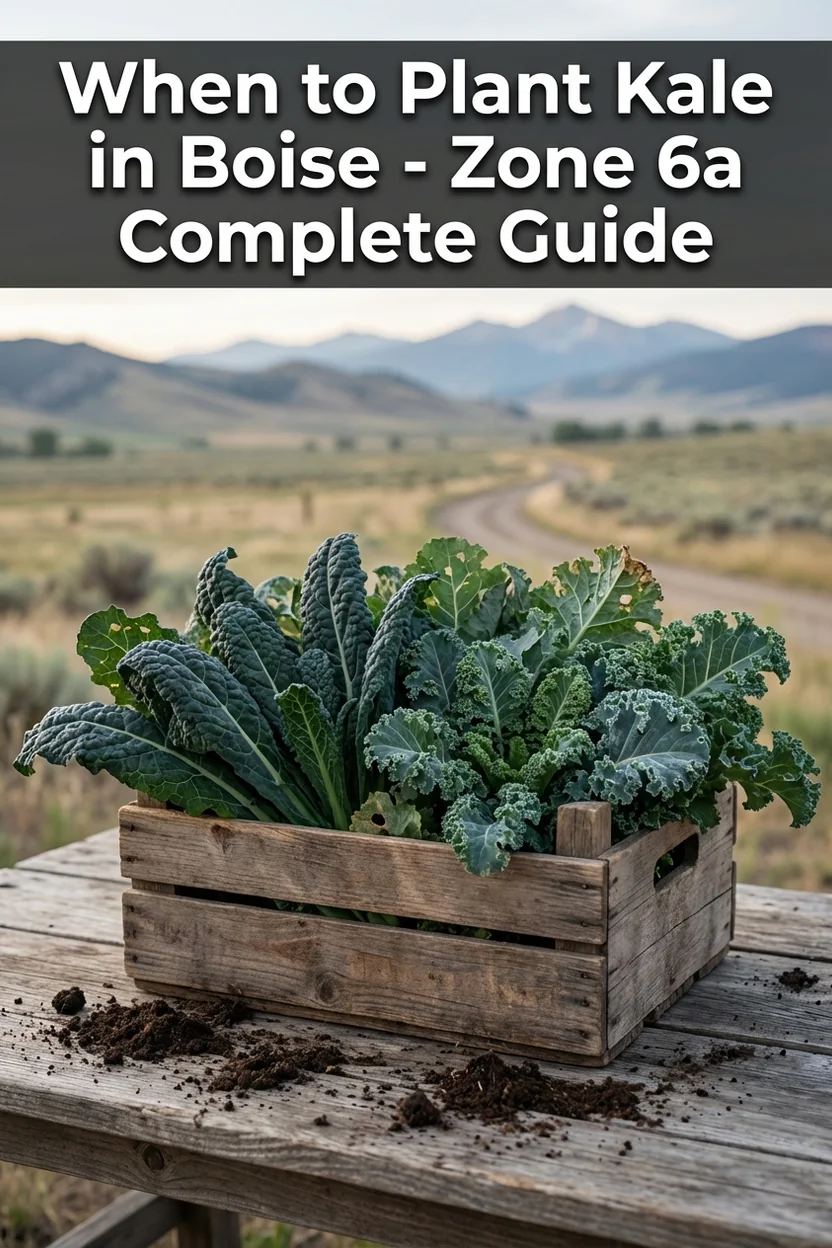
When to Plant Kale in Boise: Complete Guide + Best Varieties for Zone 6a
Pets & Toxicity
Recorded toxicity for plants linked in this guide. An unknown status is not a safety assessment.
No linked plant is recorded as toxicDetailsHide
Brassica oleracea 'Red Russian' — Toxicity
Non-toxicView Brassica oleracea 'Red Russian' plant profileBrassica oleracea var. sabellica 'Vates' — Toxicity
Non-toxicView Brassica oleracea var. sabellica 'Vates' plant profile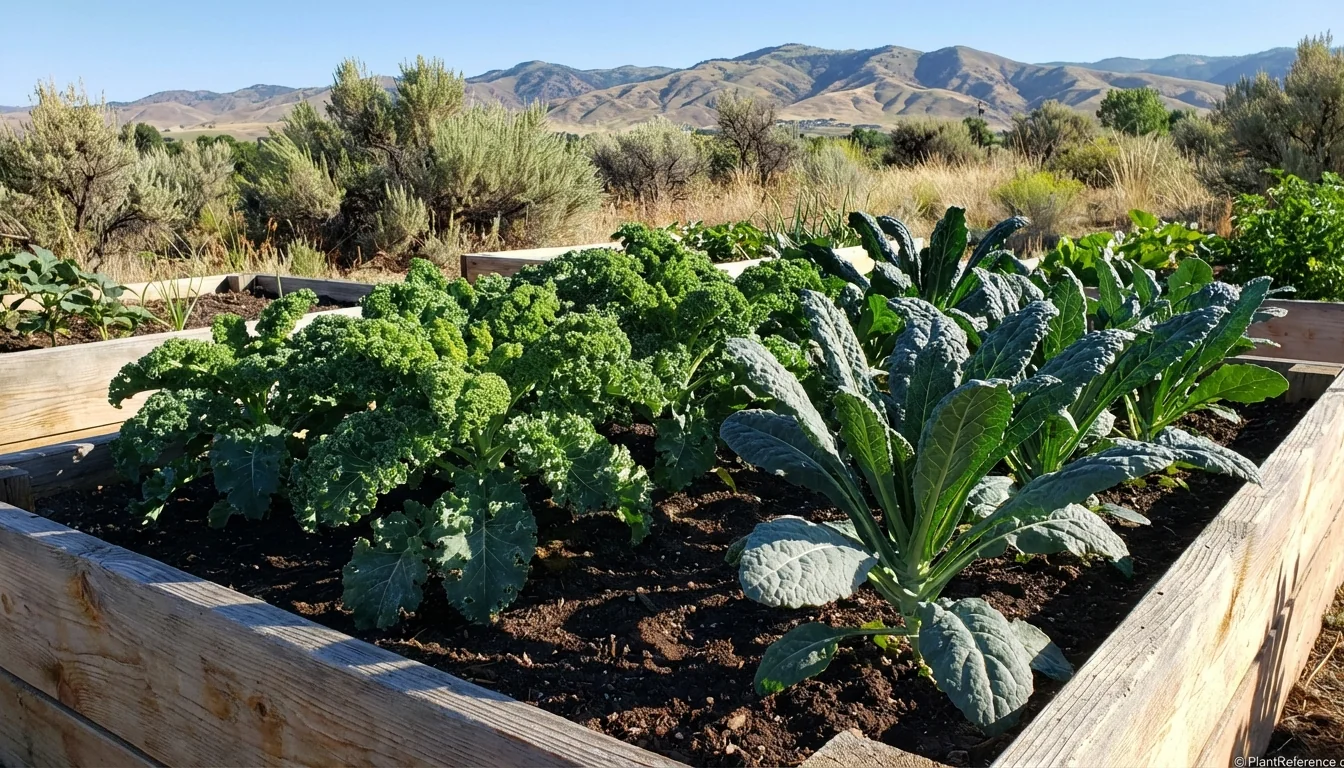
— Image © Plant Reference 2026
Boise gardeners have hit the jackpot when it comes to growing kale. With Zone 6a's moderate temperatures and 158-day growing season, you can produce some of the sweetest, most tender kale in the country. The key is timing your plantings to take advantage of Idaho's cool springs and mild falls while avoiding the intense summer heat that makes kale bitter and tough.
Best Kale Varieties for Boise's Zone 6a Climate
After forty years of growing vegetables in challenging climates, I'll tell you straight: not all kale varieties handle Boise's conditions equally. The high desert environment, with its temperature swings and intense sun, demands tough varieties that can handle both spring frost and summer heat.
Idaho's continental climate means you'll experience everything from late spring freezes to scorching July afternoons. Your kale varieties need to be ready for both. Here are the five varieties that consistently deliver in Boise gardens:
Variety | Days to Maturity | Best For | Notes for Boise |
|---|---|---|---|
60-75 days | Winter harvest | Survives Boise winters with light protection | |
60-75 days | Tender eating | Heat tolerant, resists early bolting | |
50-60 days | Quick spring crop | Fast maturity beats summer heat | |
60-75 days | Fall color display | Cold hardy, beautiful in winter garden | |
55-65 days | Compact spaces | Slow to bolt, handles temperature swings |
🌿Brassica oleracea 'Winterbor' is your insurance policy against Idaho's unpredictable weather. This F1 hybrid was bred for exactly the kind of temperature extremes Boise throws at gardeners. The deeply curled leaves shed snow beautifully, and I've seen it survive temperatures down to 5°F (-15°C) with nothing but a light row cover.
🌿Brassica oleracea 'Lacinato', also called Dinosaur kale, gives you the most tender leaves for fresh eating. The flat, savoyed leaves are easier to clean than curly types—important when Boise's spring winds blow dust onto everything. It's also your best bet for summer growing if you can provide afternoon shade.
For quick results, 🌿Brassica oleracea 'Red Russian' matures fastest and handles Boise's variable spring weather better than most. The purple-veined leaves sweeten beautifully after the first frost, usually arriving in Boise around October 9th.
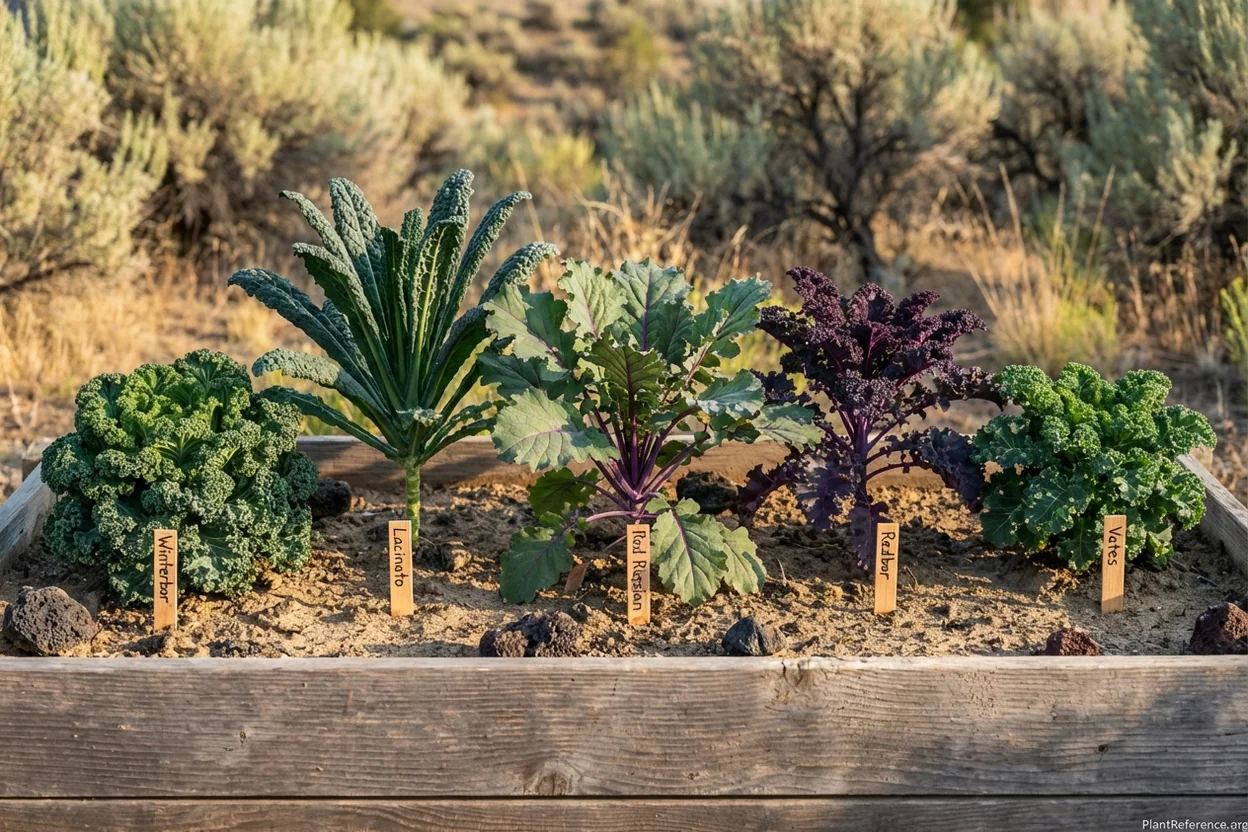
🌿Brassica oleracea 'Redbor' serves double duty as both food crop and ornamental plant. The deep purple color intensifies with cold weather, making it stunning in Boise's winter landscape. It's every bit as hardy as Winterbor but with superior flavor.
🌿Brassica oleracea 'Vates' might be the most reliable variety for new gardeners. This compact type rarely exceeds 16 inches tall, making it perfect for container growing or windy locations. It's remarkably slow to bolt even when Boise temperatures spike unexpectedly in May.
Specific Planting Dates for Boise Gardeners
Timing is everything with kale, and Boise's climate gives you two distinct growing windows. I've been tracking frost dates and growing seasons here for decades, and these dates will serve you well.
Spring Planting Schedule
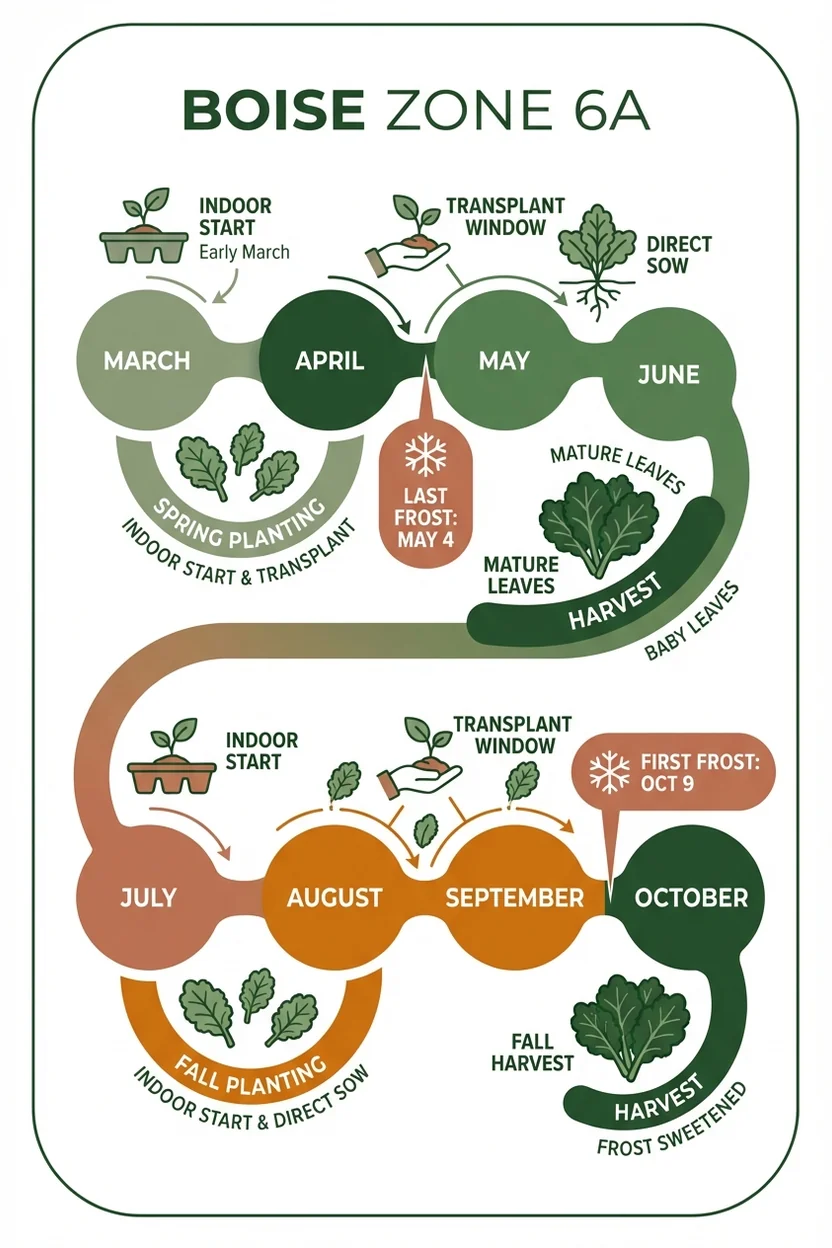
Indoor seed starting: March 15-22 Start seeds indoors 6-8 weeks before your planned transplant date. Use a quality seed starting mix and keep soil temperature at 65-70°F (18-21°C) for best germination.
Direct seeding outdoors: April 1-15 Direct sow when soil temperature reaches 45°F (7°C). In Boise, this typically happens the first week of April, though late snow can delay things a few days.
Transplanting: April 10-20 Set out transplants 2-4 weeks before Boise's average last frost date of May 4th. Young kale plants handle frost down to 25°F (-4°C) without protection.
Spring harvest window: May 15 - July 1 Your spring crop will be ready for first harvest 6-8 weeks after planting. Quality declines rapidly once temperatures consistently exceed 80°F (27°C), usually happening in Boise by mid-July.
Fall Planting Schedule (Recommended)
Direct seeding: August 1-15 This timing allows plants to mature before Boise's first frost around October 9th. Fall-planted kale develops superior flavor and texture compared to spring crops.
Late summer transplants: July 25 - August 5 If starting from transplants, plant them during Boise's hottest weather but keep them well-watered and consider temporary shade cloth.
Fall harvest begins: September 20 - October 1 Plants will be ready for harvest about 8-10 weeks after seeding. The first frost actually improves flavor rather than damaging the plants.
Winter harvest continues: October through March With simple protection like row covers or cold frames, your kale harvest can continue through Boise's winter. January and February provide the sweetest, most tender leaves.
Succession Planting Strategy
For continuous harvest, plant new rows every 2-3 weeks during your planting windows. Start with fast-maturing 🌿Brassica oleracea 'Red Russian' for early harvest, then follow with 🌿Brassica oleracea 'Lacinato' for main season production, and finish with 🌿Brassica oleracea 'Winterbor' for winter storage.
The key to success in Boise is understanding that fall plantings consistently outperform spring plantings in both flavor and yield. The gradual cooling temperatures and increased rainfall create ideal growing conditions, while spring plantings often struggle with the rapid transition from cool to hot weather.
Complete Growing Guide for Boise Conditions
Growing exceptional kale in Boise requires understanding how this crop responds to our unique high desert environment. The combination of alkaline soils, intense UV radiation, and dramatic temperature swings creates challenges you won't face in more moderate climates.
Soil Preparation for Idaho Conditions
Boise's naturally alkaline soil (typically pH 7.5-8.5) needs modification for optimal kale production. While kale tolerates alkaline conditions better than most brassicas, you'll get better results with pH between 6.0-7.0.
Work 2-3 inches of compost into your planting area each season. The organic matter improves both drainage in our clay-heavy soils and water retention in sandy areas. I add sulfur in spring at 1 pound per 100 square feet to gradually lower pH over the growing season.
Essential soil amendments for Boise:
Compost: 2-3 inches annually for organic matter and pH buffering
Sulfur: 1 lb per 100 sq ft to lower alkaline pH gradually
Bone meal: 2 lbs per 100 sq ft for phosphorus and calcium
Kelp meal: 1 lb per 100 sq ft for trace minerals often lacking in Idaho soils
Our volcanic soils often lack organic matter and beneficial microorganisms. Adding mycorrhizal inoculant when planting transplants helps establish strong root systems that better handle drought stress.
Planting Techniques for High Desert Success
Direct seeding method: Create furrows ½ inch deep in prepared soil. In Boise's clay soils, cover seeds with vermiculite or seed starting mix rather than native soil to prevent crusting. Space rows 18-24 inches apart for good air circulation.
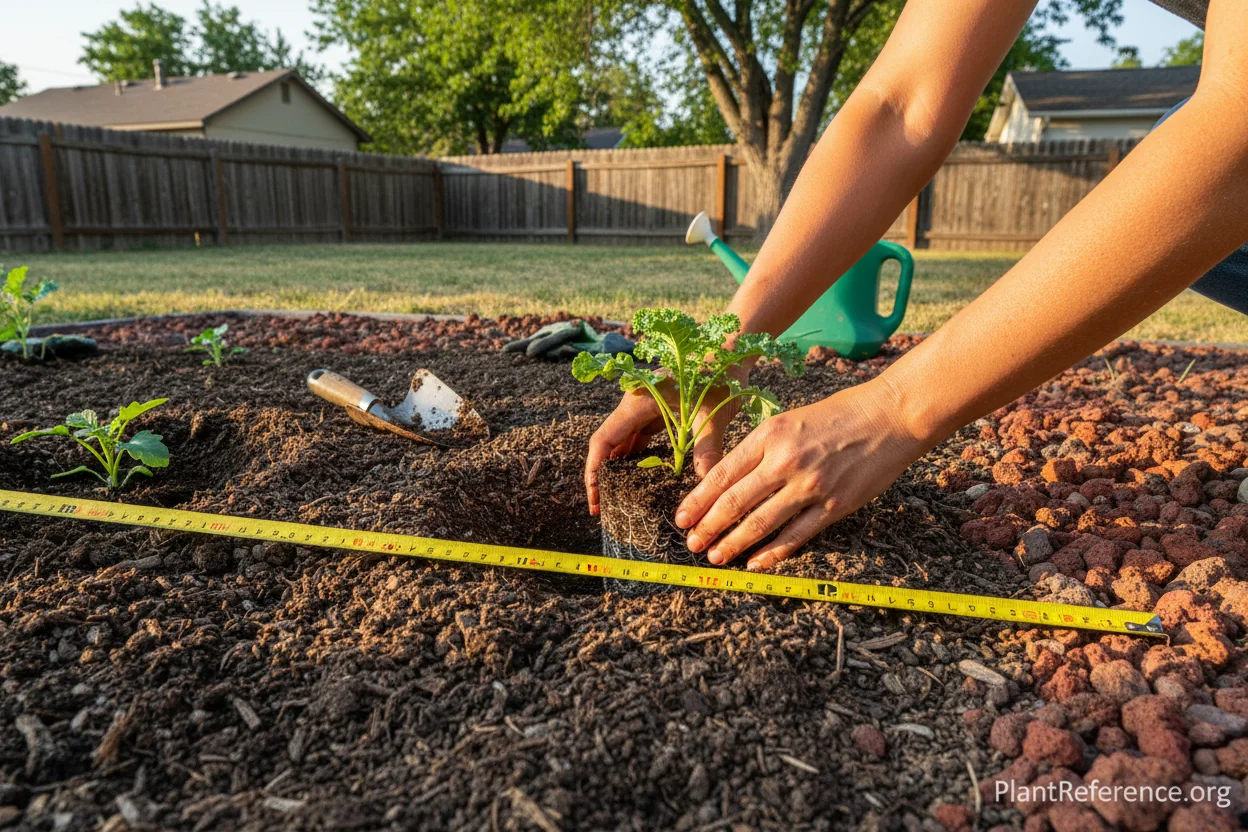
Transplant method: Dig holes slightly wider than root balls and backfill with a mixture of native soil and compost. Water thoroughly and provide temporary shade for 3-5 days if planting during hot weather.
Plant spacing of 12-15 inches between plants allows good air circulation—critical in Boise where afternoon thunderstorms can create humid conditions that encourage fungal diseases.
Irrigation Management in Boise's Dry Climate
Consistent moisture is crucial for tender kale leaves, but Boise's 12-inch annual rainfall requires careful irrigation planning. Deep, infrequent watering works better than frequent shallow applications.
Spring irrigation: Water 2-3 times per week, providing 1 inch total. Morning watering reduces evaporation and gives plants time to dry before cool nights.
Summer irrigation: Increase to daily watering if growing heat-tolerant varieties through summer. Drip irrigation or soaker hoses conserve water and keep leaves dry.
Fall/winter irrigation: Reduce frequency but maintain soil moisture. Winter dry spells can stress plants and reduce leaf quality. Check soil moisture weekly even during dormant periods.
Mulching with 2-3 inches of straw or shredded leaves conserves moisture and moderates soil temperature. In Boise's windy conditions, wet the mulch thoroughly after application to prevent it from blowing away.
Fertilization Program for Maximum Yield
Kale is a heavy nitrogen feeder, especially when growing in our short season. A balanced approach prevents the excessive vegetative growth that attracts aphids while ensuring adequate leaf production.
Pre-planting: Mix 2-4-2 organic fertilizer into soil at 2 pounds per 100 square feet.
Growth phase: Side-dress with blood meal or fish emulsion every 3-4 weeks during active growth periods.
Fall feeding: Stop nitrogen applications 6 weeks before expected frost to help plants harden off for winter survival.
Calcium deficiency shows up as brown leaf margins, especially common in our alkaline soils where calcium availability is reduced. Foliar feeding with liquid kelp every 2 weeks prevents deficiency symptoms.
Troubleshooting Boise-Specific Kale Problems
Twenty years of growing kale in Idaho has taught me that most problems are predictable and preventable. Boise's climate creates specific challenges that don't exist in more moderate growing regions.
Temperature Stress Issues
Late spring freezes can damage young transplants even though mature kale handles frost well. Row covers provide 4-6 degrees of protection, usually enough to prevent damage during typical late April/early May cold snaps.
Rapid temperature swings in May cause stress bolting, where plants flower prematurely due to perceived winter-to-summer transition. Choose bolt-resistant varieties like 🌿Brassica oleracea 'Vates' for spring planting, or focus on fall crops that avoid this issue entirely.
Summer heat stress turns leaves bitter and tough. Symptoms include yellowing, wilting during hot afternoons, and accelerated flowering. Provide afternoon shade or grow only cold-season varieties during Boise's hot summers.
Pest Management for High Desert Conditions
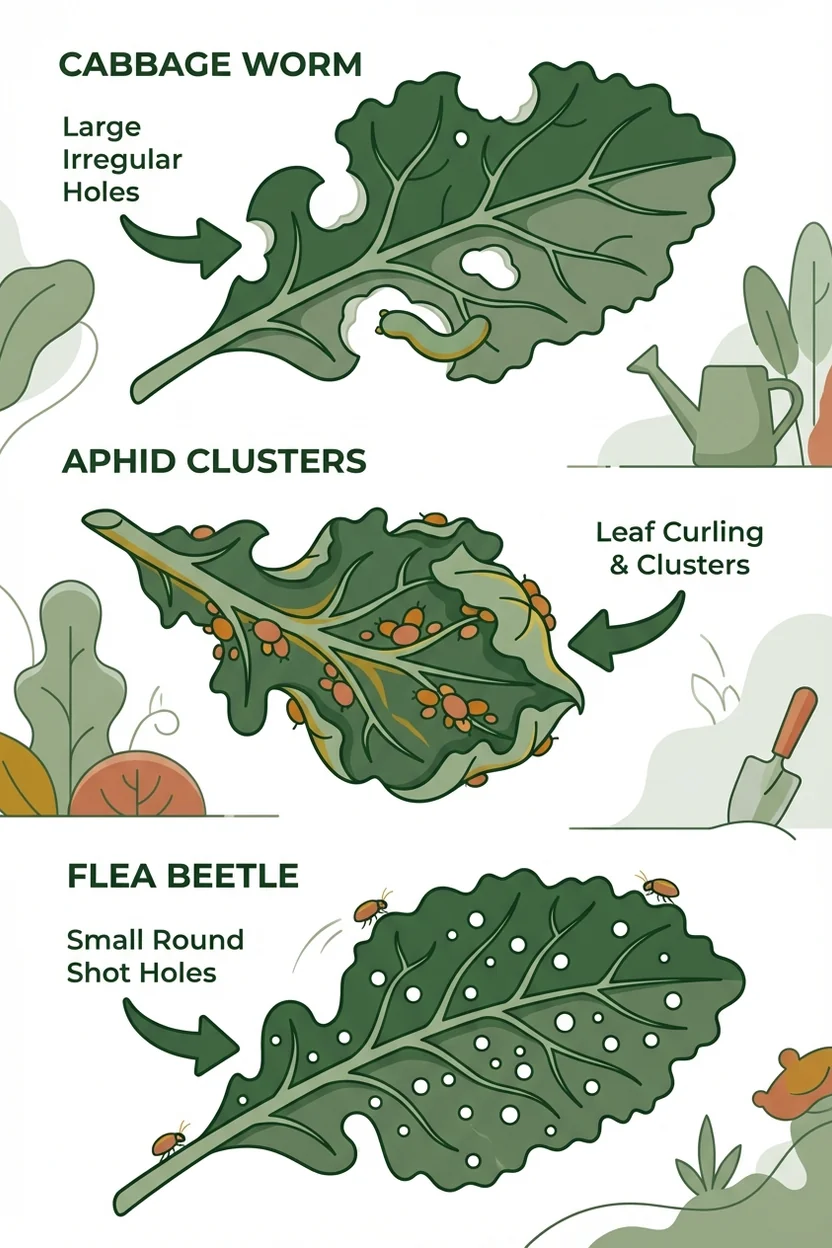
Cabbage aphids explode in population during May's warm, humid weather following spring rains. They cluster on leaf undersides and in the curled sections of varieties like 🌿Brassica oleracea 'Winterbor'.
Control with strong water sprays in early morning, allowing plants to dry before evening. Beneficial insects like ladybugs and lacewings provide natural control but may need supplemental releases in new gardens.
Flea beetles create shot-hole damage in young leaves, especially problematic on spring plantings. Row covers during the first 4-6 weeks prevent egg-laying adults from accessing plants.
Cabbage worms (imported cabbageworm larvae) appear as small white butterflies lay eggs on kale leaves. Hand-picking works for small gardens, while Bt spray provides organic control for larger plantings.
Disease Prevention in Alkaline Conditions
Clubroot rarely occurs in Boise's alkaline soils but can develop in areas where gardeners have over-acidified soil or in poorly drained locations. Maintain soil pH above 7.0 and ensure excellent drainage to prevent problems.
Black rot appears as V-shaped yellow lesions during humid periods following irrigation or thunderstorms. Water at soil level rather than overhead to keep leaves dry. Remove affected plants immediately to prevent spread.
Downy mildew develops during cool, moist conditions in fall and winter. Improve air circulation by proper spacing and avoid watering late in the day when plants won't dry before nightfall.
Harvest & Storage Tips for Idaho Growers
Proper harvesting and storage techniques can extend your kale season well into winter, even in Boise's Zone 6a climate. The key is understanding how different varieties respond to cold and which storage methods work best in our dry climate.
Harvesting Techniques for Maximum Yield
Cut-and-come-again harvesting provides continuous production from each plant. Start harvesting outer leaves when plants reach 8-10 inches tall, typically 6-8 weeks after planting. Never harvest more than one-third of the plant at once to maintain vigor.
Whole plant harvest works best for storage or when preparing large quantities. Cut plants at soil level in the morning when leaves are full of moisture but surface moisture has evaporated.
Frost-sweetened harvest occurs after temperatures drop below 28°F (-2°C) for at least 4 hours. In Boise, this usually happens in mid-October. The starches convert to sugars, creating dramatically sweeter, more tender leaves.
Fall-harvested kale stores much better than spring-harvested due to lower respiration rates in cool weather. Plan your storage harvest for late October through December when sugar content peaks.
Storage Methods for Idaho's Dry Climate
Fresh storage: Wash harvested leaves in cold water, spin or pat dry, and store in ventilated plastic bags in the refrigerator. Properly handled kale keeps 10-14 days fresh.
Blanching and freezing: Idaho's dry climate makes kale ideal for freezing. Blanch leaves in boiling water for 2 minutes, plunge into ice water, drain thoroughly, and freeze in portion-sized bags. Frozen kale keeps 8-10 months.
Dehydration: Our low humidity makes air-drying feasible. Remove thick stems, blanch for 90 seconds, and dehydrate at 125°F (52°C) until crisp. Store in airtight containers away from light.
Root cellar storage: Whole plants with roots can be stored in cool, humid conditions (32-40°F, 90-95% humidity) for 2-3 months. Boise's dry basements require adding humidity with damp sand or peat moss.
Winter Harvest Techniques
Protected plantings continue producing through Boise's winter with proper management. Row covers, cold frames, or unheated hoop houses extend harvest through February in most years.
Cold frame harvest: Ventilate on sunny winter days to prevent overheating. Harvest during warmer periods, typically late morning to early afternoon when leaves aren't frozen.
Snow harvest: Kale survives under snow and can be harvested by brushing snow away from plants. The insulation actually protects from wind damage and extreme cold.
Choose winter harvest varieties carefully. 🌿Brassica oleracea 'Winterbor' and 🌿Brassica oleracea 'Redbor' handle Boise winters best, while 🌿Brassica oleracea 'Red Russian' may suffer damage below 15°F (-9°C) without protection.
Plan winter harvests around weather patterns. After extended cold periods below 20°F (-7°C), wait for temperatures to moderate before harvesting to prevent leaf damage.
Frequently Asked Questions
Reading about plants and recognising them are different skills. These three build the second.
- Daily PlantIdentify the day’s mystery plant from a close-up photograph.
- Keyed OutWork a dichotomous key, lead by lead, to name a hidden specimen.
- Name That PlantName a specimen from botanical clues dealt hardest first.
Free to play, no account needed
Lily is a Master Gardener and high-desert homesteader outside Boise. She and her husband moved to Idaho from the Bay Area and had to completely relearn gardening for a climate with alkaline soil, intense sun, hard freezes, and limited water. Lily now grows a large vegetable garden, maintains a small orchard of cold-hardy fruit trees, and raises cut flowers for the local farmers market. She writes about the specific challenges of intermountain gardening—short seasons, temperature swings, and the importance of soil amendment in high-pH soils. Lily is honest about the learning curve: high-desert gardening is humbling, and she thinks more gardening writers should admit when conditions are genuinely difficult.