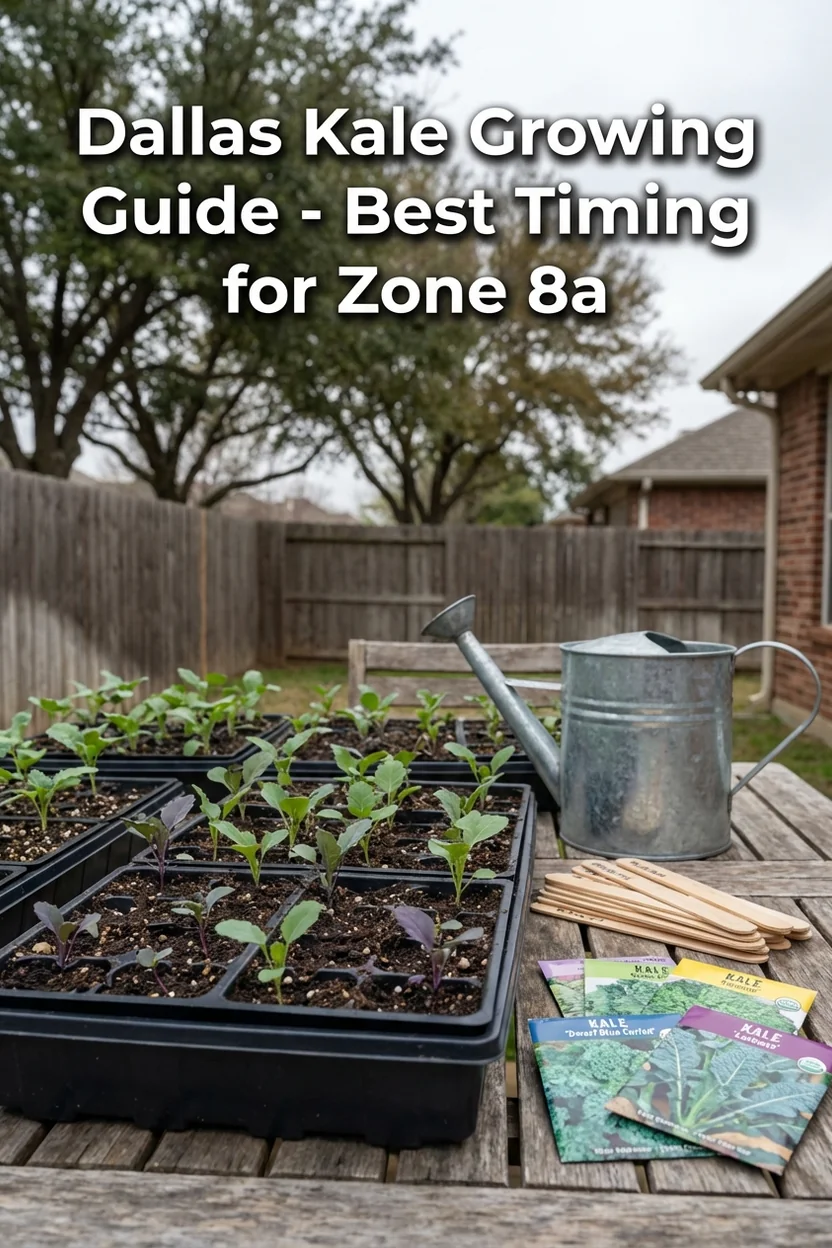
When to Plant Kale in Dallas: Complete Guide + Best Varieties for Zone 8a
Pets & Toxicity
Recorded toxicity for plants linked in this guide. An unknown status is not a safety assessment.
No linked plant is recorded as toxicDetailsHide
Brassica oleracea 'Red Russian' — Toxicity
Non-toxicView Brassica oleracea 'Red Russian' plant profileBrassica oleracea var. sabellica 'Vates' — Toxicity
Non-toxicView Brassica oleracea var. sabellica 'Vates' plant profile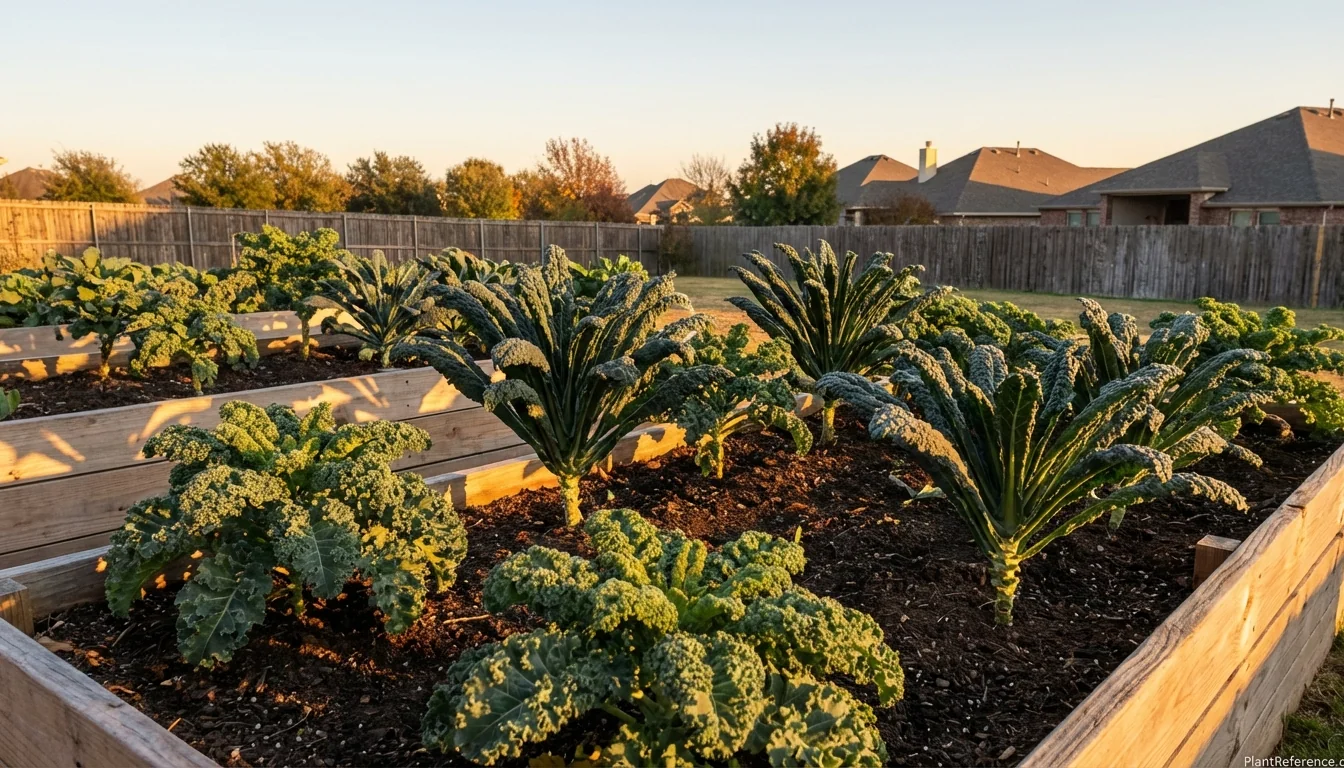
— Image © Plant Reference 2026
I've been growing vegetables in Texas for over four decades, and I'll tell you straight—Dallas summers will destroy kale faster than you can blink. But plant it right for winter harvest, and you'll have the sweetest, most tender kale you've ever tasted. The key is understanding that kale is a cool-season crop that actually improves with frost.
Best Kale Varieties for Dallas's Climate
Dallas's Zone 8a climate presents unique challenges for kale growers. Our long, hot summers make spring planting risky—plants bolt quickly when temperatures hit 85°F (29°C) consistently. However, our mild winters and long growing season (255 days) create perfect conditions for fall-planted kale that matures in cool weather and sweetens with frost.
The secret to success lies in variety selection. Some kales handle heat stress better during shoulder seasons, while others excel in our winter conditions.
Variety | Days to Maturity | Best For | Notes for Dallas |
|---|---|---|---|
50-60 days | Quick harvest | Most bolt-resistant, best for late spring | |
60-75 days | Heat tolerance | Superior summer-to-fall transition variety | |
60-75 days | Winter hardiness | Survives Dallas winter without protection | |
60-75 days | Ornamental value | Purple color intensifies in cold | |
55-65 days | Small spaces | Compact, slow to bolt |
🌿Brassica oleracea 'Red Russian' - The Spring Champion
Red Russian kale stands out for Dallas gardeners attempting spring crops. Its flat, oak-shaped leaves with purple veins mature quickly—often ready for baby leaf harvest in just 35-40 days. This variety shows superior bolt resistance when temperatures fluctuate between 60-80°F (15-27°C), making it your best bet for March through May harvest windows.
The tender leaves work beautifully in salads without massaging, and the plant recovers quickly from heat stress. I've harvested Red Russian well into June some years, though quality declines as summer approaches.
🌿Brassica oleracea 'Lacinato' - The Heat Survivor
Lacinato, also called dinosaur kale, proves invaluable for Dallas's challenging climate transitions. Its thick, deeply textured leaves withstand heat stress better than curly varieties. This makes Lacinato ideal for August plantings that must survive September's lingering heat before cooler October weather arrives.
The plant's upright growth habit also improves air circulation, reducing disease pressure during our humid late summers. Flavor develops complexity through our mild winter, becoming nutty and sweet after frost exposure.
🌿Brassica oleracea 'Winterbor' - The Winter Workhorse
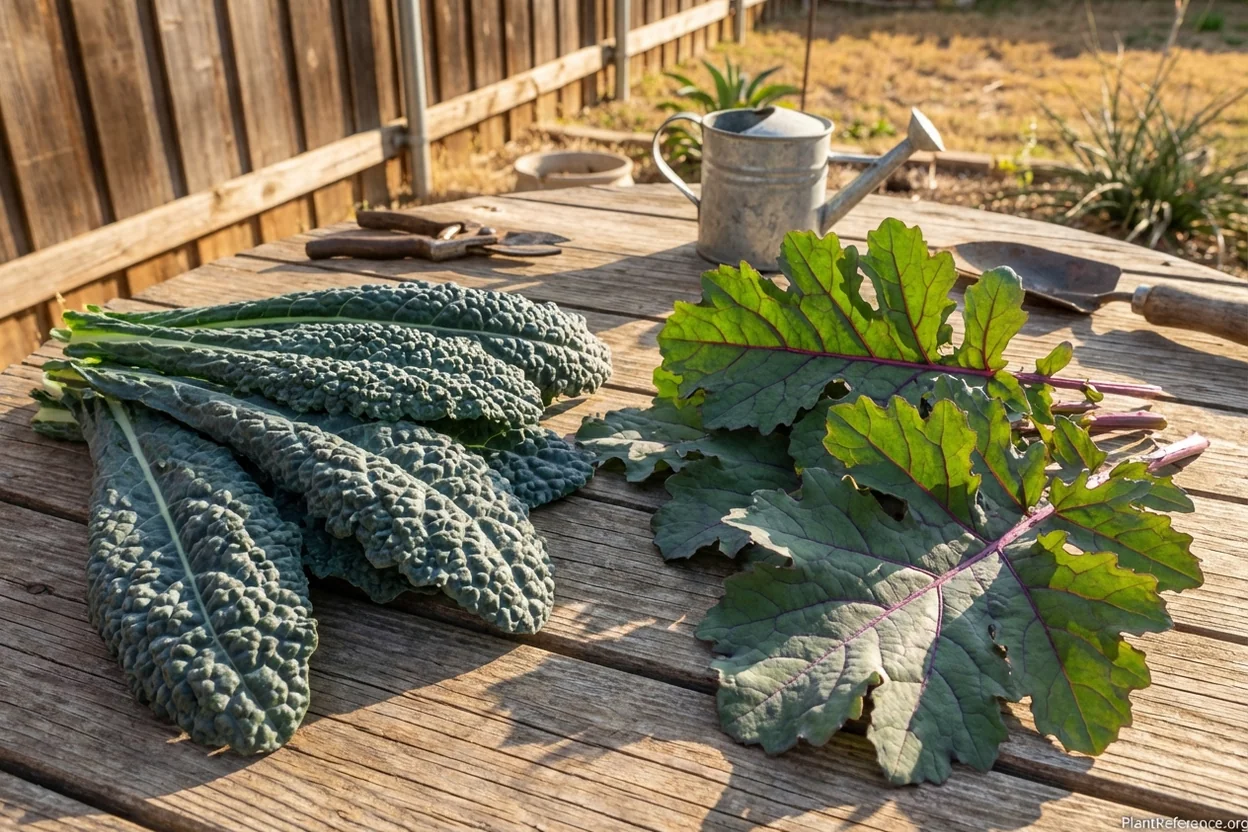
Winterbor excels in Dallas winter conditions, surviving our occasional hard freezes down to 15°F (-9°C) without protection. The deeply curled leaves create insulating air pockets that protect the plant during our unpredictable winter weather patterns.
This variety transforms after frost exposure. What starts as somewhat tough, fibrous leaves becomes sweet and tender. The key is patience—don't judge Winterbor until after it experiences several frost cycles.
Specific Planting Dates for Dallas
Dallas's Zone 8a growing calendar centers around avoiding summer heat while maximizing our excellent fall, winter, and spring growing conditions. Our last frost averages March 14, but more importantly, our first frost doesn't arrive until November 24—giving us a generous window for cool-season crops.
Fall Planting Schedule (Primary Season)
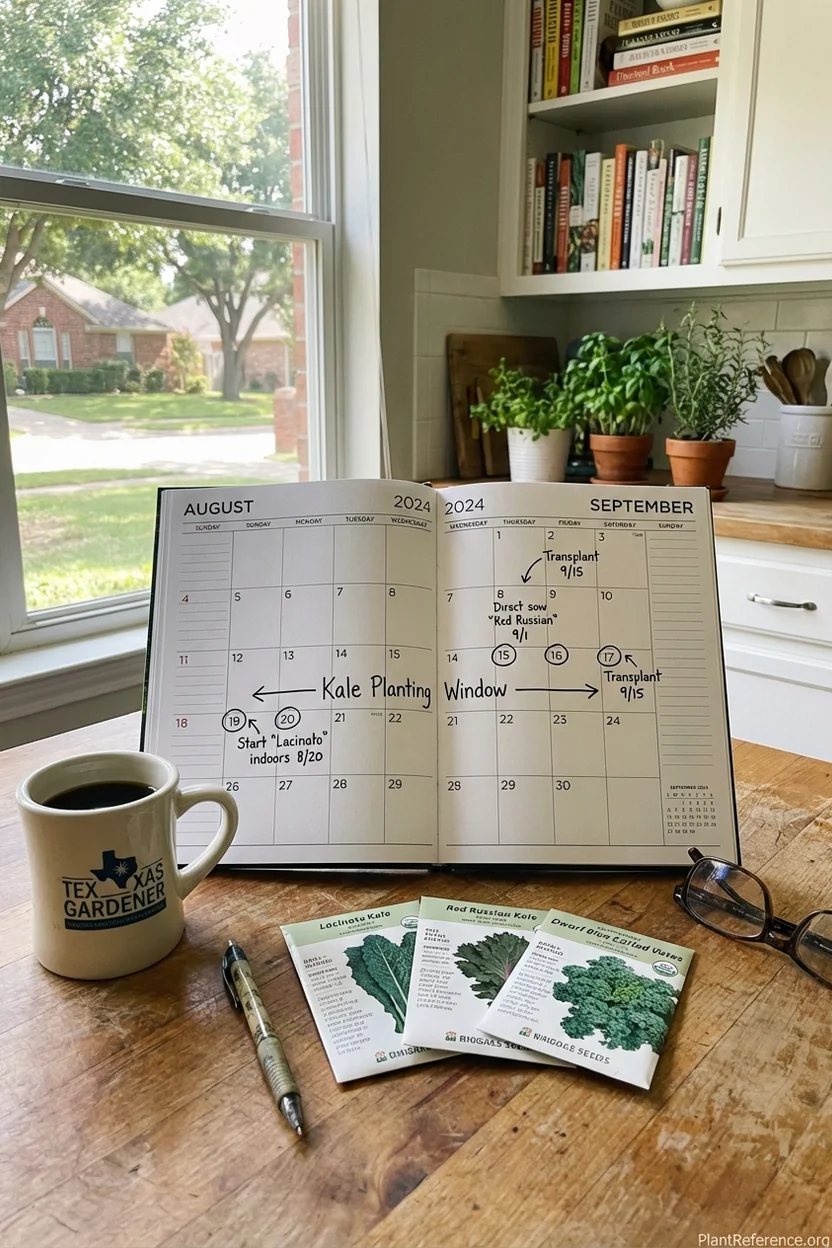
August 15 - September 15: Prime planting window for fall kale. Seeds sown during this period mature by late October, reaching full size before our first frost. Plants then continue producing through winter and into early spring.
For August 15 plantings:
Germination: August 18-25 (soil temperature 75-85°F)
First harvest: September 20-30 (baby leaves)
Mature harvest: October 15-25
Peak season: November through February (after frost sweetening)
September 15 - October 15: Secondary planting window. These plants mature smaller before frost but continue growing slowly through winter, providing spring harvest.
October 15 - November 1: Final fall plantings for winter baby leaf production. Plants won't reach full size before frost but provide tender leaves for salads.
Winter Planting Strategy
December 1 - January 15: Dallas's mild winters allow continued planting for spring harvest. Growth slows significantly during December and January, but plants establish root systems and produce heavily when temperatures warm in February and March.
These winter plantings avoid the spring bolting issues that plague early spring sowings, as plants haven't experienced the vernalization (cold period) that triggers flowering.
Spring Planting (Limited Window)
February 15 - March 15: Risky but possible for experienced growers. Start indoors February 1-15, transplant after last frost. Harvest must complete before sustained 85°F (29°C) temperatures in late May.
Success depends on variety selection—stick to Red Russian and harvest young. Any delay pushes harvest into dangerous heat territory.
Complete Growing Guide for Dallas
Soil Preparation for Texas Clay
Dallas's notorious clay soil requires amendment for successful kale production. Our heavy clay retains too much moisture during winter rains and becomes waterlogged, leading to root rot problems.
Soil Amendment Protocol:
Test soil pH—Dallas clay typically runs 7.5-8.0, which kale tolerates well
Add 2-3 inches of compost to improve drainage and organic matter
Incorporate coarse sand (not fine sand) if drainage remains poor
Consider raised beds in areas with persistent drainage issues
The goal is creating soil that drains within 24 hours after heavy rain while retaining moisture during dry periods. Kale's deep taproot system requires good drainage to prevent crown rot.
Planting Techniques
Direct Seeding (Recommended): Plant seeds ½ inch deep in Dallas clay, ¼ inch in amended soil. Space seeds 3 inches apart initially, thinning to 12 inches as plants grow. Direct seeding works well because kale germinates reliably in 75-85°F (24-29°C) soil temperatures common in August and September.
Transplant Method: Start seeds indoors 4-6 weeks before planting date. This method allows earlier plantings by protecting seedlings from late summer heat stress. Harden off transplants gradually over 5-7 days before transplanting.
Irrigation Management
Dallas's variable rainfall patterns require active irrigation management. Summer heat increases water needs, while winter rains can cause oversaturation.
Summer Establishment (August-September): Water deeply twice weekly, providing 1-1.5 inches total. Morning irrigation prevents leaf diseases and reduces heat stress. Mulch heavily to conserve moisture and moderate soil temperature.
Winter Maintenance (October-March): Reduce irrigation to once weekly or as needed. Dallas typically receives 1.5-2 inches of winter rainfall monthly, often sufficient for established plants. Monitor soil moisture—overwatering causes more problems than drought during cool months.
Drought Stress Recognition: Kale under water stress becomes bitter and tough as plants concentrate defensive compounds. Leaves appear dull gray-green rather than vibrant green. Provide deep watering to restore quality.
Fertilization Strategy
Kale requires consistent nitrogen for leaf production but balanced nutrition for winter hardiness. Dallas's alkaline soil can tie up certain nutrients, requiring strategic fertilization.
Initial Fertilization: Work 2-4 inches of compost into planting beds, providing slow-release nutrients. Apply balanced organic fertilizer (5-5-5) at planting time for quick establishment.
Maintenance Feeding: Side-dress with high-nitrogen organic fertilizer (blood meal or fish emulsion) 4-6 weeks after planting. This timing coincides with cooler October weather when plants begin rapid growth. Avoid high nitrogen late in season as it reduces cold hardiness.
Winter Dormancy: Stop fertilization in December. Plants enter semi-dormancy during Dallas's coolest months, and excess nitrogen can promote soft growth susceptible to freeze damage.
Troubleshooting Dallas-Specific Problems
Heat Stress and Bolting
Dallas's extended summer heat creates the most significant challenge for kale production. Temperatures above 85°F (29°C) for consecutive days trigger bolting—the plant sends up flower stalks and leaves become bitter.
Prevention Strategies:
Plant fall crops only from August 15 forward
Provide afternoon shade during September's heat
Maintain consistent soil moisture to prevent heat stress
Choose heat-tolerant varieties like Lacinato and Red Russian
Recognition and Response: Early bolting signs include central growing point elongation and appearance of small flower buds. Once bolting begins, harvest immediately—leaves remain edible for 7-10 days before becoming too bitter.
Pest Pressure in Mild Winters
Dallas's mild winters allow pest populations to survive that would normally die in colder climates. Cabbage worms, aphids, and harlequin bugs can remain active through winter.
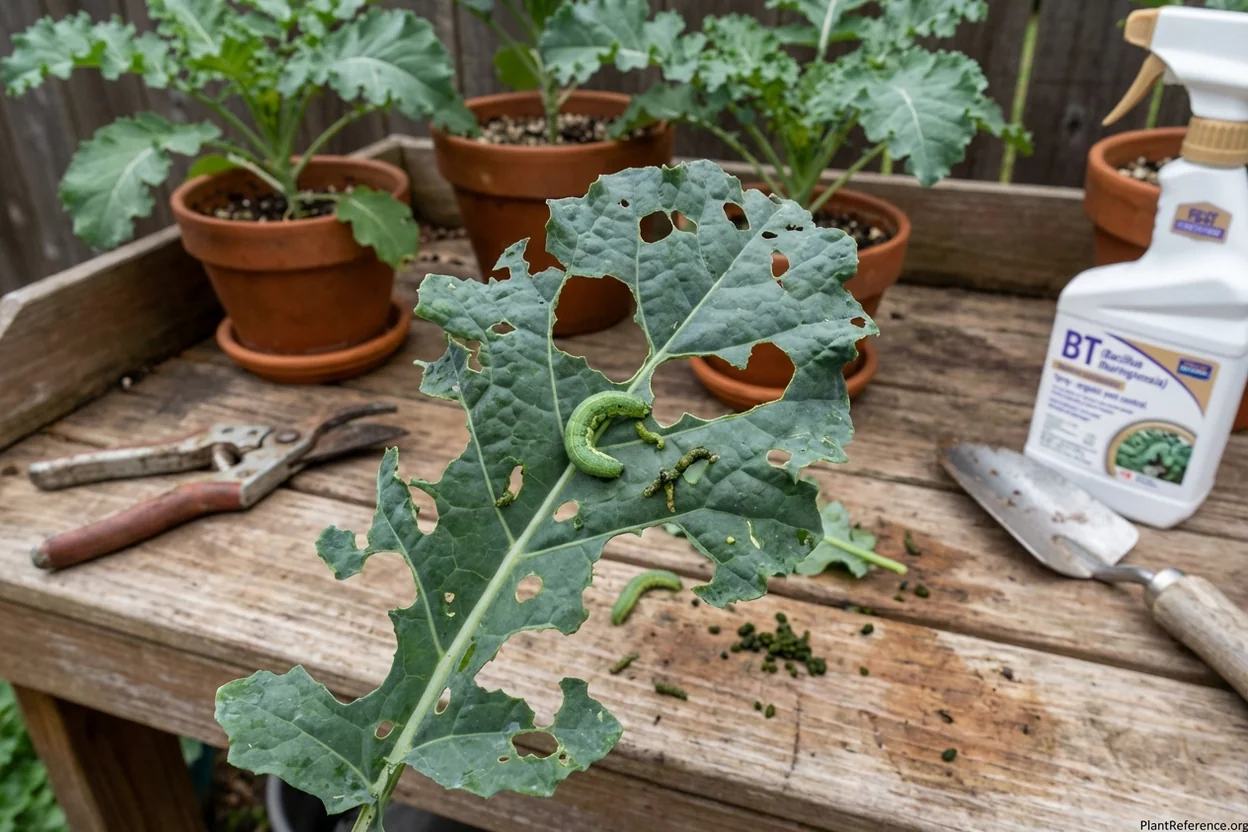
Cabbage Worms (Primary Threat): Green caterpillars appear as small white butterflies lay eggs on leaf undersides. These voracious feeders can destroy a plant overnight in fall conditions.
Control measures:
Row covers during peak butterfly activity (October-November)
Weekly Bt (Bacillus thuringiensis) sprays for active infestations
Hand removal of large caterpillars
Harlequin Bugs (Severe Threat): These shield-shaped black and orange bugs suck plant juices, causing rapid wilting and death. They're particularly problematic in Dallas's climate zone.
Control strategies:
Trap cropping with cleome or mustard planted nearby
Hand removal of adults (they're slow-moving in cool weather)
Remove plant debris where they overwinter
Early detection through weekly plant inspections
Winter Weather Fluctuations
Dallas weather includes dramatic temperature swings that can stress plants. A 70°F (21°C) day followed by a 25°F (-4°C) night shocks plant systems and can cause tissue damage.
Protection Strategies:
Mulch heavily around plant bases for root insulation
Use row covers during extreme cold snaps (below 20°F/-7°C)
Avoid harvesting when leaves are frozen—wait for thawing
Plant in locations protected from north winds
Recovery Protocols: After hard freezes, damaged outer leaves may appear water-soaked and translucent. Remove these promptly to prevent rot, but don't harvest healthy inner growth until plants recover.
Harvest & Storage
Dallas kale provides extended harvest windows when properly managed. Fall-planted crops begin producing in October and continue through April in good years.
Optimal Harvest Timing
First Light Frost (Usually late November): This magical moment transforms kale flavor. Starches convert to sugars, eliminating bitterness and creating sweet, tender leaves. Plan major harvests for 3-7 days after the first frost.
Peak Season (December-February): Dallas kale reaches its finest quality during our coldest months. Leaves maintain excellent texture and flavor, perfect for both raw and cooked applications.
Spring Decline (March-April): As temperatures warm toward summer, quality gradually decreases. Harvest heavily in early March before plants begin showing spring stress.
Harvesting Technique
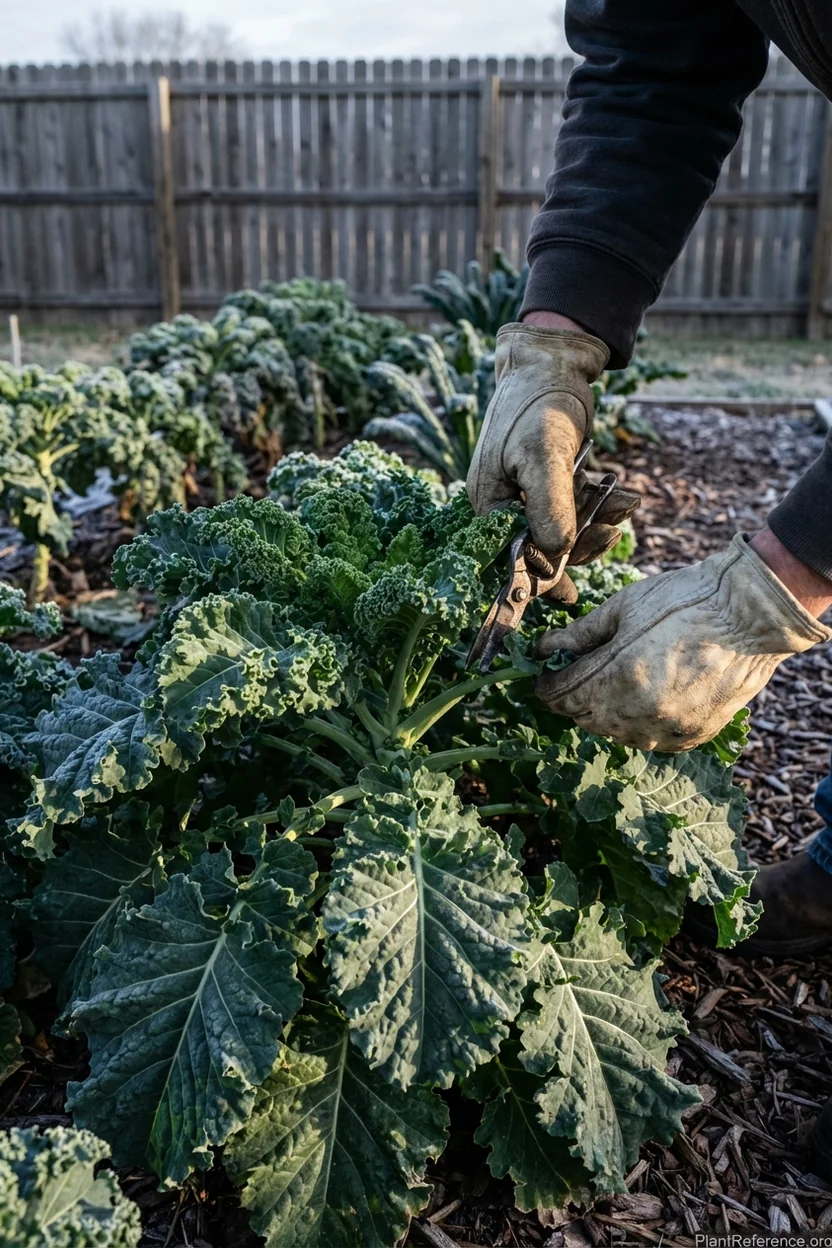
Cut outer leaves at the base, leaving inner growing points intact. Harvest no more than one-third of the plant at once to maintain vigor. In Dallas's mild climate, plants can produce continuously for 4-6 months with proper harvesting technique.
Storage Methods: Fresh kale stores 7-10 days refrigerated with stems in water like cut flowers. For longer storage, blanch and freeze harvested leaves. Dallas gardeners often preserve peak winter quality by freezing after frost-sweetening occurs.
Harvest & Storage
The beauty of Dallas kale production lies in extended harvest periods. Unlike northern climates where hard freezes end the season abruptly, our Zone 8a conditions allow continuous harvesting from October through March.
Post-Frost Quality Enhancement
Dallas's first frost typically arrives in late November, triggering the biochemical changes that make kale special. Plant starches convert to sugars, transforming what might be bitter, tough leaves into sweet, tender greens. This process continues with each subsequent frost cycle.
I always tell gardeners to taste their kale before and after the first frost—the difference is remarkable. Pre-frost leaves often require massaging or cooking to be palatable, while post-frost leaves work beautifully in raw salads.
Long-Term Storage Solutions
With 4-6 months of continuous production, Dallas growers often face preservation challenges during peak season. Kale freezes exceptionally well after blanching, maintaining nutritional value and much of its texture.
For maximum quality, harvest in early morning after frost has lifted but before afternoon warming. Clean leaves thoroughly and store with stems in water, changing water every 2-3 days for maximum freshness.
Frequently Asked Questions
Reading about plants and recognising them are different skills. These three build the second.
- Daily PlantIdentify the day’s mystery plant from a close-up photograph.
- Keyed OutWork a dichotomous key, lead by lead, to name a hidden specimen.
- Name That PlantName a specimen from botanical clues dealt hardest first.
Free to play, no account needed
James is a lawn care professional in Dallas who runs a small residential maintenance company. He started mowing lawns as a teenager and worked his way up to running crews for a large landscaping firm before going out on his own. James specializes in warm-season turf grasses—Bermuda, St. Augustine, and Zoysia—and knows how to keep a lawn alive through Texas summers without wasting water. He's also experienced with the transition zone challenges that Dallas faces, where warm-season and cool-season grasses overlap. James takes a practical, science-informed approach to lawn care and pushes back on the idea that a good lawn requires heavy chemical inputs.