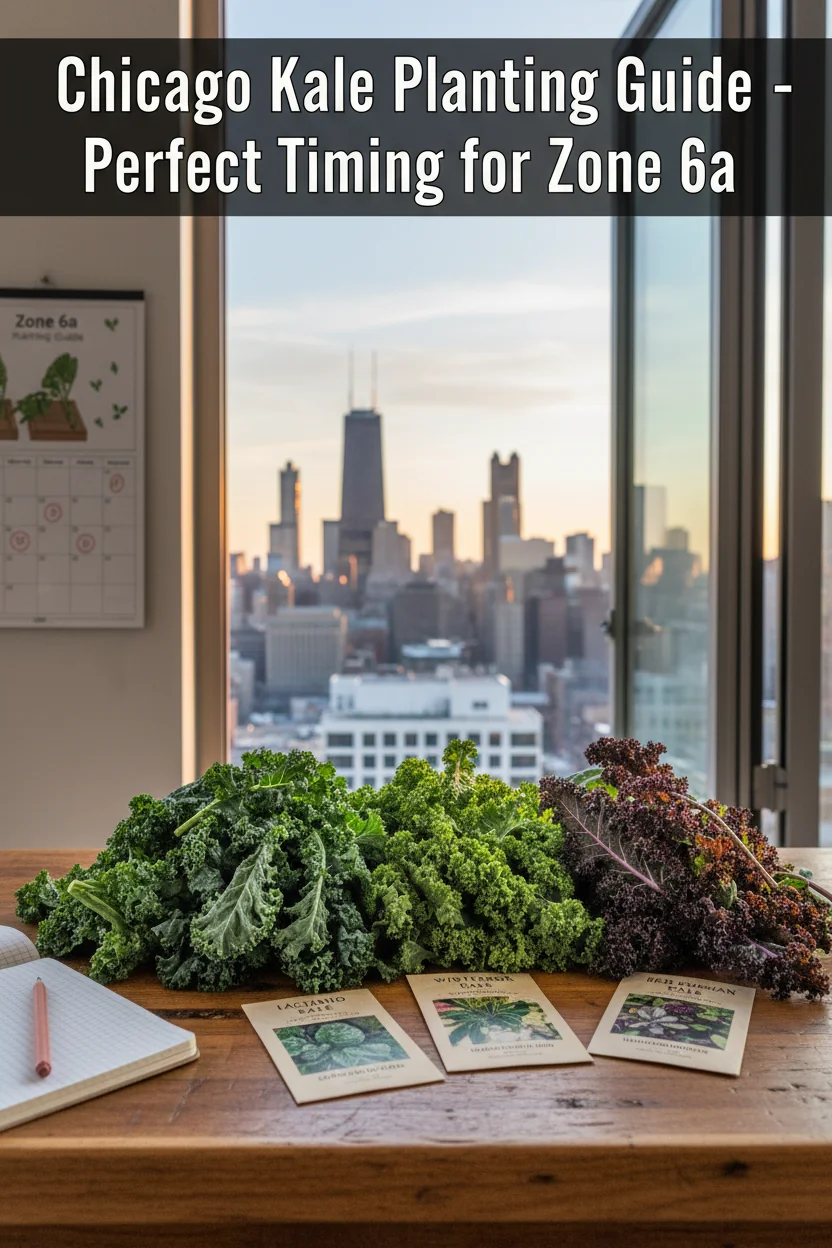
When to Plant Kale in Chicago: Complete Guide + Best Varieties for Zone 6a
Pets & Toxicity
Recorded toxicity for plants linked in this guide. An unknown status is not a safety assessment.
No linked plant is recorded as toxicDetailsHide
Brassica oleracea 'Red Russian' — Toxicity
Non-toxicView Brassica oleracea 'Red Russian' plant profileBrassica oleracea var. sabellica 'Vates' — Toxicity
Non-toxicView Brassica oleracea var. sabellica 'Vates' plant profile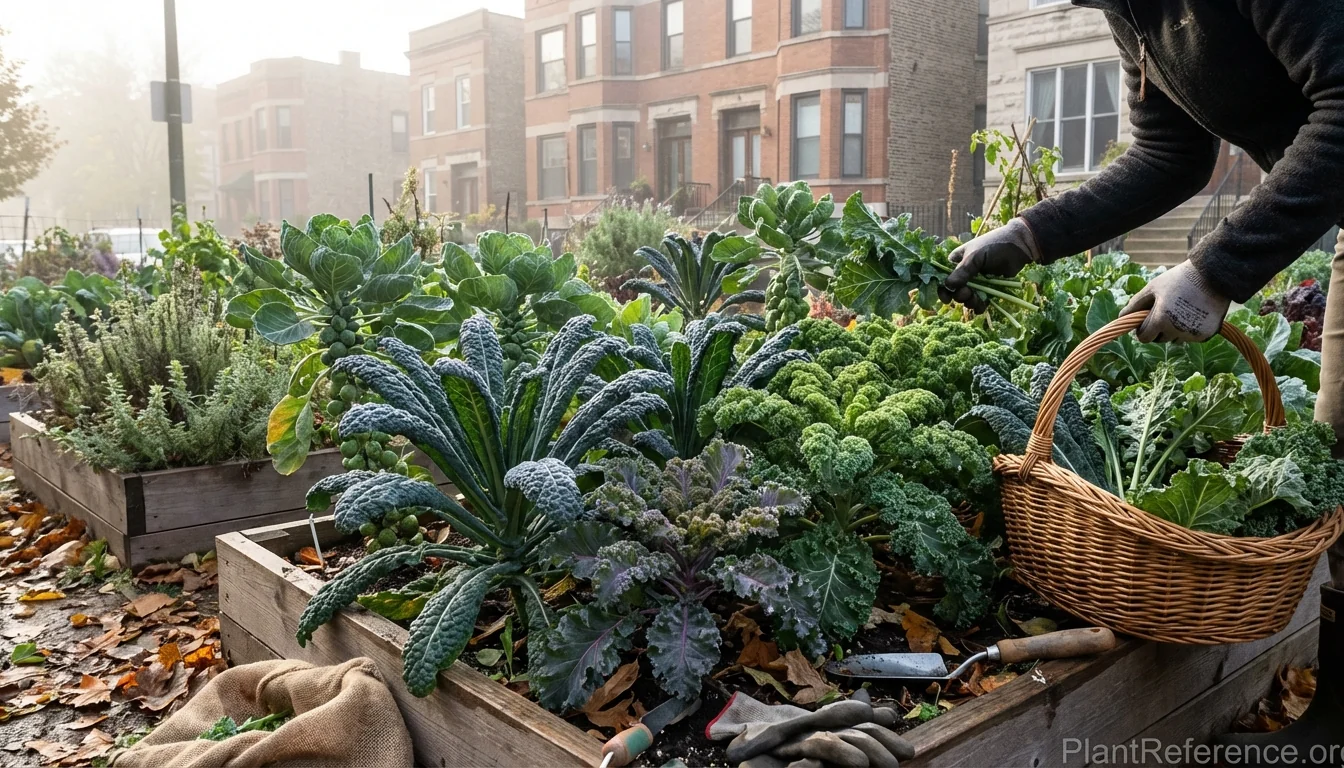
— Image © Plant Reference 2026
I've been growing kale in Chicago's Zone 6a climate for over thirty years, and I'll tell you straight—this city is absolutely perfect for kale production. Our 158-day growing season from May 9 to October 14 gives us excellent spring and fall growing windows, and our winter conditions are just right for overwintering hardy varieties with minimal protection.
Chicago gardeners have a significant advantage with kale because this crop actually prefers cool weather. While your neighbors struggle with heat-loving tomatoes and peppers, your kale will be thriving in the crisp spring and fall conditions that define our Midwest climate.
Best Kale Varieties for Chicago's Zone 6a Climate
Selecting the right varieties is crucial for success in Chicago's variable climate. After testing dozens of cultivars over the years, I've identified five varieties that consistently perform well in our Zone 6a conditions, handling everything from late spring freezes to autumn's first hard frost.
Variety | Days to Maturity | Best For | Notes for Chicago |
|---|---|---|---|
60-75 days | Winter survival | Survives Chicago winters under row covers | |
60-75 days | Heat tolerance | Best spring variety, handles May heat waves | |
50-60 days | Quick harvest | Perfect for succession planting | |
60-75 days | Cold hardiness | Ornamental and edible, great fall color | |
55-65 days | Container growing | Compact size perfect for Chicago balconies |
Cold-Hardy Champions for Chicago Winters
🌿Brassica oleracea 'Winterbor' is my go-to variety for fall planting in Chicago. This F1 hybrid was bred specifically for cold tolerance and will survive our winters under simple row covers or in cold frames. The deeply curled leaves handle snow load without breaking, and the flavor sweetens dramatically after our first hard frost in mid to late October.
🌿Brassica oleracea 'Redbor' offers similar cold hardiness with the added bonus of stunning purple foliage that intensifies in cold weather. It's particularly valuable for fall planting because the color becomes more vibrant as temperatures drop, giving you both food and ornamental value through Chicago's long autumn season.
Heat-Tolerant Options for Spring Growing
🌿Brassica oleracea 'Lacinato', also known as dinosaur kale, handles Chicago's sometimes-unpredictable spring weather better than curly varieties. When we get those sudden May heat waves that can hit 80°F (27°C) or higher, Lacinato resists bolting longer than other types, extending your spring harvest window.
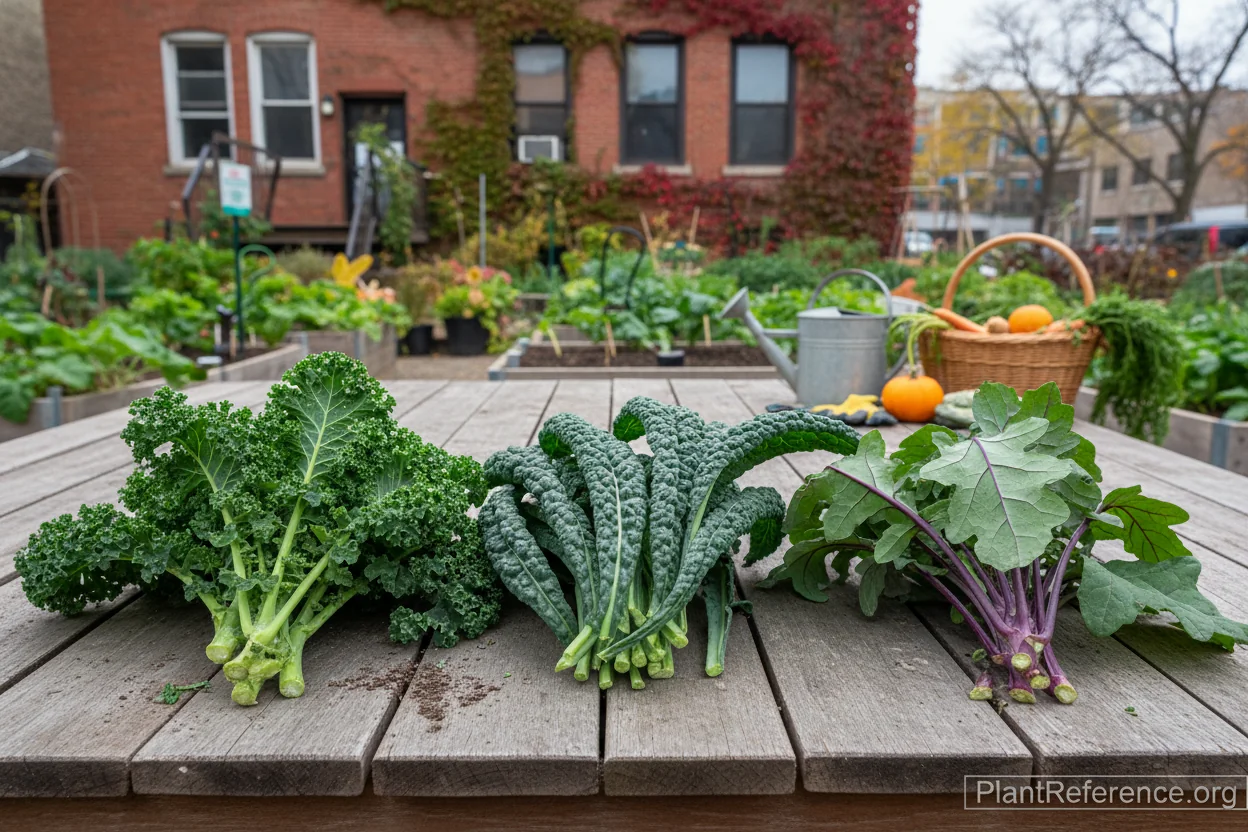
🌿Brassica oleracea 'Red Russian' is technically a different species than the others, which gives it unique characteristics. It matures fastest at 50-60 days, making it perfect for getting a quick spring harvest before Chicago's summer heat arrives. The flat, oak-shaped leaves are incredibly tender and perfect for raw salads.
Compact Varieties for Urban Chicago Gardens
🌿Brassica oleracea 'Vates' is a dwarf variety that grows only 12-16 inches (30-40 cm) tall, making it ideal for container growing on Chicago balconies or small urban lots. Despite its compact size, it's remarkably hardy and produces continuously when harvested properly.
Specific Planting Dates for Chicago
Getting your timing right is absolutely critical for kale success in Chicago. Our Zone 6a climate provides two distinct planting windows, and understanding the nuances of each will make the difference between abundant harvests and disappointing results.
Spring Planting Schedule
Indoor Seed Starting: February 15-March 1 Start seeds indoors 6-8 weeks before transplanting. Use a seed starting mix and keep soil temperature at 60-65°F (15-18°C). Seeds germinate in 5-10 days under consistent moisture.
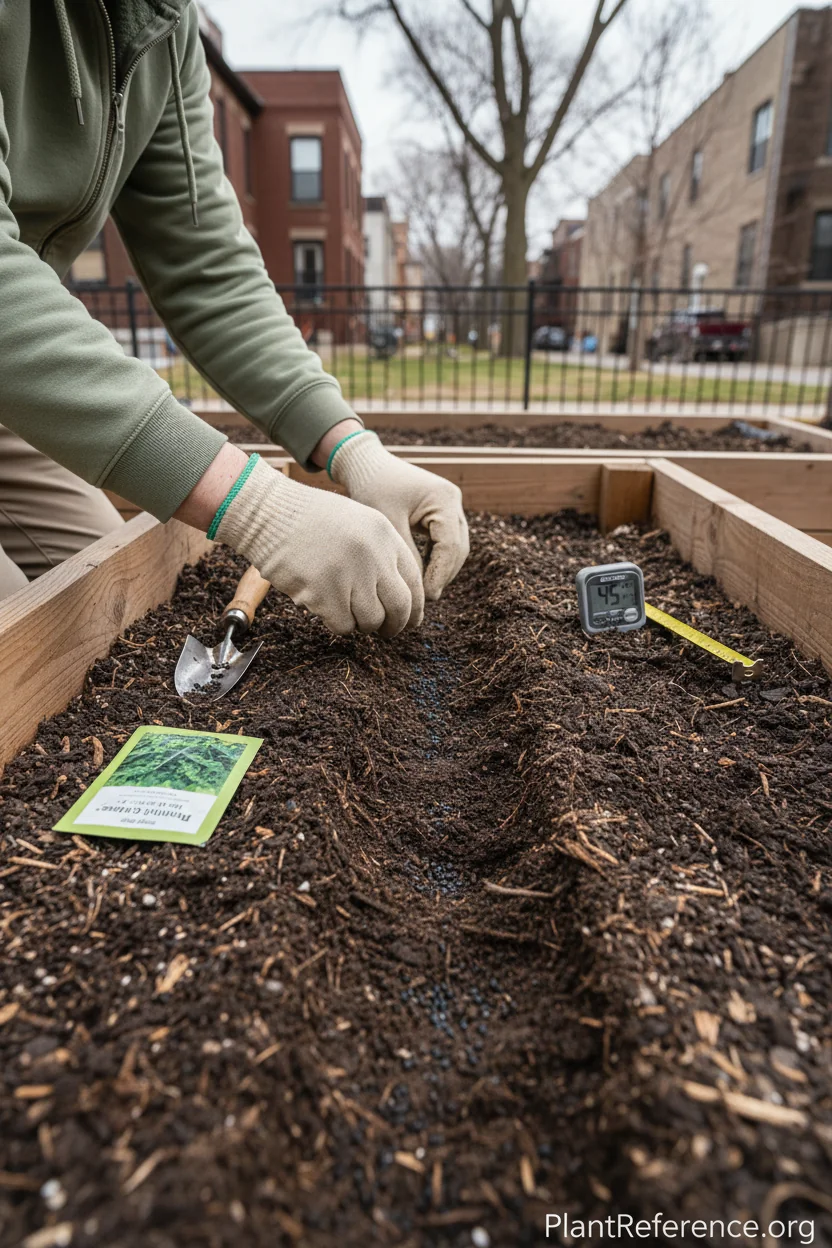
Direct Sowing: March 15-April 1 Direct sow outdoors when soil can be worked and daytime temperatures consistently reach 40°F (4°C). Chicago's soil typically thaws enough for working by mid-March. Plant seeds ½ inch (1.3 cm) deep, spacing them 2 inches (5 cm) apart in rows 12 inches (30 cm) apart.
Transplanting: March 20-April 5 Transplant indoor-started seedlings after hardening off for 7-10 days. Chicago's last frost date is May 9, but kale can handle light frosts, so you can safely transplant 3-4 weeks before this date.
Fall Planting Schedule (Recommended)
Direct Sowing: August 1-15 This is when I do most of my kale planting in Chicago. Starting August 1-15 gives plants 8-10 weeks to reach maturity before our first frost around October 14. The key is getting plants established while days are still long enough for good growth.
Succession Planting: August 15-September 1 For continuous harvest, plant a second round 2-3 weeks after your first planting. These later plantings will be smaller at first frost but will continue growing slowly through fall and winter with protection.
Calculating Harvest Dates
Spring Planting Harvest: Plan to harvest spring-planted kale from May 15 through July 1. After that, Chicago's summer heat typically causes plants to bolt or become too bitter for good eating.
Fall Planting Harvest: Fall-planted kale reaches harvest size by October 1-15, right when our first frosts begin. This is perfect timing because frost actually improves kale's flavor by converting starches to sugars. Continue harvesting through November, December, and even January with proper protection.
Complete Growing Guide for Chicago
Success with kale in Chicago comes down to understanding our unique climate challenges and working with them rather than against them. Our continental climate means temperature swings, variable spring weather, and the potential for both late spring and early fall frosts.
Soil Preparation for Chicago Conditions
Chicago's clay-heavy soils present specific challenges for kale growing. The good news is that kale is more tolerant of heavy soils than many vegetables, but proper preparation still makes a huge difference.
pH Requirements: Test your soil pH—it should be between 6.0-7.0 for optimal kale growth. Chicago soils tend to be slightly alkaline due to our limestone bedrock, which is actually beneficial for preventing clubroot disease that can affect brassicas.
Drainage Improvements: If you're dealing with heavy clay (common in many Chicago neighborhoods), add 2-3 inches (5-8 cm) of compost annually. This improves drainage while adding organic matter that kale absolutely loves.
Work compost into the top 6-8 inches (15-20 cm) of soil
Add coarse sand (not fine sand) if drainage is very poor
Consider raised beds in areas with standing water
Ensure beds drain well to prevent root rot in Chicago's wet springs
Fertilizing Strategy for Chicago's Growing Season
Kale is a heavy nitrogen feeder, which works well with Chicago's typical gardening schedule. Apply a balanced fertilizer (10-10-10) at planting time, then side-dress with nitrogen-rich fertilizer 4-6 weeks later.
Spring Feeding Schedule:
At planting (March): Apply balanced fertilizer
Mid-April: Side-dress with blood meal or fish emulsion
Early May: Final nitrogen application before harvest
Fall Feeding Schedule:
At planting (August): Apply balanced fertilizer with higher phosphorus to encourage root development
Early September: Light nitrogen feeding to support leaf development
Stop feeding by October 1 to help plants prepare for winter
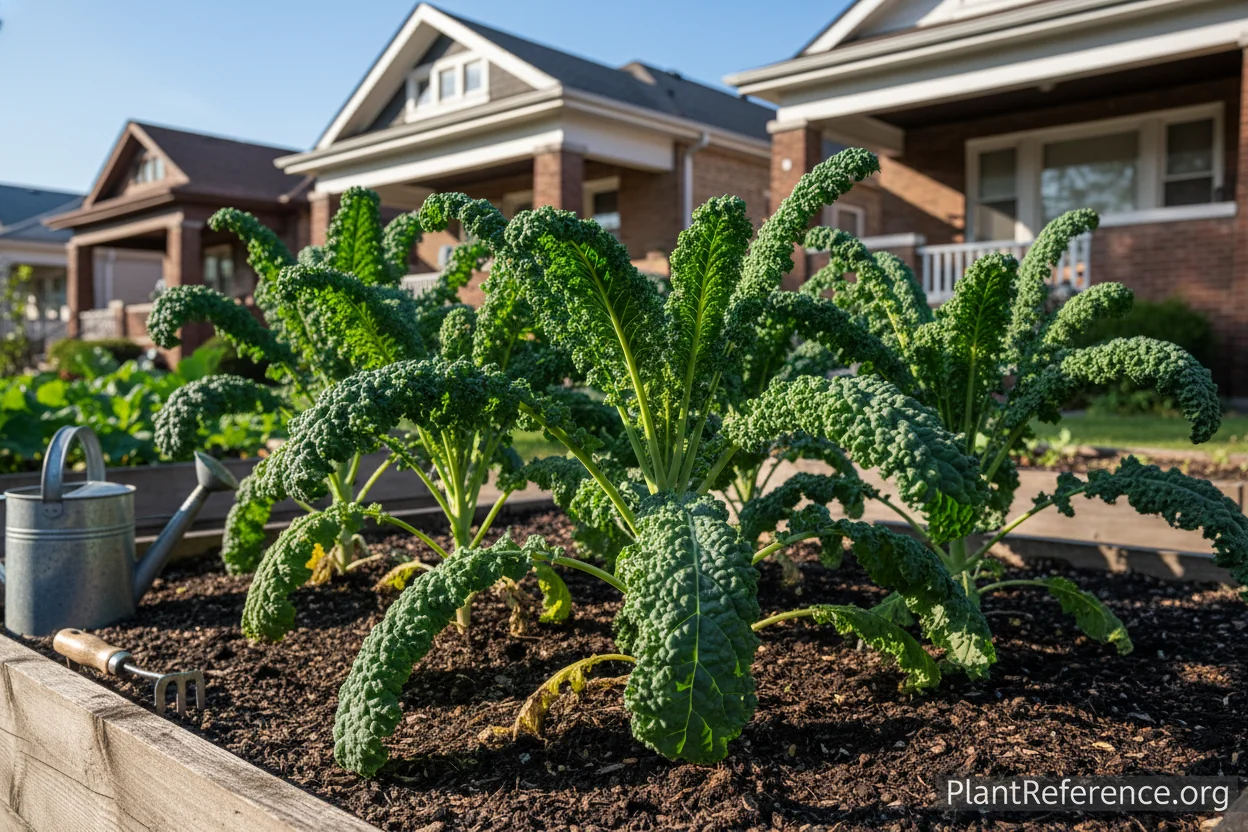
Watering Guidelines for Chicago's Variable Climate
Chicago's rainfall patterns can be erratic, with wet springs followed by dry summers. Kale prefers consistent moisture but can't tolerate waterlogged conditions.
Spring Watering: Chicago springs are often wet enough that supplemental watering isn't needed. Monitor soil moisture and only water if the top 2 inches (5 cm) of soil are dry.
Summer Watering: If you're pushing spring kale into early summer, increase watering frequency. Kale needs about 1-1.5 inches (2.5-3.8 cm) of water per week during warm weather.
Fall/Winter Watering: Reduce watering as temperatures drop and growth slows. Water deeply but less frequently, and always water in the morning so leaves have time to dry before nightfall.
Season Extension Techniques
Chicago's Zone 6a climate offers excellent opportunities for extending your kale harvest well into winter and even year-round production with proper protection.
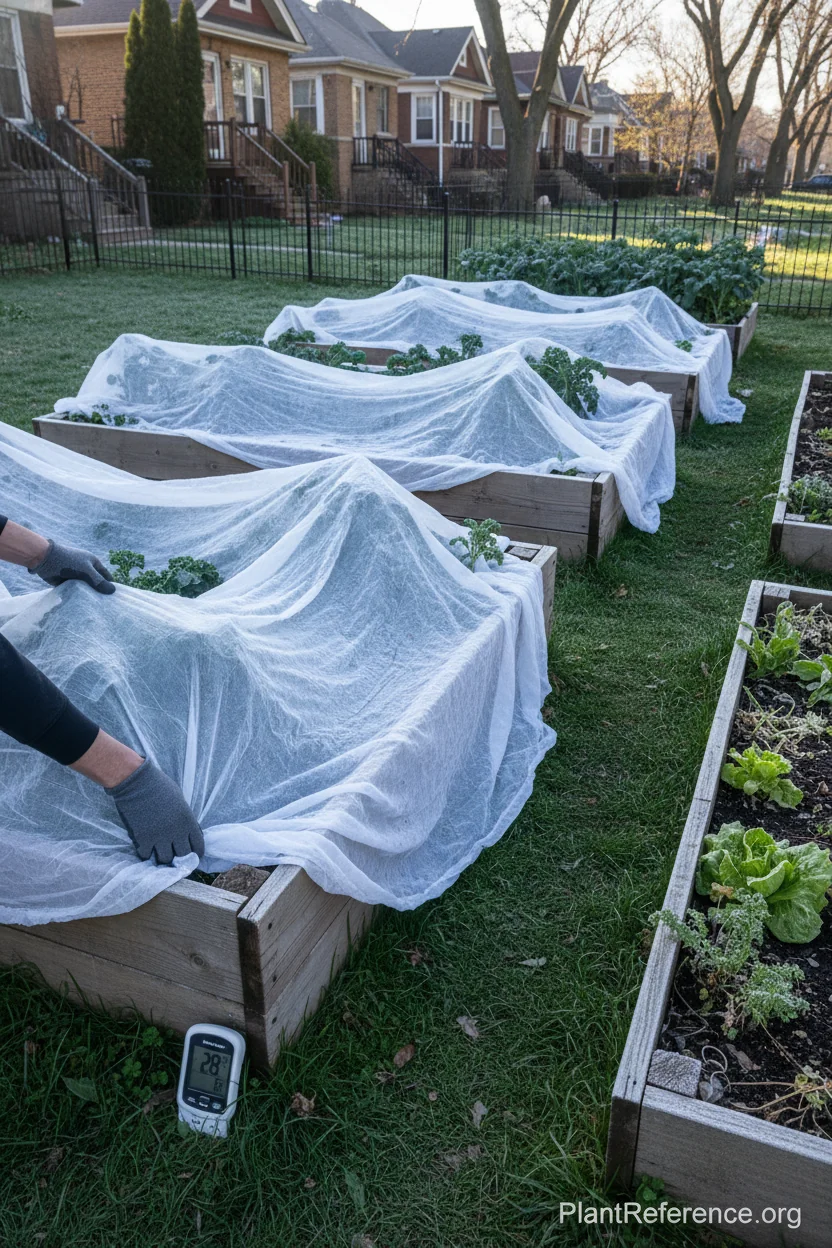
Row Covers: Lightweight row covers (0.5-0.9 oz per square yard) can extend your harvest 4-6 weeks past first frost. Install covers when nighttime temperatures consistently drop below 35°F (2°C).
Cold Frames: A simple cold frame can keep kale producing through Chicago's winter. Position frames on the south side of your house or fence for maximum sun exposure and wind protection.
Mulching for Winter Survival: Apply 4-6 inches (10-15 cm) of straw mulch around plants in late November. This insulates roots and helps prevent freeze-thaw cycles that can damage plants.
Troubleshooting Chicago-Specific Problems
Every region has its unique gardening challenges, and Chicago is no exception. After decades of growing kale here, I've encountered just about every problem you might face and learned how to handle them.
Spring Frost Protection
Late spring frosts can occur in Chicago even after our average last frost date of May 9. While kale can handle light frosts, temperatures below 25°F (-4°C) can damage tender new growth.
Signs of Frost Damage: Leaves appear water-soaked and wilted in the morning after a frost. Severely damaged leaves turn black and mushy within 24 hours.
Recovery Strategy: Remove damaged leaves immediately to prevent rot from spreading. Healthy growing points will usually recover and produce new leaves within 7-10 days.
Prevention: Monitor weather forecasts closely during April and early May. Cover plants with old bedsheets, row covers, or even newspaper when frost is predicted.
Heat Stress and Bolting
Chicago's summers can surprise you with sudden heat waves that stress cool-season crops like kale. When temperatures stay above 80°F (27°C) for several consecutive days, kale plants may bolt prematurely.
Early Warning Signs: Look for elongated stems in the center of the plant and small yellow flower buds forming. Leaves may also become more bitter and tough.
Damage Control: Once plants start bolting, harvest all usable leaves immediately. The flower shoots (called "raab") are actually edible and quite tasty—think of them as a bonus crop.
Prevention Strategies: Plant heat-tolerant varieties like 🌿Brassica oleracea 'Lacinato' for spring crops. Provide afternoon shade during heat waves using shade cloth or plant taller crops nearby.
Pest Management for Chicago Gardens
Chicago's urban environment creates unique pest pressures that rural gardeners don't face. However, the same urban density also supports beneficial insects that help control pests naturally.
Cabbage Worms (Most Common Problem): These green caterpillars are the larvae of those white butterflies you see fluttering around your garden. They can devastate kale plants quickly.
Signs: Large irregular holes in leaves, green caterpillars on leaf undersides, dark green frass (droppings) on leaves.
Control: Hand-picking works for small infestations. For larger problems, spray with Bt (Bacillus thuringiensis) every 7-10 days. Row covers prevent adult butterflies from laying eggs.
Aphids (Spring Problem): These tiny insects cluster on new growth and can cause leaves to curl and yellow.
Signs: Sticky honeydew on leaves, ants farming aphids, distorted leaf growth.
Control: Strong water spray dislodges most aphids. Neem oil spray works for persistent infestations. Encourage beneficial insects like ladybugs and lacewings.
Flea Beetles (Early Season Issue): These tiny jumping beetles create shot-hole damage on young plants and can kill seedlings.
Signs: Small round holes in leaves, tiny black beetles that jump when disturbed.
Control: Row covers are essential for protecting young plants. Diatomaceous earth around plants helps deter adults. Keep garden area weed-free to eliminate overwintering sites.
Disease Issues in Chicago's Humid Climate
Chicago's humid summers can promote fungal diseases, especially on stressed plants. Most problems can be prevented with good cultural practices.
Clubroot Prevention: This soil-borne disease causes swollen, distorted roots and stunted growth. It's more common in acidic soils but can occur in Chicago's alkaline conditions if soils stay too wet.
Prevention: Ensure good drainage, rotate crops (don't plant brassicas in the same spot for 4 years), and maintain soil pH above 6.5.
Black Rot Management: This bacterial disease causes V-shaped yellow lesions on leaves that progress inward from the margins.
Prevention: Avoid overhead watering, especially in the evening. Space plants properly for good air circulation. Remove affected plants immediately and don't compost them.
Harvest & Storage
Proper harvesting technique makes the difference between a one-time crop and continuous production throughout the growing season. Kale is remarkably generous if you treat it right.
Harvesting Techniques for Maximum Production
Cut-and-Come-Again Method: Always harvest outer, older leaves first, leaving the central growing point intact. This allows the plant to continue producing new leaves from the center. Never harvest more than one-third of the plant's leaves at one time.
Leaf Selection: Choose leaves that are 6-8 inches (15-20 cm) long for best flavor and texture. Smaller leaves are tender but less substantial, while leaves over 10 inches (25 cm) may be tough and bitter.
Timing for Best Flavor: In Chicago, the absolute best time to harvest kale is after our first light frost, typically in mid to late October. The cold triggers the plant to convert starches to sugars, dramatically improving flavor. Frost-sweetened kale is a completely different vegetable than summer-harvested leaves.
Storage Methods for Chicago Gardeners
Fresh Storage: Unwashed kale keeps in the refrigerator for 5-7 days when stored in perforated plastic bags. Wash leaves just before use to prevent premature wilting.
Long-Term Preservation: Kale freezes exceptionally well. Blanch leaves in boiling water for 2-3 minutes, plunge into ice water, drain thoroughly, and freeze in portions. Frozen kale is perfect for soups, smoothies, and cooked dishes.
Winter Harvesting: In Chicago, you can harvest fresh kale through December and even January if plants are protected with row covers or cold frames. Cut leaves in the afternoon when they're not frozen solid from overnight cold.
Frequently Asked Questions
Reading about plants and recognising them are different skills. These three build the second.
- Daily PlantIdentify the day’s mystery plant from a close-up photograph.
- Keyed OutWork a dichotomous key, lead by lead, to name a hidden specimen.
- Name That PlantName a specimen from botanical clues dealt hardest first.
Free to play, no account needed
Pat has been gardening in Milwaukee for over thirty years, through every kind of Wisconsin weather. She worked as a school librarian and started gardening seriously when her kids were small—she wanted them to know where food came from. Now retired, she's a certified Master Gardener and runs the plant sale at her local garden club every spring. She specializes in cold-hardy perennials, native wildflower meadows, and the art of getting a vegetable garden producing in Wisconsin's short but intense growing season. Pat is practical and patient—she's seen enough Wisconsin winters to know that gardening here is a long game, and she writes with the steady confidence of someone who's been doing this a long time.