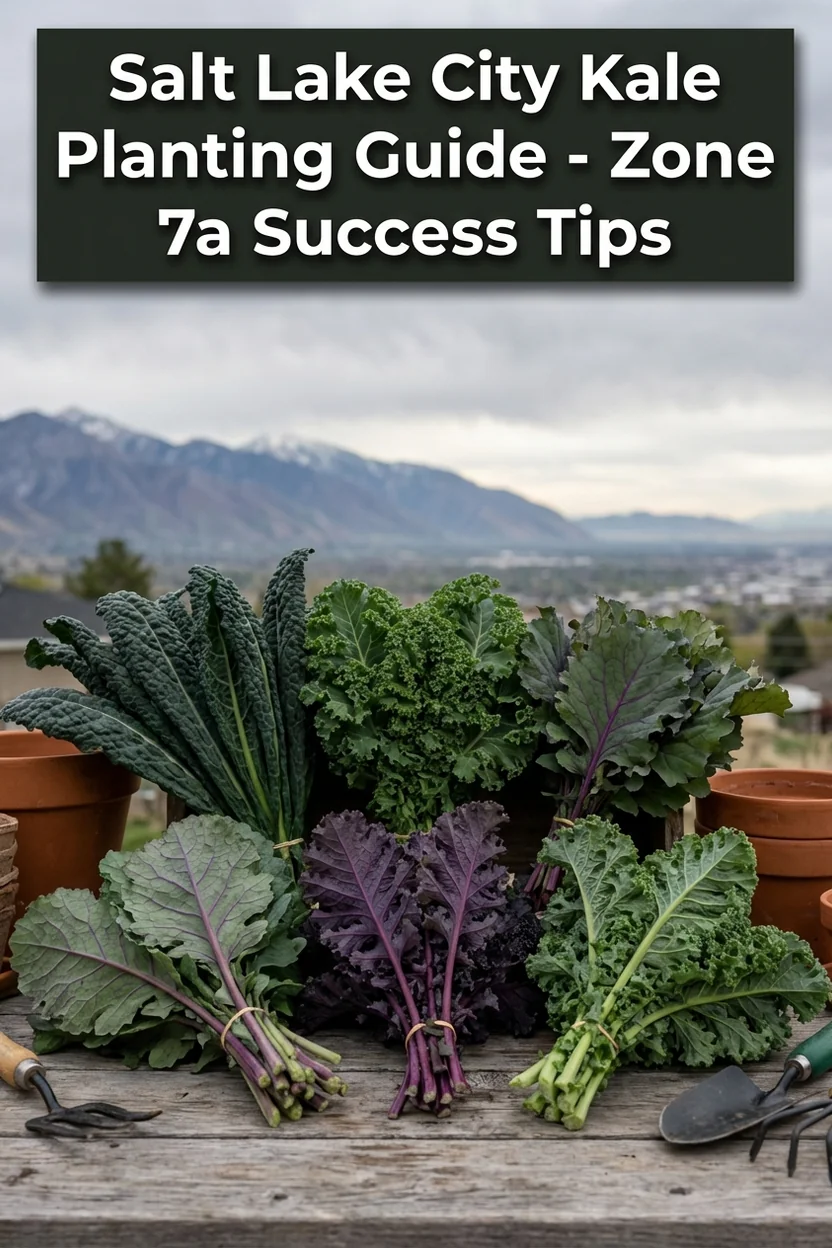
When to Plant Kale in Salt Lake City: Complete Guide + Best Varieties for Zone 7a
Pets & Toxicity
Recorded toxicity for plants linked in this guide. An unknown status is not a safety assessment.
No linked plant is recorded as toxicDetailsHide
Brassica oleracea var. sabellica 'Vates' — Toxicity
Non-toxicView Brassica oleracea var. sabellica 'Vates' plant profileBrassica oleracea 'Red Russian' — Toxicity
Non-toxicView Brassica oleracea 'Red Russian' plant profile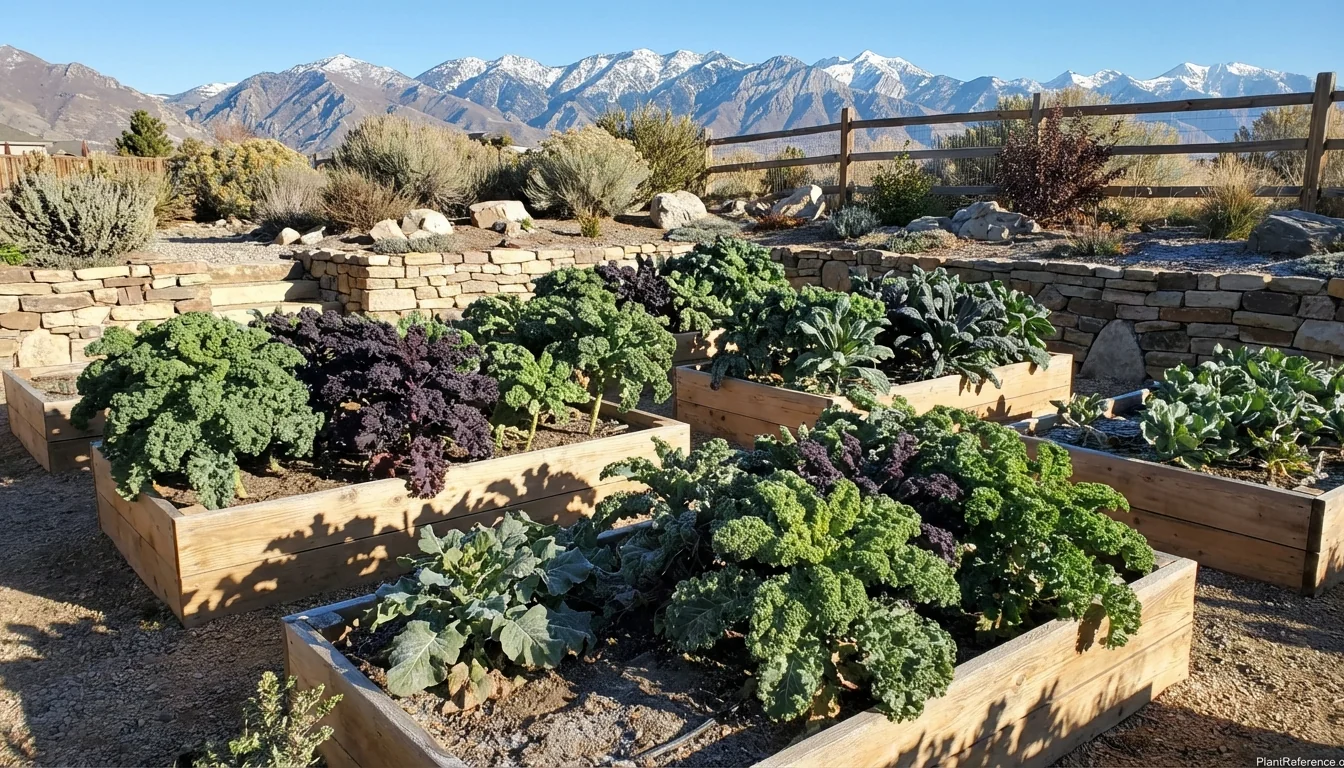
— Image © Plant Reference 2026
Salt Lake City gardeners have hit the jackpot for growing kale 🌿Brassica oleracea 'Vates' (BRASS-ih-kuh oh-ler-AY-see-uh). Utah's high altitude Zone 7a climate creates nearly perfect conditions for this cold-hardy green, with cool nights, moderate days, and that magical frost that transforms ordinary kale into candy-sweet perfection.
I've been growing kale in mountain climates for forty years, and I'll tell you what works in Salt Lake City's unique high desert environment. The elevation here—over 4,200 feet—means cooler nights even in summer, excellent drainage, and intense sunshine that kale absolutely loves during the cool months. Your biggest advantage is that 173-day growing season with reliable frost dates that let you plan precisely.
The key to Salt Lake City kale success is understanding that fall planting beats spring planting every single time. When frost hits your kale in October and November, the plant converts starches to sugars as a survival mechanism. That's what transforms tough, bitter leaves into sweet, tender greens that'll make you wonder why anyone grows spinach.
Best Kale Varieties for Salt Lake City's Climate
Salt Lake City's Zone 7a climate with its high altitude, intense sun, and reliable frost pattern works beautifully for all kale varieties. Here's what I've learned about each one in Utah conditions:
Variety | Days to Maturity | Best For | Notes for Salt Lake City |
|---|---|---|---|
60-75 days | Winter harvest | Excellent cold tolerance, sweet after frost | |
60-75 days | Overwintering | Survives Utah's harsh winters with protection | |
50-60 days | Quick spring crop | Fast maturing, good for elevation | |
60-75 days | Ornamental & eating | Purple color intensifies in mountain cold | |
55-65 days | Compact spaces | Perfect for Utah's windy conditions |
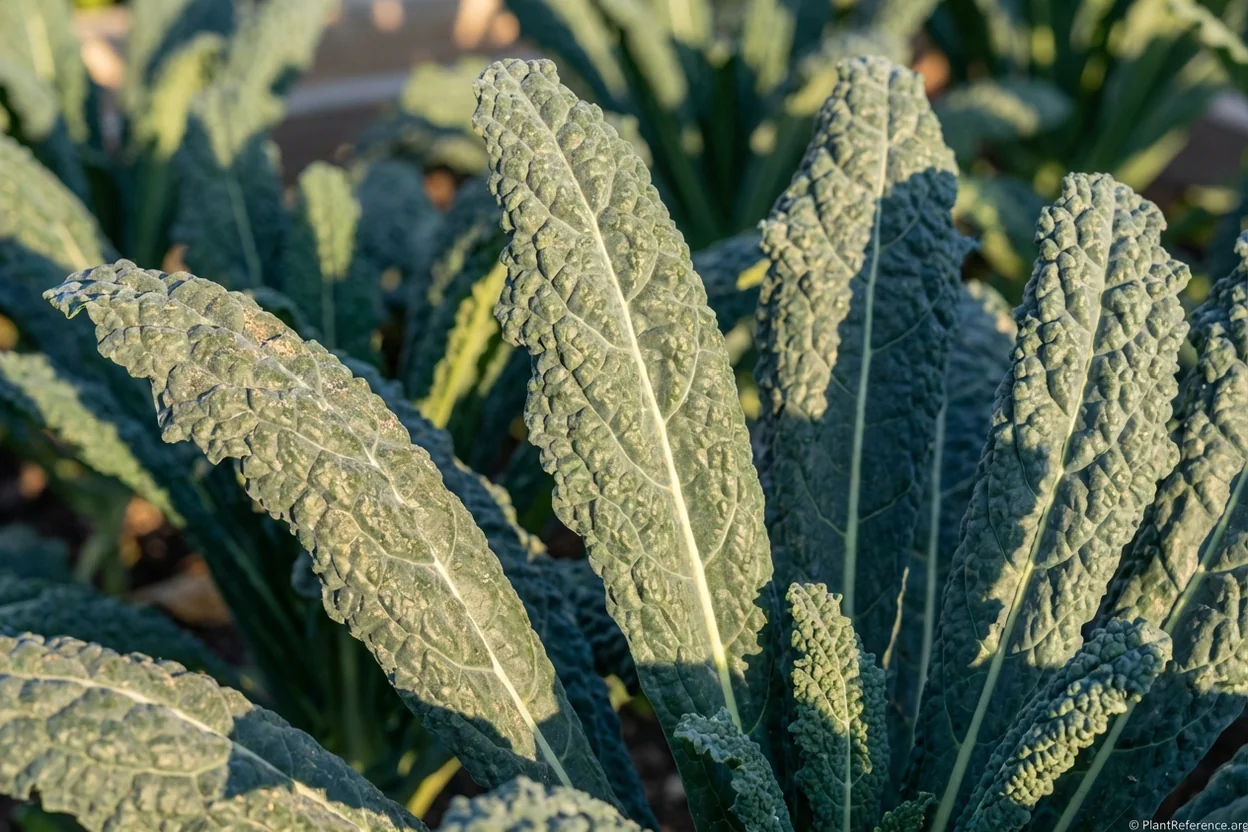
🌿Brassica oleracea 'Lacinato' is my top recommendation for Salt Lake City. This Tuscan variety, also called Dinosaur kale, has flat, heavily textured leaves that handle your intense mountain sun without burning. It's incredibly cold-hardy and actually improves in flavor as temperatures drop. The leaves stay tender even after light frosts that would damage other greens.
🌿Brassica oleracea 'Winterbor' earns its name in Salt Lake City winters. This curly variety can survive temperatures down to 10°F (-12°C) with light protection. The deeply ruffled leaves trap snow, which acts as insulation. I've harvested fresh Winterbor in January after it spent weeks buried under snow.
🌿Brassica oleracea 'Red Russian' is your speed demon for quick spring harvests. At 50-60 days to maturity, it's ready before Salt Lake City's summer heat builds up. The flat, oak-leaf shaped leaves with purple veins are tender enough for salads and sweet enough that kids actually eat them.
🌿Brassica oleracea 'Redbor' turns absolutely stunning in Utah's fall weather. Cold temperatures intensify the purple coloring until the plants look like they're glowing. It's every bit as cold-hardy as Winterbor but with twice the visual appeal.
🌿Brassica oleracea 'Vates' is perfect if you're dealing with Salt Lake City's notorious winds. This compact variety stays low and sturdy, rarely exceeding 16 inches tall. It's ideal for container growing on patios or balconies where wind exposure is severe.
Specific Planting Dates for Salt Lake City
Salt Lake City's frost dates—last frost April 24, first frost October 14—give you precise timing for kale success. Here's exactly when to plant for maximum yield and quality:
Fall Planting (Recommended): - Direct sow: August 1-15 - Transplant: July 15-30 (start indoors July 1) - Harvest begins: October 1 and continues through November - Why it works: Plants mature just as cool weather arrives, frost sweetens leaves
Spring Planting: - Direct sow: March 15-30 - Transplant: March 1-15 (start indoors February 15) - Harvest begins: May 15 and continues until heat builds in late June - Why it's trickier: Utah's rapid spring warmup can trigger early bolting
I always tell Salt Lake City gardeners to focus on fall planting. Your elevation means nights stay cool well into summer, but once July heat hits, spring-planted kale turns bitter and tough. Fall-planted kale, on the other hand, just keeps getting sweeter as temperatures drop.
Calculating Your Planting Dates:
For fall harvest, count backward from first frost (October 14):
Lacinato/Winterbor/Redbor: 75 days = plant by July 31
Red Russian: 60 days = plant by August 15
Vates: 65 days = plant by August 10
For spring harvest, count forward from last frost (April 24):
Direct sow: March 15-30 (4-6 weeks before last frost)
Transplant: March 1-15 (transplant 2-4 weeks before last frost)
Succession Planting: Plant new rows every 2-3 weeks from August 1-31 for continuous fall harvest. Spring succession works from March 15 through May 1, but expect declining quality as heat builds.
Complete Growing Guide for Salt Lake City
Growing kale in Salt Lake City means working with your unique high desert advantages: excellent drainage, intense sunlight, cool nights, and low humidity that reduces disease pressure.
Soil Preparation: Salt Lake City's clay-heavy, alkaline soils need amendment for kale success. Your typical soil pH runs 7.5-8.5, which is actually perfect for kale—it prefers slightly alkaline conditions and won't develop clubroot disease in high pH soil.
Add 2-3 inches of compost or aged manure before planting. The organic matter improves drainage in clay soils and adds nutrients. I never worry about sulfur or acidifiers here—your natural pH is exactly what kale wants.
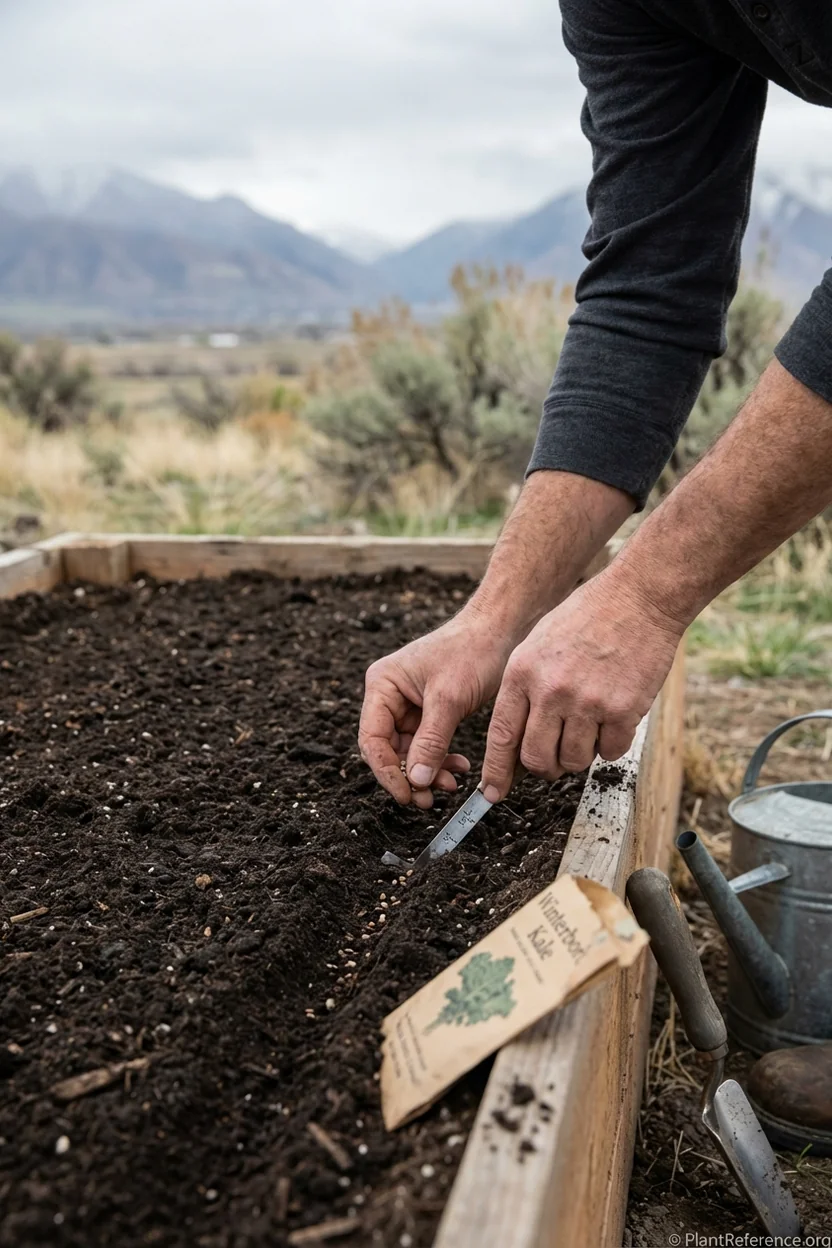
Planting Technique: - Direct sowing: Plant seeds ¼ inch deep, 12 inches apart in rows 18 inches apart - Transplanting: Start seeds indoors 6-8 weeks before transplant date - Water immediately after planting—Utah's low humidity desiccates soil quickly
Irrigation Strategy: Salt Lake City's 16 inches of annual rainfall means you'll be watering regularly. Kale needs consistent moisture but never waterlogged soil. Your clay soils hold water well but can become brick-hard when dry.
Water deeply once or twice weekly rather than daily light watering. Apply 1 inch per week, including rainfall. Drip irrigation works exceptionally well in Utah's low humidity since you lose minimal water to evaporation.
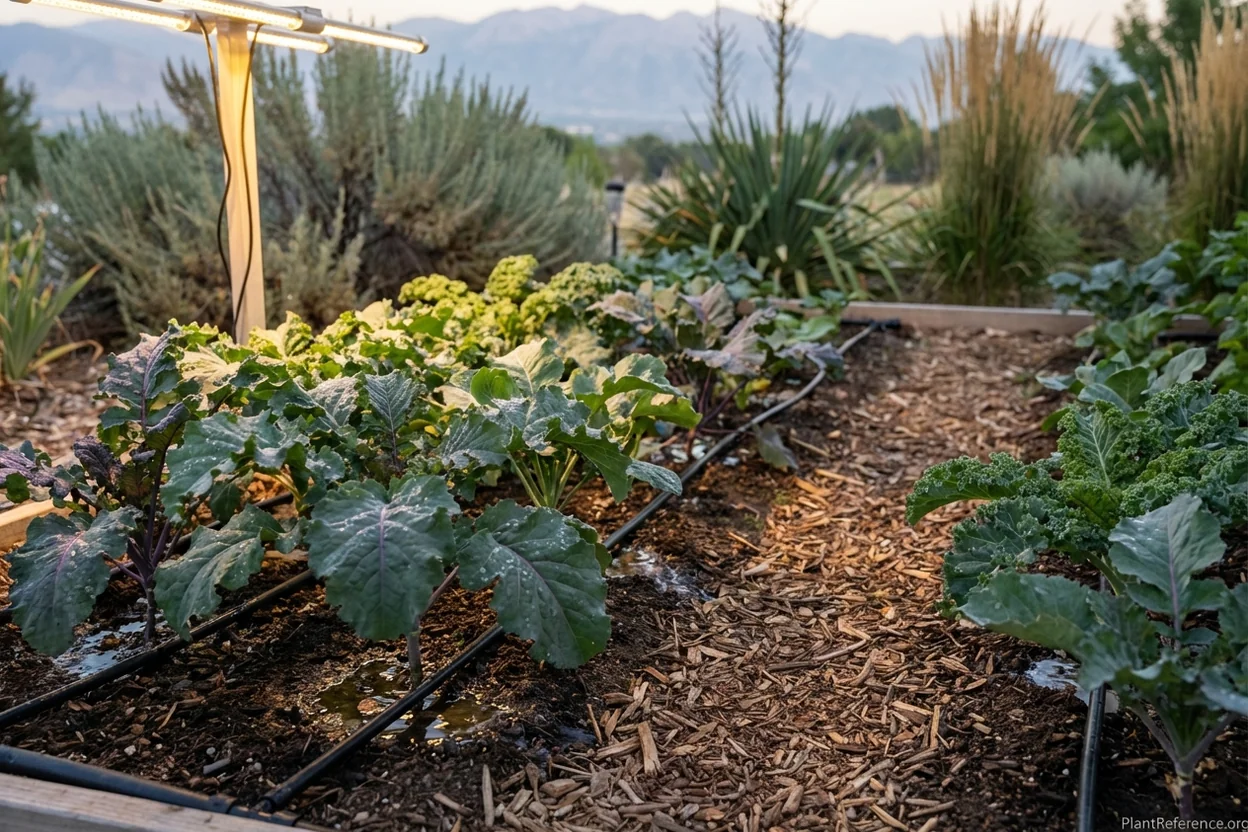
Fertilization: Start with balanced organic fertilizer (10-10-10) at planting. Side-dress with nitrogen source like blood meal or fish emulsion 4 weeks after planting. Utah's alkaline soils can lock up iron, so watch for yellowing between leaf veins (chlorosis) and apply iron chelate if needed.
Mulching: Mulch is critical in Salt Lake City's intense sun and low humidity. Apply 2-3 inches of straw or shredded leaves around plants to retain moisture and regulate soil temperature. Keep mulch 2 inches away from plant stems to prevent pest hiding spots.
Season Extension: Use row covers for early plantings and late season protection. Your clear, dry air means rapid temperature swings, so covers help stabilize conditions. Cold frames extend harvest well into December in most years.
Troubleshooting Salt Lake City-Specific Problems
Salt Lake City's high altitude, alkaline soil, and extreme weather swings create unique challenges. Here's how to handle the most common issues:
Cabbage Worms: These green caterpillars are your biggest pest threat. The adults (white butterflies) are active from May through September. Use row covers on spring plantings and spray organic BT (Bacillus thuringiensis) weekly on uncovered plants.
Flea Beetles: These tiny black jumping beetles attack young seedlings, creating shot-hole damage. Most problematic in spring when soil is warming up. Row covers are essential for the first 4-6 weeks after planting.
Wind Damage: Salt Lake City's canyon winds can shred large kale leaves and topple tall varieties. Choose compact varieties like Vates for exposed locations. Install windbreaks using landscape fabric or plant taller crops like sunflowers as natural protection.
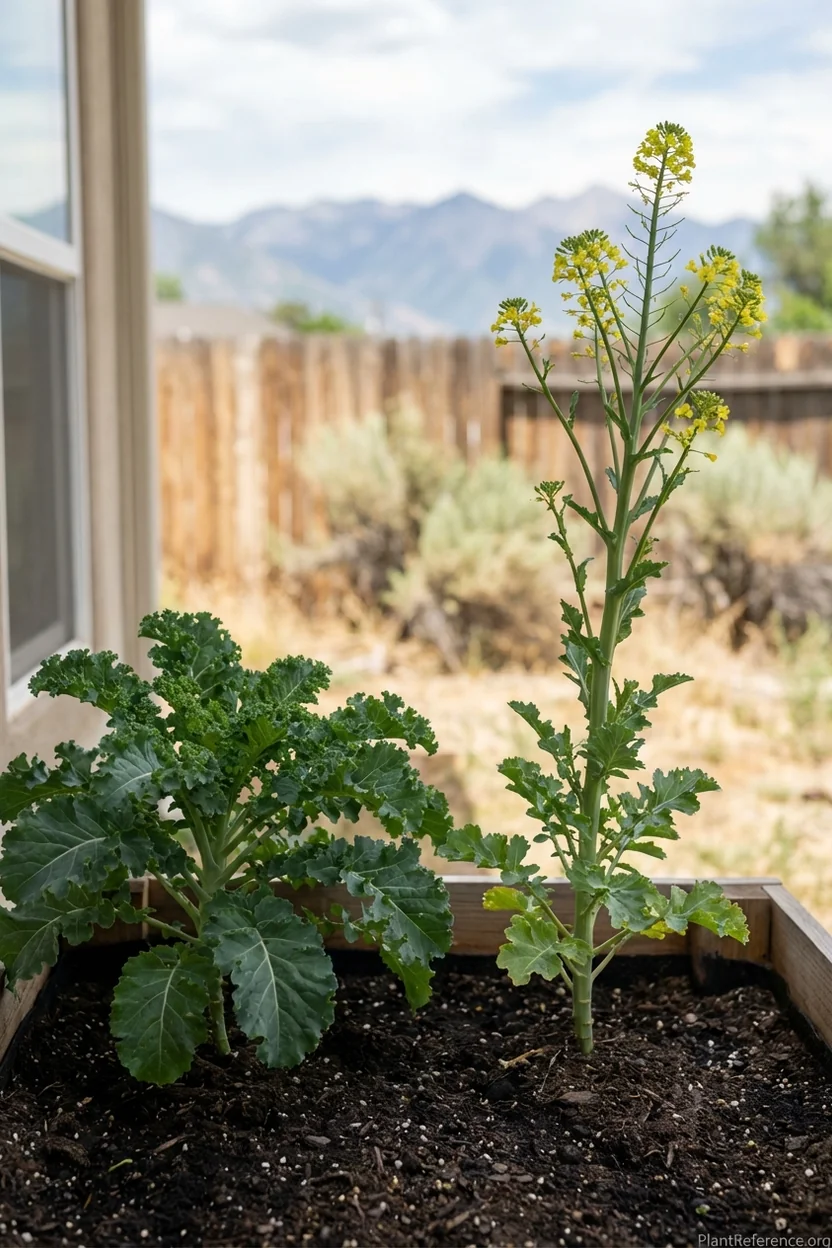
Rapid Bolting: Spring-planted kale may bolt (flower) prematurely if temperature swings are extreme. This happens when warm March days are followed by cold snaps, then sudden heat in May. Choose bolt-resistant varieties and use row covers to moderate temperature swings.
Salt Burn: Winter road salt can drift into gardens near streets. Kale is moderately salt-tolerant, but excess sodium causes leaf burn and poor growth. Flush affected soil with deep watering in spring and add gypsum to improve sodium drainage.
Iron Chlorosis: Alkaline soils can bind iron, causing yellowing between leaf veins while veins stay green. Apply chelated iron according to package directions. Long-term solution is adding organic matter to improve soil structure.
Sudden Temperature Drops: Utah weather can drop 40 degrees overnight. Protect plants with row covers, blankets, or even cardboard boxes when hard freezes threaten. Most kale survives light frost (28-32°F) without protection.
Harvest & Storage
Harvest timing makes the difference between mediocre kale and restaurant-quality greens. In Salt Lake City, your best harvest window runs from October through November for fall-planted crops.
When to Harvest: Begin harvesting when leaves reach 6-8 inches long, typically 8-10 weeks after planting. Always harvest outer leaves first, leaving the center growing point intact. The plant will continue producing new leaves for 8-12 weeks.
Post-Frost Harvest: This is where Salt Lake City kale shines. After your first frost in mid-October, taste your kale again. The transformation is remarkable—bitter compounds decrease while natural sugars increase dramatically. October and November kale tastes like candy compared to August harvest.
Storage Methods: - Fresh: Store unwashed leaves in perforated plastic bags in the refrigerator for up to one week - Freezing: Blanch leaves for 2 minutes, shock in ice water, drain thoroughly, and freeze in portions - Dehydrating: Make kale chips by dehydrating at 135°F for 6-8 hours
Preservation: Salt Lake City's dry air makes dehydrating particularly effective. Your low humidity means faster drying times and better color retention than humid climates achieve.
Frequently Asked Questions
Reading about plants and recognising them are different skills. These three build the second.
- Daily PlantIdentify the day’s mystery plant from a close-up photograph.
- Keyed OutWork a dichotomous key, lead by lead, to name a hidden specimen.
- Name That PlantName a specimen from botanical clues dealt hardest first.
Free to play, no account needed
Yuki is a landscape designer in Salt Lake City who specializes in water-wise gardens that work with Utah's dry climate and alkaline soil. She moved to Utah from Portland, Oregon—a rude awakening for someone used to gardening in rich, acidic soil with reliable rainfall. That transition taught her to rethink everything she knew about plant selection and garden design. Yuki now focuses on intermountain-adapted plantings that combine ornamental grasses, drought-tolerant perennials, and carefully chosen shrubs for year-round interest. She works with homeowners looking to reduce water use without giving up on having an attractive garden. Yuki writes with the clarity of someone who had to learn a new climate from scratch.