When to Plant Kale in Richmond: Complete Guide + Best Varieties for Zone 7b
Pets & Toxicity
Recorded toxicity for plants linked in this guide. An unknown status is not a safety assessment.
No linked plant is recorded as toxicDetailsHide
Brassica oleracea var. sabellica 'Vates' — Toxicity
Non-toxicView Brassica oleracea var. sabellica 'Vates' plant profile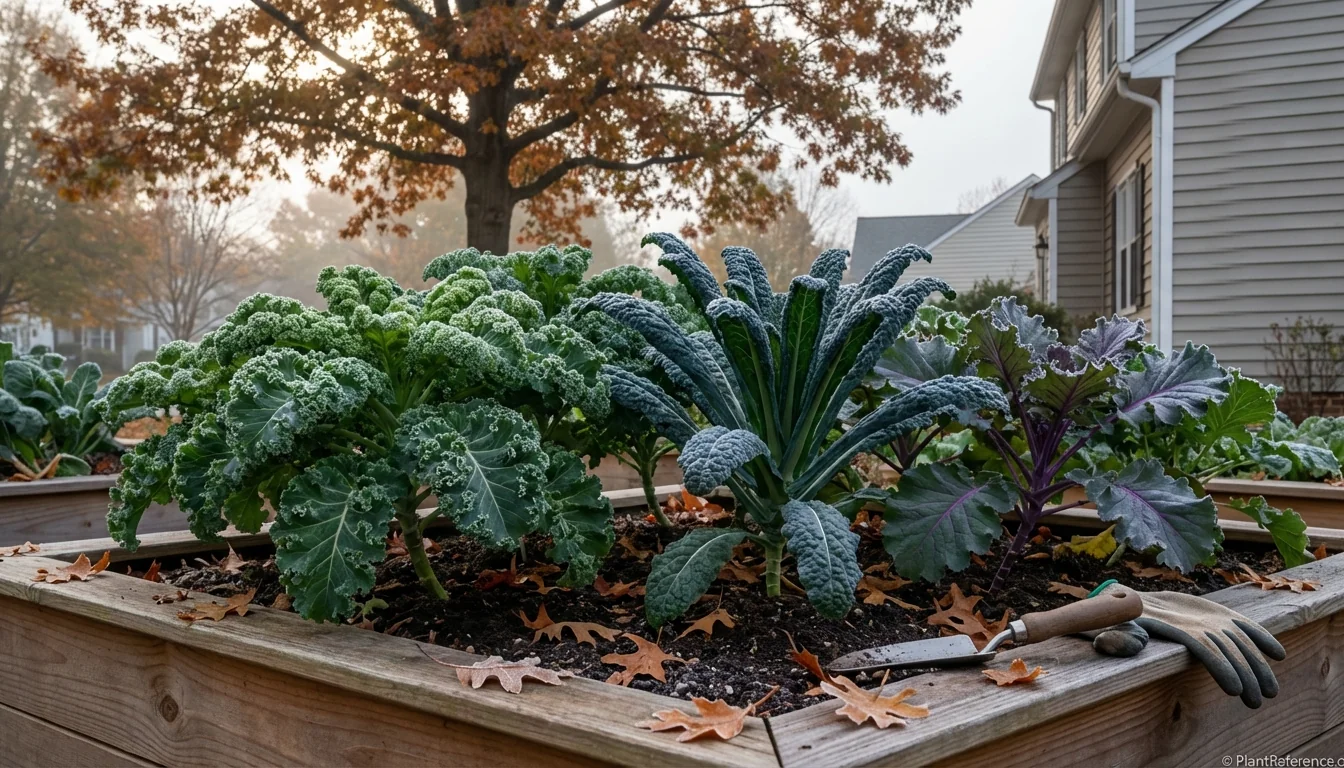
— Image © Plant Reference 2026
Richmond gardeners hit the jackpot with kale—Zone 7b's moderate climate creates nearly perfect conditions for this cold-loving superfood. I've been growing kale in Virginia for thirty years, and I'll tell you straight: Richmond's 193-day growing season offers two excellent planting windows, with fall crops delivering sweetness you simply can't get from spring plantings.
When to plant kale in Richmond depends on understanding our Zone 7b advantages. With last frost around April 14 and first frost October 24, we get a solid 193-day growing season. But here's what forty years of gardening taught me: timing determines everything. Plant too late in spring, and summer heat makes your kale bitter and tough. Plant too early in fall, and you miss the magic window when frost transforms bland leaves into candy-sweet greens.
Richmond's climate offers something special for kale growers—reliable mild winters that allow overwintering with minimal protection. While northern gardeners watch their plants die in January, Richmond kale keeps producing through December and often into February. The key is understanding which varieties thrive here and when to plant them.
Best Kale Varieties for Richmond's Zone 7b Climate
Zone 7b Richmond offers ideal conditions for all major kale varieties 🌿Brassica oleracea 'Vates' (BRASS-ih-kuh oh-ler-AH-see-uh), but selecting the right variety for your planting season makes the difference between mediocre and outstanding harvests.
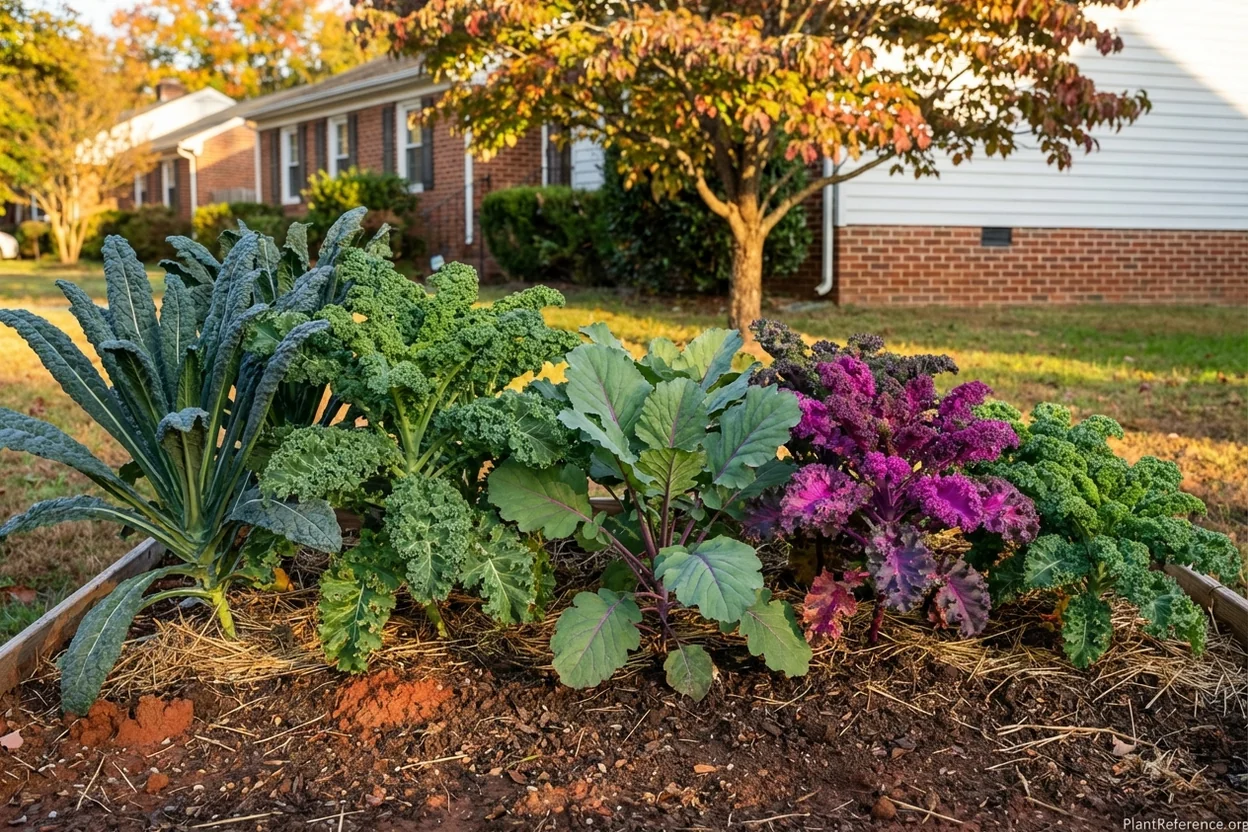
Fall Planting Champions (July-August Planting)
🌿Brassica oleracea 'Winterbor' stands as Richmond's overwintering champion. This F1 hybrid tolerates temperatures down to 10°F (-12°C) with protection, making it perfect for harvesting through Richmond's mild winters. The deeply curled leaves capture snow and develop incredible sweetness after frost. Plant by August 1 for full-size plants before first frost.
🌿Brassica oleracea 'Redbor' brings stunning purple color that intensifies in cold weather. Like Winterbor, it overwinters reliably in Richmond and offers superior cold hardiness. The color provides natural anthocyanin antioxidants, and the flavor rivals any green variety. Plant by July 25 for maximum size.
🌿Brassica oleracea 'Lacinato' produces Richmond's finest-flavored kale with its nutty, earthy sweetness. The flat, dinosaur-textured leaves resist pests better than curly varieties and hold up beautifully through mild Richmond winters. Less cold-hardy than the curly types but perfectly suited to Zone 7b temperatures.
Spring Planting All-Stars (March Planting)
🌿Brassica napus 'Red Russian' matures fastest at 50-60 days, making it perfect for Richmond's spring window. Plant March 1-10 for harvest before summer heat triggers bolting. The tender, flat leaves work beautifully raw in salads and resist toughness better than curly varieties in warming weather.
🌿Brassica oleracea 'Vates' offers compact growth ideal for container gardens and small spaces. This dwarf variety resists bolting longer than most, extending your spring harvest into early June. The fine-textured leaves work well cooked or raw.
Variety | Days to Maturity | Best For | Notes for Richmond |
|---|---|---|---|
60-75 days | Winter harvest | Survives to 10°F with protection, sweetest after frost | |
60-75 days | Ornamental winter | Purple color intensifies in cold, excellent overwintering | |
60-75 days | Gourmet cooking | Superior flavor, good winter survival in Zone 7b | |
50-60 days | Quick spring crop | Fast maturity, tender leaves, bolt-prone in heat | |
55-65 days | Small spaces | Dwarf habit, slow to bolt, good container variety |
Climate Adaptation Strategy
Richmond's Zone 7b presents unique opportunities. Unlike northern zones where kale freezes solid, or southern zones where summer heat dominates, Richmond offers the sweet spot: cold enough for proper vernalization (the process that sweetens kale) but mild enough for winter survival.
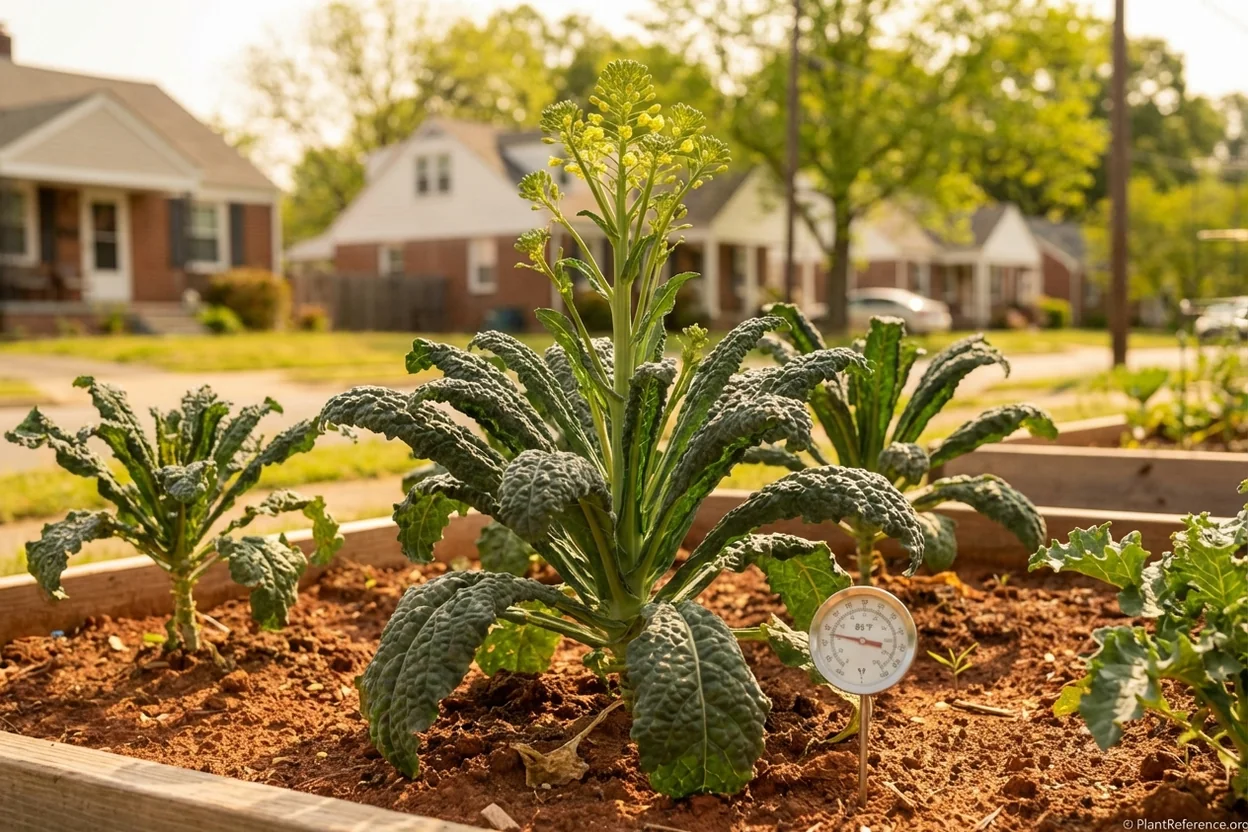
The secret lies in understanding Richmond's specific weather patterns. Our springs warm quickly—by late May, sustained 80°F temperatures trigger bolting. Fall plantings avoid this heat stress and mature during optimal conditions. Winter temperatures rarely drop below 20°F, allowing protected overwintering that northern gardeners envy.
Specific Planting Dates for Richmond
Richmond's April 14 last frost and October 24 first frost create distinct planting windows. After thirty years of trial and error, these dates deliver consistent success.
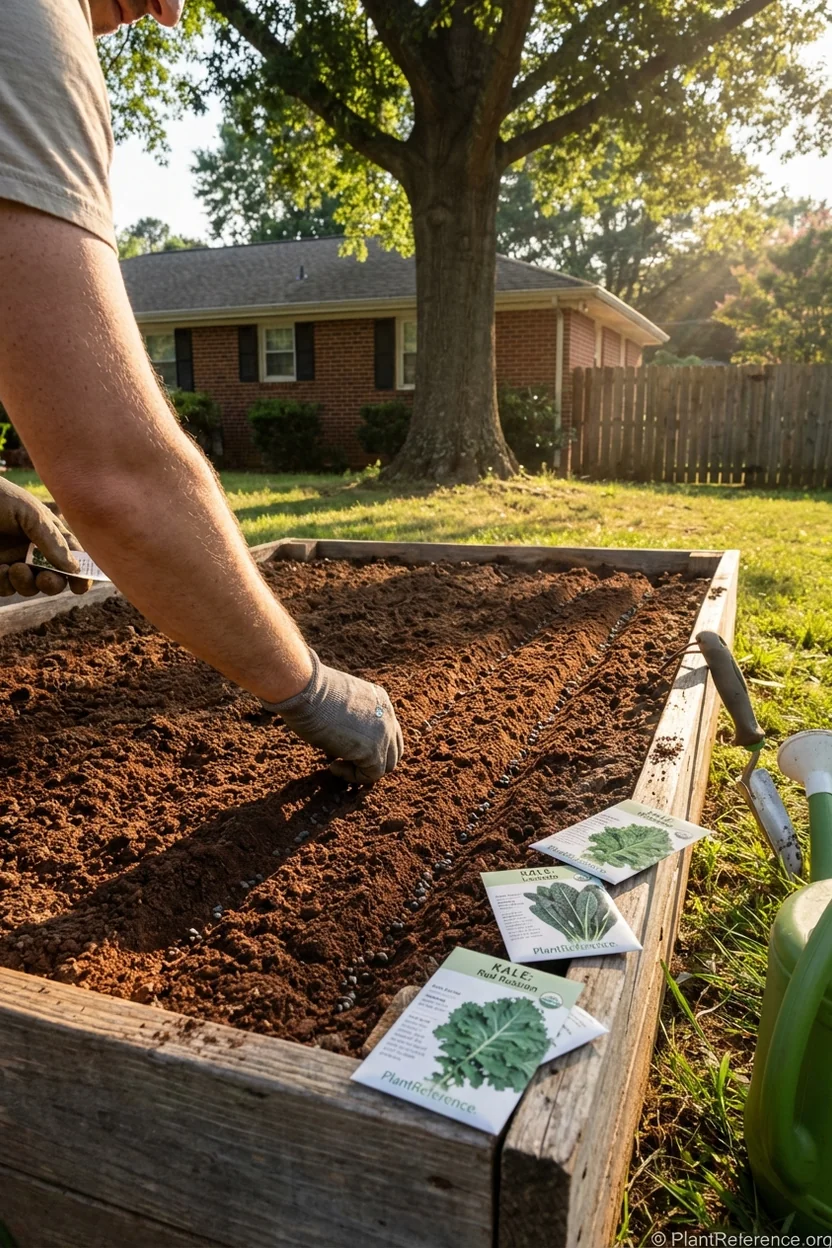
Fall Planting Schedule (Recommended)
July 15-25: Cold-Hardy Varieties Plant 🌿Brassica oleracea 'Winterbor' and 🌿Brassica oleracea 'Redbor' by July 25. These varieties need 75-90 days to reach full size before first frost. Planting by July 25 gives you October 15 maturity—perfect timing for frost sweetening.
July 25-August 5: Standard Varieties 🌿Brassica oleracea 'Lacinato' and 🌿Brassica oleracea 'Vates' require 65-75 days to maturity. August 5 planting provides October 20 harvest start, just before first frost enhances flavor.
August 5-15: Quick-Maturing Types 🌿Brassica napus 'Red Russian' matures in 50-60 days. Plant through August 15 for October harvest. Later plantings work for baby leaf production.
August 15-September 1: Baby Leaf Production All varieties can be planted for baby leaf harvest (30-35 days). These tender young leaves avoid frost entirely but miss the flavor improvement.
Spring Planting Schedule (Alternative)
February 25-March 5: Indoor Seed Starting Start 🌿Brassica napus 'Red Russian' and 🌿Brassica oleracea 'Vates' indoors 6-8 weeks before transplanting. Richmond's variable spring weather makes transplants more reliable than direct seeding.
March 10-20: Transplant/Direct Sow Transplant started seedlings or direct sow when soil temperature reaches 45°F. Young kale tolerates light frosts down to 28°F, but protect from hard freezes with row covers.
March 20-April 1: Final Spring Planting Latest date for spring kale in Richmond. Later plantings risk bolting when May temperatures hit 80°F consistently.
Succession Planting Strategy
For continuous harvest, plant new rows every 2-3 weeks during planting windows. Space plantings:
Fall: July 15, August 1, August 15 (stops growth in winter but continuous harvest)
Spring: March 1, March 15, April 1 (harvest before summer heat)
Richmond's long fall growing season allows extended succession planting impossible in northern zones. A July 15 planting provides harvest from October through March in mild winters.
Complete Growing Guide for Richmond Gardeners
Richmond's Zone 7b climate creates nearly ideal kale-growing conditions with proper variety selection and timing. Understanding our regional challenges—clay soil, humid summers, and variable winter temperatures—ensures success.
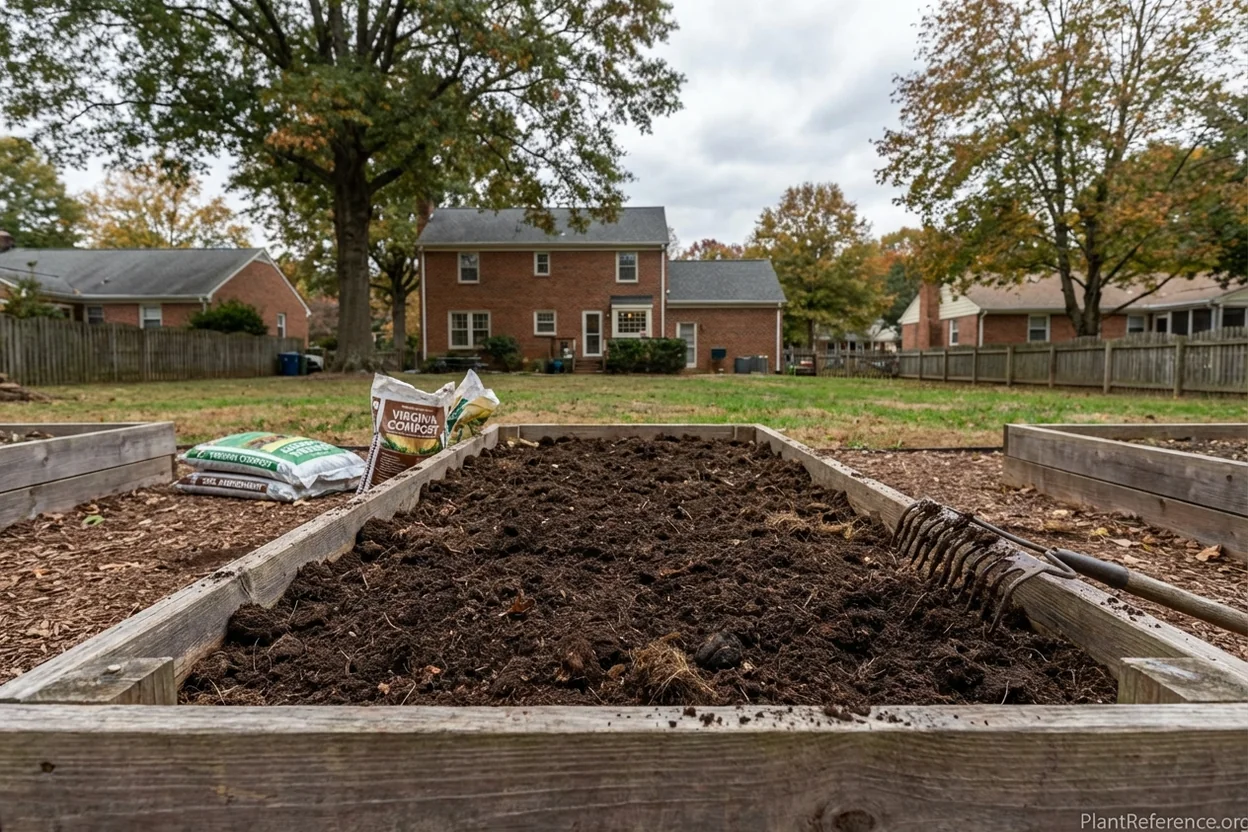
Soil Requirements for Richmond
Richmond's clay-heavy soil creates drainage challenges but offers excellent nutrient retention. Test your soil pH—Richmond averages 6.0-6.5, perfect for kale which prefers 6.0-7.0. Clay soils in Richmond hold moisture well but can become waterlogged in wet winters, causing root rot.
Soil Amendments: Add 2-3 inches of compost annually to improve drainage and tilth. Richmond's clay compacts easily; avoid working wet soil. Fall soil preparation works better than spring—clay freezing and thawing over winter naturally improves structure.
Drainage Solutions: Raised beds work excellently in Richmond, especially for overwintering kale. Six-inch raised beds provide enough drainage improvement for clay soil while retaining moisture during dry spells.
Planting Techniques
Direct Seeding (Recommended) Plant seeds ½ inch deep in rows 12-18 inches apart. Space plants 8-12 inches within rows. Richmond's moderate climate rarely requires the protection transplants need in harsher zones.
Transplant Method Start seeds indoors 4-6 weeks before planting date. Transplant when seedlings have 3-4 true leaves. Harden off for 7-10 days before transplanting—Richmond's spring temperature swings can shock unhardened plants.
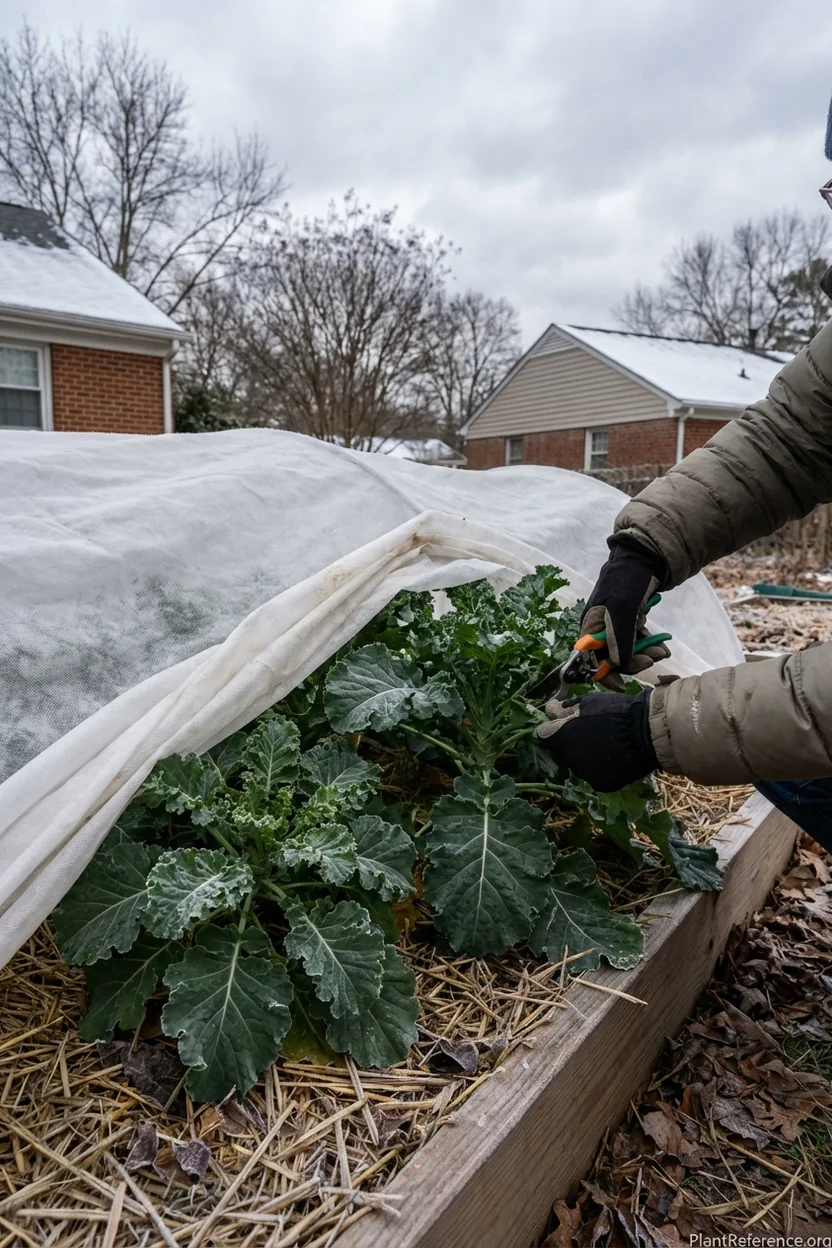
Row Cover Protection Use floating row covers for:
Spring plantings during late cold snaps (protect from 25°F or lower)
Fall plantings to exclude cabbage moths and aphids
Winter protection during ice storms (prevents desiccating wind damage)
Watering in Richmond Climate
Richmond receives 43 inches annual rainfall, but distribution varies seasonally. Summer dry spells stress kale, while wet spring weather encourages disease.
Watering Schedule:
Spring: Monitor carefully—cool wet weather reduces water needs
Summer: Deep watering twice weekly if spring crop extends into heat
Fall: Once weekly unless drought occurs
Winter: Minimal irrigation needed, avoid wet soil in freezing weather
Fertilization Program
Kale requires heavy feeding for optimal leaf production. Richmond's clay soil provides good nutrient retention but may need supplementation.
Pre-Planting: Work in 2-3 inches aged compost plus balanced organic fertilizer (5-5-5) at 2 pounds per 100 square feet.
Side-Dressing: Apply high-nitrogen fertilizer 4 weeks after planting:
Fish emulsion: 1 tablespoon per gallon, apply every 2 weeks
Blood meal: 1 cup per 10 feet of row, scratch into soil
Composted chicken manure: 2 inches around plants
Overwintering Preparation: Feed fall-planted kale heavily in September to build size before growth slows. Winter kale grows slowly but continues producing.
Pest Management in Richmond
Richmond's humid climate and moderate temperatures create ideal conditions for kale pests. Integrated pest management prevents major infestations.
Primary Pests:
Cabbage Worms appear in Richmond April-June and September-October when cabbage white butterflies lay eggs. Hand-pick green caterpillars or spray Bt (Bacillus thuringiensis) weekly during peak season.
Aphids cluster on new growth, especially during Richmond's mild springs. Control with strong water spray or insecticidal soap. Avoid over-fertilizing with nitrogen, which attracts aphids.
Flea Beetles create shot-hole damage on young plants. Row covers during vulnerable seedling stage prevent damage. Diatomaceous earth around plants helps control adult beetles.
Troubleshooting Richmond-Specific Kale Problems
Richmond gardeners face predictable challenges based on our climate patterns and soil conditions. Here's how to solve the most common problems.
Bolting in Spring Plantings
Richmond springs warm rapidly. March-planted kale often bolts by late May when temperatures hit 80°F consistently. Solution: Plant fast-maturing varieties like 🌿Brassica napus 'Red Russian' for quick spring harvest, or focus on fall planting for better flavor and longer harvest.
Winter Survival Challenges
While Richmond rarely sees temperatures below 15°F, ice storms and strong winds damage unprotected kale. Solution: Use floating row covers during ice storm warnings. Weight covers securely—Richmond winds can exceed 30 mph during winter storms.
Clay Soil Compaction
Richmond's clay soil compacts when worked wet, creating drainage problems and root restriction. Solution: Work soil only when moisture content allows it to crumble, not form mud balls. Add coarse compost and avoid walking on beds.
Summer Heat Stress
Spring-planted kale becomes bitter and tough when Richmond temperatures exceed 85°F in June. Solution: Provide afternoon shade with taller plants or shade cloth, or focus exclusively on fall planting for superior results.
Disease Pressure in Humid Weather
Richmond's humidity encourages fungal diseases, especially clubroot in acidic clay soils. Solution: Maintain soil pH 6.5-7.0 with lime applications. Ensure good air circulation with proper spacing. Avoid overhead watering during humid periods.
Test soil pH annually and lime if below 6.5
Space plants 12 inches apart for air circulation
Water at soil level, avoid wetting foliage
Rotate kale to different bed locations annually
Remove plant debris promptly after harvest
Pest Population Explosions
Richmond's mild winters allow pest populations to overwinter and explode in spring. Solution: Clean up garden debris in fall. Use beneficial insects—plant yarrow, dill, and sweet alyssum to attract predatory wasps that control cabbage worms.
Harvest & Storage in Virginia Climate
Richmond's extended growing season allows harvest strategies impossible in shorter-season climates. Understanding when and how to harvest maximizes both yield and quality.
Optimal Harvest Timing
Spring Harvest: Begin when plants reach 8-10 inches tall (6-8 weeks after planting). Harvest continuously until bolting starts—usually late May in Richmond.
Fall Harvest: Wait for first frost (October 24) before major harvest. Frost converts starches to sugars, dramatically improving flavor. Richmond kale becomes candy-sweet after several frosts.
Winter Harvest: Continue harvesting outer leaves through winter. Growth slows but doesn't stop in Zone 7b. January-February kale reaches peak sweetness in Richmond.
Harvesting Technique
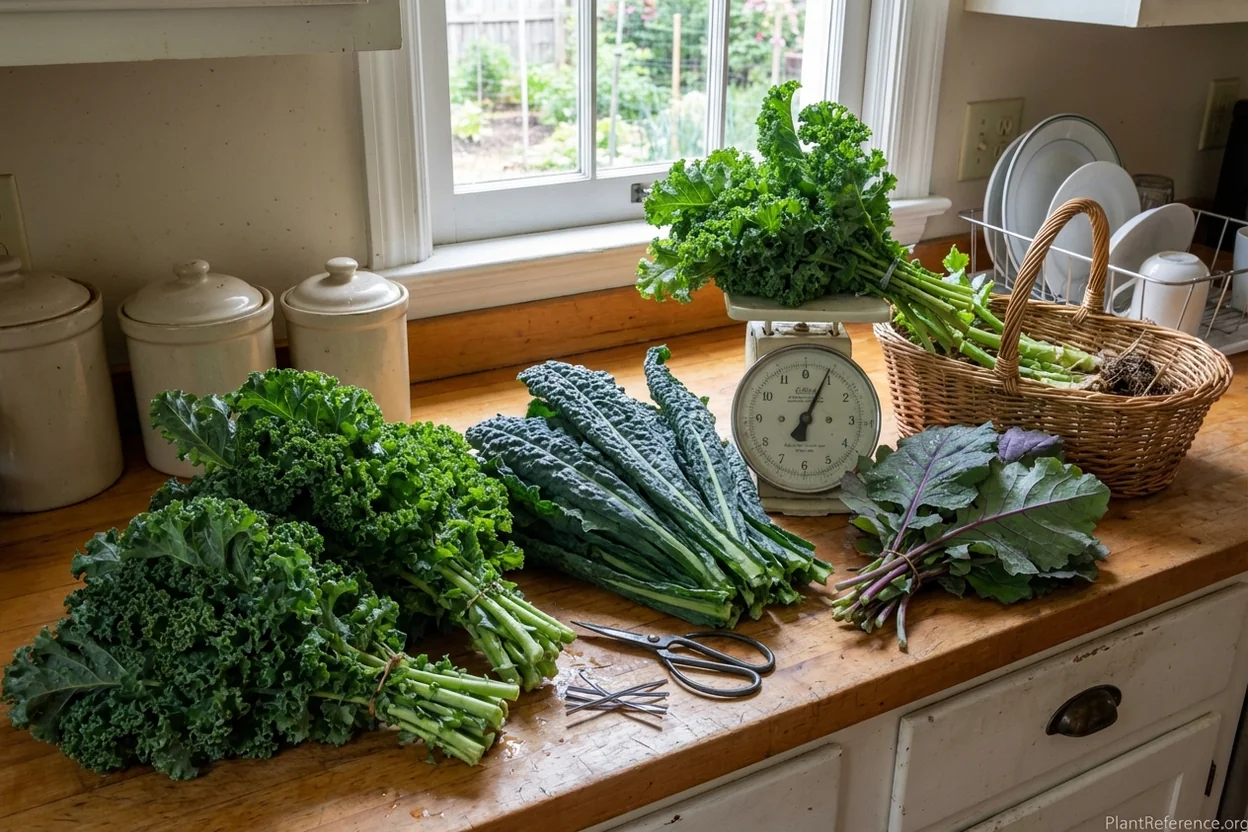
Cut outer leaves first, leaving 4-6 center leaves to continue growth. Harvest leaves 6-12 inches long for best texture. Avoid cutting the growing crown—damage stops production.
Continuous Harvest: Single Richmond kale plant produces 2-4 pounds over 3-4 months with proper harvesting. Remove leaves weekly during active growth periods, every 2-3 weeks during winter slowdown.
Storage Methods for Richmond Climate
Fresh Storage: Refrigerate unwashed kale in perforated plastic bags for 7-10 days. Richmond-grown winter kale stores longer than summer varieties due to higher sugar content.
Preservation Options:
Blanching and Freezing: Works excellently for Richmond kale. Blanch 2-3 minutes, shock in ice water, drain thoroughly, and freeze in portions. Winter-sweetened kale maintains flavor better than spring varieties.
Dehydrating: Richmond's winter kale makes superior kale chips due to natural sugar content. Dehydrate at 125°F for 4-6 hours until crispy.
Fermentation: Richmond kale works well in kimchi or sauerkraut. The natural sugars from cold exposure help fermentation process.
Frequently Asked Questions
Reading about plants and recognising them are different skills. These three build the second.
- Daily PlantIdentify the day’s mystery plant from a close-up photograph.
- Keyed OutWork a dichotomous key, lead by lead, to name a hidden specimen.
- Name That PlantName a specimen from botanical clues dealt hardest first.
Free to play, no account needed
Dot grew up on a small farm in rural Virginia and has maintained a vegetable garden for decades. After retiring from teaching elementary school, she became a Master Gardener volunteer and spends her time mentoring new gardeners at community garden plots in Richmond. She's especially knowledgeable about heirloom varieties, seed saving, and traditional growing methods passed down from her grandmother. Dot's no-nonsense advice comes from extensive trial and error—she's seen every tomato disease, pest problem, and weather disaster imaginable. Her biggest pet peeve is gardeners who overcomplicate simple tasks. "Plants want to grow," she often says. "Your job is to not get in their way."