When to Plant Cucumbers in Richmond: Complete Guide + Best Varieties for Zone 7b
Pets & Toxicity
Recorded toxicity for plants linked in this guide. An unknown status is not a safety assessment.
No linked plant is recorded as toxicDetailsHide
Cucumis sativus 'Marketmore 76' — Toxicity
Non-toxicView Cucumis sativus 'Marketmore 76' plant profileCucumis sativus 'Straight Eight' — Toxicity
Non-toxicView Cucumis sativus 'Straight Eight' plant profileCucumis sativus 'Boston Pickling' — Toxicity
Non-toxicView Cucumis sativus 'Boston Pickling' plant profile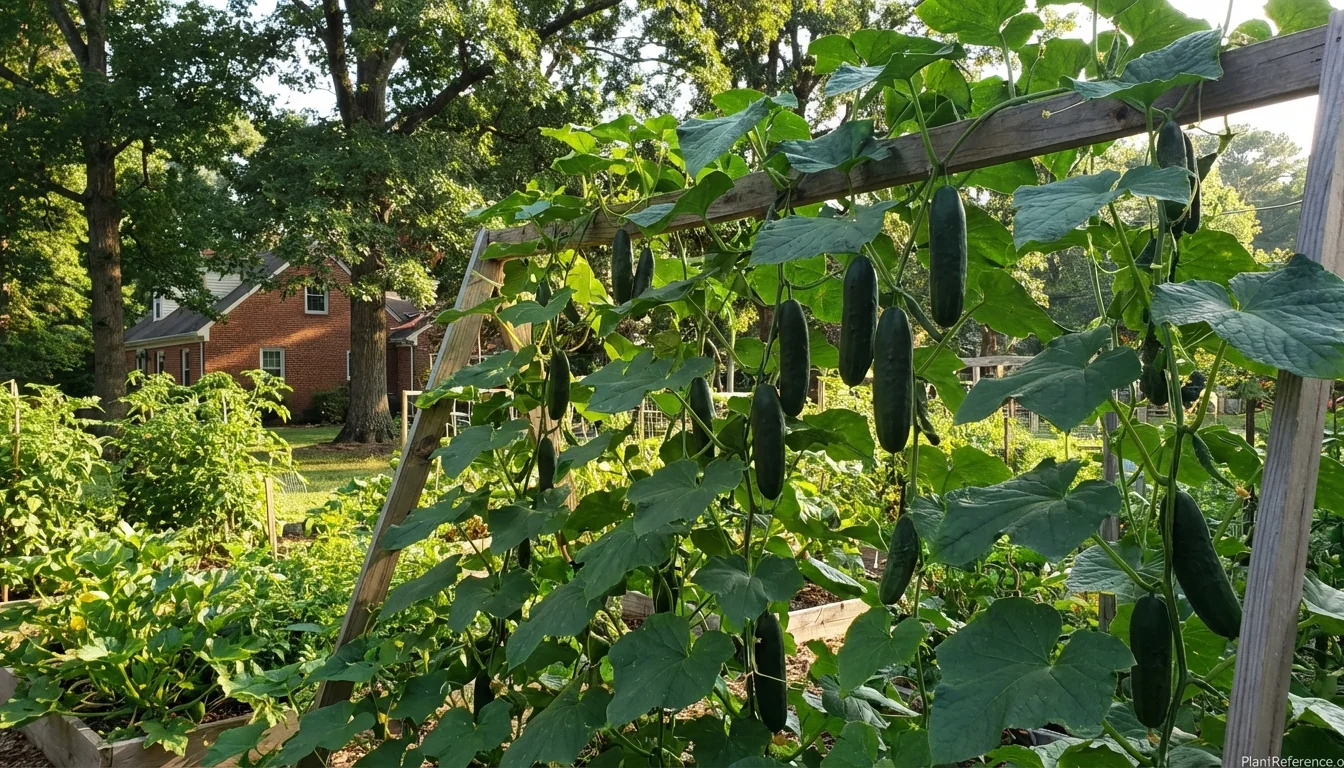
— Image © Plant Reference 2026
I've been growing cucumbers in central Virginia for over forty years, and the formula hasn't changed much: plant the right varieties, keep them off the ground, and don't let the humidity win. Richmond's climate is warm enough to produce cucumbers from May through October if you plan the season instead of just planting once and hoping. The humidity is what trips up most gardeners here. We sit right in the path of Downy Mildew (Pseudoperonospora cubensis) spores moving up the coast from Florida, and once that hits your vines, the clock is ticking. Resistant varieties buy you time. Succession planting buys you insurance. Together, they're all you need for a steady supply of cucumbers through the whole growing season. These aren't complicated crops—they're workhorses that produce heavily if you give them decent soil, consistent water, and enough airflow to stay healthy. When to Plant Tomatoes in Richmond: Complete Guide + Best Varieties for Zone 7b
Best Cucumber Varieties for Richmond's Climate
Richmond sits in USDA Zone 7b with an April 15 last frost and October 25 first frost—193 growing days. That's plenty of time for any cucumber variety with room for succession planting. Disease resistance is the selection factor that matters most. Richmond's summer humidity from June through September creates textbook conditions for Downy Mildew, and varieties without resistance genes produce for 4-6 weeks before collapsing. Choose right and you'll harvest for months.
Variety | Type | Days to Harvest | Disease Resistance | Best For |
|---|---|---|---|---|
Slicing | 65 days | High (Scab, CMV, moderate DM/PM) | Best overall for Richmond humidity | |
Pickling | 55 days | Low-Moderate | Fast harvest, fall pickling | |
🌿Cucumis sativus 'Persian' (Beit Alpha) | Specialty | 55 days | Moderate (PM) | Containers, compact gardens |
Specialty | 65 days | Moderate (Rust, drought tolerant) | Heat tolerance, drought resistant | |
Slicing | 63 days | Low (CMV tolerance only) | Early spring before disease builds | |
🌿Cucumis sativus 'Marketmore 76' (fall crop) | Slicing | 65 days | High | August planting for fall harvest |
🌿Cucumis sativus 'Marketmore 76' is what I grow and what I recommend to everyone. After forty years of testing varieties in this climate, nothing outperforms it for sustained production through Richmond humidity. The disease resistance keeps vines alive 3-4 weeks longer than susceptible heirlooms. The "stay-green" gene prevents yellowing during heat waves. And it just produces—consistent 8-inch (20 cm) dark green slicers from first pick until the vine finally gives out.
🌿Cucumis sativus 'Straight Eight' gives you early eating from April transplants, but I always tell people straight: it won't last through July here. It succumbs to Downy Mildew and turns bitter in the heat. Plant it for the first cucumbers of the year and have 🌿Cucumis sativus 'Marketmore 76' ready to take over. That's not a failing of the variety—it's just honest about what works and what doesn't in Virginia humidity.
🌿Cucumis sativus 'Boston Pickling' at 55 days is what I plant in August for fall pickles. Cooler autumn nights produce the crunchiest pickling cucumbers of the year—my grandmother knew this, and she was right. 🌿Cucumis sativus 'Persian' types work well in containers for gardeners with limited space, and their parthenocarpic fruit set means no worrying about pollinators during the hottest weeks when bees aren't as active. When to Plant Peppers in Richmond: Complete Guide + Best Varieties for Zone 7b
Specific Planting Dates for Richmond Gardens
Richmond's April 15 last frost and October 25 first frost give you a reliable 193-day window. Spring warms steadily in central Virginia—we don't get the wild swings that Northern cities deal with, and the soil warms at a dependable pace.
Indoor Seed Starting: March 25-April 1 (2-3 weeks before last frost). Start in biodegradable pots at 75°F (24°C) for 3-5 day germination. Don't overthink this—a warm windowsill and consistent water are all you need.
Transplant Outdoors: April 22-30 (one week after last frost, soil at 60°F/16°C). Harden off seedlings for 5-7 days. Richmond's late April is generally warm and settled, but keep row covers handy through the end of the month for the odd late cold front.
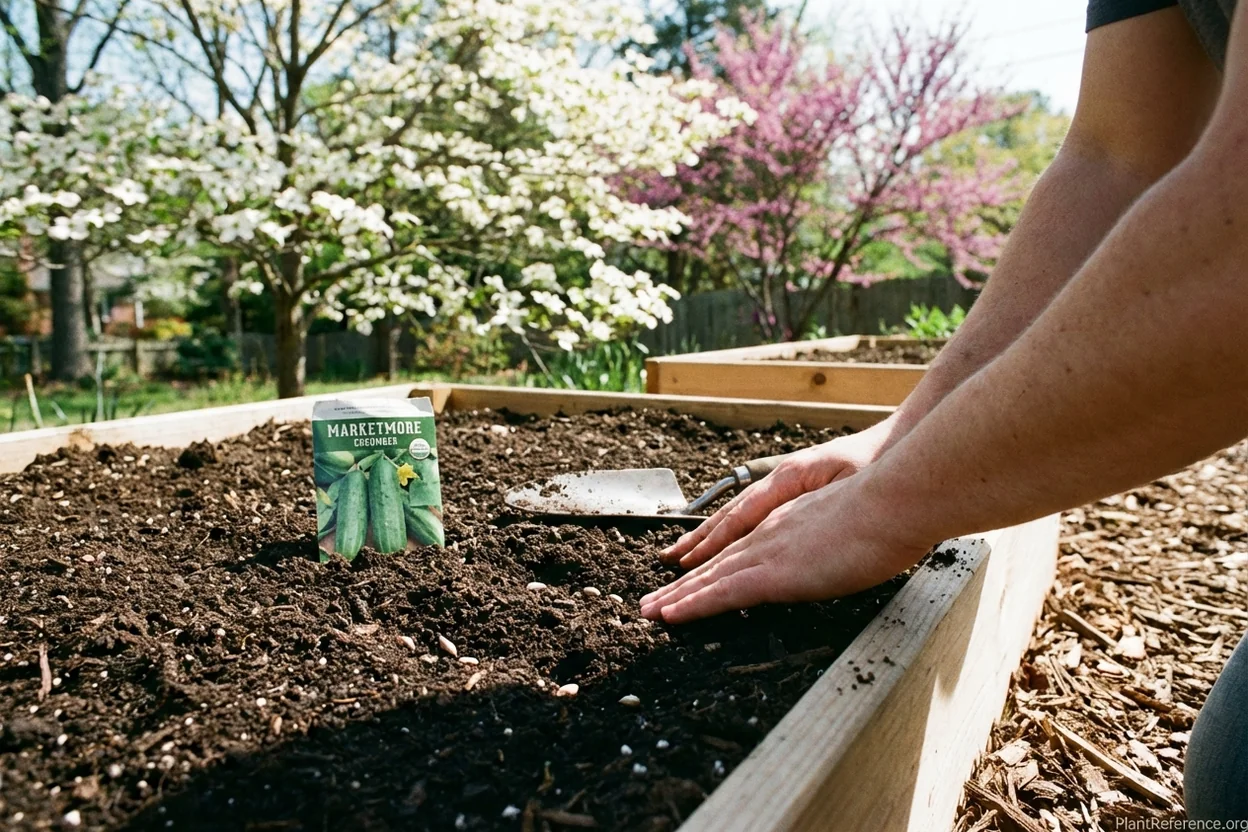
Direct Sow (spring): April 25-May 15. Richmond's clay-loam soils warm to 60°F (16°C) by late April in most gardens. Check temperature at 4 inches (10 cm) with a thermometer. Don't guess—five minutes with a thermometer saves a week of waiting for failed seeds to germinate in cold soil.
Succession Plantings: Every 3 weeks from late April through mid-July. Richmond's season supports 3-4 successions. This is the approach that separates gardeners who harvest all season from those who have a six-week run and then nothing. When Downy Mildew takes your spring planting in July, your June succession picks up without missing a beat.
Fall Planting: August 1-10. The fall crop in Richmond is reliably productive and often the highest quality of the year. Cooler September and October temperatures reduce disease pressure, restore pollination, and develop the firm texture and clean flavor that summer heat can't match. 🌿Cucumis sativus 'Boston Pickling' (55 days) planted August 1 matures by late September with four weeks of harvest before frost.
Final Sowing Deadline: August 10. A 55-day variety planted August 10 matures around October 4 with three weeks before the October 25 frost. Row covers extend production another 2-3 weeks into November. Raised Bed Vegetable Garden Layout: Planning for Maximum Production
Complete Growing Guide for Richmond
Soil Preparation
Richmond's soils vary from heavy Piedmont clay in the western suburbs to lighter sandy loam closer to the James River. Both benefit from compost amendment—4-6 inches (10-15 cm) worked into the top 12 inches (30 cm) improves clay drainage and sandy moisture retention. Target pH 6.0-6.8. Most Richmond soils test slightly acidic to neutral, which cucumbers handle well. The Virginia Cooperative Extension's soil testing service through Virginia Tech costs under $15 and tells you exactly what your soil needs.
Raised beds work well for Richmond cucumber growing, especially on heavy clay sites. Build from cedar or rot-resistant materials and fill with 60% topsoil, 30% compost, and 10% perlite. For in-ground plots on decent loam, deep compost amendment is sufficient—you don't always need raised beds in Richmond the way you do in solid clay regions. How to Build a Raised Garden Bed: Step-by-Step Construction Guide
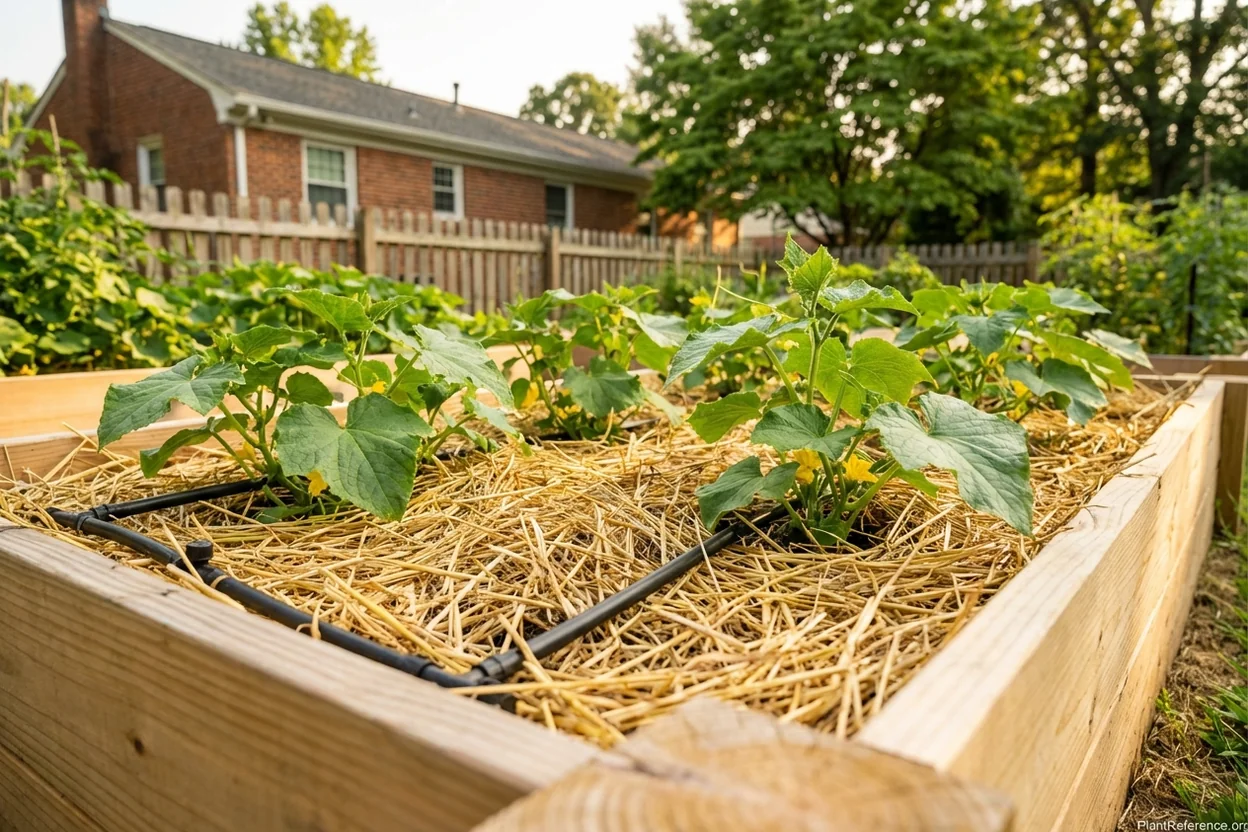
Mulch 3 inches (8 cm) with straw or shredded hardwood after transplanting. In Richmond's humidity, mulch prevents the soil splash onto lower leaves that spreads pathogens. It also retains moisture during the dry stretches that punctuate our summer thunderstorm pattern.
Trellising
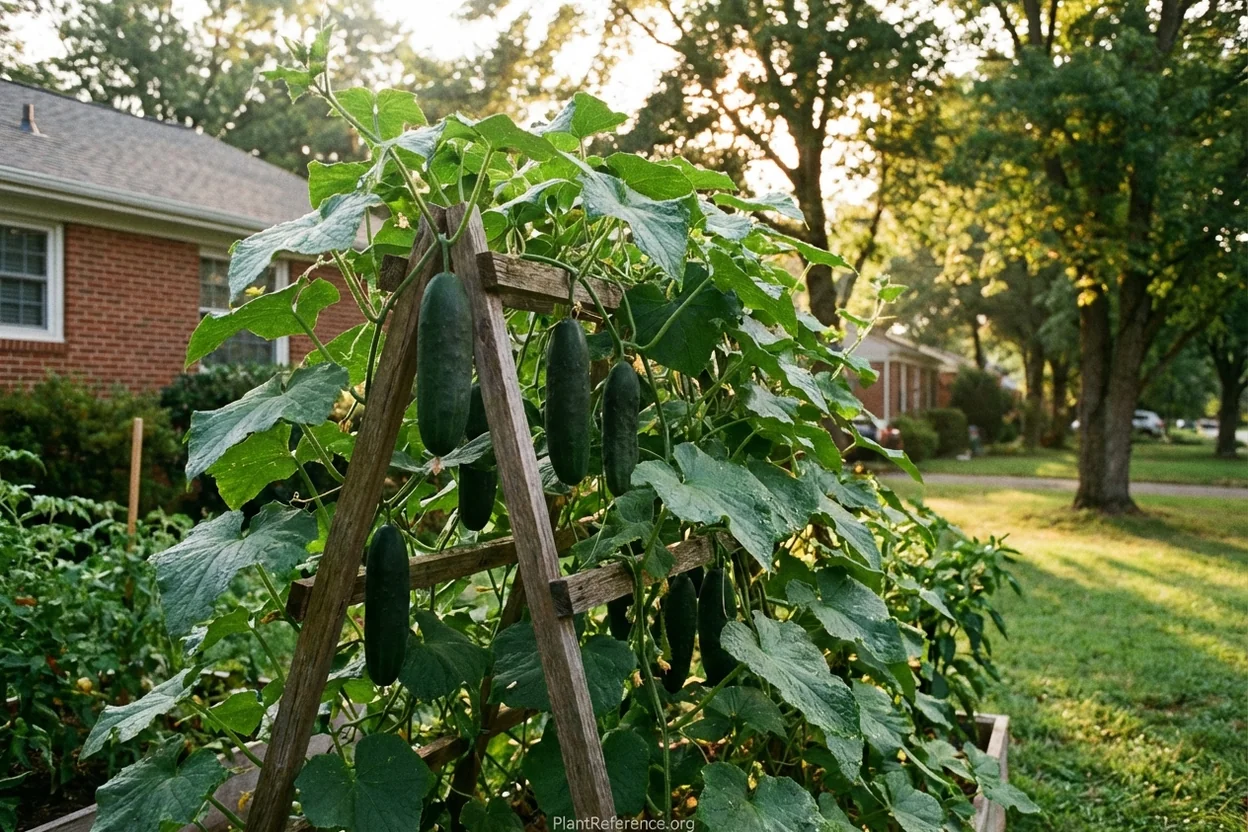
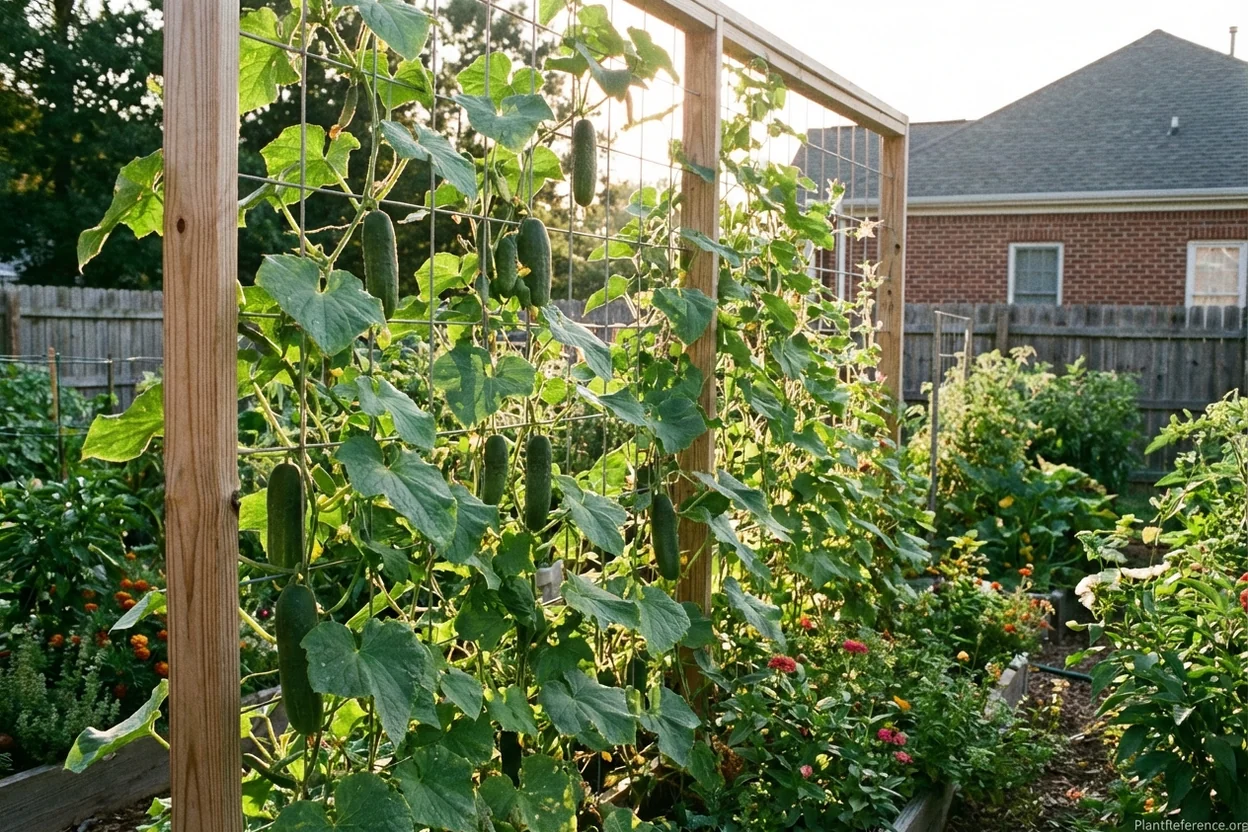
Get your cucumbers off the ground. I've said it for forty years and it's still the most important thing you can do for disease management in Virginia's humidity. A 6-foot (1.8 m) trellis—A-frame, string, cattle panel, whatever you have—improves air circulation around foliage and keeps fruit clean and dry. Ground-level cucumbers in Richmond sit in the warm, humid layer where Downy and Powdery Mildew thrive. Trellised cucumbers live in moving air where leaves dry after rain and dew. The difference in productive life is measurable. 5 Best Drip Irrigation Kits for Raised Beds (Tested for Easy Installation)
Watering
Cucumbers need 1 to 1.5 inches (2.5-4 cm) weekly. Richmond gets plenty of summer rain, but delivery is inconsistent—heavy thunderstorms dump 2 inches one day, then nothing for a week. Drip irrigation on a timer provides the steady moisture cucumbers demand and keeps foliage dry. Water at the base exclusively. Overhead watering in Richmond humidity accelerates every foliar disease we're trying to prevent.
Side-dress with balanced fertilizer at flowering and at first fruit set. Compost tea every two weeks during production keeps vines vigorous through our long, demanding season. These aren't fussy crops—consistent water and moderate feeding produce excellent results without complicated programs. Avoid heavy nitrogen after fruit begins forming; shift to phosphorus and potassium to support fruit development. Fish emulsion works well as a biweekly feed and is widely available at Richmond garden centers.
Pollination
Standard varieties need pollinator visits. Richmond supports good bee populations in most neighborhoods, and pollination is generally reliable from April through June. During July and August heat waves above 90°F (32°C), pollen viability drops and pollinators reduce activity. 🌿Cucumis sativus 'Persian' types set fruit without pollinators—useful during the hottest weeks when standard varieties struggle with empty flowers. Hand-pollinate with a small brush in the morning if standard varieties aren't setting fruit after two weeks of female flower production. Planting zinnias, sunflowers, and herbs near your cucumber bed supports bee populations and improves pollination rates across the garden. When to Plant Squash in Richmond: Complete Guide + Best Varieties for Zone 7b
Troubleshooting Richmond-Specific Problems
Downy Mildew
The primary cucumber disease in Richmond. Spores migrate up the coast from Florida each summer, reaching central Virginia by late June to early July. Angular yellow spots on upper leaf surfaces that darken to brown—once you see it, the countdown to vine decline begins. Prevention: 🌿Cucumis sativus 'Marketmore 76' for resistance, vertical trellising, drip irrigation, and removal of infected leaves. Organic copper sprays slow progression. Succession planting is your insurance—when the spring planting crashes, your June succession maintains production through fall. Raised Bed Pest Problems: Identification and Organic Control Methods
Heat Stress and Bitter Fruit
Richmond's July and August regularly exceed 90°F (32°C) with high humidity. Heat above 90°F triggers cucurbitacin production—bitterness—in susceptible varieties, especially 🌿Cucumis sativus 'Straight Eight'. Consistent deep watering prevents the water stress that amplifies bitterness. Mulch heavily to moderate root zone temperature. 🌿Cucumis sativus 'Marketmore 76' handles heat better than other slicers, and the fall crop avoids the worst heat entirely. Raised Bed Too Hot in Summer: Protecting Plants from Heat Stress
Cucumber Beetles
Active from April through October in Richmond. Striped and spotted beetles vector bacterial wilt and damage foliage and fruit. Row covers over spring transplants exclude beetles during establishment—remove at flowering. Trap cropping with Blue Hubbard squash concentrates beetles for targeted removal. Hand-picking in the early morning works in small gardens. Monitor through the entire season because bacterial wilt is untreatable once established.
Virginia Clay Drainage
Heavier Richmond soils hold water after storms, suffocating cucumber roots. Wilting despite wet soil means waterlogged roots, not drought. Check soil moisture before adding water. Raised beds and compost amendment solve the drainage issue. Avoid planting in low spots where water collects after rain. Best Soil Mix for Raised Beds: Creating the Perfect Growing Medium
Harvest & Storage
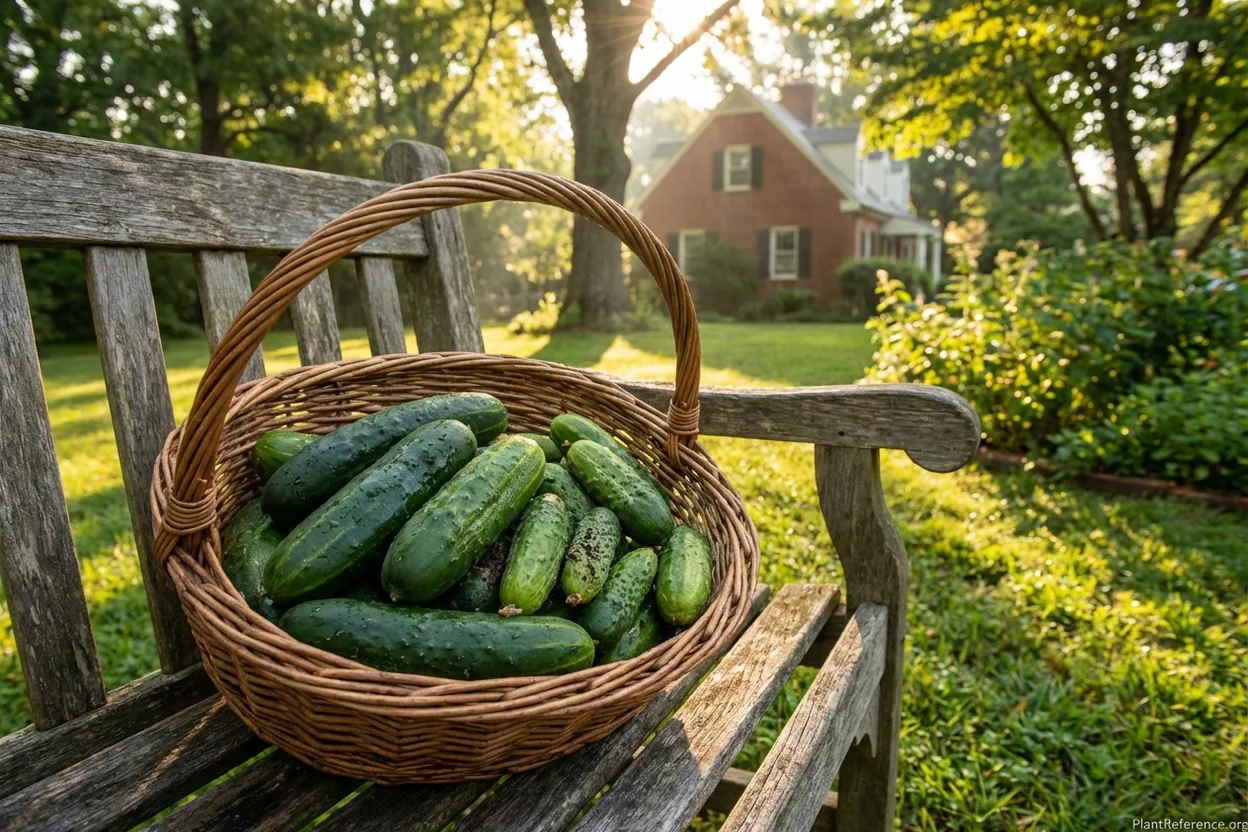
Harvest slicing cucumbers at 6-8 inches (15-20 cm) and pickling types at 2-4 inches (5-10 cm). Check vines daily in summer—Richmond's humid heat drives fast growth and cucumbers go from perfect to overgrown in two days. Every overripe fruit left on the vine signals the plant to slow down production. Don't let that happen. Pick everything, every day, even if you can't use it all. Compost the extras or give them to neighbors.
Cut with pruners rather than pulling. Harvest early morning when fruit is cool and firm. A healthy 🌿Cucumis sativus 'Marketmore 76' plant produces 10-15 slicers per planting cycle. 🌿Cucumis sativus 'Boston Pickling' yields 15-20 smaller fruits. Across 3-4 successions, a garden row produces 40-60 cucumbers per season without breaking a sweat.
Fresh cucumbers store 7-10 days refrigerated in a towel inside a loose bag. Fall 🌿Cucumis sativus 'Boston Pickling' makes the best refrigerator pickles—cooler Virginia autumn nights produce cucumber flesh with the dense, crisp texture that holds up in brine. Process within 24 hours for the crunchiest results. These aren't complicated techniques—just straightforward gardening that works if you do it consistently. The Complete Guide to Raised Bed Gardening for Beginners (2025)
Frequently Asked Questions
Reading about plants and recognising them are different skills. These three build the second.
- Daily PlantIdentify the day’s mystery plant from a close-up photograph.
- Keyed OutWork a dichotomous key, lead by lead, to name a hidden specimen.
- Name That PlantName a specimen from botanical clues dealt hardest first.
Free to play, no account needed
Dot grew up on a small farm in rural Virginia and has maintained a vegetable garden for decades. After retiring from teaching elementary school, she became a Master Gardener volunteer and spends her time mentoring new gardeners at community garden plots in Richmond. She's especially knowledgeable about heirloom varieties, seed saving, and traditional growing methods passed down from her grandmother. Dot's no-nonsense advice comes from extensive trial and error—she's seen every tomato disease, pest problem, and weather disaster imaginable. Her biggest pet peeve is gardeners who overcomplicate simple tasks. "Plants want to grow," she often says. "Your job is to not get in their way."