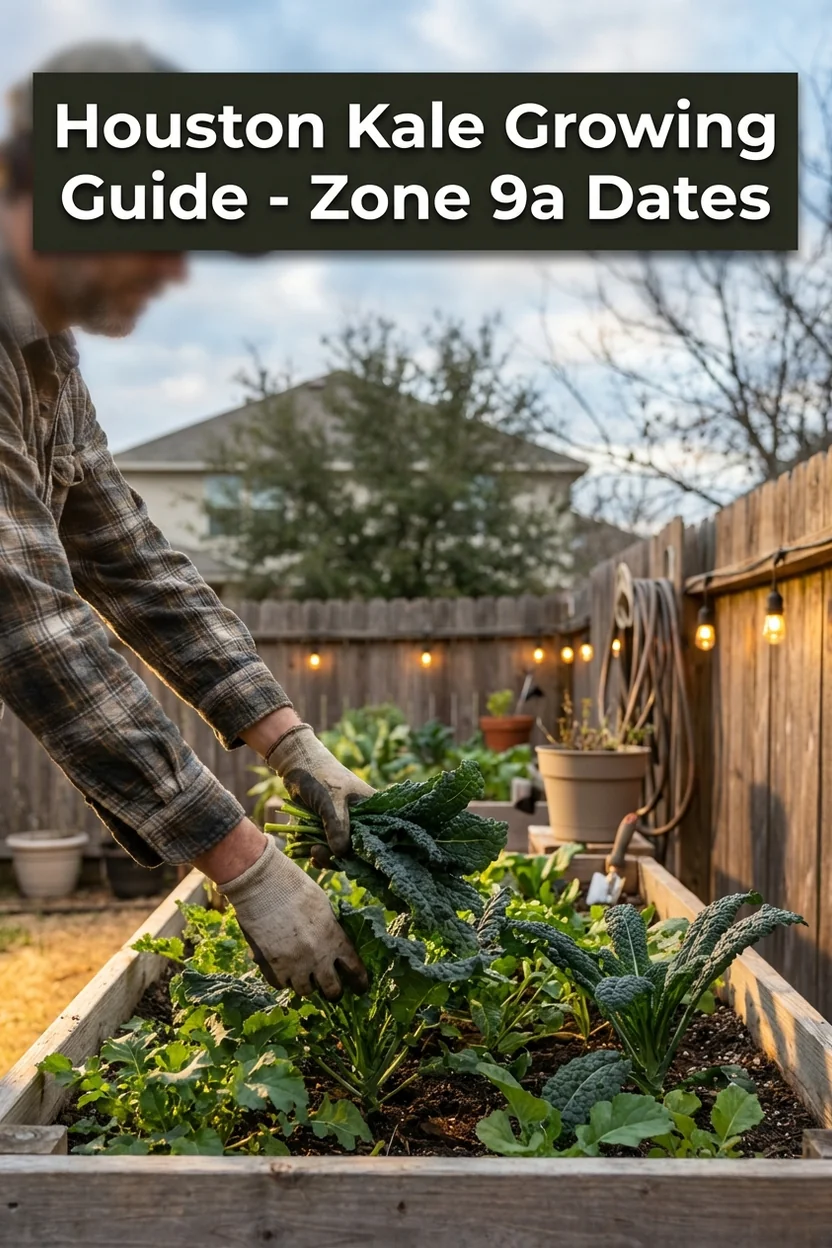
When to Plant Kale in Houston: Complete Guide + Best Varieties for Zone 9a
Pets & Toxicity
Recorded toxicity for plants linked in this guide. An unknown status is not a safety assessment.
No linked plant is recorded as toxicDetailsHide
Brassica oleracea 'Red Russian' — Toxicity
Non-toxicView Brassica oleracea 'Red Russian' plant profileBrassica oleracea var. sabellica 'Vates' — Toxicity
Non-toxicView Brassica oleracea var. sabellica 'Vates' plant profile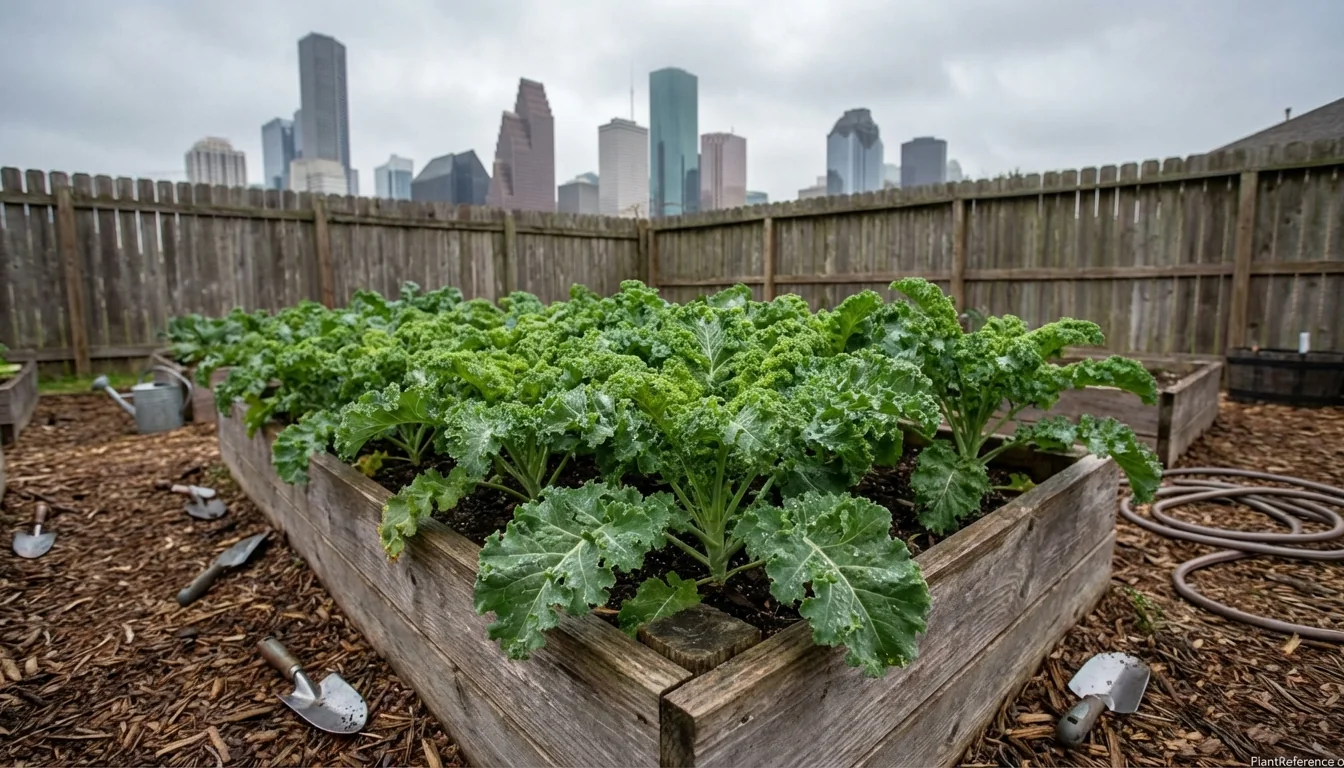
— Image © Plant Reference 2026
Houston gardeners have hit the jackpot when it comes to kale growing. Your Zone 9a climate provides nearly 8 months of perfect kale weather, from October through May. I've been growing vegetables in similar climates for forty years, and I'll tell you what works in Houston's unique conditions.
The key to Houston kale success is understanding your climate advantage. While northern gardeners struggle with short seasons, you have a generous 289-day growing window. Your last frost around February 14th and first frost around November 30th creates an ideal cool-season growing period when kale produces its sweetest, most tender leaves.
Best Kale Varieties for Houston's Zone 9a Climate
Houston's hot, humid summers and mild winters require specific variety selection. I recommend focusing on heat-tolerant types for spring growing and cold-hardy varieties for your excellent winter harvest window.
Variety | Days to Maturity | Best For | Notes for Houston |
|---|---|---|---|
50-60 days | Quick spring harvest | Most bolt-resistant for late spring | |
60-75 days | Heat tolerance | Best variety for Houston springs | |
60-75 days | Winter production | Thrives in Houston's mild winters | |
55-65 days | Small spaces | Compact growth for urban gardens | |
60-75 days | Ornamental value | Beautiful purple color in cool weather |
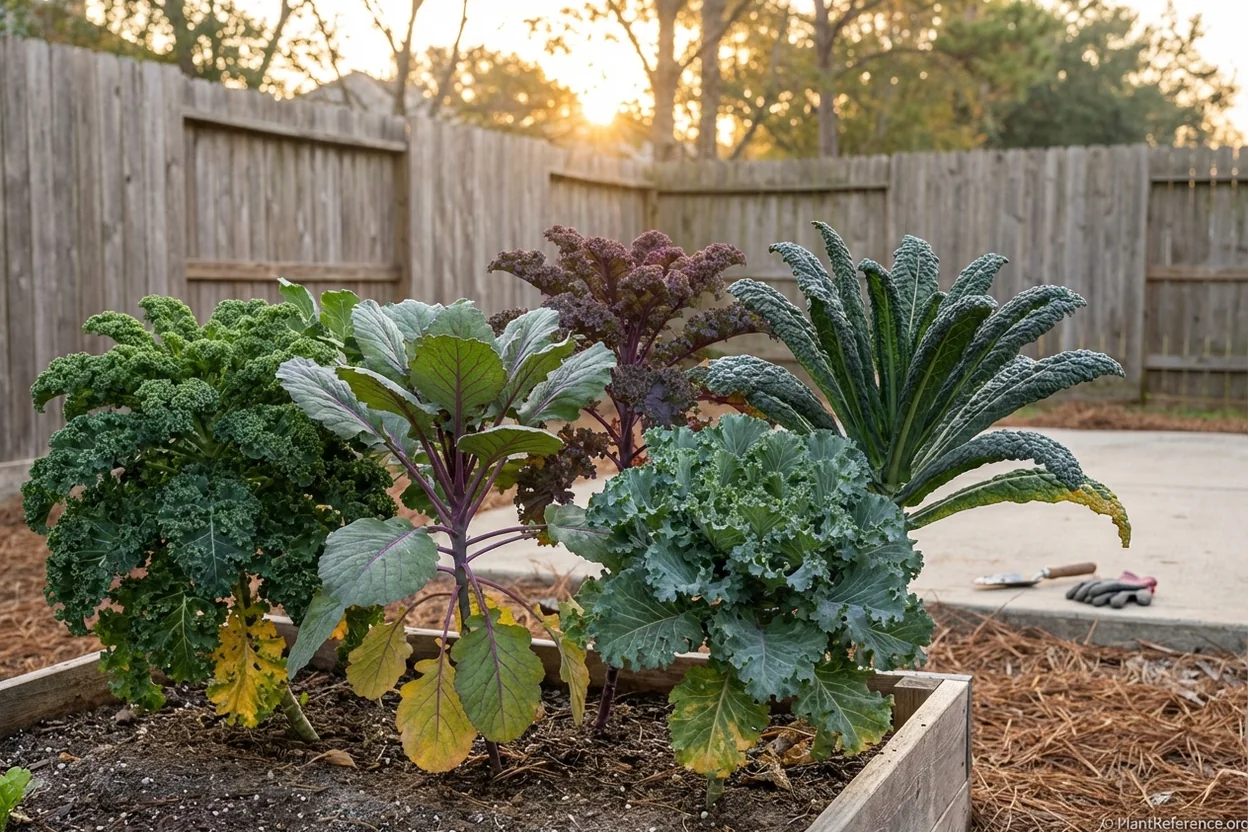
🌿Brassica oleracea 'Lacinato' (la-sin-ee-AH-toe) stands out as Houston's champion. This Italian heirloom variety tolerates heat better than curly types, making it your best choice for extending the spring harvest into early May. The dark, dinosaur-textured leaves resist Houston's humidity-related fungal issues better than heavily ruffled varieties.
🌿Brassica oleracea 'Red Russian' excels for quick spring crops. Plant it in February for harvest before the May heat arrives. Its flat leaves dry quickly after Houston's frequent spring rains, reducing disease pressure.
🌿Brassica oleracea 'Winterbor' is your winter workhorse. This variety actually improves in flavor during Houston's mild winter freezes, turning sweet and tender. It handles the occasional hard freeze that drops Houston temperatures into the low 20s.
For Houston gardeners with limited space, 🌿Brassica oleracea 'Vates' offers compact growth perfect for containers on patios and balconies. It's slow to bolt when Houston's March temperatures start climbing toward 80°F (27°C).
Specific Planting Dates for Houston
Houston's Zone 9a frost dates create two distinct planting opportunities. Your growing season runs from October through April, with the best flavor occurring during December through February when occasional light frosts sweeten the leaves.
Fall Planting (Primary Season)
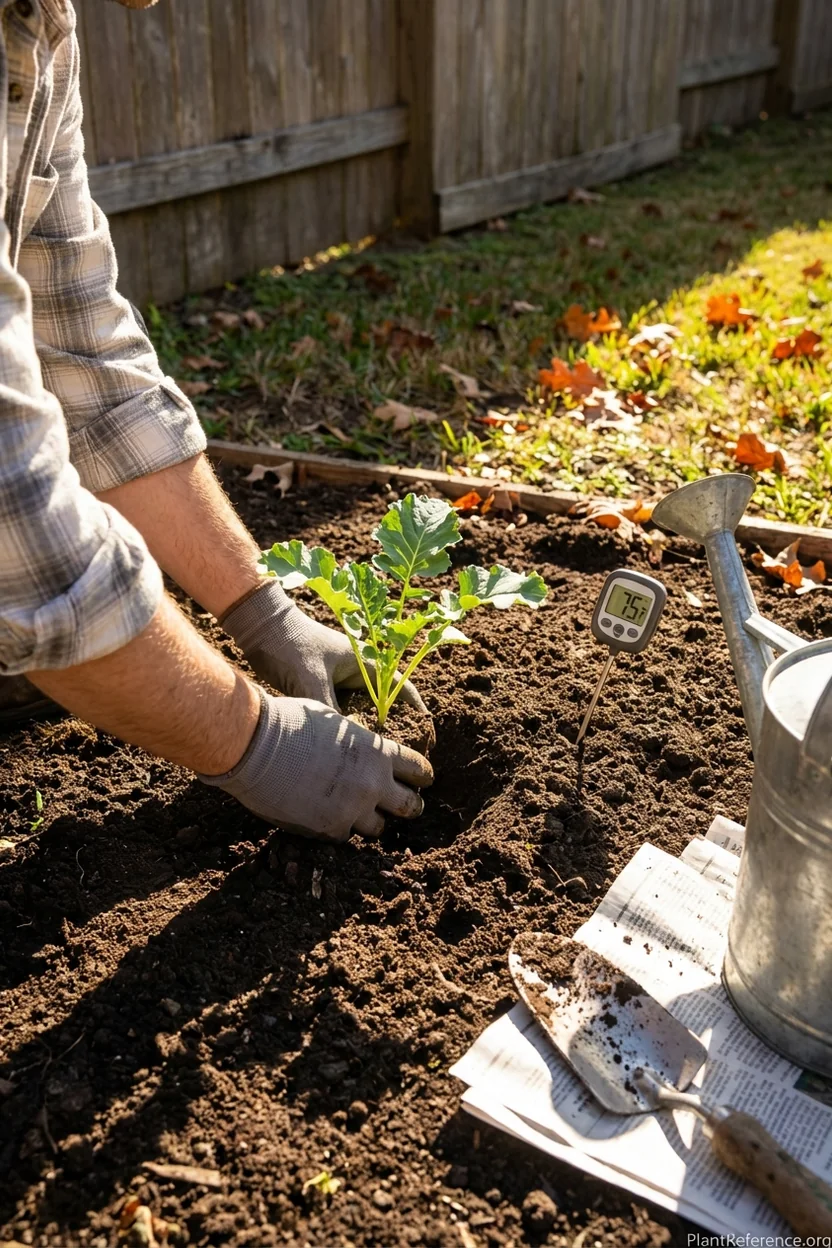
Indoor Seed Starting: September 1-15 Transplant Outdoors: October 1-15 Direct Sow: October 15 - November 15 Harvest Period: December through April
Fall planting produces Houston's best kale. Start seeds indoors during early September when it's still too hot outside. The controlled indoor environment protects seedlings from Houston's intense late-summer heat and humidity.
Transplant outdoors in early October when daytime highs drop consistently below 85°F (29°C). Direct sowing works well from mid-October through mid-November, giving plants time to establish before your first frost around November 30th.
Spring Planting (Secondary Season)
Indoor Seed Starting: January 15 - February 1 Transplant Outdoors: February 15 - March 1 Direct Sow: February 15 - March 15 Harvest Period: April through early May
Spring planting requires careful timing in Houston. Start too early and seedlings may experience frost damage. Start too late and plants bolt when May heat arrives. The narrow window between your last frost (February 14th) and consistent 80°F+ temperatures limits spring success.
Summer Avoid Zone
May through September: Do not plant kale in Houston during these months. Sustained temperatures above 85°F (29°C) cause immediate bolting, bitter flavor, and tough leaves. Houston's summer humidity compounds heat stress, making kale cultivation impossible.
Succession Planting Strategy
For continuous harvest, plant new seeds every 3-4 weeks from October through January. This provides fresh, tender leaves throughout your growing season while older plants continue producing.
Complete Growing Guide for Houston Zone 9a
Houston's clay soil, humidity, and intense sun require specific growing modifications. I've learned these techniques through decades of gardening in similar Gulf Coast conditions.
Soil Preparation for Houston Clay
Houston's heavy clay soil retains too much moisture for kale roots. Improve drainage by adding 3-4 inches of compost to your planting area. Work it in 8-10 inches deep, creating raised beds if your yard has standing water after heavy rains.
Test your soil pH annually. Houston clay tends toward neutral to slightly alkaline (pH 7.0-7.5), which suits kale perfectly. However, heavy rainfall can leach nutrients quickly, requiring regular organic matter additions.
Add 2-3 inches of aged compost before each planting season
Create raised beds 6-8 inches tall for improved drainage
Mulch heavily with shredded hardwood to retain moisture during Houston's dry spells
Install drip irrigation to avoid wetting leaves in humid conditions
Spacing and Layout Considerations
Space plants 12-15 inches apart in Houston conditions. The wider spacing improves air circulation, reducing fungal diseases common in Houston's humid climate. Plant in north-south rows to maximize winter sun exposure during Houston's shorter days.
Consider afternoon shade during spring growing. Houston's intense March-April sun can stress kale plants even in cool weather. A location receiving morning sun and afternoon shade extends your harvest window.
Water Management in Houston Climate
Houston's irregular rainfall requires flexible irrigation strategies. During typical dry winters, provide 1-1.5 inches weekly through drip irrigation or soaker hoses. Avoid overhead watering that promotes fungal diseases in Houston's humid conditions.
Monitor soil moisture at 3-4 inch depth. Houston clay retains water longer than sandy soils, making overwatering more dangerous than underwatering. Allow soil to dry slightly between waterings, especially during Houston's mild winter months.
Fertilizing Schedule
Houston's long growing season requires sustained nutrition. Apply balanced organic fertilizer (10-10-10) at planting, then side-dress with nitrogen-rich amendments every 4-6 weeks during active growth.
October planting: Organic starter fertilizer at transplanting
December: Side-dress with fish emulsion or blood meal
February: Light application of compost tea
March: Final feeding before spring harvest ends
Fish emulsion works excellently in Houston conditions, providing quick nitrogen without burning plants during occasional warm spells.
Troubleshooting Houston-Specific Problems
Houston presents unique challenges including pest pressure, humidity-related diseases, and unpredictable weather swings. Here's how to handle the most common issues.
Heat Stress and Bolting
Houston's variable spring weather causes sudden bolting when temperatures jump from 70°F to 85°F (21°C to 29°C) overnight. Watch for elongated stems and small yellow flowers appearing at plant centers.
Prevention: Choose bolt-resistant varieties like 🌿Brassica oleracea 'Red Russian' and 🌿Brassica oleracea 'Lacinato' for spring plantings. Provide afternoon shade during March and April when Houston temperatures become unpredictable.
Treatment: Once bolting starts, harvest immediately. The flower shoots are edible and taste like mild broccoli raab.
Cabbage Worms and Loopers
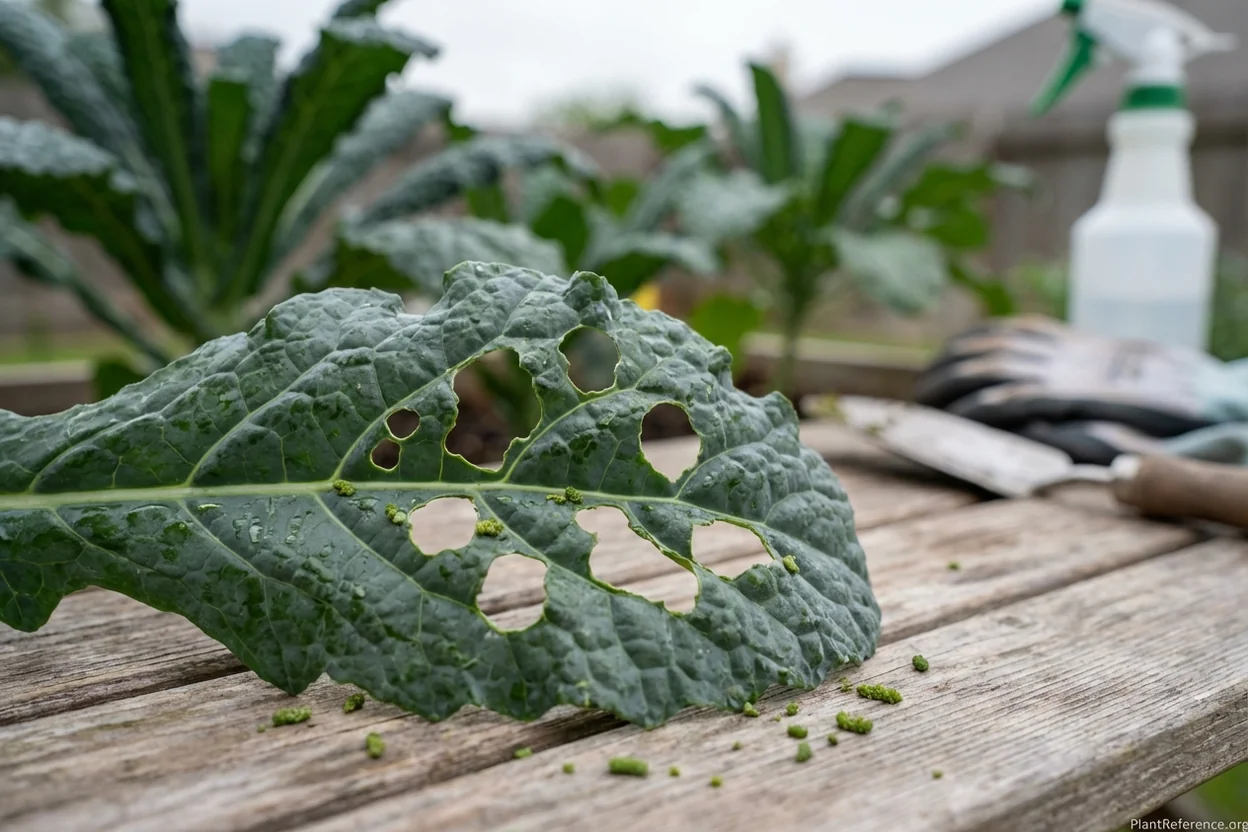
Houston's year-round warmth means cabbage white butterflies remain active longer than in northern climates. Green caterpillars appear on plants from October through April.
Identification: Look for small green caterpillars under leaves and black specks (frass) on leaf surfaces. Cabbage worms move slowly, while loopers arch their backs when crawling.
Control: Apply Bacillus thuringiensis (Bt) spray every 7-10 days when butterflies are active. Row covers work well for fall plantings but may trap heat during Houston's warm October days.
Aphid Infestations
Houston's mild winters allow aphids to reproduce continuously. Gray-green cabbage aphids cluster on leaf undersides, causing curling and yellowing.
Early Detection: Check plants weekly for small, soft-bodied insects on new growth. They multiply rapidly in Houston's favorable conditions.
Treatment: Spray plants with strong water stream early morning, allowing leaves to dry before evening humidity rises. Insecticidal soap works well but requires direct contact with insects.
Fungal Disease Pressure
Houston's humidity promotes downy mildew and black rot, especially during cool, wet winters.
Downy Mildew: Appears as yellow spots on upper leaf surfaces with fuzzy gray growth underneath. Common during Houston's foggy winter mornings.
Black Rot: Creates V-shaped yellow lesions starting at leaf edges. Spreads rapidly in wet conditions.
Prevention: Space plants widely for air circulation. Water at soil level using drip irrigation. Remove affected leaves immediately and dispose in trash, not compost.
Harvest & Storage
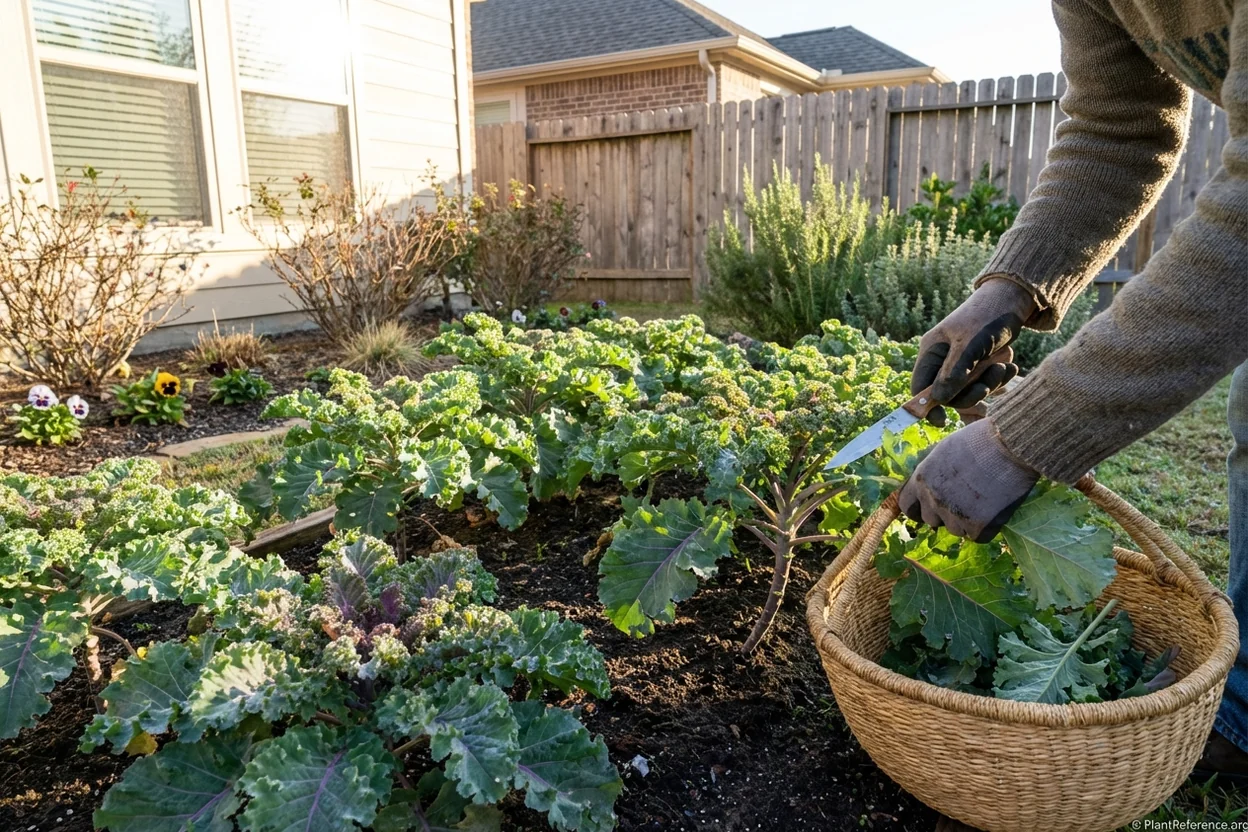
Houston's long growing season allows extended harvest periods. Begin cutting outer leaves when plants reach 8-10 inches tall, typically 6-8 weeks after transplanting fall crops.
Optimal Harvest Timing
December through February produces Houston's sweetest kale. Light frosts improve flavor by converting starches to sugars, creating tender, sweet leaves perfect for raw salads.
March through April yields good quality before heat stress begins. Harvest frequently to prevent toughening as temperatures rise.
Early morning harvest provides the crispest leaves with highest moisture content. Houston's evening humidity can make leaves limp by afternoon.
Storage Methods
Fresh kale stores 7-10 days in Houston's climate when properly handled. Wash leaves thoroughly, spin dry, and store in perforated plastic bags in the refrigerator.
For longer storage, blanch leaves for 2 minutes, cool in ice water, drain thoroughly, and freeze in portions. Houston-grown kale maintains excellent texture for cooking after freezing.
Dehydrating works well in Houston's humid climate when using a food dehydrator. Make kale chips by removing stems, tearing into bite-sized pieces, and dehydrating at 135°F (57°C) for 6-8 hours.
Seed Saving Considerations
Houston's Zone 9a climate allows easy seed production. Allow selected plants to bolt naturally in late spring, then collect seeds when pods turn brown and dry. Store seeds in cool, dry conditions for planting the following fall.
Choose your healthiest, slowest-to-bolt plants for seed saving. This improves your strain's adaptation to Houston's specific growing conditions over time.
Frequently Asked Questions
Reading about plants and recognising them are different skills. These three build the second.
- Daily PlantIdentify the day’s mystery plant from a close-up photograph.
- Keyed OutWork a dichotomous key, lead by lead, to name a hidden specimen.
- Name That PlantName a specimen from botanical clues dealt hardest first.
Free to play, no account needed
Aisha manages a small tropical nursery on the east side of Houston, specializing in plants that can handle the Gulf Coast's humidity, heat, and unpredictable flooding. She studied horticulture in college and worked at a wholesale grower before opening her own operation. Growing up, her parents kept a kitchen garden with okra, bitter gourd, and curry leaf plants—a tradition she's continued. Houston's subtropical climate lets her grow things most of the country can't, but it also means dealing with fungal issues, standing water, and summers where it's too hot for even tomatoes. Aisha writes about tropical and subtropical plant care, humidity management, and working with heavy clay soils.