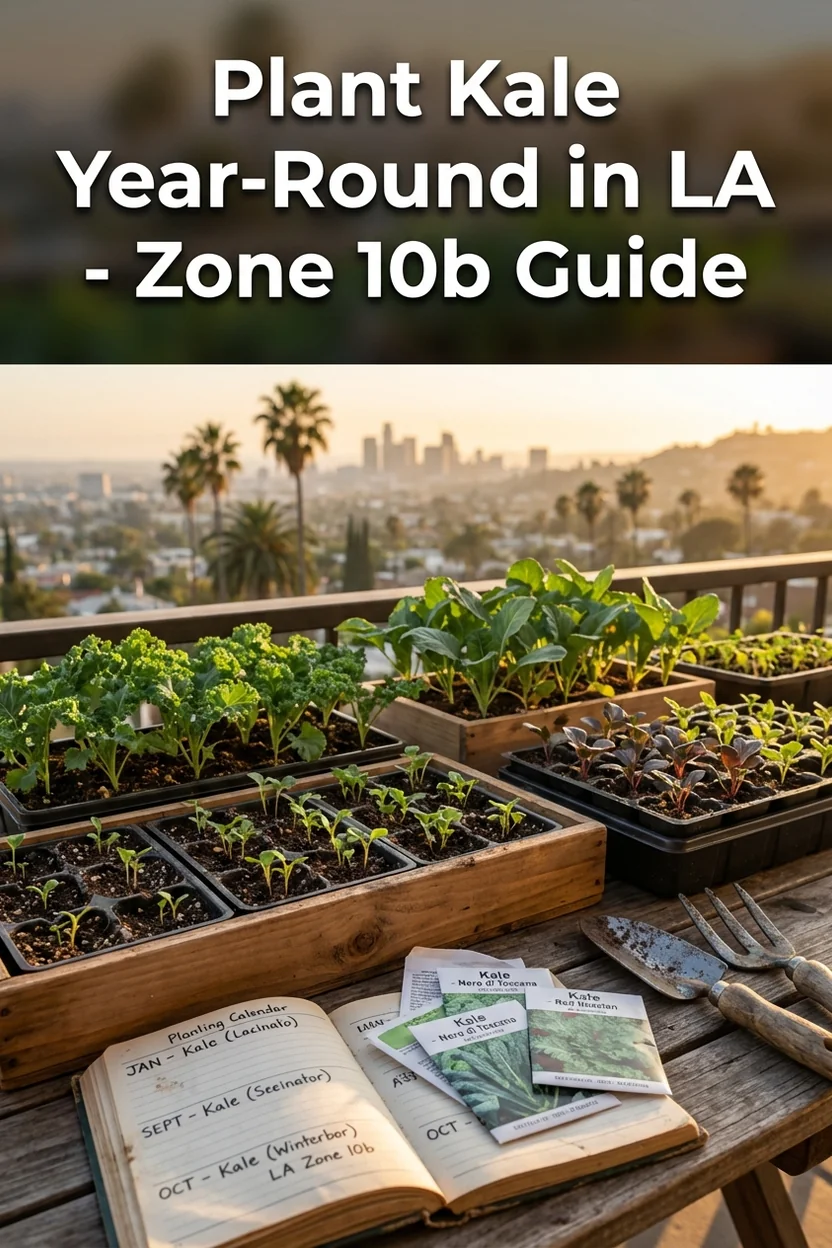
When to Plant Kale in Los Angeles: Complete Guide + Best Varieties for Zone 10b
Pets & Toxicity
Recorded toxicity for plants linked in this guide. An unknown status is not a safety assessment.
No linked plant is recorded as toxicDetailsHide
Brassica oleracea var. sabellica 'Vates' — Toxicity
Non-toxicView Brassica oleracea var. sabellica 'Vates' plant profileBrassica oleracea 'Red Russian' — Toxicity
Non-toxicView Brassica oleracea 'Red Russian' plant profile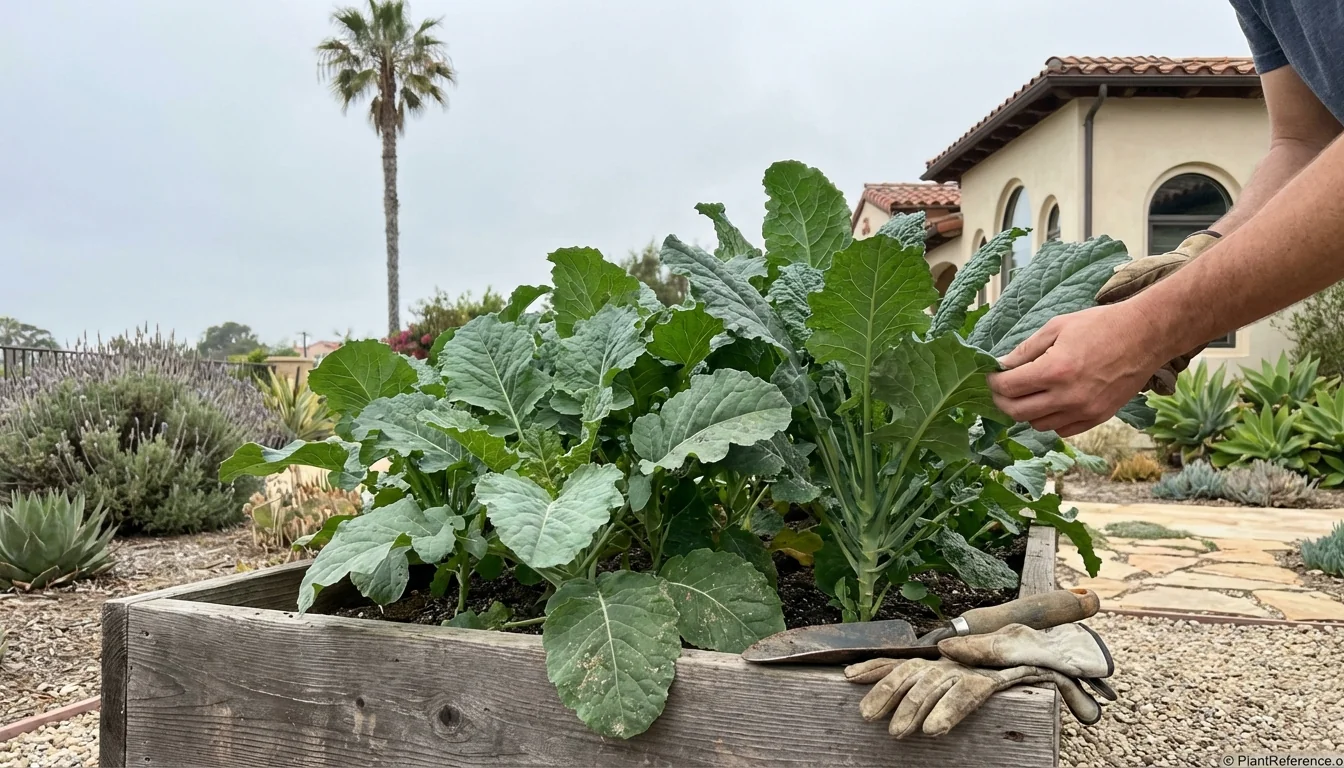
— Image © Plant Reference 2026
I've been growing vegetables in Southern California for over thirty years, and I'll tell you something about kale in Los Angeles: you've got one of the best climates in the country for this superfood green. While gardeners in Minnesota are battling snow and ice, you can harvest fresh kale from your backyard almost every month of the year.
Los Angeles sits in USDA Hardiness Zone 10b, which means your last frost typically occurs around February 14 and your first frost doesn't arrive until December 14. That gives you a whopping 303-day growing season—nearly the entire year. The secret to successful kale growing here isn't battling cold weather; it's managing the heat and timing your plantings to take advantage of the cooler months when kale thrives.
The Mediterranean climate of Los Angeles creates nearly perfect conditions for cool-season crops like kale 🌿Brassica oleracea 'Vates' (BRAS-ih-kuh oh-ler-AY-see-uh). Your mild, wet winters and warm, dry summers mean you can grow kale when most of the country is buried under snow, but you'll need to avoid the hottest months when even heat-tolerant varieties will bolt and turn bitter.
Best Kale Varieties for Los Angeles Zone 10b Climate
Not all kale varieties perform equally well in Southern California's unique climate. After years of testing different types in my own garden and talking with local growers, I've narrowed it down to five varieties that consistently deliver excellent results in Zone 10b conditions.
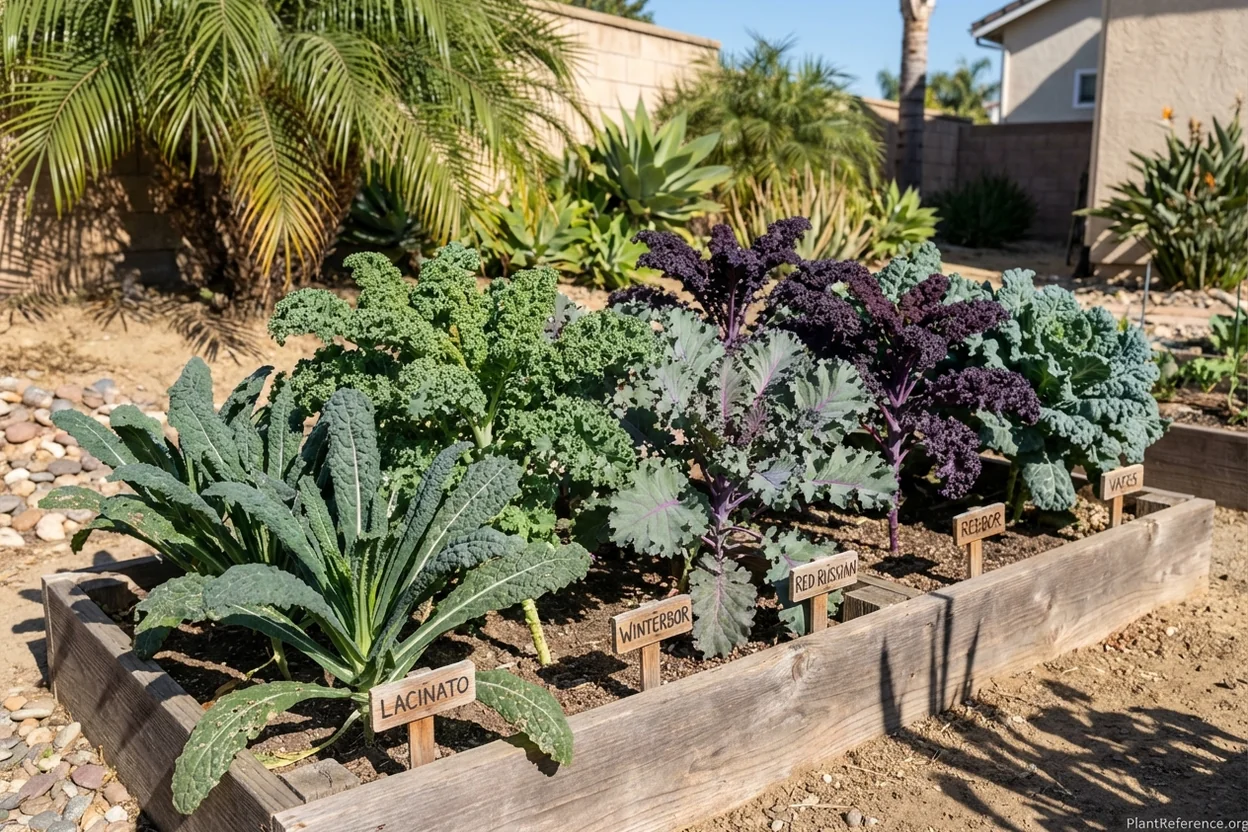
Here's my variety breakdown based on how each performs in Los Angeles conditions:
Variety | Days to Maturity | Best For | Notes for Los Angeles |
|---|---|---|---|
50-60 days | Quick harvest, heat tolerance | Most bolt-resistant for spring planting | |
60-75 days | Flavor, heat tolerance | Best overall performer in LA climate | |
60-75 days | Cold season harvest | Plant September-February only | |
60-75 days | Ornamental value | Stunning purple color, cool season only | |
55-65 days | Container growing | Compact size perfect for small LA yards |
Red Russian: The Heat Champion
🌿Brassica oleracea 'Red Russian' is your best bet for extending the growing season into the warmer months. This variety has flat, oak-leaf shaped leaves with purple stems and veins that become more pronounced in cooler weather. What makes it special for Los Angeles is its superior bolt resistance—it can handle those surprise 85°F (29°C) days in March and April better than any other variety I've grown.
Red Russian matures quickly at 50-60 days, making it perfect for succession planting. The leaves are tender enough for raw salads when harvested young, and they maintain their mild flavor even as temperatures start climbing. Plant this one for your spring crops and late-season plantings when you're pushing the heat tolerance limits.
Lacinato: The Flavor King
If I could only grow one variety in Los Angeles, it would be 🌿Brassica oleracea 'Lacinato'. This Italian heirloom, also called Dinosaur Kale or Tuscan Kale, has dark blue-green, strap-shaped leaves with a distinctive bumpy texture. The flavor is nutty and sweet without the bitter edge that some kales develop in warm weather.
Lacinato shows excellent heat tolerance for a kale variety, making it suitable for year-round growing in coastal Los Angeles areas where marine layer keeps temperatures moderate. Inland, stick to fall through spring planting. The upright growth habit makes it easy to harvest individual leaves while the plant keeps producing.
Winterbor: The Cold Season Specialist
🌿Brassica oleracea 'Winterbor' is the classic curly kale with deeply ruffled, blue-green leaves. While it's not the best choice for Los Angeles summers, it absolutely shines during our mild winter months. The heavily textured leaves create more surface area, which helps the plant handle the occasional drying Santa Ana winds better than flat-leafed varieties.
Plant Winterbor from September through February for harvests that can continue through late spring. The flavor improves significantly during the cooler months of December and January when nighttime temperatures drop into the 40s°F (4-9°C). This variety stores well after harvest and holds its texture when cooked, making it perfect for soups and sautéed dishes.
Container Growing Considerations
Many Los Angeles gardeners are working with limited space—small yards, patios, or even balconies. 🌿Brassica oleracea 'Vates' is specifically bred for compact growing and performs beautifully in containers. This dwarf variety reaches only 12-16 inches (30-40 cm) tall with a spread of about 18 inches (45 cm), making it perfect for 5-gallon containers or larger pots.
Container growing gives you more control over soil conditions and makes it easier to move plants to shadier locations during those hot September afternoons. Use a high-quality potting mix and ensure your containers have excellent drainage—kale roots hate sitting in waterlogged soil, especially during Los Angeles' rainy winter months.
Specific Planting Dates for Los Angeles
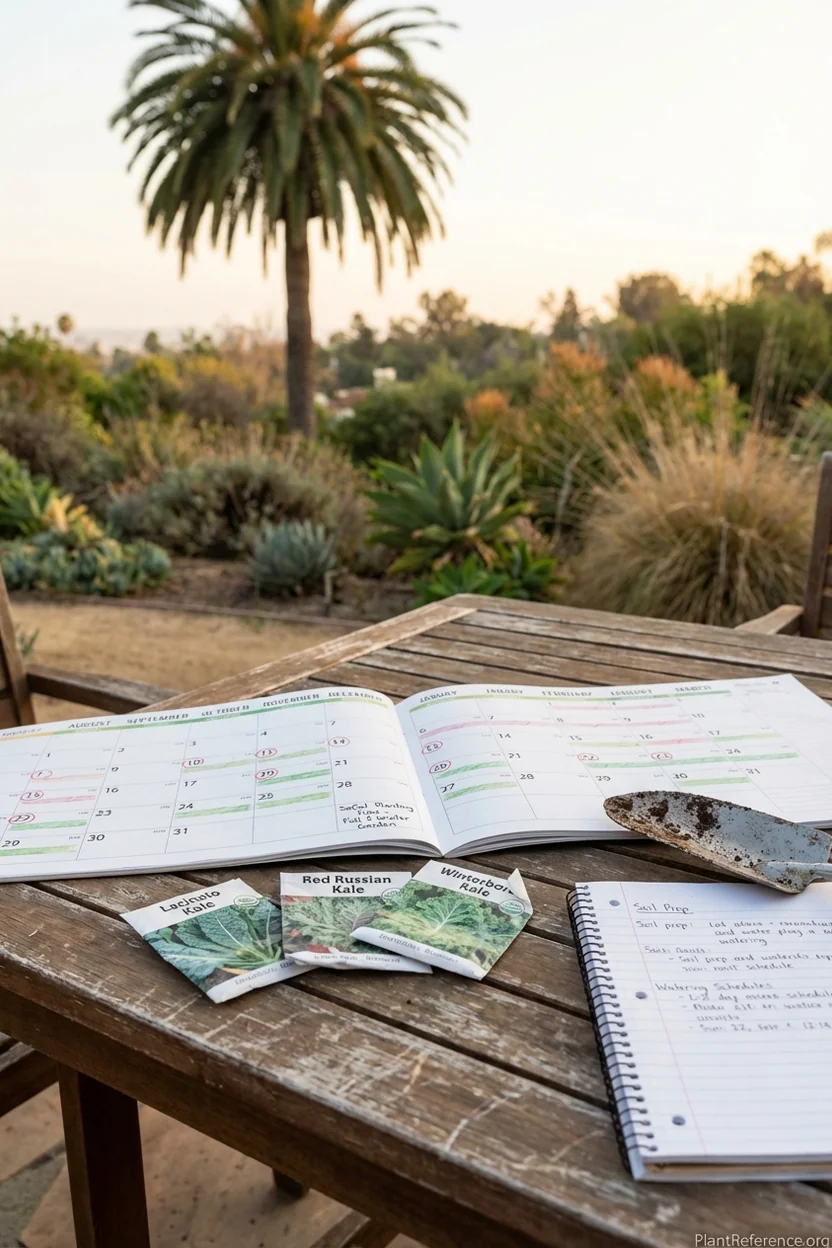
The key to successful kale growing in Los Angeles is timing your plantings to avoid the summer heat while taking advantage of the long, mild growing season. Here's my tried-and-tested planting schedule based on over three decades of growing vegetables in Southern California.
Prime Planting Windows
Fall Planting (Best Overall): August 15 - October 30 This is your money window. Seeds planted during this period will mature during the coolest, most favorable months. Start with heat-tolerant varieties like Red Russian and Lacinato in mid-August, then add Winterbor and Redbor as temperatures begin dropping in September.
August 15-31: Red Russian, Lacinato only
September 1-30: All varieties excellent
October 1-30: All varieties, best flavor development
Winter Planting: November 1 - February 15 Winter plantings grow slowly due to shorter days and cooler temperatures, but they produce some of the sweetest kale you'll ever taste. The mild Los Angeles winter rarely stresses these cool-season plants.
Spring Planting (Challenging): February 16 - March 31 Spring planting works but requires careful variety selection and vigilant harvesting before heat arrives. Stick to fast-maturing Red Russian and harvest baby leaves to beat the bolt.
Summer Growing: Not Recommended June through August temperatures regularly exceed 80°F (27°C), causing most kale varieties to bolt quickly and develop bitter flavors. Even coastal areas should avoid summer planting unless you can provide consistent afternoon shade.
Succession Planting Strategy
The secret to continuous fresh kale is succession planting every 3-4 weeks during the favorable growing periods. I plant small patches rather than large single sowings—this gives me different stages of maturity and extends my harvest window.
Here's my Los Angeles succession schedule:
August 15: First fall planting (Red Russian, Lacinato)
September 15: Main fall planting (all varieties)
October 15: Late fall planting (all varieties)
November 15: Early winter planting (Winterbor, Redbor focus)
December 15: Mid-winter planting (all varieties)
January 15: Late winter planting (all varieties)
February 15: Final planting of season (Red Russian only)
This schedule provides nearly continuous harvest from October through June, with only July and August requiring store-bought greens.
Direct Sowing vs. Transplants
In Los Angeles' mild climate, direct sowing works beautifully and is my preferred method. The soil stays workable year-round, and kale seedlings establish quickly without transplant shock. Direct sow seeds ¼ to ½ inch deep (0.6-1.2 cm) in rows 12-18 inches (30-45 cm) apart.
If you prefer transplants, start seeds indoors 4-6 weeks before your intended planting date. This method works well for the challenging spring planting window when you want maximum control over timing.
Complete Growing Guide for Los Angeles
Growing kale successfully in Los Angeles requires understanding how our unique Mediterranean climate affects plant growth. The key differences from other regions are managing heat stress, dealing with alkaline soil, and working with irregular rainfall patterns.
Soil Preparation for Los Angeles Conditions
Los Angeles soils tend to be alkaline (pH 7.0-8.5) due to our low rainfall and limestone-derived parent material. Kale prefers slightly acidic to neutral soil (pH 6.0-7.0), so soil amendment is usually necessary. I've found that adding 2-3 inches (5-7 cm) of compost annually slowly brings pH down to acceptable levels while improving soil structure.
The clay soils common in many Los Angeles neighborhoods become rock-hard when dry and waterlogged when wet—exactly what kale roots hate. Build raised beds 8-12 inches (20-30 cm) high, or heavily amend existing soil with compost and coarse sand to improve drainage. Never work Los Angeles clay soil when it's wet, as this creates concrete-like hardpan that roots cannot penetrate.
Add a balanced organic fertilizer like 5-5-5 at planting time, applying about 2 tablespoons per square foot (30 ml per 0.09 m²). Kale is a heavy nitrogen feeder, so plan to side-dress with additional nitrogen sources like fish emulsion or blood meal every 4-6 weeks during active growing periods.
Irrigation Management
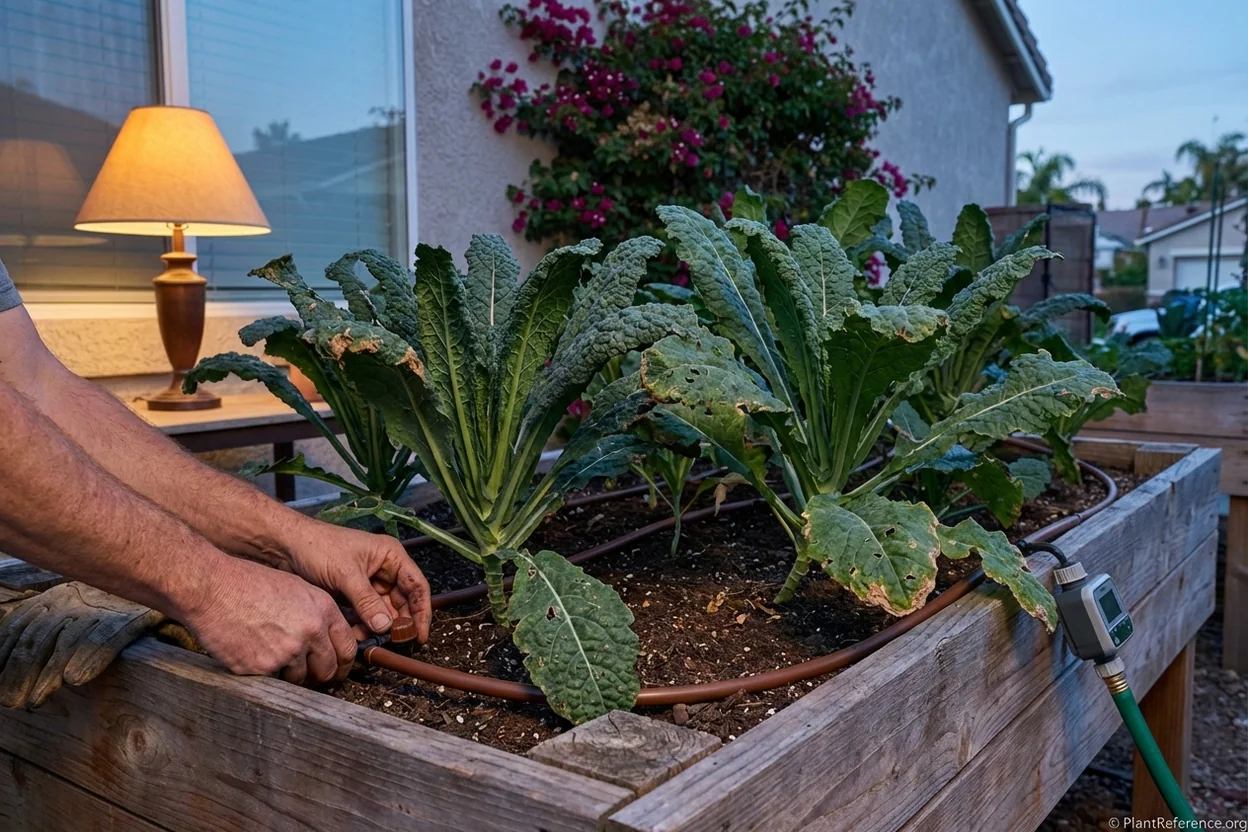
Consistent moisture is critical for tender, flavorful kale leaves. Los Angeles' Mediterranean climate means wet winters and bone-dry summers—exactly the opposite of what kale prefers. Install drip irrigation or soaker hoses to provide consistent, deep watering without wetting the leaves, which can promote fungal diseases.
During the growing season, provide 1-1.5 inches (2.5-3.8 cm) of water per week through deep, infrequent irrigation sessions. Check soil moisture by inserting your finger 2-3 inches (5-7 cm) deep—water when the soil feels dry at this depth. In Los Angeles' low-humidity environment, daily light watering leads to shallow root systems and stressed plants.
Mulch heavily with 2-3 inches (5-7 cm) of organic material like straw, shredded leaves, or wood chips. This conserves moisture, suppresses weeds, and moderates soil temperature fluctuations during those occasional heat waves that surprise us in February or March.
Shade and Heat Protection
While Los Angeles is generally excellent for kale growing, we do get heat waves that can stress plants. During September and late spring, provide afternoon shade using shade cloth, tall companion plants, or strategic placement near structures that block western sun.
I've had excellent success growing kale on the east side of my house where plants receive morning sun but are shaded during the hottest part of the afternoon. This microclimate extends the growing season by several weeks on both ends compared to full-sun locations.
Companion Planting for Los Angeles Gardens
Take advantage of Los Angeles' year-round growing season by intercropping kale with other cool-season vegetables. Plant lettuce, spinach, and Asian greens between kale rows for maximum production per square foot. These companions mature faster than kale, giving you harvests while waiting for your kale to reach full size.
Avoid planting kale near tomatoes, peppers, or other warm-season crops that require full sun and heat—their growing requirements are opposite to what kale needs.
Troubleshooting Los Angeles-Specific Problems
Growing kale in Los Angeles presents some unique challenges you won't find in gardening books written for other climates. Here are the most common issues I see and practical solutions that work in Southern California conditions.
Heat Stress and Bolting
Problem: Even cool-season plantings bolt prematurely during unexpected warm spells.
Cause: Los Angeles weather can be unpredictable, with 85°F (29°C) days in February or early heat waves in March that trigger bolting in temperature-sensitive plants.
Solution: Choose bolt-resistant varieties like Red Russian for plantings that might encounter heat. Provide afternoon shade during heat waves using shade cloth or temporary structures. Harvest regularly to keep plants in vegetative growth rather than allowing them to mature fully before hot weather arrives.
Prevention: Plant earlier in fall (August-September) so plants are well-established before any winter warm spells. Avoid late spring plantings unless you can guarantee shade protection.
Aphid Infestations
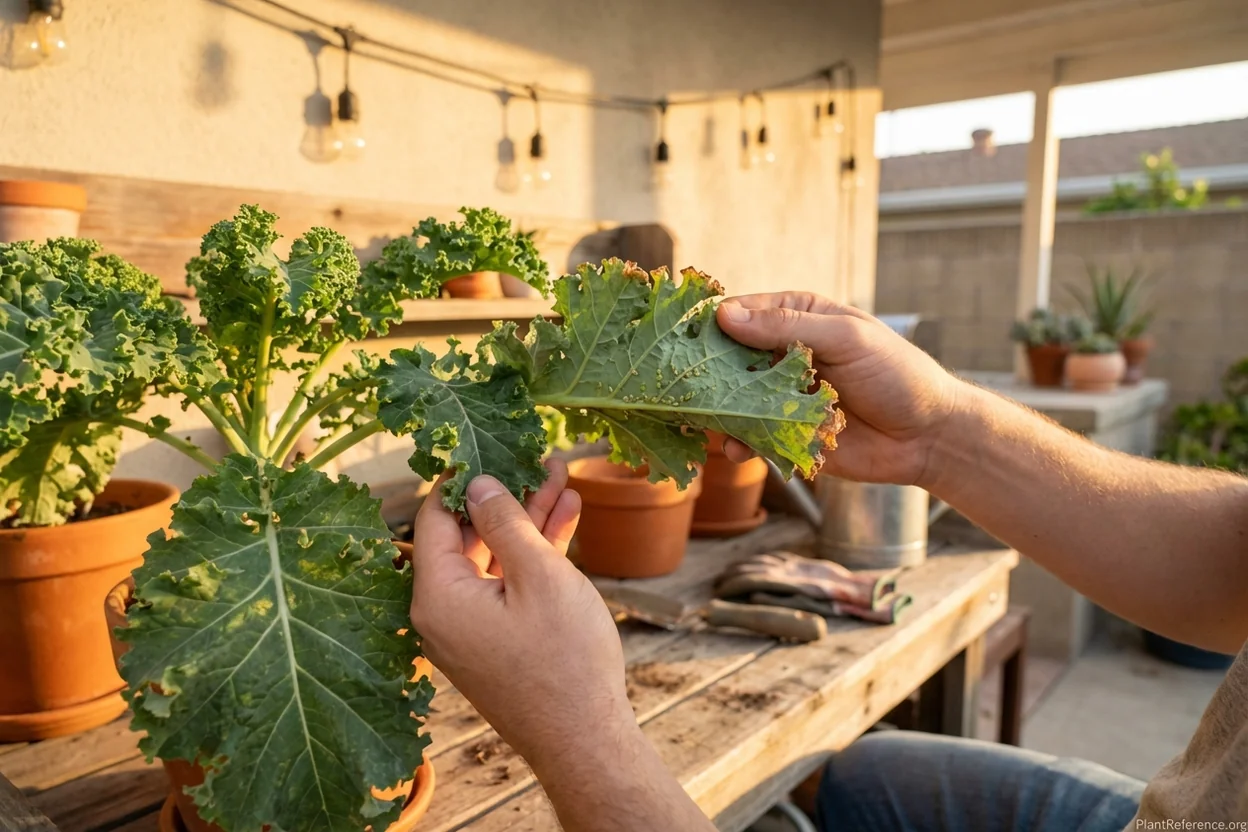
Problem: Cabbage aphids cluster heavily on kale leaves, especially during mild winter months when natural predators are less active.
Cause: Los Angeles' mild winter allows aphid populations to build up without the hard freezes that normally control them. Overuse of nitrogen fertilizer creates tender growth that attracts aphids.
Solution: Blast aphids off with strong water spray from garden hose—this simple method removes 90% of the population without chemicals. Apply neem oil or insecticidal soap in evening hours to avoid harming beneficial insects. Encourage beneficial insects by planting flowers like alyssum and fennel nearby.
Prevention: Avoid high-nitrogen fertilizers in late fall and winter. Plant onions and garlic as companions—their strong scent deters aphids naturally.
Irregular Growth Patterns
Problem: Plants grow slowly during December and January despite mild temperatures.
Cause: Shorter daylight hours slow photosynthesis even when temperatures are favorable. Los Angeles gets only 9-10 hours of daylight during winter solstice.
Solution: This is normal—don't over-fertilize trying to force growth. Plants will resume rapid growth in February as day length increases. Focus on harvesting outer leaves rather than expecting significant size increases.
Prevention: Plan plantings so your main harvest occurs during October-November and March-May when day length supports active growth.
Soil Crusting and Drainage Issues
Problem: Heavy clay soils become waterlogged during rainy periods, causing root rot and yellowing leaves.
Cause: Los Angeles receives most annual rainfall during December through March. Clay soils that work fine during dry months become problematic when saturated.
Solution: Improve drainage immediately by adding coarse sand and compost to planting areas. Create raised beds or mounded rows to lift root zones above waterlogged soil. Install French drains in chronic problem areas.
Prevention: Always work compost and drainage amendments into Los Angeles soils before planting. Never plant directly into unamended clay.
Harvest & Storage
The beauty of growing kale in Los Angeles is the extended harvest season—you can pick fresh leaves almost year-round with proper planning. However, timing your harvest correctly makes the difference between tender, sweet greens and tough, bitter leaves that nobody wants to eat.
Optimal Harvest Timing
Begin harvesting when plants reach 8-10 inches (20-25 cm) tall, typically 6-8 weeks after planting. Always harvest outer, older leaves first while allowing the center growing point to continue producing new growth. A single plant can provide harvests for 2-4 months when managed properly.
The best time of day for harvesting is early morning when leaves are fully hydrated and crisp. Avoid harvesting during hot afternoons when leaves are stressed and wilted—they won't store well and may taste bitter.
In Los Angeles climate, the sweetest kale comes from plants harvested during our coolest months: December through February. During this period, cool nighttime temperatures (40-50°F/4-10°C) trigger the plant to convert starches to sugars, creating noticeably sweeter, more flavorful leaves.
Post-Harvest Handling
Kale stores much better than most leafy greens when handled correctly. Immediately after harvest, plunge leaves into cold water to remove field heat and refresh tissues. Shake dry or use a salad spinner, then store in perforated plastic bags in the refrigerator.
Properly harvested and stored Los Angeles kale keeps 7-10 days in the refrigerator—longer than kale grown in more stressful climates. The key is maintaining high humidity while allowing air circulation to prevent condensation buildup that leads to rot.
For long-term storage, kale freezes beautifully after blanching. Blanch leaves in boiling water for 2 minutes, immediately plunge into ice water, drain thoroughly, and freeze in portion-sized bags. Frozen kale works perfectly in smoothies, soups, and cooked dishes.
Frequently Asked Questions
Reading about plants and recognising them are different skills. These three build the second.
- Daily PlantIdentify the day’s mystery plant from a close-up photograph.
- Keyed OutWork a dichotomous key, lead by lead, to name a hidden specimen.
- Name That PlantName a specimen from botanical clues dealt hardest first.
Free to play, no account needed
Emma runs a small succulent propagation business from her home in San Diego, shipping starter plants and cuttings across the country. She fell into succulents after college when she realized they were the only plants that survived her travel schedule—she was working as a travel nurse at the time. San Diego's mild, dry climate is ideal for outdoor succulent gardens, and Emma's front yard is a living catalog of over 200 varieties. She completed a certificate program in ornamental horticulture and writes about succulent care, propagation techniques, and drought-tolerant garden design. Her writing is calm and reassuring—she knows people feel bad about killing plants, and she wants them to stop worrying so much.