Image 1 of 6
1 / 6
Plant Reference
Brassica, Genus, oleracea, Species, 'Red Russian', Cultivar,
- Genus & species
- Cultivar
red Russian kale
Heirloom cultivar developed in Russia for cold tolerance; the parent species B. oleracea is native to Mediterranean and Atlantic coastal Europe.
SunFull Sun – Part Shade
WaterMedium
Overview
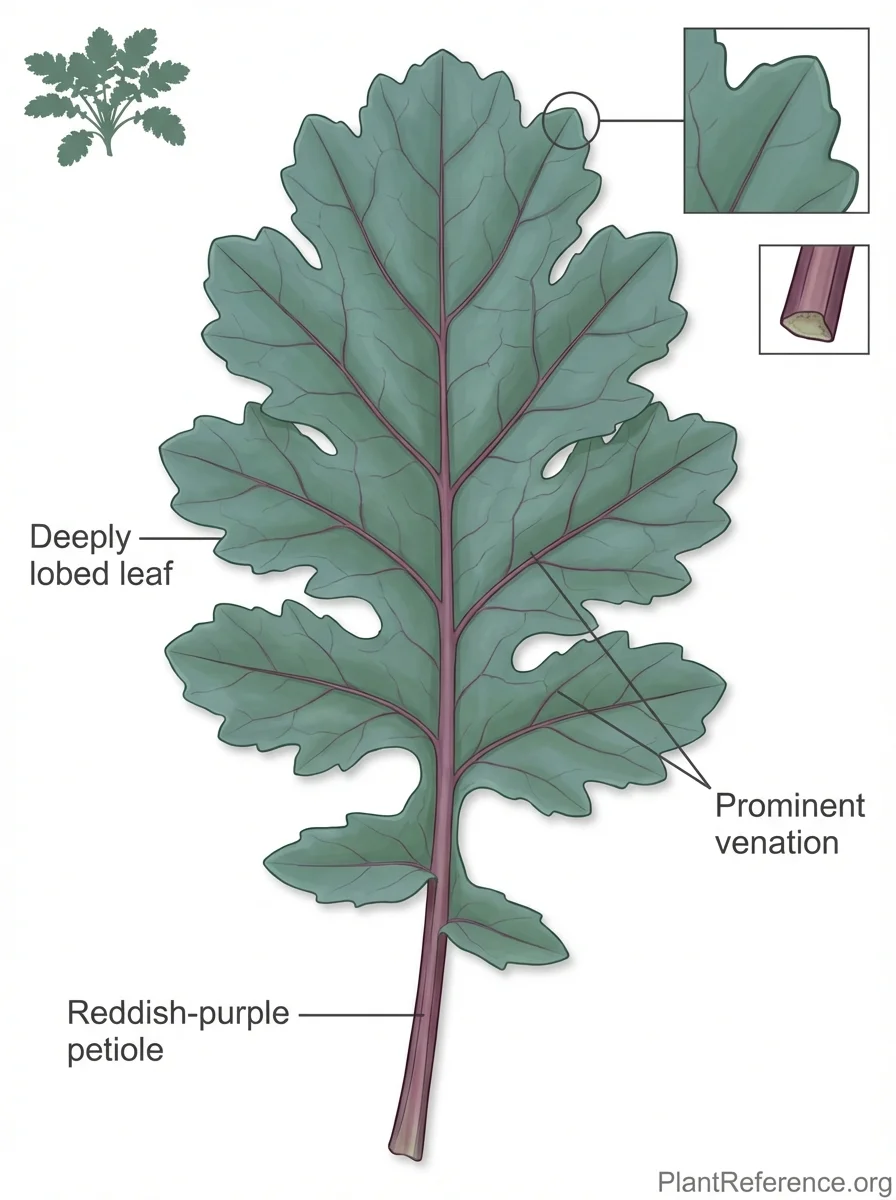
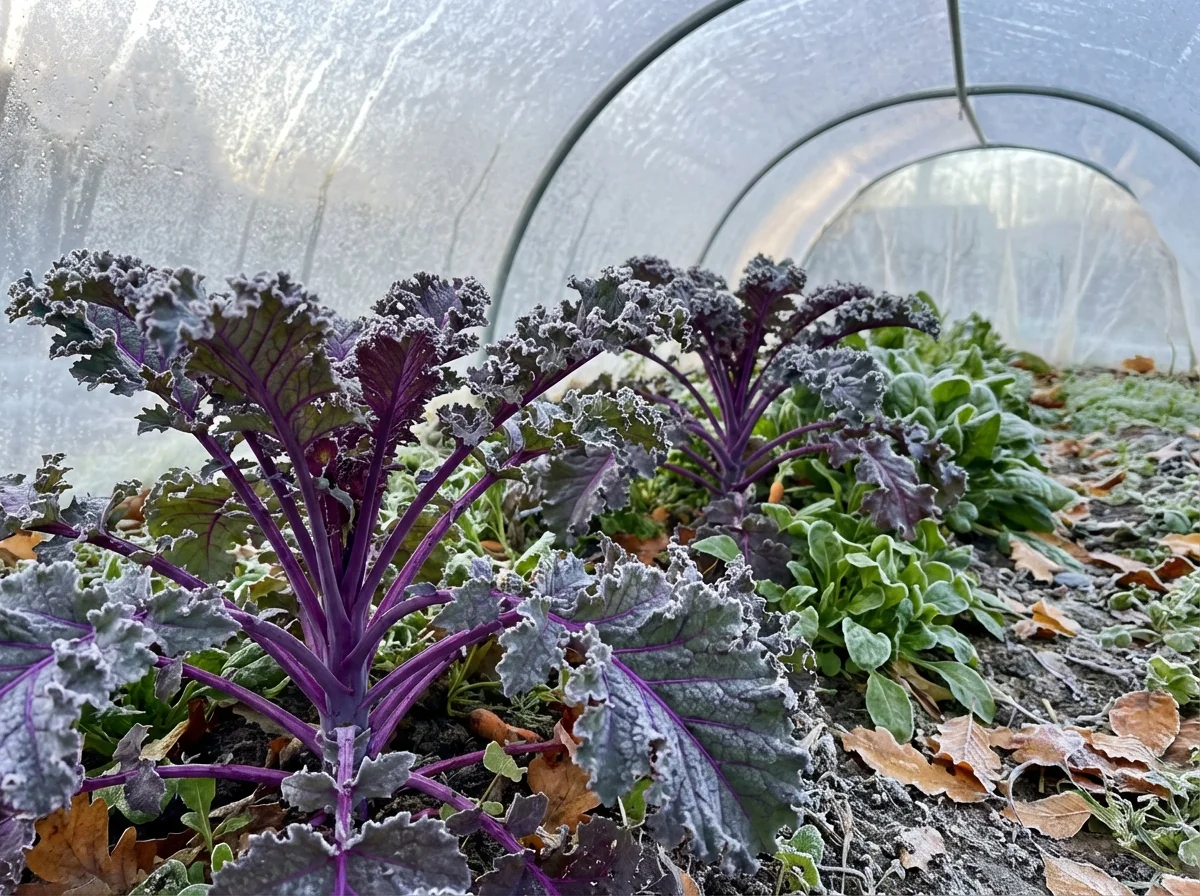
Brassica oleracea Red Russian is a cool-season leafy brassica in the mustard family (Brassicaceae) grown as an annual for its tender flat lobed leaves. Plants form an upright rosette 12-18 inches (30-45 cm) tall and 12-15 inches (30-38 cm) wide, with flat deeply lobed oak-leaf-shaped leaves 6-10 inches (15-25 cm) long. The leaf blades are blue-green to gray-green, and the stems and leaf veining are reddish-purple to burgundy; the purple coloring comes from anthocyanin pigments that accumulate more heavily in cool weather, so late-fall and winter leaves take on a stronger purple cast than spring and summer leaves. The flat oak-leaf shape separates Red Russian from the curly-leafed Winterbor type and from the strap-shaped Lacinato (dinosaur kale) type, and the smooth flat blade is noticeably less fibrous in the mouth than the dense curled leaves of Winterbor. The cultivar is an open-pollinated heirloom developed in Russia for cold tolerance, and saved seed reproduces true to the parent. Red Russian holds longer in warm summer weather before bolting than Winterbor or Lacinato, which extends the spring harvest window in Pacific Northwest gardens. Baby leaf is ready at 25-30 days from seed and full-size leaves at 50-60 days from seed, and the cultivar is among the faster-maturing kales by days-to-harvest. Leaves contain goitrogenic compounds (progoitrin and sinigrin) that are reduced by cooking and typical in the Brassicaceae. Cabbage worms (Pieris rapae), aphids, and flea beetles are the primary pest pressures. Deer readily browse kale. Hardy in USDA zones 7-10 as an overwintering leaf crop through standard Pacific Northwest winters.
Native Range
Brassica oleracea Red Russian is an open-pollinated heirloom cultivar developed in Russia and selected over generations for cold tolerance. The parent species B. oleracea is native to Mediterranean and Atlantic coastal Europe, where wild ancestors grow as coastal perennials on limestone sea cliffs; cultivated B. oleracea has diversified into the kale, cabbage, broccoli, cauliflower, Brussels sprouts, kohlrabi, and gai lan crops through centuries of selection. Red Russian sits within the acephala (non-heading) kale group.Suggested Uses
Grown in vegetable gardens, raised beds, and containers of 5 gallons (19 liters) or larger for leaf harvest. The tender flat smooth leaf is used for salads at baby-leaf stage and for cooking at full size. Open-pollinated status allows seed saving from flowering second-year plants. The cultivar holds longer in warm weather than Winterbor or Lacinato, which positions it for extended spring harvests in Pacific Northwest gardens. Succession-sowing every 2-3 weeks from spring through late summer maintains continuous harvest across the cool-season window.How to Identify
Appearance
Size & Dimensions
Height1' - 1'6"
Width/Spread1' - 1'3"
Bloom Information
Flowering is undesirable in a leaf crop because bolting makes the leaves bitter. Plants bolt (produce terminal clusters of bright yellow four-petaled cruciform flowers) in sustained heat or in the second year if overwintered, but Red Russian holds longer before bolting than Winterbor or Lacinato, which extends the harvest window into warmer weeks. When bolting does occur, the flower stalks are removed immediately to extend the leaf harvest from the remaining rosette.
Detailed Descriptions
Flower Description
Bright yellow four-petaled cruciform flowers in terminal clusters when the plant bolts; bolting is undesirable in a leaf crop because flowering makes the leaves bitterFoliage Description
Blue-green to gray-green blades with reddish-purple to burgundy stems and veining; the purple coloring intensifies in cool weather through anthocyanin accumulation; flat deeply lobed oak-leaf shape (not curly) 6-10 inches (15-25 cm) longGrowing Conditions
Sun Requirements
Requires 4-10 hours of direct sunlight daily
• Full Sun: 6+ hours of direct sunlight
• Partial Shade: 3-6 hours of direct sunlight
• Full Shade: Less than 3 hours of direct sunlight
Care & Maintenance
Care Guide
Plants grow in full sun to partial shade and tolerate a range of soils from pH 6.0 to 7.5, though rich well-drained loam gives the strongest yields. Seed is sown direct or started indoors 4 weeks before transplant, with succession-sowing every 2-3 weeks extending the harvest window across spring and fall. Baby leaf is cut at 25-30 days from seed and full-size leaves at 50-60 days, using cut-and-come-again harvest of the outer leaves while leaving the central growing point intact. Flavor sweetens noticeably after frost as cell sap concentrates sugars in response to cold, and late-fall and winter harvests are often the peak eating quality of the season. The open-pollinated heirloom reproduces true, so seed can be saved from flowering plants in the second year. Pest pressures include cabbage worms (Pieris rapae), aphids, and flea beetles, and floating row cover from seedling stage through harvest excludes all three.Pruning
No pruning is applied in the horticultural sense. Outer leaves are cut at the petiole using cut-and-come-again harvest while the central growing point is left intact; the rosette continues producing new leaves from the center for the life of the plant. Bolting stalks and flower buds are removed as they appear to keep energy directed at leaf production. Pest-damaged leaves are removed to improve air circulation and reduce pest shelter.Container Growing
Suitable for container growing
Minimum container size: 5 gallons
Toxicity
Non-toxicPlanting Guide
Planting Methods & Timing
Planting Method
both
Indoor Start
4 weeks before last frost
Direct Sow Timing
Direct-sow early spring through late summer. The cultivar holds longer in warm weather before bolting than curly kale types (Winterbor) or strap-leaf types (Lacinato). Succession-sow every 2-3 weeks for continuous harvest.
Days to Maturity
50–60 days
Plant Spacing
12 inches
Botanical Flashcard