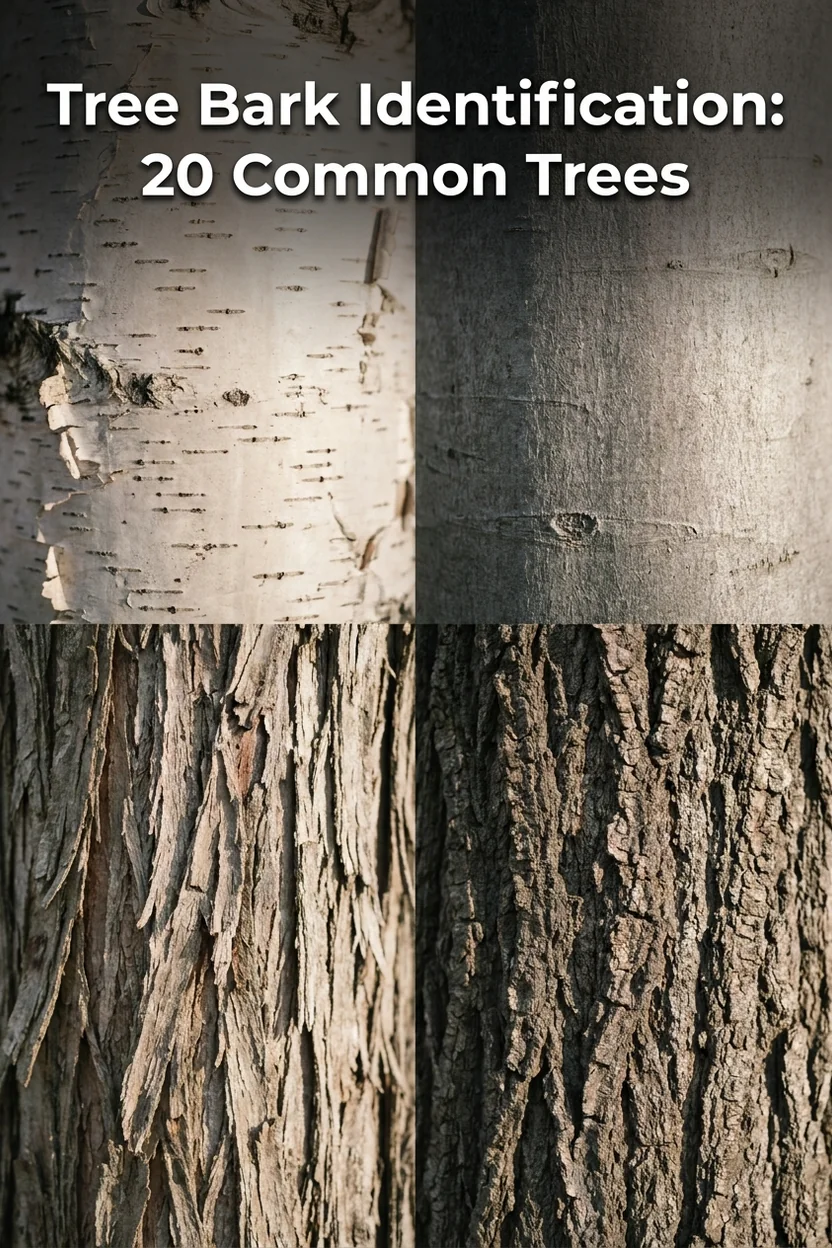
Tree Bark Identification: A Visual Guide to 20 Trees
Pets & Toxicity
Recorded toxicity for plants linked in this guide. An unknown status is not a safety assessment.
Toxic to pets: black walnut, black cherry, white oak and 1 more (20 linked plants checked)DetailsHide
Quercus alba — Toxicity Warning
Toxic when leaves or acorns are eaten in quantity, especially by horses and grazing livestock; human ingestion toxicity is generally low.View Quercus alba plant profileQuercus rubra — Toxicity Warning
Toxic when leaves or acorns are eaten in quantity, especially by horses and grazing livestock; human ingestion toxicity is generally low.View Quercus rubra plant profileDiospyros virginiana — Toxicity
Non-toxic; ripe fruit is edible and used in regional baking.View Diospyros virginiana plant profile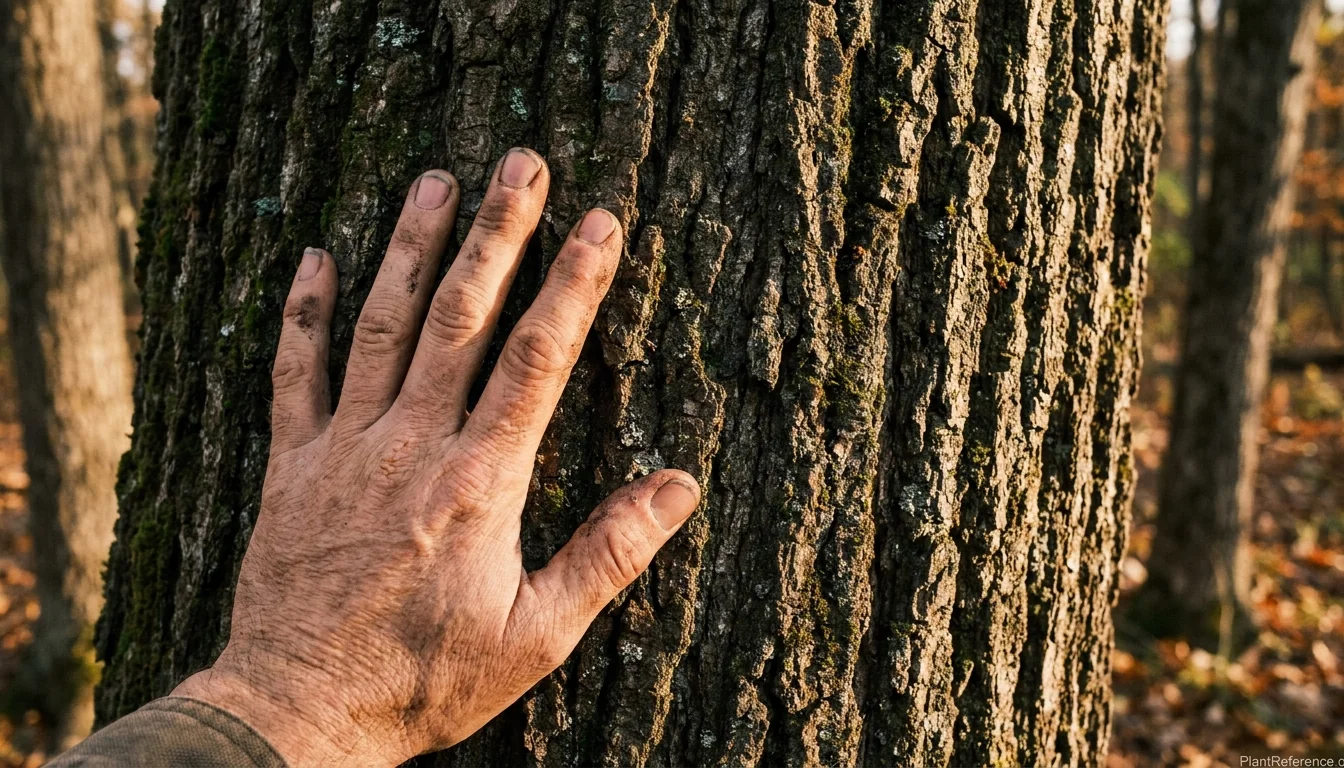
— Image © PlantReference.org 2026
Tree bark identification is the skill that keeps working when every leaf is on the ground. I've stood next to bare trees in February with homeowners who swore they could never tell them apart, and within ten minutes they were calling out beech, cherry, and walnut by texture alone. Bark doesn't fall off in autumn, doesn't get chewed by insects, and doesn't change shape from sun to shade the way leaves do. Once you learn to read it, you have a year-round identification tool that most people walk right past.
Why Bark Is a Reliable Year-Round Clue
Leaves get all the attention in plant identification, and for good reason—they're abundant and full of detail. But leaves disappear for roughly half the year across most of North America, and even in summer they hang too high to examine on a mature tree. Bark sits at eye level, stays put through every season, and tells a consistent story.
Bark is also the backbone of winter dendrology, the practice of identifying trees without leaves. Field botanists lean on what's often called the "Three Bs": branching, buds, and bark. Of those three, bark is the easiest to photograph and compare, which is why it deserves a dedicated guide. If you want to layer in the other two, Alternate vs Opposite Leaf Arrangement: The MADCapHorse Mnemonic Explained covers branching, and the broader framework lives in How to Identify Any Plant: A Beginner's Guide to Leaves, Flowers, and Stems.
One honest caveat: bark changes with age. A young black cherry looks nothing like a 60-year-old one. I'll flag those age shifts as we go, because they're the single most common source of bark identification mistakes.
The Five Bark Textures to Learn First
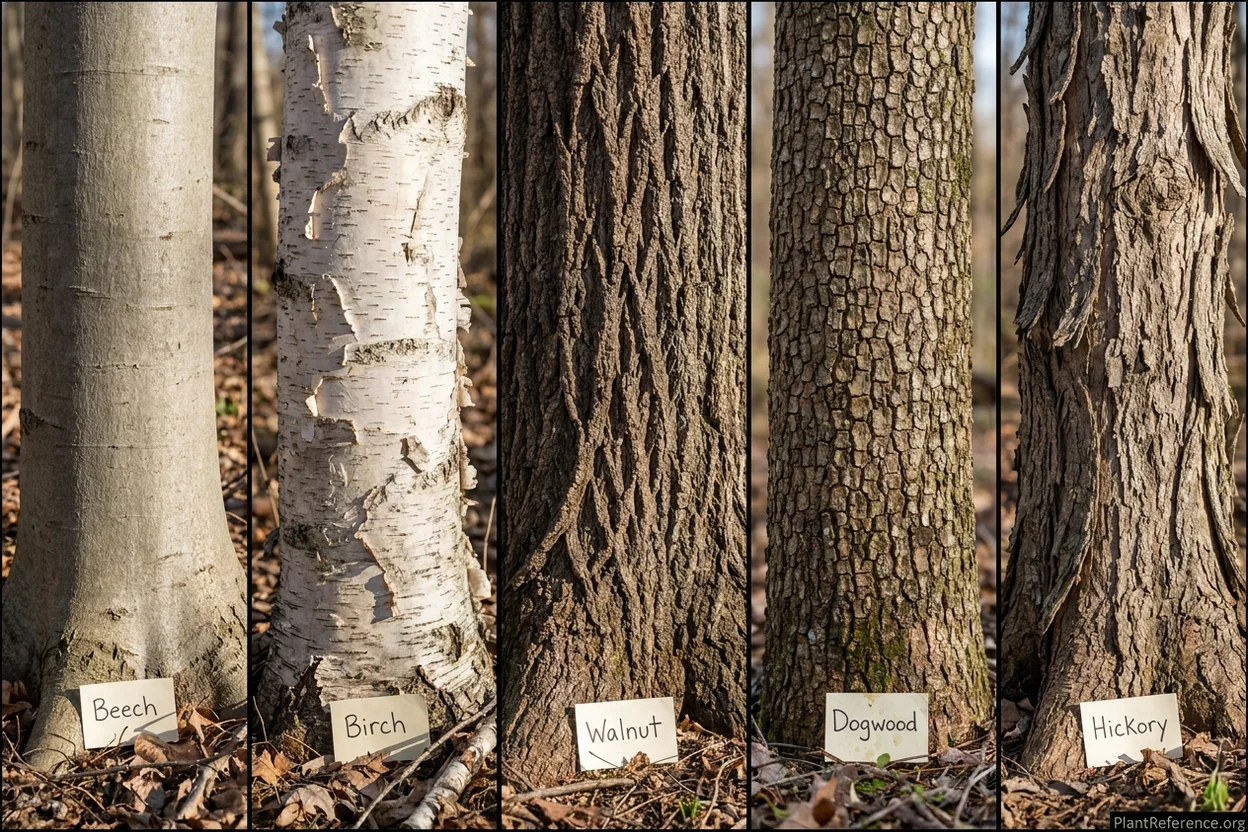
Before you memorize any species, train your eye on five broad textures. Almost every tree you meet falls into one of these categories, and sorting by texture cuts the possibilities down fast.
Smooth: Tight, unbroken bark with little furrowing, as on American beech 🌿Fagus grandifolia.
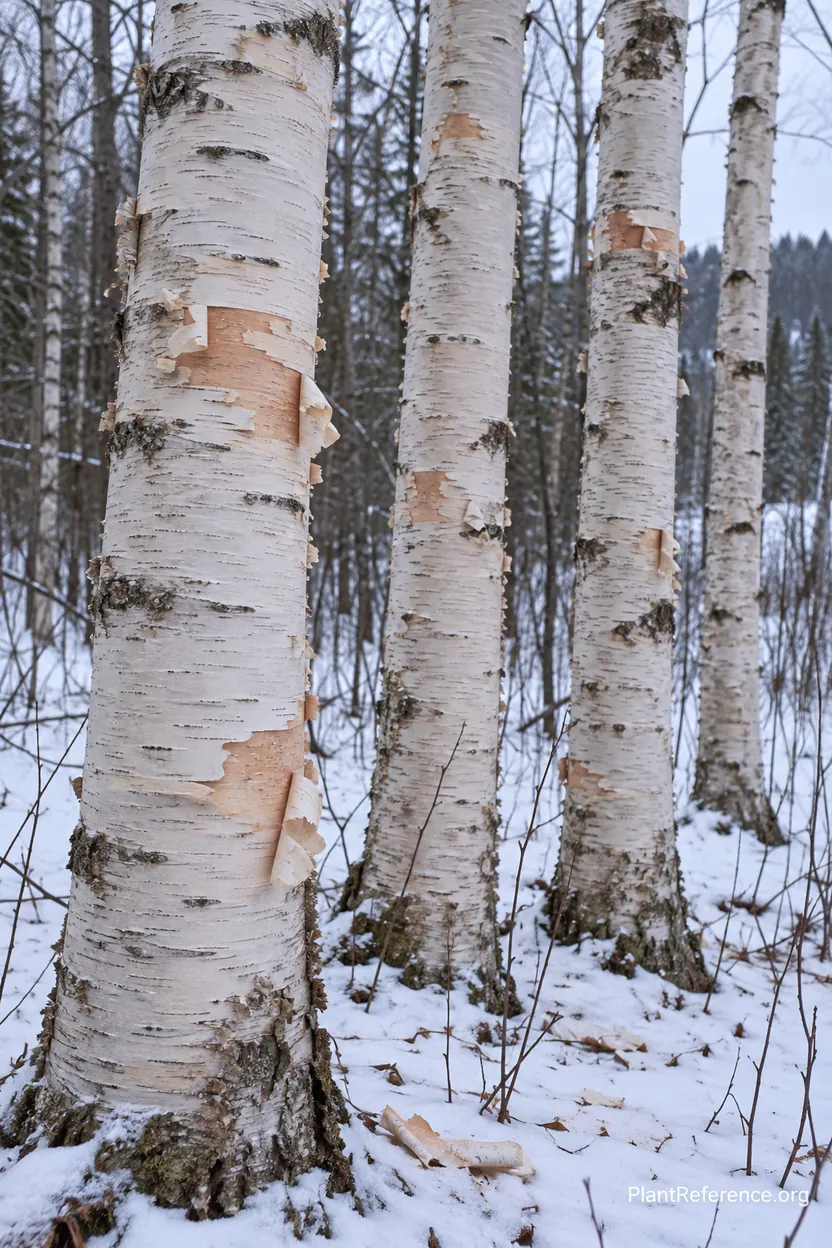
Peeling (papery or curling): Bark that flakes off in sheets or strips, as on paper birch 🌿Betula papyrifera.
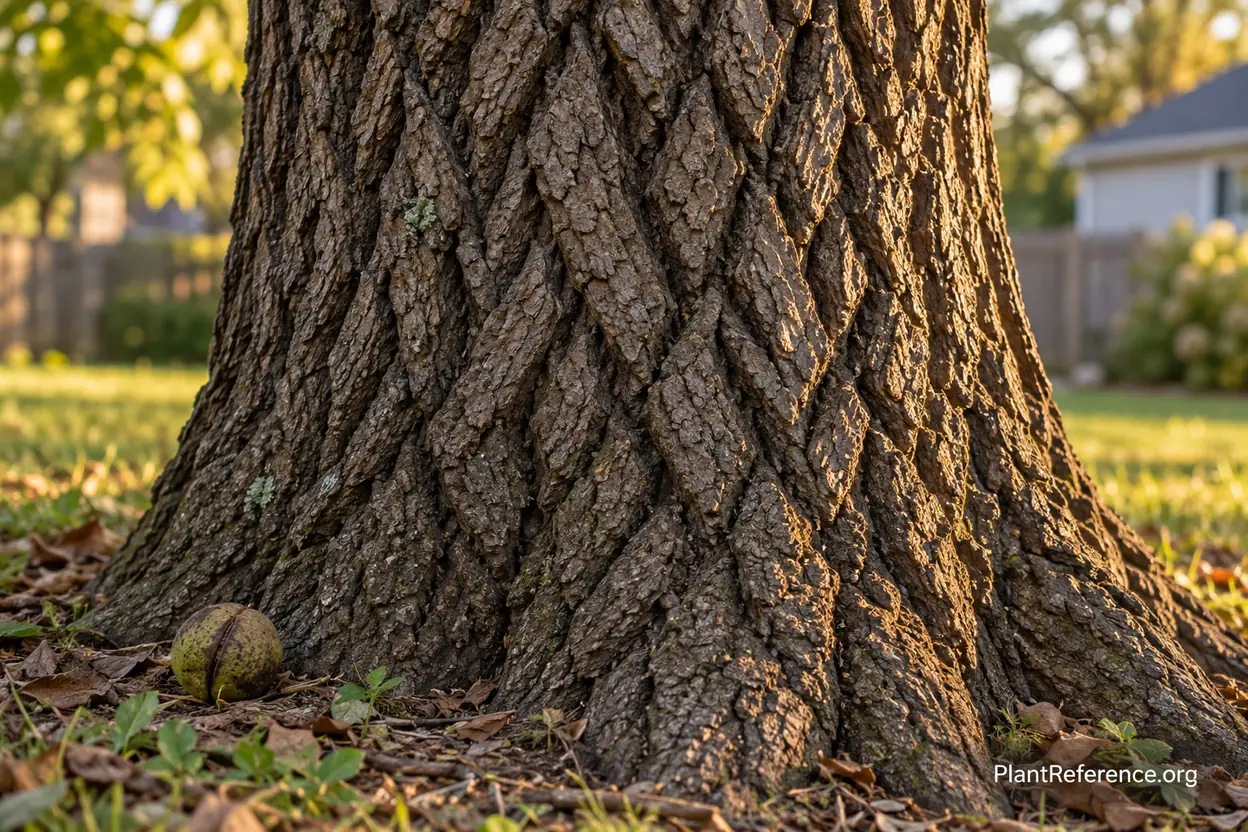
Furrowed (ridged): Deep vertical grooves separating raised ridges, as on black walnut 🌿Juglans nigra.
Scaly-plated: Bark broken into small blocks or plates, often called "alligator skin," as on flowering dogwood 🌿Cornus florida.
Shaggy: Long strips that curl away from the trunk at top and bottom, as on shagbark hickory 🌿Carya ovata.
Run your hand over the trunk and ask which of the five it is before anything else. This single habit prevents most beginner errors, because it stops you from guessing on color alone—and bark color shifts dramatically when it's wet.
Reading Lenticels, Color, and Peeling Patterns
Once you've named the texture, three details push you toward the exact species.
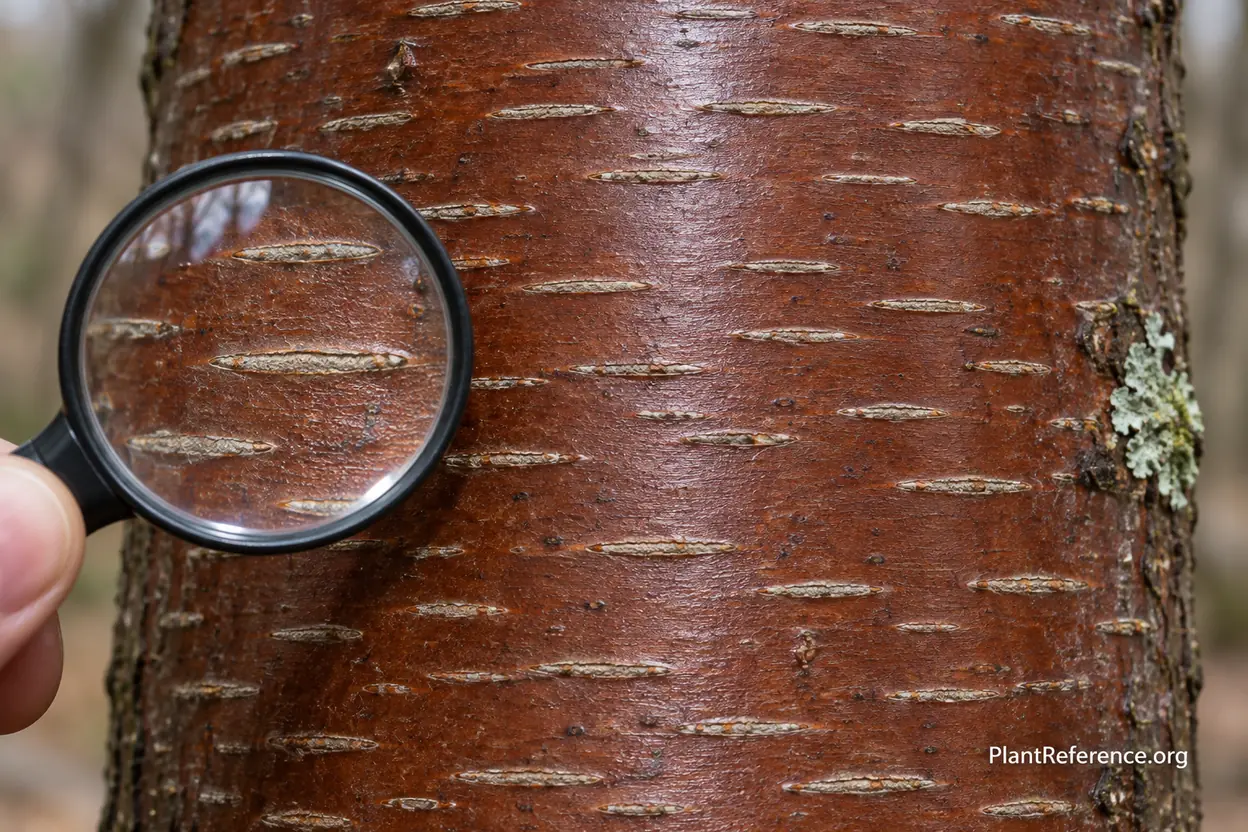
Lenticels are the small, often horizontal pores trees use for gas exchange. On cherries and other members of the genus Prunus, lenticels show up as distinct horizontal dashes across smooth, reddish bark—one of the most reliable field marks in all of bark identification. Birches show them too, running crosswise on their peeling sheets.
Color helps, but treat it as a secondary clue. Sycamore 🌿Platanus occidentalis flakes away to expose creamy white and olive patches that look almost like camouflage. Eastern redcedar Juniperus virginiana runs reddish-brown and fibrous. Quaking aspen 🌿Populus tremuloides reads chalky white-green with dark knots. Just remember that rain darkens bark and lichen masks it, so confirm color in dry conditions when you can.
Peeling direction is the final detail. Paper birch 🌿Betula papyrifera peels in horizontal papery bands. Shagbark hickory 🌿Carya ovata peels in long vertical strips that bow out at the ends. Eastern redcedar Juniperus virginiana sheds in narrow vertical ribbons. The direction and shape of the peel often nail the genus on their own.
20 Common North American Trees by Bark
Here's the reference table. Use it alongside the texture sort above: find your texture group, then scan the matching rows. For conifers specifically, bark works hand in hand with needle arrangement, which How to Identify Conifers: Pines, Spruces, and Firs Simplified breaks down in detail.
Tree (Botanical Name) | Texture Group | Bark Description & Quick Tell |
|---|---|---|
Paper Birch 🌿Betula papyrifera | Peeling | Chalky white bark peeling in horizontal papery sheets; dark horizontal lenticels |
River Birch 🌿Betula nigra | Peeling | Salmon-pink to cinnamon bark curling in ragged, shaggy flakes; loves wet ground |
American Beech 🌿Fagus grandifolia | Smooth | Tight, smooth blue-gray "elephant skin" that stays smooth even when old |
Black Cherry 🌿Prunus serotina | Smooth to scaly | Young: smooth reddish-brown with lenticels; mature: dark "burnt cornflakes" scales |
Shagbark Hickory 🌿Carya ovata | Shaggy | Gray bark in long vertical strips curling outward at top and bottom |
American Sycamore 🌿Platanus occidentalis | Peeling | Camouflage patches flaking to creamy white and olive on the upper trunk |
White Oak 🌿Quercus alba | Scaly-plated | Light ashy gray with blocky, scaly ridges; flakes loosely |
Northern Red Oak 🌿Quercus rubra | Furrowed | Dark bark with shiny, smooth "ski-track" ridges running down the center |
Sugar Maple 🌿Acer saccharum | Furrowed | Gray, irregular vertical plates that lift along one edge with age |
Eastern White Pine 🌿Pinus strobus | Furrowed | Young smooth gray-green; mature deep furrows in long grayish blocks |
Black Walnut 🌿Juglans nigra | Furrowed | Dark brown-black with deep, intersecting diamond-shaped ridges |
Quaking Aspen 🌿Populus tremuloides | Smooth | Chalky white-green smooth bark marked with black knots and scars |
Eastern Hemlock 🌿Tsuga canadensis | Furrowed | Thick cinnamon-brown scaly furrows; flat single needles confirm it |
Tulip Tree 🌿Liriodendron tulipifera | Furrowed | Gray interlacing furrows with whitish bloom in the grooves |
Sweetgum 🌿Liquidambar styraciflua | Furrowed | Gray-brown deep furrows; corky "wings" on younger twigs |
Hackberry 🌿Celtis occidentalis | Warty | Gray bark with distinctive corky warts and narrow ridges |
Eastern Redcedar Juniperus virginiana | Peeling | Reddish-brown fibrous bark shedding in long vertical ribbons |
American Elm 🌿Ulmus americana | Furrowed | Gray with broad ridges; cut edge shows buff-and-brown layered "sandwich" |
Flowering Dogwood 🌿Cornus florida | Scaly-plated | Gray-brown small blocky "alligator skin" plates |
White Ash 🌿Fraxinus americana | Furrowed | Gray tight, interlacing diamond-shaped ridge pattern |
A few of these are worth singling out. American beech 🌿Fagus grandifolia is the easiest tree in any eastern forest because its smooth gray bark almost never roughens—if it's big, old, and still smooth, it's beech. Shagbark hickory 🌿Carya ovata announces itself from a distance with its peeling vertical plates. And the camouflage flaking of sycamore 🌿Platanus occidentalis is unmistakable once you've seen it lighting up a riverbank in winter. Many of these species also turn up on tree lists for shaded yards; if that's your situation, Best Grass Seed for Shade Under Trees: 5 Species That Actually Work is a useful companion read.
Common Bark Lookalikes and How to Avoid Mistakes
Bark is reliable, but a few pairs trip people up constantly. Knowing the lookalikes in advance is half the battle.
Young black cherry 🌿Prunus serotina versus young birch Betula species is the classic mix-up—both can show smooth bark with horizontal lenticels. The tell is color and habit: cherry runs reddish-brown and stays on a single straight trunk, while birches lean toward white, cream, or cinnamon and often grow in clumps.
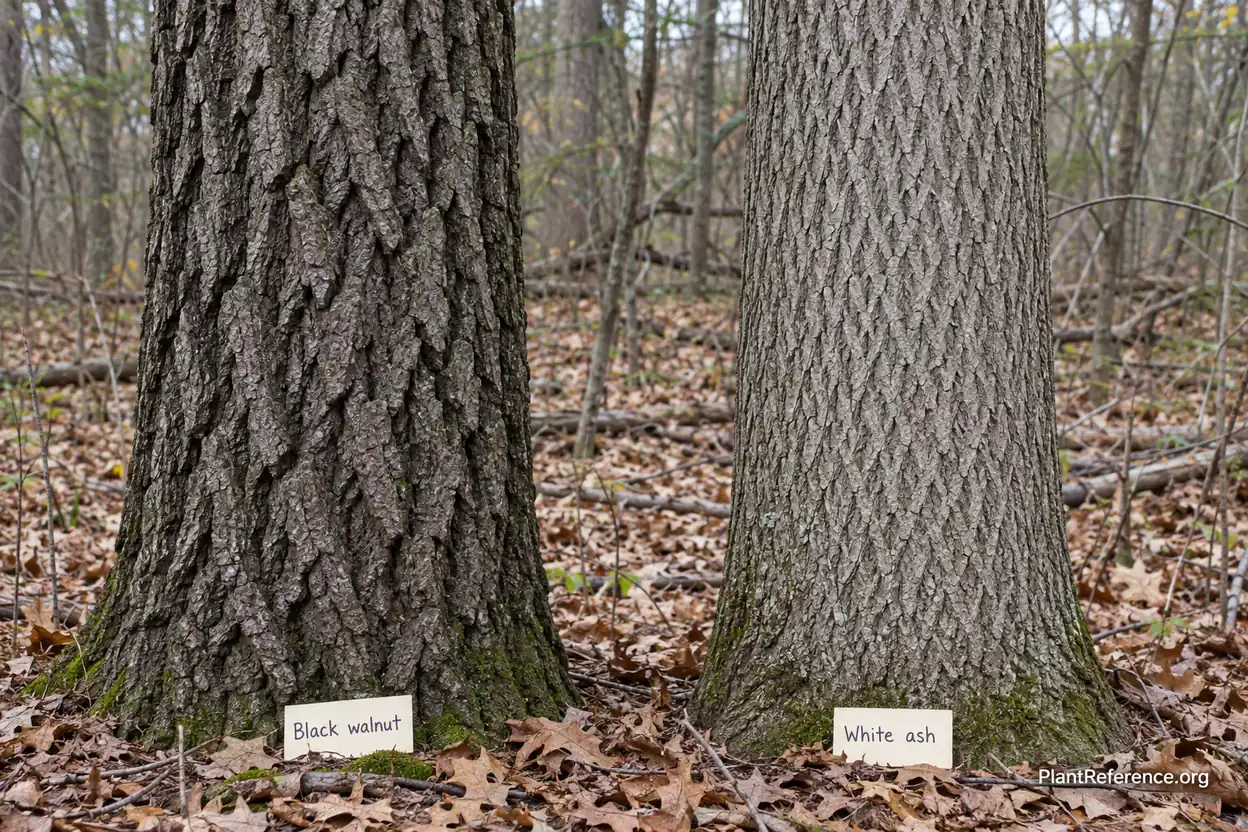
Mature black walnut 🌿Juglans nigra versus white ash 🌿Fraxinus americana both have furrowed gray-to-dark bark, but ash shows a tighter, more regular diamond lattice, while walnut's ridges are deeper and chunkier. If the tree has opposite branching, lean toward ash—it's one of the MADCapHorse families. Telling a struggling specimen apart matters for care decisions too; Is My Tree Dangerous? 10 Warning Signs Every Homeowner Should Know walks through when furrows and cracks signal a real problem.
Flowering dogwood 🌿Cornus florida versus persimmon 🌿Diospyros virginiana both wear blocky alligator-plate bark. Dogwood plates are smaller and the tree is shorter; persimmon plates are deeper and darker. When in doubt, photograph the whole tree, not just the bark—scale and form resolve most of these ties. And don't fight your bark ID against what a How to Identify Trees by Their Leaves: Shapes, Margins, and Venation Explained check tells you in summer; the two methods should agree.
How to Practice Bark Identification
Bark identification is pure pattern recognition, and the only way to build it is repeated exposure to the same species across different ages and conditions. A young trunk and an old trunk of the same tree can look like strangers, so studying one photo is rarely enough.
This is exactly where apps fall short. An app identifies a single bark photo for you, but it doesn't teach you to recognize that species the next time, on an older tree, in the rain. Apps identify plants for you; PlantReference teaches you to identify plants yourself. Our plant database pairs ID-focused descriptions with multiple images per species, so you see paper birch 🌿Betula papyrifera young and old, wet and dry, before you ever meet one in the field. If you want to test where apps help and where they mislead, How Accurate Are Plant Identification Apps? Common Mistakes and How to Get Better Results is worth a look.
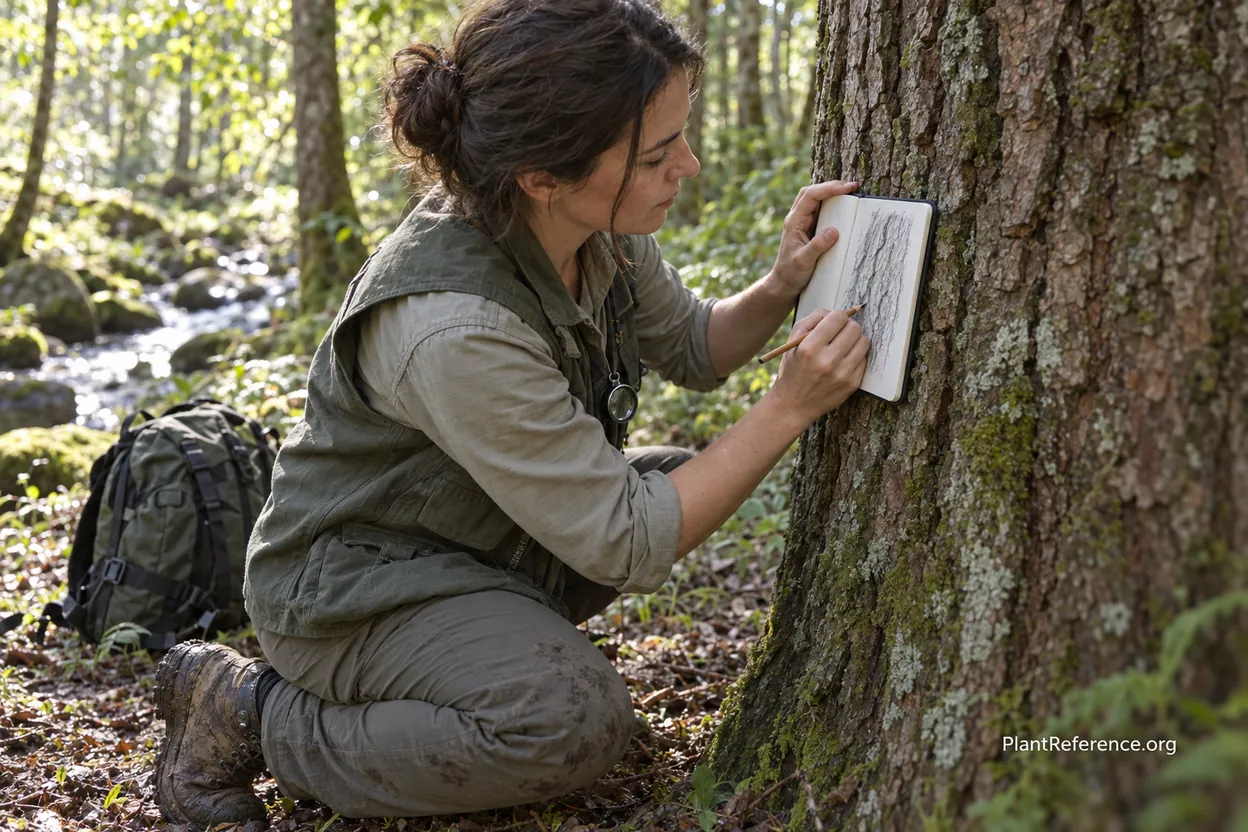
To lock it in, build a study loop: photograph bark on your walks, sketch the texture in a field notebook, then quiz yourself with our flashcard sets, which use spaced repetition to move species into long-term memory. Quiz yourself on tree bark with our flashcard system, and within a season you'll be reading trunks the way you now read faces. As you branch out, the same approach applies to the flower side of the plant world in the Flower Identification Guide: Petals, Shape & Color Explained, and to choosing future plantings in Choosing Climate-Ready Trees: Species Selection for 2050 and Beyond.
Frequently Asked Questions
Three daily games
Can you name a plant on sight?
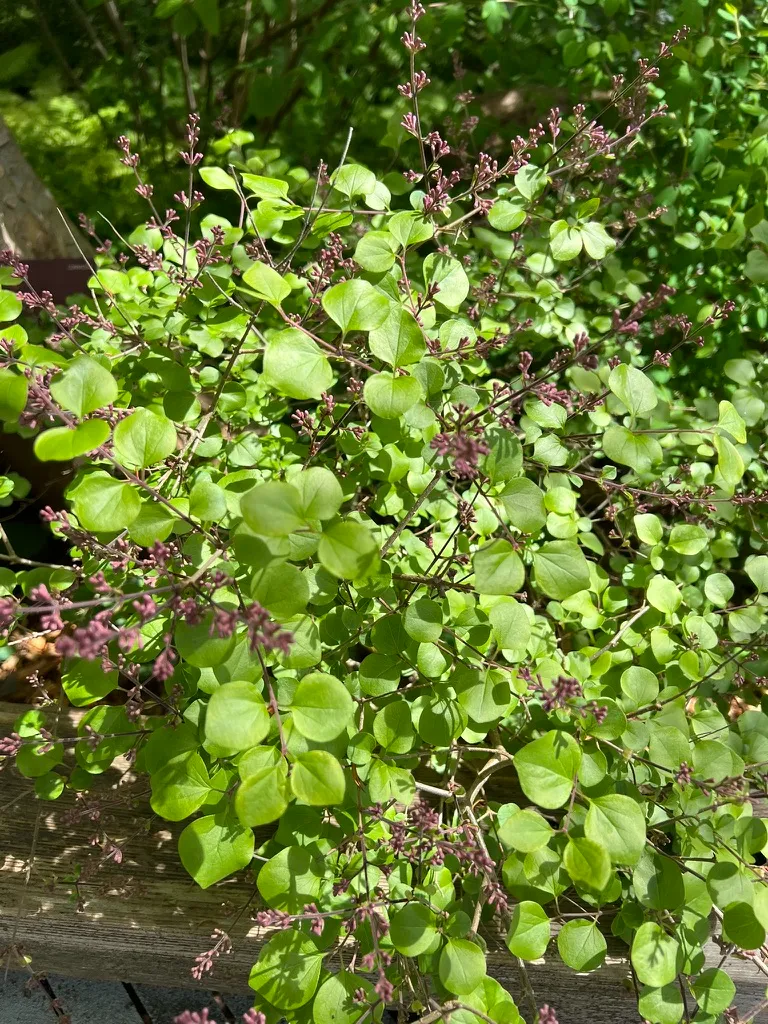
Tuesday’s specimenSyringa pubescens ssp. patula 'Miss Kim'Reading about plants and recognising them are different skills. These three build the second.
- Daily PlantIdentify the day’s mystery plant from a close-up photograph.
- Keyed OutWork a dichotomous key, lead by lead, to name a hidden specimen.
- Name That PlantName a specimen from botanical clues dealt hardest first.
Free to play, no account needed
Tagged with
Derek is an arborist and tree care specialist based in Nashville. He spent a decade working for a commercial tree service before starting his own consulting practice focused on residential tree health. His background is in forest management, and he brings that perspective to urban tree care. He's particularly interested in the intersection of native trees and suburban landscapes, helping homeowners understand what's growing in their yards and how to care for it properly. Derek also teaches tree identification walks through local parks. He's straightforward about tree care: most homeowners either ignore their trees completely or prune them incorrectly, and both cost money in the long run.