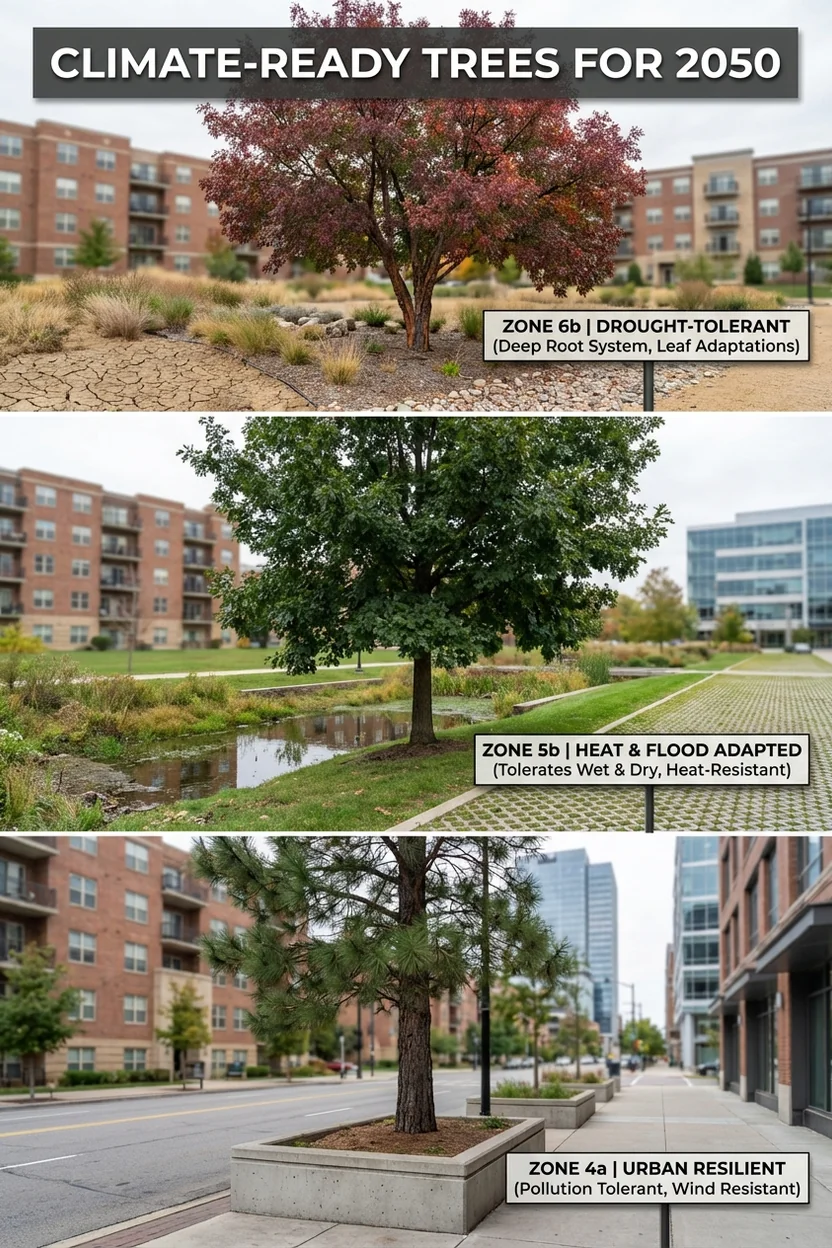
Choosing Climate-Ready Trees: Species Selection for 2050 and Beyond
Pets & Toxicity
Recorded toxicity for plants linked in this guide. An unknown status is not a safety assessment.
Toxic to pets: swamp white oak, bur oak, southern live oakDetailsHide
Magnolia grandiflora 'Little Gem' — Toxicity
Non-toxicView Magnolia grandiflora 'Little Gem' plant profileQuercus bicolor — Toxicity Warning
Toxic when leaves or acorns are eaten in quantity, especially by horses and grazing livestock; human ingestion toxicity is generally low.View Quercus bicolor plant profileQuercus macrocarpa — Toxicity Warning
Toxic when leaves or acorns are eaten in quantity, especially by horses and grazing livestock; human ingestion toxicity is generally low.View Quercus macrocarpa plant profileQuercus virginiana — Toxicity Warning
Toxic when leaves or acorns are eaten in quantity, especially by horses and grazing livestock; human ingestion toxicity is generally low.View Quercus virginiana plant profile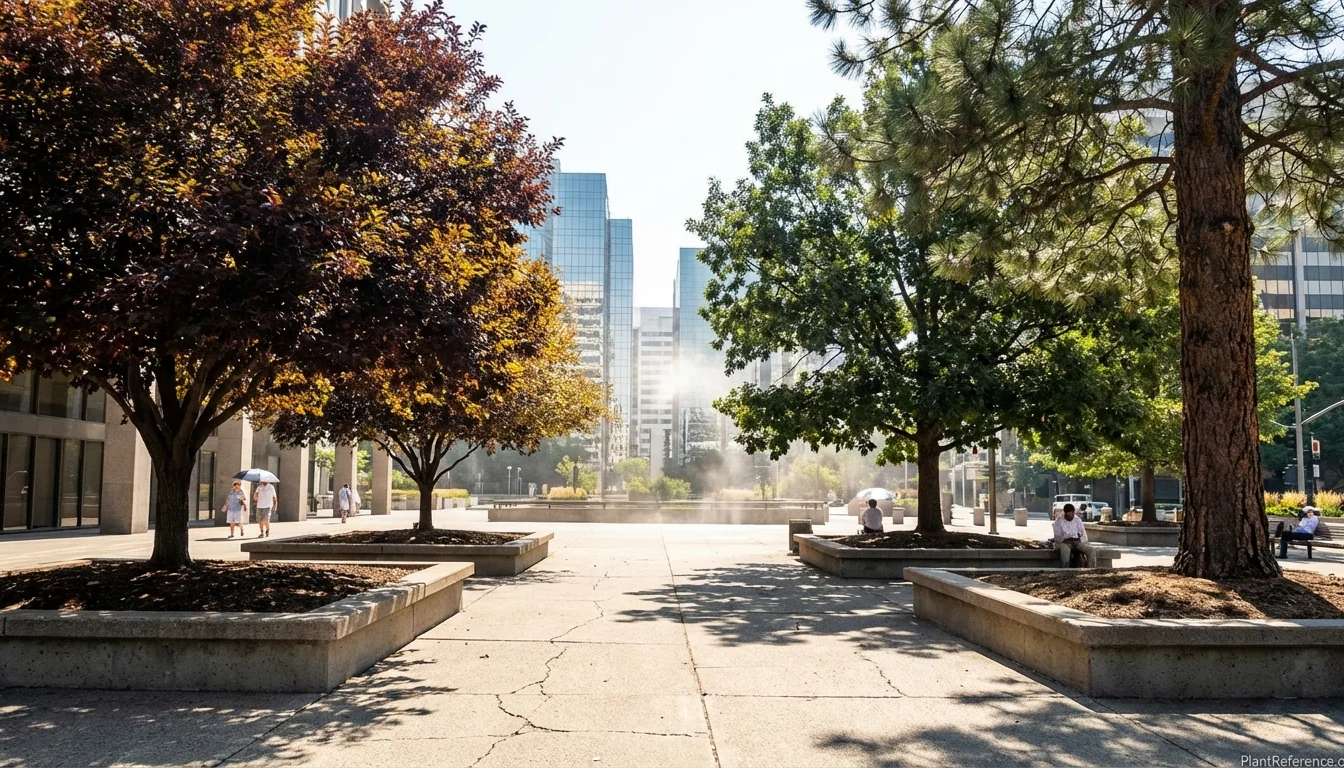
— Image © Plant Reference 2026
Urban trees face an unprecedented challenge: 2/3 of current urban tree species globally are projected at risk from warming and precipitation changes by 2050, with only 2% showing no climate vulnerability. This reality has fundamentally shifted modern arboriculture from reactive maintenance to proactive climate resilient trees selection.
Why Climate-Ready Tree Selection Matters
The traditional approach of selecting native species for their ecological appropriateness is evolving. While native plants remain valuable, climate science shows us that "native" conditions are rapidly changing. Research demonstrates that urban environments will experience significantly different temperature and precipitation patterns within the next 25 years.
The economic implications are staggering. Urban trees in the United States currently store 643 million tonnes of carbon valued at $50.5 billion. Losing this canopy to climate stress would eliminate not only carbon storage but also critical ecosystem services including stormwater management, air quality improvement, and energy savings worth billions annually.
Climate resilient trees must demonstrate three core characteristics:
Drought tolerance during extended dry periods (3+ months with minimal precipitation)
Heat resistance to temperatures 5-10°F above current averages
Adaptability to variable precipitation patterns (both drought and flooding)
The "right tree, right place" philosophy has expanded to "right tree, right climate." This means selecting species that will thrive in your projected climate, not necessarily your current one.
The Science Behind Climate Resilience
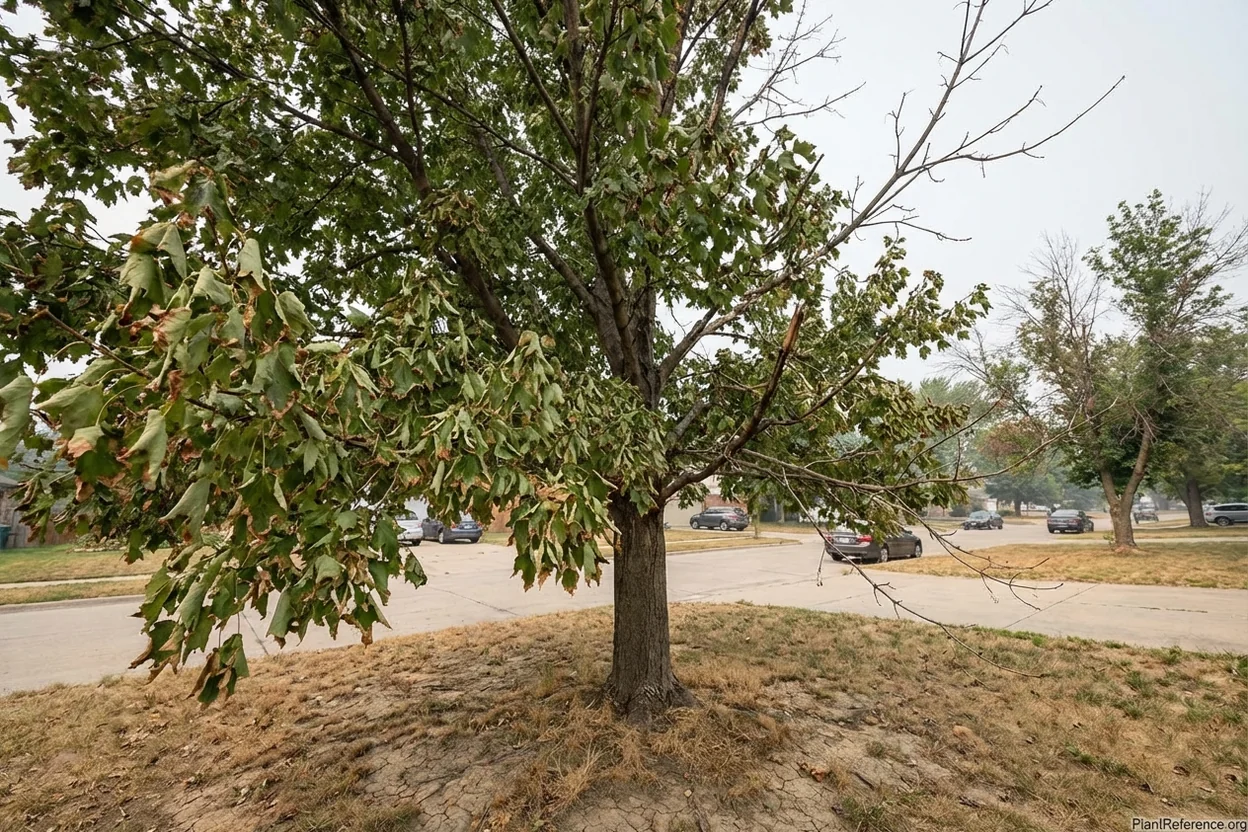
Understanding plant physiology helps explain why certain species adapt better to climate stress. Climate resilient trees possess specific anatomical and physiological adaptations that allow them to survive in challenging conditions.
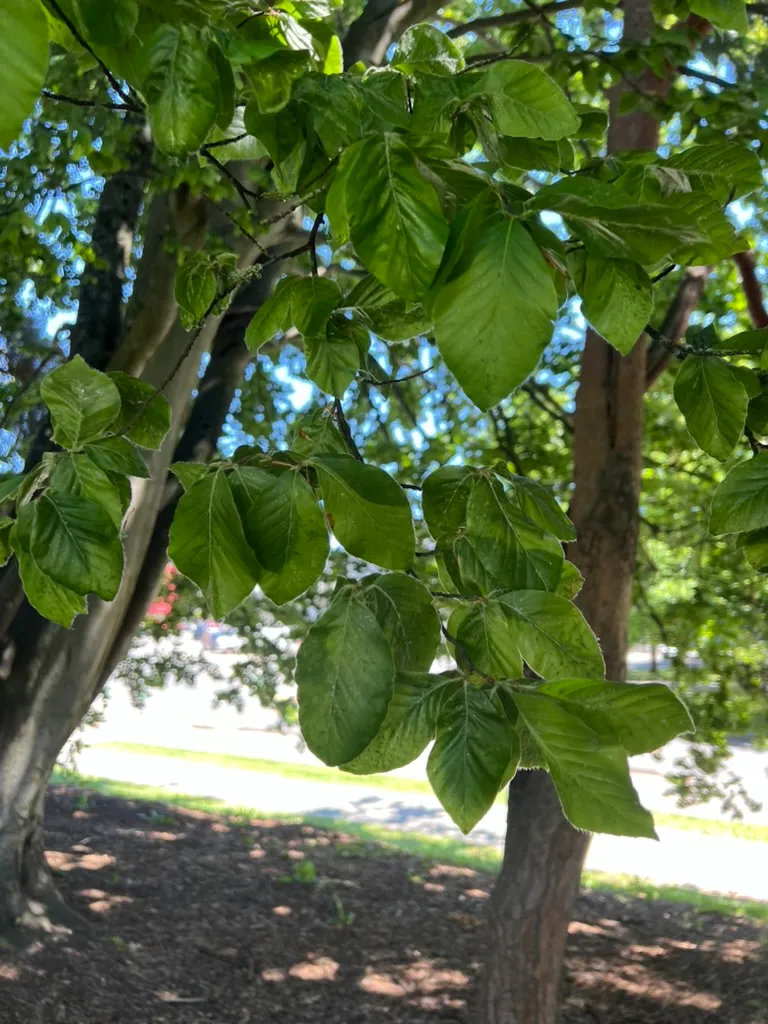
Drought tolerance mechanisms include deep taproot systems that access groundwater, waxy leaf coatings that reduce water loss, and the ability to close stomata (leaf pores) during heat stress without suffering permanent damage. Species like Persian ironwood 🌿Parrotia persica (par-OH-tee-uh PER-sih-kuh) demonstrate these adaptations through their native range across drought-prone regions of Iran.
Heat resistance involves proteins that protect cellular function at high temperatures, bark characteristics that reflect rather than absorb solar radiation, and canopy architecture that promotes air circulation. Trees adapted to Mediterranean and semi-arid climates typically possess these traits.
Variable precipitation tolerance requires both flood tolerance (ability to survive in saturated soils) and drought tolerance. Swamp white oak 🌿Quercus bicolor (KWERK-us BY-kol-or) exemplifies this dual adaptation, naturally occurring in both wetlands and drought-prone upland sites.
Research from the Nature 2025 study quantifies the cooling benefits: a 10% increase in canopy cover reduces ambient temperature by 0.8°C, while 30% canopy increase provides 1.5°C cooling. However, these benefits disappear if trees die from climate stress.
Species Diversity: The 10-20-30 Rule
The 10-20-30 diversity rule prevents catastrophic canopy losses from species-specific threats. This guideline specifies:
No single species should exceed 10% of total urban forest
No genus should exceed 20% of total population
No family should exceed 30% of total trees
This approach proved its value during the emerald ash borer epidemic, which devastated communities that had planted ash species 🌿Fraxinus oxycarpa 'Raywood' extensively. Cities following diversity guidelines experienced minimal canopy loss, while those with high ash concentrations lost 20-50% of their urban forest.
Many modern tree care plans adopt even stricter diversity thresholds—5% species maximum in some cases—to build greater resilience against unknown future threats.
Climate resilient trees selection must balance diversity with climate adaptation. This means choosing multiple species from different families that all possess strong drought tolerance and heat resistance.
Recommended Climate-Adapted Species
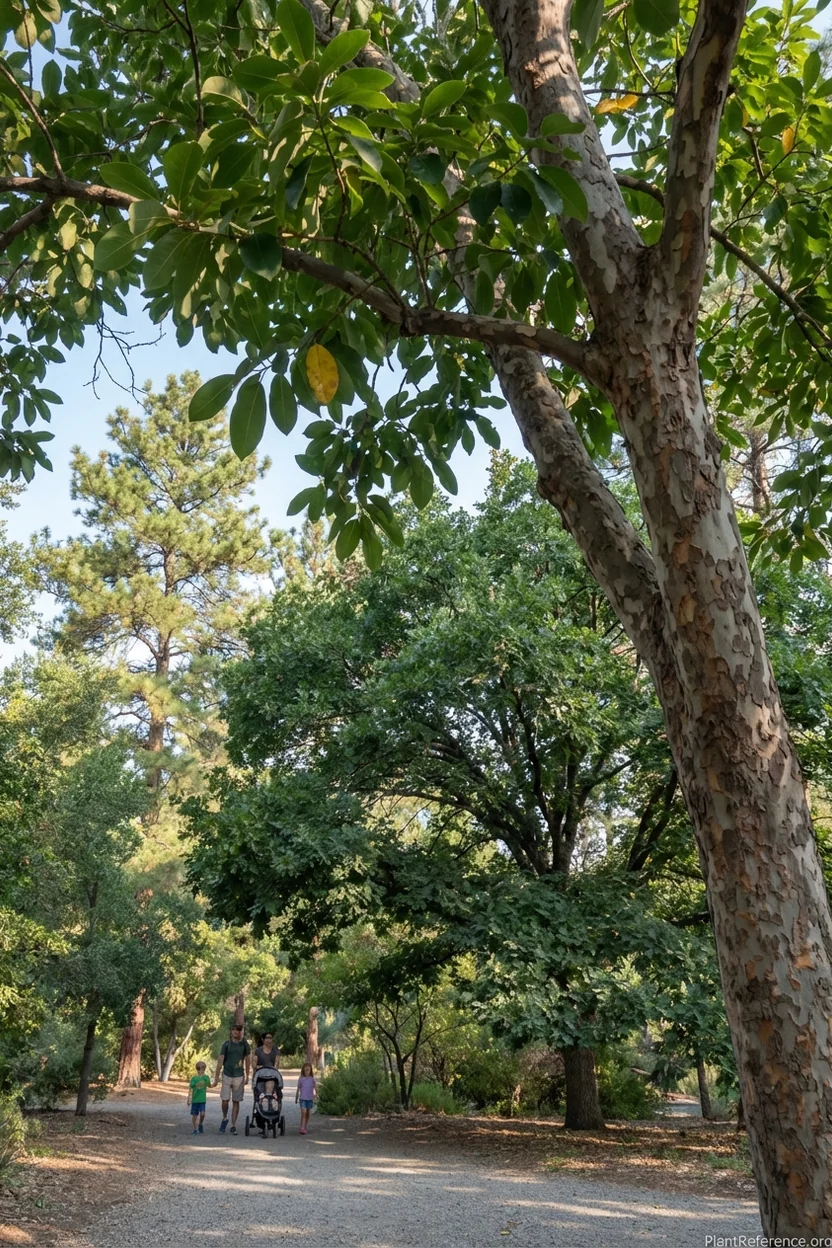
Based on current research and field performance, several species consistently demonstrate exceptional climate resilient trees characteristics across diverse urban environments:
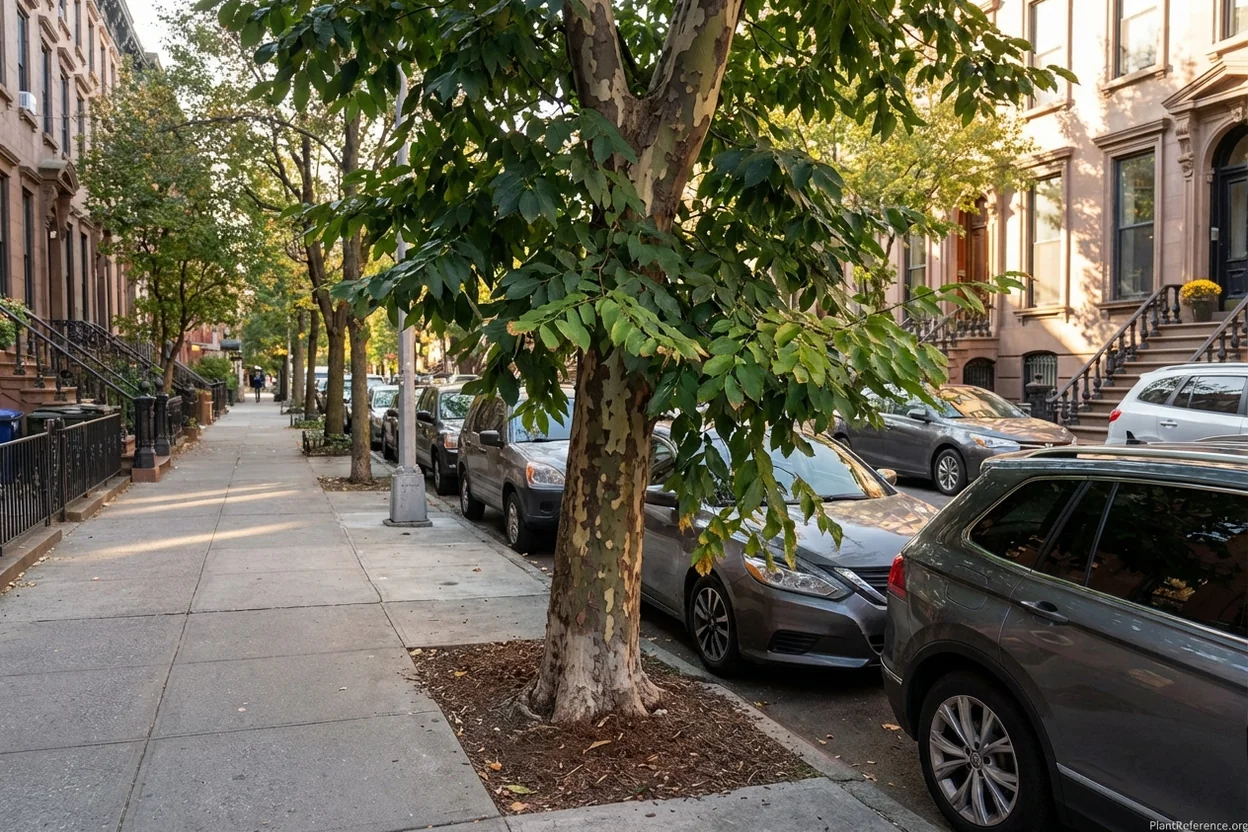
Persian Ironwood 🌿Parrotia persica has emerged as a top performer for climate adaptation. Native to Iran's Caspian region, it tolerates both drought and occasional flooding while providing excellent fall color. The species handles temperature extremes from -20°F (-29°C) to 110°F (43°C) and thrives in various soil types.
Swamp White Oak 🌿Quercus bicolor offers remarkable dual tolerance. Unlike most oaks that prefer well-drained sites, swamp white oak naturally grows in wetlands yet also survives extended droughts. This makes it ideal for urban environments with unpredictable stormwater patterns.
Ponderosa Pine 🌿Pinus ponderosa (PIE-nus pon-der-OH-suh) provides evergreen structure with proven drought tolerance. Native to western North America's semi-arid regions, it's being planted successfully in Midwest and Eastern cities as climate conditions shift toward its natural tolerance range.
For more compact urban spaces, Turkish Hazelnut 🌿Corylus colurna (KOR-ih-lus koh-LUR-nuh) demonstrates excellent heat and drought tolerance while maintaining a narrow, upright form suitable for street tree applications.
Bur Oak 🌿Quercus macrocarpa (KWERK-us may-kroh-KAR-puh) represents the most drought-tolerant native oak, naturally extending into prairie regions. Its deep taproot system and thick, corky bark provide exceptional resilience to both drought and fire.
Regional Climate Shifts and Alternatives
Climate science enables "sister city" assessments, where municipalities examine tree species thriving in cities with their projected 2050 climate. This assisted migration approach identifies climate resilient trees already proven in target conditions.
Pacific Northwest Changes: Traditional species like western red cedar and western hemlock face increasing drought stress and summer heat. Alternative selections include:
Pacific madrone replacing western red cedar for drought sites
Ponderosa pine substituting for western hemlock in heat-prone areas
Persian ironwood as climate-adapted alternative to declining bigleaf maple
Midwest Adaptations: The transition zone between eastern deciduous forests and western grasslands is shifting eastward. Species selection must account for increased summer heat and variable precipitation:
Bur oak extending range eastward from prairie regions
Swamp white oak handling both flooding and drought cycles
Turkish hazelnut providing structure in constrained urban spaces
Southeast Considerations: Increasing hurricane intensity and extended drought periods require dual resilience. Recommended adaptations include:
🌿Quercus virginiana (live oak) maintaining wind resistance with added drought tolerance
🌿Taxodium distichum (bald cypress) handling both flooding and dry periods
🌿Magnolia grandiflora (southern magnolia) adapting to increased heat stress
The key principle involves selecting species currently thriving approximately 805 kilometers (500 miles) south of your location, as this often represents your projected climate by 2050-2070.
Urban Heat Island Mitigation
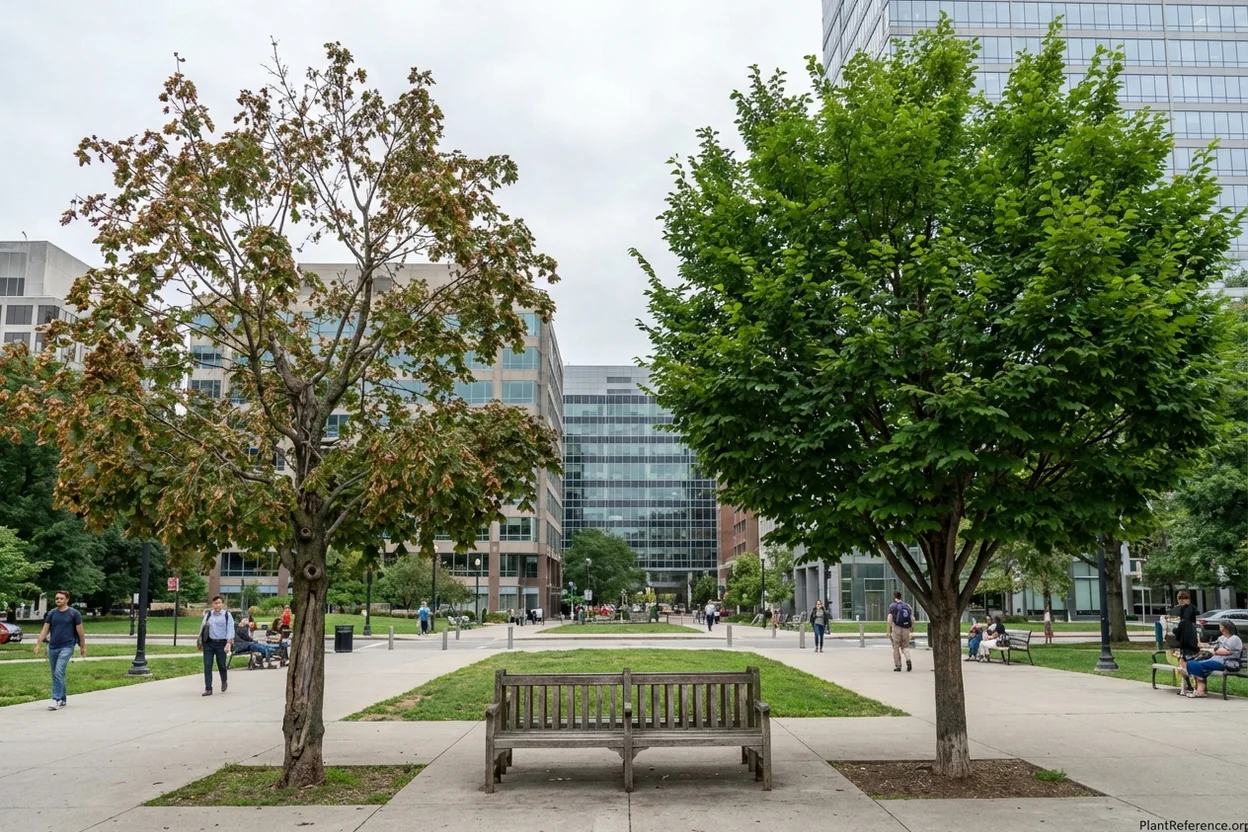
Climate resilient trees serve as critical infrastructure for urban heat island mitigation. Cities are implementing Chief Heat Officer positions in Phoenix and Miami, recognizing extreme heat as a major public health threat requiring tree-based solutions.
Strategic species placement maximizes cooling benefits. Trees with dense canopies and high transpiration rates provide the greatest temperature reduction. However, these species must also survive the harsh urban environment they're meant to cool.
The 3-30-300 rule provides implementation targets:
3 trees visible from every building, school, and workplace
30% canopy coverage in every neighborhood (not citywide average)
300 meters maximum distance to quality green space for every resident
Current compliance rates remain low: fewer than 30% of buildings in major cities like New York, Denver, and Sydney meet the 30% neighborhood canopy threshold. Climate resilient trees selection becomes critical for achieving these targets as climates become more hostile to traditional species.
Research demonstrates that tree canopy explains 67% of spatial temperature variation within cities. This means proper species selection and placement can dramatically influence neighborhood-level heat exposure.
Implementation Strategies for Tree Care Plans
Incorporating climate resilient trees into municipal and property tree care plans requires systematic approach:
Inventory Assessment: Evaluate current species composition for climate vulnerability. Identify high-risk species requiring gradual replacement over 10-20 year planning horizon.
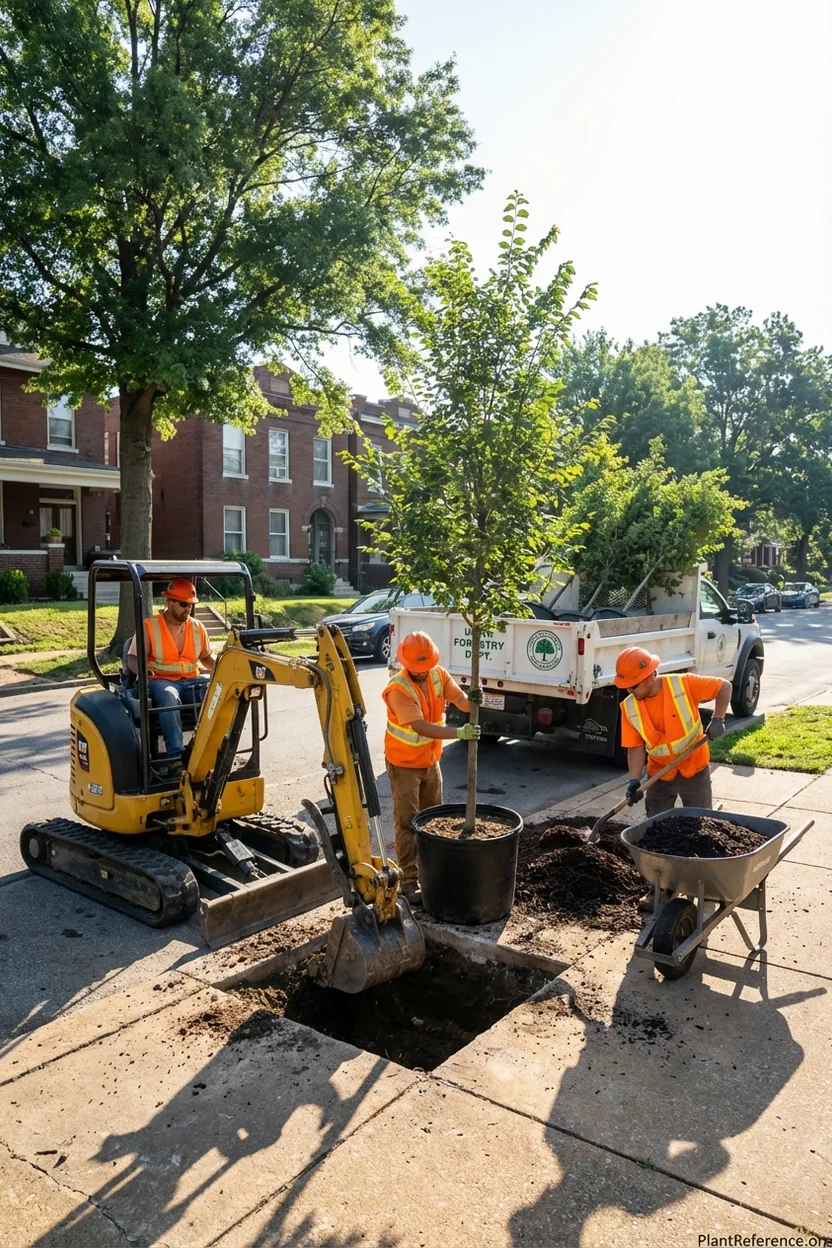
Phased Replacement: Replace failing trees with climate-adapted alternatives rather than same species. This gradual transition maintains canopy while improving resilience.
Soil Preparation: Climate resilient trees still require proper establishment. Ensure 0.14-0.19 cubic meters (1.5-2 cubic feet) of quality soil per 0.09 square meters (square foot) of mature canopy area, with particular attention to drainage for drought-tolerant species.
Maintenance Adaptation: Adjust pruning schedules and plant health care programs for climate-adapted species. Some drought-tolerant trees require different pruning timing than traditional species.
Community Education: Educate residents about the need for species changes. Many people resist unfamiliar tree species, requiring explanation of climate adaptation benefits.
Monitoring and Adaptation: Track performance of climate-adapted species over multiple growing seasons. Document survival rates, growth patterns, and stress indicators to refine future selections.
Regional Coordination: Work with neighboring municipalities and state forestry programs to coordinate climate adaptation efforts. Shared experiences accelerate learning and improve outcomes.
The transition to climate resilient trees represents the most significant shift in urban forestry in decades. However, proactive species selection ensures urban canopy survival and continued ecosystem service delivery as climates change.
Success requires viewing tree selection through the lens of projected conditions rather than historical performance. By choosing climate-adapted species today, we invest in urban forest resilience for generations to come.
Frequently Asked Questions
Reading about plants and recognising them are different skills. These three build the second.
- Daily PlantIdentify the day’s mystery plant from a close-up photograph.
- Keyed OutWork a dichotomous key, lead by lead, to name a hidden specimen.
- Name That PlantName a specimen from botanical clues dealt hardest first.
Free to play, no account needed
Sarah earned her doctorate in plant biology and spent time working in botanical garden education before transitioning to freelance writing and consulting. Now based in Portland, Oregon, she teaches plant identification workshops at local community centers and maintains a modest collection of over 60 houseplants in her small apartment. Sarah specializes in helping beginners understand plant science without the jargon—her approach focuses on practical observation over theory. She's killed her fair share of fiddle leaf figs and finally cracked the code on keeping them alive.