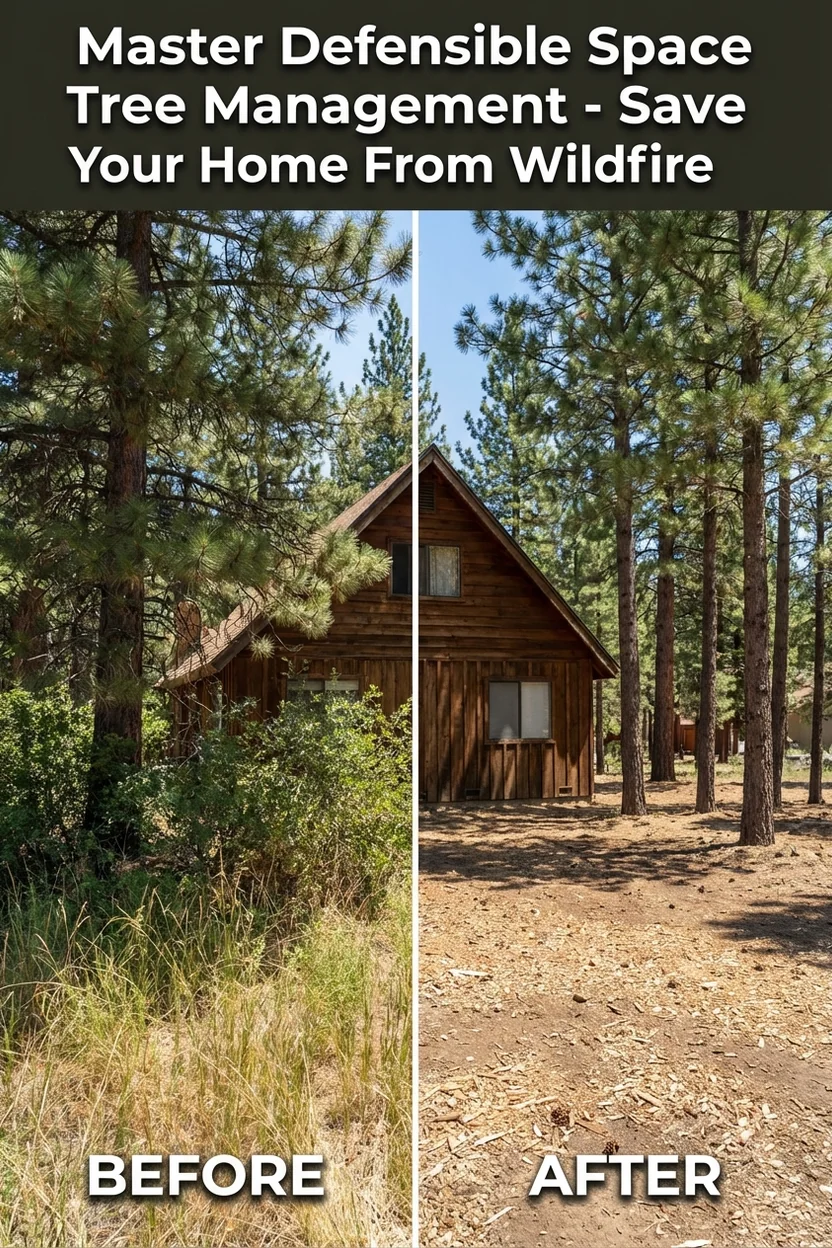
Wildfire Defensible Space: Tree Management in Fire-Prone Zones
Pets & Toxicity
Recorded toxicity for plants linked in this guide. An unknown status is not a safety assessment.
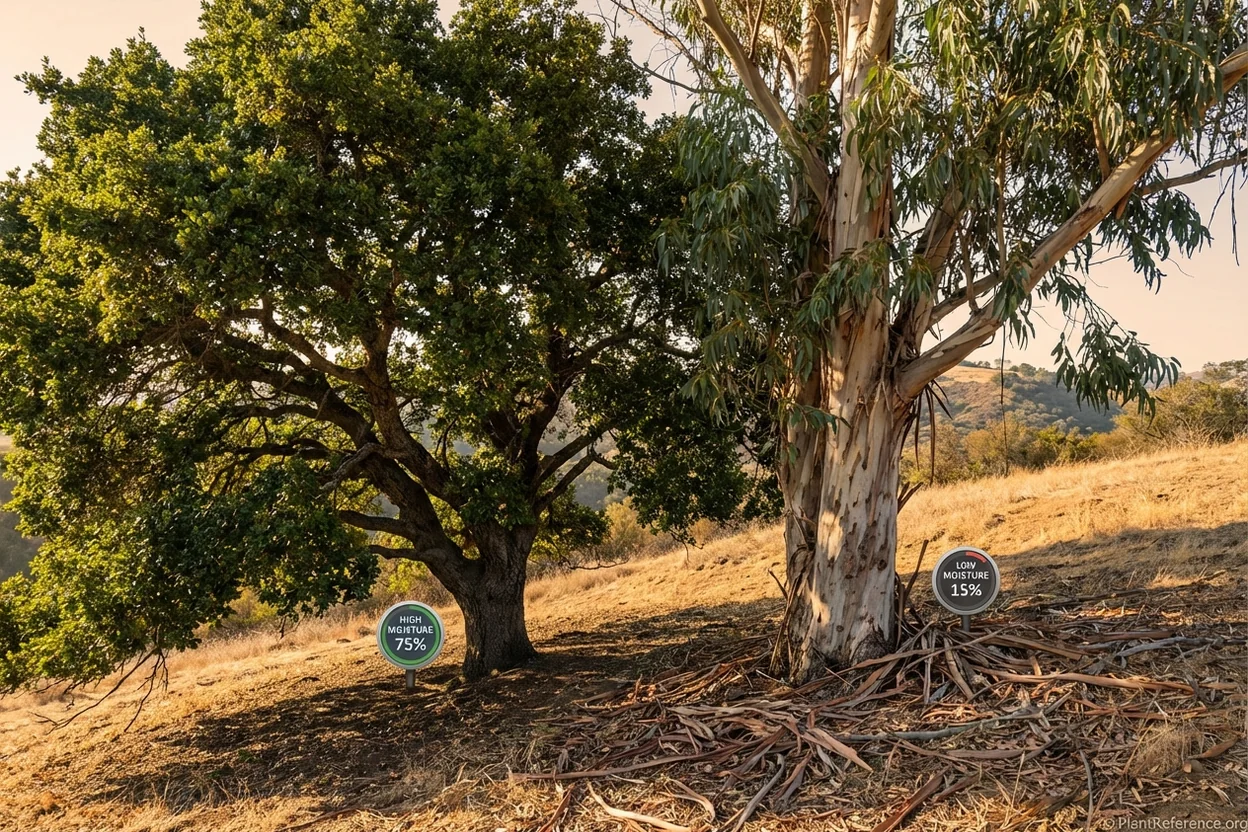
Toxic to pets: Tasmanian blue gum, coast live oak, valley oakDetailsHide
Quercus agrifolia — Toxicity Warning
Toxic when leaves or acorns are eaten in quantity, especially by horses and grazing livestock; human ingestion toxicity is generally low.View Quercus agrifolia plant profileQuercus lobata — Toxicity Warning
Toxic when leaves or acorns are eaten in quantity, especially by horses and grazing livestock; human ingestion toxicity is generally low.View Quercus lobata plant profileJuglans californica — Toxicity
Non-toxic to humans, pets, and most wildlife. The species produces juglone, an allelopathic compound concentrated in roots, leaves, and husks; juglone inhibits growth of sensitive plants (tomato, pepper, blueberry, azalea, and other Solanaceae and Ericaceae) within the dripline plus 50%. Husks stain hands and surfaces dark brown.View Juglans californica plant profile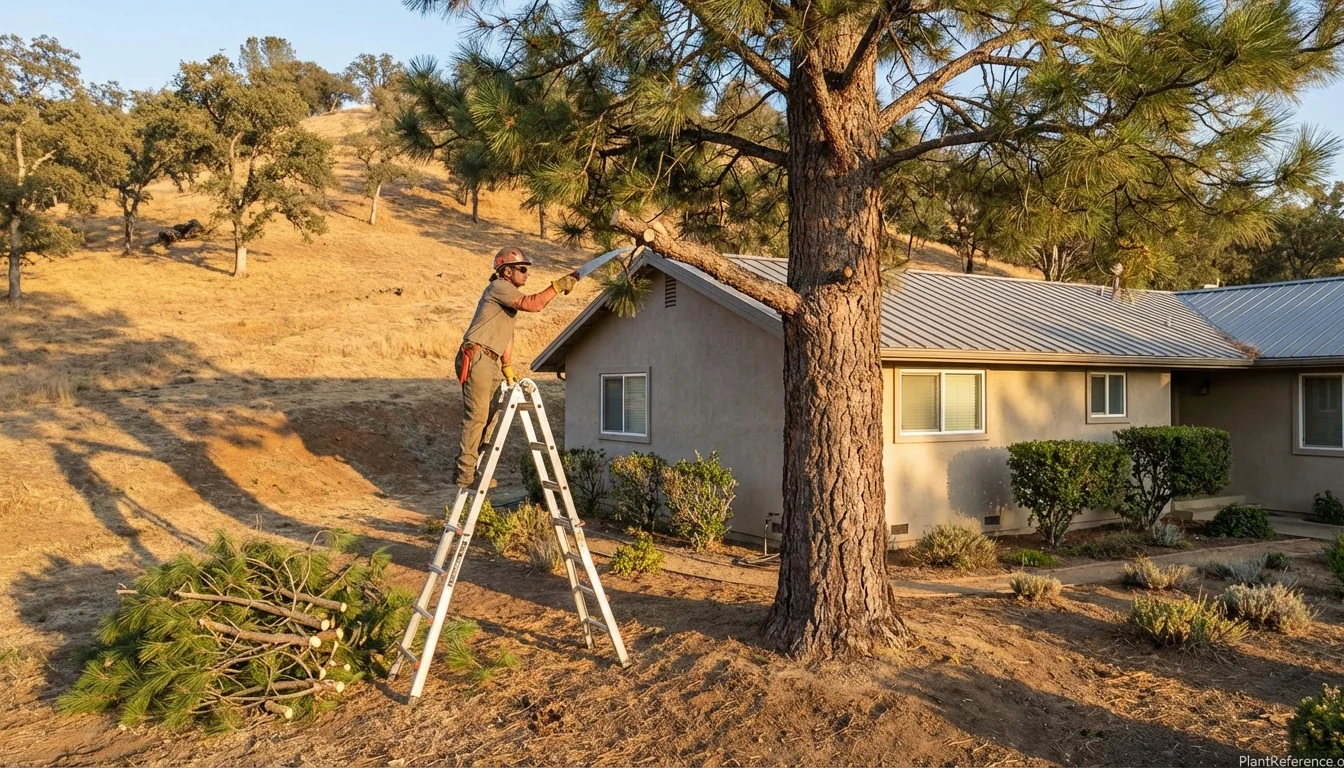
— Image © Plant Reference 2026
Living in fire-prone zones requires strategic tree management that can literally save your home. Defensible space trees are managed using specific techniques that interrupt fire behavior while preserving valuable shade and property value.
Understanding Defensible Space Requirements
Defensible space is a buffer zone around buildings where vegetation is strategically managed to slow or stop advancing wildfire. The concept isn't about creating a barren landscape—it's about intelligent fuel modification that disrupts the fire triangle: heat, fuel, and oxygen.
California leads defensible space regulations, requiring property owners to maintain a minimum 30-foot clearance around all structures. This became mandatory after the devastating Oakland Hills fire of 1991, which destroyed 1,520 single-family homes in a matter of hours. Similar requirements now exist across fire-prone states including Colorado, Texas, Arizona, and parts of Washington.
The physics behind defensible space centers on radiant heat reduction. A fully involved structure fire generates surface temperatures exceeding 1,400°F (760°C) at distances up to 100 feet. Vegetation within the critical 30-foot zone acts as additional fuel, creating a feedback loop that accelerates fire behavior and makes structures nearly impossible to defend.
Research from the Insurance Institute for Business & Home Safety demonstrates that homes with properly maintained defensible space survive wildfire encounters at rates exceeding 85%, compared to less than 40% survival for non-compliant properties.
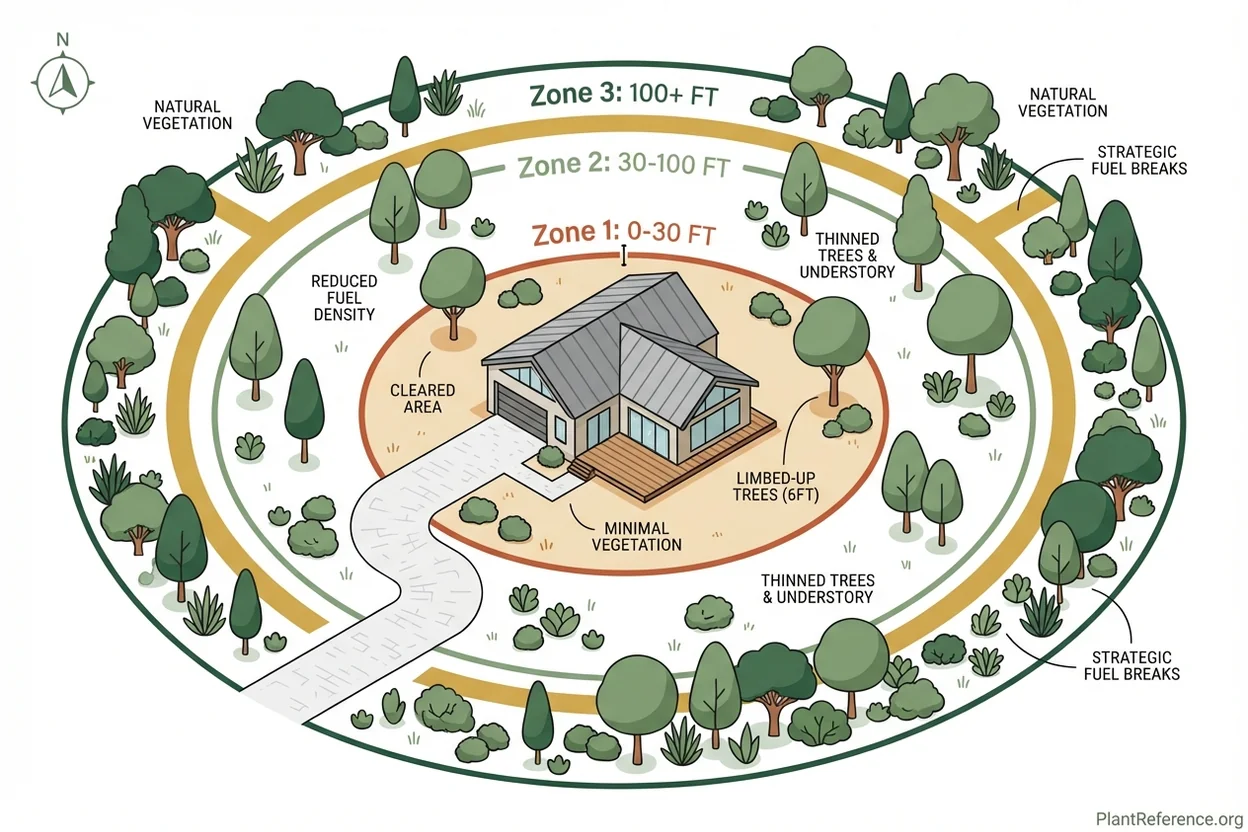
Zone 1: The Critical 30-Foot Fuel-Free Area
Zone 1 represents the most critical area for structure protection. Within this 30-foot perimeter, vegetation management follows strict protocols designed to eliminate continuous fuel beds and prevent flame impingement on structures.
Complete vegetation removal is required within the first 5 feet of all structures, including decks, outbuildings, and fences. This creates a sterile zone where even small ignitions cannot sustain combustion. Many homeowners resist this requirement, but compromise in Zone 1 frequently results in total structure loss.
Individual tree management in Zone 1 allows for widely spaced specimen trees that provide shade without creating fire hazards. Trees must be limbed up to a minimum of 6 feet (1.8 m) from ground level, eliminating ladder fuels that allow ground fires to climb into canopies. The spacing between tree canopies should be at least 10 feet (3 m) to prevent crown-to-crown fire spread.
Acceptable trees for Zone 1 include mature, healthy specimens of fire-resistant species with high moisture content and low volatile oil production. Examples include coast live oak 🌿Quercus agrifolia (KWER-kus ag-rih-FOH-lee-uh), California sycamore 🌿Platanus racemosa (PLAT-an-us ray-see-MOH-suh), and valley oak 🌿Quercus lobata (KWER-kus loh-BAH-tuh).
Ground fuel management requires removing all dead plant material, leaf litter deeper than 3 inches, and woody debris larger than 3 inches in diameter. Living ground cover must be maintained below 4 inches in height through regular mowing or cutting. Decorative rock mulch is preferred over organic mulches in Zone 1.
The California Department of Forestry and Fire Protection (CAL FIRE) recommends treating Zone 1 as "irrigated defensive space" where strategic watering maintains higher fuel moisture content during critical fire weather periods.
Ladder Fuel Removal and Tree Limbing Techniques
Ladder fuels are continuous vertical arrangements of combustible vegetation that allow ground fires to reach tree canopies. Once fire transitions from surface to crown behavior, suppression becomes nearly impossible and fire spread accelerates exponentially.
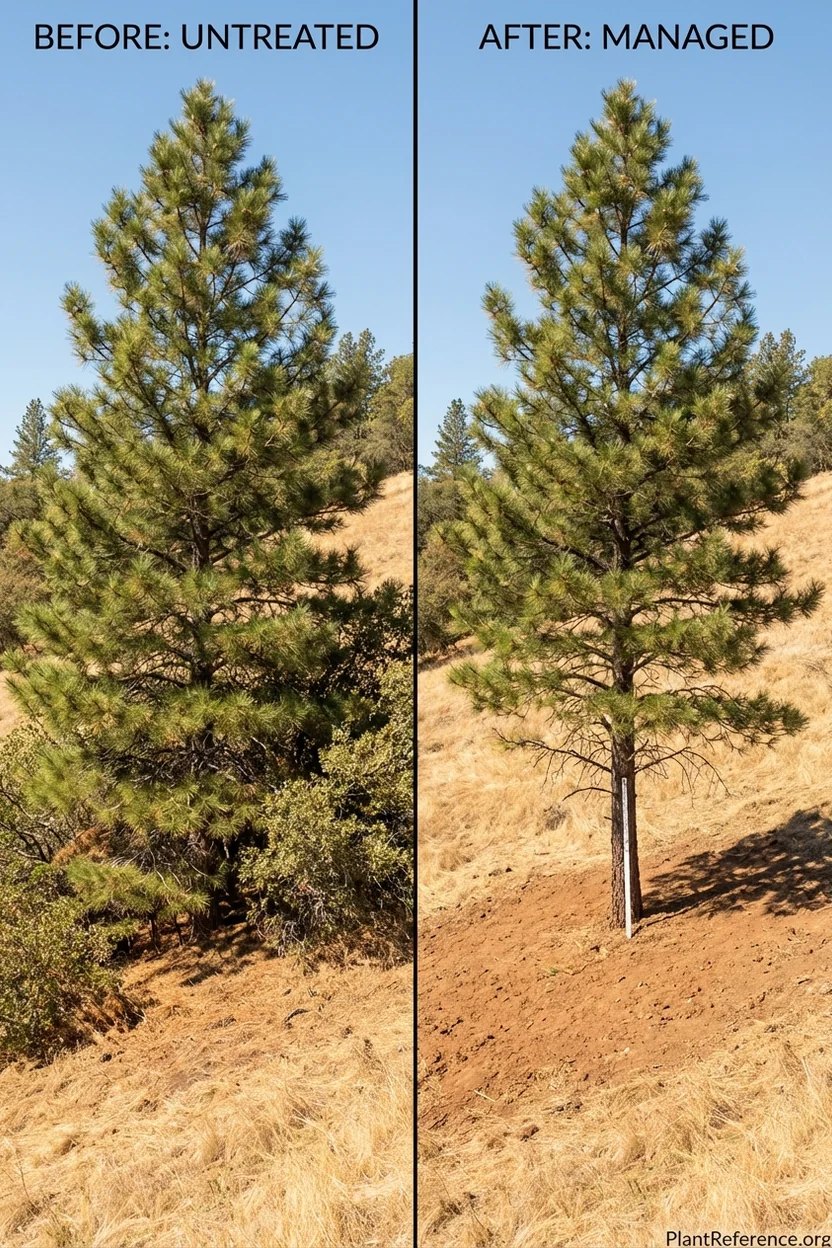
Proper limbing technique requires removing all branches within 6 feet (1.8 m) of ground level using clean cuts that promote rapid wound closure. For trees taller than 18 feet, remove branches up to one-third of the total tree height to prevent flame contact. Always maintain at least two-thirds of the live crown to ensure tree health and survival.
Make pruning cuts just outside the branch collar—the swollen area where the branch attaches to the trunk. Avoid flush cuts that damage the trunk's natural defense zones. For branches larger than 2 inches in diameter, use the three-cut method to prevent bark stripping.
Understory fuel reduction beneath retained trees requires removing all shrubs, saplings, and regenerating vegetation. This creates a clear stem forest structure where crown fires cannot sustain themselves due to insufficient surface fuel connectivity.
Remove all dead branches regardless of size
Cut live branches flush with branch collar (not trunk)
Maintain minimum 6-foot clearance from ground to lowest branch
Space branch tips at least 10 feet apart between adjacent trees
Clear all vegetation beneath tree canopies to mineral soil
Remove moss, lichens, and loose bark on oak species
Seasonal timing for ladder fuel removal should occur during the dormant season (November through February in most fire-prone regions) to minimize tree stress and reduce fire risk during active fire season. Avoid pruning during periods of high fire danger when power tools and equipment can ignite wildfires.
Professional arborists certified through the International Society of Arboriculture (ISA) understand species-specific pruning requirements and can ensure work complies with both fire safety objectives and sound arboricultural practices.
Emergency Access and Roadside Clearance
Emergency vehicle access remains critical during wildfire incidents. Fire engines and evacuation routes require specific clearance dimensions that many rural property owners overlook until emergency situations arise.
Minimum clearance requirements along driveways and access roads specify 14 feet of vertical clearance and 20 feet of horizontal clearance. This accommodates fire trucks with extended outriggers and aerial ladder operations. Gates must be at least 12 feet wide with emergency access locks or knox box systems.
Roadside fuel modification extends the defensible space concept to evacuation routes and strategic ridge lines. CAL FIRE maintains fuel breaks along major highways using mechanical treatment and prescribed burning. Property owners adjacent to these corridors must maintain compatible fuel profiles on their land.
Driveway surfaces longer than 150 feet require turnouts at maximum 400-foot intervals to allow two-way traffic during evacuations. The turnaround at the structure end must accommodate a fire engine with minimum 40-foot turning radius.
Utilities and infrastructure within access corridors require special attention. Overhead power lines need 10 feet of clearance on all sides, and propane tanks must have 30 feet of clearance in all directions. These requirements often exceed basic defensible space minimums.
→ Silky ZUBAT Professional Hand Saw ($45-55) - Professional arborists' choice for clean defensible space cuts
Japanese steel curved blade cuts branches up to 6 inches diameter with aggressive 7 TPI tooth configuration. Lightweight aluminum handle reduces fatigue during extended ladder fuel removal sessions. Razor-sharp impulse-hardened teeth stay sharp through heavy use. Non-slip grip prevents accidents when working on ladders or uneven terrain. Curved design follows natural cutting motion for faster, cleaner cuts that heal properly. Trusted by professional arborists worldwide for precision pruning work requiring perfect wound closure.
Fire-Resistant Tree Species Selection
When establishing new trees within defensible space zones, species selection becomes critical for long-term fire safety. Fire-resistant trees share common characteristics: high moisture content, low volatile oil production, thick bark, and sparse branching patterns.
Deciduous hardwoods generally provide better fire resistance than evergreen conifers due to higher moisture content and seasonal leaf drop that reduces fuel loading. Species like 🌿Quercus agrifolia coast live oak, 🌿Fraxinus velutina Arizona ash (FRAK-sin-us veh-LOO-tih-nuh), and 🌿Platanus racemosa California sycamore maintain moisture even during extended drought periods.
Avoid high-risk species including eucalyptus, Monterey pine 🌿Pinus radiata (PY-nus ray-dee-AH-tuh), juniper species, and most palm trees. These species contain volatile oils, have fibrous bark that ignites easily, or produce extensive dead material that increases fire hazard.
Fire-Resistant Species | Fire Risk Species | Management Notes |
|---|---|---|
Coast Live Oak 🌿Quercus agrifolia | Eucalyptus 🌿Eucalyptus globulus | High oil content, explosive burning |
California Sycamore 🌿Platanus racemosa | Monterey Pine 🌿Pinus radiata | Resinous, fast-burning needles |
Valley Oak 🌿Quercus lobata | Juniper 🌿Juniperus californica | Volatile oils, fibrous bark |
California Black Walnut 🌿Juglans californica | Palm species (most) | Dead fronds create fire ladders |
Toyon 🌿Heteromeles arbutifolia | Rosemary Rosmarinus officinalis | High volatile oil content |
Native species adaptation provides the best long-term success in fire-prone environments. Plants evolved with local fire cycles typically resprout after burning and require less irrigation during establishment. The California Native Plant Society maintains regional species lists for fire-adapted landscapes.
Placement strategy positions fire-resistant trees to provide maximum structure protection while maintaining required clearances. Trees should be planted on the uphill side of structures where possible, as fire typically advances more slowly downhill and these trees can serve as heat shields.
Balancing Wildfire Safety with Urban Canopy Goals
Many communities struggle to balance wildfire protection requirements with urban forest canopy objectives. Complete tree removal often conflicts with climate cooling goals, property values, and quality of life considerations.
Strategic canopy retention focuses on preserving maximum tree cover while meeting defensible space requirements. This involves selecting appropriate species, managing fuel continuity, and maintaining proper spacing rather than wholesale removal.
The 3-30-300 Urban Forest Rule suggests every neighborhood should maintain 30% canopy cover for optimal cooling and air quality benefits. In fire-prone zones, this target can still be achieved through careful species selection and strategic placement outside critical safety zones.
Micro-climate management uses retained trees to create localized cooling that reduces extreme fire weather conditions. Trees positioned to shade structures and create wind breaks can reduce structure ignition potential while providing ecosystem services.
Professional urban foresters trained in fire behavior can design landscapes that meet both safety and environmental objectives. The International Society of Arboriculture offers specialized training in fire-safe urban forestry practices.
Community planning increasingly integrates wildfire protection with urban forest master plans. Communities like Santa Rosa, California, have developed post-fire rebuilding codes that require defensible space compliance while mandating minimum canopy replacement ratios.
Insurance Implications of Non-Compliance
Property insurance in fire-prone zones increasingly requires documented defensible space compliance. Major insurers now use satellite imagery and drone surveys to verify maintenance before issuing or renewing policies.
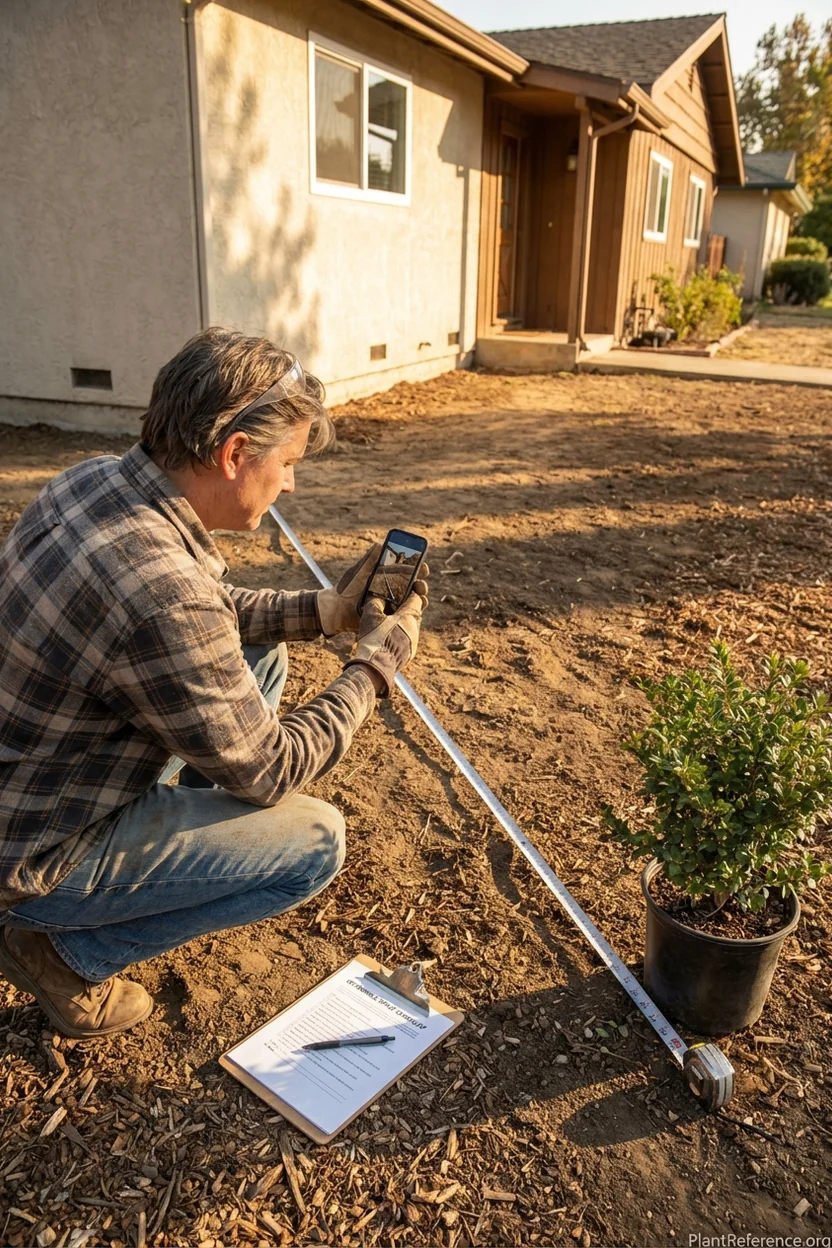
Documentation requirements for insurance compliance include annual photographs showing maintained clearances, professional arborist reports for retained trees, and receipts for fuel reduction services. Some insurers require quarterly inspections during fire season.
Non-compliance penalties extend beyond policy cancellation. In California, homeowners can be held liable for fire suppression costs if their property fails to meet defensible space requirements and contributes to fire spread. These costs can reach millions of dollars for major incidents.
Annual defensible space inspections by certified professionals
Photographic documentation of maintained clearances
Professional arborist reports for tree health and fire resistance
Receipts showing regular fuel reduction maintenance
Compliance certificates from local fire authorities
Updated property surveys showing vegetation modifications
Premium discounts are available for properties exceeding minimum requirements. Installing ember-resistant vents, using fire-resistant roofing materials, and maintaining irrigated defensible space can reduce premiums by 15-30%.
The Institute for Business & Home Safety provides defensible space certification programs that qualify properties for additional insurance discounts. These voluntary programs exceed basic regulatory requirements but provide superior protection during extreme fire events.
→ STIHL MSA 120 C-B Battery Chainsaw ($179-199) - Quiet electric saw perfect for defensible space maintenance
Lightweight electric chainsaw designed for homeowner defensible space maintenance. 12-inch bar handles branches up to 10 inches diameter with minimal noise for neighborhood compliance. AK 20 lithium-ion battery provides 45 minutes of runtime per charge. Quick Chain Tensioning system allows tool-free adjustments during extended cutting sessions. Significantly quieter than gas chainsaws, reducing neighbor complaints during early morning work. STIHL quality construction ensures reliable performance for seasonal fuel reduction projects. Perfect balance of power and convenience for regular defensible space management.
Product link unavailable
Defensible space tree management requires ongoing commitment rather than one-time treatment. Vegetation regrowth, seasonal fuel accumulation, and changing fire behavior patterns demand regular reassessment and maintenance.
Annual inspection schedules should coincide with the end of dormant season (February-March in most regions) to identify maintenance needs before fire season begins. Professional arborists can provide comprehensive assessments that address both fire safety and tree health considerations.
The investment in proper defensible space management pays dividends through reduced insurance costs, improved property values, and most importantly, protection of life and property during wildfire events. As fire seasons lengthen and intensify due to climate change, these practices become increasingly critical for rural and wildland-urban interface communities.
Frequently Asked Questions
Reading about plants and recognising them are different skills. These three build the second.
- Daily PlantIdentify the day’s mystery plant from a close-up photograph.
- Keyed OutWork a dichotomous key, lead by lead, to name a hidden specimen.
- Name That PlantName a specimen from botanical clues dealt hardest first.
Free to play, no account needed
Aisha manages a small tropical nursery on the east side of Houston, specializing in plants that can handle the Gulf Coast's humidity, heat, and unpredictable flooding. She studied horticulture in college and worked at a wholesale grower before opening her own operation. Growing up, her parents kept a kitchen garden with okra, bitter gourd, and curry leaf plants—a tradition she's continued. Houston's subtropical climate lets her grow things most of the country can't, but it also means dealing with fungal issues, standing water, and summers where it's too hot for even tomatoes. Aisha writes about tropical and subtropical plant care, humidity management, and working with heavy clay soils.