Eucalyptus, Genus, globulus, Species,
- Genus & species
Tasmanian blue gum
Tasmania and southeastern Australia (Victoria); moist forests and along rivers at low to moderate elevations
Overview
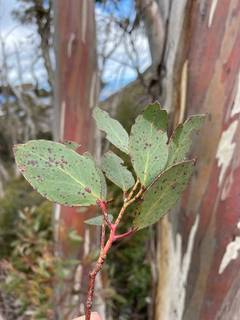
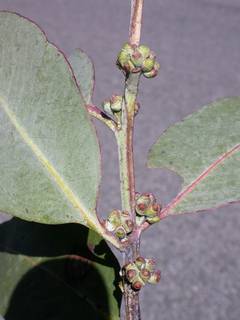
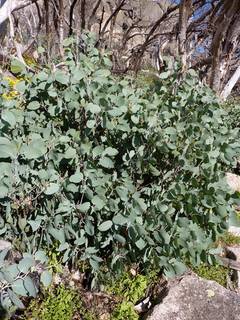
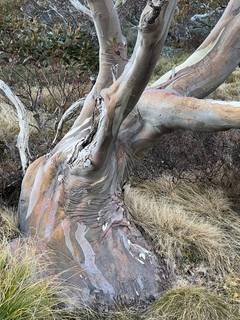
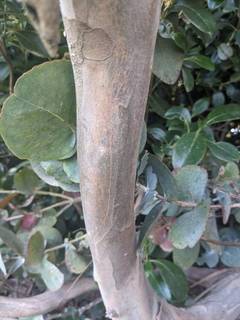
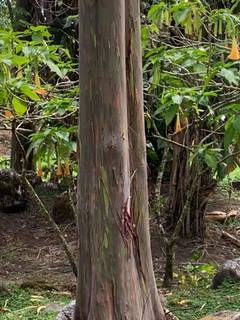
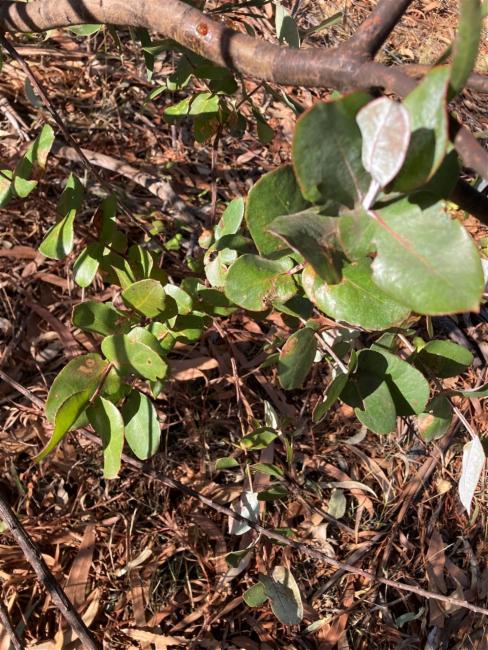
Eucalyptus globulus is a large evergreen tree in the myrtle family Myrtaceae growing 60–120 feet (18–36 m) tall and 40–60 feet (12–18 m) wide with a single straight trunk and a rounded upper canopy that develops from vigorous juvenile growth at rates of 3–6 feet (90–180 cm) per year in favorable conditions. The species is the most planted Eucalyptus in global commercial plantation forestry — an estimated 20 million hectares of plantation are established worldwide for pulpwood, timber, and essential oil production, and the species dominates the planted eucalypt estate in Iberia, parts of South America, southern China, and coastal California. The smooth bark sheds in long ribbonlike strips through the warm months to reveal fresh cream, gray, and blue-gray new bark on the trunk and major limbs, and the shedding bark accumulates under the tree as a deep litter of dry ribbon fragments. Juvenile leaves are rounded, blue-gray, glaucous, and clasp the stem in opposite pairs; adult leaves are lance-shaped and sickle-shaped (falcate), dark green, leathery, 6–12 inches (15–30 cm) long, and hang pendulously from the twigs — the marked contrast between juvenile and adult foliage is a hallmark of the genus Eucalyptus and is used commercially in the floral trade where coppiced plants supply the blue-gray juvenile foliage sold as cut eucalyptus. The foliage carries eucalyptol (1,8-cineole) and other volatile aromatic oils that release the characteristic eucalyptus scent when the leaves are crushed or warmed by the sun. White to cream fluffy stamen-cluster flowers 1.5 inches (4 cm) across open in January through April across a 4–6 week bloom period — the warty blue-gray operculum (a fused bud cap covering the developing flower) falls to expose the stamens at anthesis, and the button-shaped operculum is the basis for the specific epithet globulus. Limitation: the species is classified as an invasive plant in California where wind-dispersed and gravity-dropped seed colonizes coastal bluffs, open grasslands, and disturbed ground and displaces native plant communities — regional invasive species lists should be consulted before planting in jurisdictions where the species is restricted. Fire risk is severe because the volatile leaf oils, the shedding bark litter, and the tall open canopy structure combine to carry fire rapidly through a stand of trees — the species is implicated in the severity of several California wildfires and is excluded from fire-risk areas in fire-code jurisdictions. Brittle branch drop is a documented hazard in which large living branches fall without warning from mature trees, and the species is unsuitable for siting near buildings, patios, driveways, playgrounds, or any location with regular human occupation. Allelopathic leaf litter suppresses the growth of understory plants beneath the canopy. Damaged below 25 °F (−4 °C). The essential oil eucalyptol is toxic to dogs and cats if ingested. Native to Tasmania and southeastern Australia (Victoria). Drought-tolerant once established. Deer-resistant.
Native Range
Native to Tasmania and southeastern Australia (Victoria), growing in moist forests and along rivers at low to moderate elevations. The species was introduced to California in the 1850s during the Gold Rush as a timber source and windbreak, and the species has subsequently naturalized on coastal bluffs and in disturbed ground along the California coast where it is now classified as an invasive plant. Commercial plantation forestry expanded the species' global range through the 20th century — an estimated 20 million hectares are established worldwide for pulpwood, timber, and essential oil production, making this the most planted Eucalyptus species in global commercial forestry.Suggested Uses
Used in commercial plantation forestry for pulpwood, timber, and essential oil production, in windbreaks on large rural properties, and as a coppiced specimen for harvest of juvenile floral foliage in USDA zones 8 through 10. Residential garden use is very limited because the large mature size (60–120 feet), the brittle branch drop hazard, the allelopathic leaf litter, the severe fire risk, and the California invasive status combine to exclude the species from most small to medium residential sites. Jurisdictions where the species is classified as invasive (California — the Cal-IPC invasive plant inventory lists the species as a high-impact invasive), fire-code jurisdictions that exclude the species from fire-risk areas, and positions near buildings or any location with regular human occupation are unsuitable for the species. Households with dogs or cats should account for the eucalyptol toxicity of the foliage and essential oil.How to Identify
Appearance
Size & Dimensions
Height60' - 120'
Width/Spread40' - 60'
Bloom Information
White to cream fluffy stamen-cluster flowers 1.5 inches (4 cm) across open in January through April across a 4–6 week bloom period. The warty blue-gray operculum (a fused bud cap covering the developing flower) falls to expose the stamens at anthesis, and the button-shaped operculum is the basis for the specific epithet globulus. Honeybees work the flowers heavily during the winter and early spring bloom, and eucalyptus honey from E. globulus plantations is a commercial product of Australia, Iberia, and other plantation regions.
Detailed Descriptions
Flower Description
white to cream fluffy stamen-cluster flowers 1.5 inches (4 cm) across in winter and early spring; the warty blue-gray operculum (a fused bud cap that covers the developing flower) falls to expose the stamens at anthesis, and the button-shaped operculum is the basis for the specific epithet globulus (meaning little globe or button in Latin)Foliage Description
juvenile leaves are rounded, blue-gray, glaucous (waxy white bloom), and clasping the stem in opposite pairs — widely used in floral arrangements and cut-foliage trade; adult leaves are lance-shaped and sickle-shaped (falcate), dark green, leathery, 6-12 inches (15-30 cm) long, pendulous, and strongly aromatic from eucalyptol (1,8-cineole) and other volatile oils in the leaf tissue; the marked contrast between juvenile and adult foliage is a hallmark of the genus EucalyptusGrowing Conditions
Sun Requirements
Requires 6-10 hours of direct sunlight daily
• Full Sun: 6+ hours of direct sunlight
• Partial Shade: 3-6 hours of direct sunlight
• Full Shade: Less than 3 hours of direct sunlight