Eucalyptus, Genus, pauciflora, Species, ssp., Subspecies, debeuzevillei, Subspecies,
- Genus & species
- Subspecies
Jounama snow gum
New South Wales, Australia (Jounama Range; subalpine woodland, 4,000-5,500 ft)
Overview
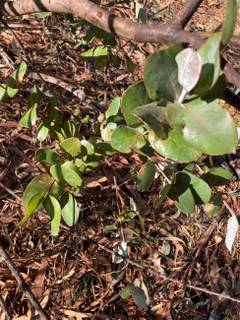
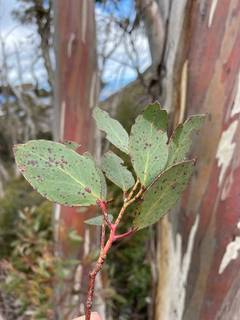
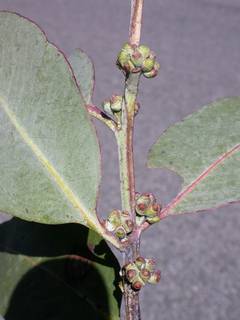
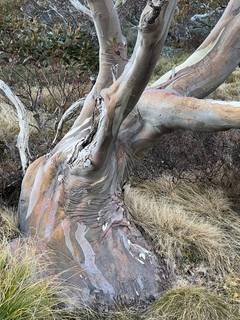
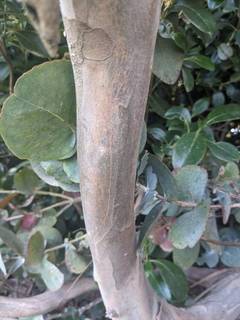
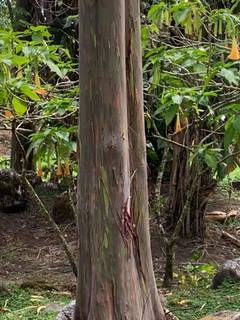
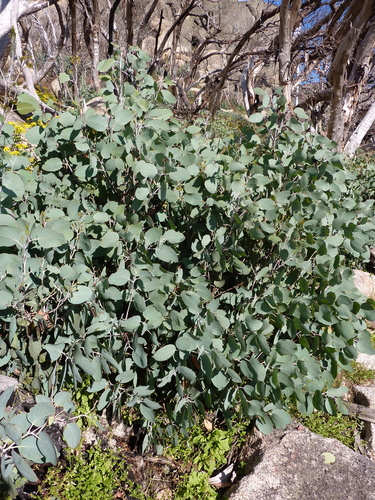
Eucalyptus pauciflora ssp. debeuzevillei is an upright single- to multi-stemmed evergreen tree reaching 20–40 feet (6–12 m) tall in cultivation with a spread of 15–25 feet (4.5–7.5 m). The subspecies from the Jounama Range sits at the cold-hardiest end of the Eucalyptus genus in commerce, tolerating temperatures to 0°F (−18°C) once the root system is established—a cold threshold that opens the species to gardens where no other eucalyptus survives. Bark is smooth and sheds in large patches to expose a mosaic of white, cream, pale gray, and olive-green tones, and the bark appearance shifts character through the seasons as fresh patches emerge from beneath the shed layers. Adult leaves are sickle-shaped (falcate), 3–5 inches (8–13 cm) long, gray-green to blue-green, with a waxy bloom that reduces water loss and reflects summer sun. Juvenile leaves are broader, more rounded, and bluer. Small white flowers in clusters of 7–11 open in summer as a minor ornamental contribution behind the bark and foliage, which carry the main visual value. Growth rate is moderate—2–3 feet (60–90 cm) per year. The root system is shallow, which has planting-position consequences covered under care.
Native Range
Eucalyptus pauciflora ssp. debeuzevillei is native to New South Wales, Australia, restricted to the Jounama Range and adjacent highlands near Tumut, where the subspecies grows in subalpine woodland at 4,000–5,500 feet (1,200–1,700 m) on rocky well-drained granite soils. The narrow geographic range in the wild contrasts with the wide cultivation of the subspecies in temperate-zone gardens outside Australia, where its cold-hardiness value has driven heavy commercial production. The subspecies name honors Wilfred de Beuzeville, an Australian forester who documented the taxon in the early 20th century.Suggested Uses
Planted as a specimen tree for ornamental bark—the main year-round feature. The white, cream, gray, and olive-green bark mosaic changes character through the seasons and reads strongly against dark evergreen backgrounds. The cold-hardiness ceiling of the Eucalyptus genus opens this subspecies to colder gardens where all other species fail. Functions as a single-specimen anchor in a composition, particularly with low underplanting that does not obscure the ornamental trunk. The sickle-shaped leaves are harvested for floral-trade use. Small gardens, positions near foundations and utilities, waterlogged soils, and shade are poor fits for the subspecies.How to Identify
Appearance
Size & Dimensions
Height20' - 40'
Width/Spread15' - 25'
Bloom Information
Small white fluffy flowers open in clusters of 7–11 in leaf axils during summer (July–August). Small cup-shaped seed capsules follow bloom. The flowering display is a minor ornamental contribution behind the bark and foliage.
Detailed Descriptions
Flower Description
White, small fluffy clustersFoliage Description
Gray-green to blue-green, sickle-shaped adult; broader bluer juvenileGrowing Conditions
Sun Requirements
Requires 6-12 hours of direct sunlight daily
• Full Sun: 6+ hours of direct sunlight
• Partial Shade: 3-6 hours of direct sunlight
• Full Shade: Less than 3 hours of direct sunlight
Care & Maintenance
Care Guide
Plant in full sun in well-drained soil. Hardy to zone 7a (0°F / −18°C)—the cold-hardiest eucalyptus subspecies available in temperate-zone commerce. Moderate growth rate—2–3 feet (60–90 cm) per year. Planting position 15 feet (4.5 m) or more from foundations and utilities protects structures from the shallow spreading root system that develops over the first 5–10 years. Staking young trees through the first 2–3 establishment years supports the root system during the wind-vulnerable period before anchor roots develop. The sickle-shaped adult leaves shed wind more readily than the broad juvenile leaves, which gives mature trees better wind resistance than E. coccifera in the same climate. No serious pest or disease problems outside Australia. Toxic to pets if foliage is ingested in quantity.Pruning
Pruning is done in late spring once the risk of frost damage on cut surfaces has passed. Coppicing is possible but reduces the ornamental bark that is the main feature of the subspecies, so coppicing is rarely chosen for this taxon. For trees grown to full stature, lower branches are removed progressively as the tree matures to raise the canopy and expose the ornamental bark. Damaged or crossing branches are removed as noticed.Pruning Schedule
Prune: May
late spring