Eucalyptus, Genus, gunnii, Species,
- Genus & species
silver drop eucalyptus
Overview
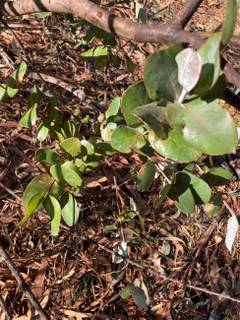
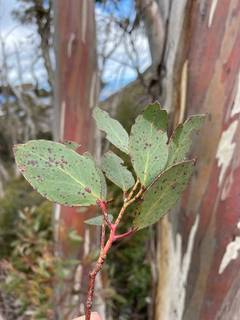
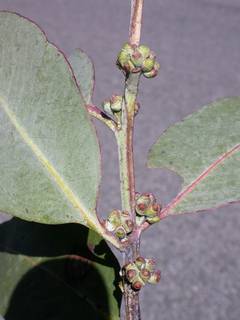
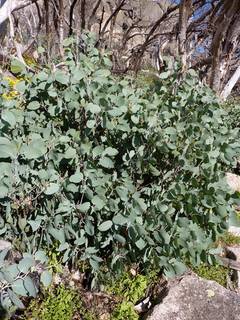
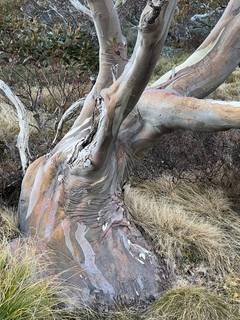
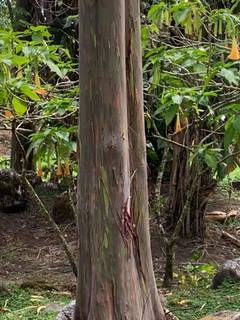
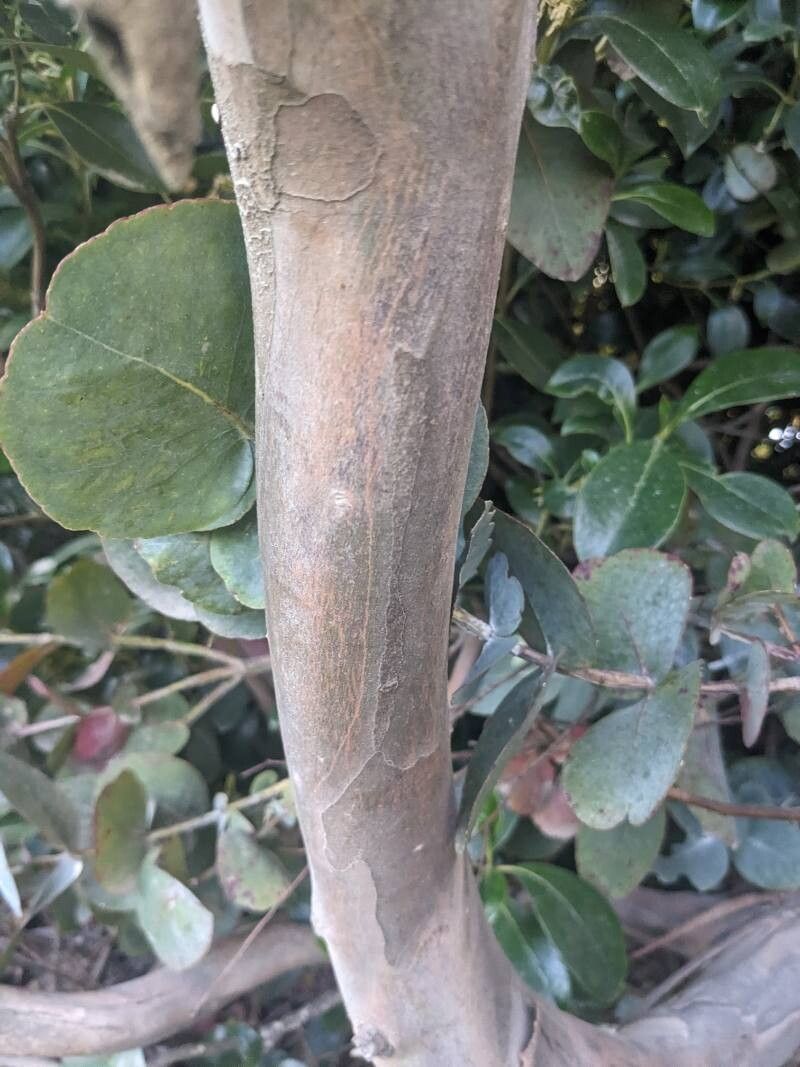
Eucalyptus gunnii is an evergreen tree in the myrtle family (Myrtaceae), reaching 360-720 inches (900-1,800 cm) tall and 180-360 inches (450-900 cm) wide at maturity, and routinely coppiced to 36-120 inches (90-300 cm) for cut-foliage harvest in the floristry trade. Juvenile foliage consists of round to ovate silver-blue leaves 1.5-2.5 inches (4-6 cm) across arranged in opposite pairs along stems; this is the foliage harvested commercially and the form sold as a young container plant. Adult foliage on mature trees consists of sickle-shaped gray-green leaves 2.5-4 inches (6-10 cm) long arranged alternately. Coppicing maintains the juvenile foliage indefinitely. Bark is smooth, peeling in patches of green, gray, and orange on mature trunks. Small white stamen-tufted flowers form in clusters of three in summer to autumn on mature unpruned plants. Native to Tasmania, where it grows on cool wet plateaus at 1,500-3,500 feet (450-1,070 m) elevation. Hardy to zones 7-10 with foliage damage below 5°F (-15°C). Cultivated in the British Isles, Ireland, and the Pacific Northwest, where most other eucalypts are killed by winter cold. Crushed foliage releases a strong menthol-eucalyptus aroma. Toxic to dogs, cats, and humans if ingested in quantity, causing vomiting, drooling, and weakness; the essential oil is a contact and respiratory irritant. Wind tolerance is moderate; trees on shallow soils blow over in storms.
Native Range
E. gunnii is native to Tasmania, where it grows on cool wet plateaus and montane grasslands at 1,500-3,500 feet (450-1,070 m) elevation. Cultivated outside its native range across temperate climates including the United Kingdom, Ireland, the Pacific Northwest, and parts of the southern United States.Suggested Uses
Grown as a coppiced shrub at 36-60 inch (90-150 cm) spacing for cut-foliage harvest, as a screen or windbreak when allowed to grow into a tree at 240-360 inch (600-900 cm) spacing in zones 7-10, and in large containers of 15-25 gallons (57-95 L) where the coppiced juvenile form is wanted. Toxic to humans and pets if ingested.How to Identify
Appearance
Size & Dimensions
Height3' - 60'
Width/Spread15' - 30'
Bloom Information
Small white stamen-tufted flowers form in clusters of three in late summer to autumn on mature unpruned trees. Coppiced container plants and stooled cut-foliage stock rarely flower because the juvenile growth maintained by repeated cutting is non-flowering. Bloom period lasts 4-6 weeks.
Detailed Descriptions
Foliage Description
Silver-blue (juvenile); gray-green sickle-shaped (adult)Growing Conditions
Sun Requirements
Requires 6-12 hours of direct sunlight daily
• Full Sun: 6+ hours of direct sunlight
• Partial Shade: 3-6 hours of direct sunlight
• Full Shade: Less than 3 hours of direct sunlight
Care & Maintenance
Care Guide
Full sun (6+ hours). Soil pH 5.5-7.0, well-drained, with consistent moisture during establishment in the first 2 years. Drought-tolerant once established but loses lower leaves in prolonged drought. Hardy to zones 7-10 with foliage damage below 5°F (-15°C); root death follows below -10°F (-23°C). Coppice annually in late winter to maintain juvenile silver-blue foliage and a multi-stemmed shrubby form, or grow into a single-trunk tree if mature flowering and bark color are wanted. Foliage and oil are toxic to dogs, cats, and humans if ingested; the oil is a contact and respiratory irritant.Pruning
Coppice (cut all stems to 4-12 inches/10-30 cm) annually in late winter to maintain juvenile silver-blue foliage. Stems regenerate 36-72 inches (90-180 cm) per growing season after coppicing. Single-trunk trees are formed by removing competing leaders and lower branches in winter; mature trees rarely tolerate hard rejuvenation pruning beyond 5 years of age.Pruning Schedule
Prune: February
winter
Container Growing
Suitable for container growing
Minimum container size: 15 gallons