Eucalyptus, Genus, neglecta, Species,
- Genus & species
Omeo gum
Victoria, Australia (Omeo district; subalpine woodlands, 3,000-5,000 ft)
Overview
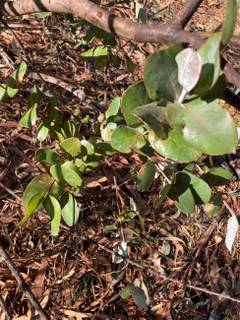
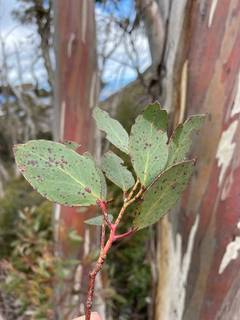
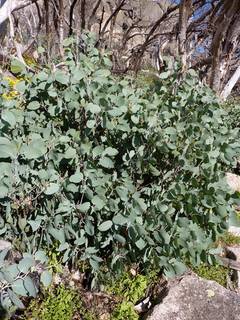
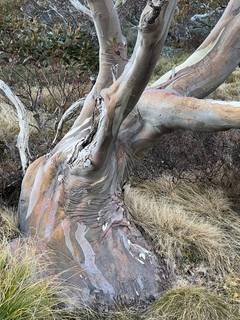
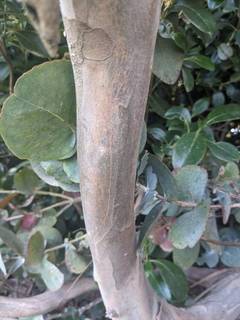
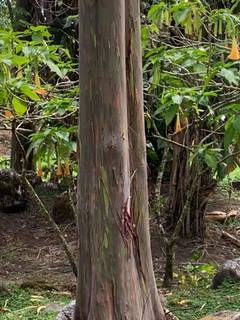
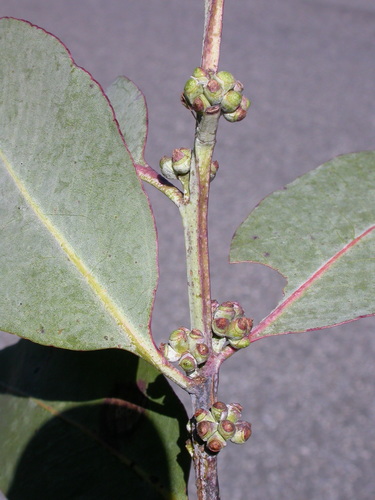
Eucalyptus neglecta is an upright multi-stemmed evergreen tree or large shrub reaching 20–35 feet (6–10.5 m) tall in cultivation with a spread of 12–20 feet (3.5–6 m). The Victorian alpine species carries an ornamental trait that separates it from most Eucalyptus in cultivation: the rounded juvenile foliage is retained into maturity. Most eucalypts transition through 2–4 years of juvenile rounded leaves before switching to narrow lance-shaped adult leaves, at which point the ornamental blue-gray roundness of the juvenile stage is lost without coppicing; E. neglecta holds the rounded blue-green to gray-green juvenile leaves 2–3 inches (5–8 cm) across throughout its entire life. This persistent juvenile foliage is the key garden value and the reason cut-foliage operations have adopted the species as a replacement for coppiced E. gunnii. Bark is rough and fibrous on the lower trunk and smooth-shedding on upper branches, exposing gray-green to olive tones on younger wood. Small white flowers in clusters open in summer. Growth rate is fast—2–4 feet (60–120 cm) per year. The species sits at the cold-hardy end of the genus, tolerating temperatures to 5°F (−15°C). The shallow root system calls for the same planting-position discipline as other eucalypts: 15 feet (4.5 m) or more from foundations and utilities protects structures from root interference over the life of the tree.
Native Range
Eucalyptus neglecta is native to Victoria, Australia, specifically the Omeo district and surrounding highlands in the Great Dividing Range, growing in subalpine woodlands at 3,000–5,000 feet (900–1,500 m) on rocky well-drained soils. The wild range is restricted—the species is listed as Vulnerable in its native Victoria because of the small geographic distribution, which contrasts with its wide availability in horticultural commerce outside Australia. The common name 'Neglected Gum' refers to taxonomic history: the species was overlooked and unnamed for decades before its formal description in 1947, despite being known locally in the Omeo district.Suggested Uses
Planted as a specimen tree or large shrub for the persistent rounded blue-green foliage. The retained juvenile foliage makes this the Eucalyptus of choice for gardeners who want the rounded-leaf effect without committing to the annual coppicing regimen that E. gunnii requires to hold juvenile leaves. Functions as a screen or windbreak with fast growth. The rounded leaves are harvested for floral-trade use and have replaced coppiced E. gunnii in some commercial cut-foliage operations for that reason. Small gardens (unless the tree is coppiced), positions near foundations and utilities, waterlogged soils, and cold zones below 7 are poor fits for the species.How to Identify
Appearance
Size & Dimensions
Height20' - 35'
Width/Spread12' - 20'
Bloom Information
Small white fluffy flowers open in axillary clusters during summer (July–August). Small cup-shaped seed capsules follow bloom. The flowering display is a minor ornamental contribution behind the foliage, which carries the primary year-round value.
Detailed Descriptions
Flower Description
White, small fluffy clustersFoliage Description
Blue-green to gray-green, rounded, persistent juvenile foliageGrowing Conditions
Sun Requirements
Requires 6-12 hours of direct sunlight daily
• Full Sun: 6+ hours of direct sunlight
• Partial Shade: 3-6 hours of direct sunlight
• Full Shade: Less than 3 hours of direct sunlight
Care & Maintenance
Care Guide
Plant in full sun in well-drained soil. Hardy to zone 7 (5°F / −15°C)—one of the cold-hardiest eucalypts. Fast-growing—2–4 feet (60–120 cm) per year. Planting position 15 feet (4.5 m) or more from foundations and utilities protects structures from the shallow spreading root system that develops over the first 5–10 years. Staking young trees through the first 2–3 years supports the root system during the wind-vulnerable establishment period. The multi-stemmed habit develops naturally but responds to training toward a single trunk if desired. No serious pest or disease problems in temperate climates outside Australia. Toxic to pets if foliage is ingested in quantity.Pruning
Pruning is done in late spring once the risk of frost damage on cut surfaces has passed. Coppicing every 2–3 years maintains the tree as a large shrub with dense juvenile foliage that holds at 6–10 feet (1.8–3 m). For trees grown to full stature, selective thinning of stems develops the desired form over 3–5 years. Damaged or crossing branches are removed as noticed.Pruning Schedule
Prune: May
late spring