Urban Canopy Equity: Why Tree Cover Matters for Public Health
— Image © Plant Reference 2026
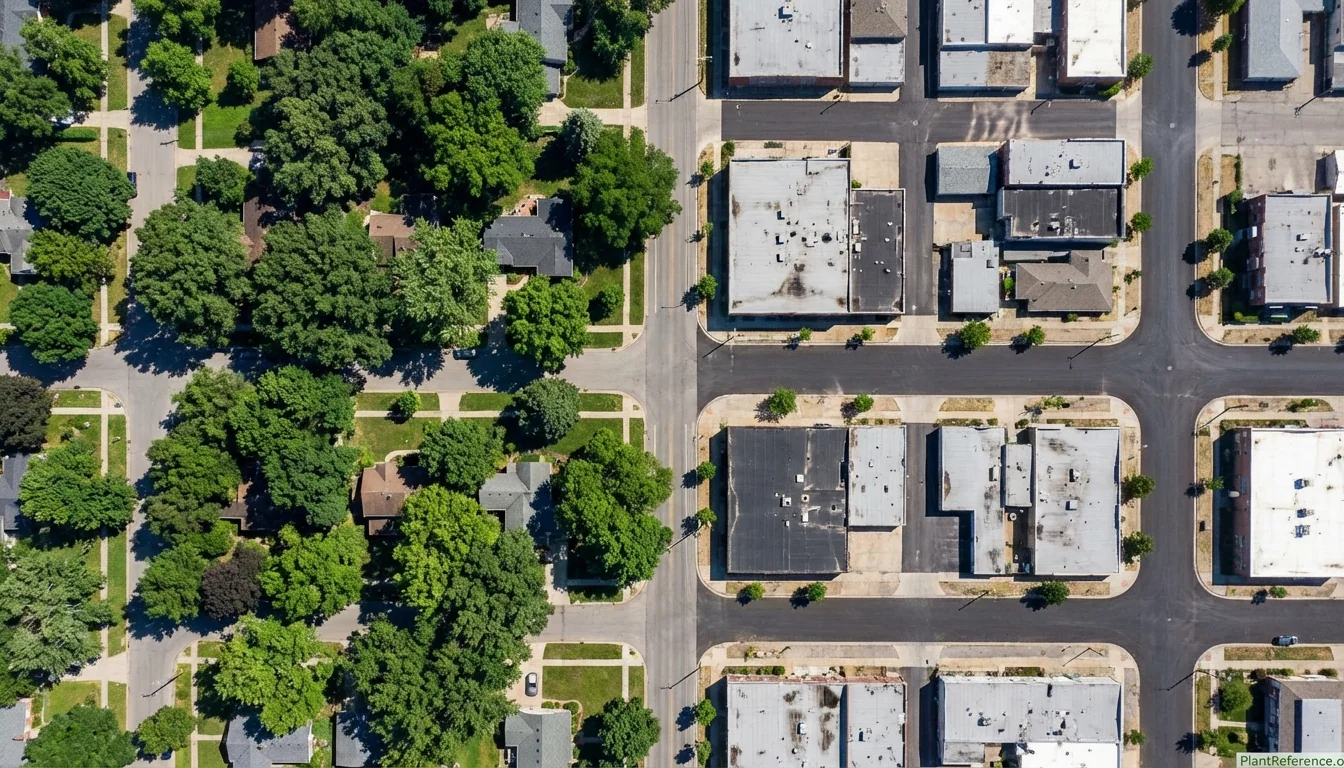
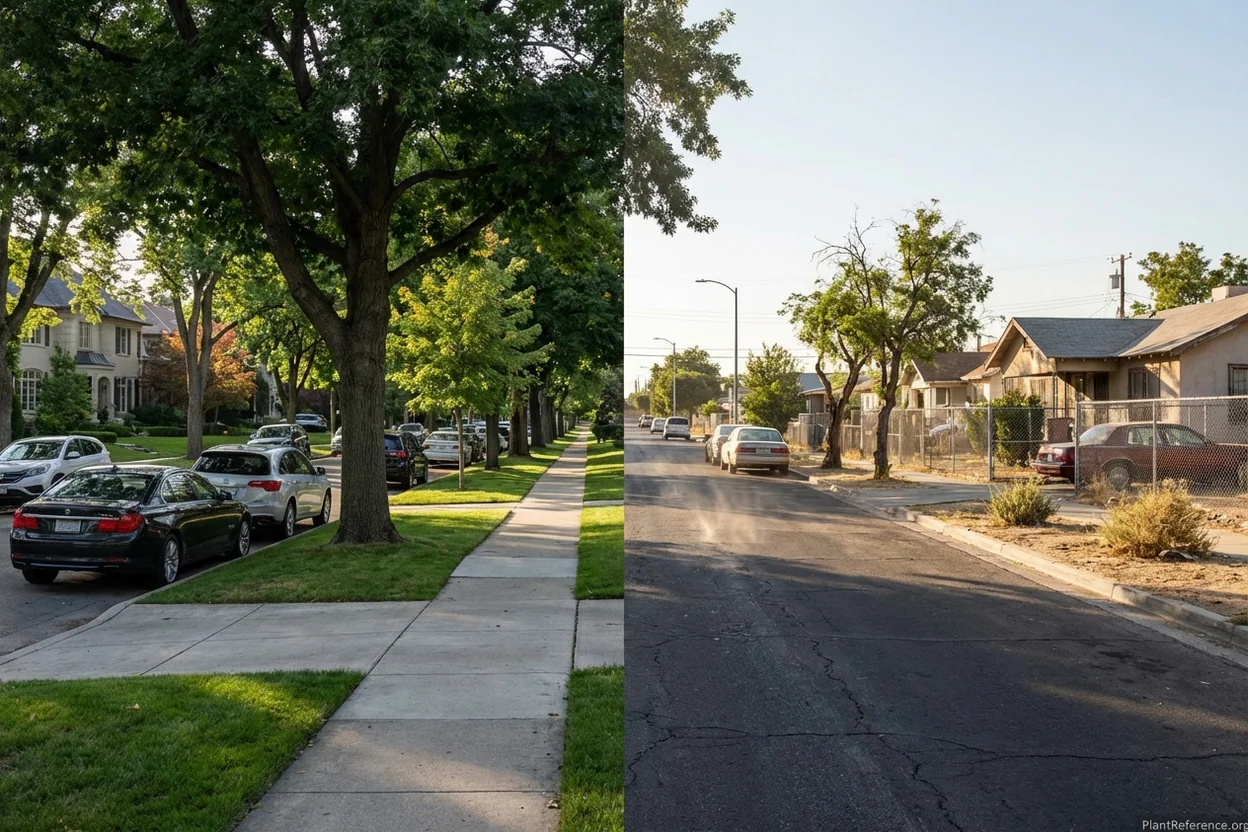
Walk through any American city and you'll see it immediately—tree-lined streets in affluent neighborhoods, bare sidewalks in low-income areas. What you're witnessing isn't coincidence. It's urban tree canopy equity, and the health consequences are profound and measurable.
The Hidden Crisis: Urban Canopy Equity Explained
Urban tree canopy equity refers to the fair distribution of tree cover across all neighborhoods, regardless of income level or racial composition. But fair distribution is exactly what we don't have. Research consistently shows that low-income communities and communities of color have significantly less tree cover than wealthy, predominantly white neighborhoods—often by dramatic margins.
In my work with Atlanta's urban forest initiatives, I've seen this disparity firsthand. Drive through Buckhead's tree-canopied streets, then visit neighborhoods like English Avenue, and the contrast is stark. It's not just about aesthetics. These differences create measurable impacts on air quality, temperature, stormwater management, and ultimately, human health.
The Tree Equity Score, developed by American Forests, maps these disparities nationwide. Using satellite imagery and demographic data, it reveals that tree cover correlates strongly with income and race across virtually every US metropolitan area. This isn't a coincidence—it's the result of decades of planning decisions, investment patterns, and policy choices.
Research Reveals Stark Health Disparities
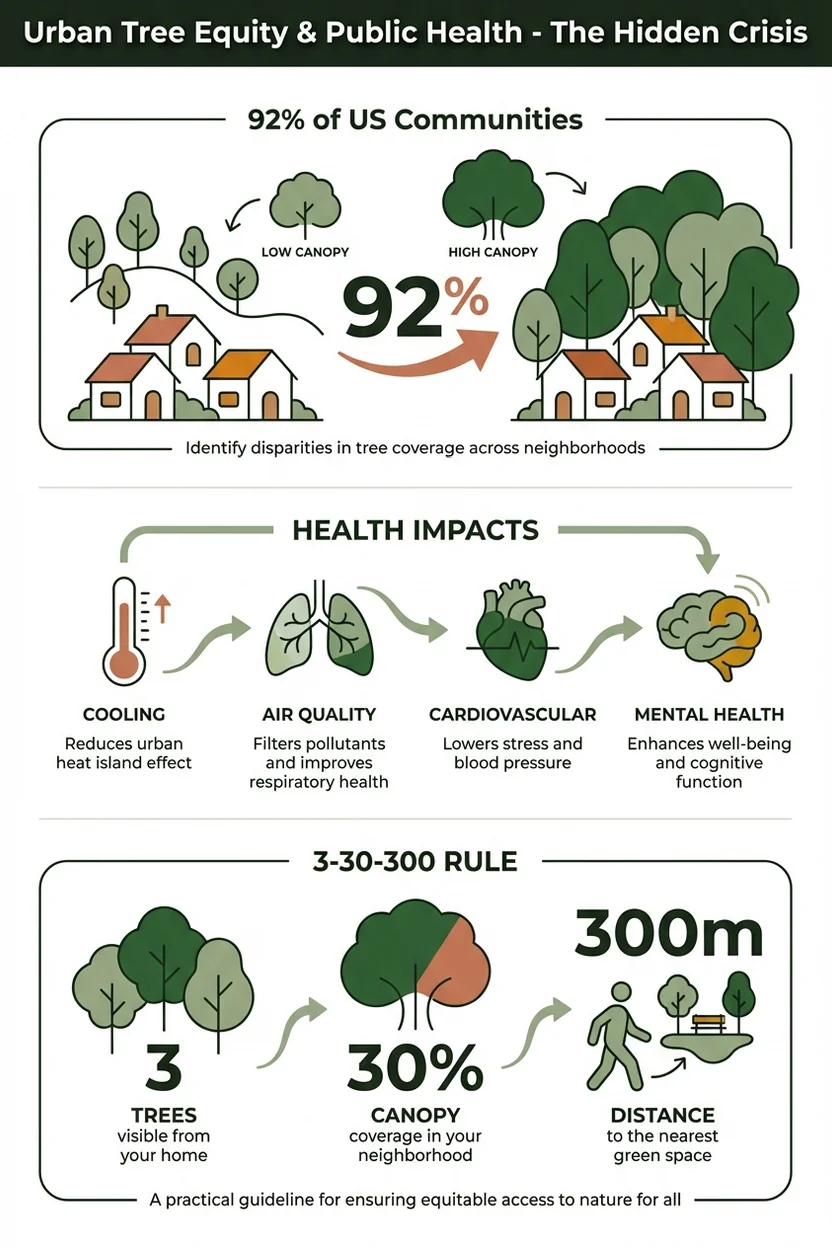
The numbers tell a powerful story. A comprehensive analysis by American Forests found that 92% of US communities have lower tree canopy coverage in areas with higher poverty rates and higher percentages of people of color. This isn't a small difference—we're talking about gaps of 15-40 percentage points in canopy cover between neighborhoods within the same city.
Consider Oakland, California, where the City Council unanimously adopted an Urban Forest Plan in December 2024. Their detailed analysis revealed canopy coverage ranging from a mere 2.65% in the Coliseum Industrial area to 59.7% in Piedmont Pines. That's a 22-fold difference within the same metropolitan area.
These disparities have measurable health consequences:
Temperature differences of 2-5°F between high and low-canopy neighborhoods during heat waves
16% higher cardiovascular disease risk in areas with minimal tree cover
Increased asthma rates in children living in low-canopy communities
Higher rates of heat-related emergency room visits in tree-sparse neighborhoods
Reduced physical activity levels where walking conditions are less comfortable
The cooling effect is particularly significant. A 2025 Nature study from Calgary demonstrated that a 10% increase in canopy cover produces 0.8°C (1.4°F) of cooling, while a 30% increase delivers 1.5°C (2.7°F) of temperature reduction. Tree canopy explained 67% of spatial temperature variation across the city.
The 3-30-300 Rule: A Framework for Equity
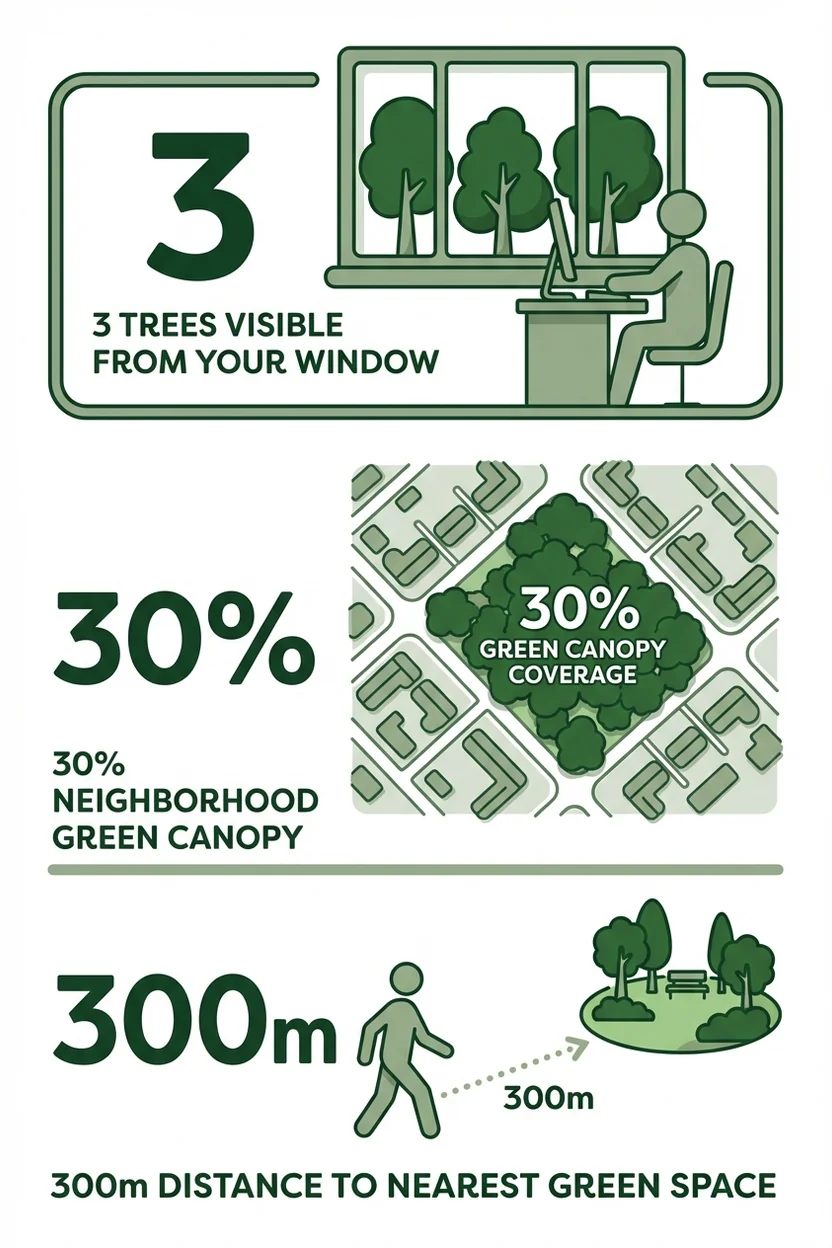
The 3-30-300 rule, developed by urban forestry researchers, provides an evidence-based framework for equitable canopy distribution. Each number represents a specific health-related benchmark:
3 Trees in Sight: Every home, school, and workplace should have at least three trees visible from windows or entrances. Research shows this simple standard reduces stress hormones, speeds recovery from illness, and improves cognitive performance and job satisfaction.
30% Canopy Cover: Every neighborhood should achieve 30% tree canopy coverage, measured at the neighborhood level rather than as a citywide average. This threshold correlates with reduced all-cause mortality and cardiovascular disease risk.
300 Meters to Green Space: Every resident should live within 300 meters (about a 5-minute walk) of high-quality green space. This proximity encourages physical activity and provides mental health benefits.
The reality? Most cities fall far short of these benchmarks. Research analyzing major metropolitan areas found that fewer than 30% of buildings in New York City, Amsterdam, Buenos Aires, Denver, Sydney, and Melbourne meet the 30% canopy threshold. In Fort Collins, Colorado, analysis revealed compliance ranging from 91.6% in low-density conservation zones to 0.0% in many industrial and high-density mixed-use neighborhoods.
Real-World Examples: Cities Leading Change
Some cities are taking bold action to address canopy equity. Here's what meaningful change looks like:
Portland, Oregon updated its Title 11 Tree Code in 2026, explicitly prioritizing tree planting and preservation in underserved communities. The new code reduces canopy disparities by simplifying permits for affordable housing developments that integrate healthy trees, while imposing high "recompense" fees for removing landmark trees. These fees fund the Tree Planting and Preservation Fund, directed specifically to neighborhoods with low existing canopy.
Atlanta, Georgia allocated $400,000 annually for low-income tree assistance as part of its 2025 tree ordinance overhaul. The program provides free trees, planting, and maintenance for qualifying homeowners, while restructuring removal fees to $140 per inch of trunk diameter with fines up to $200,000 per acre for unpermitted removal.
Tucson, Arizona adopted the Tree Equity Score as its primary tool for green infrastructure project prioritization. Rather than distributing trees evenly across the city, resources are concentrated in neighborhoods scoring lowest on the equity index.
These cities recognize that achieving urban tree canopy equity requires intentional intervention. Market forces and individual property owner decisions won't naturally create equitable distribution.
Health Impacts You Can Measure
The health benefits of urban tree canopy equity extend far beyond temperature reduction. Research demonstrates measurable improvements across multiple health indicators when tree cover increases in underserved communities.
Cardiovascular Health: A landmark study published in Scientific Reports analyzed health records from 247,000 people across seven countries. Areas with higher tree density showed significantly lower rates of cardiovascular disease, with the strongest effects in urban areas where baseline canopy was lowest.
Respiratory Health: Trees filter particulate matter (PM2.5 and PM10) from the air, with especially pronounced benefits in neighborhoods near highways and industrial areas. Children in schools surrounded by trees show reduced asthma symptoms and better lung function development.
Mental Health: The psychological benefits of trees are substantial and measurable. Studies document reduced anxiety, depression, and ADHD symptoms in both children and adults with regular access to tree-covered environments. The effect size increases dramatically when people transition from very low-canopy to moderate-canopy neighborhoods.
Heat-Related Illness: During extreme heat events, emergency room admissions for heat-related illness are 25-40% lower in neighborhoods with adequate tree cover compared to concrete-dominated areas. This difference is especially pronounced for elderly residents and people with chronic health conditions.
Historical Roots: How We Got Here
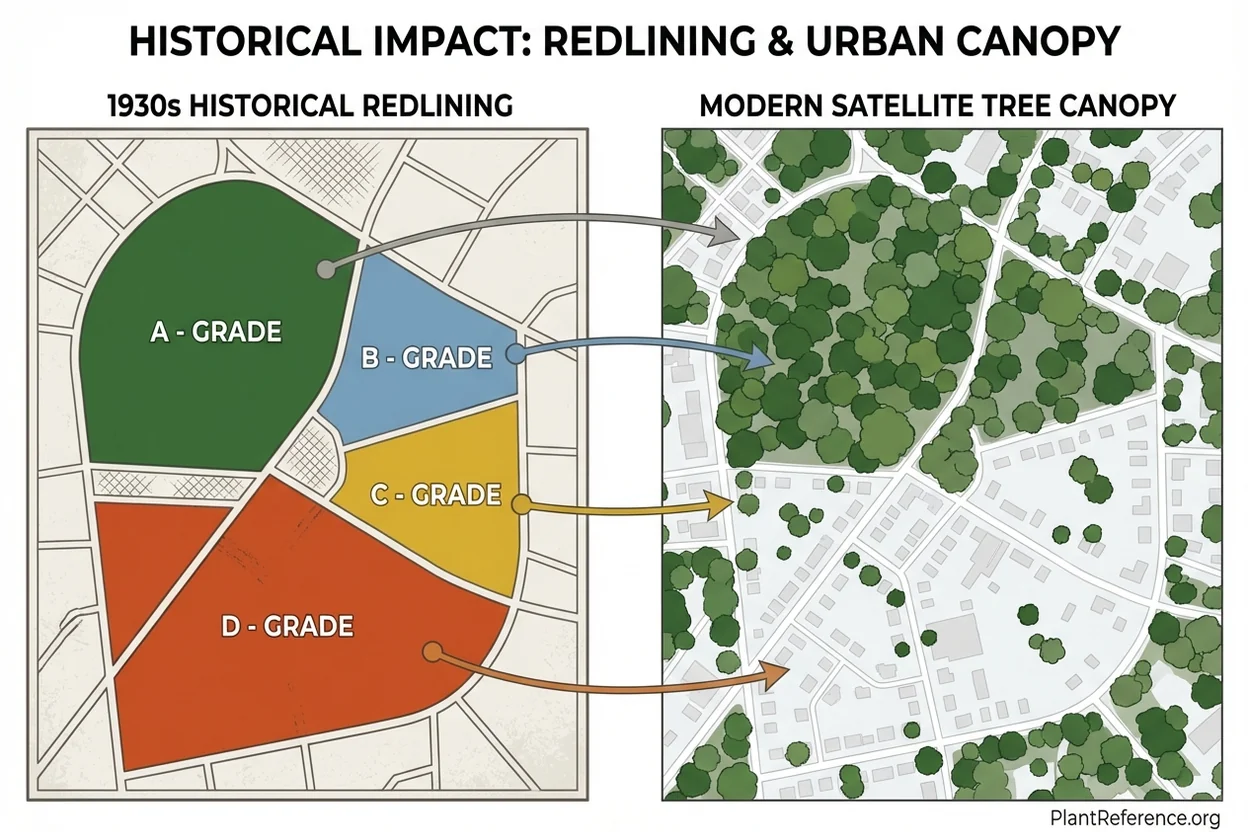
Understanding urban tree canopy equity requires acknowledging its historical roots. The patterns we see today directly correlate with redlining maps created by the federal government in the 1930s-1960s. Neighborhoods rated as "hazardous" for lending—predominantly communities of color—received minimal public investment in infrastructure, including street trees and parks.
The Home Owners' Loan Corporation (HOLC) maps from this era show remarkable correlation with today's canopy distribution. Areas marked in red on historical redlining maps consistently show lower tree cover 80+ years later. This isn't coincidence—it's the compound effect of decades of disinvestment in public amenities.
Federal agencies now use the Climate and Economic Justice Screening Tool (CEJST) to prioritize investments in disadvantaged communities. This tool identifies census tracts that are both environmentally burdened and economically distressed, providing a framework for directing urban forestry resources where they're needed most.
Solutions That Work: Policy and Practice
Addressing urban tree canopy equity requires coordinated policy intervention. Successful programs share several key characteristics:
Targeted Investment: Rather than distributing trees equally across all neighborhoods, equity-focused programs concentrate resources in areas with the lowest existing canopy. Oakland's Urban Forest Plan explicitly prioritizes frontline communities identified through CalEnviroScreen.
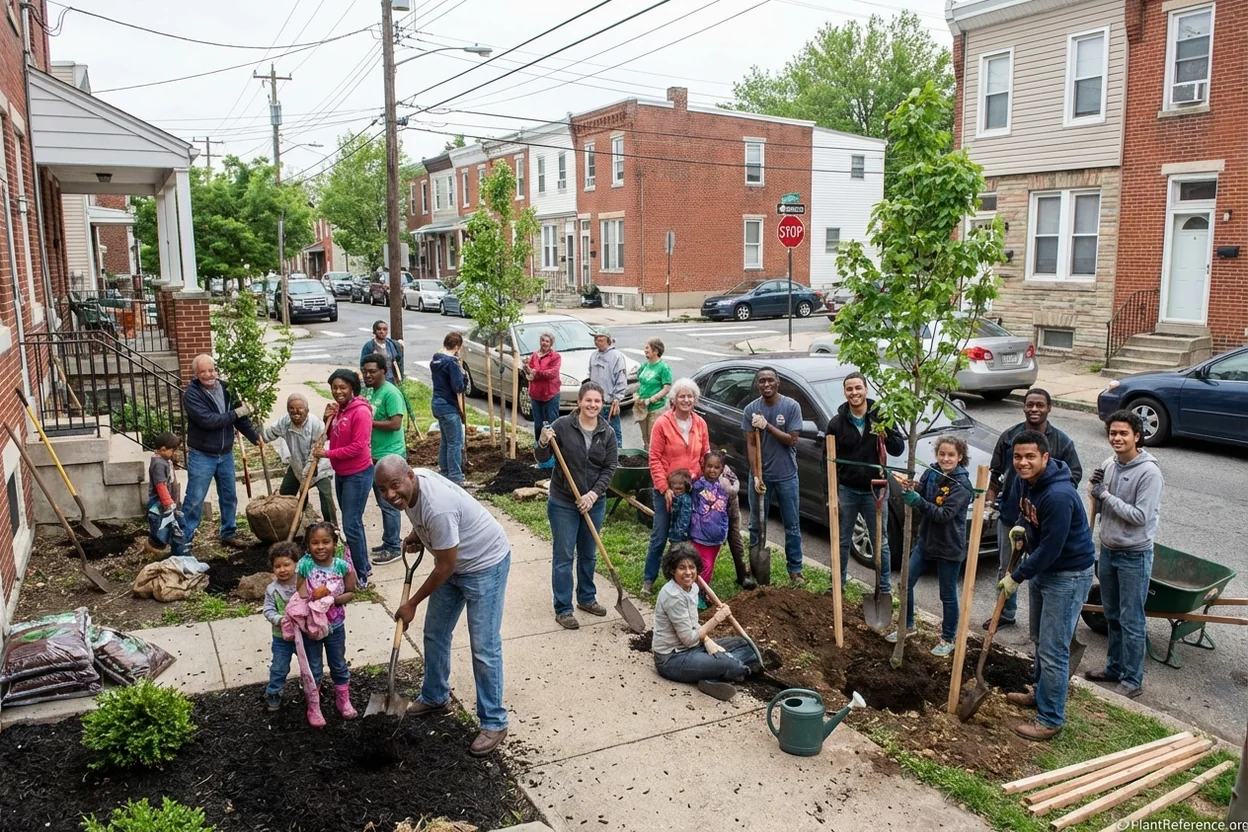
Community Engagement: Effective programs involve residents in species selection, planting locations, and ongoing care. This builds local ownership and ensures long-term tree survival. Community Tree Planting Programs: A Complete Guide
Maintenance Commitment: Many well-intentioned planting programs fail because they don't address long-term maintenance. Successful equity programs include 3-5 year watering and care commitments, often funded through developer fees or dedicated tax revenue.
Policy Integration: Tree equity works best when integrated with other planning initiatives. Portland's new tree code coordinates with affordable housing development, stormwater management, and transportation planning.
Performance Monitoring: Programs track canopy change over time using satellite imagery and LiDAR data. Regular monitoring enables course corrections and demonstrates results to stakeholders.
The most effective approach combines "green from the ground up" community organizing with "green from the top down" policy reform. Neither alone is sufficient.
Community Action and Advocacy
Individuals and community organizations can drive urban tree canopy equity improvements through strategic advocacy and action:
Document the Disparity: Use the American Forests Tree Equity Score mapping tool to quantify canopy gaps in your community. Visual evidence is powerful for city council presentations and grant applications.
Organize Neighborhood Groups: Form tree advocacy organizations that can apply for grants, organize volunteer planting events, and provide sustained pressure for policy change. Starting a Community Tree Group: Step-by-Step Guide
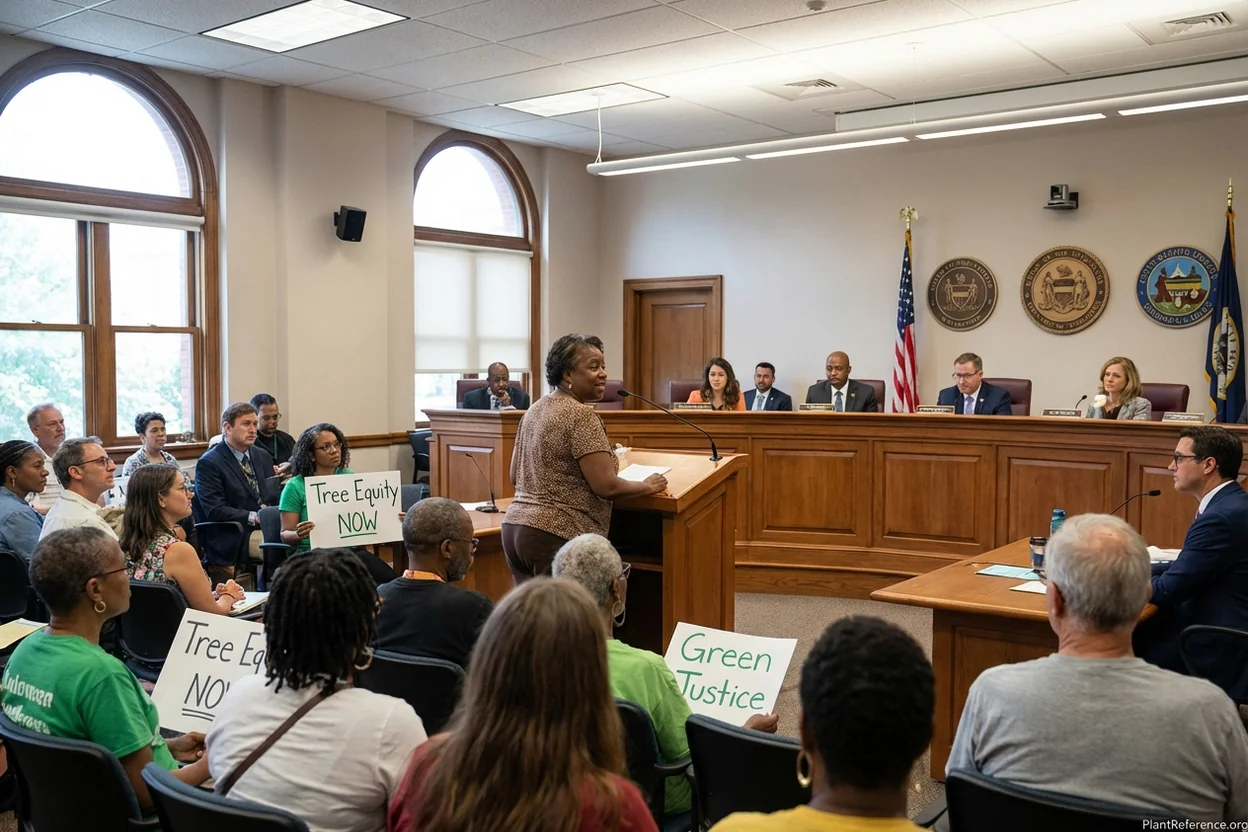
Engage in Planning Processes: Attend city council meetings, planning commission hearings, and budget discussions. Urban forestry funding often gets cut during budget crunches unless residents advocate for it.
Partner with Schools: Schools in low-canopy neighborhoods often have large grounds suitable for tree planting. Educational partnerships can provide workforce development while improving neighborhood canopy.
Support Policy Change: Advocate for tree protection ordinances, developer tree requirements, and dedicated funding streams for urban forestry in underserved communities.
The Economic Case for Tree Equity
Beyond health benefits, urban tree canopy equity makes strong economic sense. Research consistently shows positive returns on investment for urban forestry programs, with especially high returns in areas with low existing canopy.
Property Values: Trees increase residential property values by an average of 7-15%, with higher impacts in neighborhoods that previously had minimal canopy. This creates wealth-building opportunities for residents while improving neighborhood stability.
Energy Savings: Strategic tree placement reduces cooling costs by 10-50%, with the largest savings in areas with little existing shade. This is especially significant for renters and homeowners with limited incomes who spend higher percentages of their income on utilities.
Healthcare Costs: Research suggests that achieving 30% canopy in currently under-treed neighborhoods could reduce healthcare spending by $160-$430 per resident annually through improved air quality, temperature moderation, and mental health benefits.
California's Return on Investment: The state's comprehensive analysis found that every dollar invested in urban trees yields $5.82 in benefits. The return is highest in disadvantaged communities where baseline canopy is lowest and health disparities are greatest.
A 25-year implementation timeline with phased goals, supportive policies, and continuous monitoring is required to achieve meaningful change. This isn't a quick fix—it's a generational investment in community health and environmental justice.
The federal Infrastructure Reduction Act allocated $1.5 billion to USDA Urban and Community Forestry programs, representing the largest-ever federal investment in urban trees. However, the current administration froze and terminated these grants in early 2025, severely disrupting programs nationwide. Cities like Cleveland lost $600,000, while New Orleans' SOUL program nearly closed before receiving a $250,000 emergency grant from Bloomberg Philanthropies.
Despite federal funding uncertainty, local and state action continues. The tree equity movement has momentum, driven by mounting evidence of health disparities and successful model programs demonstrating that change is possible.
Urban tree canopy equity isn't just an environmental issue—it's a public health crisis that demands immediate action. The research is clear, the solutions are known, and the benefits extend far beyond trees themselves. The question isn't whether we can afford to address canopy equity, but whether we can afford not to.
Frequently Asked Questions
Reading about plants and recognising them are different skills. These three build the second.
- Daily PlantIdentify the day’s mystery plant from a close-up photograph.
- Keyed OutWork a dichotomous key, lead by lead, to name a hidden specimen.
- Name That PlantName a specimen from botanical clues dealt hardest first.
Free to play, no account needed
Grace is a community garden organizer in Atlanta who manages three neighborhood garden plots across the city. She came to gardening through food justice work—she saw how many Atlanta neighborhoods lacked access to fresh produce and decided to do something about it. Grace has a background in public health and brings that lens to everything she writes about food growing, soil safety in urban settings, and making gardens work for the communities they serve. She grows a wide range of vegetables, with a focus on crops that produce heavily in Atlanta's long growing season. Grace is practical and community-minded—she thinks about gardens as shared spaces, not just personal projects.