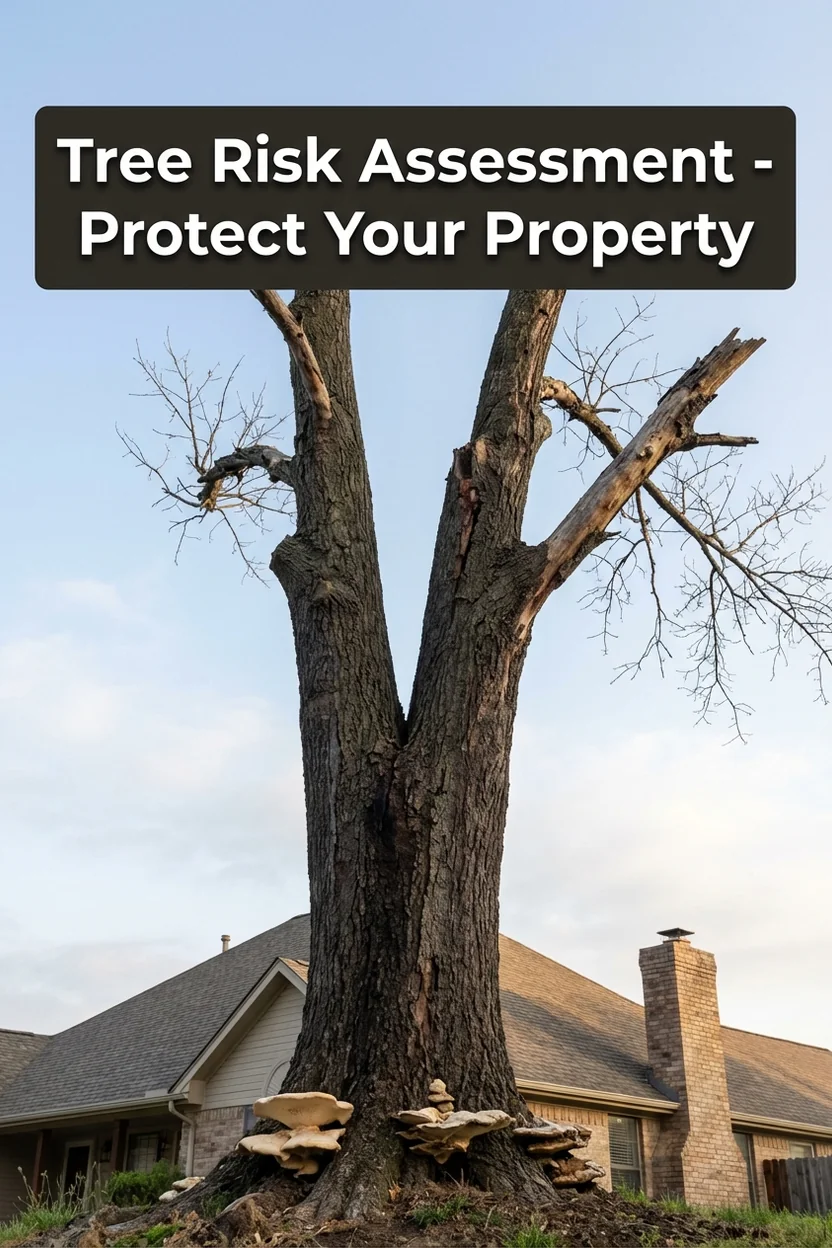
Tree Risk Assessment: TRAQ Methods, Levels, and What to Expect in 2026
— Image © Plant Reference 2026
What is Tree Risk Assessment and Why Does it Matter?
Tree risk assessment is the systematic evaluation of trees to identify the likelihood of failure and potential consequences. The International Society of Arboriculture (ISA) developed the Tree Risk Assessment Qualification (TRAQ) program as the global standard for consistent, defensible risk evaluation.
The process considers three fundamental components: likelihood of failure, likelihood of impact, and consequences of failure. A tree with significant internal decay presents high failure likelihood, but if located in an empty field with no targets, the overall risk remains low. Conversely, a structurally sound tree overhanging a busy playground carries higher risk due to severe potential consequences.
Modern tree risk assessment has evolved from subjective "gut feeling" evaluations to rigorous, standardized protocols backed by biomechanical research. This shift toward evidence-based assessment provides legal defensibility for property owners and insurance companies while ensuring consistent evaluation standards across practitioners.
The financial implications are substantial. Research shows every dollar invested in proactive tree risk management saves $3-7 in emergency response and liability costs. Municipal risk assessment programs reduce storm-related failures by 40-60% through targeted intervention on high-risk trees.
Tree failures cause billions in property damage annually, with 2025 insurance claims reaching record highs due to extreme weather events. Whether you're a homeowner concerned about a leaning oak or a municipal manager prioritizing limited budgets, understanding tree risk assessment methodology can save lives and prevent catastrophic losses.
ISA TRAQ Methodology: The Three Assessment Levels
The ISA TRAQ system divides tree risk assessment into three distinct levels, each serving different purposes and requiring varying expertise levels.
Level 1: Limited Visual Assessment functions as a screening tool for large tree populations. Assessors conduct walk-by or drive-by inspections to identify obviously hazardous conditions requiring further investigation. This rapid screening method processes hundreds of trees daily, making it cost-effective for municipal inventories and large property management.
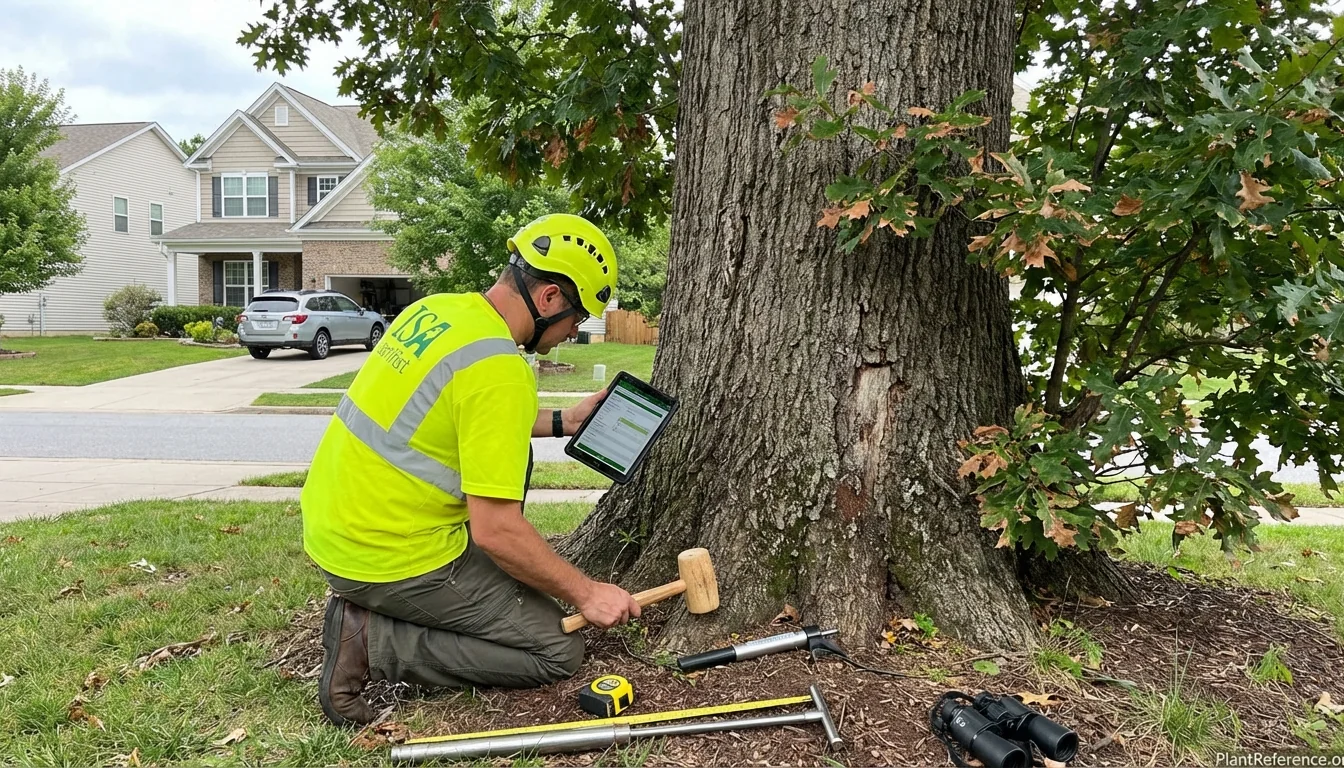
Level 2: Basic Assessment represents the most common evaluation type. Assessors conduct complete 360-degree ground-level inspections using standardized ISA Basic Tree Risk Assessment Forms. This comprehensive visual evaluation examines root zones, trunk structure, and crown condition without climbing or specialized equipment.
Level 3: Advanced Assessment involves detailed investigation using climbing, aerial lifts, or specialized diagnostic equipment. Reserved for trees where Level 2 assessment identifies specific concerns requiring further investigation, Level 3 evaluations use resistographs, sonic tomographs, or static pull testing to quantify internal conditions.
The key principle: always start with Level 1 screening, progress to Level 2 for comprehensive evaluation, and advance to Level 3 only when specific diagnostic questions remain unanswered. This tiered approach ensures cost-effective resource allocation while maintaining thorough risk evaluation.
Each level requires specific qualifications. Level 1 assessments need basic tree biology knowledge, Level 2 requires TRAQ qualification, and Level 3 demands advanced training in specialized equipment operation and data interpretation.
TRAQ 3.0 Updates: What Changed in 2025-2026
The fall 2025 launch of TRAQ 3.0 represents the most significant update since the program's inception. These changes affect every practicing tree risk assessor and impact how risk evaluations are conducted.
Extended Qualification Period: TRAQ terms increased from 5 to 7 years, recognizing the stability of fundamental risk assessment principles while reducing recertification frequency for qualified practitioners.
Elimination of Renewal Course: All TRAQ holders must now retake the complete 2-day course plus half-day field assessment. The previous renewal option was eliminated to ensure all practitioners maintain current knowledge of evolving assessment techniques.
Updated Manual and Forms: The Third Edition TRAQ manual incorporates five years of field experience feedback, biomechanical research advances, and clarifications on difficult assessment scenarios. New assessment forms streamline data collection while improving documentation consistency.
Enhanced Field Assessment: The practical evaluation component now emphasizes real-world problem-solving scenarios, requiring candidates to demonstrate proficiency with actual assessment challenges rather than theoretical knowledge alone.
Cost Structure: TRAQ qualification costs approximately $625 for ISA members, with non-member rates significantly higher. The investment reflects the comprehensive nature of current training and the professional liability benefits of standardized qualification.
These changes acknowledge tree risk assessment as a specialized professional skill requiring ongoing education and practical competency demonstration. The 7-year qualification period provides stability for qualified assessors while ensuring currency of knowledge through complete recertification.
Level 1 Assessment: Limited Visual Screening
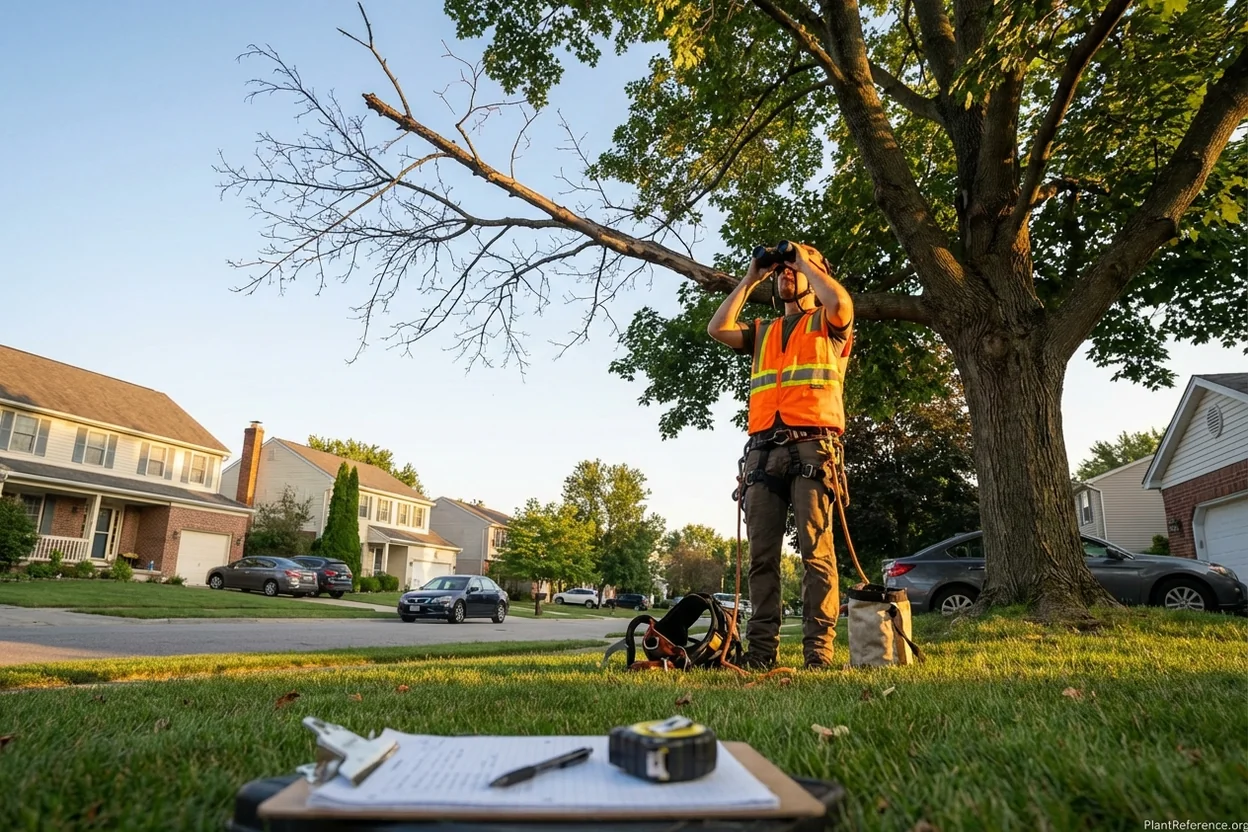
Level 1 assessment serves as the entry point for systematic risk evaluation, designed for rapid screening of large tree populations. This walk-by or drive-by inspection identifies obvious hazard conditions while efficiently processing hundreds of trees.
The assessment focuses on immediately apparent defects visible from normal vantage points. Assessors look for dead trees, significant lean changes, large dead branches, obvious trunk damage, and signs of recent failure. Level 1 evaluation does NOT attempt detailed diagnosis—its purpose is flagging trees requiring Level 2 investigation.
Time Investment: Experienced assessors complete Level 1 evaluation in 1-2 minutes per tree, making this approach viable for municipal street tree inventories spanning thousands of specimens.
Documentation Requirements: Basic record-keeping includes tree location, species identification, and flagged defects. Photographic documentation supports follow-up scheduling and provides baseline conditions for future comparison.
Qualification Standards: While formal TRAQ certification isn't required for Level 1 screening, assessors need sufficient tree biology knowledge to recognize obvious defect patterns. Many municipalities train urban forestry staff in Level 1 protocols while reserving TRAQ-qualified personnel for higher-level assessments.
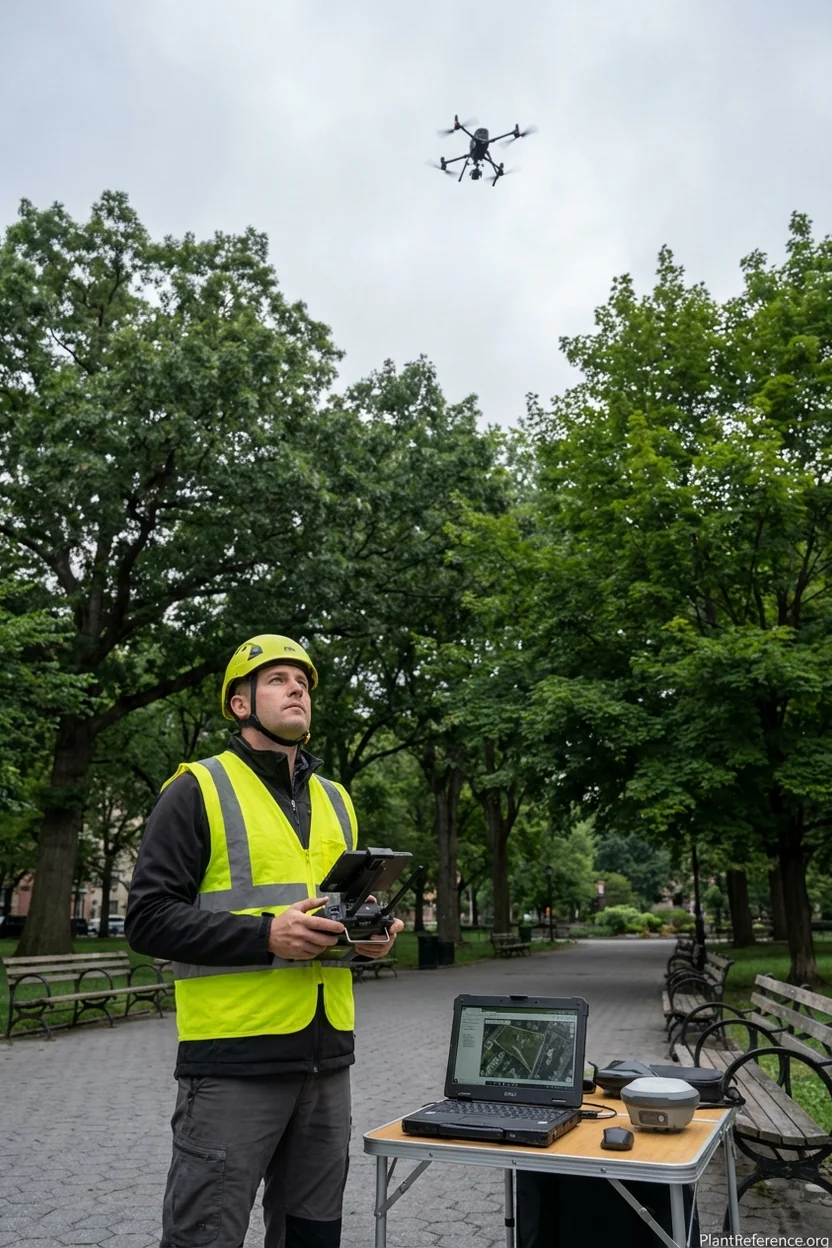
Technology Integration: Modern Level 1 programs utilize mobile data collection platforms and GPS tracking for efficient field documentation. Some municipalities employ drone-mounted cameras for initial canopy screening before ground-level evaluation.
Limitations: Level 1 assessment cannot determine specific risk ratings or provide detailed failure probability analysis. Trees flagged during Level 1 screening require Level 2 evaluation before making management decisions.
Level 2 Assessment: Basic Ground-Level Inspection
Level 2 assessment represents the core of professional tree risk evaluation, providing comprehensive ground-level inspection using standardized ISA protocols. This thorough evaluation examines all visible tree components while remaining accessible to most TRAQ-qualified practitioners.
The assessment follows systematic methodology examining three critical zones: root area, trunk structure, and crown condition. Assessors conduct complete 360-degree inspection, documenting observable defects and rating their significance using established criteria.
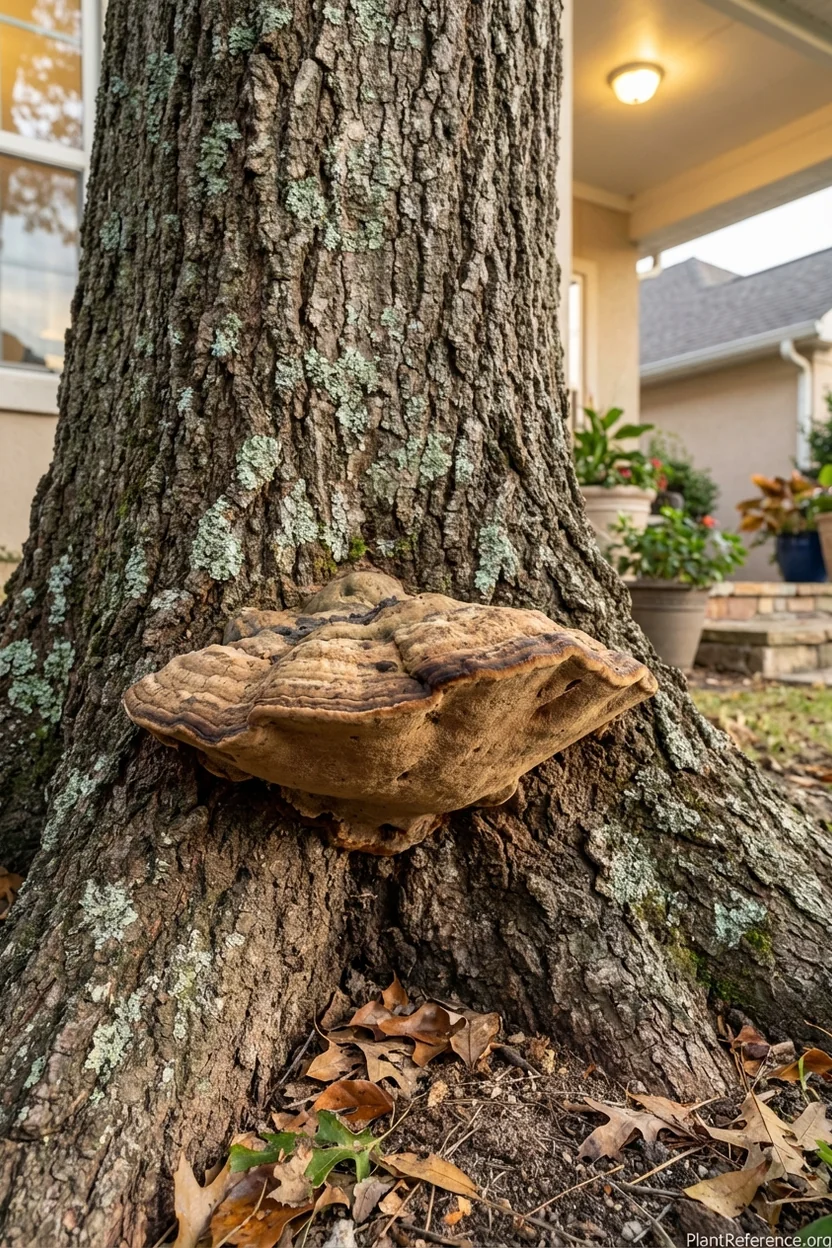
Root Zone Evaluation focuses on visible root flare, soil conditions, and evidence of root damage or decay. Common defects include girdling roots, construction damage, grade changes, and fungal fruiting bodies indicating root rot. The absence of visible root flare often signals buried root systems requiring further investigation.
Trunk Assessment examines bark condition, cavity formation, crack development, and signs of internal decay. Assessors use tactile evaluation (sounding with a mallet) to identify hollow sections and document external indicators of structural compromise.
Crown Inspection evaluates branch structure, foliage density, dead wood presence, and co-dominant stem formations. Binoculars enable detailed examination of upper crown conditions invisible from ground level.
Risk evaluation uses two assessment matrices provided in TRAQ materials. The first matrix evaluates failure probability based on observable defects, while the second incorporates target assessment and consequences to determine overall risk rating.
Assessment Duration: Thorough Level 2 evaluation typically requires 15-30 minutes per tree, depending on size and complexity. Documentation time adds 5-10 minutes for complete record-keeping.
Environmental Considerations: Weather conditions significantly impact assessment quality. Wet conditions improve sound transmission during mallet testing, while recent storms may reveal previously hidden defects through branch movement or failure.
Level 3 Assessment: Advanced Diagnostic Technology
Level 3 assessment addresses specific diagnostic questions arising from Level 2 evaluation through specialized equipment and advanced investigation techniques. This detailed analysis quantifies internal conditions impossible to evaluate through visual inspection alone.
Climbing and Aerial Access allows direct examination of upper crown conditions, branch attachment points, and decay pockets inaccessible from ground level. Certified climbers or bucket truck operators provide access while maintaining safety protocols outlined in ASC Z133-2026 standards.
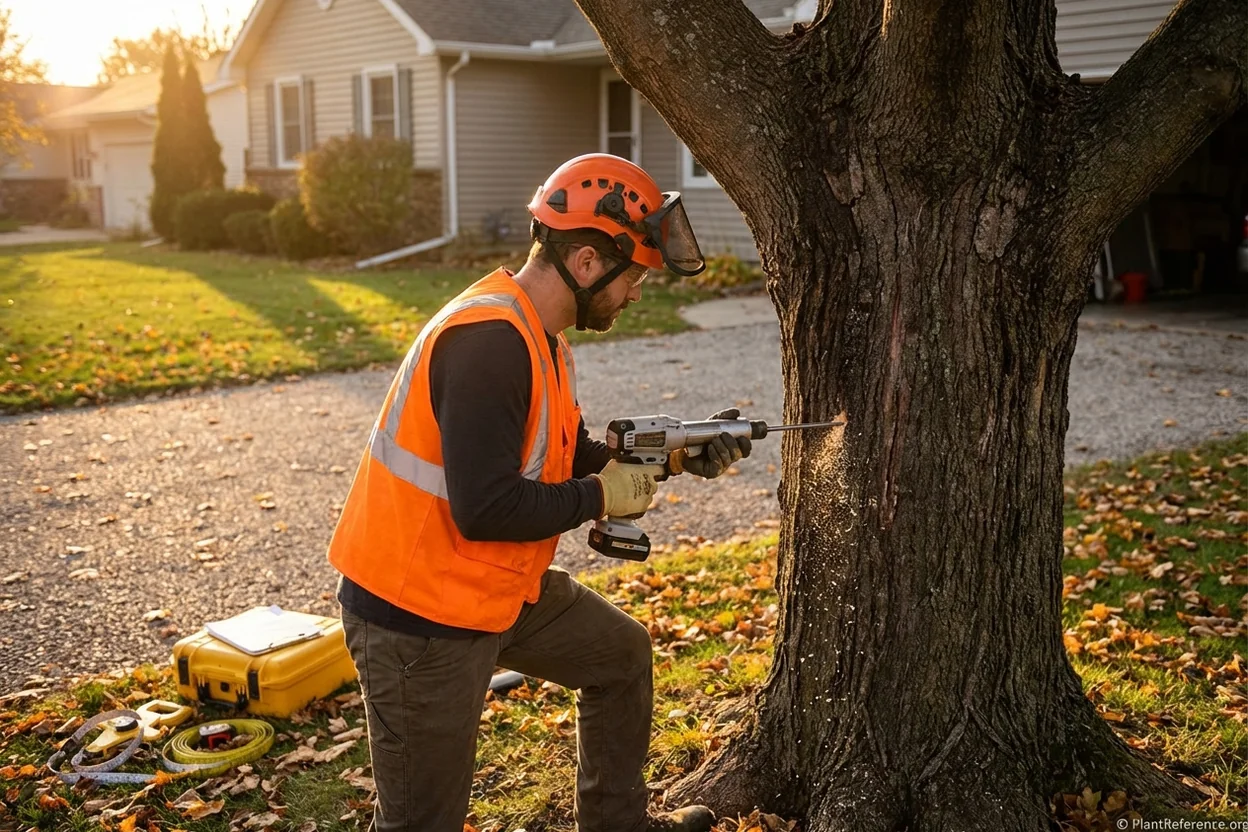
Resistograph Analysis uses 3mm micro-drills penetrating up to 500mm (19.7 inches) into wood, producing resistance profiles identifying decay location and extent. The drill resistance correlates directly with wood density, providing quantitative decay assessment. Equipment costs range from $3,000-6,000, making specialized training essential for proper operation.
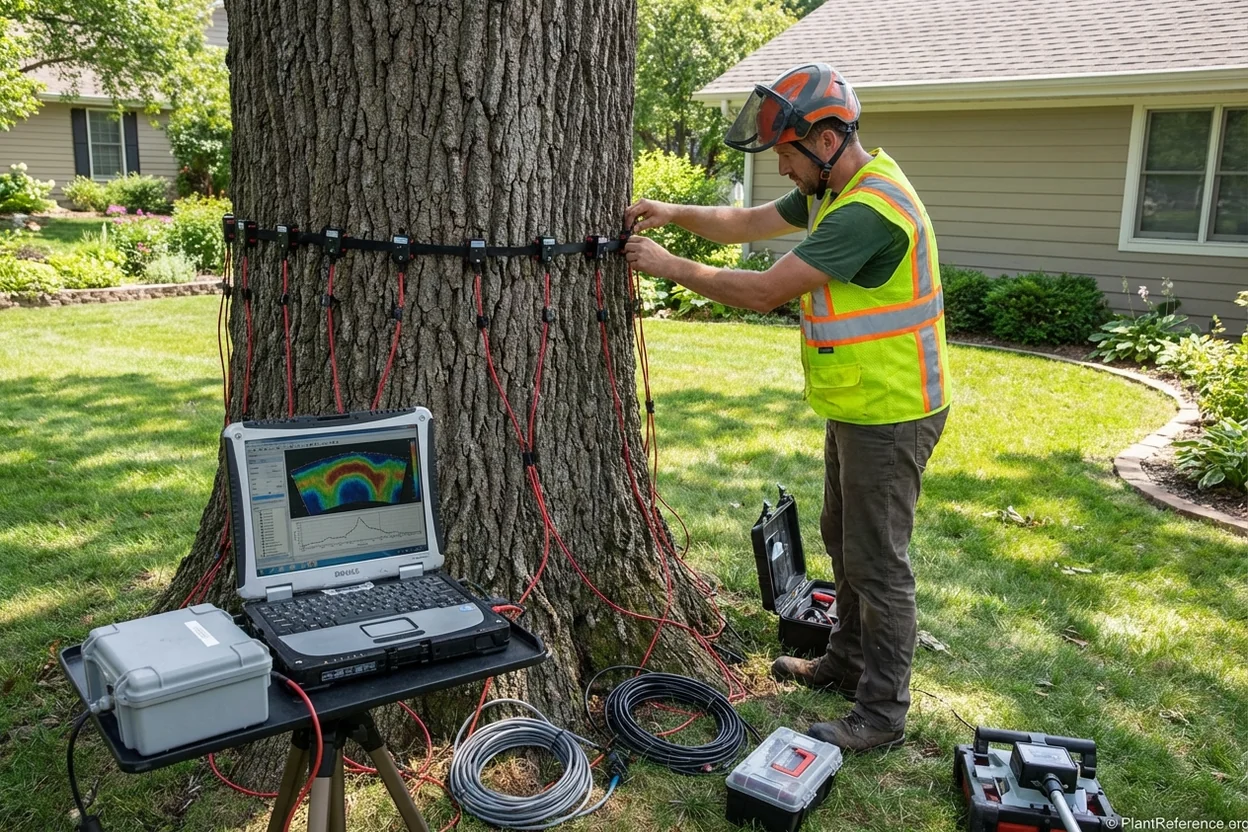
Sonic Tomography employs multiple sensors (typically 12-24) placed around trunk circumference to map internal wood condition. Systems like Arbotom and PiCUS 3 generate 2D and 3D cross-sectional images showing decay patterns, cavity formation, and remaining sound wood percentage. Professional-grade tomographs cost $8,000-15,000.
Research demonstrates strong correlation between resistograph and sonic tomograph results (R² = 0.764), validating both technologies for decay quantification. However, each method provides unique information—resistographs offer precise depth penetration while tomographs show complete cross-sectional patterns.
Static Pull Testing evaluates root system stability and overall tree structural response to dynamic loads. Controlled force application measures tree movement and calculates safety factors for various wind speeds. This biomechanical analysis proves particularly valuable for trees with questionable root stability following construction damage.
Risk Rating System: From Low to Extreme
The TRAQ risk rating system provides standardized terminology for communicating tree failure probability and management urgency. Understanding these categories enables property owners and managers to prioritize interventions and allocate resources effectively.
Low Risk represents trees with minimal failure likelihood or consequences. Structural defects may exist but pose minimal threat to targets. These trees typically require only routine monitoring and standard maintenance practices. Management actions focus on preserving tree health through appropriate pruning and cultural practices.
Moderate Risk indicates elevated failure potential or consequences requiring active management consideration. Trees in this category may have structural defects of concern but aren't immediately hazardous. Management options include structural pruning, cabling systems, target removal, or increased monitoring frequency.
High Risk designates trees with significant failure likelihood and potential for substantial consequences. These trees require prompt management action within the current growing season. Intervention options include major structural modifications, target restrictions, or removal if risk cannot be adequately reduced.
Extreme Risk represents imminent failure potential with severe consequences. These trees require immediate action—typically removal or emergency target restriction. Extreme risk ratings trigger urgent response protocols and cannot be deferred without accepting liability for predictable failure.
The rating system considers both likelihood assessment (improbable through imminent) and consequence evaluation (negligible through severe). A moderately defective tree overhanging a busy sidewalk may rate higher risk than a severely compromised tree in an isolated area.
Risk Tolerance varies significantly among property types and managers. Schools and hospitals typically accept only low-risk trees near buildings, while parks may tolerate moderate risk in less-utilized areas. Understanding acceptable risk levels guides appropriate assessment frequency and management responses.
Biomechanical Modeling and Failure Probability
Modern tree risk assessment increasingly incorporates biomechanical analysis to quantify structural performance under various loading conditions. This engineering approach provides objective failure probability estimates based on measurable physical properties rather than subjective visual assessment alone.
Wind Load Analysis calculates forces exerted on tree crowns during various wind speeds, considering canopy area, tree height, and species-specific drag coefficients. The analysis incorporates local wind history and extreme weather probability to estimate realistic loading scenarios.
Material Properties Testing determines wood strength characteristics through increment boring and laboratory analysis. Species-specific wood density, moisture content, and decay progression rates inform structural calculations and safety factor determination.
Safety Factor Calculation compares applied loads (wind forces) against material strength (wood properties) to determine structural adequacy. Safety factors below 1.5 typically indicate elevated failure risk, while factors above 3.0 suggest adequate structural reserves.
Computer Modeling Software like SIMALIVE and TreeCalc integrate multiple variables to predict failure probability under specified conditions. These programs incorporate tree geometry, material properties, and loading conditions to generate quantitative risk assessments.
The integration of biomechanical modeling with traditional visual assessment provides unprecedented accuracy in failure prediction. Research validates that combined approaches reduce assessment uncertainty by 30-40% compared to visual evaluation alone.
Dynamic Response Analysis considers tree movement characteristics during wind loading. Healthy trees exhibit controlled swaying patterns, while structurally compromised specimens show irregular movement suggesting internal damage or root instability.
When Do You Need a Professional Tree Risk Assessment?
Determining when to invest in professional tree risk assessment requires understanding triggering conditions and legal liability implications. Strategic assessment timing prevents emergency situations while optimizing resource allocation.
Obvious Warning Signs mandate immediate professional evaluation. These include recent storm damage with hanging branches, sudden lean development, large fungal growth at tree base, significant crown dieback exceeding 25%, construction damage to root zones, and co-dominant stems with included bark formations.
Property Transfer Situations often require tree risk documentation for insurance and liability purposes. Real estate transactions, commercial property sales, and estate planning frequently involve tree risk assessment to establish baseline conditions and identify potential liabilities.
Insurance Requirements increasingly mandate documented tree risk evaluation following storm damage claims. Many carriers now require professional assessment before approving coverage renewals for properties with mature trees near structures.
Legal Defensibility Needs arise when tree ownership disputes or liability questions emerge. TRAQ-qualified assessment provides legally defensible documentation of tree conditions and appropriate management recommendations.
Routine Preventive Programs benefit high-value properties and liability-sensitive organizations. Schools, hospitals, and municipal agencies typically schedule regular risk assessment cycles every 3-5 years for mature trees, with annual inspection for high-risk specimens.
Development and Construction Projects require pre-construction tree risk evaluation to identify preservation candidates and hazard trees. This assessment integrates with Tree Protection During Construction protocols and building permit requirements.
Assessment Frequency Guidelines vary by tree condition and risk tolerance. Low-risk trees may require assessment every 5-7 years, moderate-risk trees every 2-3 years, and high-risk trees annually or bi-annually.
Cost-Benefit Analysis supports assessment investment decisions. Professional evaluation typically costs $200-800 per tree depending on complexity, while emergency removal and property damage often exceed $5,000-20,000 per incident.
Advanced Technology: Sonic Tomography and Resistographs
Advanced diagnostic technology has revolutionized tree risk assessment capabilities, providing quantitative internal condition analysis previously impossible through visual inspection. Understanding these tools enables informed decisions about assessment scope and cost-benefit analysis.
Sonic Tomography Principles rely on sound wave transmission through wood to map internal structure. Sensors placed around trunk circumference emit and receive acoustic signals, with transmission speed varying based on wood density. Healthy wood transmits sound rapidly, while decayed areas show delayed or blocked transmission.
Resistograph Operation employs a thin steel needle drilling into wood while measuring resistance to penetration. The resulting graph displays wood density variations along the drill path, clearly identifying decay pockets, cavity boundaries, and remaining sound wood thickness.
Data Interpretation Requirements demand specialized training and experience. Raw tomography images require analysis to distinguish decay patterns from natural wood variation, while resistograph traces need correlation with species-specific wood properties and seasonal moisture fluctuations.
Equipment Costs and ROI vary significantly based on practice size and assessment frequency. Resistographs range $3,000-6,000, while sonic tomographs cost $8,000-15,000. Consulting arborists specializing in high-value tree assessment often achieve equipment payback within 2-3 years.
Accuracy and Limitations research demonstrates strong correlation between different diagnostic methods (R² = 0.764 for resistograph-tomograph comparison). However, each technology provides unique information—combining multiple approaches improves overall assessment accuracy.
Field Application Strategies focus advanced diagnostics on specific questions arising from Level 2 assessment. Random testing without clear diagnostic objectives wastes resources and provides limited value for risk management decisions.
CTLA Tree Valuation and Economic Impact
The Council of Tree & Landscape Appraisers (CTLA) methodology provides standardized approaches for determining monetary tree values, enabling cost-benefit analysis of risk management alternatives and supporting legal proceedings involving tree damage or removal.
Trunk Formula Method calculates basic tree value using trunk cross-sectional area multiplied by species-specific unit costs, then adjusted for location, condition, and functional factors. This approach works best for commonly planted landscape trees with established market values.
Replacement Cost Method determines the expense of installing comparable trees of the largest readily available size. This method proves most appropriate for recently planted or smaller specimen trees where replacement remains feasible.
Income Approach quantifies monetary benefits generated by trees, including energy savings, stormwater management, air quality improvement, and property value enhancement. Research shows mature urban trees provide $5.82 in benefits for every dollar invested in California markets.
Economic Impact of Tree Loss extends beyond replacement costs to include collateral damage, liability exposure, property value reduction, and loss of ecosystem services. A mature oak providing $200 annual benefits over 50 years represents $10,000 in net present value.
Risk Management Economics support investment in preventive care and assessment programs. Data shows every dollar spent on proactive tree risk management saves $3-7 in emergency response and damage costs.
The Land Expectation Value (LEV) formula assumes infinite planning horizons for municipal forest management programs, enabling long-term economic viability analysis of different management strategies.
Legal Defensibility and Documentation Requirements
Tree risk assessment documentation serves critical roles in liability protection, insurance claims, and legal proceedings. Understanding documentation standards and legal implications protects property owners while ensuring appropriate professional standards.
Standard of Care Requirements establish that property owners must exercise reasonable care in maintaining trees, particularly those with potential to cause harm. TRAQ-qualified assessment provides evidence of meeting professional standards and exercising due diligence.
Documentation Elements must include assessor qualifications, assessment methodology, specific observations, risk rating determinations, and management recommendations with implementation timelines. Photographic documentation supports written findings and provides baseline conditions for future reference.
Liability Implications vary significantly based on tree ownership, target exposure, and previous knowledge of defects. Property owners who receive risk assessment reports but fail to implement recommendations face increased liability exposure for predictable failures.
Insurance Considerations increasingly require documented risk assessment following storm damage or liability claims. Many carriers offer premium reductions for properties with regular professional tree risk evaluation and maintenance programs.
Municipal Applications require TRAQ documentation for budget justification, emergency response prioritization, and liability protection. Cities face significant legal exposure from tree failures on public property, making professional assessment programs essential risk management tools.
Expert Witness Standards in legal proceedings recognize TRAQ qualification as professional competency evidence. Courts increasingly rely on standardized assessment methodology rather than subjective opinion when evaluating tree-related liability cases.
Record Retention Requirements vary by jurisdiction but typically recommend maintaining assessment documentation for 5-10 years minimum. Digital record systems with GPS coordinates and photographic evidence provide superior long-term documentation compared to paper-based systems.
Municipal Risk Management and Budget Prioritization
Municipal tree risk management programs require systematic approaches to prioritize limited resources while protecting public safety and minimizing liability exposure. Effective programs integrate assessment data with budget planning and emergency response protocols.
Prioritization Matrices rank trees by risk level and target exposure to direct maintenance resources toward highest-priority interventions. High-risk trees near schools or hospitals receive immediate attention, while moderate-risk trees in low-traffic areas may be scheduled for routine maintenance cycles.
Budget Allocation Strategies typically dedicate 60-70% of resources to routine maintenance, 20-30% to risk mitigation, and 10-20% to emergency response reserves. This distribution prevents "crash diet" budget approaches that defer critical maintenance and increase long-term costs.
Emergency Response Planning requires pre-positioned contractor agreements and rapid deployment protocols for storm damage situations. The Storm Debris Calculator helps estimate equipment and personnel needs based on storm intensity and tree population characteristics.
Public Communication Programs educate residents about urban forest benefits and risk management activities. Transparent communication about tree removals and management decisions builds community support for urban forestry programs and reduces complaints about necessary interventions.
Inventory Integration combines risk assessment data with comprehensive tree inventories using platforms like TreePlotter INVENTORY and TreeKeeper systems. This integration enables sophisticated analysis of population-level risks and maintenance needs.
Performance Metrics track program effectiveness through failure rate reduction, emergency response costs, and public safety incidents. Successful programs typically achieve 40-60% reduction in storm-related tree failures through targeted risk mitigation.
AI and Drone Technology in Risk Assessment
Artificial intelligence and unmanned aerial systems are transforming tree risk assessment capabilities, enabling rapid evaluation of large tree populations while identifying conditions invisible from ground-level inspection.
AI-Powered Image Analysis processes aerial imagery to identify structural defects, crown dieback patterns, and failure indicators. Machine learning algorithms trained on thousands of tree failure examples can flag high-risk conditions with increasing accuracy approaching human expert levels.
Drone-Mounted LiDAR Systems like the DJI M350 RTK with Zenmuse L2 can map approximately 10,000 trees across 15 hectares in just 15 minutes, producing detailed canopy height models and individual tree crown detection data.
Multispectral Imaging reveals tree stress indicators invisible to standard photography. Near-infrared and thermal sensors detect early drought stress, disease onset, and physiological decline before visual symptoms appear.
The greehill Platform represents the current state-of-the-art in AI-driven tree assessment. Their vehicle-mounted mobile LiDAR systems with ultra-high-resolution panoramic imagery automatically extract species identification, diameter measurements, crown dimensions, condition ratings, and precise GPS locations.
Processing Capabilities enable scanning 8,000 trees per day compared to 150 trees by manual arborist evaluation. The AI automatically detects structural weaknesses, dieback patterns, lean angles, and health issues while generating comprehensive assessment reports.
TreeStructor Technology developed by Purdue and Kiel University uses AI-driven 3D forest reconstruction from remote sensing data. Their "dictionary method" compares point-cloud data against predefined geometric meshes representing tree components, achieving 6% better accuracy than previous methods.
Cost-Effectiveness Analysis shows AI-assisted assessment reduces evaluation costs by 60-80% for large tree populations while improving consistency and eliminating human assessment variability.
Common Tree Failure Warning Signs
Recognizing early warning signs of potential tree failure enables proactive management before emergencies develop. Understanding these indicators helps property owners determine when professional assessment becomes necessary.
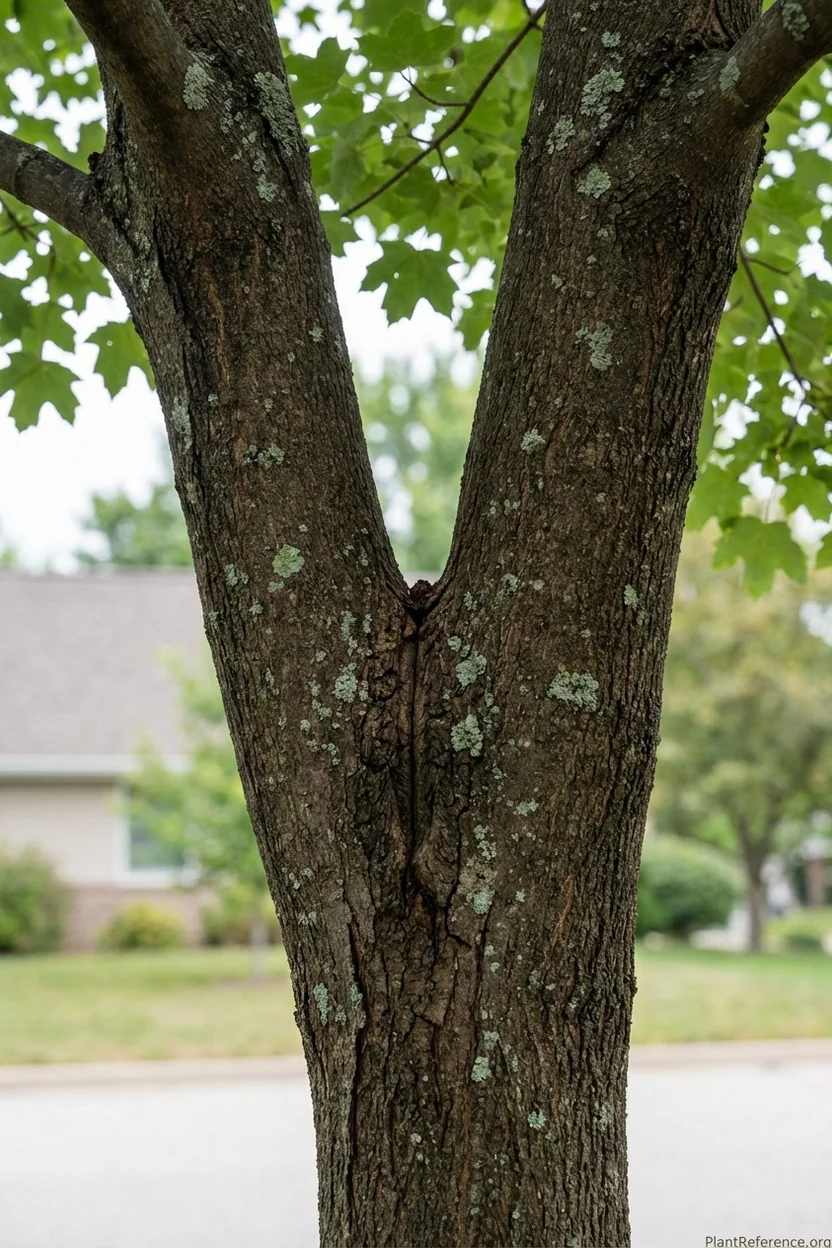
Co-dominant Stems with Included Bark represent one of the most common structural defects leading to failure. When two or more stems of similar size compete for dominance, bark becomes included between them rather than proper wood connection forming. This creates a fundamental weak point prone to splitting.
Large Dead Branches (Hangers) exceeding 4 inches (10 cm) in diameter pose immediate hazard potential. Dead wood loses structural integrity progressively, with failure timing unpredictable based on weather conditions, vibration, and continued decay progression.
Fungal Fruiting Bodies appearing at the root flare or trunk base indicate advanced internal decay. Mushrooms, conks, and bracket fungi represent reproductive structures of organisms already well-established within tree tissues.
Recent Lean Changes signal potential root system compromise or structural failure progression. Gradual lean development over years may be acceptable, but sudden changes indicate active instability requiring immediate professional evaluation.
Root Plate Heaving shows soil movement around tree base, often indicating root system failure or soil instability. This condition frequently develops following construction activity, drought stress, or saturated soil conditions.
Trunk Cracks and Splits extending through bark into wood suggest internal stress concentration and potential failure initiation points. Vertical cracks may indicate root problems, while horizontal cracks often signal structural overloading.
Crown Dieback Exceeding 25% indicates significant physiological stress that compromises tree structural integrity. Extensive dieback reduces photosynthetic capacity and energy available for wound response and defense mechanism maintenance.
Construction Damage to root zones frequently causes delayed tree failure months or years after initial disturbance. Root severance, soil compaction, and grade changes create cumulative stress leading to structural compromise.
Selecting a TRAQ-Qualified Assessor
Choosing appropriate professional expertise ensures reliable risk assessment while protecting against liability exposure from inadequate evaluation. Understanding qualification standards and selection criteria prevents costly mistakes and ensures defensible results.
ISA TRAQ Qualification Verification should be your first step. The ISA maintains online databases of current TRAQ-qualified assessors with expiration dates and contact information. Verify current status rather than relying on business cards or website claims.
Experience Level Considerations matter significantly for complex assessment scenarios. Newly qualified assessors may handle routine residential evaluations adequately, while complex urban trees or high-liability situations benefit from assessors with extensive field experience.
Advanced Certification Credentials like ISA Board Certified Master Arborist (BCMA) or American Society of Consulting Arborists Registered Consulting Arborist (RCA) indicate highest professional qualifications. Less than 2% of certified arborists achieve BCMA status.
Technology Capabilities vary among practitioners. Assessors equipped with sonic tomography, resistograph, or drone technology may provide more comprehensive evaluation for complex diagnostic questions, though basic Level 2 assessment often suffices for routine evaluations.
Insurance and Bonding Requirements protect clients from professional errors and omissions. Verify current liability coverage and ensure assessor carries professional indemnity insurance appropriate for assessment scope and property values.
Local Experience and Knowledge benefits assessment quality through familiarity with regional species, soil conditions, weather patterns, and municipal regulations. Assessors working regularly in your area understand local risk factors and management options.
Report Quality and Timeliness expectations should be established upfront. Professional reports typically require 3-5 business days for completion and should include specific management recommendations with implementation priorities.
Cost Structure Understanding helps avoid surprises. Basic Level 2 assessments typically cost $200-400 per tree, while Level 3 evaluations with advanced diagnostics may reach $800-1,500 depending on complexity and technology requirements.
Frequently Asked Questions

Reading about plants and recognising them are different skills. These three build the second.
- Daily PlantIdentify the day’s mystery plant from a close-up photograph.
- Keyed OutWork a dichotomous key, lead by lead, to name a hidden specimen.
- Name That PlantName a specimen from botanical clues dealt hardest first.
Free to play, no account needed
Derek is an arborist and tree care specialist based in Nashville. He spent a decade working for a commercial tree service before starting his own consulting practice focused on residential tree health. His background is in forest management, and he brings that perspective to urban tree care. He's particularly interested in the intersection of native trees and suburban landscapes, helping homeowners understand what's growing in their yards and how to care for it properly. Derek also teaches tree identification walks through local parks. He's straightforward about tree care: most homeowners either ignore their trees completely or prune them incorrectly, and both cost money in the long run.