Best Tree Assessment Tools: Resistographs, Tomographs, and Drones Compared
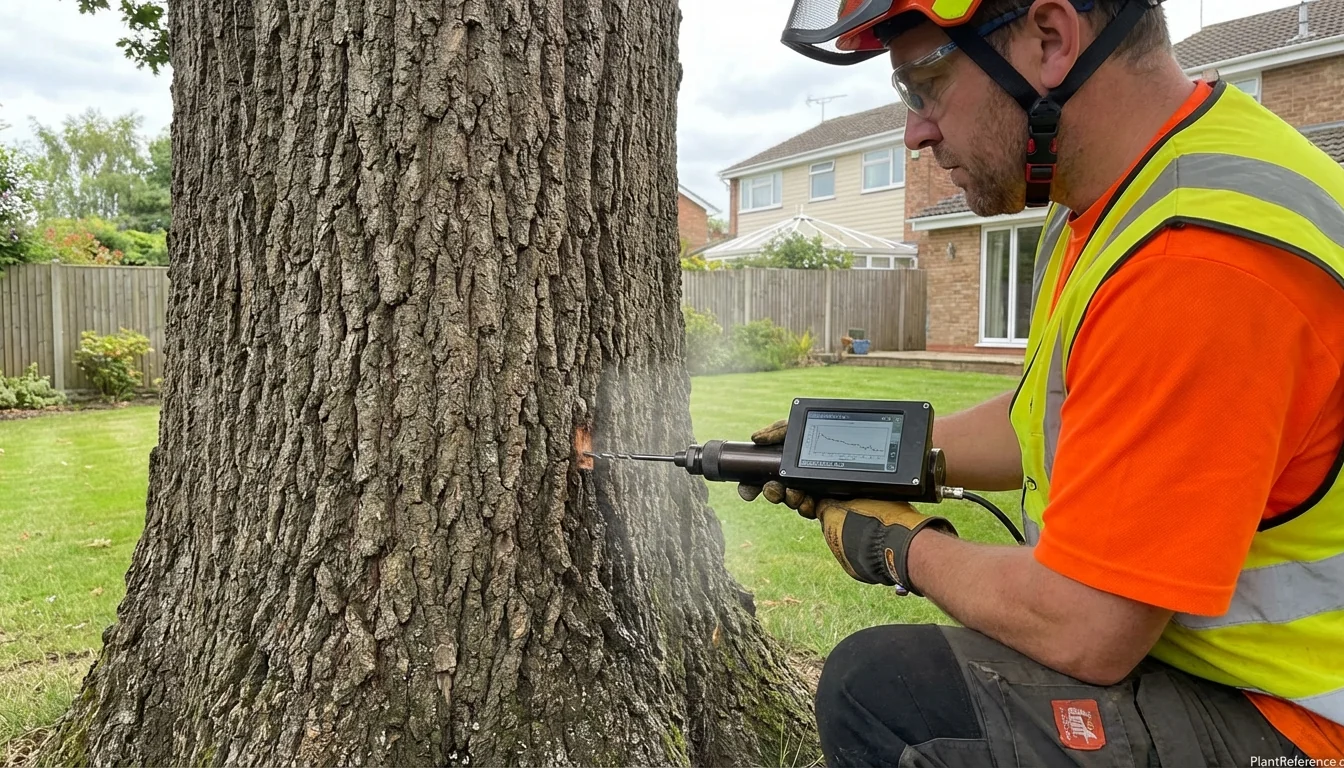
— Image © Plant Reference 2026
Tree assessment has split into two worlds. On one side, you've got instruments that tell you exactly what's happening inside a single tree—resistographs drilling through wood to map decay columns, sonic tomographs building cross-sectional images of internal condition. On the other, drone-mounted LiDAR systems that scan 10,000 trees in 15 minutes, building 3D digital twins of entire urban canopies. The tools you need depend entirely on whether you're answering "is this specific tree safe?" or "which of these 50,000 trees should I look at first?" Most serious operations need tools from both categories. Here's what's worth the investment in 2026. Tree Risk Assessment: TRAQ Methods, Levels, and What to Expect in 2026
Assessment Tool Comparison Matrix
Tool Category | Price Range | Best For | Accuracy | Training Needed | Speed |
|---|---|---|---|---|---|
Resistograph | $3,000-6,000 | Targeted decay detection | High (single axis) | Moderate | 5-10 min/tree |
Sonic Tomograph | $8,000-15,000 | Full internal imaging | Very high (cross-section) | Extensive | 20-45 min/tree |
Static Pull Test | $2,000-5,000 | Root stability assessment | High | Extensive | 30-60 min/tree |
Drone LiDAR | $15,000-50,000 | Large-scale canopy mapping | Moderate (external only) | FAA Part 107 + training | 10,000 trees/15 min |
Drone Multispectral | $5,000-20,000 | Health stress detection | Moderate | FAA Part 107 + analysis | Hundreds of trees/flight |
Basic tools (mallet, borer) | $50-500 | Initial screening | Low-moderate | Basic | 2-5 min/tree |
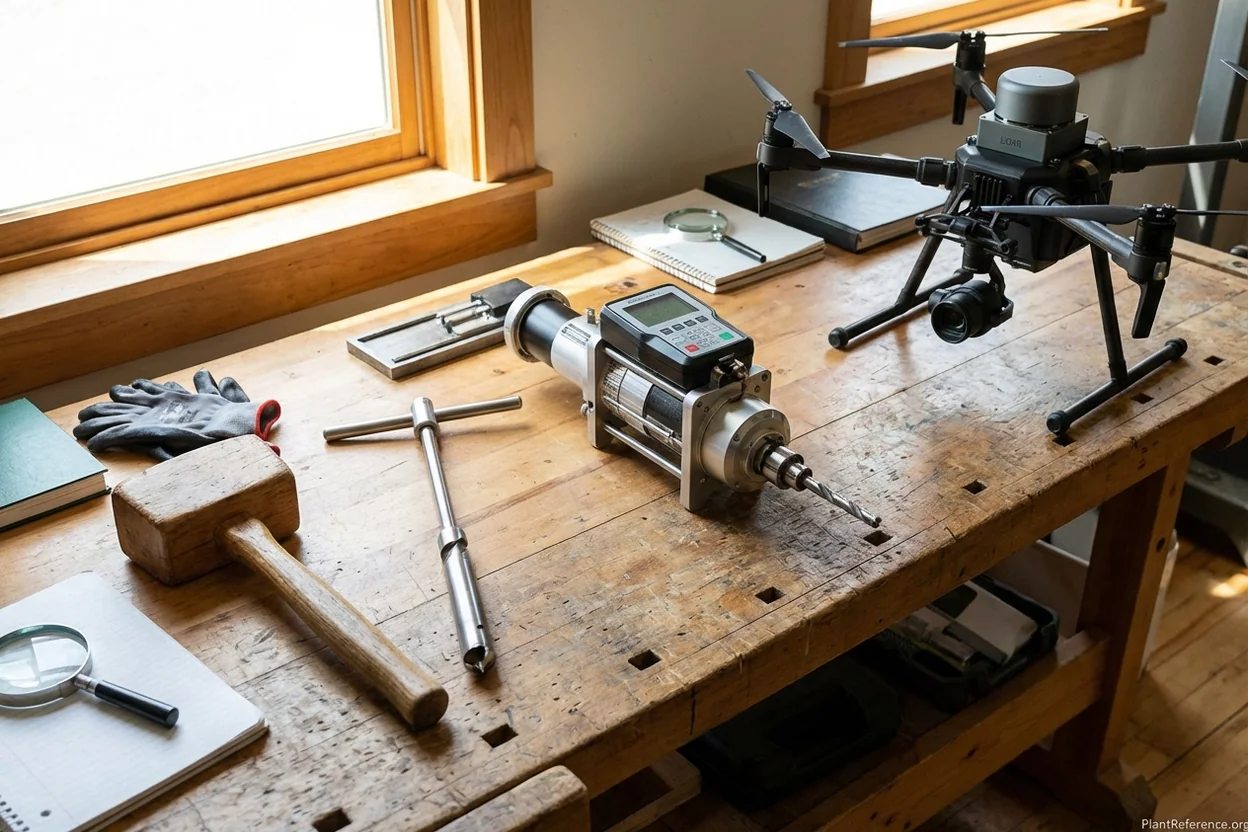
Micro-Drilling: Resistographs
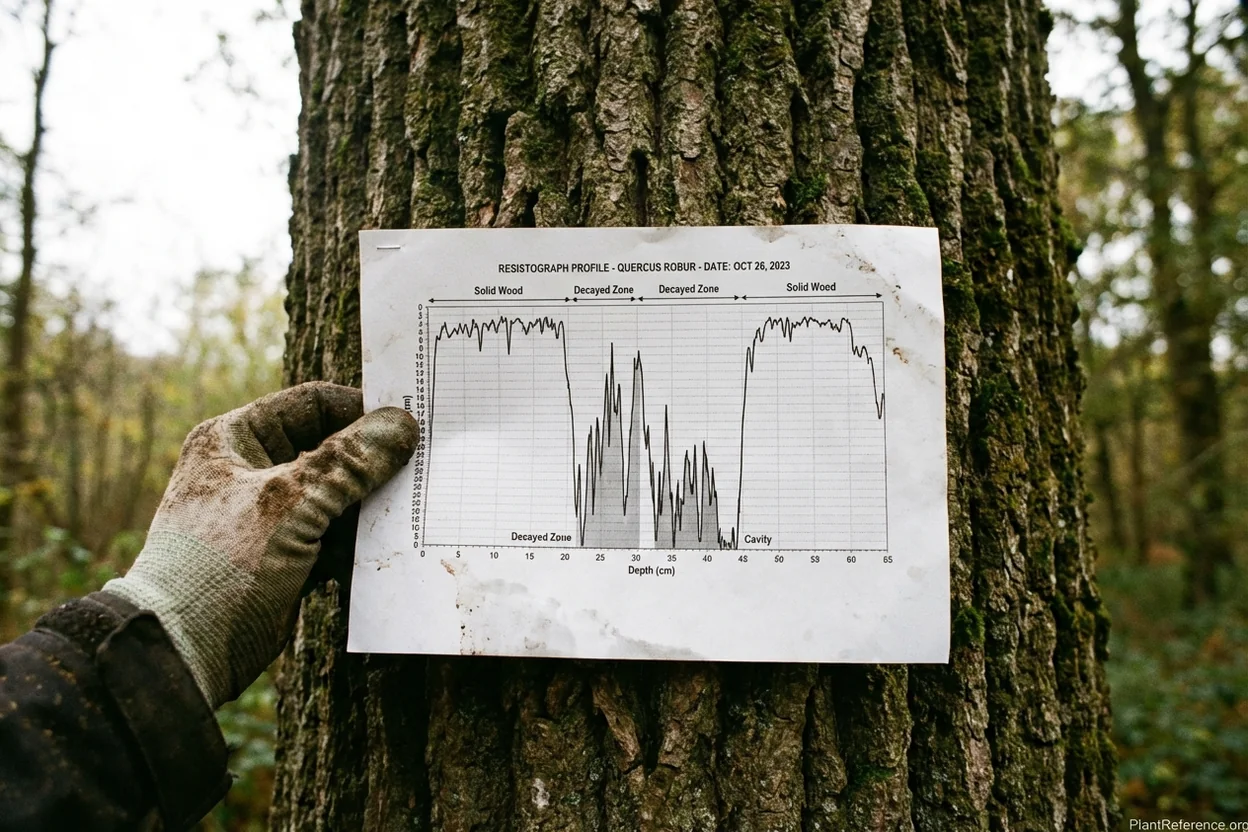
The resistograph is the tool I use most in my consulting practice. A 3mm micro-drill penetrates up to 500mm into the wood while measuring drilling resistance continuously. The output is a resistance profile—a line graph showing where wood is solid and where it's decayed or hollow. You can identify the exact location and extent of decay columns, cavity walls, and crack planes along the drilling axis. Is My Tree Dangerous? 10 Warning Signs Every Homeowner Should Know
At $3,000-6,000, a resistograph is the most cost-effective advanced assessment tool. The learning curve is moderate—interpreting resistance profiles takes practice, but most arborists with a background in wood biology can read the output reliably after 20-30 assessments. The limitation is that you're sampling along a single axis per drilling. To build a complete picture of internal condition, you need multiple drillings from different angles around the trunk, and even then you're interpolating between data points rather than seeing a full cross-section.
Where resistographs excel: confirming suspected decay in trees flagged during visual assessment, documenting internal condition for risk reports, and providing quantitative data that supports management recommendations. Where they fall short: assessing very large trees where 500mm penetration doesn't reach the center, and situations requiring full cross-sectional imaging.
Sonic and Electrical Tomography
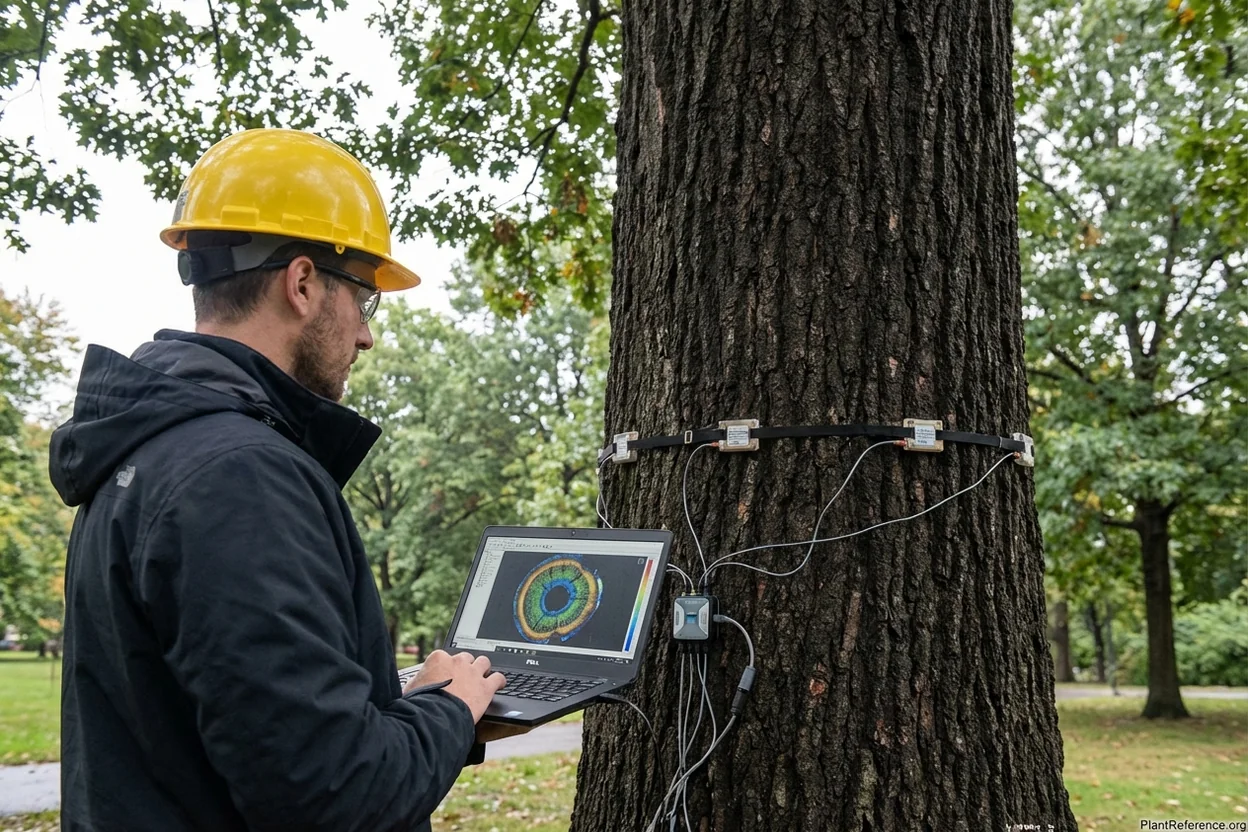
Sonic tomographs—the Arbotom and PiCUS 3 are the two dominant platforms—represent the gold standard for internal tree imaging. You attach 12-24 sensors around the trunk circumference, tap each sensor point, and the system measures sound wave travel time between all sensor pairs. Sound travels faster through solid wood and slower through decayed or hollow sections. The software builds a 2D or 3D cross-sectional image showing internal condition across the entire trunk section. How to Write a Tree Care Plan: The Complete 2026 Guide
The correlation between resistograph and tomograph results is strong (R² = 0.764 in published studies), but the tomograph gives you something the resistograph cannot: a complete cross-sectional view without drilling. This matters for high-value heritage trees where clients resist even 3mm drill holes, and for trees where the decay pattern is complex enough that point sampling would miss critical features.
At $8,000-15,000, sonic tomography is a significant investment. The training requirement is substantial—interpreting tomographic images requires understanding of wood anatomy, decay patterns, and the specific artifacts each platform produces. Budget 3-5 days of manufacturer training plus 50+ supervised assessments before relying on results independently.
The PiCUS 3 adds electrical resistivity measurement alongside sonic data, improving accuracy in wet wood conditions where sonic-only systems can produce misleading results. If you're assessing trees in humid climates where wet decay is common, the dual-measurement capability justifies the higher price point. ANSI A300 Tree Care Standards: What Every Arborist Needs to Know in 2026
Static Pull Testing
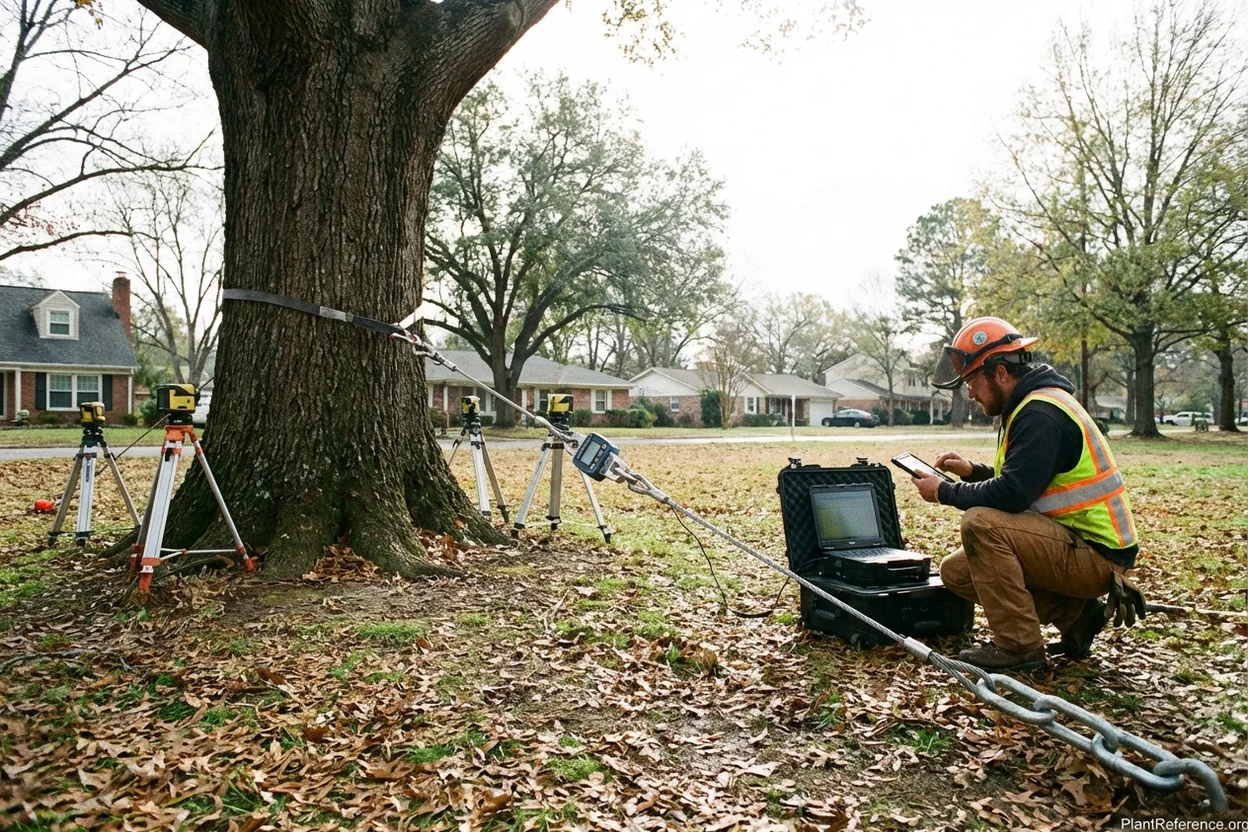
Static pull testing evaluates what tomography and resistography cannot: the structural response of the whole tree to dynamic loads. A cable attached to the trunk or major branch applies a controlled horizontal load while sensors measure trunk deflection and root plate movement. The data feeds into biomechanical models that calculate the tree's safety factor against wind loading. Prescriptive Pruning: The PPQ Model for Structural Tree Care
At $2,000-5,000 for equipment, static pull testing fills a specific niche: trees where the concern is root stability rather than trunk decay. A tree with a perfect trunk and compromised root system will pass resistograph and tomograph assessment but fail under the next windstorm. Pull testing catches this scenario.
The training requirement is the highest of any tool on this list. Setting up the test correctly, choosing the right load application point, and interpreting the biomechanical model output requires solid understanding of tree mechanics. This is specialist territory—most consultants who offer pull testing have engineering backgrounds alongside their arborist credentials.
Drone and LiDAR Systems
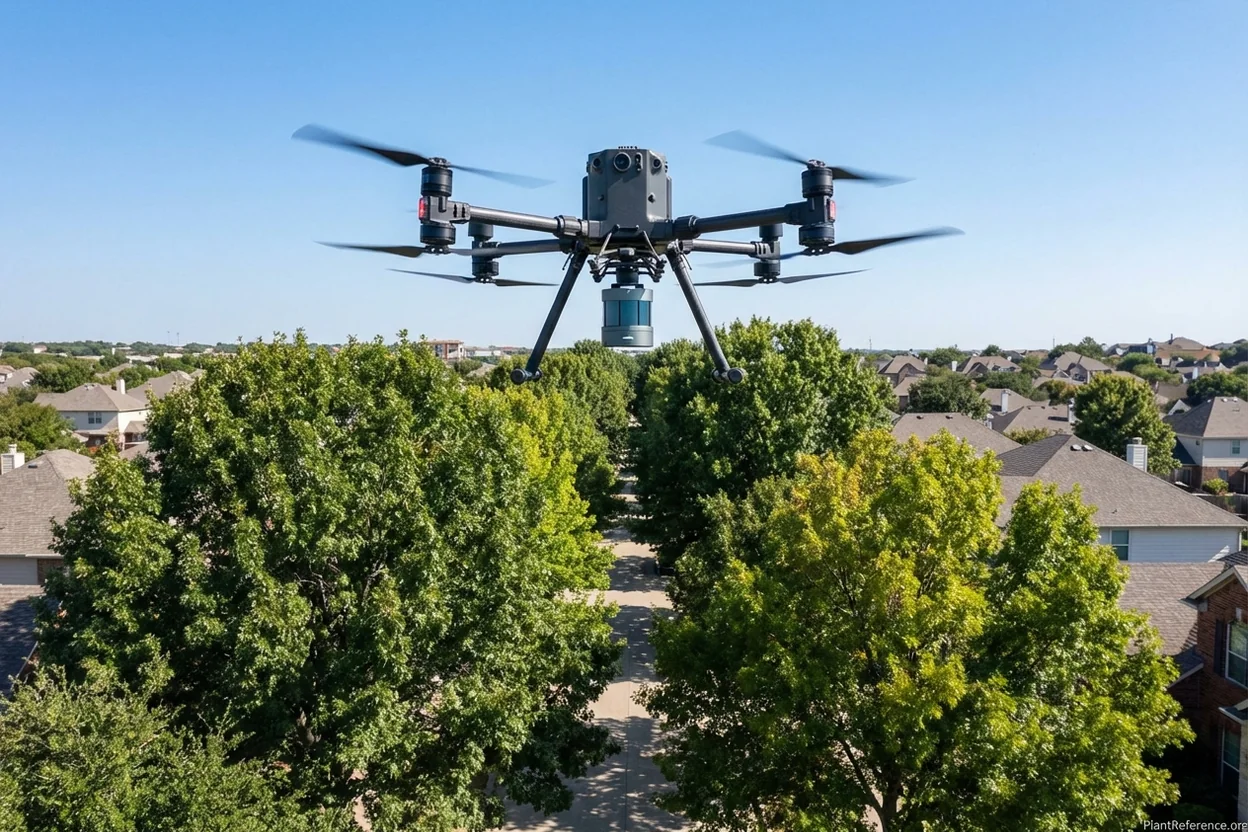
Drones have fundamentally changed large-scale tree assessment. The DJI M350 RTK equipped with a Zenmuse L2 LiDAR sensor maps approximately 10,000 trees across 15 hectares in a single 15-minute flight, producing canopy height models and individual tree crown detection. That's a scale of assessment impossible by any ground-based method. Urban Forest Management Technology: AI, LiDAR, and Digital Tools for 2026
The vehicle-mounted mobile LiDAR approach—greehill is the leading platform—takes this further. Their system deploys vehicle-mounted LiDAR and ultra-high-resolution panoramic imagery to create centimeter-accurate 3D digital twins. AI automatically extracts species, diameter, crown height, canopy volume, condition, and location. The system detects structural weaknesses, dieback, lean angles, and health issues across 8,000 trees per day. Over 70 cities adopted greehill in 2024, reporting more than 80% improvement in safety outcomes and up to 30% maintenance cost savings.
Multispectral and thermal drone cameras add another layer. Multispectral imaging detects chlorophyll stress, water deficit, and early disease symptoms before they're visible to the naked eye. Thermal cameras identify areas of different metabolic activity within canopies. These tools don't replace hands-on assessment of individual trees—they tell you which trees to assess next.
The investment ranges from $5,000-20,000 for multispectral setups to $15,000-50,000+ for LiDAR-equipped systems. FAA Part 107 certification is mandatory for commercial drone operations. Budget an additional 40-80 hours for data analysis training. Choosing Climate-Ready Trees: Species Selection for 2050 and Beyond
Basic Field Assessment Tools
Not every assessment needs a $15,000 instrument. The basic toolkit that every working arborist carries handles the majority of routine assessments.
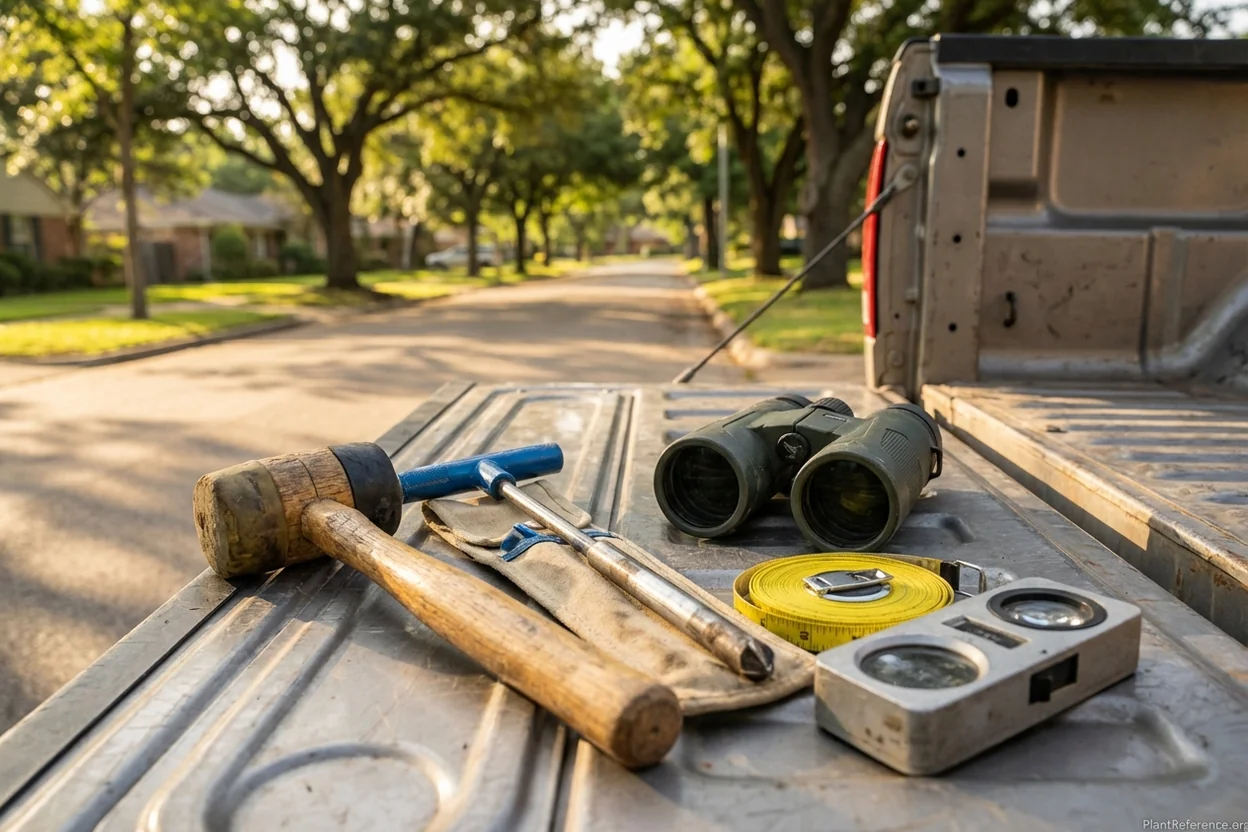
A sounding mallet ($20-50) remains effective for initial screening. Tapping the trunk produces a sharp ring in solid wood and a dull thud over decay cavities. It won't tell you the extent of decay, but it tells you where to focus further investigation. An increment borer ($200-500) extracts a thin core sample showing wood condition, growth ring patterns, and decay boundaries—essentially a manual resistograph producing a physical sample.
Quality binoculars ($100-400) let you assess upper crown condition from the ground—dead branches, codominant stem unions, decay indicators, and canopy density—without climbing. A diameter tape ($15-30) and clinometer ($50-200) provide basic mensuration data. How Much Soil Do Urban Trees Actually Need? The Root Volume Guide
The smart approach is a tiered system: screen with basic tools, confirm with a resistograph, and bring in the tomograph or pull test only when risk and tree value justify the cost.
Frequently Asked Questions

Reading about plants and recognising them are different skills. These three build the second.
- Daily PlantIdentify the day’s mystery plant from a close-up photograph.
- Keyed OutWork a dichotomous key, lead by lead, to name a hidden specimen.
- Name That PlantName a specimen from botanical clues dealt hardest first.
Free to play, no account needed
Aisha manages a small tropical nursery on the east side of Houston, specializing in plants that can handle the Gulf Coast's humidity, heat, and unpredictable flooding. She studied horticulture in college and worked at a wholesale grower before opening her own operation. Growing up, her parents kept a kitchen garden with okra, bitter gourd, and curry leaf plants—a tradition she's continued. Houston's subtropical climate lets her grow things most of the country can't, but it also means dealing with fungal issues, standing water, and summers where it's too hot for even tomatoes. Aisha writes about tropical and subtropical plant care, humidity management, and working with heavy clay soils.