How to Write a Tree Care Plan: The Complete 2026 Guide
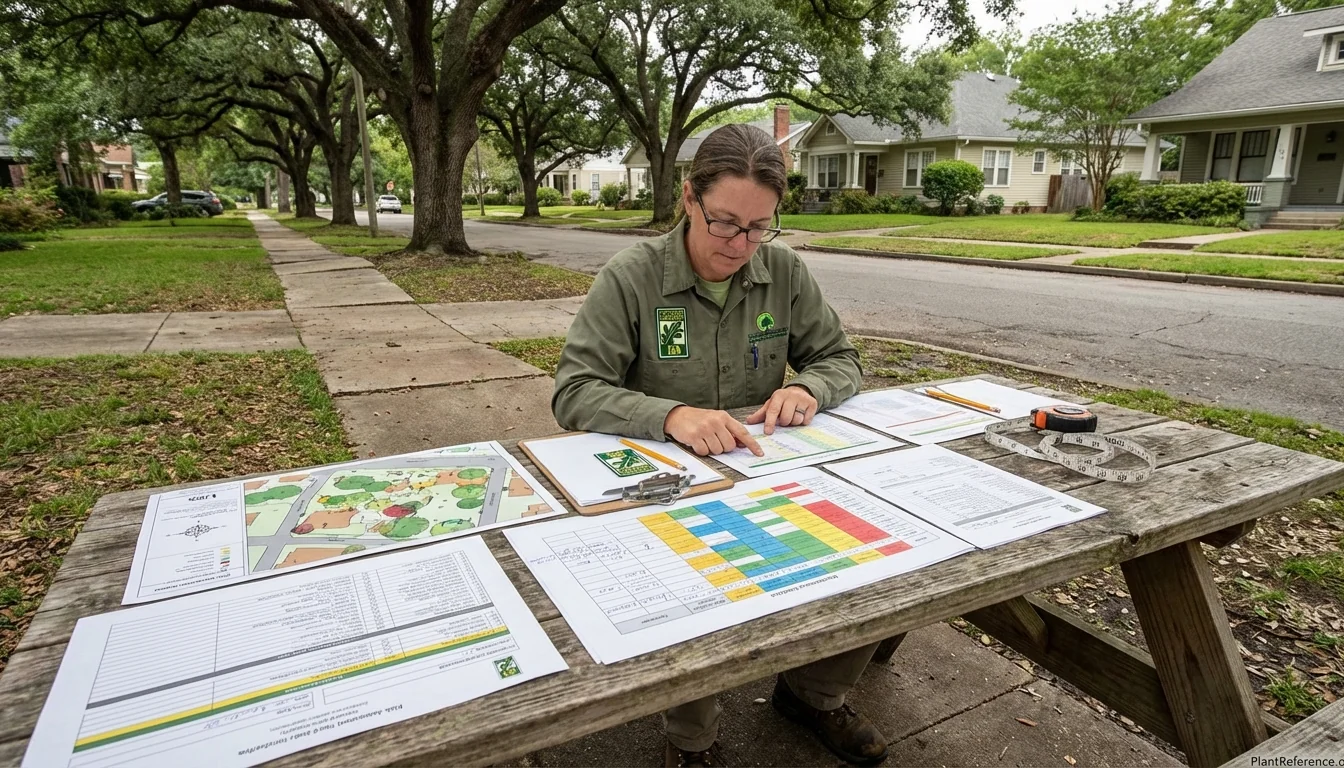
— Image © Plant Reference 2026
Creating an effective tree care plan has evolved dramatically since 2024, when ANSI A300 consolidated all ten separate standards into one comprehensive document. Whether you're managing municipal street trees, university campuses, or commercial properties, a well-structured tree care plan transforms reactive maintenance into proactive asset management that reduces long-term costs and liability risks.
What Is a Tree Care Plan and Why Do You Need One?
A tree care plan is a comprehensive management document that systematically addresses every aspect of tree stewardship on your property. Unlike simple maintenance contracts, professional tree care plans integrate inventory data, species-specific care protocols, risk mitigation strategies, and long-term financial planning into a cohesive framework that guides decision-making for 5-20 years.
The shift toward formal planning accelerated after multiple high-profile liability cases where courts referenced ANSI A300 standards as the definitive measure of professional care. ANSI A300 is recognized as the final authority in US civil courts for determining arboricultural negligence, making compliance essential for property managers and municipal foresters.
Modern tree care plans serve three critical functions: liability protection through documented professional standards, cost optimization via preventive maintenance scheduling, and asset preservation through species-appropriate care protocols.
Legal Foundation: ANSI A300 Compliance and Standards
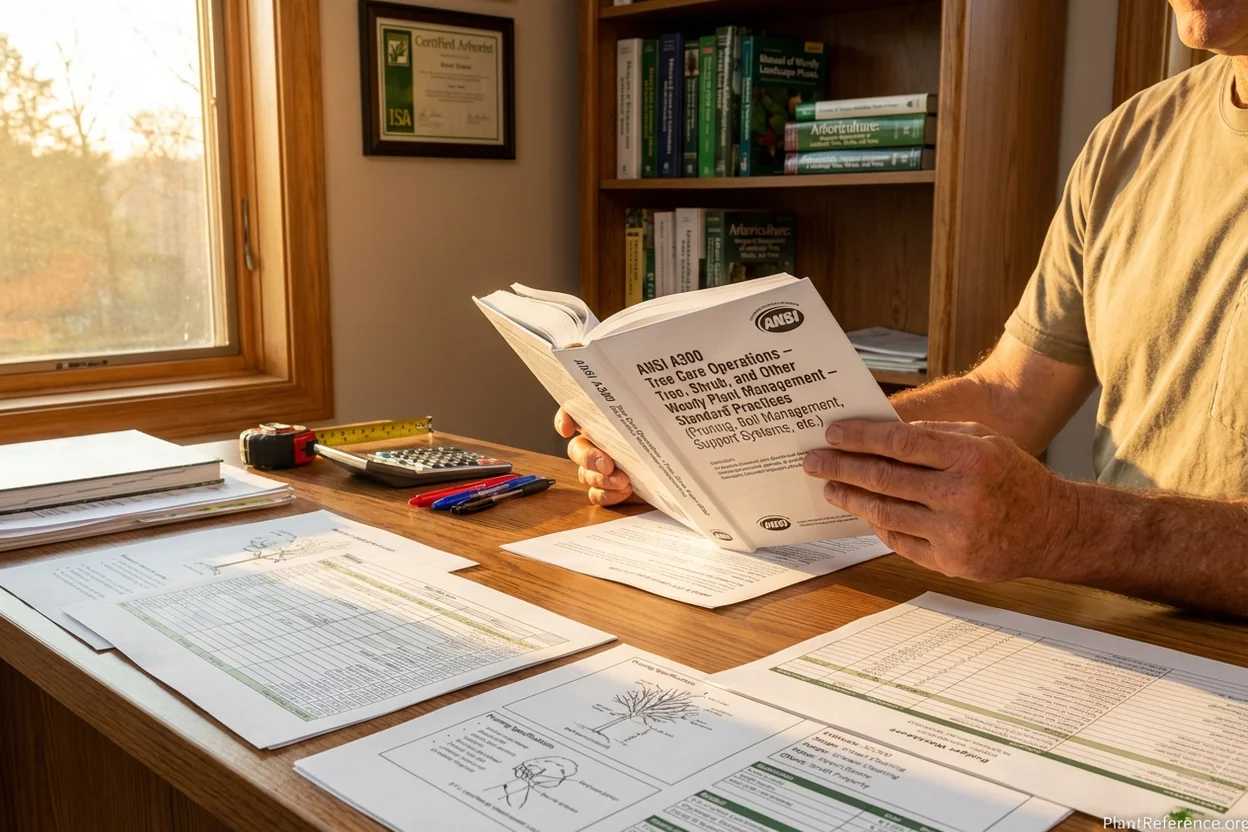
The January 1, 2024 consolidation of ANSI A300 into a single 14-clause document fundamentally changed how professionals write tree care specifications. Previous versions spread requirements across ten separate publications on different review cycles, creating conflicts and confusion. The consolidated standard eliminates these issues while ensuring practitioners always reference current requirements.
Key ANSI A300 clauses that directly impact tree care plan development:
Clause 1: Pruning specifications based on objective structural goals rather than generic trimming
Clause 4: Water management integrating IoT sensor data and soil moisture monitoring
Clause 6: Soil management covering fertilization schedules and organic matter amendments
Clause 10: Plant Health Care (PHC) emphasizing Integrated Pest Management over chemical treatments
Clause 12: Root management standards for uncompacted soil volumes and root protection zones
Clause 13: Tree risk assessment requiring qualified arborist evaluation using ISA TRAQ protocols
Your tree care plan must reference these specific clauses in maintenance specifications to ensure legal defensibility. Generic language like "trim as needed" no longer meets professional standards.
Step 1: Establishing Purpose and Authority
Every professional tree care plan begins with a clear purpose statement defining the scope, objectives, and legal authority for tree management decisions. This section establishes who has authorization to approve work, budget limitations, and performance standards that contractors must meet.
Effective purpose statements address five core elements: management objectives (safety, aesthetics, environmental benefits), geographic scope (property boundaries, right-of-way responsibilities), decision-making authority (who approves removals, emergency work, budget changes), performance standards (ANSI A300 compliance, ISA certification requirements), and review cycles (annual plan updates, contractor performance evaluations).
For municipal programs, the purpose statement should reference the Tree Advisory Committee or similar governing body that provides oversight and public input on major decisions. Private property plans typically designate the property manager or facilities director as the primary authority, with specific dollar thresholds requiring board approval.
Include liability protection language specifying that all tree work must be performed by ISA Certified Arborists following ANSI A300 standards. This establishes the professional standard of care expected and protects against substandard work that could create future liability.
Step 2: Conducting a Professional Tree Inventory
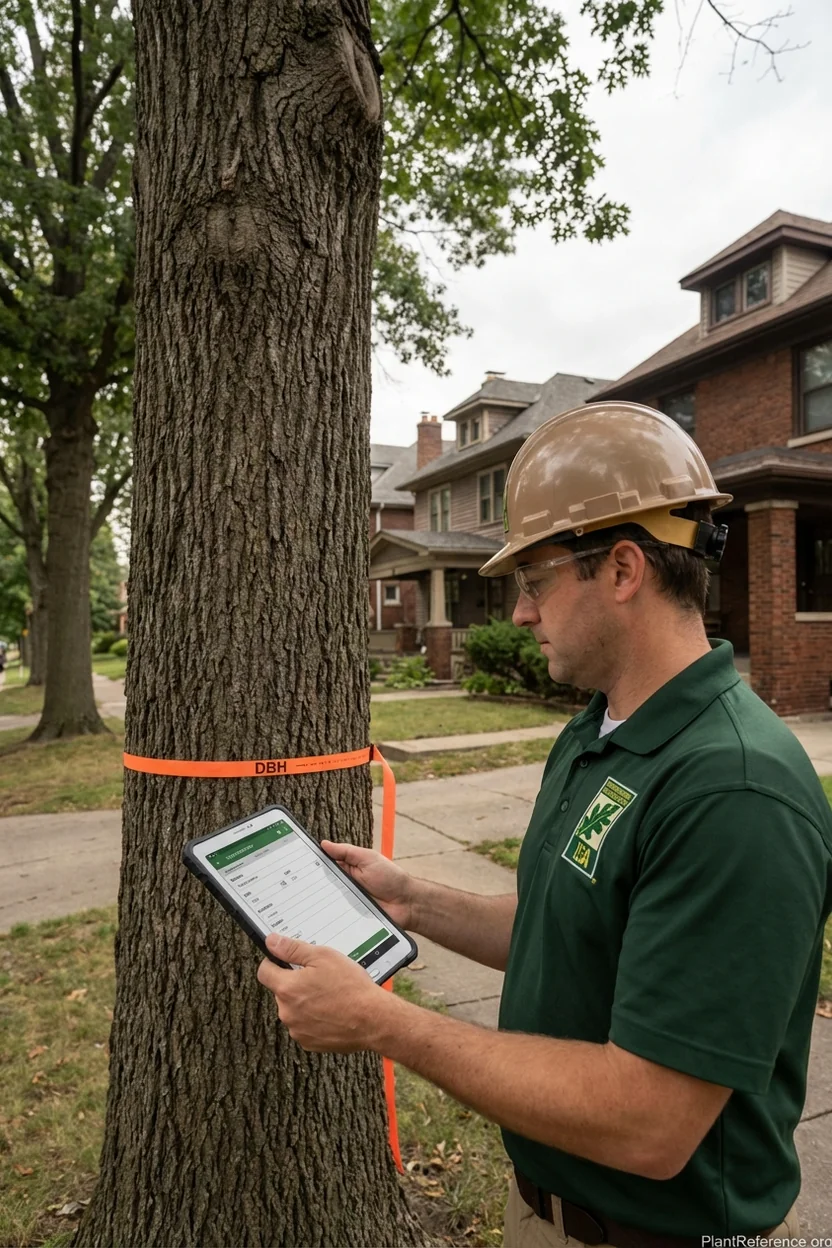
Modern tree inventories go far beyond simply counting trees. Professional inventories collect GPS coordinates, species identification with full botanical names, diameter at breast height (DBH) measurements, structural condition assessments, maintenance priorities, and estimated useful life expectancy for each tree.
The most efficient approach utilizes digital inventory platforms that eliminate paper forms and integrate directly with GIS mapping systems. TreePlotter INVENTORY by PlanIT Geo ($3,500+/year) leads the municipal market with cloud-based data collection, automatic CTLA tree valuation, and TRAQ risk assessment integration.
Essential data fields for every tree:
Species identification using Genus species format for botanical accuracy
DBH measurement in inches (diameter at 4.5 feet above ground)
GPS coordinates with sub-meter accuracy for future relocating
Condition rating (Excellent, Good, Fair, Poor, Dead/Dying)
Maintenance priority (Immediate, High, Moderate, Low, Routine)
Structural defects (co-dominant stems, included bark, cavities, lean)
Clearance needs (building, utility, pedestrian, vehicular)
Estimated useful life expectancy in years
Quality control requires that all species identifications be verified by an ISA Certified Arborist, as misidentification leads to inappropriate care prescriptions that can damage or kill trees.
Step 3: Canopy Analysis and Species Assessment
Canopy analysis reveals the ecological health and sustainability of your tree population through species diversity evaluation, age structure assessment, and ecosystem services quantification. This analysis drives species selection for replacement plantings and identifies potential risks from over-reliance on vulnerable species.
Apply the 10-20-30 diversity rule: no single species should exceed 10% of the total population, no genus should exceed 20%, and no family should exceed 30%. This standard prevents catastrophic losses from species-specific pests like Emerald Ash Borer or diseases affecting entire genera.
Analyze your current species distribution using the inventory data to identify over-represented species that create vulnerability. Many urban areas discovered dangerous over-reliance on ash species (often 20-40% of the canopy) only after Emerald Ash Borer arrived, requiring massive removal programs costing millions of dollars.
Age structure assessment examines the distribution of young, mature, and over-mature trees. Healthy urban forests show roughly 40% young trees, 40% mature trees, and 20% over-mature specimens. Populations skewed toward over-mature trees indicate insufficient replacement planting and predict expensive removal costs in coming decades.
Climate resilience analysis compares your species list against projected 2050-2070 climate conditions. Research shows that two-thirds of urban tree species globally face risks from changing temperature and precipitation patterns. Modern tree care plans prioritize climate-adapted species that thrive in conditions 500 miles south of your current location.
Step 4: Developing Maintenance Specifications
Maintenance specifications form the technical heart of your tree care plan, translating inventory data into actionable work prescriptions that contractors can implement consistently. The shift from generic "trimming" to prescriptive pruning based on Dr. Ed Gilman's research represents the most significant advancement in urban arboriculture practice.
Prescriptive pruning distinguishes between Prescriber and Producer roles. The Prescriber (ISA Certified Arborist with advanced training) develops site-specific structural goals for each tree based on species characteristics, site constraints, and long-term objectives. The Producer (qualified crew leader) implements the prescription using refined pruning cuts that promote rapid wound closure.
Modern pruning specifications must include:
Pruning type (crown cleaning, raising, reduction, thinning, or structural training)
Measurable objectives ("remove all dead branches greater than 2 inches diameter")
Priority levels (immediate safety hazards vs routine maintenance)
Seasonal timing windows (dormant season for most deciduous species)
Biological limits (maximum 25% live tissue removal in single year)
Clearance requirements (8 feet above sidewalks, 14 feet above streets)
Follow-up inspection schedules (6 months post-pruning for large removals)
Fertilization protocols should reference soil testing results rather than applying blanket treatments. Most urban soils suffer from compaction and poor drainage rather than nutrient deficiency, making soil aeration more beneficial than fertilizer application.
Tree Size (DBH) | Pruning Cycle | Priority Level | Biological Limit |
|---|---|---|---|
0-6 inches | Annual structural training | High (young tree development) | 50% maximum removal |
6-12 inches | Every 3-4 years | Moderate (establishment) | 25% maximum removal |
12-24 inches | Every 5-7 years | Routine (maintenance) | 15% maximum removal |
24+ inches | Every 7-10 years | Conservative (preservation) | 10% maximum removal |
Plant Health Care (PHC) specifications should emphasize Integrated Pest Management (IPM) approaches that monitor pest populations and apply treatments only when economic or aesthetic thresholds are exceeded. The indiscriminate spraying programs of previous decades have been replaced by targeted, pollinator-friendly approaches that preserve beneficial insects.
Step 5: Risk Assessment Integration
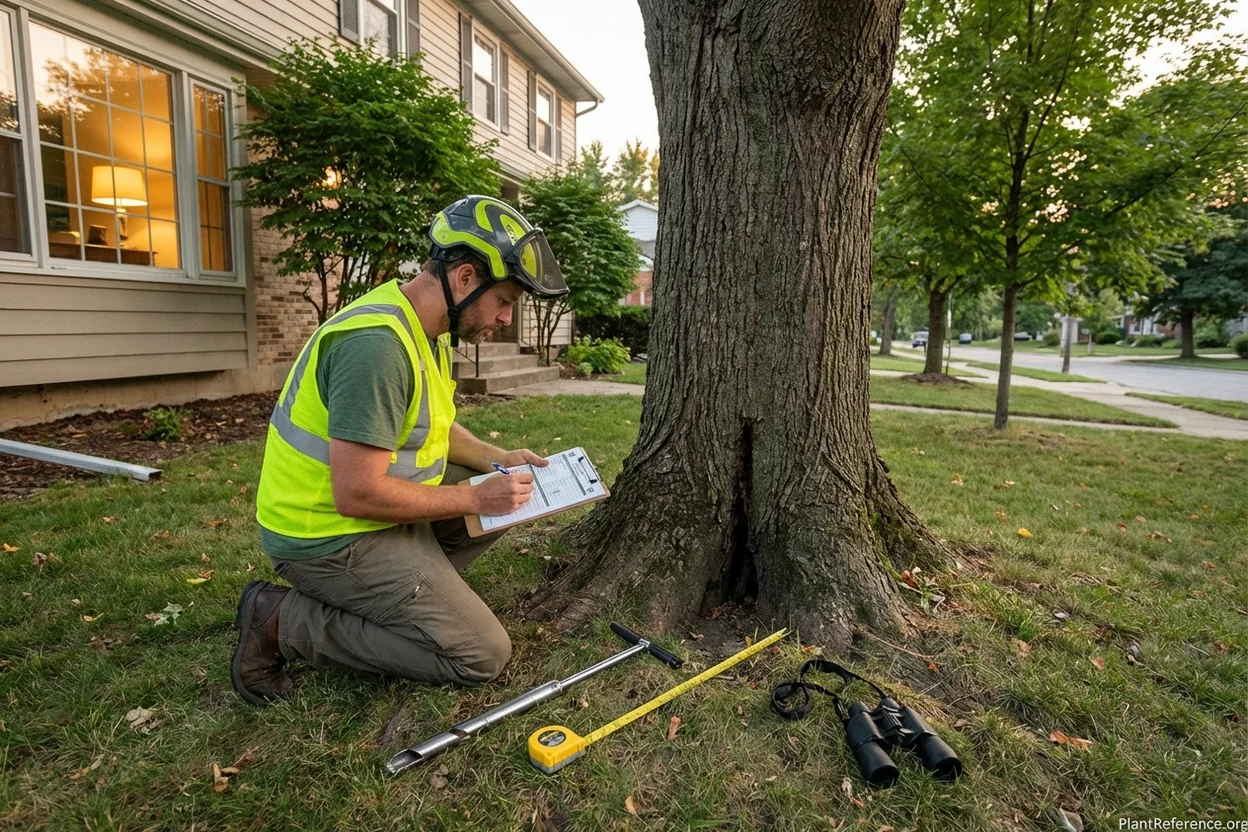
Tree risk assessment provides the scientific foundation for prioritizing maintenance investments and protecting against liability claims. The ISA Tree Risk Assessment Qualification (TRAQ) methodology offers three assessment levels designed for different scenarios and expertise requirements.
Level 1 (Limited Visual Assessment) serves as a screening tool for large tree populations, typically conducted during drive-by or walk-by surveys. This level identifies trees requiring more detailed evaluation but cannot determine specific risk levels or management recommendations.
Level 2 (Basic Assessment) provides the standard evaluation for most urban forestry applications. This 360-degree ground-level inspection uses the ISA Basic Tree Risk Assessment Form to evaluate crown condition, trunk integrity, and root zone stability through standardized risk matrices.
Level 3 (Advanced Assessment) employs specialized equipment like sonic tomographs, resistographs, and aerial inspection platforms when Level 2 evaluation indicates potential structural problems but cannot definitively determine the extent of defects.
The 2025 update to TRAQ 3.0 extended qualification terms from 5 to 7 years while eliminating the renewal course option. All current holders must retake the complete 2-day course plus field assessment (approximately $625 for ISA members) to maintain qualification.
Risk assessment results guide budget allocation by categorizing trees into four management categories:
Low Risk: Routine maintenance following standard pruning cycles
Moderate Risk: Accelerated maintenance or monitoring every 6-12 months
High Risk: Immediate corrective action or advanced assessment required
Extreme Risk: Emergency removal or severe restriction of target use
Step 6: Budget and Timeline Development
Effective tree care plans require realistic budget projections based on actual tree populations, local labor rates, and lifecycle costing principles that account for long-term replacement needs. Municipal programs typically budget $50-200 per tree annually for comprehensive management, while commercial properties often spend $75-300 per tree depending on species complexity and site constraints.
Lifecycle costing analysis reveals that removal costs at the end of a tree's 40-year lifespan can represent up to 60% of total annual expenses, creating clear incentives for maintenance programs that extend useful life. "Crash-diet" budgeting that defers critical maintenance inevitably leads to higher long-term costs through emergency removals and liability claims.
Budget categories should align with maintenance specifications:
Routine Maintenance (40-50% of annual budget): Scheduled pruning cycles, fertilization, mulching
Corrective Actions (20-30%): Risk mitigation, structural repairs, pest management
Emergency Response (10-15%): Storm damage cleanup, hazardous tree removal
Replacement Planting (15-25%): New installations, failed tree replacement, diversity improvement
Professional Services (5-10%): Consulting arborist fees, advanced diagnostics, plan updates
Implementation timelines typically span 5-20 years with annual review cycles that adjust priorities based on changing conditions. Successful plans establish clear milestones for completion of high-priority work while maintaining flexibility for emergency situations that can consume significant budget resources.
Consider establishing a Tree Replacement Fund that accumulates $100-300 per mature tree over its lifespan to cover eventual removal and replacement costs. This approach spreads major expenses over multiple budget cycles rather than creating sudden financial impacts when large trees reach the end of their useful life.
Step 7: Protection and Preservation Policies
Tree protection policies establish specific protocols for preventing damage during construction activities, utility work, and routine property maintenance. These policies must balance tree preservation goals with practical development needs while ensuring compliance with local tree protection ordinances.
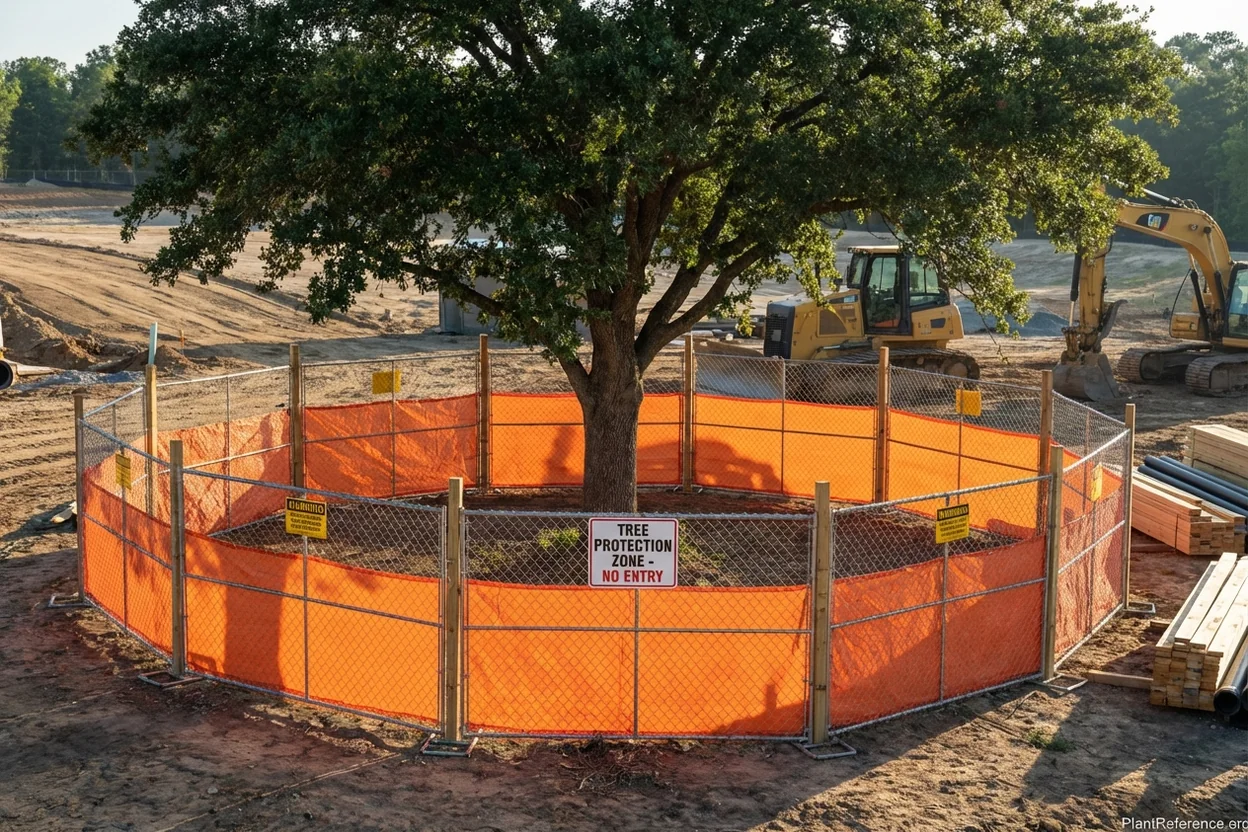
Tree Protection Zone (TPZ) calculation provides the mathematical foundation for construction restrictions. The standard formula requires 1 foot of radius per inch of trunk diameter measured at breast height, with a minimum TPZ of 8 feet (2.4 m) for any tree regardless of size.
Tree protection fencing must be installed at the TPZ boundary before any construction equipment enters the site. Chain-link fencing with bright fabric provides maximum visibility and durability, while plastic construction fencing tears easily and creates false confidence in protection levels.
Soil compaction prevention requires restricting vehicle traffic, material storage, and concrete washout within the TPZ. When work within the TPZ cannot be avoided, use techniques like pneumatic soil excavation (air-spading) for utility trenching, lightweight equipment with low ground pressure, and temporary roadway systems that distribute load over larger areas.
Root damage protocols specify when professional consultation is required. Any root cutting within the TPZ requires approval from an ISA Certified Arborist who can evaluate the impact on tree stability and prescribe mitigation measures like cable support systems or crown reduction to balance the root loss.
→ Silva Cell Suspended Pavement System ($45-65 per cubic foot) - Provides 1,000+ cubic feet of uncompacted soil under pavement
Modular plastic frame system allowing tree root growth under sidewalks and parking areas. Each unit provides 97% soil volume while supporting 115,000 pounds loading. Eliminates traditional conflict between pavement integrity and tree health. Proven in thousands of installations worldwide including Seattle, Portland, and New York streetscape projects. Reduces long-term pavement replacement costs while extending tree lifespan significantly.
Product link unavailable
Step 8: Emergency Response Planning
Emergency response procedures ensure rapid, coordinated action when storms, high winds, or other events create widespread tree hazards. Effective emergency plans pre-position resources, establish clear communication protocols, and prioritize public safety while minimizing long-term tree losses.
Pre-event preparation includes identifying high-risk trees through risk assessment surveys, pre-qualifying emergency contractors with verified insurance and ISA certifications, and establishing debris processing sites with adequate capacity for large-volume events.
Priority response matrix guides resource allocation during emergency situations:
Priority 1: Life safety hazards blocking emergency vehicle access
Priority 2: Trees blocking major transportation corridors
Priority 3: Utility line clearance for power restoration
Priority 4: Damaged trees threatening buildings or infrastructure
Priority 5: Cleanup of debris not creating immediate hazards
Communication protocols should establish a single point of contact for emergency contractors and define approval authority for expenditures exceeding normal budget thresholds. Many organizations pre-approve emergency spending up to $50,000 per event without requiring board or council approval to ensure rapid response capability.
Post-event documentation requirements include photographic evidence of damage, contractor time sheets, equipment usage logs, and disposal receipts for potential FEMA reimbursement applications. Maintain separate accounting codes for emergency response to track actual costs and improve future budget planning.
Step 9: Community Engagement and Implementation
Successful tree care plans require community understanding and support, particularly for municipal programs funded through taxpayer resources. Effective engagement strategies educate residents about urban forest benefits while building support for ongoing investment in professional tree management.
Public education components should quantify ecosystem services using tools like i-Tree Eco to calculate carbon storage, stormwater management, air quality improvement, and energy savings provided by the urban forest. These economic benefits often exceed program costs by ratios of 3:1 to 5:1, providing compelling justification for continued investment.
Community partnership opportunities include:
Volunteer tree planting programs with professional site preparation and species selection
Adopt-a-tree programs where residents provide supplemental watering for young trees
Neighborhood tree inventory projects using standardized forms and training
Educational workshops on proper tree care and when to contact professionals
Tree advocacy groups that support budget requests and ordinance development
Implementation success depends on clear assignment of responsibilities between professional staff, contractors, and community volunteers. Professional arborists should handle all risk assessment, pruning specification development, and hazardous tree evaluation, while volunteers can assist with data collection, young tree care, and public outreach activities.
Regular progress reporting through newsletters, websites, and public presentations maintains community engagement while demonstrating accountability for public investment in urban forest management.
Digital Tools for Modern Tree Care Plans
Technology platforms have revolutionized tree care plan development and implementation, replacing paper-based systems with integrated digital workflows that improve accuracy, reduce costs, and enable real-time monitoring of tree populations.
TreePlotter INVENTORY by PlanIT Geo represents the gold standard for municipal tree management, with cloud-based GIS integration, automatic CTLA tree valuation, and TRAQ risk assessment modules. At $3,500+ annually, the platform serves over 1,000 municipalities with comprehensive urban forest management capabilities.
ArboStar introduces artificial intelligence through their Real Arborist Intelligence (RAI) system featuring 10 specialized AI assistants. The RAI Estimator reduces proposal errors by 40% while RAI Scheduler optimizes crew routing based on equipment requirements, traffic patterns, and job priority. Administrative staff report saving approximately 9 hours weekly through automated workflows.
LiDAR technology enables rapid assessment of large tree populations with centimeter-accurate measurements. The greehill platform deploys vehicle-mounted mobile LiDAR systems that scan 8,000 trees per day compared to 150 trees through manual inventory methods, while automatically detecting species, diameter, height, and structural defects.
IoT sensors provide continuous monitoring of tree health parameters including soil moisture levels, tilt measurements for structural stability, and dendrometer readings for growth rate assessment. TreeTalker sensors quantify ecosystem services in real-time, measuring transpiration rates, carbon sequestration, and temperature reduction effects.
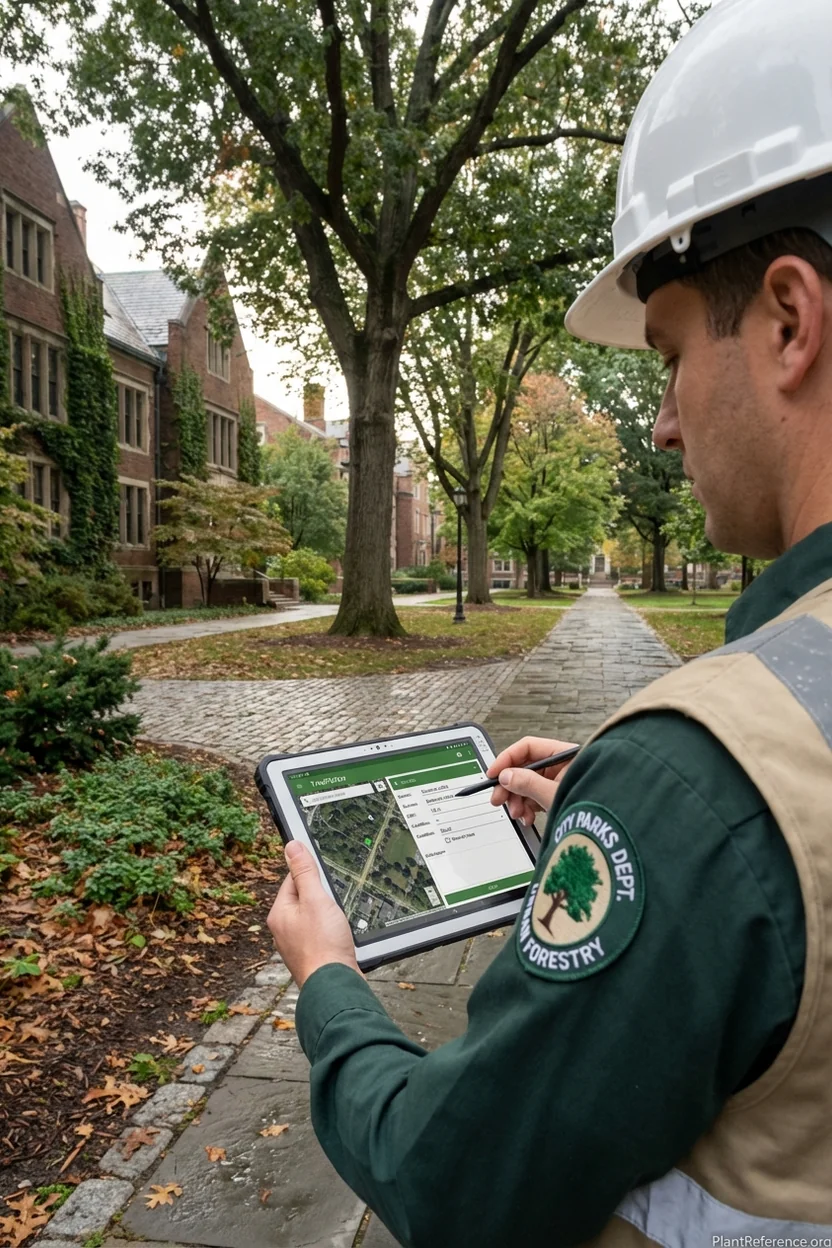
The integration of these digital tools creates comprehensive "digital twins" of urban forests that enable predictive maintenance scheduling, budget optimization, and evidence-based decision making that was impossible with traditional paper-based management systems.
Modern tree care plans leverage these technological capabilities while maintaining focus on fundamental arboricultural principles established through decades of research. The combination of digital efficiency with scientific rigor produces management systems that protect public safety, optimize financial resources, and ensure long-term urban forest sustainability.
Understanding that trees represent living infrastructure requiring specialized expertise, the most successful tree care plans establish clear lines of responsibility between property owners, professional arborists, and technology platforms. This collaborative approach ensures that trees receive appropriate care while property managers maintain the documentation necessary for liability protection and regulatory compliance.
Professional tree care planning has evolved from simple maintenance scheduling into comprehensive asset management that integrates ecological science, digital technology, and financial planning. Whether managing a small commercial property or a municipal forest of thousands of trees, following these systematic approaches produces measurable improvements in tree health, public safety, and long-term cost effectiveness.
The investment in developing a comprehensive tree care plan typically pays for itself within 3-5 years through reduced emergency costs, extended tree lifespan, and improved property values. More importantly, professional planning provides the legal protection and community benefits that justify continued investment in urban forest stewardship for generations to come.
Frequently Asked Questions
Reading about plants and recognising them are different skills. These three build the second.
- Daily PlantIdentify the day’s mystery plant from a close-up photograph.
- Keyed OutWork a dichotomous key, lead by lead, to name a hidden specimen.
- Name That PlantName a specimen from botanical clues dealt hardest first.
Free to play, no account needed
Derek is an arborist and tree care specialist based in Nashville. He spent a decade working for a commercial tree service before starting his own consulting practice focused on residential tree health. His background is in forest management, and he brings that perspective to urban tree care. He's particularly interested in the intersection of native trees and suburban landscapes, helping homeowners understand what's growing in their yards and how to care for it properly. Derek also teaches tree identification walks through local parks. He's straightforward about tree care: most homeowners either ignore their trees completely or prune them incorrectly, and both cost money in the long run.