Magnolia, Genus, grandiflora, Species, 'Little Gem', Cultivar,
- Genus & species
- Cultivar
little gem magnolia
Southeastern United States (Virginia to Florida, west to Texas and Oklahoma); cultivar selected in the 1960s at Monrovia Nursery for compact size and precocious flowering
Overview
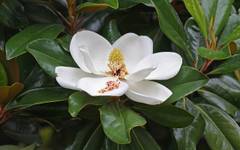
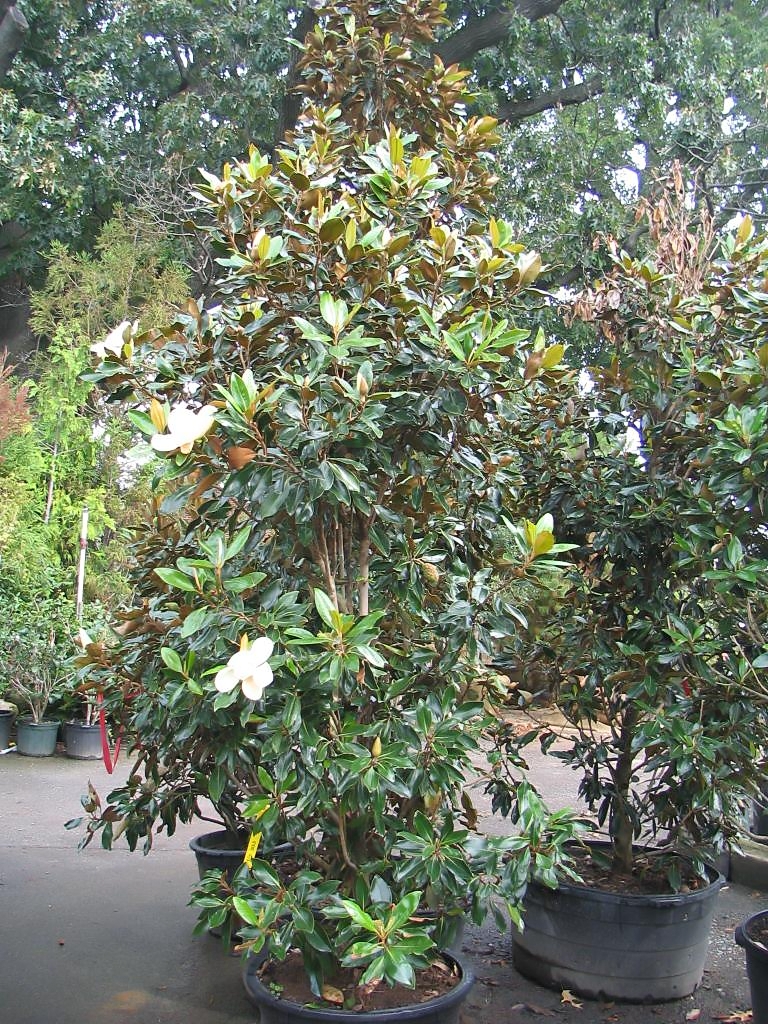
Magnolia grandiflora 'Little Gem' is a compact evergreen tree reaching 15-25 feet (4.5-7.5 m) tall with a spread of 8-12 feet (2.4-3.6 m) and a dense, narrowly pyramidal to columnar form. Mature size is roughly one-third that of seedling M. grandiflora, which reaches 40-60+ feet (12-18+ m). Flowers are proportionally reduced: bowl-shaped, creamy-white, 3-5 inches (8-13 cm) across, with 6-9 thick waxy tepals and a sweet fragrance — versus 8-12 inch (20-30 cm) flowers on the species. Bloom begins on trees as young as 2-3 years and runs May through September in intermittent flushes, giving a total bloom duration across the season of 16-20 weeks. Individual flowers last 2-3 days. Alternate leaves are glossy dark green above with a russet-brown indumentum beneath, 3-5 inches (8-13 cm) long, about half the species leaf size. Cone-like aggregate fruits 2-3 inches (5-8 cm) long ripen in autumn. Growth rate is slow to moderate, 6-12 inches (15-30 cm) per year. Hardy to USDA zone 7. Non-toxic. Dense branching to the ground persists unless the trunk is limbed up. Leaf litter is present but less in volume than on larger cultivars. The cultivar was selected in the 1960s at Monrovia Nursery, California, and is propagated vegetatively.
Native Range
The species Magnolia grandiflora is native to the southeastern United States, from Virginia south to central Florida and west to eastern Texas and Oklahoma. 'Little Gem' was selected in the 1960s at Monrovia Nursery, California, for its compact size and precocious flowering, and is propagated vegetatively.Suggested Uses
Used as a specimen, low screen, informal hedge, or container tree in zones 7-10 at 8-10 foot (2.4-3 m) spacing. The 15-25 foot (4.5-7.5 m) mature size fits small residential gardens, courtyards, and foundation plantings where seedling M. grandiflora at 40-60 feet (12-18 m) would outgrow the site. Dense branching to the ground gives screening at a small scale. The extended May-September bloom flushes spread flowering across 16-20 weeks, though individual flowers are proportionally smaller than on the species. Persistent leaf litter is present as on other M. grandiflora cultivars. Not suited to alkaline soils or climates colder than zone 7.How to Identify
Appearance
Size & Dimensions
Height15' - 25'
Width/Spread8' - 12'
Bloom Information
Bowl-shaped creamy-white flowers 3-5 inches (8-13 cm) across with 6-9 thick waxy tepals and a sweet fragrance. Bloom May-September in intermittent flushes, beginning on trees as young as 2-3 years. Individual flowers last 2-3 days. Extended total bloom duration across the season is 16-20 weeks. Cone-like aggregate fruits 2-3 inches (5-8 cm) ripen in autumn.
Detailed Descriptions
Flower Description
Creamy-white bowl-shaped 3-5 inches (8-13 cm) across; 6-9 thick waxy tepals; sweet fragrance; smaller than the species but produced in intermittent flushes May-SeptemberFoliage Description
Glossy dark green above; russet-brown indumentum beneath; alternate 3-5 inches (8-13 cm), about half the species leaf size; thick and leatheryGrowing Conditions
Sun Requirements
Requires 4-10 hours of direct sunlight daily
• Full Sun: 6+ hours of direct sunlight
• Partial Shade: 3-6 hours of direct sunlight
• Full Shade: Less than 3 hours of direct sunlight
Care & Maintenance
Care Guide
Grows in full sun to partial shade in moist, well-drained, acidic to neutral soil at pH 5.0-6.5. Hardy to USDA zone 7. Tolerates clay soils and short drought once established. The compact size and dense form suit small gardens and containers of at least 25 gallons (95 L). Dense branching to the ground creates screening at a small scale. Leaf litter is present but proportionally less than on larger cultivars. Transplant balled-and-burlapped or container-grown in spring. Growth is slow to moderate.Pruning
The naturally dense narrow pyramidal form is self-maintaining and rarely needs shaping. Can be limbed up for clearance beneath or maintained as a screen branching to the ground. Remove dead or damaged branches in late spring after the first bloom flush. Avoid heavy cuts into older wood — magnolias heal slowly.Pruning Schedule
Prune: June–July
summer
Container Growing
Suitable for container growing
Minimum container size: 25 gallons