Magnolia, Genus, acuminata, Species,
- Genus & species
cucumber tree
Eastern North America (southern Ontario and New York south to Georgia, Alabama, Mississippi; west to Illinois, Missouri, Arkansas)
Overview
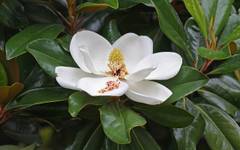
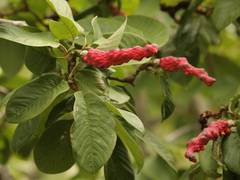
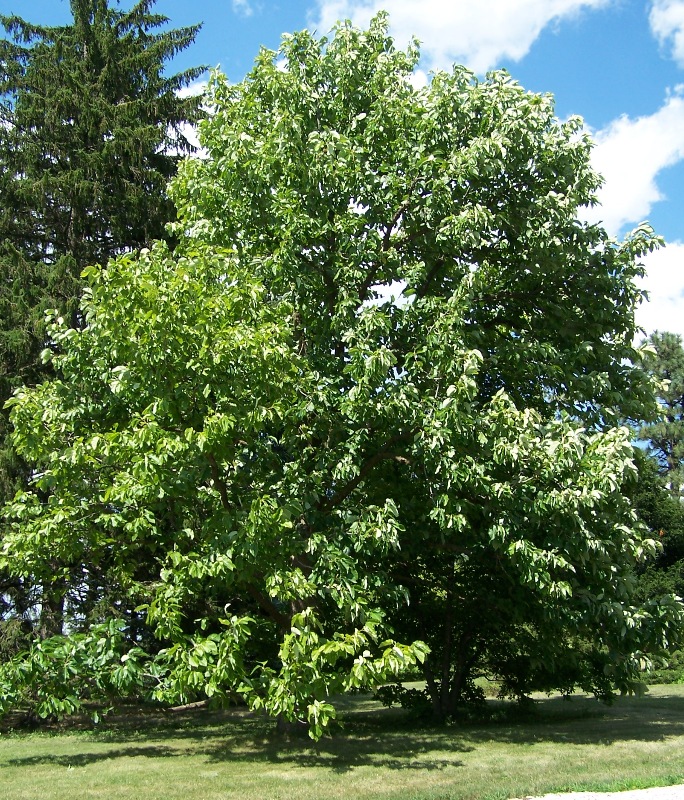
Magnolia acuminata is a large deciduous tree reaching 50–80 feet (15–24 m) tall and 35–50 feet (10.5–15 m) wide with a broadly pyramidal crown that rounds out and opens with age. The species is the most cold-hardy magnolia at USDA zone 3 and the only magnolia with yellow-toned flowers in its wild form; it has been used as the pollen parent in many yellow-flowered magnolia hybrids including M. × brooklynensis. Flowers are tulip-shaped, 2–3 inches (5–8 cm) long, with 6–9 greenish-yellow to pale yellow tepals; they appear in May–June after the leaves have fully emerged, and the foliage canopy screens them from all but close-range viewing. Leaves are alternate, ovate to elliptic, 5–10 inches (13–25 cm) long, medium to dark green above with a paler and slightly pubescent underside. Aggregate fruit clusters 2–3 inches (5–8 cm) long resemble small cucumbers while green in summer and ripen to red in September, splitting to reveal orange-red seeds suspended on silken threads. Bark on mature trunks is dark brown, furrowed into narrow scaly ridges. Growth rate is moderate to rapid for a magnolia at 12–24 inches (30–60 cm) per year, reaching mature size in 25 years. Hardy to USDA zone 3. Not known to be toxic to pets or humans.
Native Range
Magnolia acuminata is native to eastern North America, from southern Ontario and upstate New York south through the Appalachian Mountains to Georgia, Alabama, and Mississippi, and west to southern Illinois, Missouri, and Arkansas. The species occurs in moist, rich, well-drained soils of mixed mesophytic forests and stream-valley ravines at elevations of 300–4,500 feet (90–1,370 m).Suggested Uses
Used as a shade tree and canopy specimen on large residential lots, in parks, estates, and arboreta at 35–45 foot (10.5–13.5 m) spacing. The 50–80 foot (15–24 m) mature height sets the minimum lot scale for placement; the broad pyramidal crown holds position in wind-exposed landscapes where smaller magnolias suffer leaf shredding. Flowers are largely hidden within the foliage and read as subtle yellow accents from within 15 feet (4.5 m) rather than a canopy display; the red fruit clusters in September give stronger visual interest than the flowers. The species does not fit small residential lots, urban street-tree pits under 10 feet (3 m) wide, or positions where showy flowering is the primary requirement.How to Identify
Appearance
Size & Dimensions
Height50' - 80'
Width/Spread35' - 50'
Bloom Information
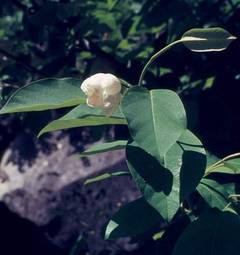
Tulip-shaped flowers 2–3 inches (5–8 cm) long with 6–9 greenish-yellow to pale yellow tepals appear in May–June over a 2–3 week window, after the leaves have fully emerged. Flowers are largely screened by the canopy and are not visible from more than 15 feet (4.5 m) away on mature trees. Fragrance is light. Aggregate fruit clusters 2–3 inches (5–8 cm) long ripen from green to red in September, splitting to reveal orange-red seeds on silken threads.
Detailed Descriptions
Flower Description
Tulip-shaped 2-3 inches long; 6-9 greenish-yellow to pale yellow tepals; screened by foliage; appearing May-June after leaf emergenceFoliage Description
Medium to dark green above, paler and slightly pubescent underside; alternate, ovate to elliptic, 5-10 inches longGrowing Conditions
Sun Requirements
Requires 4-10 hours of direct sunlight daily
• Full Sun: 6+ hours of direct sunlight
• Partial Shade: 3-6 hours of direct sunlight
• Full Shade: Less than 3 hours of direct sunlight
Care & Maintenance
Care Guide
Grow in full sun to partial shade with 4–10 hours of direct light in moist, rich, well-drained loam, clay, or silt at pH 5.0–7.0. Tolerates heavier soils than many magnolias but does not tolerate prolonged waterlogging. Water deeply once per week during the first three growing seasons, then maintain moisture during extended drought. Apply 2–3 inches (5–8 cm) of organic mulch in spring, kept away from the trunk. Transplant balled-and-burlapped specimens in early spring before leaf-out; the fleshy root system is damaged by autumn transplanting. Scale insects are an occasional issue on stressed trees. Exposed sites with sustained winds above 25 mph (40 km/h) cause shredding of the large leaves. Hardy to USDA zone 3.Pruning
Prune in late spring to early summer after flowering when sap flow is low. Established trees need minimal pruning beyond removal of dead, crossing, or storm-damaged branches. Train for a strong central leader during the first 3–5 years. The mature size of 50–80 feet (15–24 m) is difficult to reduce through pruning without destroying the canopy form; species selection should match the available space at planting.Pruning Schedule
Prune: June–July
summer