© The original uploader was Yongxinge at English Wikipedia., some rights reserved (CC-BY-SA) · Wikimedia Commons
Magnolia, Genus, denudata, Species,
- Genus & species
yulan magnolia
Central and eastern China (Anhui, Fujian, Henan, Hubei, Hunan, Jiangxi, Zhejiang; mixed forests at 1,000-5,000 ft / 300-1,500 m); cultivated in Chinese temple gardens since the Tang Dynasty (618-907 CE)
Overview
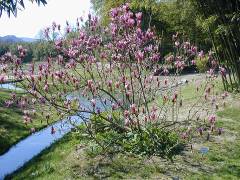
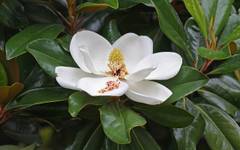
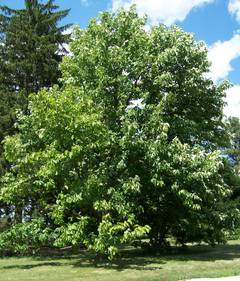
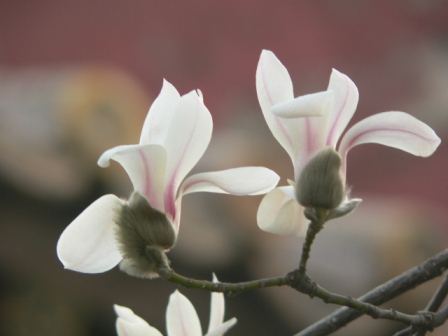
Magnolia denudata is a medium deciduous tree reaching 30-40 feet (9-12 m) tall with a spread of 25-35 feet (7.5-10.5 m) and a rounded to broadly spreading crown. Ivory-white goblet-shaped flowers 5-6 inches (13-15 cm) across with 9 thick, fleshy tepals open on bare branches in March and April and carry a sweet, lemony fragrance. Bloom duration is 2-3 weeks. The early bloom period puts the flowers at risk of late-frost damage, which can brown or destroy an entire flush in a single night. Alternate obovate leaves 4-7 inches (10-18 cm) long emerge after flowering, medium to dark green above with a paler, slightly pubescent underside. Cone-like aggregate fruits 3-5 inches (8-13 cm) long ripen pink-red in autumn. The bark is smooth and gray. Growth rate is moderate, 12-18 inches (30-45 cm) per year in youth. Hardy to USDA zone 5. Non-toxic. The species has been cultivated in Chinese temple gardens for over 1,400 years and is a parent of M. × soulangeana (crossed with M. liliiflora) as well as many yellow-flowered garden hybrids produced with M. acuminata.
Native Range
Magnolia denudata is native to central and eastern China — Anhui, Fujian, Henan, Hubei, Hunan, Jiangxi, and Zhejiang provinces — in mixed forests at 1,000-5,000 feet (300-1,500 m). The species has been cultivated in Chinese temple gardens since at least the Tang Dynasty (618-907 CE).Suggested Uses
Used as a specimen in medium to large residential and public gardens in zones 5-9 at 25-30 foot (7.5-9 m) spacing. The pure white flowers on bare spring branches give a different visual character from pink-flushed M. × soulangeana. The 30-40 foot (9-12 m) mature size calls for a setting with adequate space. Late-spring frost can destroy a flush of open flowers, so frost-pocket sites are poorly suited. The species is a parent of M. × soulangeana and of yellow-flowered hybrids produced with M. acuminata, which is often cited by collectors. Not suited to small gardens, alkaline soils, drought-prone sites, or exposed frost pockets.How to Identify
Appearance
Size & Dimensions
Height30' - 40'
Width/Spread25' - 35'
Bloom Information
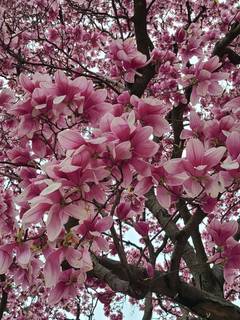
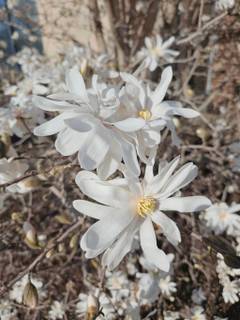
Ivory-white goblet-shaped flowers 5-6 inches (13-15 cm) across with 9 thick fleshy tepals open on bare branches in March and April, carrying a sweet lemony fragrance. Bloom duration is 2-3 weeks, and late-spring frosts can destroy an entire flush overnight. Cone-like aggregate fruits 3-5 inches (8-13 cm) long ripen pink-red in autumn.
Detailed Descriptions
Flower Description
Ivory-white; goblet-shaped 5-6 inches (13-15 cm) across; 9 thick fleshy tepals; sweet lemony fragrance; March-April on bare branchesFoliage Description
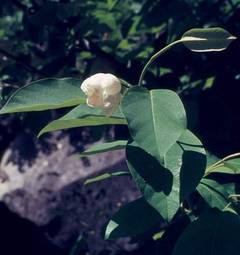
Medium to dark green above; paler, slightly pubescent beneath; alternate obovate 4-7 inches (10-18 cm) longGrowing Conditions
Sun Requirements
Requires 4-8 hours of direct sunlight daily
• Full Sun: 6+ hours of direct sunlight
• Partial Shade: 3-6 hours of direct sunlight
• Full Shade: Less than 3 hours of direct sunlight
Care & Maintenance
Care Guide
Grows in full sun to partial shade in moist, rich, well-drained, acidic to neutral soil at pH 5.0-6.5. Hardy to USDA zone 5. Late-spring frosts can destroy the flowers of an open flush; a south- or west-facing sheltered site and a position out of frost pockets reduce this risk. Mulch the root zone 2-3 inches (5-8 cm) deep to retain moisture. Transplant balled-and-burlapped or container-grown in early spring; magnolias are slow to recover from root disturbance. Scale insects and magnolia scab can occur occasionally.Pruning
Prune in late spring immediately after flowering if needed. Established trees develop their rounded form without intervention and require little pruning. Remove dead, crossing, or damaged branches. Heavy cuts into older wood heal slowly on magnolias and are better left to structural necessity only.Pruning Schedule
Prune: May–June
late spring