Magnolia, Genus, 'Galaxy', Cultivar,
- Genus
- Cultivar
galaxy magnolia
Garden hybrid (M. liliiflora 'Nigra' × M. sprengeri 'Diva'; William Kosar, U.S. National Arboretum, DC, 1980)
Overview
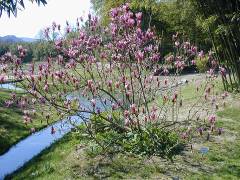
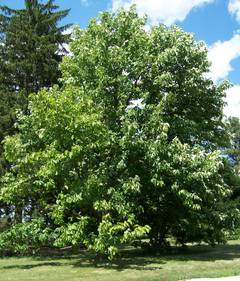
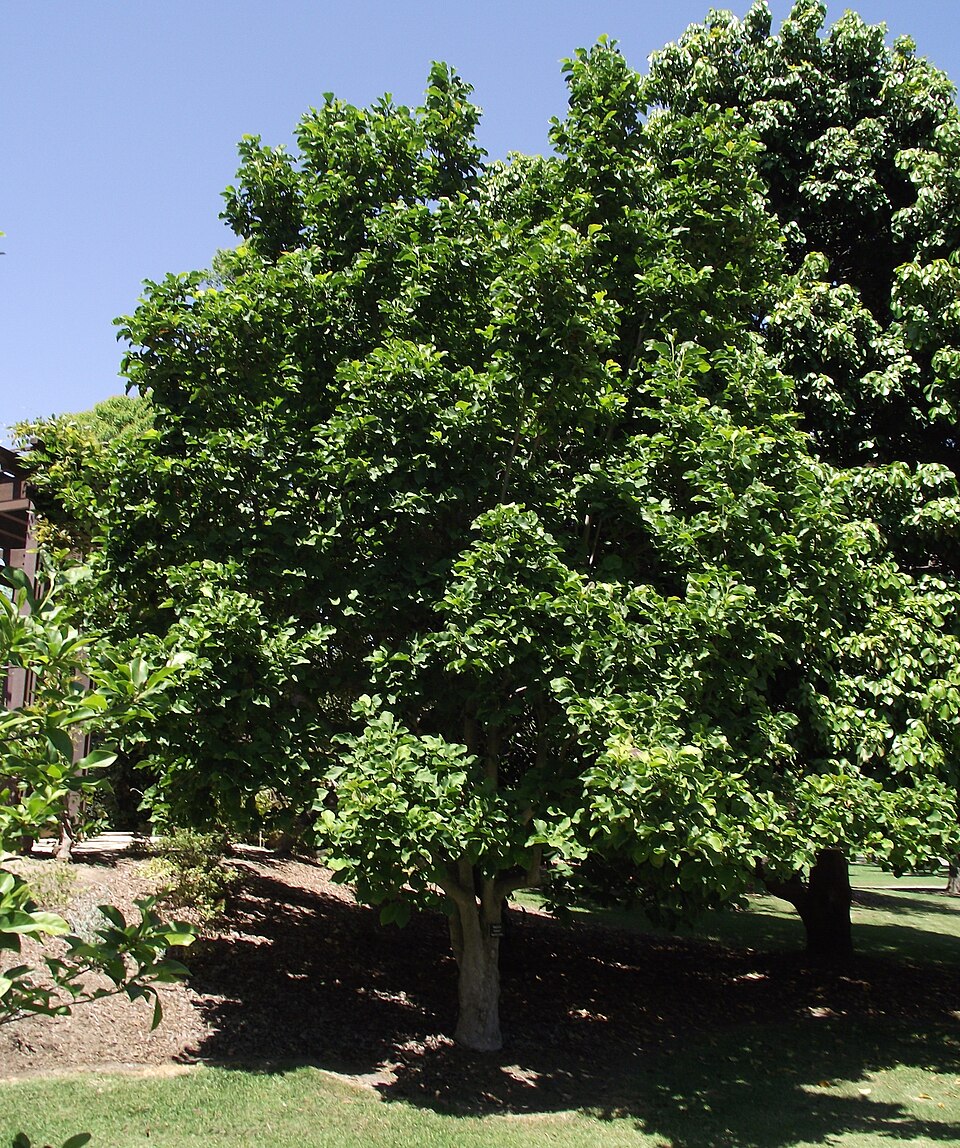
Magnolia 'Galaxy' is a medium, deciduous tree reaching 25–40 feet (7.5–12 m) tall with a spread of 15–25 feet (4.5–7.5 m) and a narrowly pyramidal to columnar crown—one of the narrowest magnolia cultivars. This hybrid of M. liliiflora 'Nigra' × M. sprengeri 'Diva' was developed at the U.S. National Arboretum by William Kosar and introduced in 1980. The flowers are 6–8 inches (15–20 cm) across with 9–12 tepals, deep reddish-purple to magenta-pink on the exterior and paler pink within, borne on bare branches in late March–April. The flowers are held upright in a tulip to goblet shape. The alternate, obovate leaves are 5–8 inches (13–20 cm) long, dark green. The narrow, upright crown maintains its columnar form without pruning. Growth rate is moderate to fast. Hardy to zone 5. The later bloom (compared to M. × soulangeana) reduces frost damage. Single-trunked—does not produce basal suckers.
Native Range
Magnolia 'Galaxy' is a garden hybrid (M. liliiflora 'Nigra' × M. sprengeri 'Diva') developed at the U.S. National Arboretum, Washington, D.C., by William Kosar, introduced in 1980.Suggested Uses
Planted as a specimen, street tree, or in narrow spaces at 15–20 foot (4.5–6 m) spacing. The narrow columnar form (15–25 foot spread) fits sites where most magnolias are too wide. The deep reddish-purple flowers are among the darkest of any magnolia of this size. Single-trunked with no basal suckers. The flowers are borne on bare branches—the tree is leafless during bloom. Not suitable for alkaline soils, drought-prone sites, or positions where a wide-spreading crown is desired.How to Identify
Appearance
Size & Dimensions
Height25' - 40'
Width/Spread15' - 25'
Bloom Information
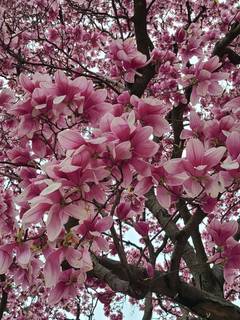
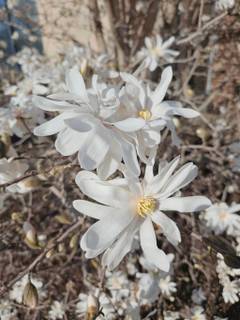
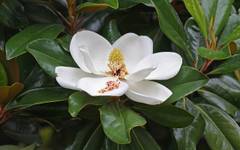
Flowers 6–8 inches (15–20 cm) across with 9–12 tepals, deep reddish-purple to magenta-pink exterior and paler pink interior, held upright in tulip to goblet form on bare branches in late March–April. Later bloom than M. × soulangeana reduces frost damage. Bloom duration is 2–3 weeks. Light fragrance.
Detailed Descriptions
Flower Description
Deep reddish-purple to magenta-pink exterior, paler pink interior; tulip to goblet shape 6-8 inches; 9-12 tepals; uprightFoliage Description
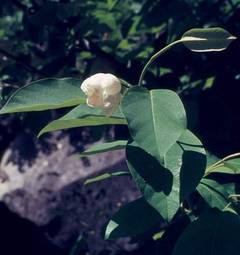
Dark green; alternate obovate 5-8 inchesGrowing Conditions
Sun Requirements
Requires 4-8 hours of direct sunlight daily
• Full Sun: 6+ hours of direct sunlight
• Partial Shade: 3-6 hours of direct sunlight
• Full Shade: Less than 3 hours of direct sunlight
Care & Maintenance
Care Guide
Plant in full sun to partial shade in moist, rich, well-drained, acidic to neutral soil (pH 5.0–6.5). Hardy to zone 5. The later bloom timing reduces frost damage compared to earlier-flowering magnolias. The narrow columnar form requires minimal space—can be planted closer to structures than most magnolias. Mulch the root zone. Transplant balled-and-burlapped or container-grown in spring. No significant pest or disease problems. Moderate to fast growth rate.Pruning
Minimal pruning required. The naturally narrow, columnar form develops a strong central leader without training. Remove dead, crossing, or damaged branches in late spring after flowering. Does not produce basal suckers.Pruning Schedule
Prune: May–June
late spring